
Evan Elder vs Samuel Sanches: analysis & prediction

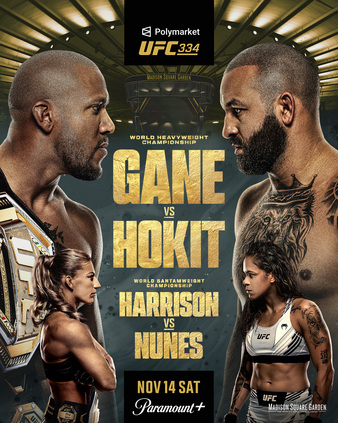
PRELIMS · LIGHTWEIGHT · 3 ROUNDSUFC 334: Gane vs. Hokit
Evan Elder — Lightweight fighter

Evan Elder

10W2L
MMA
…
VS
Samuel Sanches — Lightweight fighter

Samuel Sanches

11W1L
…

Elder's sustained work against Sanches' explosive reset

LightweightMadison Square Garden2026-11-14

The fight in 30 seconds

Evan Elder 58% / Samuel Sanches 42%. Evan Elder is the editorial selection. Elder receives a restrained 58% through the more established UFC control and decision sample. Sanches receives 42%, concentrated in a knockout because his documented showcase includes a finish immediately after surviving grappling danger. His short DWCS rates remain excluded from the observed UFC statistics.

Subjective editorial probabilities, not calibrated model outputs.

Evan Elder

Insufficient price data
Editorial win estimate
58%
Fair odds
-138
Reference quote
—
Fair decimal odds
1.72

Samuel Sanches

Insufficient price data
Editorial win estimate
42%
Fair odds
+138
Reference quote
—
Fair decimal odds
2.38
Price freshness & calculation notes

Quotes older than 48 hours are marked outdated. EV at an old or undated price is a historical calculation, not a current opportunity. Date-only snapshots have no verified capture time.

Read the handicapping and counterarguments
01

The Frame

What this fight is really about — and the measurements that shape it

The Analyst's Take

Evan Elder (10-2) vs. Samuel Sanches (11-1): Lightweight, 3 five-minute rounds at Madison Square Garden. Elder needs to make Sanches defend several connected exchanges. Sanches has shown he can survive an early grappling threat and finish immediately after separation, so Elder cannot treat a broken clinch as a safe pause.

Evan Elder
Attribute
Samuel Sanches
10-2
Pro record
11-1
Lightweight
Booked division
Lightweight
155 lb
Booked limit
155 lb
70.00
Height
70.00
72.00
Reach
74.50
28
Age in reviewed profile
23
Syndicate MMA
Trains at
—

Measurements come from the reviewed athlete profiles (height and reach in inches). Age is the source snapshot, not a projected fight-night age. The listed fight limit follows the supplied card; past profile weigh-ins do not change the booking.

Venue Factor
Scheduled for 3 five-minute rounds. The round scenarios below are tactical questions, not invented statistical forecasts.
02

The Fighters

Careers, chins, schedules — and the form they bring into the cage

Evan Elder portrait

Evan Elder

Evan Elder

Pro record
10-2
UFC bouts
—
Career KO/TKO wins
4
Career submission wins
2

Elder enters at 10-2 after wins over Genaro Valdez, Darrius Flowers and Gauge Young. The Flowers arm-triangle and two decision wins show that his recent success includes both sustained work and a positional finish. Earlier losses to Preston Parsons and Nazim Sadykhov provide context for the level of resistance he has faced. His career striking rates show activity on both sides of the exchange, which makes defensive position an important part of any pressure plan.

Recent results

  • W

    Gauge Young

    Decision · 4/26/25 · UFC Fight Night

  • W

    Darrius Flowers

    Submission · 7/13/24 · UFC on ESPN

  • W

    Genaro Valdez

    Decision · 7/15/23 · UFC on ESPN

  • L

    Nazim Sadykhov

    KO/TKO · 2/18/23 · UFC Fight Night

  • L

    Preston Parsons

    Decision · 4/23/22 · UFC Fight Night

Samuel Sanches portrait

Samuel Sanches

Samuel Sanches

Pro record
11-1
UFC bouts
—
Career KO/TKO wins
—
Career submission wins
—

Sanches enters at 11-1. The clearest documented showcase is his Contender Series knockout of Chasen Blair after defending an early back-control threat. The public profile's tiny record and extreme defensive numbers describe that short sample, not the supplied professional record and not a mature UFC career. The evidence supports dangerous finishing after a reset; it does not establish that he can always escape sustained control or reproduce the same efficiency over fifteen minutes.

Recent results

  • W

    Chasen Blair

    KO, R1 2:01 · 2025-09-09 · DWCS — Season 9, Week 5

03

The Numbers

Career statistics and what they say about this matchup

Published career statistics

Published profile averages describe past opposition, not a prediction of this fight. The source sample may include Contender Series appearances.

Evan Elder: Published UFC athlete-profile averages reviewed October 11, 2026. 5 UFC results appear in the reviewed log; the rate denominator may also include Contender Series appearances. These are not opponent- or division-adjusted.

Samuel Sanches: No reconciled completed UFC rate sample. Showcase or regional figures are withheld; unavailable observations are not zero. The supplied card record 11-1 takes precedence over the profile header 1-0-0; no extra fight result is inferred from that difference.

Career statistical comparison for Evan Elder and Samuel Sanches
MetricEvan ElderSamuel Sanches
Significant strikes landed / min5.66—
Significant strikes absorbed / min4.94—
Striking accuracy51%—
Striking defence57%—
Takedowns / 15 min0.48—
Takedown defence40%—
Submission attempts / 15 min0.48—
Knockdowns / 15 min0.48—

Submission attempts are not submission wins. Defence percentages depend on attempts faced. No matched division cohort is supplied for these profile averages, so division ranks are unavailable. A dash means unavailable data, not zero.

04

The Story of the Fight

Advantages, worst cases, gameplans — and the patterns underneath

Elder's sustained work against Sanches' explosive reset

Elder needs to make Sanches defend several connected exchanges. Sanches has shown he can survive an early grappling threat and finish immediately after separation, so Elder cannot treat a broken clinch as a safe pause.

The Deep Read

Elder's pressure should be designed to survive the break. If he reaches the clinch and then lets the hands separate while remaining in punching range, he may recreate the moment in which Sanches was most effective against Blair. The exit requires as much planning as the entry. Elder can either maintain a secure connection and work, or leave behind defensive cover; an indecisive half-step between those choices is the risky position.

Sanches should resist making the earlier escape a licence to concede control. Defending a dangerous position once is useful evidence of composure, but Elder can offer a different sequence and a longer period of pressure. The first priority is to prevent the attachment becoming settled. If the break comes, Sanches can exploit the opponent's transition back to striking, provided his own feet and hands are ready to support the attack.

At distance, Elder's recent record supports a gameplan built around repeated work rather than one perfect shot. He can test whether Sanches remains defensively sound after several entries, exits and body attacks. Sanches' response should not be to wait indefinitely for an identical overhand opportunity. A measured first attack can make Elder hesitate or change his entry; that reaction may be more valuable than immediately loading up again.

The sample imbalance is central. Elder has several UFC bouts and demonstrated decision wins; Sanches' public statistics are dominated by a brief showcase. A displayed zero in strikes absorbed cannot be interpreted as an expectation that Elder will struggle to land. The analysis therefore centres on repeatable positional actions and on how Sanches responds when the first defence does not immediately create a finish.

Path to Victory

Evan Elder

Build pressure through compact combinations and controlled clinch entries, then remain defensively organised when the connection breaks. Make Sanches work through repeated sequences instead of offering one decisive reset.

Why they win
01
Primary route

Build pressure through compact combinations and controlled clinch entries, then remain defensively organised when the connection breaks. Make Sanches work through repeated sequences instead of offering one decisive reset.

02
Supporting evidence

Elder enters at 10-2 after wins over Genaro Valdez, Darrius Flowers and Gauge Young. The Flowers arm-triangle and two decision wins show that his recent success includes both sustained work and a positional finish. Earlier losses to Preston Parsons and Nazim Sadykhov provide context for the level of resistance he has faced. His career striking rates show activity on both sides of the exchange, which makes defensive position an important part of any pressure plan.

The gameplan
  1. 1
    Entry

    Keep a defensive hand available when entering behind combinations.

  2. 2
    Position

    Once attached, secure the position before attempting a finish or disengaging.

  3. 3
    Adjustment

    Leave the clinch at an angle with cover, especially when Sanches has just freed his hands.

Path to Victory

Samuel Sanches

Deny settled control, recover a balanced striking stance after separation and punish Elder while he is changing phases. Use the first hard response to create more space rather than abandoning position in pursuit of an instant finish.

Why they win
01
Primary route

Deny settled control, recover a balanced striking stance after separation and punish Elder while he is changing phases. Use the first hard response to create more space rather than abandoning position in pursuit of an instant finish.

02
Supporting evidence

Sanches enters at 11-1. The clearest documented showcase is his Contender Series knockout of Chasen Blair after defending an early back-control threat. The public profile's tiny record and extreme defensive numbers describe that short sample, not the supplied professional record and not a mature UFC career. The evidence supports dangerous finishing after a reset; it does not establish that he can always escape sustained control or reproduce the same efficiency over fifteen minutes.

The gameplan
  1. 1
    Entry

    Contest grips early so the escape does not begin from a fully settled bad position.

  2. 2
    Position

    Recover the feet before throwing the finishing combination after a break.

  3. 3
    Adjustment

    If Elder survives the first burst, return to measured attacks instead of repeating an increasingly visible power swing.

Danger Zone

How Evan Elder loses

  • Elder breaks the clinch without cover and walks into Sanches' best reset attack.

  • He increases volume without controlling the exchange and gives the prospect repeated clean counters.

Danger Zone

How Samuel Sanches loses

  • Sanches allows Elder to establish control and cannot reproduce the quick escape from his showcase.

  • He relies on one explosive sequence and loses the later rounds when Elder forces repeated work.

Conditional tactical scenario, not a statistical projection

Round 1: what to watch

Round 1: watch the first break from contact. The fighter who is balanced and defensively ready at that moment may gain more than the fighter who initially forced the clinch.

Conditional tactical scenario, not a statistical projection

Round 2: what to watch

Round 2: Elder should be testing whether Sanches can repeat his defence under sustained work. Sanches needs a scoring route that does not depend on an immediate knockout.

Conditional tactical scenario, not a statistical projection

Round 3: what to watch

Round 3: the limited long-fight evidence for Sanches remains uncertainty, not a presumed collapse. Elder should continue organised pressure rather than treating experience as permission to trade recklessly.

05

The Verdict

The matchup read, the betting market, and the swing factors

Editorial handicapping

Evan Elder 58% · Samuel Sanches 42%

Subjective analyst estimates for the announced opponent and distance. These are not calibrated outputs from the prediction model. Method probabilities are portions of the overall outcome distribution, not percentages conditional on winning.

Elder receives a restrained 58% through the more established UFC control and decision sample. Sanches receives 42%, concentrated in a knockout because his documented showcase includes a finish immediately after surviving grappling danger. His short DWCS rates remain excluded from the observed UFC statistics.

Elder needs to make Sanches defend several connected exchanges. Sanches has shown he can survive an early grappling threat and finish immediately after separation, so Elder cannot treat a broken clinch as a safe pause.

The assessment is for 3 five-minute rounds at 155 lb. The six outcomes are mutually exclusive allocations conditional on a decisive result; draws and no-contests are not separately priced. Method shares are not conditional on the fighter winning, and the 100-cell display visualises these allocations rather than reporting simulated fights.

Elder falls toward 48% if Sanches repeatedly escapes cleanly and lands on separation; he rises toward 65% if he can connect control sequences while denying that dangerous reset. Scenario range for Evan Elder: 48–65%; the complementary range for Samuel Sanches is 35–52%. These are judgment-based scenarios, not statistical confidence intervals.

If you only read 2 things
1

Evan Elder 58% / Samuel Sanches 42%. Evan Elder is the editorial selection. Elder receives a restrained 58% through the more established UFC control and decision sample. Sanches receives 42%, concentrated in a knockout because his documented showcase includes a finish immediately after surviving grappling danger. His short DWCS rates remain excluded from the observed UFC statistics.

2

Elder falls toward 48% if Sanches repeatedly escapes cleanly and lands on separation; he rises toward 65% if he can connect control sequences while denying that dangerous reset.

Editorial outcome distribution · 100 percentage points

Each square represents one percentage point of the subjective editorial distribution. This is an illustration of the assigned probabilities, not a simulation or an observed result.

Evan Elder · KO/TKO — 15%Evan Elder · Decision — 31%Evan Elder · Submission — 12%Samuel Sanches · KO/TKO — 26%Samuel Sanches · Decision — 11%Samuel Sanches · Submission — 5%

Each square = 1 editorial percentage point. Evan Elder gold · Samuel Sanches orange · color opacity: 100% = decision, 70% = submission, 45% = KO/TKO.

Evan Elder win probability
0%
15%
31%
12%
KO/TKODECSUB
  • Connected exchanges and accumulated damage can expose a stoppage opportunity.

  • Making Sanches defend multiple organised sequences is the strongest route.

  • Repeated control attempts can generate a back or neck attack if Sanches gives position.

Samuel Sanches win probability
0%
26%
11%
5%
KO/TKODECSUB
  • The documented post-separation knockout makes phase changes his principal finishing opportunity.

  • Escaping safely and maintaining offence over several rounds offers a less established decision route.

  • A scramble reversal is possible but not supported by a reconciled career method ledger.

Editorial estimate vs market

Evan Elder

Insufficient price data
Editorial win estimate
58%
Fair odds
-138
Reference quote
—
Fair decimal odds
1.72
Estimated EV
—
Edge vs no-vig market
—

Samuel Sanches

Insufficient price data
Editorial win estimate
42%
Fair odds
+138
Reference quote
—
Fair decimal odds
2.38
Estimated EV
—
Edge vs no-vig market
—

EV uses the displayed price: probability × decimal odds − 1. Edge is a percentage-point difference from a proportionally de-vigged, same-book pair. A dash means that comparison is unavailable.

Price freshness & calculation notes

Quotes older than 48 hours are marked outdated. EV at an old or undated price is a historical calculation, not a current opportunity. Date-only snapshots have no verified capture time.

Fair odds are the break-even price under this estimate, not a recommended entry price. Model uncertainty can erase a small edge.

What price would change the calculation? · Evan Elder

Change the assumptions to see how the required price moves. This does not update the published model or recommend an entry price.

Required decimal price: 1.73 or higher. At the exact unrounded break-even price, estimated EV is zero.

What price would change the calculation? · Samuel Sanches

Change the assumptions to see how the required price moves. This does not update the published model or recommend an entry price.

Required decimal price: 2.39 or higher. At the exact unrounded break-even price, estimated EV is zero.

Fair prices and expected value are arithmetic consequences of these subjective estimates. A positive calculation at an old quote is not a verified current opportunity.

Conviction
0
3/10

Editorial confidence in the evidence, not a win probability or a calibrated confidence interval.

Confidence reflects the quality and comparability of the evidence, not the size of the win probability. Lean: Evan Elder.

What backs the lean
  • Elder needs to make Sanches defend several connected exchanges. Sanches has shown he can survive an early grappling threat and finish immediately after separation, so Elder cannot treat a broken clinch as a safe pause.

  • Elder receives a restrained 58% through the more established UFC control and decision sample. Sanches receives 42%, concentrated in a knockout because his documented showcase includes a finish immediately after surviving grappling danger. His short DWCS rates remain excluded from the observed UFC statistics.

What limits it
  • Sanches' short Contender Series rates are not shown as UFC career statistics.

  • The public profile does not supply a reconciled full fight log for Sanches, so missing results and method totals remain unfilled.

  • These are subjective editorial estimates without out-of-sample calibration; numerical precision does not imply measurement precision.

Final Assessment

Evan Elder 58% / Samuel Sanches 42%. Evan Elder is the editorial selection. Elder receives a restrained 58% through the more established UFC control and decision sample. Sanches receives 42%, concentrated in a knockout because his documented showcase includes a finish immediately after surviving grappling danger. His short DWCS rates remain excluded from the observed UFC statistics.

Elder falls toward 48% if Sanches repeatedly escapes cleanly and lands on separation; he rises toward 65% if he can connect control sequences while denying that dangerous reset.

Skip to main content
Use Tab to navigate through elements, Enter to activate buttons and links.