Joe Pyfer vs Bo Nickal: analysis & prediction

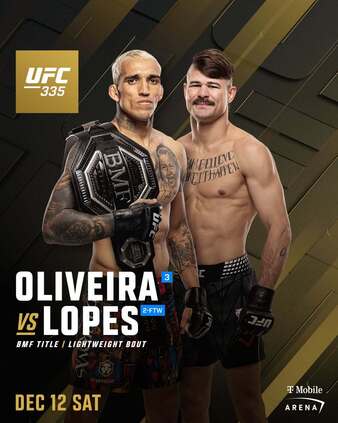
MAIN CARD · MIDDLEWEIGHT · 3 ROUNDSUFC 335: Oliveira vs. Lopes
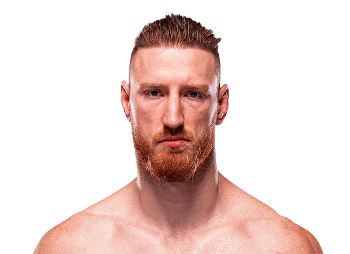
Joe Pyfer — Middleweight fighter

Joe Pyfer

16W3L
Boxing
…
VS
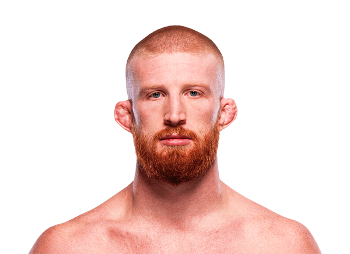
Bo Nickal — Middleweight fighter

Bo Nickal

9W1L
Wrestler
…

Pyfer's first response to the shot shapes Nickal's entire striking game

MiddleweightT-Mobile Arena2026-12-12

The fight in 30 seconds

Joe Pyfer 53% / Bo Nickal 47%. Joe Pyfer is the editorial selection. Pyfer is only a 53/47 favourite: his broader recent UFC opposition and entry-punishing power are offset by Nickal's route to sustained control. Pyfer's largest outcome is KO/TKO; Nickal's is submission. This is a small stylistic lean, not a strong selection derived from comparing short-fight accuracy or takedown rates against different opponents.

Subjective editorial probabilities, not calibrated model outputs.

Joe Pyfer

Insufficient price data
Editorial win estimate
53%
Fair odds
-113
Reference quote
—
Fair decimal odds
1.89

Bo Nickal

Insufficient price data
Editorial win estimate
47%
Fair odds
+113
Reference quote
—
Fair decimal odds
2.13
Price freshness & calculation notes

Quotes older than 48 hours are marked outdated. EV at an old or undated price is a historical calculation, not a current opportunity. Date-only snapshots have no verified capture time.

Read the handicapping and counterarguments
01

The Frame

What this fight is really about — and the measurements that shape it

The Analyst's Take

Joe Pyfer (16-3) vs. Bo Nickal (9-1): Middleweight, 3 five-minute rounds at T-Mobile Arena. Nickal's wrestling threat can change when Pyfer is willing to plant and punch. Pyfer needs to punish the entry while preserving the stance to defend it. Nickal must connect the first shot to stable control rather than assume his wrestling résumé completes the sequence.

Joe Pyfer
Attribute
Bo Nickal
16-3
Pro record
9-1
Middleweight
Booked division
Middleweight
185 lb
Booked limit
185 lb
74.00
Height
73.00
75.00
Reach
76.00
30
Age in reviewed profile
30
Team Marquez MMA
Trains at
American Top Team

Measurements come from the reviewed athlete profiles (height and reach in inches). Age is the source snapshot, not a projected fight-night age. The listed fight limit follows the supplied card; past profile weigh-ins do not change the booking.

Venue Factor
Scheduled for 3 five-minute rounds. The round scenarios below are tactical questions, not invented statistical forecasts.
02

The Fighters

Careers, chins, schedules — and the form they bring into the cage

Joe Pyfer portrait

Joe Pyfer

Joe Pyfer

Pro record
16-3
UFC bouts
—
Career KO/TKO wins
10
Career submission wins
4

Pyfer enters at 16-3 after wins over Barriault, Gastelum, Magomedov and Adesanya in the recent public ledger. The methods vary: a quick knockout, a decision, a submission and a striking stoppage. That variety matters against Nickal because Pyfer has shown more than one response to a fight that changes phases. The earlier five-round loss to Hermansson remains useful context for how sustained opposition can expose gaps that an early finish does not reveal.

Recent results

  • W

    Israel Adesanya

    KO/TKO · 3/28/26 · UFC Fight Night

  • W

    Abus Magomedov

    Submission · 10/4/25 · UFC 320

  • W

    Kelvin Gastelum

    Decision · 6/7/25 · UFC 316

  • W

    Marc-Andre Barriault

    KO/TKO · 6/29/24 · UFC 303

  • L

    Jack Hermansson

    Decision · 2/10/24 · UFC Fight Night

Bo Nickal portrait

Bo Nickal

Bo Nickal

Pro record
9-1
UFC bouts
—
Career KO/TKO wins
4
Career submission wins
4

Nickal enters at 9-1 after finishing Vieira and Daukaus following a stoppage loss to Reinier de Ridder. His wrestling background supplies a credible entry threat, and his UFC record includes submissions as well as striking finishes. The de Ridder loss prevents the grappling credentials from being treated as automatic control against every larger or more experienced mixed martial artist. This is three rounds at middleweight, with both men bringing serious finishing danger.

Recent results

  • W

    Kyle Daukaus

    KO/TKO · 6/14/26 · UFC Freedom 250

  • W

    Rodolfo Vieira

    KO/TKO · 11/15/25 · UFC 322

  • L

    Reinier de Ridder

    KO/TKO · 5/3/25 · UFC on ESPN

  • W

    Paul Craig

    Decision · 11/16/24 · UFC 309

  • W

    Cody Brundage

    Submission · 4/13/24 · UFC 300

03

The Numbers

Career statistics and what they say about this matchup

Published career statistics

Published profile averages describe past opposition, not a prediction of this fight. The source sample may include Contender Series appearances.

Joe Pyfer: Published UFC athlete-profile averages reviewed October 11, 2026. 8 UFC results appear in the reviewed log; the rate denominator may also include Contender Series appearances. These are not opponent- or division-adjusted.

Bo Nickal: Published UFC athlete-profile averages reviewed October 11, 2026. 7 UFC results appear in the reviewed log; the rate denominator may also include Contender Series appearances. These are not opponent- or division-adjusted.

Career statistical comparison for Joe Pyfer and Bo Nickal
MetricJoe PyferBo Nickal
Significant strikes landed / min3.523.36
Significant strikes absorbed / min3.221.93
Striking accuracy44%62%
Striking defence53%60%
Takedowns / 15 min1.453.12
Takedown defence63%100%
Submission attempts / 15 min0.912.27
Knockdowns / 15 min1.090.85

Submission attempts are not submission wins. Defence percentages depend on attempts faced. No matched division cohort is supplied for these profile averages, so division ranks are unavailable. A dash means unavailable data, not zero.

04

The Story of the Fight

Advantages, worst cases, gameplans — and the patterns underneath

Pyfer's first response to the shot shapes Nickal's entire striking game

Nickal's wrestling threat can change when Pyfer is willing to plant and punch. Pyfer needs to punish the entry while preserving the stance to defend it. Nickal must connect the first shot to stable control rather than assume his wrestling résumé completes the sequence.

The Deep Read

Pyfer's striking power matters most if he can use it without giving Nickal an easy reaction. A large, planted combination may be dangerous to the opponent and still create the cleanest takedown entry. The better starting question is what Pyfer can land while keeping the hips and hands available. If he makes Nickal pay for the first entry without becoming extended himself, the wrestling threat has to be rebuilt rather than simply repeated.

Nickal does not need every strike to be a finishing shot. A credible attack can make Pyfer raise the guard, stop moving or widen the stance, creating a better entry. Conversely, a defended takedown can still change the next striking exchange if Pyfer remains preoccupied with protecting the hips. The argument for Nickal is the interaction of threats, not a claim that a wrestling pedigree guarantees control regardless of setup.

The landing is the central grappling test. Pyfer's submission win over Magomedov and BJJ background mean that top position should not be approached casually, but those facts also do not prove he can neutralise Nickal from underneath. Nickal needs control of the hips and a clear next action. Pyfer needs frames, hand-fighting and a workable base before attempting an explosive escape. Both can lose an apparently favourable moment by moving to the finish too quickly.

Nickal's recent striking finishes broaden the scouting problem without erasing the sample limits. Pyfer cannot defend only the shot and ignore the punches that set it up. Nickal cannot assume that those finishes establish a technical advantage in a prolonged boxing contest with Pyfer. A sound plan should preserve the threat that makes the other phase more effective, rather than abandoning one phase to prove a point in the other.

The Hermansson and de Ridder losses are informative for different reasons. They show that both fighters have encountered opponents who could extend or redirect the contest beyond the initial preferred attack. They do not provide a ready-made blueprint that the current opponent can execute unchanged. The useful lesson is to test the second and third action: the reshot after a sprawl, the return after a stand-up, and the defensive recovery after a power combination.

Path to Victory

Joe Pyfer

Land behind a stance that can meet the level change, force Nickal to restart after the first shot and keep the fight in exchanges where clean power can accumulate. If taken down, build the escape through position before exploding.

Why they win
01
Primary route

Land behind a stance that can meet the level change, force Nickal to restart after the first shot and keep the fight in exchanges where clean power can accumulate. If taken down, build the escape through position before exploding.

02
Supporting evidence

Pyfer enters at 16-3 after wins over Barriault, Gastelum, Magomedov and Adesanya in the recent public ledger. The methods vary: a quick knockout, a decision, a submission and a striking stoppage. That variety matters against Nickal because Pyfer has shown more than one response to a fight that changes phases. The earlier five-round loss to Hermansson remains useful context for how sustained opposition can expose gaps that an early finish does not reveal.

The gameplan
  1. 1
    Entry

    Keep the first combination compact and be ready to frame or sprawl before adding another punch.

  2. 2
    Position

    After defending a shot, separate completely or establish a clearly favourable clinch before resuming offence.

  3. 3
    Adjustment

    From underneath, secure a base and protect the back during the stand-up; do not rely on one explosive movement.

Path to Victory

Bo Nickal

Use striking to make Pyfer's stance predictable, connect the shot to a secure landing and keep adding controlled returns when Pyfer stands. Let the wrestling threat create striking opportunities rather than treating the two phases as separate contests.

Why they win
01
Primary route

Use striking to make Pyfer's stance predictable, connect the shot to a secure landing and keep adding controlled returns when Pyfer stands. Let the wrestling threat create striking opportunities rather than treating the two phases as separate contests.

02
Supporting evidence

Nickal enters at 9-1 after finishing Vieira and Daukaus following a stoppage loss to Reinier de Ridder. His wrestling background supplies a credible entry threat, and his UFC record includes submissions as well as striking finishes. The de Ridder loss prevents the grappling credentials from being treated as automatic control against every larger or more experienced mixed martial artist. This is three rounds at middleweight, with both men bringing serious finishing danger.

The gameplan
  1. 1
    Entry

    Make Pyfer defend a real strike before committing to the strongest entry.

  2. 2
    Position

    Control the hips after the takedown and anticipate the stand-up rather than celebrating the initial completion.

  3. 3
    Adjustment

    If the first shot fails, change the setup instead of repeatedly entering on the same visible line.

Danger Zone

How Joe Pyfer loses

  • Pyfer plants for a large combination and gives Nickal the timing to reach the hips cleanly.

  • A rushed escape exposes the back or allows repeated mat returns that consume the round.

Danger Zone

How Bo Nickal loses

  • Nickal enters predictably and absorbs hard counters before he can establish contact.

  • He reaches top position but advances too quickly, allowing Pyfer to escape and resume the striking contest.

Conditional tactical scenario, not a statistical projection

Round 1: what to watch

Round 1: the first defended shot matters because of what follows. Pyfer wants a completed reset; Nickal wants a connected second attempt or a striking opening created by the defence.

Conditional tactical scenario, not a statistical projection

Round 2: what to watch

Round 2: repeated mat returns or repeated failed entries will shape the workload. Judge the quality of the positions, not merely the number of attempts.

Conditional tactical scenario, not a statistical projection

Round 3: what to watch

Round 3: a close score may force more urgency. Pyfer should not surrender his stance chasing a knockout; Nickal should make control produce clear offence rather than assume a final takedown settles the round.

05

The Verdict

The matchup read, the betting market, and the swing factors

Editorial handicapping

Joe Pyfer 53% · Bo Nickal 47%

Subjective analyst estimates for the announced opponent and distance. These are not calibrated outputs from the prediction model. Method probabilities are portions of the overall outcome distribution, not percentages conditional on winning.

Pyfer is only a 53/47 favourite: his broader recent UFC opposition and entry-punishing power are offset by Nickal's route to sustained control. Pyfer's largest outcome is KO/TKO; Nickal's is submission. This is a small stylistic lean, not a strong selection derived from comparing short-fight accuracy or takedown rates against different opponents.

Nickal's wrestling threat can change when Pyfer is willing to plant and punch. Pyfer needs to punish the entry while preserving the stance to defend it. Nickal must connect the first shot to stable control rather than assume his wrestling résumé completes the sequence.

The assessment is for 3 five-minute rounds at 185 lb. The six outcomes are mutually exclusive allocations conditional on a decisive result; draws and no-contests are not separately priced. Method shares are not conditional on the fighter winning, and the 100-cell display visualises these allocations rather than reporting simulated fights.

Pyfer falls toward 43% if Nickal repeatedly lands takedowns and denies the stand-up; he rises toward 61% if first entries are defended and subsequent attempts become costly. One defended shot is insufficient to establish that favourable scenario. Scenario range for Joe Pyfer: 43–61%; the complementary range for Bo Nickal is 39–57%. These are judgment-based scenarios, not statistical confidence intervals.

If you only read 2 things
1

Joe Pyfer 53% / Bo Nickal 47%. Joe Pyfer is the editorial selection. Pyfer is only a 53/47 favourite: his broader recent UFC opposition and entry-punishing power are offset by Nickal's route to sustained control. Pyfer's largest outcome is KO/TKO; Nickal's is submission. This is a small stylistic lean, not a strong selection derived from comparing short-fight accuracy or takedown rates against different opponents.

2

Pyfer falls toward 43% if Nickal repeatedly lands takedowns and denies the stand-up; he rises toward 61% if first entries are defended and subsequent attempts become costly. One defended shot is insufficient to establish that favourable scenario.

Editorial outcome distribution · 100 percentage points

Each square represents one percentage point of the subjective editorial distribution. This is an illustration of the assigned probabilities, not a simulation or an observed result.

Joe Pyfer · KO/TKO — 29%Joe Pyfer · Decision — 16%Joe Pyfer · Submission — 8%Bo Nickal · KO/TKO — 10%Bo Nickal · Decision — 13%Bo Nickal · Submission — 24%

Each square = 1 editorial percentage point. Joe Pyfer gold · Bo Nickal orange · color opacity: 100% = decision, 70% = submission, 45% = KO/TKO.

Joe Pyfer win probability
0%
29%
16%
8%
KO/TKODECSUB
  • Punishing the entry while retaining a defensive stance is the main winning route.

  • Defending control and landing the more consequential offence can win rounds without a finish.

  • A reversal or dominant transition can expose a submission, but it is secondary to striking.

Bo Nickal win probability
0%
10%
13%
24%
KO/TKODECSUB
  • Ground damage or a clean strike under the wrestling threat can produce a stoppage.

  • Repeated productive control can win rounds if Pyfer successfully defends the submission.

  • A connected takedown, denied stand-up and dominant position form the strongest finishing route.

Editorial estimate vs market

Joe Pyfer

Insufficient price data
Editorial win estimate
53%
Fair odds
-113
Reference quote
—
Fair decimal odds
1.89
Estimated EV
—
Edge vs no-vig market
—

Bo Nickal

Insufficient price data
Editorial win estimate
47%
Fair odds
+113
Reference quote
—
Fair decimal odds
2.13
Estimated EV
—
Edge vs no-vig market
—

EV uses the displayed price: probability × decimal odds − 1. Edge is a percentage-point difference from a proportionally de-vigged, same-book pair. A dash means that comparison is unavailable.

Price freshness & calculation notes

Quotes older than 48 hours are marked outdated. EV at an old or undated price is a historical calculation, not a current opportunity. Date-only snapshots have no verified capture time.

Fair odds are the break-even price under this estimate, not a recommended entry price. Model uncertainty can erase a small edge.

What price would change the calculation? · Joe Pyfer

Change the assumptions to see how the required price moves. This does not update the published model or recommend an entry price.

Required decimal price: 1.89 or higher. At the exact unrounded break-even price, estimated EV is zero.

What price would change the calculation? · Bo Nickal

Change the assumptions to see how the required price moves. This does not update the published model or recommend an entry price.

Required decimal price: 2.13 or higher. At the exact unrounded break-even price, estimated EV is zero.

Fair prices and expected value are arithmetic consequences of these subjective estimates. A positive calculation at an old quote is not a verified current opportunity.

Conviction
0
3/10

Editorial confidence in the evidence, not a win probability or a calibrated confidence interval.

Confidence reflects the quality and comparability of the evidence, not the size of the win probability. Lean: Joe Pyfer.

What backs the lean
  • Nickal's wrestling threat can change when Pyfer is willing to plant and punch. Pyfer needs to punish the entry while preserving the stance to defend it. Nickal must connect the first shot to stable control rather than assume his wrestling résumé completes the sequence.

  • Pyfer is only a 53/47 favourite: his broader recent UFC opposition and entry-punishing power are offset by Nickal's route to sustained control. Pyfer's largest outcome is KO/TKO; Nickal's is submission. This is a small stylistic lean, not a strong selection derived from comparing short-fight accuracy or takedown rates against different opponents.

What limits it
  • Wrestling credentials and submission belts are supporting context, not substitutes for observed MMA control sequences.

  • These are subjective editorial estimates without out-of-sample calibration; numerical precision does not imply measurement precision.

Final Assessment

Joe Pyfer 53% / Bo Nickal 47%. Joe Pyfer is the editorial selection. Pyfer is only a 53/47 favourite: his broader recent UFC opposition and entry-punishing power are offset by Nickal's route to sustained control. Pyfer's largest outcome is KO/TKO; Nickal's is submission. This is a small stylistic lean, not a strong selection derived from comparing short-fight accuracy or takedown rates against different opponents.

Pyfer falls toward 43% if Nickal repeatedly lands takedowns and denies the stand-up; he rises toward 61% if first entries are defended and subsequent attempts become costly. One defended shot is insufficient to establish that favourable scenario.

Skip to main content
Use Tab to navigate through elements, Enter to activate buttons and links.