
Sergei Pavlovich vs Alex Pereira: analysis & prediction

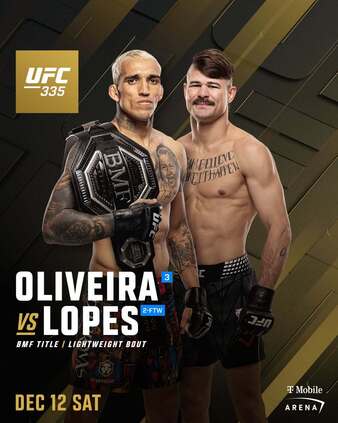
CO-MAIN EVENT · HEAVYWEIGHT · 5 ROUNDSUFC 335: Oliveira vs. Lopes
Sergei Pavlovich — Heavyweight fighter

Sergei Pavlovich

21W3L
MMA
…
VS
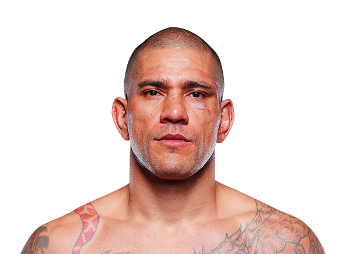
Alex Pereira — Heavyweight fighter

Alex Pereira

13W4L
Kickboxer
…

Pavlovich's long punching reach meets Pereira's timing over five rounds

HeavyweightT-Mobile Arena2026-12-12

The fight in 30 seconds

Sergei Pavlovich 55% / Alex Pereira 45%. Sergei Pavlovich is the editorial selection. Pavlovich is a narrow 55/45 heavyweight favourite based on established heavyweight work and reach, with Pereira's timing keeping the margin small. Eighty percentage points are allocated to KO/TKO across both fighters over five rounds. That is a matchup judgment about two dangerous strikers, not a literal application of career knockout percentages or a simulated finish frequency.

Subjective editorial probabilities, not calibrated model outputs.

Sergei Pavlovich

Insufficient price data
Editorial win estimate
55%
Fair odds
-122
Reference quote
—
Fair decimal odds
1.82

Alex Pereira

Insufficient price data
Editorial win estimate
45%
Fair odds
+122
Reference quote
—
Fair decimal odds
2.22
Price freshness & calculation notes

Quotes older than 48 hours are marked outdated. EV at an old or undated price is a historical calculation, not a current opportunity. Date-only snapshots have no verified capture time.

Read the handicapping and counterarguments
01

The Frame

What this fight is really about — and the measurements that shape it

The Analyst's Take

Sergei Pavlovich (21-3) vs. Alex Pereira (13-4): Heavyweight, 5 five-minute rounds at T-Mobile Arena. Pavlovich can reach Pereira before Pereira reaches him, but must avoid turning a long attack into a square recovery. Pereira needs to make the larger punching frame reset through timing and lower-body attacks rather than accepting repeated straight exchanges.

Sergei Pavlovich
Attribute
Alex Pereira
21-3
Pro record
13-4
Heavyweight
Booked division
Heavyweight
265 lb
Booked limit
265 lb
75.00
Height
76.00
84.00
Reach
79.00
34
Age in reviewed profile
38
—
Trains at
Teixeira MMA & Fitness-Bethel, CT

Measurements come from the reviewed athlete profiles (height and reach in inches). Age is the source snapshot, not a projected fight-night age. The listed fight limit follows the supplied card; past profile weigh-ins do not change the booking.

Venue Factor
Scheduled for 5 five-minute rounds. The round scenarios below are tactical questions, not invented statistical forecasts.
02

The Fighters

Careers, chins, schedules — and the form they bring into the cage

Sergei Pavlovich portrait

Sergei Pavlovich

Sergei Pavlovich

Pro record
21-3
UFC bouts
—
Career KO/TKO wins
16
Career submission wins
—

Pavlovich enters at 21-3, with a recent first-round stoppage of Tallison Teixeira following decision wins over Rozenstruik and Cortes Acosta. Those decisions are useful evidence that his recent game is not limited to an immediate finish. Losses to Volkov and Aspinall show two different ways that his offence can be interrupted: a sustained range contest and a fast damaging exchange. Neither result should be treated as a direct prediction against Pereira.

Recent results

  • W

    Tallison Teixeira

    KO/TKO · 5/30/26 · UFC Fight Night

  • W

    Waldo Cortes Acosta

    Decision · 8/23/25 · UFC Fight Night

  • W

    Jairzinho Rozenstruik

    Decision · 2/1/25 · UFC Fight Night

  • L

    Alexander Volkov

    Decision · 6/22/24 · UFC on ABC

  • L

    Tom Aspinall

    KO/TKO · 11/11/23 · UFC 295

Alex Pereira portrait

Alex Pereira

Alex Pereira

Pro record
13-4
UFC bouts
—
Career KO/TKO wins
11
Career submission wins
—

Pereira enters at 13-4 after a heavyweight stoppage loss to Ciryl Gane. His earlier UFC work includes a fast title-winning finish of Ankalaev, a five-round loss to the same opponent and a fourth-round finish of Rountree. That history demonstrates elite timing and experience in long fights, but much of it came below heavyweight. The current booking is 265 pounds over five rounds, so his past efficiency is not assumed to transfer unchanged against Pavlovich's size and reach.

Recent results

  • L

    Ciryl Gane

    KO/TKO · 6/14/26 · UFC Freedom 250

  • W

    Magomed Ankalaev

    KO/TKO · 10/4/25 · UFC 320

  • L

    Magomed Ankalaev, losing his UFC light heavyweight title

    Decision · 3/8/25 · UFC 313

  • W

    Khalil Rountree Jr.

    KO/TKO · 10/5/24 · UFC 307

  • W

    Jiří Procházka

    KO/TKO · 6/29/24 · UFC 303

03

The Numbers

Career statistics and what they say about this matchup

Published career statistics

Published profile averages describe past opposition, not a prediction of this fight. The source sample may include Contender Series appearances.

Sergei Pavlovich: Published UFC athlete-profile averages reviewed October 11, 2026. 12 UFC results appear in the reviewed log; the rate denominator may also include Contender Series appearances. These are not opponent- or division-adjusted.

Alex Pereira: Published UFC athlete-profile averages reviewed October 11, 2026. 13 UFC results appear in the reviewed log; the rate denominator may also include Contender Series appearances. These are not opponent- or division-adjusted.

Career statistical comparison for Sergei Pavlovich and Alex Pereira
MetricSergei PavlovichAlex Pereira
Significant strikes landed / min4.495.01
Significant strikes absorbed / min3.583.72
Striking accuracy45%61%
Striking defence56%53%
Takedowns / 15 min0.470.11
Takedown defence75%80%
Submission attempts / 15 min00.22
Knockdowns / 15 min1.890.75

Submission attempts are not submission wins. Defence percentages depend on attempts faced. No matched division cohort is supplied for these profile averages, so division ranks are unavailable. A dash means unavailable data, not zero.

04

The Story of the Fight

Advantages, worst cases, gameplans — and the patterns underneath

Pavlovich's long punching reach meets Pereira's timing over five rounds

Pavlovich can reach Pereira before Pereira reaches him, but must avoid turning a long attack into a square recovery. Pereira needs to make the larger punching frame reset through timing and lower-body attacks rather than accepting repeated straight exchanges.

The Deep Read

The reach comparison is more complicated than simply calling Pereira the technical striker. Pavlovich's listed 84 inches exceed Pereira's 79, giving Pavlovich a route to score before the familiar counter distance. Pereira has to influence the feet and the start of the combination, not merely wait at the end of it. A kick or feint that delays Pavlovich's next step may create more useful space than retreating straight from another long punch.

Pavlovich should make the first attack long and the recovery compact. If he finishes square after extending several punches, Pereira can attack the returning stance or the next step. The safer pressure is built around a jab, a measured follow-up and a defensible exit or reset. The temptation to overwhelm a recent knockout loser must not replace the positional discipline shown in his decision wins.

Pereira's best counter is not necessarily the hardest one available. A smaller interruption to the body or leg can change Pavlovich's willingness to step into range, creating a later opening for the hook or straight attack. The analysis treats those as tactical options consistent with Pereira's striking background, not as a claim that a specific kick sequence has already been observed against Pavlovich. The opponent's response decides which option remains usable.

The Gane loss is relevant as evidence that heavyweight defence and recovery cannot be assumed from Pereira's lower-weight title record. It does not prove that Pavlovich will reproduce Gane's movement or finishing sequence. Likewise, Aspinall's fast finish of Pavlovich does not establish that Pereira has the same speed or entry. The matchup must be analysed through the tools these two fighters actually bring, without transferring another opponent's complete skill set.

The five-round format changes the management of risk. Both have reasons to avoid treating the opening minutes as the only chance to win. Pavlovich's recent decisions show an ability to work beyond an early burst, while Pereira has completed championship-distance fights at other weights. Neither sample provides a reliable twenty-five-minute heavyweight pace forecast for this pairing. The fourth and fifth rounds remain a meaningful extension of the uncertainty.

Path to Victory

Sergei Pavlovich

Use the longer reach to establish the first clean exchange, keep the recovery stance compact and make Pereira work to interrupt the entry. Build pressure without offering a stationary square target after the combination.

Why they win
01
Primary route

Use the longer reach to establish the first clean exchange, keep the recovery stance compact and make Pereira work to interrupt the entry. Build pressure without offering a stationary square target after the combination.

02
Supporting evidence

Pavlovich enters at 21-3, with a recent first-round stoppage of Tallison Teixeira following decision wins over Rozenstruik and Cortes Acosta. Those decisions are useful evidence that his recent game is not limited to an immediate finish. Losses to Volkov and Aspinall show two different ways that his offence can be interrupted: a sustained range contest and a fast damaging exchange. Neither result should be treated as a direct prediction against Pereira.

The gameplan
  1. 1
    Entry

    Start with the jab or a measured straight attack before expanding the combination.

  2. 2
    Position

    Recover the feet after punching and be ready for a counter to the body or lead side.

  3. 3
    Adjustment

    If the immediate finish is unavailable, bank clear rounds instead of increasing the size of every swing.

Path to Victory

Alex Pereira

Disrupt Pavlovich's feet and timing, vary the first threat and counter the recovery rather than repeatedly trading at the end of the longer reach. Preserve space before the opponent can connect the next long attack.

Why they win
01
Primary route

Disrupt Pavlovich's feet and timing, vary the first threat and counter the recovery rather than repeatedly trading at the end of the longer reach. Preserve space before the opponent can connect the next long attack.

02
Supporting evidence

Pereira enters at 13-4 after a heavyweight stoppage loss to Ciryl Gane. His earlier UFC work includes a fast title-winning finish of Ankalaev, a five-round loss to the same opponent and a fourth-round finish of Rountree. That history demonstrates elite timing and experience in long fights, but much of it came below heavyweight. The current booking is 265 pounds over five rounds, so his past efficiency is not assumed to transfer unchanged against Pavlovich's size and reach.

The gameplan
  1. 1
    Entry

    Use feints and lower-body attacks to affect when Pavlovich can step forward.

  2. 2
    Position

    Avoid a straight retreat that keeps the head on the line of the next long punch.

  3. 3
    Adjustment

    Choose counters from a stable stance; do not let the desire to answer damage produce a reckless heavyweight exchange.

Danger Zone

How Sergei Pavlovich loses

  • Pavlovich's long combinations end square and Pereira repeatedly punishes the recovery.

  • He becomes impatient when the early finish does not appear and abandons the measured work needed over five rounds.

Danger Zone

How Alex Pereira loses

  • Pereira waits at a distance where Pavlovich can land first and continue the combination.

  • An attempt to answer a hard shot immediately turns the fight into an unfavourable exchange of heavyweight power.

Conditional tactical scenario, not a statistical projection

Round 1: what to watch

Round 1: assess whether Pereira can disrupt the entry before Pavlovich's reach becomes continuous offence. A single hard connection does not establish control of the distance.

Conditional tactical scenario, not a statistical projection

Round 2: what to watch

Round 2: watch the recovery after combinations. The fighter who can attack and rebuild the stance safely has the more repeatable route.

Conditional tactical scenario, not a statistical projection

Round 3: what to watch

Round 3: measured scoring becomes important if neither early finishing route has worked. Both have decision experience, but neither should assume that the opponent's pace will collapse.

Conditional tactical scenario, not a statistical projection

Round 4: what to watch

Round 4: the heavyweight sample becomes thin, especially for Pereira. Judge current balance, defensive reactions and shot selection rather than importing lower-weight averages.

Conditional tactical scenario, not a statistical projection

Round 5: what to watch

Round 5: the score dictates urgency. A fighter ahead should resist converting a positional advantage into a final uncontrolled exchange.

05

The Verdict

The matchup read, the betting market, and the swing factors

Editorial handicapping

Sergei Pavlovich 55% · Alex Pereira 45%

Subjective analyst estimates for the announced opponent and distance. These are not calibrated outputs from the prediction model. Method probabilities are portions of the overall outcome distribution, not percentages conditional on winning.

Pavlovich is a narrow 55/45 heavyweight favourite based on established heavyweight work and reach, with Pereira's timing keeping the margin small. Eighty percentage points are allocated to KO/TKO across both fighters over five rounds. That is a matchup judgment about two dangerous strikers, not a literal application of career knockout percentages or a simulated finish frequency.

Pavlovich can reach Pereira before Pereira reaches him, but must avoid turning a long attack into a square recovery. Pereira needs to make the larger punching frame reset through timing and lower-body attacks rather than accepting repeated straight exchanges.

The assessment is for 5 five-minute rounds at 265 lb. The six outcomes are mutually exclusive allocations conditional on a decisive result; draws and no-contests are not separately priced. Method shares are not conditional on the fighter winning, and the 100-cell display visualises these allocations rather than reporting simulated fights.

Pavlovich falls toward 45% if Pereira regularly disrupts and punishes the entry; he rises toward 63% if reach controls the exchanges without square recoveries. Five-round heavyweight endurance remains a major uncertainty. Scenario range for Sergei Pavlovich: 45–63%; the complementary range for Alex Pereira is 37–55%. These are judgment-based scenarios, not statistical confidence intervals.

If you only read 2 things
1

Sergei Pavlovich 55% / Alex Pereira 45%. Sergei Pavlovich is the editorial selection. Pavlovich is a narrow 55/45 heavyweight favourite based on established heavyweight work and reach, with Pereira's timing keeping the margin small. Eighty percentage points are allocated to KO/TKO across both fighters over five rounds. That is a matchup judgment about two dangerous strikers, not a literal application of career knockout percentages or a simulated finish frequency.

2

Pavlovich falls toward 45% if Pereira regularly disrupts and punishes the entry; he rises toward 63% if reach controls the exchanges without square recoveries. Five-round heavyweight endurance remains a major uncertainty.

Editorial outcome distribution · 100 percentage points

Each square represents one percentage point of the subjective editorial distribution. This is an illustration of the assigned probabilities, not a simulation or an observed result.

Sergei Pavlovich · KO/TKO — 43%Sergei Pavlovich · Decision — 11%Sergei Pavlovich · Submission — 1%Alex Pereira · KO/TKO — 37%Alex Pereira · Decision — 7%Alex Pereira · Submission — 1%

Each square = 1 editorial percentage point. Sergei Pavlovich gold · Alex Pereira orange · color opacity: 100% = decision, 70% = submission, 45% = KO/TKO.

Sergei Pavlovich win probability
0%
43%
11%
KO/TKODECSUB
  • Long straight attacks and follow-up damage form the main winning route.

  • Recent distance work supports a decision route if he remains organised after early attacks.

  • A submission is a small residual outcome, not an established primary weapon.

Alex Pereira win probability
0%
37%
7%
KO/TKODECSUB
  • Timing the entry and punishing the recovery is his principal counterroute.

  • Repeated disruption and safe resets can win rounds if the knockout never arrives.

  • A rare submission outcome is retained without asserting specialist superiority.

Editorial estimate vs market

Sergei Pavlovich

Insufficient price data
Editorial win estimate
55%
Fair odds
-122
Reference quote
—
Fair decimal odds
1.82
Estimated EV
—
Edge vs no-vig market
—

Alex Pereira

Insufficient price data
Editorial win estimate
45%
Fair odds
+122
Reference quote
—
Fair decimal odds
2.22
Estimated EV
—
Edge vs no-vig market
—

EV uses the displayed price: probability × decimal odds − 1. Edge is a percentage-point difference from a proportionally de-vigged, same-book pair. A dash means that comparison is unavailable.

Price freshness & calculation notes

Quotes older than 48 hours are marked outdated. EV at an old or undated price is a historical calculation, not a current opportunity. Date-only snapshots have no verified capture time.

Fair odds are the break-even price under this estimate, not a recommended entry price. Model uncertainty can erase a small edge.

What price would change the calculation? · Sergei Pavlovich

Change the assumptions to see how the required price moves. This does not update the published model or recommend an entry price.

Required decimal price: 1.82 or higher. At the exact unrounded break-even price, estimated EV is zero.

What price would change the calculation? · Alex Pereira

Change the assumptions to see how the required price moves. This does not update the published model or recommend an entry price.

Required decimal price: 2.23 or higher. At the exact unrounded break-even price, estimated EV is zero.

Fair prices and expected value are arithmetic consequences of these subjective estimates. A positive calculation at an old quote is not a verified current opportunity.

Conviction
0
3/10

Editorial confidence in the evidence, not a win probability or a calibrated confidence interval.

Confidence reflects the quality and comparability of the evidence, not the size of the win probability. Lean: Sergei Pavlovich.

What backs the lean
  • Pavlovich can reach Pereira before Pereira reaches him, but must avoid turning a long attack into a square recovery. Pereira needs to make the larger punching frame reset through timing and lower-body attacks rather than accepting repeated straight exchanges.

  • Pavlovich is a narrow 55/45 heavyweight favourite based on established heavyweight work and reach, with Pereira's timing keeping the margin small. Eighty percentage points are allocated to KO/TKO across both fighters over five rounds. That is a matchup judgment about two dangerous strikers, not a literal application of career knockout percentages or a simulated finish frequency.

What limits it
  • Pereira's mixed middleweight, light-heavyweight and heavyweight sample is not a heavyweight-only rate comparison.

  • The co-main is five rounds as supplied, without adding an unannounced championship claim.

  • These are subjective editorial estimates without out-of-sample calibration; numerical precision does not imply measurement precision.

Final Assessment

Sergei Pavlovich 55% / Alex Pereira 45%. Sergei Pavlovich is the editorial selection. Pavlovich is a narrow 55/45 heavyweight favourite based on established heavyweight work and reach, with Pereira's timing keeping the margin small. Eighty percentage points are allocated to KO/TKO across both fighters over five rounds. That is a matchup judgment about two dangerous strikers, not a literal application of career knockout percentages or a simulated finish frequency.

Pavlovich falls toward 45% if Pereira regularly disrupts and punishes the entry; he rises toward 63% if reach controls the exchanges without square recoveries. Five-round heavyweight endurance remains a major uncertainty.

Skip to main content
Use Tab to navigate through elements, Enter to activate buttons and links.