Grant Dawson vs Nurullo Aliev: analysis & prediction

PRELIM · LIGHTWEIGHT · 3 ROUNDSUFC 333: Volkanovski vs. Evloev
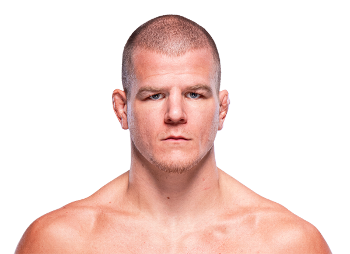
Grant Dawson — Lightweight fighter

Grant Dawson

“KGD”
24W3L1D
Wrestle-to-Submit
VS
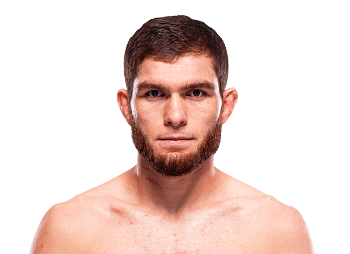
Nurullo Aliev — Lightweight fighter

Nurullo Aliev

“Tajik Eagle”
12W0L
Control Wrestler

Fourteen career submissions against zero

LightweightEtihad Arena, Abu Dhabi, United Arab EmiratesOctober 24, 2026Standard 30ft Octagon

Fight overview

The fight in 30 seconds

Both men wrestle, but only Dawson turns top position into real danger: three of his finishes came in a fight's final minute. Aliev has won every UFC fight on the cards, mostly through takedowns and control, and if he stuffs Dawson's body locks he can grind out another. If the fight is level entering the third, Dawson's back-take becomes the deciding threat.

Paths that change the fight

  • Grant DawsonHe finds the mat and makes it cost something. Fourteen career submissions, control that holds through the third round, and three finishes inside the last 49 seconds of Round 3 — get past minute five and the shape of the fight turns over.
  • Nurullo AlievFifteen minutes of arithmetic. The wall holds at 80%, he banks the fence rounds the way he did against Alves and Davis, and a man who has never needed a finish never needs one here either.
What limits this estimate · Analyst conviction: 5/10
  • 80% takedown defence against 39% takedown accuracy — if the wall holds, Dawson has no second plan.
  • Better takedown efficiency (58% against 39%) into a Dawson takedown defence that opponents have tested only ten times.

Editorial assessment of the evidence, not a win probability or a calibrated confidence interval.

Grant Dawson

Insufficient price data
Model win probability
56%
Fair odds
-127
Reference quote
—
Fair decimal odds
1.79

Nurullo Aliev

Insufficient price data
Model win probability
44%
Fair odds
+127
Reference quote
—
Fair decimal odds
2.27
Price freshness & calculation notes

Quotes older than 48 hours are marked outdated. EV at an old or undated price is a historical calculation, not a current opportunity. Date-only snapshots have no verified capture time.

Sources and data limitations

Career statistics and fight results through September 2026. Composite scores, probabilities and fair prices are MMA Analytics model outputs.

Model methodology
01

The Frame

What this fight is really about — and the measurements that shape it

The Analyst's Take

Grant Dawson arrives off the grittiest win of his career, dropped by Mateusz Rębecki before taking his back for a choke in the closing seconds. Nurullo Aliev is 12-0 and has never been finished, though none of his UFC opponents was ranked. Between two wrestlers with identical frames, the question is whose grappling breaks first, and Dawson's only losses have come to fast, early strikes, a weapon Aliev has not shown. The swing factor is Aliev's plan B: the one time an opponent stopped his takedowns, his output faded round by round with no finishing threat behind it.

Grant Dawson
Attribute
Nurullo Aliev
32
Age
25
5'10"
Height
5'10"
72"
Reach
72"
40"
Leg Reach
38"
Switch
Stance
Orthodox
American Top Team, Coconut Creek
Team
Kaizen MMA
Mar 9, 2019 (at featherweight)
Octagon Debut
Feb 25, 2023
Wrestle-to-submit; back-take and rear-naked-choke specialist
Fighting Style
Control wrestling; fence pins, positional grinding

These two are dimensional twins: identical 5'10" height, identical 72" reach, separated only by Dawson's two extra inches of leg reach and a seven-year age gap. There is no length story here, no southpaw-versus-orthodox puzzle beyond Dawson's switching, and no free edge handed to either man by the tale of the tape — every advantage in this fight has to be earned in a grappling exchange. What actually separates them is chronology and mileage. Dawson has fifteen UFC fights and roughly 170 Octagon minutes behind him; Aliev has four fights and exactly sixty minutes, every one of which went to the scorecards. Aliev's eight-month gap between Shaqueme Rock in November 2025 and Mike Davis in July 2026 is followed by a brisk three-month turnaround into this booking; Dawson returns five and a half months after UFC 328.

Venue Factor
Aliev fought at Etihad Arena on July 25, 2026 and returns to the same building three months later — the same canvas, the same sea-level Gulf air, the same walkout. Dawson has never fought at Etihad Arena; his only Abu Dhabi appearance was a 2020 decision over Nad Narimani during the Fight Island era. That is a marginal but real familiarity edge, and it lands on the man whose entire game is comfort and repetition rather than adrenaline. It matters more here than it usually would, because neither fighter's style depends on crowd energy: this is a fight that will be decided by who is more comfortable in minute eleven, not minute one.
02

The Fighters

Careers, chins, schedules — and the form they bring into the cage

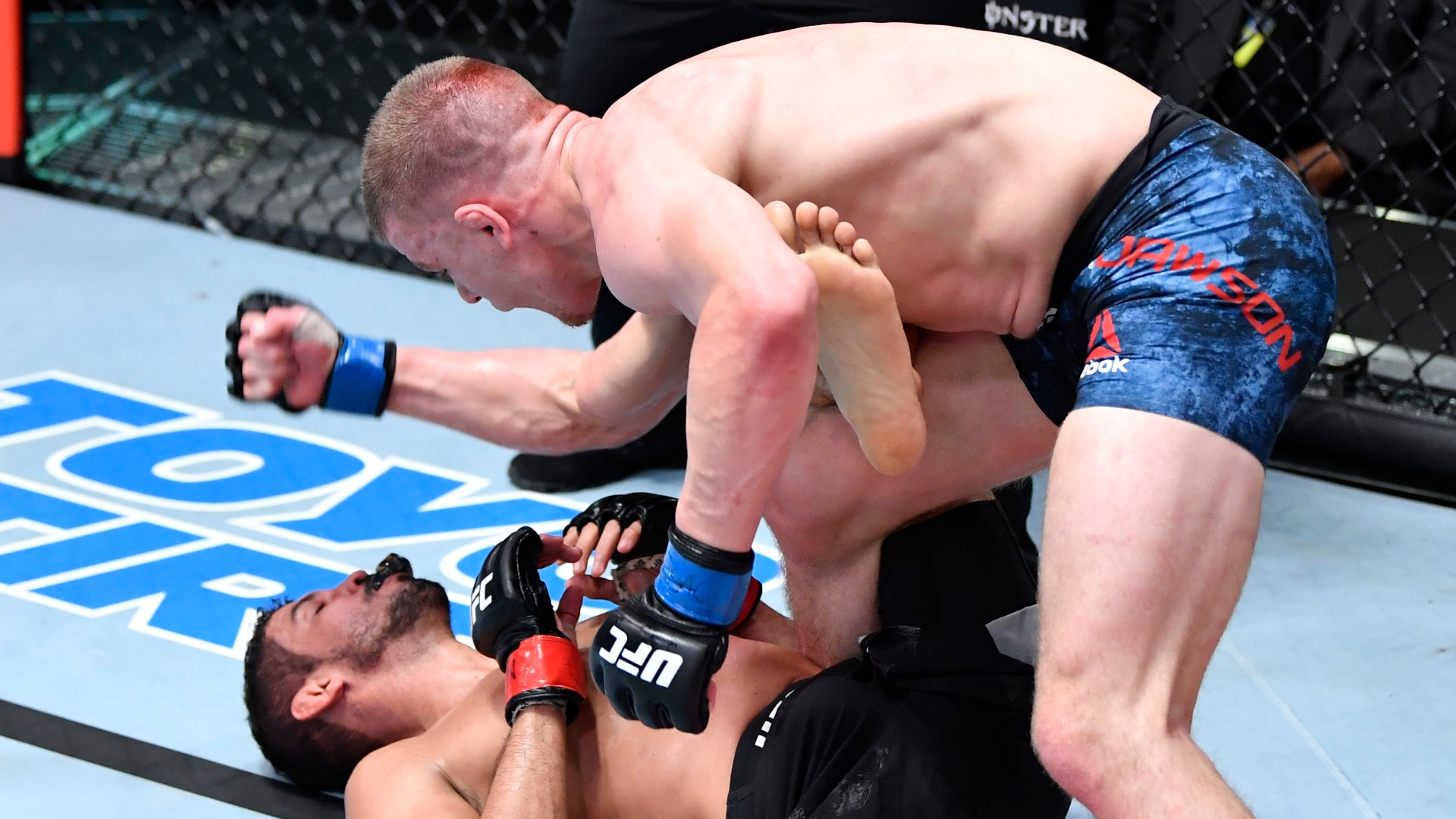
Grant Dawson punching down from top position on Leonardo Santos in March 2021

Grant Dawson

Pro Record
24-3-1
UFC Record
12-2-1 across fifteen bouts since March 2019
Streak
Won his last — rear-naked choke of Mateusz Rębecki at 4:42 of Round 3 (UFC 328)
Finish Rate
79% (19 of 24 wins) — seven UFC finishes, none in Round 1
Avg Fight Time
11:19 (15 UFC bouts)
Chin · Vulnerable early — all three career defeats are first-round stoppages by strikes, he has been knocked down three times in the UFC, and his 45% striking defence ranks 73rd of 84SOS · Proven UFCWrestle-to-submit grappler

The finisher who stopped finishing early. Dawson entered the UFC with a 100% finish rate — 12-1 on the regional circuit and the Contender Series with three knockouts and nine submissions, seven of them inside the first round — and has since built a very different career: seven UFC finishes, every one of them in Round 2 or Round 3, and not a single Round-1 stoppage in fifteen Octagon appearances. He has simultaneously become one of the harder men in the division to out-grapple and one of the easier ones to catch cold. His three defeats span a decade and share a single fingerprint — Hugh Pulley in 0:35 in 2016, Bobby Green in 0:33 in 2023, Manuel Torres in 2:25 in 2025, all first-round strikes — and in the two UFC ones he registered zero takedowns and zero seconds of control before the finish. Then came UFC 328: dropped hard in Round 2 by Mateusz Rębecki, he recovered and took the back for the choke with eighteen seconds left — the first time he has been knocked down in the Octagon and still won.

Nurullo Aliev driving down on Joe Solecki from a front headlock

Nurullo Aliev

Pro Record
12-0-0
UFC Record
4-0 — all four by decision, all four to the final horn
Streak
Undefeated — twelve straight, most recently a 30-27 sweep of Mike Davis
Finish Rate
17% (2 of 12 wins) — both pre-UFC; zero UFC finishes in sixty minutes
Avg Fight Time
15:00 — all four UFC fights went the distance
Chin · Never finished or submitted in twelve professional fights, and never knocked down in the OctagonSOS · UFC mid-tierPositional control wrestler

The grinder who never started finishing. Aliev arrived on the back of a Round-1 Contender Series knockout of Josh Wick in September 2022 — the first Tajik fighter in UFC history — then produced four consecutive Octagon decisions, the last of them his most dominant: eight takedowns from thirteen attempts and 12:25 of control against Mike Davis in July 2026, a performance in which he landed 81 total strikes but only 13 significant ones across the full fifteen minutes. The Alves debut was pure smother: 10:51 of control across fifteen minutes for nineteen significant strikes, and it came within one scorecard of a draw because he was deducted a point in Round 1 for biting. Against Shaqueme Rock the wrestling largely failed him — one of five on takedowns, 3:44 of control — and his output decayed 28 to 14 to 9 across the rounds while Rock out-landed him in both the second and the third. He has never needed a finish, and has never shown one at UFC level. He is a wrestler first and last, with zero career submission wins.

Grant Dawson
0 dealt · 0 absorbed
Knockdown Exchange
Knockdowns dealt vs absorbed.
Nurullo Aliev
0 dealt · 0 absorbed

Grant Dawsonsignature weapons

Rear-Naked Choketwelve of his fourteen career submissions (the others a triangle and an armbar); latest Mateusz Rębecki, R3 4:42 at UFC 328, May 2026
×12
Ground-and-Pound from TopRafa García by elbows and punches at 1:42 of R2, 21 of his 24 second-round strikes landing on the ground; Leonardo Santos by punches at 4:59 of R3 after 4:10 of control in the round
×2
The Closing Gearthree UFC finishes inside the final 49 seconds of Round 3 — Santos 4:59, Rębecki 4:42, Gordon 4:11
×3

Nurullo Alievsignature weapons

Fence Pin / Body-Lock Takedown14 of 24 UFC takedown attempts landed (58%), eight of thirteen against Mike Davis; 54.5% of his clinch takedown attempts succeed
×14
Fifteen-Minute Positional Controlall four UFC wins by decision — 35:13 of control across sixty UFC minutes (59%), 2:56 per round
×4
Early Stoppage (pre-UFC only)corner-stoppage TKO in R2 on the Russian regional circuit in 2018, and the Contender Series knockout of Josh Wick at 4:36 of R1 in 2022 — zero UFC finishes since
×2

Grant Dawson

W
Mateusz Rębecki
Submission — Rear-naked choke

Opponent context: veteran

R3 (4:42)
UFC 328: Chimaev vs. Strickland — May 9, 2026
L
Manuel Torres
KO/TKO — punches

Opponent context: ranked

R1 (2:25)
UFC 323: Dvalishvili vs. Yan 2 — Dec 6, 2025
W
Diego Ferreira
Decision — Unanimous

Opponent context: veteran

R3
UFC 311: Makhachev vs. Moicano — Jan 18, 2025
W
Rafa García
KO/TKO — elbows and punches on the ground

Opponent context: prospect

R2 (1:42)
UFC Fight Night: Royval vs. Taira — Oct 12, 2024
W
Joe Solecki
Decision — Unanimous (29-28, 30-27, 30-27)

Opponent context: prospect

R3
UFC 302: Makhachev vs. Poirier — Jun 1, 2024
Pattern

Four wins in five, and the one loss is the recurring nightmare — Round 1, punches, done inside 150 seconds, with zero takedowns landed and zero control time banked. The Rębecki win is the most important fight on this list. Dawson was dropped hard in Round 2 by a fellow wrestler, recovered, and took his back for the choke with eighteen seconds left in the fight. He did it during a week in which he and his wife had lost their first pregnancy, disclosed post-fight. His own framing afterwards: a lot of people think of him as skilled, not many think of him as tough, and he hoped the night had answered the question. It also proved he can be dropped and still win.

Nurullo Aliev

W
Mike Davis
Decision — Unanimous (30-27 x3)

Opponent context: veteran

R3
UFC FN: Ankalaev vs. Guskov, Etihad Arena — Jul 25, 2026
W
Shaqueme Rock
Decision — Unanimous (30-27 x3)

Opponent context: prospect

R3
UFC FN: Tsarukyan vs. Hooker, Qatar — Nov 22, 2025
W
Joe Solecki
Decision — Unanimous (29-28, 29-28, 30-27)

Opponent context: prospect

R3
UFC FN: Dern vs. Ribas 2, UFC Apex — Jan 11, 2025
W
Rafael Alves
Decision — Majority (29-27, 29-27, 28-28)

Opponent context: prospect

R3
UFC FN: Muniz vs. Allen, UFC Apex — Feb 25, 2023
W
Josh Wick
KO/TKO

Opponent context: prospect

R1 (4:36)
Dana White's Contender Series S6W9 — Sep 20, 2022 (not a UFC bout)
Pattern

Five wins, four of them UFC decisions, zero UFC finishes, and a visible evolution in method. The Alves debut was a smother that came within one scorecard of a draw. Against Solecki he controlled 8:13 of fifteen minutes but conceded a takedown and 21 significant strikes in a third round he spent almost entirely on his feet, and two of the three judges gave that round to Solecki. Against Shaqueme Rock the wrestling largely failed — one of five on takedowns, only 3:44 of control — and he was forced into a striking match in which his output fell every round, 28 to 14 to 9, with Rock out-landing him 20-14 in the second and 12-9 in the third. Then against Davis the wrestling returned at full volume: eight takedowns from thirteen attempts and near-total control for fifteen minutes. That Rock fight is the single warning on his ledger — the only time an opponent denied his takedowns, and he had no finishing gear to fall back on.

Grant Dawson

Win Methods
Wins by Round

Nurullo Aliev

Win Methods
Wins by Round
Critical Insight
Both charts cover every professional win — Dawson's 24 (14 submissions, 5 knockouts, 5 decisions) and Aliev's 12 (10 decisions, 2 knockouts, zero submissions). Read together they show the structural fork of this fight: fourteen career submissions against zero. Both men will spend the night trying to put the other on the floor, and their takedown rates are functionally identical at 3.62 and 3.50 per fifteen minutes. But the mat means two entirely different things to them. For Aliev it is a scoring surface, a place to accumulate control seconds and win rounds. For Dawson it is a finishing surface. The round bars also show how Dawson's career has changed shape: all seven of his first-round finishes came on the regional circuit between 2014 and 2016, while his seven UFC finishes split three in Round 2 and four in Round 3, with none at all in Round 1 across fifteen Octagon appearances. Aliev's only two stoppages are a regional corner stoppage after the second round in 2018 and his first-round Contender Series knockout of Josh Wick in 2022.

Common Opponents

OpponentGrantNurullo
Joe SoleckiW· UD3 (Jun 2024, 29-28, 30-27, 30-27) — 13:46 of 15:00 control (91.8%), 46 of 70 significant strikes (65.7%), 12 absorbed, Solecki 0 of 2 on takedowns and 0:14 of control concededW· UD3 (Jan 2025, 29-28, 29-28, 30-27) — 8:13 of 15:00 control (54.8%), 35 of 88 (39.8%), 28 absorbed, one takedown and 0:36 of control conceded in Round 3
The single most useful comparison in the matchup: the same grappler, seven months apart, both by unanimous decision, both nights recorded round by round. Dawson took eight of the nine judges' rounds; Aliev took seven, with two judges handing Solecki the third. Underneath the cards the gap is wider still.
03

The Numbers

Composites, division ranks and round-by-round evidence

Composite scores summarize selected statistics on a 0–100 scale. They are not win probabilities. Compare the underlying metrics, opponent quality and UFC experience before interpreting a score difference as a matchup advantage.

Striking

SLpM 25% · StrAcc 30% · StrDef 30% · SApM 15%

0
Grant
0
Nurullofew UFC fights

A genuine wash between two low-volume strikers who are both hard to hurt. Dawson: 3.11 landed per minute, 51% accuracy lifted by 69.2% on the ground against 40.0% at distance, 45% defence (73rd of 84), 2.20 absorbed. Aliev: 1.97 landed per minute, 42% accuracy (37.6% at distance, 50.0% on the ground), 56% defence, 1.67 absorbed. Both absorb barely half the lightweight average of 4.15.

Grappling

TD/15 25% · TDAcc 25% · TDDef 30% · Sub/15 20%

0
Grant
0
Nurullofew UFC fights

Aliev is the more efficient wrestler on the ratios — 58% takedown accuracy against 39%, 80% takedown defence against 70% — and matches Dawson's control almost to the second (2:56 per round against 2:54). Dawson is the more dangerous one: 1.24 submission attempts per fifteen minutes against 0.50, fourteen career finishes on the mat to Aliev's none, and control that holds into the third round (2:46 against 2:12). Aliev wins the exchanges; Dawson owns the consequences.

Technical

(Striking + Grappling) / 2

0
Grant
0.0
Nurullofew UFC fights

The entire technical gap — all 3.5 points of it — comes from the grappling column, and specifically from submission threat rather than from raw wrestling skill. On striking these two are separated by a single point. Taken alone, a gap this size argues for something close to a coin flip; the 56-44 lean comes from three things the rate columns cannot express.

MetricGrantNurullo
Avg Fight Time11:19 (15 UFC bouts)15:00 (4 UFC bouts)few UFC fights
Total Strikes Landed / Min7.15.3
R3/R1 Output128% (12.6 → 16.1 sig)147% (8.0 → 11.8 sig)few UFC fights
Round-1 Start12.6 sig · 1.20 TD · 3:07 control8.0 sig · 1.50 TD · 3:09 controlfew UFC fights
Round-3 Control2:46 per round (10 third rounds)2:12 per round (4 third rounds)few UFC fights

Archetype Base Rate

Wrestler 50%50% Wrestler

28-bout archetype sample (14-14) · A dead heat, and deliberately so. Aliev is a wrestler — zero career submission wins and 0.50 submission attempts per fifteen minutes in the UFC — so this is a Wrestler-vs-Wrestler matchup, not the Wrestler-vs-Submission-Artist pairing that would read 67.6% for Dawson. Our 56-44 lean therefore sits above the base rate, and every point of that gap has to be argued rather than looked up.

Grant DawsonNurullo Aliev

Lightweight

· 84 fighters
StatGrantGrant rankDiv avgNurullo rankNurullo
SLpM3.11—4.51—1.97
Str Acc51%
26/84
47.8%—42%
Distance Acc40.0%———37.6%
Str Def45%
73/84
52.4%—56%
SApM2.20—4.15—1.67
Sig. Str. Differential / Min+0.91———+0.30
KD Avg0.09—0.51—0.00
TD/153.62—1.67—3.50
TD Acc39% (41 of 105)———58% (14 of 24)
TD Def70% (3 of 10 landed)——
21/84few UFC fights
80% (2 of 10 landed)
Sub/151.24—0.48—0.50
Control / Round2:54———2:56
Avg Fight Time11:19———15:00
Statistical Verdict
Every efficiency and durability marker belongs to Aliev — better takedown accuracy, better takedown defence, better striking defence, lower absorption, seven fewer years, and a record with no losses and no finishes against it — and on control per round he is Dawson's equal. Every threat and pedigree marker belongs to Dawson — two and a half times the submission rate, fourteen career finishes on the mat, a wider striking differential, nearly three times the Octagon minutes, and a genuinely superior list of men beaten. The fight reduces to a single question: is Aliev's 80% takedown defence a real wall, or a number built from ten attempts, nine of them by Shem Rock, none of them by anyone like Grant Dawson?

Significant Strikes Landed per Round

Control Time per Round (sec)

Grant Dawson

  • His output rises through a fight — 12.6 significant strikes in Round 1 to 16.1 in Round 3 — and his accuracy is highest in the first and the third, at 54.8% in each.
  • Takedowns come earliest: 1.20 landed per first round, then 1.00 in each of the second and third. He establishes position first and hunts second — nearly half of his first-round strikes land on the ground.
  • Control is relentless and barely tapers — 3:07, 2:47, 2:46, an average of 2:54 per round and more than 110 minutes across fifteen UFC bouts, against a little over twelve minutes conceded in his entire Octagon career.
  • Submission attempts climb the other way — 0.13 in Round 1, 0.38 in Round 2, 0.70 in Round 3. Seven of his fourteen UFC submission attempts have come in the third round, and three of his four third-round finishes were chokes.

Nurullo Aliev

  • His four UFC fights are all here, including the Mike Davis win — eight takedowns from thirteen attempts and 12:25 of control, his most dominant wrestling performance yet.
  • His control peaks in Round 2 at 3:28 — the heaviest single round either man produces — and then drops to 2:12 in the third, his lowest of any round.
  • Takedown output falls round by round: 1.50 in Round 1, 1.25 in Round 2, 0.75 in the third. His third rounds are the rounds he wrestles least.
  • His accuracy dips to 35.8% in Round 2, and his opponents find their best minutes late, landing 5.8, then 8.8, then 10.5 significant strikes per round against him.
Critical Insight
The two profiles rhyme and then diverge exactly where it matters. Both men land the most significant strikes in Round 3 — Dawson 16.1, Aliev 11.8 — but Dawson's third-round control holds at 2:46 and his submission attempts peak at 0.70 per round, while Aliev's third-round control drops to 2:12 and his takedowns fall to 0.75. Aliev's third rounds are the rounds he wrestles least; Dawson's third rounds are the rounds he starts hunting the neck. Aliev's opponents have controlled him for barely three minutes across four fights — but they have found their best striking minutes late.

Strike targeting

Grant

Head
69%
Body
19%
Legs
12%

Nurullo

Head
82%
Body
14%
Legs
4%

Head hunting vs body work vs leg attack — the shape of the damage.

Striking range — distance, clinch and ground

GrantNurullo
50%Distance63%
10%Clinch7%
40%Ground30%

Share of significant strikes landed at distance, in the clinch and on the ground across each fighter's UFC rounds, weighted by strike volume.

04

The Story of the Fight

Advantages, worst cases, gameplans — and the patterns underneath

Where the fight lives

Who owns each phase — and by how much
Open SpaceNurullo owns it

Neither man is sharp at range — Dawson lands 40.0% at distance, Aliev 37.6% — but range is where Dawson has lost three times, and Aliev's 56% striking defence and 1.67 absorbed per minute make it his safest room

Pocket / ExchangesNurullo owns it

Dawson's 45% striking defence is 73rd of 84 and is the mechanism of all three of his defeats; the discount is that Aliev has not scored a knockdown in four UFC fights

ClinchEven

The collision at the heart of the fight: 40.6% of Dawson's clinch takedown attempts land and 54.5% of Aliev's, and Aliev's 80% takedown defence meets Dawson's 70%

GroundGrant owns it

Fourteen career submissions to zero, 69.2% ground-strike accuracy to Aliev's 50.0%, and half of Dawson's UFC submission attempts landing in Round 3 — the one phase with a decisive owner

The Deep Read

The single most useful object in this matchup is the fact that both men beat the same grappler, seven months apart, by unanimous decision, and both nights were recorded round by round. Dawson controlled Joe Solecki for 13:46 of fifteen minutes — 91.8% — landing 46 of 70 significant strikes at 65.7% accuracy, absorbing twelve, stuffing both of Solecki's takedown attempts and conceding just fourteen seconds of control. Aliev controlled the same man for 8:13, or 54.8%, landing 35 of 88 at 39.8%, absorbing 28, and conceding a takedown and 0:36 of control in the third round. Dawson won eight of the nine judges' rounds; Aliev won seven, and two of the three judges gave Solecki the third. Aliev needed only two takedown attempts to Dawson's three, which is genuinely to his credit — but he spent nearly half the fight out of control and lost his own third round.

The counterweight is the round-one trapdoor. Dawson's three professional losses span ten years — Hugh Pulley in 2016 at 0:35, Bobby Green in 2023 at 0:33, Manuel Torres in 2025 at 2:25 — and they are the same loss three times: Round 1, strikes, before the grappling ever begins. The fight records make the mechanism explicit. Against Green he attempted six significant strikes, zero takedowns, and logged no control at all. Against Torres: 8 of 21 striking, 0 of 2 on takedowns, no control. In every one of his thirteen non-losing UFC appearances he banked at least four minutes of control; in both UFC losses he banked none. His 45% striking defence is the mechanism and it is real. The reason it does not sink him here is arithmetic about the other man: Aliev has not scored a knockdown in four UFC fights, lands 1.97 significant strikes per minute, and owns two stoppages in twelve professional fights, the latest in 2022. The trapdoor exists, but Aliev has never shown he possesses the key — which is why the model prices his knockout bucket at five rather than fifteen.

The technical composites land at Dawson 64.0 and Aliev 60.5, and on striking alone they sit a single point apart; the archetype row — Wrestler versus Wrestler, 14-14, exactly 50.0% over 28 bouts — calls it a coin flip. We publish 56-44 anyway, and the extra points come from three places no rate column can reach: the submission asymmetry, where a mat exchange is a scoring opportunity for one man and a fight-ending one for the other; the common-opponent control delta of 91.8% against 54.8%; and a discount on Aliev's best number, since his 80% takedown defence rests on ten attempts, nine of them by a single opponent in Shem Rock. None of those three is a rate. All three are real.
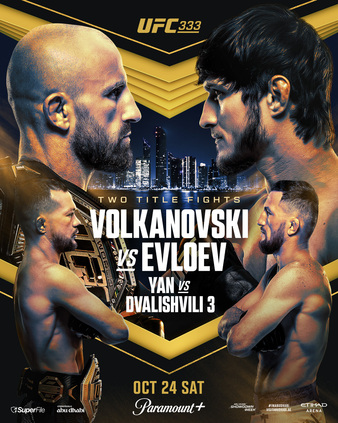
UFC 333: Volkanovski vs. Evloev event poster
UFC 333 lands at Etihad Arena in Abu Dhabi on October 24, 2026 — the building Nurullo Aliev fought in three months earlier, and one Grant Dawson has never fought in.
Path to Victory

Grant Dawson

He finds the mat and makes it cost something. Fourteen career submissions, control that holds through the third round, and three finishes inside the last 49 seconds of Round 3 — get past minute five and the shape of the fight turns over.

Why they win
01
Fourteen career submissions to zero

1.24 submission attempts per fifteen minutes in the UFC against 0.50. Twelve of the fourteen are rear-naked chokes, and he is a jiu-jitsu black belt. Every second either man spends on the mat carries fight-ending risk in one direction only.

02
Control that lasts

More than 110 minutes of UFC control across fifteen fights, and it barely tapers — 3:07, 2:47 and 2:46 by round. Aliev matches him per round overall, but his third-round figure drops to 2:12. Dawson does not merely take opponents down; he keeps them down when it matters most.

03
The Round-3 closing gear

Three finishes inside the last 49 seconds of the final round (Santos 4:59, Rębecki 4:42, Gordon 4:11), half of his UFC submission attempts landing in the third, and output rising to 128% of its Round-1 figure.

04
Strength of schedule

Ferreira, Ismagulov, Gordon, Rębecki, and Mark Madsen — an Olympic silver medallist in Greco-Roman wrestling whom he took down twice and submitted in Round 3. Aliev has not yet faced a ranked opponent.

05
The common-opponent delta

Against Joe Solecki he banked 13:46 of control (91.8%) and 65.7% striking accuracy, conceding twelve significant strikes and zero takedowns. Aliev's version of the same fight: 8:13 (54.8%), 39.8% accuracy, 28 absorbed, one takedown conceded.

06
Octagon mileage

Fifteen UFC fights and roughly 170 minutes against four and sixty. He has been in every kind of trouble this fight can produce and has come out of most of it — including a knockdown in Round 2 at UFC 328, from which he won.

The gameplan
  1. 1
    Survive the first three minutes with discipline

    No wild entries, no standing trades at 40% distance accuracy against a man who is hard to hit and impossible to hurt cheaply. Round 1 is a round to get through, not to win.

  2. 2
    Attack the body lock against the fence

    His best entries come from the clinch, where 40.6% of his takedown attempts land, not from the open-mat doubles that Aliev's 80% defence is built to stuff.

  3. 3
    Take the back, not the guard

    Twelve of his fourteen career submissions are rear-naked chokes — he finishes from dominant positions, not from his back. Against a man who has never been submitted, position must precede submission.

  4. 4
    Bank control seconds relentlessly in Round 2

    Aliev's heaviest control round is his second, at 3:28 on average. Winning that round on the mat forces him into a third he has to chase, and the third is the round his wrestling historically fades.

  5. 5
    Trust the closing gear

    Three finishes in the last 49 seconds of Round 3 and half his UFC submission attempts in that round. The fight he wants is a competitive one with two minutes left on the clock.

  6. 6
    Contingency — make it a clinch fight

    If takedowns are being stuffed at Aliev's advertised rate by minute eight, stop shooting from distance: chain knees and short elbows against the fence to force a reaction, then take the back off the reaction. Out-pointing Aliev at range is not a viable path — he must find the mat or accept a loss.

Path to Victory

Nurullo Aliev

Fifteen minutes of arithmetic. The wall holds at 80%, he banks the fence rounds the way he did against Alves and Davis, and a man who has never needed a finish never needs one here either.

Why they win
01
80% takedown defence against 39% takedown accuracy

The single most important number pairing in the fight. Opponents have landed two of ten takedown attempts against him in the UFC — nine of those ten came from Shem Rock. If the wall holds, Dawson's entire game is unplugged and he has no second plan.

02
Superior takedown efficiency

58% in the UFC (14 of 24) against a Dawson takedown defence of 70% — opponents have tried only ten takedowns on him in fifteen fights and landed three. He is statistically the more likely of the two to land the takedowns he actually shoots.

03
Seven years younger and completely unmarked

Never finished or submitted in twelve professional fights and never knocked down in the Octagon. He absorbs 1.67 significant strikes per minute, well under half the lightweight average of 4.15. He is exceptionally difficult to damage.

04
Dawson's 45% striking defence

Seventy-third of 84, and the reason three men have knocked him out. Aliev does not need power to exploit it, only clean volume in the exchanges he chooses to take.

05
The decision engine

Ten of twelve career wins and four of four UFC wins by decision, every Octagon appearance going the full fifteen minutes. He does not need a finish, has never needed one, and knows exactly how to spend three rounds.

06
Venue familiarity and freshness

He fought at Etihad Arena three months ago and won every round; Dawson arrives off a 5.5-month layoff and an emotionally brutal last camp, at 32 against 25.

The gameplan
  1. 1
    Defend the fence

    Everything Dawson does starts with a body lock. Underhooks, wall-walks and hand-fighting are the whole fight; the open mat is almost irrelevant here.

  2. 2
    Land his own takedowns at his 58% UFC clip

    But do not follow him to the mat when he sits to guard — pass or disengage. Never enter a scramble with a man carrying twelve rear-naked chokes.

  3. 3
    Keep it at distance

    Dawson lands 40% of his distance strikes and does most of his damage from the floor. A boring fight is a winning fight, and Aliev's 1.67 absorbed per minute says he can afford one.

  4. 4
    Bank Rounds 1 and 2 with control and fence work

    Exactly the Mike Davis template: volume takedowns, minimal risk, no exchanges that invite a scramble. Two rounds banked forces Dawson into the one thing he cannot do — chase.

  5. 5
    Protect the neck in the final two minutes above all else

    The clock is his friend everywhere except the last 120 seconds, where three of Dawson's seven UFC finishes have arrived.

  6. 6
    Contingency — win Round 3 standing

    If he is taken down in Rounds 1 and 2 he cannot win a decision from underneath. He would have to abandon safety-first, get up, and out-strike a man with 45% striking defence — precisely the fight he has never yet had to have.

Danger Zone

How Grant Dawson loses

  • Torres 2.0. He walks onto a clean shot inside the first five minutes, before a single takedown lands, and the night ends the way all three of his defeats have — Round 1, strikes, no control time banked.

  • The wall holds. Aliev stuffs entries at 80%, reverses into his own fence pin, and Dawson spends fifteen minutes losing the exact battle he has built his career on — a 30-27 he can neither finish nor out-point.

  • Age shows in the scrambles. At 32 against 25 he wins the first two exchanges of every sequence and loses the third, bleeding the control seconds he historically banks.

Danger Zone

How Nurullo Aliev loses

  • He gets his back taken. One lapse in one scramble against a man with twelve career rear-naked chokes ends an undefeated record in a single sequence.

  • Shem Rock, but worse. His takedowns fail as they did at one-of-five against Rock, his output decays 28 to 14 to 9, and this time the man opposite him is hunting a submission rather than trading.

  • He wins two rounds and loses the fight. He is up 2-0, his third-round control dips as it usually does, and Dawson's closing gear produces the third-round choke that has ended three of his last seven wins.

Same man, same result, different levels

The Joe Solecki Control Test

Both fighters beat Joe Solecki by unanimous decision seven months apart — Dawson taking eight of the nine judges' rounds, Aliev seven. Underneath the cards, Dawson controlled him for five and a half minutes longer, landed at 26 percentage points higher accuracy, absorbed less than half as much, and conceded no takedowns at all. Two fighters can produce the same result while operating at visibly different levels of dominance, and this is the clearest single piece of evidence that Dawson is the more accomplished grappler.

91.8% vs 54.8%
control time against the same opponent
The pairing that shapes the fight

Two Genuine Takedown Artists

Dawson has landed 41 of 105 UFC takedown attempts (39%) and Aliev 14 of 24 (58%), at 3.62 and 3.50 per fifteen minutes — each more than double the lightweight average of 1.67 — and they bank almost identical control, 2:54 and 2:56 per round. This is not a wrestler against a non-wrestler. Both men want the fight on the mat, and the real question is what each of them does once it gets there.

41 of 105 · 14 of 24
UFC takedowns landed — Dawson and Aliev
The structural fork

Fourteen Submissions to Zero

Their takedown volumes are nearly identical, but the mat means two different things to them. For Aliev it is a scoring surface where control seconds accumulate; for Dawson it is a finishing surface with twelve rear-naked chokes on it. Whoever ends up on top, the fight-ending risk runs in one direction only — and Aliev has never been submitted, which is the honest counter.

1.24 vs 0.50
UFC submission attempts per 15 min
One man's loss equity lives in a different round from his win equity

The Round-One Trapdoor

All three of Dawson's career defeats are Round-1 KO/TKO, ten years apart and mechanically identical — strikes, before the grappling begins, with zero takedowns and zero control banked in both UFC versions. His 45% striking defence is 73rd of 84 and it is the mechanism. The reason it is priced at five points rather than fifteen is that Aliev has not scored a knockdown in four UFC fights, and his two career finishes are a 2018 regional corner stoppage and a 2022 Contender Series knockout.

3 of 3
Dawson defeats that are Round-1 KO/TKO
Why the base rate is 50.0%

A True Wrestler-vs-Wrestler Matchup

Aliev has zero career submission wins and two submission attempts across twelve UFC rounds. He is a wrestler, and the tape supports that without qualification — so this is not a Wrestler-vs-Submission-Artist pairing, which would read 67.6% for Dawson. Wrestler versus Wrestler returns 14-14, exactly 50.0% over 28 bouts, and that is where the model starts before the matchup-specific edges move it to 56-44.

50.0%
Wrestler vs Wrestler, 14-14 over 28 recorded bouts

The Five-Round Clock

Grant Dawson danger windowNurullo Aliev danger windowNeutral / contested
R1 · 0:00–5:00The trapdoor round

The one round where Dawson's downside is real and Aliev's upside is not. Dawson has zero Round-1 finishes in fifteen UFC fights; Aliev has zero UFC finishes at all. Nobody realistically wins here — but Dawson can lose here, and it is the single branch worth pricing above its intuitive weight. Against that: Aliev has never knocked anyone down at this level.

Critical Insight
This is a rare fight in which one man's win equity and his loss equity sit in different rounds. Dawson loses in Round 1 or he probably does not lose by stoppage at all; he wins in Rounds 2 and 3 or he wins on the cards. Aliev's equity is flat and cumulative — he has no round in which he is dangerous and no round in which he is vulnerable, only fifteen minutes of arithmetic. Get Dawson past minute five and the shape of the fight turns over decisively.

Finish Threat by Round

Share of each fighter's wins that end in each round — early finishers spike left, grinders rise right.

05

The Verdict

One hundred simulated fights, the betting market, and our conviction

If you only read 3 things
1

Both men are genuine takedown artists who shoot at more than twice the lightweight rate and bank almost identical control per round — Aliev is the more efficient shooter, Dawson the more dangerous man once the fight reaches the floor.

2

Fourteen career submissions against zero is the structural fork. The mat is a scoring surface for Aliev and a finishing surface for Dawson — and the third round, where Dawson's control holds and Aliev's fades, is where that difference comes due.

3

Model: Dawson 56% / Aliev 44%, conviction 5/10. The wrestler-versus-wrestler base rate is a coin flip, so every point of the lean is argued from the submission asymmetry, the Solecki control delta and the thinness of Aliev's defensive sample — not looked up.

Model outcomes per 100 fights

Each square represents one percentage point of the model distribution, not an observed fight. This visualization does not measure model accuracy or reduce uncertainty in the inputs.

Dawson Decision — 26%Dawson Submission — 21%Dawson KO/TKO — 9%Aliev KO/TKO — 5%Aliev Decision — 38%Aliev Submission — 1%

Each square = 1 simulated fight. Grant Dawson gold · Nurullo Aliev orange · full color = decision, 70% = submission, 45% = KO/TKO.

Takedown collision

Dawson's 3.62 takedowns per fifteen minutes at 39% accuracy against Aliev's 80% takedown defence — a wall built on only ten opponent attempts, nine of them by Shem Rock. This is the branch that decides more simulations than any other.

Reverse collision

Aliev's 3.50 per fifteen at 58% against a Dawson takedown defence of 70% — opponents have tried only ten takedowns on him in fifteen UFC fights and landed three. Nobody shoots on Dawson much because he is usually the one on top, which makes the number lightly tested rather than weak.

Submission asymmetry

Fourteen career submissions and 1.24 UFC submission attempts per fifteen minutes against zero submissions and 0.50. This is where the 21-point Dawson submission bucket comes from, and it is the only outcome in the fight that just one of the two men can produce.

The Round-1 trapdoor

Dawson is three-for-three losing by Round-1 KO/TKO, against an opponent with no UFC knockdowns and 1.97 significant strikes per minute. A fifteen-minute fight against a hittable man produces occasional accidents — hence five points, not fifteen.

Round-3 divergence

Dawson at 16.1 significant strikes, 2:46 of control and half his UFC submission attempts in the third, against Aliev at 11.8, 2:12 and a takedown rate falling to 0.75. If the fight is still competitive at the ten-minute mark, the trend lines cross in Dawson's favour.

Archetype, schedule and experience

The Wrestler-vs-Wrestler base rate is exactly 50.0% over 28 bouts. Fifteen UFC bouts and about 170 minutes against four and sixty, with no ranked opponent on the younger man's ledger, supplies most of the remaining lean.

Fight Scripts

0%
of simulations

The Wall Holds

Aliev stuffs the entries at his advertised rate, reverses into his own fence pin, and spends fifteen minutes doing to Dawson what he did to Rafael Alves and Mike Davis: volume takedowns, minimal risk, no exchange that invites a scramble. The single largest bucket in the simulation, and the only path he has ever demonstrated.

Scripted outcomes for Grant Dawson vs Nurullo Aliev — how each version of this fight unfolds.

Grant Dawson win probability
0%
9%
26%
21%
KO/TKODECSUB
  • Kept modest, and explicitly not a standing-power bucket. Both of his UFC stoppages by strikes came from top position — Rafa García by elbows and punches on the ground in the second, Leonardo Santos by punches at 4:59 of the third after more than four minutes of control in that round — and he has one knockdown in fifteen UFC fights.

  • The five UFC decision wins and, more importantly, the control production — 2:54 a round — that banks rounds without ever needing a finish. He has zero career decision losses.

  • The bucket that creates the lean. 1.24 submission attempts per fifteen minutes in the UFC, fourteen career submissions including twelve rear-naked chokes, and half of his UFC submission attempts coming in Round 3 — against a man who has never been submitted but has also never met anyone like this.

Nurullo Aliev win probability
0%
5%
38%
KO/TKODECSUB
  • Prices the Round-1 trapdoor honestly. Dawson's 45% striking defence and three Round-1 knockout losses are real; Aliev's lack of a single knockdown in four UFC fights is why the bucket is five and not fifteen.

  • The largest single bucket in the simulation, and deliberately so. It is his only demonstrated path — four of four UFC wins and ten of twelve career wins by decision — and his 80% takedown defence, 56% striking defence and 1.67 absorbed per minute make the fifteen-minute version genuinely hard for Dawson to win.

  • Near-vestigial. Zero career submission wins and two submission attempts across twelve UFC rounds; this point exists only because scrambles occasionally end in ways nobody planned.

Projected Scorecards

How the model scores each round
R1
Nurullo
R2
Grant
R3
Grant
29-28 Dawson
Aliev banks the cautious opener, Dawson takes the mat rounds
The most likely card in the 26% of simulations Dawson wins on points
30-27 Aliev
The wall holds from the opening bell — the Mike Davis template
The shape of his 38% decision bucket, and the single most common card overall
29-28 Aliev
Dawson steals the third late but never lands the takedown early enough
The competitive version, and a genuine robbery-adjacent risk either way

Model and price

Grant Dawson

Insufficient price data
Model win probability
56%
Fair odds
-127
Reference quote
—
Fair decimal odds
1.79
Estimated EV
—
Edge vs no-vig market
—

Nurullo Aliev

Insufficient price data
Model win probability
44%
Fair odds
+127
Reference quote
—
Fair decimal odds
2.27
Estimated EV
—
Edge vs no-vig market
—

EV uses the displayed price: probability × decimal odds − 1. Edge is a percentage-point difference from a proportionally de-vigged, same-book pair. A dash means that comparison is unavailable.

Price freshness & calculation notes

Quotes older than 48 hours are marked outdated. EV at an old or undated price is a historical calculation, not a current opportunity. Date-only snapshots have no verified capture time.

Fair odds are the break-even price under this estimate, not a recommended entry price. Model uncertainty can erase a small edge.

What price would change the calculation? · Grant Dawson

Change the assumptions to see how the required price moves. This does not update the published model or recommend an entry price.

Required decimal price: 1.79 or higher. At the exact unrounded break-even price, estimated EV is zero.

What price would change the calculation? · Nurullo Aliev

Change the assumptions to see how the required price moves. This does not update the published model or recommend an entry price.

Required decimal price: 2.28 or higher. At the exact unrounded break-even price, estimated EV is zero.

Original analyst price notes

These notes describe the original analysis and may refer to older prices.

Dawson by submission at a model 21% is the standout. It is the one outcome that only one fighter in this matchup can produce, it is supported by a UFC submission rate more than double the lightweight average and fourteen career finishes on the mat, and it is concentrated in the exact round where Aliev's control production fades. Our other model numbers: fight goes the distance 64%, does not go the distance 36%, Aliev by decision 38%, Dawson by decision 26%, Dawson inside the distance 30%, Aliev inside the distance 6%, and a round-of-finish spread of roughly 4% in R1, 11% in R2 and 21% in R3 — the largest single-round finish cluster in the fight. Fade Aliev inside the distance entirely: a fighter with zero UFC finishes, zero career submissions and zero knockdowns in four UFC fights is not a live finishing threat, however hittable Dawson is. The genuinely under-priced dog angle is Aliev by decision at 38%, a bigger number than the obscurity of a 12-0 record suggests.

Conviction
0
5/10

Editorial confidence in the evidence, not a win probability or a calibrated confidence interval.

A real but modest lean. The striking composites sit a single point apart, the archetype table returns exactly 50.0% for wrestler versus wrestler over 28 bouts, the two men bank near-identical control per round, and Aliev holds the better takedown accuracy, takedown defence, striking defence and absorption rate. The lean is built on three specific asymmetries rather than any broad superiority — and it is capped because four UFC fights and sixty minutes have not yet shown where Aliev's ceiling is. Lean: Grant Dawson.

What backs the lean
  • Fourteen career submissions to zero — mat exchanges carry fight-ending risk in one direction only.

  • Control that holds into the third: 2:46 a round in Round 3 against Aliev's 2:12.

  • The Solecki test — 91.8% control and 65.7% accuracy against the same man Aliev controlled for 54.8% at 39.8%.

  • Round 3 belongs to him: 16.1 significant strikes, half his UFC submission attempts, and three finishes inside the final 49 seconds.

  • Strength of schedule — Ferreira, Ismagulov, Gordon, Rębecki and an Olympic silver-medallist wrestler submitted in Round 3, against a ledger with no ranked opponent on it.

  • Aliev has not shown the one thing that has ever beaten Dawson: no UFC knockdowns, 1.97 significant strikes per minute, two stoppages in twelve professional fights.

What limits it
  • 80% takedown defence against 39% takedown accuracy — if the wall holds, Dawson has no second plan.

  • Better takedown efficiency (58% against 39%) into a Dawson takedown defence that opponents have tested only ten times.

  • Seven years younger, never finished, never knocked down in the Octagon, and absorbing just 1.67 significant strikes per minute.

  • Dawson's 45% striking defence is 73rd of 84, and three Round-1 knockout losses across ten years are not a fluke.

  • The decision engine — ten of twelve career wins and four of four in the UFC. He does not need to hurt anybody.

  • Sample size cuts both ways: four UFC fights is too few to trust his 80% wall, and also too few to have found his ceiling.

Final Assessment

In roughly 56 of 100 simulations Grant Dawson finds the mat and makes it cost something. Most often that is an ugly, control-heavy decision built on his near-three-minutes-a-round grip and five UFC decision wins (26%); frequently it is the rear-naked choke that has ended twelve of his fourteen career submissions, arriving late in a round where Aliev's control historically fades (21%); occasionally it is ground-and-pound from top position in the Rafa García mould (9%). The version of this fight Dawson wants is a competitive one with two minutes left on the clock — the exact position from which he has stopped three UFC opponents inside the final 49 seconds.

In the other 44, the Tajik Eagle's wall holds and the arithmetic runs out. Overwhelmingly that is a decision (38%) — the fence pins, the 80% takedown defence, the 1.67 significant strikes absorbed per minute, and fifteen minutes of the low-damage control that beat Rafael Alves, Joe Solecki, Shaqueme Rock and Mike Davis without ever threatening a finish. A small residue (5%) is the Round-1 trapdoor that Pulley, Bobby Green and Manuel Torres all walked Dawson through — priced honestly, but priced low, because Aliev has never scored a knockdown in the Octagon. And 1% is a submission he has no career evidence of owning.

The data gives Aliev the efficiency, the durability, the youth and the cleaner defensive profile; it gives Dawson the control production, the finishing threat, the Octagon mileage and a meaningfully better list of men beaten. On October 24 at Etihad Arena we take Grant Dawson narrowly — and we would not fade Nurullo Aliev's decision at anything close to fair value, because in a wrestler-versus-wrestler mirror where the striking composites differ by a single point, the man who only needs to be boring is always live.

Skip to main content
Use Tab to navigate through elements, Enter to activate buttons and links.