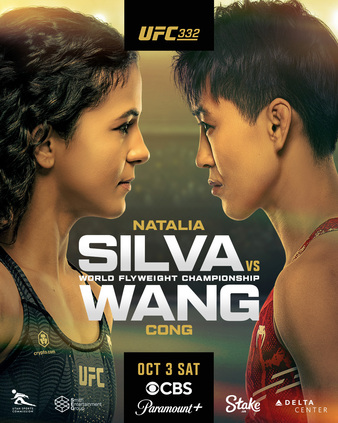
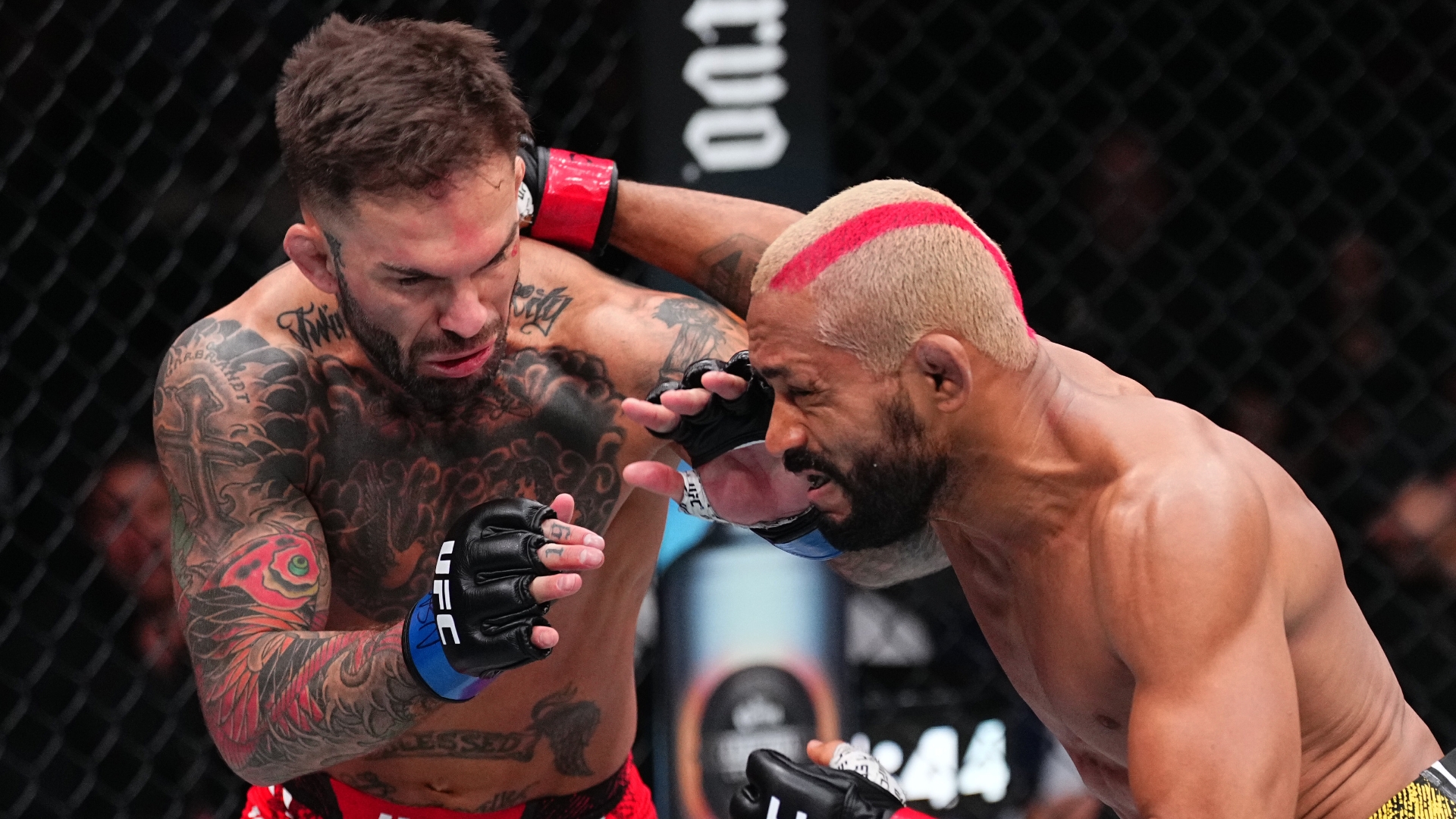
CO-MAIN EVENT · BANTAMWEIGHT · 3 ROUNDSUFC 332: Silva vs. Wang
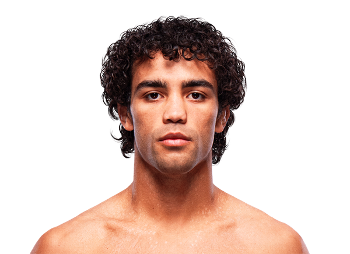
Payton Talbott — Bantamweight fighter

Payton Talbott

11W1L
Volume Pressure Striker
VS
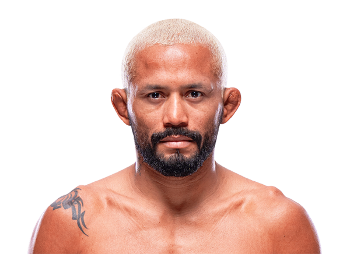
Deiveson Figueiredo — Bantamweight fighter

Deiveson Figueiredo

25W7L1D
Power Puncher / Grappler

Ten years and a two-to-one volume gap — against a former two-division champion who is 1-4 in his last five

BantamweightDelta Center, Salt Lake City, Utah, United StatesOctober 3, 2026Standard 30ft Octagon · 4,300 ft elevation
01

The Frame

What this fight is really about — and the measurements that shape it

The Analyst's Take

This is a generational handoff with a knockout risk attached, and the numbers are unusually blunt about both halves. Payton Talbott lands 6.62 significant strikes per minute at 57% accuracy; Deiveson Figueiredo lands 2.57 at 54%. Round by round the gap is close to two-to-one in every frame — 21.5 to 10.3 in the first, 26.2 to 12.7 in the second, 25.5 to 12.3 in the third — and Talbott is ten years younger and five inches taller. Figueiredo's recent record is the harder fact: he is 1-4 in his last five, with a submission loss to Song Yadong, a knockout loss to Cory Sandhagen, and unanimous-decision losses to Umar Nurmagomedov and Petr Yan, the lone win a split decision over Montel Jackson. What keeps this at 62/38 rather than wider is that the former two-division champion still has the two things that end fights fastest: nine career knockouts with a 0.33 knockdown average in Round 2, and nine career submissions with 1.18 submission attempts per fifteen minutes — the highest figure in this bout by a distance, aimed at a man whose takedown defence reads 78% and whose striking defence reads 47%, the lowest number on either sheet. Talbott is also not the pure striker his label suggests: 37.4% of his Round-2 offence lands on the ground. Model: Talbott 62% / Figueiredo 38%, conviction 6/10.

Payton Talbott
Attribute
Deiveson Figueiredo
2810 years
Age
38
5'10" (70")+5" Talbott
Height
5'5" (65")
70.5"+2.5" Talbott
Reach
68"
40"
Leg Reach
38"
Volume pressure striker with a live grappling game
Fighting Style
Power boxing off a Brazilian jiu-jitsu base
Las Vegas, Nevada, United States
Origin
Soure, Pará, Brazil
3-1 in his last four — decisions over Henry Cejudo and Felipe Lima
Recent Form
1-4 in his last five — stopped twice
None
Titles
Former UFC Flyweight Champion (two reigns)

Five inches of height and two and a half of reach, in the division where that gap is hardest to close. Talbott is 5'10" at bantamweight — a genuinely unusual frame — against a 5'5" former flyweight champion who moved up. Figueiredo has spent his entire career fighting taller men and has a well-drilled answer: get inside, throw the overhand, and put people on the mat. His 1.61 takedowns per fifteen minutes and 1.18 submission attempts per fifteen are both roughly double Talbott's, and they are the mechanism by which the height gap gets erased. The counter-argument is that Talbott's takedown defence reads 78% and Figueiredo's takedown accuracy reads 8%, which is the lowest offensive wrestling conversion rate on this card.

Venue Factor
The Delta Center sits at roughly 4,300 feet. This is a three-round fight rather than five, so the altitude tax is smaller than in the main event — but it lands on the fighter throwing 6.62 significant strikes a minute rather than the one throwing 2.57, and it lands hardest in the third round, which is where Figueiredo's own control time collapses from 54 seconds to 23.
02

The Fighters

Careers, chins, schedules — and the form they bring into the cage

Payton Talbott, UFC bantamweight

Payton Talbott

Pro Record
11-1-0
UFC Record
5-1 — two straight wins
Streak
Two consecutive wins, including Henry Cejudo
Finish Rate
73% (8 of 11 wins) — 7 KO/TKO, 1 submission, 3 decisions
Avg Fight Time
10:57 in the UFC
Chin · Untested — never stoppedSOS · Rising fastVolume pressure striker

A prospect who took the one loss early and got better for it. Talbott arrived on a run of knockouts — five straight stoppages through Urijah Faber's A1 Combat and FirePower before a Contender Series decision — then blitzed Cameron Saaiman in 21 seconds of the second round and Yanis Ghemmouri in 19 seconds. Raoni Barcelos out-wrestled him for a unanimous decision at UFC 311 in January 2025, and the answer since has been to add rather than reload: decisions over Felipe Lima and, at UFC 323 in December 2025, over Henry Cejudo. That last one is the résumé line. The round data shows what the label misses — he is not a pure striker. His control time runs 36, 68 and 66 seconds a round and 37.4% of his second-round offence lands on the ground, which for a 5'10" bantamweight with 78% takedown defence is an unusually complete profile.

Deiveson Figueiredo, UFC bantamweight

Deiveson Figueiredo

Pro Record
25-7-1
UFC Record
14-7-1 across 22 Octagon bouts — 1-4 in his last five
Streak
Two straight losses — Song Yadong and Umar Nurmagomedov
Finish Rate
72% (18 of 25 wins) — 9 KO/TKO, 9 submissions, 7 decisions
Avg Fight Time
12:43 in the UFC
Chin · DecliningSOS · Elite — championship level, historicallyPower puncher / submission grappler

One of the great flyweights, now four years into the part of the career nobody enjoys watching. Figueiredo won the flyweight title twice, went 2-1-1 across four fights with Brandon Moreno, and moved up to bantamweight in 2023 with wins over Rob Font, Cody Garbrandt and Marlon Vera. Then the floor gave way. Petr Yan beat him over five rounds in November 2024, Cory Sandhagen knocked him out in the second round in May 2025, he squeezed past Montel Jackson on a split decision in October, Umar Nurmagomedov out-pointed him in January 2026, and Song Yadong submitted him in the second round in May. That is 1-4 with two stoppage defeats in eighteen months, at 38. What has not gone is the danger: nine career knockouts, nine career submissions, a knockdown average that still peaks at 0.33 in Round 2, and 1.18 submission attempts per fifteen minutes — the highest number in this fight.

Payton Talbott
0 dealt · 0 absorbed
Knockdown Exchange
KD dealt vs absorbed
Deiveson Figueiredo
0 dealt · 0 absorbed

Payton Talbottsignature weapons

Early KnockoutSaaiman in 21 seconds of Round 2 and Ghemmouri in 19 seconds of Round 1 — six of his eight career finishes came inside the opening two rounds
×7
Hidden Ground Game36, 68 and 66 seconds of control per round, with 37.4% of his Round-2 offence landing on the ground — an unusual profile for a fighter billed as a striker
×1

Deiveson Figueiredosignature weapons

The Overhand RightNine career knockouts and a knockdown average that peaks at 0.33 per round in the second; the shot that beat Joseph Benavidez and Brandon Moreno
×9
Submission ChainNine career submissions and 1.18 attempts per fifteen minutes — the highest figure in this bout, and the mechanism behind the Cody Garbrandt finish at UFC 300
×9

Payton Talbott

W
Henry Cejudo
Decision — Unanimous
RR3
UFC 323 — Dec 6, 2025
W
Felipe Lima
Decision — Unanimous
RR3
UFC 317 — Jun 28, 2025
L
Raoni Barcelos
Decision — Unanimous
RR3
UFC 311 — Jan 18, 2025
W
Yanis Ghemmouri
KO/TKO
RR1 (0:19)
UFC 303 — Jun 29, 2024
W
Cameron Saaiman
KO/TKO
RR2 (0:21)
UFC FN: Ribas vs. Namajunas — Mar 23, 2024
Pattern

Two knockouts inside 40 combined seconds, then a loss that changed the fighter, then two decisions — the second of them over Henry Cejudo. The trajectory is the opposite of Figueiredo's: he is adding rounds rather than losing them, and the Cejudo win is the first genuinely elite name on his record. The Barcelos defeat is the one caveat and it is instructive: he was out-wrestled, which is the exact plan available to the man across from him.

Deiveson Figueiredo

L
Song Yadong
Submission
RR2 (4:42)
UFC FN: Song vs. Figueiredo — May 30, 2026
L
Umar Nurmagomedov
Decision — Unanimous
RR3
UFC 324 — Jan 24, 2026
W
Montel Jackson
Decision — Split
RR3
UFC FN: Oliveira vs. Gamrot — Oct 11, 2025
L
Cory Sandhagen
KO/TKO
RR2 (4:08)
UFC FN: Sandhagen vs. Figueiredo — May 3, 2025
L
Petr Yan
Decision — Unanimous
RR5
UFC FN: Yan vs. Figueiredo — Nov 23, 2024
Pattern

One win in five, and the losses are not close calls dressed up as declines — a knockout, a submission, and two clear decisions against Yan and Nurmagomedov. The Montel Jackson split decision in October 2025 is the only thing holding the sample together. Against that: every opponent in this sample is a genuine top-five bantamweight, which is a level Talbott has faced exactly once.

Payton Talbott

Win Methods
Wins by Round

Deiveson Figueiredo

Win Methods
Wins by Round
Critical Insight
Both charts close exactly — Talbott's 7 knockouts plus 1 submission plus 3 decisions is his 11 wins, Figueiredo's 9 plus 9 plus 7 is his 25 — and they describe the same underlying truth from opposite ends of a career. Figueiredo's donut is almost perfectly balanced: 36% knockouts, 36% submissions, 28% decisions, which is what a two-division threat looks like on paper and why nobody discounts him at 38. Talbott's is 64% knockouts, and six of his eight career finishes landed in the first two rounds. The round columns are where the ages show. Figueiredo has fourteen finishes inside two rounds across a 33-fight career and has been to a fourth round once; Talbott has six inside two rounds across twelve fights and has never been past three. Neither man's chart contains the thing that decides this fight — that Figueiredo has lost four of five, and two of those by stoppage.

Common Opponents

OpponentPaytonDeiveson
Henry Cejudo (level proxy)W· Unanimous decision (UFC 323, Dec 2025)never faced
The only former champion on either recent sheet that Talbott has beaten, and the reason his lean here is more than a youth argument
Cory Sandhagen and Song Yadong (level proxy)has not faced a top-five bantamweight other than CejudoL· KO/TKO R2 (May 2025) and L · Submission R2 (May 2026)
Two stoppage defeats in twelve months, both in the second round, both against elite bantamweights — the clearest evidence of decline on the page
Raoni Barcelos (blueprint)L· Unanimous decision (UFC 311, Jan 2025)never faced
The only loss of Talbott's career and the template against him: sustained wrestling pressure over three rounds, which is precisely what Figueiredo's 1.61 takedowns per 15 would have to reproduce
03

The Numbers

Composites, division ranks and round-by-round evidence

Striking

SLpM 25% · StrAcc 30% · StrDef 30% · SApM 15%

0
Payton
0
Deiveson

A twelve-point gap driven almost entirely by volume: 6.62 significant strikes landed per minute against 2.57, which is the widest output ratio in any bout on this card. Accuracy is near-level at 57% to 54% and both men absorb almost identically — 3.41 and 3.43 per minute. The one column that runs against Talbott is defence: his 47% is the lowest number on either sheet and sits below the bantamweight baseline, which is exactly the surface Figueiredo's overhand is built to attack.

Grappling

TD/15 25% · TDAcc 25% · TDDef 30% · Sub/15 20%

0
Payton
0
Deiveson

Figueiredo's column, and it is the whole reason this fight is live. He doubles Talbott on takedown volume (1.61 to 0.78) and on submission threat (1.18 to 0.20), with nine career submissions behind it. But the two conversion numbers are terrible: 8% takedown accuracy against Talbott's 78% takedown defence. He generates the threat; the sample says he has stopped converting it.

Technical

(Striking + Grappling) / 2

0.0
Payton
0.0
Deiveson

Two points, which understates the fight badly. These are not two similar fighters with a small gap — they are two fighters whose strengths barely overlap, and the composite averaging hides that. Read the two rows above separately.

Cardio

Fight time · pace curve · R3 output · control decay

0
Payton
0
Deiveson

The clearest gap on the page after volume. Talbott's output holds across all three rounds — 21.5, 26.2, 25.5 — with control time rising from 36 seconds to 68 and staying at 66. Figueiredo's third-round control time collapses to 23 seconds from 54 in the second, his accuracy falls from 59.3% to 49.3% across the three rounds, and he is 38 with 33 professional fights behind him. Ten years is the number underneath this row.

Overall

(Technical + Cardio) / 2

0.0
Payton
0.0
Deiveson

An eight-point gap that maps reasonably onto 62/38. The ratings justify the lean; the nine knockouts, the nine submissions and the 1.18 submission attempts per fifteen minutes cap it.

MetricPaytonDeiveson
Avg Fight Time10:57 (UFC)12:43 (UFC)
Pace Tier6.62 SLpM — 2.6× his opponent2.57 SLpM
R3/R1 Output25.5 / 21.5 — holds12.3 / 10.3 — holds, at a third the volume
R3 Control Time66 sec — his highest phase23 sec — down from 54 in R2
Champ RoundsN/A — 3-round bout (never past R3)N/A — 3-round bout (5 title fights contested)

Archetype Base Rate

Volume Pressure Striker 62%38% Power Puncher / Grappler

No archetype base-rate row exists for this pairing · No historical archetype rate is applied. The 62/38 is built from four measured things: a 2.6-to-1 volume advantage that holds in every round, five inches of height and two and a half of reach, ten years, and a 1-4 recent record with two stoppage defeats for the older man. It is capped by nine career knockouts, nine career submissions, the highest submission-attempt rate in the bout, and the plain fact that Talbott's 47% striking defence is the softest surface on either sheet.

Payton TalbottDeiveson Figueiredo

Bantamweight

· 41 fighters
StatPaytonPayton rankDiv avgDeiveson rankDeiveson
SLpM6.62~4.122.57
Str Acc57%~46%54%
Str Def47%~56%50%
SApM3.41~3.883.43
TD/150.78~1.741.61
TD AccNone credited~35%8%
TD Def78%~63%57%
Sub/150.20~0.581.18
Career Finishes8 of 11 (73%)18 of 25 (72%)
Last Five3-1 (one no-contest-free stretch)1-4, two by stoppage
Avg Fight Time10:5712:43
Statistical Verdict
Talbott is above the divisional baseline on volume and accuracy and well below it on striking defence — 47% against a ~56% benchmark, the one number in this fight that should worry his corner. Figueiredo is below baseline on volume by a third, below on takedown accuracy by a factor of four, and below on takedown defence, but above it on submission threat by more than double. Read together, the table describes a young high-output striker with a defensive hole meeting an aging finisher whose delivery systems still exist and whose conversion rates have collapsed. The row that settles it is second from the bottom.

Significant Strikes Landed per Round

Control Time per Round (sec)

Payton Talbott

  • He out-lands Figueiredo roughly two-to-one in every round — 21.5 to 10.3, 26.2 to 12.7, 25.5 to 12.3 — and his accuracy stays above 56% throughout, peaking at 62.9% in the opening five minutes.
  • The label is wrong about him. Control time runs 36, 68 and 66 seconds a round, and 37.4% of his Round-2 offence lands on the ground. His second round is a grappling round dressed up as a striking round, and his knockdown average peaks there at 0.40.
  • Round 2 is also where he goes head-hunting: 83.2% of landed strikes upstairs, against 64.3% in the first and 68.6% in the third.

Deiveson Figueiredo

  • The clearest decline curve on this card. Accuracy falls every round — 59.3%, 53.0%, 49.3% — and third-round control time collapses to 23 seconds from 54 in the second and 59 in the first.
  • The volume was never the point. 10.3 landed in an average first round is a third of what Talbott does, but 25.0% of it lands on the ground in Round 1 and 22.7% in Round 2 — he wins by position and by power, not by output.
  • The power is still measurable: knockdown averages of 0.10, 0.33 and 0.25 per round across 51 scored rounds, and the Round-2 figure is the highest single number either man carries.
  • These rows span nineteen UFC bouts including his flyweight title reign, so they describe a career rather than the 38-year-old bantamweight who has lost four of five.
Critical Insight
Two curves pointing in opposite directions. Talbott's output rises from 21.5 to 26.2 and holds at 25.5, with control time nearly doubling into the second round and staying there. Figueiredo's accuracy declines every round and his control time falls off a cliff in the third. The overlap that makes this a fight rather than a formality sits in one cell: Figueiredo's 0.33 knockdowns per round in the second, landing against a man whose striking defence reads 47%. If this fight is going to change hands, it changes hands between minutes five and ten.

Strike Targeting (career avg)

Head hunting vs body work vs leg attack — the shape of the damage.

Range Profile — where the minutes go

PaytonDeiveson
65%Distance74%
12%Clinch8%
23%Ground18%

Share of significant-strike volume by range from UFC career data. Debutants / fighters without Octagon samples show as N/A.

04

The Story of the Fight

Advantages, worst cases, gameplans — and the patterns underneath

Where the fight lives

Who owns each phase — and by how much
Open SpacePayton owns it

Five inches of height, two and a half of reach, 6.62 significant strikes per minute against 2.57, and 75.2% of Talbott's Round-1 offence at distance

Pocket / ExchangesDeiveson owns it

Nine career knockouts and a 0.33 Round-2 knockdown average against the lowest striking defence in the fight at 47%

ClinchPayton owns it

Talbott's clinch share rises to 17.6% by the third round against Figueiredo's 9.5%, and the height gap makes the collar tie his

GroundDeiveson owns it

Nine career submissions and 1.18 attempts per fifteen against 0.20 — but converted through 8% takedown accuracy into 78% takedown defence

Path to Victory

Payton Talbott

Keep it long, keep it busy, and do not stand still in the second round. He out-works Figueiredo everywhere the fight is not on the mat.

Why they win
01
A 2.6-to-1 volume advantage

6.62 significant strikes landed per minute against 2.57, and it holds round by round: 21.5 to 10.3, 26.2 to 12.7, 25.5 to 12.3. The widest output gap on the card.

02
Five inches and two and a half of reach

5'10" at bantamweight against a former flyweight champion. Figueiredo has to close every exchange, and his 8% takedown accuracy says closing has stopped working.

03
Ten years

27 against 38, with 12 professional fights against 33. Figueiredo has absorbed four knockdowns and two stoppage losses in eighteen months.

04
78% takedown defence

Against 1.61 takedown attempts per fifteen minutes converted at 8%. The submission threat is real; the delivery mechanism has a documented conversion problem.

05
A grappling game nobody prices

36, 68 and 66 seconds of control per round and 37.4% of Round-2 offence on the ground. He is not obliged to keep this standing.

06
The Cejudo win

A unanimous decision over a two-division champion at UFC 323 — the elite-level result Figueiredo's last five fights have not produced.

The gameplan
  1. 1
    Use the jab and the length from the first bell

    Five inches of height, two and a half of reach, and an opponent who lands 10.3 a round. There is no reason to be in the pocket in the first five minutes.

  2. 2
    Do not trade in the second round

    Figueiredo's knockdown average peaks at 0.33 there, against the softest striking defence in the fight. It is the one five-minute block Talbott must fight conservatively.

  3. 3
    Make him wrestle at 8%

    Every failed takedown is thirty seconds of Figueiredo's gas tank and a scoring opportunity. The 78%-versus-8% collision is Talbott's cheapest win condition.

  4. 4
    Attack the body

    Figueiredo is 38 with 33 fights and a third-round accuracy of 49.3%. Body work is the fastest route to the version of him that shows up in minute eleven.

  5. 5
    Take the third round on control

    66 seconds of control per third round against a man whose own falls to 23. If the fight is level after ten minutes, this is where it is decided.

  6. 6
    Contingency — if Plan A fails

    If he is dropped or taken down early, the answer is not to brawl back. Get up, reset to range, and let the volume gap do the arithmetic over the remaining rounds.

Path to Victory

Deiveson Figueiredo

One overhand right, or one scramble. He has nine of each and needs the fight to last five minutes at a time, not fifteen.

Why they win
01
Nine knockouts and nine submissions

A perfectly balanced 36/36/28 method split across 25 wins. He threatens in both phases and has finished champions in both.

02
The highest submission threat in the bout

1.18 attempts per fifteen minutes against Talbott's 0.20 — nearly six times the rate, against a man who has never been submitted but has also never met this.

03
Talbott's 47% striking defence

The lowest number on either sheet and well below the ~56% bantamweight baseline. Figueiredo's knockdown average peaks at 0.33 in Round 2. That is the collision.

04
Championship experience

Five title fights, four fights with Brandon Moreno, and the composure that comes with it. Talbott has been past the second round four times in his career.

05
Ground share where it counts

25.0% of his Round-1 offence and 22.7% of his Round-2 offence lands on the mat. He does not need to out-strike Talbott; he needs to change the floor of the fight.

06
The Barcelos blueprint exists

Talbott's only career loss came to sustained wrestling pressure. Somebody has already shown how this is done.

The gameplan
  1. 1
    Close the distance behind the overhand

    It is the shot that beat Benavidez and Moreno, and it is aimed at 47% striking defence. Nothing else on this list works until he is inside.

  2. 2
    Commit to the second round

    His own knockdown average peaks there and Talbott's ground share peaks there too — the round where both men are most willing to be caught is the round he needs.

  3. 3
    Force the scramble, not the takedown

    At 8% takedown accuracy the clean shot is not coming. Nine career submissions say the chain-wrestling scramble off a stuffed attempt is the better door.

  4. 4
    Fight in three-minute bursts

    His accuracy and control both fall off after ten minutes. Fifteen minutes of even effort loses; three concentrated bursts might not.

  5. 5
    Attack the lead leg and the body early

    He cannot win a volume war, so the goal is to make Talbott's volume expensive rather than to match it.

  6. 6
    Contingency — if Plan A fails

    If he is down two rounds with five minutes left, the decision path is gone — his third round is his worst and always has been. That is a branch where he has to chase the finish and accept the risk.

Danger Zone

How Payton Talbott loses

  • He stands in front of a former champion with 47% striking defence and gets caught by the overhand in the second round, where Figueiredo's knockdown average peaks.

  • He over-commits to the grappling exchange he keeps winning against lesser opponents, and finds himself in a scramble with a nine-time submission finisher.

  • He fights the record rather than the man, paces himself against a 38-year-old, and loses two close rounds to power over volume.

Danger Zone

How Deiveson Figueiredo loses

  • He gets out-landed two-to-one for fifteen minutes and loses a wide decision, exactly as he did against Umar Nurmagomedov nine months earlier.

  • The takedowns do not land — 8% accuracy against 78% defence — and the submission game never gets a floor to work from.

  • His third round arrives the way it has for two years: 23 seconds of control, 49.3% accuracy, and a younger man still throwing 25 a round.

The fact that sets the price

One in Five

Deiveson Figueiredo has won one of his last five fights. The four losses are a submission to Song Yadong, a knockout by Cory Sandhagen, and unanimous decisions to Umar Nurmagomedov and Petr Yan; the win is a split decision over Montel Jackson. Two stoppage defeats in eighteen months at 38 years old is not a slump, it is a curve — and no model that ignores it is being honest.

1-4
Figueiredo's last five
The measured gap

Two to One, Every Round

Talbott out-lands Figueiredo 21.5 to 10.3 in an average first round, 26.2 to 12.7 in a second and 25.5 to 12.3 in a third. That ratio does not narrow, and it is not an artefact of one blowout — it holds across 15 scored rounds for Talbott and 51 for Figueiredo. In a three-round fight decided on the cards, it is simply decisive.

2.6×
Talbott's significant strikes per minute
Why this is not a formality

The 47% Problem

Payton Talbott's striking defence reads 47% — the lowest number on either sheet and nine points under the bantamweight baseline. Deiveson Figueiredo has nine career knockouts and a knockdown average that peaks at 0.33 per round in the second. Talbott has never been stopped, but he has also never been hit by a former two-division champion with that shot. The whole 38% lives in this paragraph.

47%
Talbott's striking defence
What the label misses

The Striker Who Grapples

Talbott is billed as a knockout artist with seven KOs in eleven wins. The round data says something else: 36, 68 and 66 seconds of control per round, and 37.4% of his second-round offence landing on the ground. Against a nine-time submission finisher that is a double-edged number — it means he does not have to keep the fight standing, and it means he might not.

37.4%
Talbott's R2 offence landed on the ground
The one thing that has beaten Talbott

The Barcelos Template

Raoni Barcelos out-wrestled Payton Talbott over three rounds at UFC 311 in January 2025 — the only defeat of his career. Figueiredo attempts 1.61 takedowns per fifteen minutes, more than double Talbott's rate, and owns nine career submissions. He also converts those attempts at 8% into a defence that stops 78%. The blueprint exists; the tools to run it have measurably rusted.

The Five-Round Clock

Payton Talbott danger windowDeiveson Figueiredo danger windowNeutral / contested
R1 · 0:00–5:00Talbott's cleanest round

62.9% accuracy — his best of the three — and 21.5 landed against 10.3. Figueiredo's first round is his most accurate too (59.3%) and his highest-control (59 seconds), so this is the frame where the former champion is closest to level. Talbott's knockdown average here is 0.17.

Critical Insight
This fight has a single hinge and it is the second round. Talbott owns the first on accuracy and length, and owns the third on everything — control, output, and ten years. In between sits the one window where Deiveson Figueiredo's knockdown rate peaks, Talbott's ground share peaks, and the softest striking defence in the bout meets the hardest single punch. Roughly two-thirds of Figueiredo's remaining win equity resolves in those five minutes; after them the curve bends hard and does not come back.

Finish Threat by Round

Share of each fighter's wins that end in each round — early finishers spike left, grinders rise right.

05

The Verdict

One hundred simulated fights, the betting market, and our conviction

If you only read 3 things
1

Payton Talbott out-lands Deiveson Figueiredo roughly two-to-one in every measured round — 21.5 to 10.3, 26.2 to 12.7, 25.5 to 12.3 — while giving up ten years and taking five inches of height.

2

Figueiredo is 1-4 in his last five with a knockout loss and a submission loss, but still owns nine career KOs, nine career submissions and the highest knockdown average in the fight at 0.33 per Round 2.

3

Model: Talbott 62% / Figueiredo 38%, conviction 6/10 — and 29 of Figueiredo's 38 points sit in the first ten minutes.

100 Simulated Fights

Talbott Decision 32%Talbott KO/TKO 25%Figueiredo KO/TKO 17%Figueiredo Submission 12%Figueiredo Decision 9%Talbott Submission 5%

Each square = 1 simulated fight. Payton Talbott gold · Deiveson Figueiredo orange · full color = decision, 70% = submission, 45% = KO/TKO.

The volume ratio

6.62 significant strikes per minute against 2.57, holding at roughly two-to-one in every measured round. In a three-round fight on the cards this is the dominant term.

Recent form and stoppage losses

Figueiredo is 1-4 in his last five with a knockout loss to Sandhagen and a submission loss to Song Yadong, both in the second round, both within eighteen months.

Talbott's 47% striking defence

The lowest number on either sheet, nine points under the bantamweight baseline, meeting nine career knockouts and a 0.33 second-round knockdown average. This is the entire case for the underdog.

Ten years and 21 fewer fights

27 against 38; 12 professional bouts against 33. Figueiredo's third-round control time has already collapsed to 23 seconds.

Submission threat against conversion failure

1.18 submission attempts per fifteen minutes and nine career finishes — delivered through 8% takedown accuracy into 78% takedown defence. The threat is real; the delivery is broken.

Sample asymmetry

Figueiredo's round table rests on 51 scored rounds, Talbott's on 15. The younger man's numbers carry the wider interval, in both directions.

Fight Scripts

0%
of simulations

The Volume Wins

Talbott jabs, moves, and out-works a 38-year-old for fifteen minutes — 25-plus landed a round against 12 — mixing in the control time nobody prices. A 30-27 or 29-28 that looks routine on the cards and is anything but for the first ten minutes.

Scripted outcomes for Payton Talbott vs Deiveson Figueiredo — how each version of this fight unfolds.

Payton Talbott win probability
0%
25%
32%
5%
KO/TKODECSUB
  • Seven career knockouts, six inside the opening two rounds, against a man stopped twice in the last eighteen months. The second-largest bucket on the page and rising with every round Figueiredo has to absorb 25 strikes.

  • The structural chalk. A two-to-one volume advantage in every round, 66 seconds of third-round control, and ten years of freshness — this is what happens when neither man lands the fight-ender.

  • One career submission and 0.20 attempts per fifteen minutes. Small by design: he grapples more than his label suggests but he does not hunt finishes there, and Figueiredo is the last man in the division to give up a neck cheaply.

Deiveson Figueiredo win probability
0%
17%
9%
12%
KO/TKODECSUB
  • The largest single bucket in his column and the reason this is 62/38 rather than 75/25. Nine career knockouts, a 0.33 knockdown average in Round 2, and the softest striking defence in the fight to aim at.

  • Deliberately suppressed. Winning on the cards requires him to take two of three rounds from a man who out-lands him two-to-one, and his own third round is the worst five minutes on his sheet — 23 seconds of control and 49.3% accuracy.

  • Nine career submissions and 1.18 attempts per fifteen minutes, the highest rate in the bout. The path runs through a scramble rather than a clean takedown, because 8% accuracy against 78% defence says the clean one is not coming.

Projected Scorecards

How the model scores each round
R1
Payton
R2
Deiveson
R3
Payton
29-28 Talbott
Figueiredo takes the second on power; Talbott takes the first and third on volume and control
The most likely card in a fight that reaches them
30-27 Talbott
The volume gap simply holds for fifteen minutes
Common in the branch where the overhand never lands clean
29-28 Figueiredo
Two rounds decided by knockdowns rather than output
His only realistic decision path — his third round is his worst

Moneyline

Payton Talbott
Not posted
Deiveson Figueiredo
Not posted

No book has published a line for this bout at the time of writing. Converting our own probabilities gives fair prices of Payton Talbott -163 from 62% and Deiveson Figueiredo +163 from 38% — model outputs, not quotes. Live prices appear in the hero above once a market opens.

Props: model vs market

PropOddsImplied %Model %FairEdgeVerdict
Best Value
Talbott by knockout at 25% is the most under-priced outcome we can identify: seven career KOs, six of them inside two rounds, aimed at a 38-year-old stopped twice in the last eighteen months and defending at 50%. The market will likely price Talbott as a clear favourite on the moneyline; the method market is where the edge sits. On the other side, Figueiredo inside the distance at 29% combined is a live dog ticket for anyone who thinks the overhand still travels.
Conviction
0
6/10

A clear, well-evidenced lean with a large and specific tail. Everything measurable favours Talbott: a two-to-one volume advantage in every round, five inches of height, ten years, 78% takedown defence against 8% takedown accuracy, and an opponent who has lost four of his last five with two stoppages. The 38% is not politeness — it is nine career knockouts, nine career submissions, a knockdown average of 0.33 in the round where Talbott is most catchable, and the softest striking defence in the fight to land on. Six of ten is where a heavy statistical favourite with a real one-punch problem belongs. Lean: Payton Talbott.

What backs the lean
  • A 2.6-to-1 volume advantage that holds in every measured round.

  • Five inches of height and two and a half inches of reach at bantamweight.

  • Ten years younger, with 12 professional fights against 33.

  • 78% takedown defence against a 1.61-per-15 attempt rate converted at just 8%.

  • Figueiredo is 1-4 in his last five, stopped twice inside eighteen months.

  • A unanimous decision over Henry Cejudo — the elite result Figueiredo's recent sample lacks.

What limits it
  • Talbott's 47% striking defence is the lowest number on either sheet, nine points under the divisional baseline.

  • Nine career knockouts, and a knockdown average that peaks at 0.33 in exactly the round Talbott is most exposed.

  • Nine career submissions and 1.18 submission attempts per fifteen minutes — nearly six times Talbott's rate.

  • Talbott's only career loss came to sustained wrestling pressure, which is the plan Figueiredo already owns.

  • Championship experience: five title fights and four bouts with Brandon Moreno against a man who has been past Round 2 four times.

  • Talbott's round table rests on 15 scored rounds. The confidence interval runs both ways.

Final Assessment

In roughly sixty-two of one hundred simulations, Payton Talbott wins, and in thirty-two of those he simply out-works a 38-year-old for fifteen minutes. The mechanism is the least glamorous thing on this page and the most reliable: 21.5 landed against 10.3 in the first, 26.2 against 12.7 in the second, 25.5 against 12.3 in the third, with 66 seconds of third-round control against 23. Add five inches of height and ten years and the arithmetic does not need help. In another twenty-five he finishes it — seven career knockouts against a man stopped twice since May 2025.

In the other thirty-eight, Deiveson Figueiredo does what he has done to Joseph Benavidez, Brandon Moreno and Cody Garbrandt. The overhand lands on a 47% striking defence in the second round, where his knockdown average peaks at 0.33 (17%), or a scramble off a stuffed takedown turns into one of the nine submissions on his record (12%). Both paths are front-loaded and both are real; almost none of his equity survives past the ten-minute mark.

This is a fight about whether a curve has already bent. Every rate, every round and every inch says Talbott, and the recent record — one win in five, two stoppage defeats — says the former two-division champion is no longer the fighter those career numbers describe. What the numbers cannot retire is the punch. On October 3 in Salt Lake City: Talbott 62% / Figueiredo 38%, conviction 6/10, with the danger concentrated between minutes five and ten.

Skip to main content
Use Tab to navigate through elements, Enter to activate buttons and links.