
Marc-André Barriault vs Kyle Daukaus: analysis & prediction

MAIN CARD · MIDDLEWEIGHT · 3 ROUNDSUFC Fight Night: Buckley vs. Malott
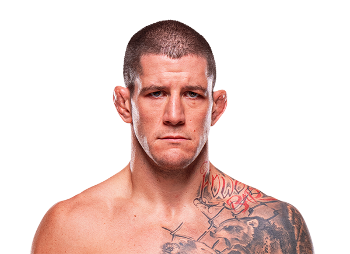
Marc-André Barriault — Middleweight fighter

Marc-André Barriault

17W11L
Clinch Mauler
VS
Kyle Daukaus — Middleweight fighter

Kyle Daukaus

“The D'Arce Knight”
17W5L
D'Arce Specialist

The clinch he needs is the choke he cannot survive

MiddleweightRogers Place, Edmonton, AlbertaOctober 17, 2026Standard 30ft Octagon

Fight overview

The fight in 30 seconds

Barriault wins by walking opponents to the fence and mauling them in the clinch, which is exactly where the D'Arce choke is thrown, and Daukaus has finished eight men with it. Daukaus is at his most dangerous and his most hittable in the opening round. If Barriault enters shoulder-first and survives that round, his volume starts piling up; a lowered head on the way in can end it.

Paths that change the fight

  • Marc-André BarriaultSurvive the first five minutes without offering his neck, then let the volume run — 36.2 significant strikes per second round into a defence that lets opponents land 59% in exactly that round.
  • Kyle DaukausOne front headlock. Barriault's clinch entry is the D'Arce's doorway, and eight men have already walked through it.
What limits this estimate · Analyst conviction: 4/10
  • Daukaus's 42% striking defence ranks 43rd of 47 — opponents land on him at 57-59% in every round, and he has been dropped five times in ten UFC first rounds.
  • Barriault out-lands him 5.65 to 2.86 per minute and 36.2 to 16.3 in Round 2 — the largest single edge in the fight.

Editorial assessment of the evidence, not a win probability or a calibrated confidence interval.

Marc-André Barriault

Insufficient price data
Model win probability
46%
Fair odds
+117
Reference quote
—
Fair decimal odds
2.17

Kyle Daukaus

Insufficient price data
Model win probability
54%
Fair odds
-117
Reference quote
—
Fair decimal odds
1.85
Price freshness & calculation notes

Quotes older than 48 hours are marked outdated. EV at an old or undated price is a historical calculation, not a current opportunity. Date-only snapshots have no verified capture time.

Sources and data limitations

Career statistics and fight results through September 2026. Composite scores, probabilities, fair prices and analyst conviction are MMA Analytics model outputs, not observed outcomes.

Model methodology
01

The Frame

What this fight is really about — and the measurements that shape it

The Analyst's Take

The cleanest archetype clash on the card. Marc-André "Powerbar" Barriault is a clinch-mauling volume striker: more than a quarter of his career Octagon output lands in the clinch, eleven of his seventeen wins are knockouts, and his output more than doubles once the first round is behind him. Kyle "The D'Arce Knight" Daukaus is a front-headlock submission specialist with twelve submission wins, eight of them D'Arce chokes, and one of the highest submission-attempt rates in the division. The trap is structural: the clinch entry Barriault needs is the exact position the D'Arce is thrown from. The counterweight is structural too: Daukaus has been dropped five times in ten UFC fights, every time in a first round, and opponents land well over half of what they throw at him in every round.

Marc-André Barriault
Attribute
Kyle Daukaus
36
Age
33
6'1"
Height
6'3"
74"
Reach
+2" Daukaus76"
42.5"
Leg Reach
43.0"
Orthodox
Stance
Southpaw
Kill Cliff FC, Deerfield Beach
Team
The Forge MMA, Philadelphia
May 4, 2019
Octagon Debut
June 27, 2020 (re-signed 2025)
Pressure striking into the clinch
Fighting Style
Front headlock into the D'Arce

Length and handedness belong to Daukaus; the mileage belongs to Barriault. The two inches of height and two inches of reach matter more than usual because they arrive from the southpaw side into an orthodox pressure fighter who wants to be at chest range. Barriault's answer has always been to erase distance rather than manage it: 28% of his 995 career UFC significant strikes have landed in the clinch, against 13% for Daukaus. Conversely, 18% of Daukaus's UFC significant strikes land on the ground against 7% for Barriault — the fingerprint of a man who wants the fight horizontal. The three-year age gap matters less than the mileage gap: Barriault has spent roughly 176 minutes inside the Octagon to Daukaus's 69, and has absorbed 5.94 significant strikes per minute across all of them, the second-highest rate in a 47-man middleweight pool. Daukaus has never been past the third round in the UFC and has reached a decision only five times in 23 professional fights.

Venue Factor
Rogers Place has not been a friendly building for Barriault. He has fought here twice and lost both: a split decision to Krzysztof Jotko at UFC 240 in July 2019, his second Octagon appearance, and a first-round knockout by Dustin Stoltzfus in November 2024. He is 2-4 in the UFC on Canadian soil, with the wins coming in Vancouver against Eryk Anders and in Montréal against Bruno Silva. For Daukaus this is his first professional bout in Canada, and the crowd will be against him from the walkout. Home-crowd equity here is a nudge on close rounds in a fight with a real chance of producing close rounds — nothing in Barriault's record says Edmonton lifts him beyond that.
02

The Fighters

Careers, chins, schedules — and the form they bring into the cage

Marc-André Barriault and Chris Curtis trading punches at UFC 297

Marc-André Barriault

Pro Record
17-11-0 (1 NC)
UFC Record
6-10 (1 NC) across 17 bouts since 2019
Streak
Two-fight skid — decisions to Magomedov and Oleksiejczuk
Finish Rate
71% (12 of 17 wins) — 11 by KO/TKO
Avg Fight Time
10:21
Chin · Knocked out three times, all in Round 1 — not dropped in the seven rounds sinceSOS · Step-up UFCPressure striker / clinch mauler

The veteran in decline, but the decline has a specific shape. He is 1-5 in his last six and on a two-fight skid; the last time he won two in a row was the Julian Marquez knockout and the Eryk Anders decision in 2023. The 2024 version of him was knocked out inside Round 1 twice, by Joe Pyfer at 1:25 and Dustin Stoltzfus at 4:28. Since then he has not been dropped: a first-round clinch knockout of Bruno Silva, then fifteen full minutes against Shara Magomedov and fifteen more against Michał Oleksiejczuk, who out-landed him 140 to 77 and still dropped a round on all three cards in a 29-28 decision. His record also carries a No Contest — the 2020 stoppage of Oskar Piechota was overturned after a failed drug test. What has not changed is the arithmetic underneath: 5.65 landed against 5.94 absorbed per minute is a negative differential, and 5-7 in career decisions is a coin flip he has usually lost.

Kyle Daukaus landing a right hand in the Octagon

Kyle Daukaus

Pro Record
17-5-0 (1 NC)
UFC Record
4-5 (1 NC) across 10 bouts in two stints
Streak
Lost his last — Bo Nickal, TKO R1 (4:34), June 2026 — after six straight wins
Finish Rate
82% (14 of 17 wins) — 12 by submission
Avg Fight Time
6:53
Chin · Vulnerable — stopped by strikes three times and dropped five times in ten UFC boutsSOS · PolarizedFront-headlock submission grappler

The mirror image of Barriault's arc: a 9-0 prospect who went 2-4 with a No Contest in his first UFC stint and was released after 2022, then rebuilt at Cage Fury FC — winning the middleweight title over Gregg Ellis by unanimous decision and defending it twice — before re-signing and producing two first-minute finishes: Michel Pereira dropped and elbowed out in 43 seconds, then Gerald Meerschaert dropped and D'Arce-choked in 50 seconds at UFC 322. Then Bo Nickal took him down, held him for more than three minutes, dropped him and finished him at 4:34 of Round 1 in June 2026, ending a six-fight winning run. That performance exposed exactly what his 42% striking defence implies. He has never been submitted in 23 professional fights, and only five of those 23 reached the scorecards — one of them a 26-30, 26-30, 27-29 shutout loss to Phil Hawes that remains the worst-case data point on his record.

Marc-André Barriault
0 dealt · 0 absorbed
Knockdown Exchange
Knockdowns dealt vs absorbed.
Kyle Daukaus
0 dealt · 0 absorbed

Marc-André Barriaultsignature weapons

Clinch Elbows & Dirty BoxingBruno Silva stopped by elbows in the clinch at 1:27 (UFC 315) and Julian Marquez by punches in the clinch at 4:12 (UFC 285) — 28% of his 995 career UFC significant strikes land from this position
×2
Punches (KO/TKO)Abu Azaitar, finished from mount at 4:56 of Round 3 at UFC 260, plus seven regional stoppages in Québec
×8
Guillotine from Bottom GuardJordan Wright, R1 2:36 — his only career submission win, and a front-headlock finish of his own
×1

Kyle Daukaussignature weapons

D'Arce ChokeMeerschaert (R1 0:50, UFC 322), Pickett (R1 4:59, from half guard), Walker, Norwood, Bayer, Regman, Fallon and Webb at the R3 buzzer — a ninth, on Kevin Holland in 2021, was overturned to a No Contest after an accidental clash of heads
×8
Rear-Naked ChokeGidron, Long, Juklo and Gbollie — the four finishes that complete all twelve of his career submission wins
×4
Punches & Elbows (KO/TKO)Michel Pereira, dropped and finished with elbows from guard at 0:43 of Round 1, and Keanan Patershuk at 1:24 of Round 1 in a Cage Fury title defence
×2

Marc-André Barriault

L
Michał Oleksiejczuk
Decision — Unanimous (29-28 ×3)

Opponent context: veteran

R3
UFC FN: Bautista vs. Oliveira — Feb 7, 2026
L
Shara Magomedov
Decision — Unanimous (27-30 ×3)

Opponent context: prospect

R3
UFC FN: Whittaker vs. de Ridder — Jul 26, 2025
W
Bruno Silva
KO/TKO — Elbows in the clinch

Opponent context: veteran

R1 (1:27)
UFC 315 — May 10, 2025, Montréal
L
Dustin Stoltzfus
KO/TKO — Punch in the clinch

Opponent context: veteran

R1 (4:28)
UFC FN: Moreno vs. Albazi — Nov 2, 2024, Edmonton
L
Joe Pyfer
KO/TKO — Punch at distance

Opponent context: prospect

R1 (1:25)
UFC 303 — Jun 29, 2024
Pattern

One win in five, one in six, and the shape of the decline is specific. In 2024 he was stopped twice inside Round 1, the second time by Dustin Stoltzfus at Rogers Place. Then in 2025-26 he stopped getting stopped: he took Shara Magomedov's full fifteen minutes, albeit swept 27-30, and went the distance with Michał Oleksiejczuk, losing 29-28 on all three cards. He has not been knocked down in the seven rounds since Stoltzfus, and the only win in the run is a first-round clinch knockout in Canada. His lowest-output round is the first; he gets busier as the fight lengthens.

Kyle Daukaus

L
Bo Nickal
KO/TKO — Punches

Opponent context: elite

R1 (4:34)
UFC Freedom 250 — Jun 14, 2026
W
Gerald Meerschaert
Submission — D'Arce choke

Opponent context: veteran

R1 (0:50)
UFC 322 — Nov 15, 2025
W
Michel Pereira
KO/TKO — Knockdown, then elbows from guard

Opponent context: veteran

R1 (0:43)
UFC FN: Walker vs. Zhang — Aug 23, 2025
W
Keanan Patershuk
KO/TKO — Punches

Opponent context: prospect

R1 (1:24)
CFFC 132 — Jun 14, 2024
W
Sean Connor Fallon
Submission — D'Arce choke

Opponent context: prospect

R3 (3:45)
CFFC 129 — Feb 9, 2024
Pattern

Four wins in five, and every one of those five fights ended inside the distance. Three of the four wins took under ninety seconds, and in both of his last two UFC wins he dropped his man before finishing him. The one loss is the important one — Nickal took him down, controlled him for more than three minutes, dropped him and finished him before the first round was out. It fits the rest of his UFC record: all five knockdowns he has absorbed came in a first round, and opponents land well over half of their significant strikes on him. He is at his most dangerous and his most vulnerable in the same five minutes.

Marc-André Barriault

Win Methods
Wins by Round

Kyle Daukaus

Win Methods
Wins by Round
Critical Insight
Read against each other, the two ledgers describe a one-directional grappling exchange. Barriault has one career submission win in twenty-eight professional fights, a guillotine from bottom guard on Jordan Wright, and one career submission loss, an arm-triangle from mount by Anthony Hernandez. His neck is not a proven leak, but it has never been tested by a specialist of this type. Daukaus has never been submitted in twenty-three fights, so the submission threat runs one way. The structural fork is finish-path asymmetry against decision-path unreliability: Daukaus finishes 82% of the fights he wins and eight of them inside one round, but his UFC losses that reached a second round were a shutout decision to Phil Hawes, a decision to Brendan Allen and a Round-2 knockout by Eryk Anders. Barriault can go fifteen minutes with anyone but is 5-7 in career decisions. Neither man's fallback plan is trustworthy, which is why this fight is priced near even and why it should end early.

Common Opponents

OpponentMarc-AndréKyle
Eryk AndersW· Unanimous Decision, 30-27 ×3 (UFC 289, Jun 10, 2023)L· KO/TKO R2 (2:45), Dec 3, 2022
The more meaningful of the two shared lines: Anders stopped Daukaus in the second round, and six months later Barriault beat the same man on all three cards. This is a real point in Barriault's favour and part of why the lean is not larger.
Dustin StoltzfusL· KO/TKO R1 (4:28), Nov 2, 2024 — EdmontonW· Unanimous Decision (UFC 255, Nov 21, 2020)
And it cuts straight back. Daukaus beat Stoltzfus on all three cards in 2020; Stoltzfus knocked Barriault out in 2024, in the same building that hosts this fight. Taken together the shared-opponent evidence is a genuine wash — itself one of the reasons this fight is priced at 54/46 rather than anything wider.
03

The Numbers

Composites, division ranks and round-by-round evidence

Composite scores summarize selected statistics on a 0–100 scale. They are not win probabilities. Compare the underlying metrics, opponent quality and UFC experience before interpreting a score difference as a matchup advantage.

Striking

SLpM 25% · StrAcc 30% · StrDef 30% · SApM 15%

0
Marc-André
0
Kyle

Barriault lands nearly twice as often per minute — 5.65 to 2.86, 8th and 40th in a 47-man middleweight pool — into a defence that has held at only 42%. What caps him at 55 is his own ledger: 47% accuracy below the 52.9% divisional mean and 5.94 absorbed per minute, 46th of 47. Both men absorb more than they land, Barriault by 0.29 a minute and Daukaus by 0.37.

Grappling

TD/15 25% · TDAcc 25% · TDDef 30% · Sub/15 20%

0
Marc-André
0
Kyle

The most lopsided category in the fight. Barriault has four takedowns on fourteen attempts across seventeen UFC fights, one submission win and 68% takedown defence against opponents who attempt 1.7, 1.4 and 2.3 takedowns per round on him. Daukaus attempts 1.53 submissions per fifteen minutes, sixth in the pool, defends 71% of takedowns and has hit his signature choke eight times.

Technical

(Striking + Grappling) / 2

0
Marc-André
0
Kyle

Barriault owns striking by nine points; Daukaus owns grappling by thirty-five. Net technique favours Daukaus by roughly thirteen, driven almost entirely by the fact that Barriault has almost no grappling offence while Daukaus at least has a functional, if low-volume, striking game.

MetricMarc-AndréKyle
Avg Fight Time10:216:53
Pace TierHigh volume — 5.65 SLpM (8th of 47)Low volume by design — 2.86 SLpM (40th of 47)
R3/R1 Output206% (30.7 vs 14.9 sig)172% (15.0 vs 8.7 sig)few UFC fights
Slow Start %Pronounced — 14.9 landed at 42.6% in R1, his lowest roundLow output, high danger — 2.0 takedown and 0.6 submission attempts per R1
Career Decisions12 (5-7)5 (3-2)

Archetype Base Rate

Striker 38.9%61.1% Submission Artist

234-fight sample · Across 234 recorded fights between these archetypes, the striker has won 38.9%. The model puts Barriault above that base rate at 46% because of his volume, his knockout power and a striking defence on the other side that sits near the bottom of the division.

Marc-André BarriaultKyle Daukaus

Middleweight

· 47 fighters

Rank bars use the recorded division cohort. Where a rank is unavailable, the comparison shows the difference from the published division average; the white marker denotes equality. Percentage differences are percentage points (pp). Higher is not always better: fewer strikes absorbed is preferable. Missing benchmarks are not estimated.

StatMarc-AndréMarc-André comparisonDiv avgKyle comparisonKyle
SLpM5.65
8/47elite
4.22
40/47
2.86
Str Acc47%
36/47
52.9%
30/47
49%
Str Def49%
31/47
51.9%
43/47
42%
SApM5.94
46/47
3.63
18/47
3.23
KD Avg0.34
24/47
0.55
16/47
0.44
Damage Ratio0.95
37/47
1.25
40/47
0.89
TD/150.34
41/47
1.93
14/47
1.96
TD Acc29% (4 of 14)
33/45
~38%
36/45
24% (9 of 38)
TD Def68%
25/45
~71%
23/45
71%
Sub/150.09
35/47
0.72
6/47elite
1.53
Avg Fight Time10:21
Not available
—
Not available
6:53
Statistical Verdict
Barriault owns volume, power, mileage and the clinch. Daukaus owns length, handedness, youth and one of the top submission rates in the division. The columns that decide it are the ones nobody markets: both men absorb more significant strikes than they land — Barriault by 0.29 a minute, Daukaus by 0.37 — and Daukaus's 42% striking defence, 43rd of 47, is the portrait of a man who gets hit clean. The honest one-line read is that Daukaus wins the fight that ends in the first eight minutes and Barriault wins the fight that is still standing at minute ten.

Significant Strikes Landed per Round

Control Time per Round (sec)

Marc-André Barriault

  • His output more than doubles between the first round and the second — 14.9 significant strikes to 36.2 — and his accuracy peaks alongside it at 50.0%.
  • The defensive rows are where he loses fights: opponents land 22.5 on him in Round 1 at 52.5% accuracy, and all three knockdowns he has absorbed in the UFC came in a first round. Each one ended the fight.
  • Control time barely registers on his side of the ledger — 19, 33 and 38 seconds a round — while opponents complete roughly a third of the 1.7, 1.4 and 2.3 takedowns they attempt on him per round.
  • Seventeen Octagon appearances stand behind these curves: 17 first rounds, 12 second rounds and 10 third rounds.

Kyle Daukaus

  • Low output, high intent in Round 1: 8.7 significant strikes, but 2.0 takedown attempts and 0.6 submission attempts inside the same five minutes — and both of his UFC knockdowns.
  • His control time is highest in the third round — 91, 87, then 144 seconds. The assumption that a late fight is automatically Barriault's does not survive that number.
  • The defensive line is the worst either man carries: opponents land at 56.9%, 59.0% and 57.1% accuracy across the three rounds, and all five knockdowns he has absorbed came in a first round.
  • Ten first rounds, four second rounds and three third rounds stand behind these curves; the deep-water version of Daukaus is the least-tested one.
Critical Insight
Barriault's last three fights ended in Round 3, Round 3 and Round 1, the last of those his own knockout win. Daukaus's last three ended in Round 1, Round 1 and Round 1. That is the whole fight in six data points: Daukaus's equity is concentrated in the first five minutes and Barriault's grows every minute the fight survives — with one exception the intuitive read misses, which is that Daukaus's control time is highest in the third round, not the first. Whoever imposes their clock wins.

Strike targeting

Marc-André

Head
72%
Body
20%
Legs
8%

Kyle

Head
73%
Body
14%
Legs
13%

Head hunting vs body work vs leg attack — the shape of the damage.

Striking range — distance, clinch and ground

Marc-AndréKyle
65%Distance70%
28%Clinch12%
7%Ground18%

Share of significant strikes landed at distance, in the clinch and on the ground across each fighter's UFC rounds, weighted by strike volume.

04

The Story of the Fight

Advantages, worst cases, gameplans — and the patterns underneath

Where the fight lives

Who owns each phase — and by how much
Open SpaceMarc-André owns it

5.65 landed per minute against 2.86 into a 42% defence — every disengaged minute is a Barriault minute, discounted by the punch that dropped Pereira in 43 seconds

Pocket / ExchangesMarc-André owns it

36.2 sig strikes per Round 2 at 50% against opponents landing 59% on Daukaus in that round — offset by Barriault's own three Round-1 KO losses

ClinchKyle owns it

Barriault lands 28% of his offence here and stopped Silva and Marquez from it — but it is also where the D'Arce is thrown, even if Dolidze once knocked Daukaus out with a clinch knee

GroundKyle owns it

Sub/15 1.53 (6th of 47) and twelve submission wins against one career submission win — ~60 to ~25, the most lopsided category in the fight

Path to Victory

Marc-André Barriault

Survive the first five minutes without offering his neck, then let the volume run — 36.2 significant strikes per second round into a defence that lets opponents land 59% in exactly that round.

Why they win
01
Volume dominance

5.65 significant strikes landed per minute against 2.86 — 8th and 40th in a 47-man middleweight pool — into a defence that has held at only 42%. On raw striking arithmetic, no minute spent upright is a good minute for Daukaus.

02
The Round-2 engine

36.2 significant strikes landed per second round at 50% accuracy, against Daukaus's 16.3. If the fight reaches minute six the output gap becomes a two-to-one gap.

03
Genuine, recent, UFC-level knockout power

Eleven career KO wins, most recently a 1:27 clinch-elbow stoppage of Bruno Silva at UFC 315. Daukaus has been stopped by strikes three times — a Roman Dolidze clinch knee in the first, Eryk Anders in the second, Bo Nickal in the first — and dropped five times in ten UFC fights.

04
Cardio and distance familiarity

10:21 average fight time, 176 Octagon minutes, twelve career decisions. Only five of Daukaus's 23 professional fights have reached the scorecards.

05
Takedown math and a Canadian crowd

Daukaus completes 24% of his UFC takedown attempts, so Barriault's 68% defence plus fence discipline keeps most of this fight upright — and he has four takedowns of his own if he needs to steal a position. Close rounds in Edmonton will lean his way, even if his record in this building is 0-2.

The gameplan
  1. 1
    Do not enter head-down

    Every clinch entry must be shoulder-first with the chin tucked and the hands framing. The D'Arce needs a lowered head and a trailing arm; deny both and the position becomes his again.

  2. 2
    Fight at the fence, not in open space

    Pin Daukaus against the cage where the 76-inch reach and the southpaw angles die and clinch elbows and knees live.

  3. 3
    Attack the body early

    His Round-1 output is his weakest at 14.9 landed on 42.6% accuracy. Body work buys the fastest route to the Round-2 volume differential without exposing the neck.

  4. 4
    Make it minute eight

    Every minute past the first round compounds — 10:21 average fight time against 6:53, and Daukaus's opponents land 59% on him in Round 2.

  5. 5
    Do not chase a submission or a scramble

    One career submission win and four takedowns in seventeen UFC fights. There is nothing to gain on the mat and everything to lose. If he is dropped or nearly caught early he must disengage and reset in open space rather than clinch to recover.

Path to Victory

Kyle Daukaus

One front headlock. Barriault's clinch entry is the D'Arce's doorway, and eight men have already walked through it.

Why they win
01
A top-six submission threat in the division

1.53 submission attempts per fifteen minutes, sixth in a 47-man middleweight pool, with twelve submission wins including eight D'Arce chokes.

02
The clinch trap

Barriault lands 28% of his strikes in the clinch, which is the single position from which the D'Arce is thrown. His best weapon is Daukaus's best entry, and he cannot simply abandon it.

03
Length and handedness

Two inches of height, two inches of reach and a southpaw stance into an orthodox pressure fighter with 49% striking defence and three Round-1 knockout losses.

04
Never submitted

Zero submission losses in 23 fights and 71% takedown defence. Barriault has one career submission win — there is no realistic submission path back for him.

05
First-round finishing identity and form

Eight career Round-1 finishes, with his last three UFC wins arriving at 4:59, 0:43 and 0:50. He does not need to solve fifteen minutes, and he arrives 4-1 in his last five against a 36-year-old who is 1-5 in his last six.

The gameplan
  1. 1
    Hunt the front headlock from the opening bell

    Do not wait for a takedown to complete — the stuffed shot is the entry. He averages two attempts in Round 1 alone, and 29 of his 38 UFC attempts have been stuffed, which is where the D'Arce comes from.

  2. 2
    Lead with the southpaw straight

    Throw it as Barriault steps in behind volume. Pereira and Meerschaert were both dropped before they were finished, and Barriault walks forward by design.

  3. 3
    Take the neck whenever Barriault initiates the clinch

    Barriault's instinct to close range is a gift. Punish it every single time — 28% of his career offence lives in that position.

  4. 4
    If it reaches Round 3, grind

    His 144-second average third-round control time is his most underrated asset. Top position steals rounds even without a finish, and this is a fight that may need one stolen.

  5. 5
    Manage the range in open space

    Use the two inches of reach to keep Barriault at the end of the jab and do not trade in the pocket, where Barriault's volume beats his nearly two to one. If the D'Arce and the takedowns are both empty by minute seven, stop chasing entries and start banking control time for a 29-28.

Danger Zone

How Marc-André Barriault loses

  • He does what he always does — closes to the clinch inside the first ninety seconds — ducks his head on the entry, and is choked out before he has thrown twenty strikes, in front of a home crowd.

  • A clean punch lands early. He has been knocked out at 0:16, 1:25 and 4:28 of Round 1, and Daukaus dropped both of his last two UFC victims before finishing them inside a minute.

  • He survives, lands more for fifteen minutes, and loses a close decision anyway — his fourth straight decision loss, and his 5-7 career decision record made 5-8.

Danger Zone

How Kyle Daukaus loses

  • The early entries fail at 24% UFC takedown accuracy, the fight is still standing at minute six, and Barriault's Round-2 flood of 36-plus strikes into a 42% defence ends it the way Eryk Anders did in Round 2 of 2022.

  • He gets jammed on the fence and mauled with clinch elbows — the Bruno Silva finish — while his own clinch output, 13% of his strikes, gives him nothing back. Roman Dolidze already knocked him out with a clinch knee.

  • He wins the first round on control, fades in the third, and loses two rounds to volume in a hostile building on a 29-28 card.

The fight's central axis

The Clinch Is Both the Weapon and the Trap

This is the rare matchup where one statistic explains almost the entire fight. Twenty-eight percent of Barriault's 995 career UFC significant strikes have landed in the clinch, and his two most recent stoppage wins — Bruno Silva by elbows at 1:27 and Julian Marquez by punches at 4:12 — were both delivered from exactly there. It is also the position from which eight D'Arce chokes have been thrown, one of them on Gerald Meerschaert in fifty seconds at UFC 322. Barriault cannot simply avoid the clinch; it is where more than a quarter of his offence lives and where his only recent win came from. The one counterpoint is that the clinch has hurt Daukaus too: Roman Dolidze knocked him out with a knee from there.

28%
of Barriault's career UFC strikes land in the clinch — the D'Arce's doorway
The shared-opponent ledger, split down the middle

Two Common Opponents, Two Opposite Verdicts

They have never fought each other, but they share two opponents and the results split perfectly. Barriault beat Eryk Anders 30-27 on all three cards at UFC 289 in June 2023; Anders had stopped Daukaus in the second round six months earlier. That is the stronger of the two lines and a real point in Barriault's favour. The other cuts back: Daukaus beat Dustin Stoltzfus on all three cards at UFC 255 in 2020, while Stoltzfus knocked Barriault out in the first round in 2024 — at Rogers Place, the building that hosts this fight. The evidence is a genuine wash, which is itself informative.

1-1
shared-opponent record apiece — Anders to Barriault, Stoltzfus to Daukaus
Reading the decline correctly

The Two-Fight Skid Is Not the 2024 Collapse

It is easy to read 1-5 in his last six as a fighter falling apart, and the raw record supports it. The tape does not, entirely. The 2024 version of Barriault was stopped inside Round 1 twice, by Joe Pyfer at 1:25 and Dustin Stoltzfus at 4:28. The 2025-26 version has not been knocked down in seven rounds: a first-round knockout of Bruno Silva, Shara Magomedov's full fifteen minutes, and a 29-28 loss to Michał Oleksiejczuk on all three cards in which he was out-landed 140 to 77 yet still took a round from every judge. The chin has held. What has not changed is 5.65 landed against 5.94 absorbed per minute and a 5-7 career decision record. He is not collapsing — he is losing the fights that go the distance, which is a different and more permanent problem.

Why three rounds favours the finisher

Front-Loaded Violence Against a Back-Loaded Engine

Daukaus's last three UFC results all ended in Round 1 — two of them his own wins at 0:43 and 0:50, one his loss to Bo Nickal at 4:34. Barriault's output more than doubles between Round 1 and Round 2, from 14.9 to 36.2 significant strikes, and his career average fight time of 10:21 is half again as long as Daukaus's 6:53. A three-round scheduling gives the front-loaded fighter proportionally more of what he wants than a five-round one would: there is no championship-round runway for Barriault's engine to run out to. That scheduling detail, more than any single statistic, is what tips a fight with opposite strengths to Daukaus.

The qualitative counterweight

Strength of Schedule and the Edmonton Ledger

Barriault has fought a consistently harder schedule. Across seventeen Octagon appearances he has faced Krzysztof Jotko, JunYong Park, Anthony Hernandez, Chris Curtis, Joe Pyfer, Shara Magomedov and Michał Oleksiejczuk, and he has never been released despite a losing UFC record — which itself reflects how competitive those fights were. Daukaus's top-end opposition is thinner and more polarized: Brendan Allen and Kevin Holland early, Bo Nickal recently, with four Cage Fury fights in between against opponents nowhere near this level. His two flashiest wins, Pereira and Meerschaert, are genuine UFC names, but both finishes came in under a minute against fighters well past their peaks. The building is no equaliser: Barriault is 2-4 in the UFC in Canada and 0-2 at Rogers Place, so the crowd is a nudge on a close round and nothing more.

The Five-Round Clock

Marc-André Barriault danger windowKyle Daukaus danger windowNeutral / contested
R1 · 0:00–5:00The D'Arce window

Maximum Daukaus equity and maximum Daukaus danger in the same five minutes. He has finished eight fights in the first round including his last three UFC wins, and he averages two takedown attempts and 0.6 submission attempts per opening round. Barriault's Round-1 output is his lowest at 14.9 landed on 42.6%, and all three of his career knockout losses arrived here — but so did all five knockdowns Daukaus has absorbed in the UFC. The highest-variance round of the fight.

Critical Insight
Daukaus's equity is front-loaded and Barriault's is back-loaded, but not cleanly. Roughly 26 of 100 simulations end in Round 1 and Daukaus takes the clear majority of them. Barriault's path requires him to survive the opening five minutes without offering his neck, and then to accept that even a full fifteen-minute fight is one he historically loses more often than he wins at 5-7. The reason the lean is not larger is that Round 2 is Barriault's round by a wide margin and it is also the round in which Daukaus is statistically most hittable.

Finish Threat by Round

Share of each fighter's wins that end in each round — early finishers spike left, grinders rise right.

05

The Verdict

One hundred simulated fights, the betting market, and our conviction

If you only read 3 things
1

Daukaus has twelve submission wins, eight of them D'Arce chokes, and the front headlock is waiting exactly where Barriault likes to work: more than a quarter of Barriault's career offence lands in the clinch.

2

Barriault's counterweight is volume and time: he lands nearly twice as often per minute, his output more than doubles after the first round, and Daukaus's striking defence sits near the bottom of the division.

3

Model: Daukaus 54% / Barriault 46%, conviction 4/10. Sixty percent of simulations end inside the distance, and the round it ends in decides who wins it.

Model outcomes per 100 fights

Each square represents one percentage point of the model distribution, not an observed fight. This visualization does not measure model accuracy or reduce uncertainty in the inputs.

Barriault Decision — 24%Barriault Submission — 1%Barriault KO/TKO — 21%Daukaus KO/TKO — 14%Daukaus Decision — 16%Daukaus Submission — 24%

Each square = 1 model percentage point. Marc-André Barriault gold · Kyle Daukaus orange · color opacity: 100% = decision, 70% = submission, 45% = KO/TKO.

The clinch collision

Barriault's 28% clinch striking share against Daukaus's eight-D'Arce front-headlock game. This single variable produces the largest bucket in the simulation: Daukaus by submission, 24 of 100, roughly two-thirds of them landing in Round 1.

First-round chin risk, in both directions

Barriault has three Round-1 knockout losses, at 0:16, 1:25 and 4:28. Daukaus defends 42% of incoming strikes, 43rd of 47, and has been dropped five times in ten UFC first rounds. Roughly 26 of 100 sims end in the first five minutes.

The Round-2 volume differential

36.2 significant strikes to 16.3, into a defence that leaks at 59% accuracy in exactly that round. This is what prices Barriault's 21% knockout bucket as a real path rather than a courtesy.

Takedown reality

Daukaus attempts 2.0, 3.75 and 1.0 takedowns per round against Barriault's 68% defence, at only 24% UFC completion (9 of 38). The stuffed attempt is the D'Arce entry, so a poor completion rate materially understates the threat.

Cardio, distance and the crowd

10:21 average fight time against 6:53 and twelve career decisions against five — against Daukaus's 144-second third-round control, the sleeper stat that keeps the cards from being a Barriault formality. The Canadian crowd helps on a close round, though Barriault is 0-2 in this building.

Fight Scripts

0%
of simulations

The Neck

Barriault closes to the clinch inside the opening minutes the way he always does, ducks his head on the entry, and the front headlock is already there. Gerald Meerschaert went out in fifty seconds at UFC 322 from a front headlock. The largest single bucket in the simulation and roughly two-thirds of it lands in Round 1.

Scripted outcomes for Marc-André Barriault vs Kyle Daukaus — how each version of this fight unfolds.

Marc-André Barriault win probability
0%
21%
24%
KO/TKODECSUB
  • Fully priced, not a courtesy. Daukaus's 42% striking defence ranks 43rd of 47, he has been stopped by strikes three times and dropped five times in the UFC, and Barriault's clinch-elbow finish of Bruno Silva was seventeen months ago. Eleven career knockout wins sit behind this number.

  • The second-largest bucket in the simulation and nearly the largest. If the fight is still live at minute eight, his 36.2-strike second round and the Edmonton crowd make him the favourite on the cards — tempered by a 5-7 lifetime decision record and a −0.29 net strike differential.

  • A token. One career submission win in twenty-eight professional fights, against a man never submitted in twenty-three.

Kyle Daukaus win probability
0%
14%
16%
24%
KO/TKODECSUB
  • He dropped Michel Pereira and finished him with elbows in 43 seconds, and he dropped Meerschaert before the choke; the target is a chin stopped at 0:16, 1:25 and 4:28 — offset by the fact that Daukaus has only two career knockouts in seventeen wins.

  • Deliberately modest. Only five of his 23 professional fights reached the cards and one of those was a 26-30 shutout loss to Phil Hawes. His 144-second third-round control time is what keeps this from being lower.

  • The largest single bucket in the simulation and the entire reason for the lean: a top-six submission rate in the division and eight D'Arce chokes aimed at a fighter who lands 28% of his offence in the clinch and defends takedowns at only 68%. Roughly two-thirds of these land in Round 1.

Projected Scorecards

How the model scores each round
R1
Kyle
R2
Marc-André
R3
Even
29-28 Barriault
He survives the first, floods the second, and edges a close third in Edmonton
The most likely card in a fight that reaches them — his decision bucket is 24 to Daukaus's 16
29-28 Daukaus
A takedown and ninety seconds of control in the first, 144 more in the third
The version where control time out-scores volume, and the reason his decision bucket is not lower
30-27 Barriault
Volume from the opening bell, the way he swept Eryk Anders on all three cards
Uncommon — his Round-1 output is the lowest round he owns

Model and price

Marc-André Barriault

Insufficient price data
Model win probability
46%
Fair odds
+117
Reference quote
—
Fair decimal odds
2.17
Estimated EV
—
Edge vs no-vig market
—

Kyle Daukaus

Insufficient price data
Model win probability
54%
Fair odds
-117
Reference quote
—
Fair decimal odds
1.85
Estimated EV
—
Edge vs no-vig market
—

EV uses the displayed price: probability × decimal odds − 1. Edge is a percentage-point difference from a proportionally de-vigged, same-book pair. A dash means that comparison is unavailable.

Price freshness & calculation notes

Quotes older than 48 hours are marked outdated. EV at an old or undated price is a historical calculation, not a current opportunity. Date-only snapshots have no verified capture time.

Fair odds are the break-even price under this estimate, not a recommended entry price. Model uncertainty can erase a small edge.

What price would change the calculation? · Marc-André Barriault

Change the assumptions to see how the required price moves. This does not update the published model or recommend an entry price.

Required decimal price: 2.18 or higher. At the exact unrounded break-even price, estimated EV is zero.

What price would change the calculation? · Kyle Daukaus

Change the assumptions to see how the required price moves. This does not update the published model or recommend an entry price.

Required decimal price: 1.86 or higher. At the exact unrounded break-even price, estimated EV is zero.

Original analyst price notes

These notes describe the original analysis and may refer to older prices.

Daukaus by submission is the structural play — one of the top submission rates in the division with a signature choke, pointed directly at a clinch-first opponent with little grappling offence and slightly below-average takedown defence, and the model prices it at 24%. Barriault by KO/TKO at 21% is the live contrarian side: a 42% striking defence is the worst number in the matchup, and Barriault has an eleven-knockout career and a first-round clinch stoppage on his most recent win. The number to avoid is Daukaus by decision at 16% — his path is the finish, and pricing him as a points fighter misreads a career in which only five of twenty-three bouts reached the cards. If you want the total, the 60% does-not-go-the-distance side is the most defensible position in the entire analysis.

Conviction
0
4/10

Editorial confidence in the evidence, not a win probability or a calibrated confidence interval.

A real but modest lean built on one dominant statistical asymmetry — the submission threat — inside a matchup where the striking and grappling edges point in opposite directions, both men have been knocked out three times, both are coming off losses, and the home crowd belongs to the underdog. This is close to a coin flip and is priced accordingly. Lean: Kyle Daukaus.

What backs the lean
  • 1.53 submission attempts per fifteen minutes, sixth of 47 middleweights, with twelve submission wins and eight D'Arce chokes aimed at the exact position Barriault seeks out.

  • Barriault's clinch dependency — 28% of career strikes — is his best weapon and his most likely route to being finished.

  • Two inches of height, two inches of reach and a southpaw stance against an orthodox pressure fighter with 49% striking defence and three Round-1 knockout losses.

  • Three years younger and 4-1 in his last five with four stoppages, against a man who has lost five of his last six.

  • Barriault's net strike differential is −0.29 per minute and his career decision record is 5-7 — his safe path is one he loses more often than he wins.

  • Front-loaded finishing equity fits a three-round scheduling better than a back-loaded engine does.

What limits it
  • Daukaus's 42% striking defence ranks 43rd of 47 — opponents land on him at 57-59% in every round, and he has been dropped five times in ten UFC first rounds.

  • Barriault out-lands him 5.65 to 2.86 per minute and 36.2 to 16.3 in Round 2 — the largest single edge in the fight.

  • Eleven career knockout wins including a 1:27 clinch stoppage at UFC 315; Daukaus has been knocked out three times.

  • Cardio and mileage: 10:21 average fight time against 6:53, 176 Octagon minutes against 69, twelve career decisions against five.

  • The Anders common-opponent line — Barriault beat him on all three cards, and Anders stopped Daukaus in Round 2.

  • Daukaus completes only 24% of his UFC takedowns, Barriault stuffs 68% of the attempts made on him, and close rounds in Edmonton will lean Canadian.

Final Assessment

In roughly 54 of 100 simulations, Kyle "The D'Arce Knight" Daukaus finds the neck or the button before the fight becomes a fifteen-minute problem — most often by submission from a front headlock Barriault himself initiated (24%), usually inside the first two rounds and frequently inside the first two minutes, the way Gerald Meerschaert went out in fifty seconds at UFC 322. Sometimes it is a clean shot that drops him, the way Michel Pereira went down before the elbows ended it in forty-three seconds, landing on a chin that has been stopped at 0:16, 1:25 and 4:28 (14%). And in a smaller set he simply grinds — a takedown, ninety seconds of control, a hundred and forty-four in the third, and a 29-28 in a hostile building (16%).

In the other 46, Marc-André "Powerbar" Barriault survives the opening trap and turns the fight into arithmetic — his output more than doubling from Round 1 to Round 2 while Daukaus's striking defence holds at 42% and his opponents' accuracy climbs to 59%, producing either a clinch stoppage of the kind that ended Bruno Silva and Julian Marquez (21%) or a hard-earned decision on volume in front of a crowd that has yet to see him win in this building (24%). The submission path back is essentially closed to him — one career submission win against a man never submitted in twenty-three fights (1%).

The data gives Daukaus the finish, the length, the youth and the one truly elite number in the matchup; it gives Barriault the volume, the power, the engine and the crowd. This is one of the closest fights on the card and one of the most likely to end early — 60% inside the distance, with Round 1 the single most dangerous five minutes for both men. On October 17 in Edmonton we take The D'Arce Knight by a narrow margin, and we will not fade Powerbar's clinch elbows if this fight is still upright when the second round starts.

Skip to main content
Use Tab to navigate through elements, Enter to activate buttons and links.