Joaquin Buckley vs Mike Malott: analysis & prediction

MAIN EVENT · WELTERWEIGHT · 5 ROUNDSUFC Fight Night: Buckley vs. Malott
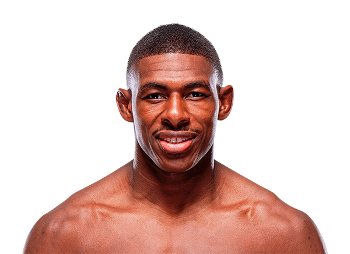
Joaquin Buckley — Welterweight fighter

Joaquin Buckley

“New Mansa”
21W8L
Power Striker
VS
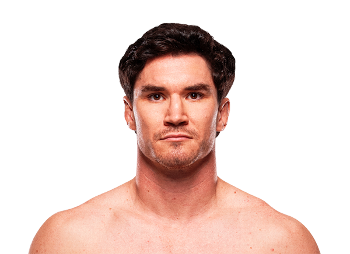
Mike Malott — Welterweight fighter

Mike Malott

“Proper”
14W2L1D
Dual-Threat Finisher

Five-round experience against a hometown finisher who has never seen round four

WelterweightRogers Place, Edmonton, AlbertaOctober 17, 2026Standard 30ft Octagon

Fight overview

The fight in 30 seconds

Malott is the cleaner fighter, landing more often, getting hit less and never once dropped in the Octagon, and his wrestling gives him a second way to win rounds. Buckley's answer is power and time: his output climbs as fights age and he has already been into the championship rounds. If Malott banks the early rounds, that late surge has too much ground to make up.

Paths that change the fight

  • Joaquin BuckleyLand the one big shot and make the fight long. His power is the single heaviest weapon in the matchup, his output climbs as fights age, and he is the only man here who has been past fifteen minutes — he out-landed Usman in each of the last three rounds of their fight. He has to get there without spending the early rounds underneath.
  • Mike MalottWin the rounds, not just the exchanges. He is more accurate, absorbs less and has never been knocked down in the Octagon; banking the first two rounds at range and mixing in takedowns and control — the way he took all three cards from Kevin Holland — leaves Buckley needing a knockout against a chin that has never been dropped.
What limits this estimate · Analyst conviction: 4/10
  • Buckley's power: fifteen career knockouts, four stoppages in eight welterweight fights, and never stopped at welterweight himself.
  • Malott has never fought a fourth round; Buckley went twenty-five minutes with Usman and out-landed him in each of the last three rounds.

Editorial assessment of the evidence, not a win probability or a calibrated confidence interval.

Joaquin Buckley

Insufficient price data
Model win probability
45%
Fair odds
+122
Reference quote
—
Fair decimal odds
2.22

Mike Malott

Insufficient price data
Model win probability
55%
Fair odds
-122
Reference quote
—
Fair decimal odds
1.82
Price freshness & calculation notes

Quotes older than 48 hours are marked outdated. EV at an old or undated price is a historical calculation, not a current opportunity. Date-only snapshots have no verified capture time.

Sources and data limitations

Career statistics and fight results through September 2026. Composite scores, probabilities and fair prices are MMA Analytics model outputs.

Model methodology
01

The Frame

What this fight is really about — and the measurements that shape it

The Analyst's Take

Joaquin Buckley arrives in Edmonton on the first losing streak of his welterweight career. Kamaru Usman controlled him for almost thirteen of twenty-five minutes in June 2025, and in May Sean Brady took him down four times, held him for 12:09 of fifteen minutes and out-landed him 77 to 5. Mike Malott arrives on four straight wins, the last a third-round stoppage of Gilbert Burns in a five-round main event. On the rate lines Malott is the cleaner fighter: 52% striking accuracy against 36%, 2.83 significant strikes absorbed per minute against 3.10, 1.57 takedowns per fifteen minutes at 57% against 1.43 at 45%, and 73% takedown defence against 70%. He has scored five knockdowns in eight UFC fights and has never been dropped. Buckley's case is the part a rate sheet does not hold: fifteen career knockouts, eight of them in the Octagon against a list that includes Stephen Thompson, Vicente Luque and Colby Covington; three inches of reach; output that climbs from 13.9 significant strikes in his first rounds to 20.6 in his thirds; and twenty-five minutes with Usman. Malott has never fought a fourth round, and opponents have landed more on him late — 8.1 significant strikes in an average first round, 20.0 in an average third, though Neil Magny's 46 in a single round carries most of that. Weighed together, the fighter who is cleaner at range, has a second way to win rounds and fights in front of his own crowd is the pick: the model makes Malott a 55% favourite, and Buckley's 45% rests on his power and on how deep this fight goes.

Joaquin Buckley
Attribute
Mike Malott
32
Age
34
5'10"
Height
+3" Malott6'1"
76"+3" Buckley
Reach
73"
40"
Leg Reach
+1" Malott41"
Southpaw
Stance
Orthodox
St. Louis, United States
Origin
Burlington, Ontario, Canada
—
Team
Niagara Top Team
Aug 8, 2020
Octagon Debut
Apr 9, 2022
Power striking and kicks from range, takedowns as a second layer
Fighting Style
Accurate striking, guillotines and arm-triangles off scrambles

The tape reads backwards. Malott is three inches taller at 6'1" and Buckley still owns three inches of reach — 76 against 73, unusual geometry for a 5'10" welterweight and exactly the frame a southpaw wants for teeps, head kicks and long outside entries. Malott has to cross that corridor to reach the range where his 52% striking accuracy lives. The legs are a live target in both directions: 31.1% of Malott's first-round strikes go to the legs, the highest single-round leg share of either man, while 16.9% of Buckley's opening-round offence goes to the legs. Age is close to a wash — Buckley is 32, Malott turns 35 three weeks after the fight.

Venue Factor
Rogers Place will be loud for the Canadian from the walkout, and Malott has already won in Edmonton — a unanimous decision over Trevin Giles in November 2024. He is 5-1 in the UFC on Canadian soil. The noise is worth something specific: adrenaline for the first exchanges and the benefit of the doubt in close early rounds, which is where his numbers are strongest anyway. What it cannot do is add minutes to a résumé that has never included a fourth round. Home-cage equity is front-loaded; a five-round main event is, by definition, the longest night of Malott's career.
02

The Fighters

Careers, chins, schedules — and the form they bring into the cage

Joaquin Buckley lands a kick on a bloodied Colby Covington

Joaquin Buckley

Pro Record
21-8-0
UFC Record
11-6 over seventeen Octagon bouts since 2020
Streak
Two straight losses — decisions to Kamaru Usman (Jun 2025) and Sean Brady (May 2026)
Finish Rate
15 of 21 career wins by knockout (~71%); 8 of his 11 UFC wins
Avg Fight Time
11:45
Chin · Tested — three UFC knockout losses, all at middleweightSOS · Ranked welterweightPower striker with a takedown layer

The highlight became a résumé, and then the résumé met wrestlers. Buckley entered public consciousness with a spinning back kick that ended Impa Kasanganay in 2020 and spent three years as a middleweight who could be knocked out — Kevin Holland stopped him in the third on his UFC debut, Alessio Di Chirico in the first, Chris Curtis in the second. The move to welterweight in 2023 rebuilt him: Andre Fialho kicked out in the second, Alex Morono out-pointed, Vicente Luque stopped in the second, Nursulton Ruziboev out-pointed, Stephen Thompson knocked out in the third, and Colby Covington finished on a doctor's stoppage late in the third of a five-round main event. Six straight wins. Then two elite wrestlers solved him the same way. Kamaru Usman controlled him for 12:57 of twenty-five minutes in June 2025, and in May 2026 Sean Brady took him down four times, controlled 12:09 of fifteen minutes and out-landed him 77 to 5. Neither man hurt him — he has never been stopped at welterweight — but neither let him throw.

Mike Malott exchanging with Kevin Holland

Mike Malott

Pro Record
14-2-1
UFC Record
7-1 across eight bouts since 2022
Streak
Four straight since the January 2024 loss to Neil Magny — Giles, Radtke, Holland and a third-round stoppage of Burns
Finish Rate
12 of 14 career wins by stoppage (~86%); 5 of his 7 UFC wins
Avg Fight Time
9:33
Chin · Never knocked down in the Octagon — one stoppage lossSOS · Rising — one former title challenger stoppedDual-path finisher

A career built on moving first. Malott finished his first three UFC opponents — Mickey Gall in the first, Yohan Lainesse by arm-triangle in the first, Adam Fugitt by guillotine 66 seconds into the second — and nine of his fourteen professional wins have come in the opening round. Then Neil Magny showed the other version. Malott took him down four times and controlled him for six minutes, but Magny survived, got on top in the third, landed 46 significant strikes in that round and finished him with punches from mount at 4:45 — the only loss of his UFC career. The response has been the best stretch of his career: Trevin Giles and Kevin Holland out-pointed over fifteen minutes, Charles Radtke knocked out 26 seconds into the second, and Gilbert Burns dropped twice and stopped at 2:08 of the third round of a five-round main event while Burns went 0 for 7 on takedowns. He can win patiently now as well as fast. What that stretch has not produced is a fourth round.

Joaquin Buckley
0 dealt · 0 absorbed
Knockdown Exchange
Knockdowns dealt vs absorbed.
Mike Malott
0 dealt · 0 absorbed

Joaquin Buckleysignature weapons

Head KicksImpa Kasanganay by spinning back kick at 2:03 of the second (2020) and Andre Fialho by head kick at 4:15 of the second (2023)
×2
Right Hand & Ground StrikesJordan Wright at 0:18 of the second, Antonio Arroyo in the third, Vicente Luque from top in the second and Stephen Thompson at 2:17 of the third — nine UFC knockdowns in all
×4
Damage StoppagesAlbert Duraev after the second round and Colby Covington at 4:42 of the third, both stopped on the doctor's advice
×2

Mike Malottsignature weapons

Guillotine & Arm-TriangleAdam Fugitt by guillotine at 1:06 of the second, Yohan Lainesse by arm-triangle at 4:15 of the first and Shimon Smotritsky by guillotine on the Contender Series — six career submissions in all
×3
Punching PowerMickey Gall at 3:41 of the first, Charles Radtke 26 seconds into the second and Gilbert Burns at 2:08 of the third — five UFC knockdowns dealt, none absorbed
×3

Joaquin Buckley

L
Sean Brady
Decision — Unanimous

Opponent context: elite

R3
UFC 328 — May 9, 2026
L
Kamaru Usman
Decision — Unanimous

Opponent context: elite

R5
UFC FN: Usman vs. Buckley — Jun 14, 2025
W
Colby Covington
TKO — Doctor's Stoppage

Opponent context: elite

R3 (4:42)
UFC FN: Covington vs. Buckley — Dec 14, 2024
W
Stephen Thompson
KO/TKO — Punch

Opponent context: veteran

R3 (2:17)
UFC 307 — Oct 5, 2024
W
Nursulton Ruziboev
Decision — Unanimous

Opponent context: prospect

R3
UFC FN: Lewis vs. Nascimento — May 11, 2024
Pattern

Four wins over named welterweights and then two losses to the two best wrestlers he has faced. Luque was stopped in the second, Thompson knocked out in the third, Ruziboev out-pointed, Covington finished late on a doctor's call — a run that took Buckley from highlight act to ranked contender. Usman and Brady then beat him the way wrestlers beat him: not by hurting him but by taking the fight somewhere he could not score. Across those two fights he landed 49 significant strikes in forty minutes. Note the round numbers on the finishes too: none of his eleven UFC wins ended in the first round. He is a slow starter who gets more dangerous as the fight ages, which is the opposite of the man across from him.

Mike Malott

W
Gilbert Burns
KO/TKO — Punches

Opponent context: elite

R3 (2:08)
UFC FN: Burns vs. Malott — Apr 18, 2026
W
Kevin Holland
Decision — Unanimous

Opponent context: veteran

R3
UFC FN: De Ridder vs. Allen — Oct 18, 2025
W
Charles Radtke
KO/TKO — Punches

Opponent context: prospect

R2 (0:26)
UFC 315 — May 10, 2025
W
Trevin Giles
Decision — Unanimous

Opponent context: veteran

R3
UFC FN: Moreno vs. Albazi — Nov 2, 2024
L
Neil Magny
KO/TKO — Punches from Mount

Opponent context: veteran

R3 (4:45)
UFC 297 — Jan 20, 2024
Pattern

Five finishes, two decisions, one loss. Four of the finishes came when Malott dictated the opening exchange, and they came fast — 3:41 of the first, 4:15 of the first, 1:06 of the second, 0:26 of the second. The Magny loss is the counter-example and it should worry Edmonton: a rangy welterweight survived the early surge, took top position in the third and finished him there. Since then the wins have been better and more varied — Giles and Holland over fifteen minutes, Radtke in 26 seconds, and Burns stopped at 2:08 of the third, the first finish past the second round in fourteen professional wins. That is genuine growth, but it is not championship-round evidence: the Burns main event ended before round four, and Malott has never fought a fourth or fifth round.

Joaquin Buckley

Win Methods
Wins by Round

Mike Malott

Win Methods
Wins by Round
Critical Insight
Both donuts and both round columns cover every professional win. Buckley: fifteen knockouts and six decisions in twenty-one wins, no submissions — and inside the Octagon eight knockouts and three decisions, none of the eleven ending in the first round. Malott: six knockouts, six submissions and two decisions in fourteen wins, nine of them in the first round; in the UFC it is three knockouts, two submissions and two decisions. Read the round columns together and the timing problem is plain: Malott's wins cluster at the opening bell, Buckley's in the second and third, and neither man has ever won a fight in round four or five.

Common Opponents

OpponentJoaquinMike
Kevin HollandL· KO/TKO R3 (0:32, 2020)W· UD3 (Oct 2025)
The only genuine shared opponent — but Buckley's loss was his UFC debut, at middleweight, six years and a division ago
Colby Covington / Gilbert BurnsW· TKO R3 (4:42) over Covington (5-rd main event)W· TKO R3 (2:08) over Burns (5-rd main event)
Each man's best five-round night, both against a former title challenger and both ended in the third — so only Buckley has seen the championship rounds, in the Usman loss
03

The Numbers

Composites, division ranks and round-by-round evidence

Composite scores summarize selected statistics on a 0–100 scale. They are not win probabilities. Compare the underlying metrics, opponent quality and UFC experience before interpreting a score difference as a matchup advantage.

Striking

SLpM 25% · StrAcc 30% · StrDef 30% · SApM 15%

0
Joaquin
0
Mike

A one-point gauge and a genuine split. Malott is the more accurate striker (52% against 36%), lands slightly more (3.94 against 3.62) and absorbs less (2.83 against 3.10); Buckley defends slightly better (59% against 57%). The rates lean Malott; the composite stays level because defence carries the heaviest weight.

Grappling

TD/15 25% · TDAcc 25% · TDDef 30% · Sub/15 20%

0
Joaquin
0
Mike

Two points to Malott. He takes opponents down more often and more efficiently (1.57 per fifteen minutes at 57% against 1.43 at 45%), defends slightly better (73% against 70%) and has a real submission game where Buckley has none. Buckley's grappling value is defensive: he has never been submitted, but Usman and Brady both held him down.

Technical

(Striking + Grappling) / 2

0
Joaquin
0.0
Mike

Level on technique, with Malott a half-point ahead. The gauges flatten a real edge: defence carries the heaviest striking weight and Buckley's one elite number is defence, while Malott leads on accuracy, absorption, knockdowns and every grappling input. What the composites cannot measure — Buckley's finishing résumé and what happens after the fifteen-minute mark — is the counterweight, and it is why the gap is narrow.

MetricJoaquinMike
Avg Fight Time11:459:33
Pace TierBelow average — 3.62 SLpM (division 4.38)Below average — 3.94 SLpM
R3/R1 Output148% (20.6 vs 13.9 sig)82% (13.8 vs 16.9 sig)
Slow Start %High — 13.9 sig at 31% in R1, 0.06 KDLow — 16.9 sig at 50% in R1, 0.13 KD
Champ Rounds2 rounds — the Usman fight (11 and 20 sig), a decision lossfew UFC fights—few UFC fights

Archetype Base Rate

Power Striker 45%55% Dual-Threat Finisher

— · The 55-45 line is the model's own simulation. It gives Malott the rate sheet, the grappling layer and the Canadian crowd, and keeps Buckley close on his knockout power, three inches of reach and the only championship-round minutes in the fight.

Joaquin BuckleyMike Malott

Welterweight

· 54 fighters

Rank bars use the recorded division cohort. Where a rank is unavailable, the comparison shows the difference from the published division average; the white marker denotes equality. Percentage differences are percentage points (pp). Higher is not always better: fewer strikes absorbed is preferable. Missing benchmarks are not estimated.

StatJoaquinJoaquin comparisonDiv avgMike comparisonMike
SLpM3.62
34/54
4.38
27/54
3.94
Str Acc36%
53/54
48.7%
24/54
52%
Str Def59%
8/54elite
53.7%
24/54
57%
SApM3.10
-0.79 vs avg
3.89
-1.06 vs avg
2.83
KD Avg0.68
+0.16 vs avg
0.52
+0.46 vs avg
0.98
Damage Ratio1.17
20/54
1.22
13/54
1.39
TD/151.43
21/54
1.64
14/54
1.57
TD Acc45%
Not available
—
Not available
57%
TD Def70%
Not available
~67%
Not available
73%
Sub/150.08
34/54
0.47
15/54
0.59
Avg Fight Time11:45
Not available
—
Not available
9:33
Statistical Verdict
Read the table and Malott wins more of it: output (3.94 against 3.62), accuracy (52% against 36% — Buckley's accuracy ranks 53rd of 54), absorption (2.83 against 3.10), knockdown rate (0.98 against 0.68), takedown volume and accuracy, takedown defence (73% against 70%) and submission rate. Buckley's rows are striking defence, eighth in the division at 59%, and fight length. That is the honest shape of the matchup: the rate sheet belongs to the home fighter, and Buckley's case lives in what a per-minute table cannot hold — who he has beaten, how he finishes and how late he can do it.

Significant Strikes Landed per Round

⚠ R4, R5: single-fight sample for Joaquin Buckley

Control Time per Round (sec)

Joaquin Buckley

  • He builds. Output climbs 13.9 → 15.6 → 20.6 across the first three rounds and accuracy climbs with it, 31% → 37% → 45%. His knockdown rate is 0.06 in the first and roughly 0.30 in each of the second and third — the danger is late, not early.
  • The fight migrates toward the mat as it goes: ground strikes are 7.2% of his first-round offence, 16.8% of his second and 37.9% of his third, with head-hunting rising from 52.1% to 74.3%.
  • His only championship rounds are the Usman fight — 11 significant strikes in the fourth, 20 in the fifth, zero control time in either, and 95% of his fifth-round offence thrown at distance. The Brady fight shows the other limit: 5 significant strikes landed in fifteen minutes while Brady controlled 12:09.

Mike Malott

  • The most distinctive first round in the matchup: 31.1% of his opening-round strikes go to the legs and 92.6% of his offence is thrown at distance, at 50% accuracy. He kicks the legs and stays out of the pocket until he decides to close.
  • His second round is his most accurate at 55%, and his knockdowns arrive later than his reputation suggests — 0.33 per second round and 0.50 per third, with both Burns knockdowns in the round that ended it.
  • The warning sits on the other side of the ledger. Opponents land 8.1 significant strikes on him in an average first round, 11.8 in the second and 20.0 in the third — driven by Neil Magny's 46 in the round that finished him, though Kevin Holland also landed 20 in their third.
Critical Insight
The two curves cross in the third round, with a caveat on each side. Malott is at his best early — 50% accuracy in the first, 55% in the second — and opponents land 8.1 significant strikes on him in an average first round against 20.0 in an average third, most of it from Neil Magny's 46. Buckley does not reach his best round until the third, 20.6 at 45% with 37.9% of it on the ground, a figure lifted by the 64 he landed on Nursulton Ruziboev. Both trends are real but thinner than the averages suggest. In a five-round fight the crossing still arrives with two rounds to go, which is why Buckley stays live late.

Strike targeting

Joaquin

Head
62%
Body
28%
Legs
10%

Mike

Head
60%
Body
20%
Legs
20%

Head hunting vs body work vs leg attack — the shape of the damage.

Striking range — distance, clinch and ground

JoaquinMike
75%Distance84%
6%Clinch2%
19%Ground14%

Share of significant strikes landed at distance, in the clinch and on the ground across each fighter's UFC rounds, weighted by strike volume.

04

The Story of the Fight

Advantages, worst cases, gameplans — and the patterns underneath

Where the fight lives

Who owns each phase — and by how much
Open SpaceEven

Malott is the more accurate at range (50% in his opening rounds against Buckley's 31%); Buckley has three inches of reach and two head-kick finishes

Pocket / ExchangesJoaquin owns it

Fifteen career knockouts and nine UFC knockdowns for Buckley — though Malott has never been dropped in the Octagon and knocks opponents down at 0.98 per fifteen minutes

ClinchEven

Neither man lives there: 5.8% of Buckley's UFC offence and 1.7% of Malott's lands in the clinch

GroundMike owns it

Malott lands 57% of his takedowns and has six career submissions; Usman and Brady controlled Buckley for more than twelve minutes each

Path to Victory

Joaquin Buckley

Land the one big shot and make the fight long. His power is the single heaviest weapon in the matchup, his output climbs as fights age, and he is the only man here who has been past fifteen minutes — he out-landed Usman in each of the last three rounds of their fight. He has to get there without spending the early rounds underneath.

Why they win
01
He is the one who has been past fifteen minutes

Buckley went twenty-five minutes with Kamaru Usman and has headlined two five-round main events. Malott has never fought a fourth round — his one five-round booking, the Burns main event, ended at 2:08 of the third.

02
His curve rises

13.9 significant strikes in the first round, 20.6 in the third; accuracy from 31% to 45%; ground offence from 7.2% to 37.9%. Every minute that passes moves the fight toward the version he wins.

03
Malott's defence leaks late

Opponents land 8.1 significant strikes on Malott in an average first round and 20.0 in an average third. Neil Magny's 46 in the third round of their fight is the extreme case, and it ended in a stoppage.

04
The heavier résumé

Fifteen career knockouts, eight in the UFC, and wins over two former title challengers in Stephen Thompson and Colby Covington, plus Vicente Luque. Malott's best win, over Gilbert Burns, is his only one at that level.

05
Three inches of reach and the better striking defence

76 inches against 73 from a southpaw who throws 84.3% of his first-round offence at distance, and 59% striking defence — eighth of 54 welterweights — against 57%.

The gameplan
  1. 1
    Kick from 76 inches and make him travel

    Teeps, southpaw open-stance kicks and the spinning arsenal. 84.3% of his first-round offence is already at distance — the job is to make Malott pay a toll for every step he closes.

  2. 2
    Deny the takedown, not just the finish

    The two men who beat him most recently did it from top position. His 70% takedown defence has to hold against a fighter who lands 57% of his attempts, and the fence is where it gets tested.

  3. 3
    Survive the first ten minutes on purpose

    He is a slow starter against a man who finishes early. Losing the first round 10-9 is survivable; losing it to a knockdown or a choke is the whole fight.

  4. 4
    Pour it on when the defence starts to leak

    Opponents land 20.0 significant strikes on Malott in an average third round. That is when Buckley's own third-round volume — 20.6 at 45% — turns into damage.

  5. 5
    Trust the back half

    Three UFC finishes in third rounds, twenty-five minutes against Usman, and rounds four and five that Malott has never seen. The longer this goes, the more it belongs to him.

Path to Victory

Mike Malott

Win the rounds, not just the exchanges. He is more accurate, absorbs less and has never been knocked down in the Octagon; banking the first two rounds at range and mixing in takedowns and control — the way he took all three cards from Kevin Holland — leaves Buckley needing a knockout against a chin that has never been dropped.

Why they win
01
The cleaner rate line almost everywhere

52% striking accuracy against 36% (Buckley's ranks 53rd of 54), 3.94 landed per minute against 3.62, 2.83 absorbed against 3.10. If this is a technical fight at range, Malott scores more of it.

02
Never knocked down in the Octagon

Five knockdowns dealt in eight UFC fights and none absorbed — 0.98 per fifteen minutes against Buckley's 0.68. Buckley has been stopped three times in the UFC, all at middleweight.

03
Two ways to finish, and Buckley has one

Six career submissions — two guillotines, two armbars, a rear-naked choke and an arm-triangle — and 0.59 attempts per fifteen minutes. Buckley has no submission wins in twenty-one.

04
The wrestling blueprint already exists

Usman and Brady took Buckley down eight times across forty minutes and controlled him for more than twenty-five of them. Malott lands 57% of his takedowns and stops 73% of the ones aimed at him.

05
Momentum, and a Canadian crowd

Four straight wins, the last a main-event stoppage of Gilbert Burns, against a man on two straight losses. Malott is 5-1 in the UFC on Canadian soil and has already won in Edmonton, over Trevin Giles in 2024.

The gameplan
  1. 1
    Win the first two rounds clean

    His opening rounds are his most accurate — 50% in the first, 55% in the second — against a man who starts at 31%. Banking both leaves Buckley needing three straight.

  2. 2
    Take him down and keep him there

    Usman and Brady wrote the plan. Malott lands 57% of his takedowns; the question is whether he commits to control rather than hunting the finish from every position.

  3. 3
    Kick the legs early

    31.1% of his first-round strikes already go to the legs. Taking the base out from under a southpaw kicker is how the 76-inch reach stops mattering.

  4. 4
    Chain to the neck in scrambles

    The Fugitt guillotine and the Lainesse arm-triangle are the template. Buckley has never been submitted, but making him defend the neck still costs him energy and position.

  5. 5
    Protect the third round

    It is where Magny finished him and where his absorption jumps. If he is ahead after two, the plan is range and discipline, not a firefight.

Danger Zone

How Joaquin Buckley loses

  • He starts the way he always starts — 13.9 significant strikes at 31% in the first round — and loses the first two rounds to a more accurate fighter in a loud building, leaving him needing a finish in the championship rounds.

  • Malott reads the Usman and Brady tapes and wrestles: takedowns at 57% accuracy, control, and a fifteen-minute stretch in which Buckley throws almost nothing, as he did against Brady.

  • He chases a spinning kick, gets caught in the scramble, and finds out why six of Malott's fourteen wins came by submission.

Danger Zone

How Mike Malott loses

  • The fight goes long. Rounds four and five, which he has never fought, arrive against a man whose output peaks in the third, and the late-fight leak that let Magny land 46 significant strikes in a round opens again.

  • He closes the distance through three inches of reach and walks onto the right hand or the kick that finished Thompson and Fialho — Buckley has eight UFC knockouts.

  • He wins the first two rounds and fades, and Buckley's rising curve turns a 20-18 lead into a 48-47 loss.

The fight's central tension

The Rate Sheet Belongs to Malott

Malott is more accurate (52% against 36%), absorbs less (2.83 against 3.10), knocks opponents down more often (0.98 per fifteen minutes against 0.68), takes them down more often and more efficiently, and defends takedowns slightly better (73% against 70%). It is the main reason the model makes him the favourite; the rest of this section is what keeps Buckley close.

52% vs 36%
Striking accuracy — Malott against Buckley
Why five rounds matters

The Curves Cross at Round Three

Buckley opens at 13.9 significant strikes and reaches 20.6 in the third. Malott's defence runs the other way: opponents land 8.1 in his first rounds and 20.0 in his thirds. In a three-round fight that crossing comes at the end. In a five-round fight it comes with ten minutes left.

20.6 vs 13.8
Third-round significant strikes landed — Buckley against Malott
Buckley's slow start

Buckley Has Never Won a UFC Fight in Round One

Not one of his eleven UFC wins ended in the first round — five ended in the second, three in the third. He opens at 13.9 significant strikes and 31% accuracy with a 0.06 knockdown average. Nine of Malott's fourteen professional wins came in the first round, and Rogers Place will be loudest for exactly that window.

The blueprint against Buckley

Usman and Brady

Buckley's last two fights were losses to wrestlers who took him down eight times and controlled him for more than twenty-five of forty minutes. Against Brady he landed five significant strikes in fifteen minutes. Malott is not a control wrestler in the same mould — his longest UFC control night is six minutes, against Magny — but the map is on tape.

The closest thing to a preview

The Magny Tape

Neil Magny is the one welterweight who survived Malott's early surge. Malott took him down four times and controlled him for six minutes; then Magny got on top in the third, landed 46 significant strikes in that round and finished him at 4:45. It is Malott's only UFC loss, and it is the shape of Buckley's best round — 37.9% of his third-round offence lands on the ground.

The Five-Round Clock

Joaquin Buckley danger windowMike Malott danger windowNeutral / contested
R1 · 0:00–5:00Malott's building

Home crowd, his 50% opening-round accuracy and a third of his strikes going to the legs — against a man who opens at 31% accuracy with a 0.06 knockdown average and has never finished anyone in a UFC first round.

Critical Insight
The clock favours Malott early and asks him a question late. His best work sits in the first ten minutes — home noise, his most accurate rounds, a record that ended nine professional wins in round one — and a decision built on those rounds is the single most likely way this fight ends. Buckley's advantages accumulate: his output rises through the fight, his ground share grows fivefold by the third, and he out-landed Usman in each of the last three rounds of their five-rounder. If Buckley reaches the midpoint of the third unhurt and not far behind, the remaining twelve minutes are the part of the fight only he has done before.

Finish Threat by Round

Share of each fighter's wins that end in each round — early finishers spike left, grinders rise right.

05

The Verdict

One hundred simulated fights, the betting market, and our conviction

If you only read 3 things
1

Mike Malott owns most of the rate sheet — 52% striking accuracy against 36%, fewer strikes absorbed, more knockdowns, better takedown numbers — and has never been knocked down in the Octagon. Joaquin Buckley's case is résumé, power and time.

2

The curves cross at round three. Buckley's output climbs from 13.9 significant strikes in the first to 20.6 in the third, while opponents land 8.1 on Malott in the first and 20.0 in the third. Only Buckley has fought a fourth and fifth round.

3

Model: Malott 55% / Buckley 45%, conviction 4/10 — the cleaner fighter with the grappling layer and the home crowd, held to a narrow edge by Buckley's knockout power, his reach and the only championship-round minutes in the fight.

Model outcomes per 100 fights

Each square represents one percentage point of the model distribution, not an observed fight. This visualization does not measure model accuracy or reduce uncertainty in the inputs.

Buckley KO/TKO — 26%Buckley Decision — 17%Buckley Submission — 2%Malott Decision — 27%Malott KO/TKO — 19%Malott Submission — 9%

Each square = 1 model percentage point. Joaquin Buckley gold · Mike Malott orange · color opacity: 100% = decision, 70% = submission, 45% = KO/TKO.

The rate sheet

Malott is more accurate (52% against 36%), absorbs less, knocks opponents down more often and has never been dropped in the Octagon. Per minute he is the better fighter, and that is the largest single reason he is the 55% favourite.

A second way to win rounds

Malott lands 57% of his takedowns and won all three cards against Kevin Holland on the strength of late control despite landing fewer significant strikes. Buckley's last two opponents held him down for more than twenty-five of forty minutes. That layer is why Malott's biggest bucket is a decision (27).

Buckley's power

Fifteen career knockouts, eight in the UFC, and four stoppages in eight welterweight fights, including Thompson, Luque and Covington. Malott has never been dropped in the Octagon, but one clean shot is the variable a rate sheet cannot price — the 26-point knockout bucket, and the main reason this is close.

Five-round experience

Buckley has fought twenty-five minutes and out-landed Usman in each of the last three rounds; Malott has never seen a fourth round. The model gives Buckley the edge after the fifteen-minute mark, which feeds his 17-point decision bucket and the late tail of his knockout path.

Form and Rogers Place

Malott is on four straight wins and 5-1 in the UFC on Canadian soil; Buckley has lost two straight and landed five significant strikes against Brady in May. The crowd is priced as early-round energy and close-round judging, not as a structural adjustment.

Fight Scripts

0%
of simulations

Twenty-Five Clean Minutes

Malott wins the first two rounds at range on accuracy, mixes in takedowns when Buckley loads up, and holds position late the way he did against Kevin Holland. Buckley comes on after the midpoint, as he did against Usman, but not by enough. The cards read 48-47 or 49-46 Malott — the single largest bucket in the simulation.

Scripted outcomes for Joaquin Buckley vs Mike Malott — how each version of this fight unfolds.

Joaquin Buckley win probability
0%
26%
17%
KO/TKODECSUB
  • Buckley's primary path and more than half of his equity. Fifteen career knockouts, eight in the UFC and four stoppages in eight welterweight fights — arriving as a kick or right hand when Malott closes the reach, or as ground strikes after a scramble later in the fight. Malott has never been knocked down in the Octagon, which is why this bucket is 26 and not higher.

  • The five-round path. Survive the early rounds without long stretches underneath, then win the back half on output — he out-landed Usman in each of the last three rounds of their fight. It means beating the more accurate fighter on the cards in Canada, which keeps it at 17.

  • Two points of scramble noise. Buckley has no submission wins and 0.08 attempts per fifteen minutes — a positional accident, not a path.

Mike Malott win probability
0%
19%
27%
9%
KO/TKODECSUB
  • Five UFC knockdowns and none absorbed, and three knockout wins in the Octagon including the third-round stoppage of Burns. Buckley has never been stopped at welterweight, so most of these points need Malott to win the early exchanges clean, or to finish from top after a knockdown as he did against Burns.

  • His largest single path and the most likely outcome in the simulation. More accurate, harder to hit and able to win rounds with takedowns and control, Malott can bank the first two and take one of the last three — the Kevin Holland fight, which he won on all three cards despite landing fewer significant strikes, is the template.

  • Six career submissions and 0.59 attempts per fifteen minutes, but against a man who has never been submitted in twenty-nine professional fights and survived more than twenty-five minutes underneath Usman and Brady. It needs a scramble, almost always in the first two rounds, which keeps it at 9.

Projected Scorecards

How the model scores each round
R1
Mike
R2
Mike
R3
Joaquin
R4
Even
R5
Joaquin
48-47 Malott
Malott takes the first two on accuracy and steals one of the last three with a takedown
The most likely card in a fight that reaches them
49-46 Malott
Accuracy and takedowns keep him ahead throughout
Common if Buckley starts as slowly as usual
48-47 Buckley
Buckley shares the early rounds and takes the last three on output
His path to the cards, worth 17 of his 45 points

Model and price

Joaquin Buckley

Insufficient price data
Model win probability
45%
Fair odds
+122
Reference quote
—
Fair decimal odds
2.22
Estimated EV
—
Edge vs no-vig market
—

Mike Malott

Insufficient price data
Model win probability
55%
Fair odds
-122
Reference quote
—
Fair decimal odds
1.82
Estimated EV
—
Edge vs no-vig market
—

EV uses the displayed price: probability × decimal odds − 1. Edge is a percentage-point difference from a proportionally de-vigged, same-book pair. A dash means that comparison is unavailable.

Price freshness & calculation notes

Quotes older than 48 hours are marked outdated. EV at an old or undated price is a historical calculation, not a current opportunity. Date-only snapshots have no verified capture time.

Fair odds are the break-even price under this estimate, not a recommended entry price. Model uncertainty can erase a small edge.

What price would change the calculation? · Joaquin Buckley

Change the assumptions to see how the required price moves. This does not update the published model or recommend an entry price.

Required decimal price: 2.23 or higher. At the exact unrounded break-even price, estimated EV is zero.

What price would change the calculation? · Mike Malott

Change the assumptions to see how the required price moves. This does not update the published model or recommend an entry price.

Required decimal price: 1.82 or higher. At the exact unrounded break-even price, estimated EV is zero.

Original analyst price notes

These notes describe the original analysis and may refer to older prices.

Malott by decision is the single most likely outcome in the simulation at 27 points, a fair price of about +270. A market that prices Malott as a finisher on his nine first-round wins may leave it long, and Buckley has never been stopped at welterweight, which pushes this fight toward the cards. On the other side, Buckley by knockout carries 26 of his 45 points, fair at about +285: if the market reacts to the Brady loss by pricing him as a wide underdog, his knockout prop is where the value sits. Malott by submission, at 9 points, is thinner than his record suggests against a man who has never been submitted.

Conviction
0
4/10

Editorial confidence in the evidence, not a win probability or a calibrated confidence interval.

A narrow lean to the cleaner fighter. Malott is more accurate, absorbs less, has never been knocked down in the Octagon, carries a grappling layer Buckley has struggled with and fights at home. Held at four out of ten because Buckley brings the heavier knockout record, three inches of reach and the only championship-round minutes in the fight. Lean: Mike Malott.

What backs the lean
  • Malott is more accurate (52% against 36%), absorbs less (2.83 against 3.10 per minute) and knocks opponents down more often (0.98 per fifteen minutes against 0.68) — and he has never been dropped in the Octagon.

  • A second way to win rounds: 57% takedown accuracy against a man whose last two opponents controlled him for more than twenty-five of forty minutes.

  • Form: four straight wins including a main-event stoppage of Gilbert Burns, against two straight losses and five significant strikes landed in fifteen minutes against Brady in May.

  • Home cage: 5-1 in the UFC in Canada and already a winner in Edmonton, in a fight where close early rounds should go to the more accurate man.

What limits it
  • Buckley's power: fifteen career knockouts, four stoppages in eight welterweight fights, and never stopped at welterweight himself.

  • Malott has never fought a fourth round; Buckley went twenty-five minutes with Usman and out-landed him in each of the last three rounds.

  • Malott's 73% takedown defence is thinner than it looks — Burns accounts for seven of the eleven attempts, and the other opponents landed three of four.

  • Three inches of reach for a southpaw kicker, and Malott turns 35 three weeks after the fight.

Final Assessment

This is a main event between a cleaner fighter and a more dangerous one. Mike Malott owns most of the rate sheet: he is more accurate, absorbs less, knocks opponents down more often, takes them down more efficiently and has never been dropped in the Octagon. Joaquin Buckley arrives off two losses to wrestlers who held him down for most of forty minutes, and in May he landed five significant strikes in fifteen minutes against Sean Brady. On form, on the per-minute numbers and on home soil, Malott is the more likely winner.

The gap is narrow because the rest of the evidence runs the other way. Buckley has fifteen career knockouts and has stopped four of his eight welterweight opponents; Malott has never been dropped in the Octagon, but one clean shot is the variable no rate sheet prices. Buckley has been through rounds four and five and out-landed Usman in each of the last three, while Malott has never fought a fourth round. Buckley's rising curve and Malott's late-round absorption each lean on a single fight, but they point the same way, and a five-round main event gives them ten extra minutes to matter. Put together, the model makes it 55-45 Malott.

The honest read: Malott narrowly, at conviction four. His most likely win is the least dramatic one — two clean early rounds, takedowns when Buckley loads up, and a close card in front of his own crowd — with a finish before the ten-minute mark close behind. Buckley's path runs almost entirely through his right hand and his kicks: if he is still upright and close at the midpoint of the third, the fight moves toward the only man in it who has already fought the championship rounds.

Skip to main content
Use Tab to navigate through elements, Enter to activate buttons and links.