
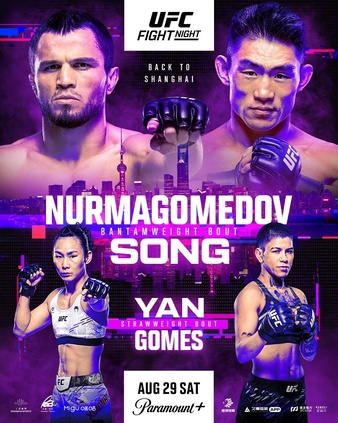
Aoriqileng vs Kai Asakura
Bantamweight Bout • UFC Fight Night: Nurmagomedov vs. Song
Saturday, August 29, 2026 • SPD Bank Oriental Sports Center, Shanghai
Explore Detailed Fighter Profiles
Click on either the fighter's name or profile image for each fighter to access comprehensive UFC statistics including striking metrics, grappling data, clinch performance, complete fight history, offensive & defensive analytics, and round-by-round breakdowns.
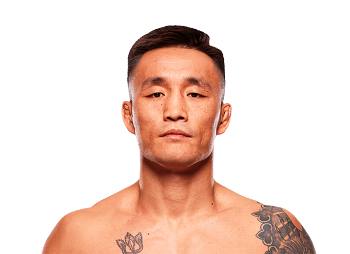
Aoriqileng
Fighter Metrics
Victory Methods
Win Round Distribution
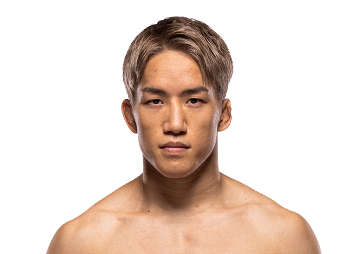
Kai Asakura
Fighter Metrics
Victory Methods
Win Round Distribution
📋 Last 5 Fights - Aoriqileng
| Date | Opponent | Result | Method |
|---|---|---|---|
| 2026-05-30 | Cody Haddon | L | TKO (Body Knees + Punches) (R2, 2:11) |
| 2025-10-18 | Cody Gibson | W | KO/TKO (Punches) (R1, 0:21) |
| 2024-09-14 | Raul Rosas Jr. | L | Decision (Unanimous) (R3, 5:00) |
| 2024-02-10 | Daniel Marcos | NC | No Contest (Groin Kick) (R2, 3:28) |
| 2023-10-07 | Johnny Muñoz Jr. | W | Decision (Unanimous) (R3, 5:00) |
📋 Last 5 Fights - Kai Asakura
| Date | Opponent | Result | Method |
|---|---|---|---|
| 2026-05-30 | Cameron Smotherman | W | KO (Punch) (R1, 1:50) |
| 2025-08-16 | Tim Elliott | L | Submission (Mounted Guillotine) (R2, 4:39) |
| 2024-12-07 | Alexandre Pantoja | L | Submission (Rear-Naked Choke) (R2, 2:05) |
| 2023-12-31 | Juan Archuleta | W | KO/TKO (Rizin BW Title) (R2, 3:20) |
| 2023-05-06 | Yuki Motoya | W | KO/TKO (R3, 2:25) |
Technical Analysis
Technical Score
Cardio Score
Overall Rating
📊 Technical Score
Calculated as the average of Striking Composite (50 vs 48) and Grappling Composite (40 vs 32), computed against approximate bantamweight norms. Balances overall striking effectiveness with grappling ability to measure complete technical skills.
💪 Cardio Score
Based on average fight duration, striking rate per minute, takedown rate, and finish rate. Measures cardiovascular endurance and ability to maintain pace throughout fights.
🎯 Overall Rating
Simple average of Technical Score and Cardio Score. Provides a holistic view of fighter capabilities combining skill level with physical conditioning and fight performance.
Striking Composite
Grappling Composite
Technical Radar Comparison
Visual comparison of key performance metrics between both fighters
📊 Detailed Statistical Comparison
🥊 Fight Analysis Breakdown
🧩 Aoriqileng Key Advantages
Both numbers are clearly above the bantamweight norm and clearly above Kai Asakura's own UFC figures (2.53 SLpM, 34% accuracy) — even accounting for Asakura's small, skewed sample, Aoriqileng is the more proven high-output striker at this level, and 62% of his career wins already come by grinding out decisions this way.
Ten completed Octagon fights to Kai Asakura's three. He has faced UFC-level pace, cage generalship, and championship-round pressure that Asakura has only glimpsed in flashes — his three UFC fights have combined for barely 18 minutes of action.
Asakura has attempted zero takedowns in three UFC fights and carries no answer for a shot. Aoriqileng's modest 1.11 TD/15 and 60% takedown defense at least give him a way to change rhythm, steal exchanges, or simply survive a bad striking round — something Asakura cannot easily replicate in reverse.
⚠️ Unfavorable Scenarios
Kai Asakura lands clean early behind real one-punch power, and the exact pattern from the Cody Haddon fight repeats — Aoriqileng gets hurt, his composure erodes, and the fight ends inside two rounds rather than the 15-minute grind his volume is built for.
His striking defense is below the divisional norm and his 5.66 strikes absorbed per minute is a genuinely high number for the weight class. Against a fighter whose UFC knockdown average (0.81) is nearly double his own, the volume he wins rounds with is also the exposure that ends his night.
📋 Likely Gameplan
Establish output and rhythm from the opening bell — his path to winning is accuracy and volume over 15 minutes — but stay defensively disciplined. The Haddon tape shows exactly what happens when he gets careless in exchanges against real power.
Even a threatened shot (27% completion is enough to matter) can disrupt Asakura's power-punching timing and buy a breather. Drag the fight into deep water — his 10-fight UFC experience is a real asset against a man who has never gone a third UFC round.
🚀 Kai Asakura Key Advantages
A 0.81 UFC knockdown average — nearly double Aoriqileng's 0.47 — backed by a career that has produced 14 knockouts in 22 wins, including a finish of former Rizin bantamweight champion Kyoji Horiguchi. This is not a theoretical threat; it is his single defining skill.
47% UFC striking defense and 5.66 strikes absorbed per minute are poor numbers for the division, and Aoriqileng was just walked down and finished by strikes in his last fight. A power-punching finisher is the worst possible style matchup for a defensively porous volume fighter with a recent finish loss on his ledger.
Both UFC losses came at flyweight, a weight he had never fought at professionally before the UFC signed him for a title shot. His entire title-winning career — two Rizin Bantamweight Championships — happened at 135, and his first fight back there (the Cameron Smotherman KO) looked like the real Kai Asakura again.
⚠️ Unfavorable Scenarios
He has never seen a third UFC round — two of his three Octagon fights ended in Round 2 with him being finished, and the third ended in under two minutes. If the power doesn't land against a 10-fight UFC veteran comfortable going the distance, he is in genuinely uncharted territory.
Aoriqileng's volume and accuracy are genuinely above the divisional norm. If Asakura can't find the shot in the first two rounds, he risks losing a clear decision to a busier, more consistent output fighter — the way grappling ultimately dictated terms against him in his two UFC losses.
📋 Likely Gameplan
Thirteen of his 22 career wins came in Round 1 — there is no reason to wait against an opponent with proven, recently- exploited defensive holes. Sit down on the power shot behind the jab rather than looking to accumulate.
Low UFC volume (2.53 SLpM) is partly a product of short fights — he shouldn't need to force exchanges, just be patient and efficient behind real power aimed squarely at Aoriqileng's below-norm striking defense. Respect the occasional level change without over-committing to takedown defense he hasn't had to use much in the Octagon.
🎯 Fight Prediction Analysis
Data-driven prediction model based on statistical analysis
📊Detailed Analysis Summary
⚖️The Weight-Class Correction
The most important adjustment in this file is refusing to treat Kai Asakura's 1-2 UFC record at face value. Both losses happened at flyweight — a division he had never fought in professionally before the UFC handed him a title shot on short notice against Alexandre Pantoja. His actual career, 22-6 with two Rizin Bantamweight Championships and 14 knockouts, happened almost entirely at or near 135 pounds. His first fight back there in the UFC (a first-round KO of Cameron Smotherman) looked like the real Asakura again — this fight, not the flyweight tape, is the more relevant form line.
🎯Technical Breakdown
Aoriqileng owns the volume-and-accuracy markers (4.40 SLpM to 2.53, 50% accuracy to 34%) and a modest wrestling-adjacent edge (1.11 TD/15, 60% takedown defense to Asakura's zero attempts and 50% defense). Kai Asakura owns the danger markers — a 0.81 UFC knockdown average (nearly double Aoriqileng's 0.47), a 77% career finish rate to 38%, and less damage absorbed per minute (3.34 to 5.66). Read honestly, the composite model actually grades Aoriqileng higher overall (~50.5 to ~44.5) on the strength of his activity and UFC-tested volume — which is exactly why the conviction here is modest.
🧩Key Battle Areas
So why does the outcome model still favor Kai Asakura? Because a 0–100 composite cannot fully weight a specific, proven power-vs-defense mismatch. Aoriqileng's 47% striking defense is below the divisional norm and matches exactly how his last fight ended — hurt by body work, then finished by strikes. Asakura's own well-documented submission-defense hole (exposed by Pantoja and Elliott) barely factors in here, since Aoriqileng has just one submission win in 40 professional fights to exploit it. This is a standing fight, and that is exactly where both men's real strengths and weaknesses live.
🏁Final Prediction
Kai Asakura by KO/TKO (35%) is the single most likely outcome in the entire simulation — the direct expression of real power aimed at a well-documented, recently-exploited weakness. Aoriqileng's most probable path is a grinding decision (26%), leaning on superior UFC volume and experience if the power doesn't land clean early. Asakura's 56% breaks down to 35% KO/TKO, 16% decision, and 5% submission; Aoriqileng's 44% breaks down to 26% decision, 15% KO/TKO, and 3% submission — both largely neutralized on the ground given how little either man actually wrestles.
💰 Betting Analysis: Model vs Market
Detailed value assessment in the betting market
📊Market Odds
🤖Analytical Model
💎Value Opportunities
THE VALUE THESIS
Model: 35% | Fair: +186 — value above +200
BEST FAVORITE PLAY
Model: 58% | Fair: -138 — both are heavy finishers
FAIR / LIVE
Model: 26% | Fair: +285 (his most probable path)
⚠️Key Market Discrepancies
- • Power likely underpriced – the market may anchor on Asakura's 1-2 UFC record without pricing in that both losses came outside his real weight class.
- • The weight-class return ignored – his one fight back at bantamweight in the UFC was an immediate finish.
- • Aoriqileng's own defensive numbers – 47% striking defense and 5.66 SApM are below the divisional norm and match exactly how his last fight ended.
🎯 Comprehensive Probabilistic Analysis
100 hypothetical fight simulation based on statistical data
🏆Outcome Distribution - Aoriqileng
His most probable path — superior UFC volume, accuracy, and experience
A real but secondary path — two Round 1 UFC finishes on his ledger
A rounding-level token — one submission win in 40 career fights
💥Outcome Distribution - Kai Asakura
His likeliest path — and the fight's single most likely outcome
Out-lands a defensively porous opponent even without the finish
A minor path — untested UFC sub defense, but rarely called on
⏰Fight Timeline Analysis
⚡Finishing Window - Kai Asakura
- • Hunt it early: 13 of his 22 career wins came in Round 1 — sit down on the power shot rather than wait.
- • Target the 47%: Aoriqileng's below-norm striking defense is a proven, recently-exploited weakness.
- • Stay efficient, not just powerful: low UFC volume is a sample-size artifact — patience finds the shot.
🎯The Long Game - Aoriqileng
- • Volume and discipline: establish output early but stay defensively sound — don't repeat the Haddon fight.
- • Threaten the level change: even a low-percentage shot (27%) can disrupt Asakura's power-punching rhythm.
- • Drag it deep: his 10-fight UFC experience is a real asset against a man who has never gone a third UFC round.
🎯 Final Confidence Assessment
Confidence level and uncertainty factors
Confidence Level
Real but modest Kai Asakura lean — the composite model honestly favors Aoriqileng
✅Supporting Factors
- • Power-vs-defense mismatch: 0.81 UFC KD avg vs 47% StrDef
- • Weight-class correction: both UFC losses came at flyweight
- • Career finish rate strongly favors Asakura (77% to 38%)
- • Aoriqileng's sub-defense hole is largely neutralized (1 sub in 40 fights)
⚠️Risk Factors
- • The composite model actually favors Aoriqileng (~50.5 to ~44.5)
- • Asakura's UFC sample is just 3 fights, with real cardio unknowns
- • Aoriqileng's volume/accuracy and takedown wrinkle are genuine paths
🏁Executive Summary
The composite model and the outcome model deliberately disagree, and that tension is the story. On raw UFC volume and activity, Aoriqileng is the more proven fighter — higher SLpM (4.40 to 2.53), higher accuracy (50% to 34%), and 10 completed Octagon fights to Asakura's 3. That is why the composite grades him higher (~50.5 to ~44.5). But the outcome model corrects for two things a composite cannot fully weight: a specific, proven power-vs-defense mismatch (Asakura's 0.81 UFC knockdown average against Aoriqileng's below-norm 47% striking defense, which is exactly how his last fight ended), and the context that Asakura's shaky 1-2 UFC record happened almost entirely outside his real weight class — his one fight back at bantamweight produced an immediate knockout.
Prediction: Kai Asakura wins ~56% of simulations — most often by KO/TKO (35%, the single most likely outcome in the entire simulation) finding the shot his career power profile suggests he should against a well-documented defensive hole, with a decision (16%) and a minor submission path (5%) behind it. Aoriqileng's ~44% lives mostly in the decision (26%) — his most probable path, leaning on superior UFC volume and experience — plus a Round 1 KO/TKO of his own (15%) and a token submission (3%). This is a fight about power finding a leaky defense versus volume surviving long enough to grind it out — the lean reflects Asakura's real, proven finishing pedigree now applied in his actual weight class, but Aoriqileng's UFC-tested volume and the composite model's honest dissent keep this well short of a confident call.