Alexander Volkov vs Rizvan Kuniev: analysis & prediction

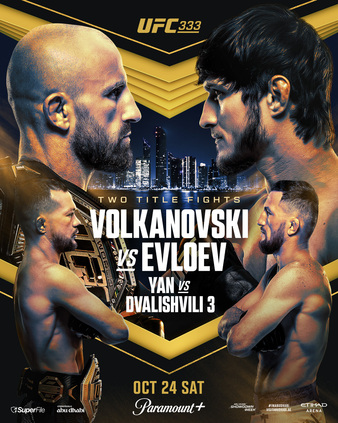
MAIN CARD · HEAVYWEIGHT · 3 ROUNDSUFC 333: Volkanovski vs. Evloev
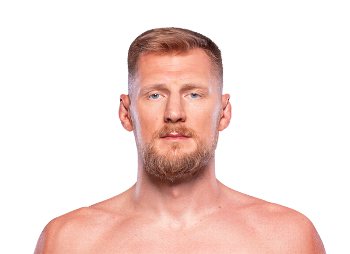
Alexander Volkov — Heavyweight fighter

Alexander Volkov

“Drago”
40W11L
Long-Range Kickboxer
VS
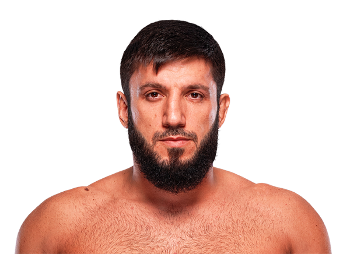
Rizvan Kuniev — Heavyweight fighter

Rizvan Kuniev

“Superman”
14W3L1D
Clinch Grinder

Eighty inches of reach against eight square feet of fence

HeavyweightEtihad Arena, Abu Dhabi, United Arab EmiratesOctober 24, 2026Standard 30ft Octagon

Fight overview

The fight in 30 seconds

Volkov's striking is most productive at distance, while Kuniev does more of his work in the clinch. Volkov needs lateral exits before Kuniev secures contact; Kuniev needs to cut off space and keep him working at the fence. The battle for range determines which striking figures are most relevant.

Paths that change the fight

  • Alexander VolkovFifteen minutes at eighty inches. If the fight is fought where Volkov converts 54.1% and Kuniev converts 38.2%, the cards write themselves — and the round he cannot afford to lose is the first.
  • Rizvan KunievEight square feet of fence. If he closes inside ninety seconds of every round and banks sixty-plus seconds of body-lock control with knees attached, he wins the judges' impression fight the same way he won it against Almeida.
What limits this estimate · Analyst conviction: 6/10
  • Never finished, never knocked down, in nineteen professional bouts — all three of his losses are decisions.
  • 94% takedown defence against a 69% leak, with Volkov conceding 80 seconds of control in an average first round.

Editorial assessment of the evidence, not a win probability or a calibrated confidence interval.

Alexander Volkov

Insufficient price data
Model win probability
58%
Fair decimal odds
1.72
Reference quote—

Rizvan Kuniev

Insufficient price data
Model win probability
42%
Fair decimal odds
2.38
Reference quote—
Price freshness & calculation notes

Quotes older than 48 hours are marked outdated. EV at an old or undated price is a historical calculation, not a current opportunity. Date-only snapshots have no verified capture time.

Sources and data limitations

Sources cited in this analysis: UFC.com, Wikipedia. Statistics reflect the sample and reporting dates available for this matchup. Coverage can differ between fighters and may include bouts outside the UFC where noted. Unavailable measurements are not zeros. Projections, composite scores and analyst conviction are estimates, not observed outcomes.

Model methodology
01

The Frame

What this fight is really about — and the measurements that shape it

The Analyst's Take

The best-documented heavyweight in the division against the least-documented man to beat a ranked one. Alexander Volkov is 6'7" with an 80-inch reach and a 47.5-inch leg reach, eighteen UFC bouts behind him, and 82% of his damage landing at distance at 54.1% accuracy. Rizvan Kuniev is three inches shorter, three pounds heavier at the scale, does 31% of his work in the clinch at 74.3% accuracy, and converts only 38.2% of what he throws at range. The whole fight is one question — can a Dagestani clinch grinder with a 0.79 takedown rate reach the chest of the longest man in the division often enough to matter? We land Volkov 58% / Kuniev 42%, conviction 6/10, and the decisive tiebreaker is that this is scheduled for three rounds while Volkov's only proven structural weakness lives in rounds four and five.

Alexander Volkov
Attribute
Rizvan Kuniev
38
Age
Volkov turns 38 on fight night34
6'7" (79")
Height
6'4" (76")
80"+4" Volkov
Reach
76"
47.5"+6.5" Volkov
Leg Reach
41.0"
Orthodox
Stance
Orthodox
Global Fight Gym / Strela Team, Moscow
Team
American Top Team / Gorets FT
Nov 19, 2016
Octagon Debut
Jun 21, 2025
Long-range kickboxing, BJJ black belt
Fighting Style
Clinch grinding, Dagestani grappling base

The reach gap reads as +4", but the more punishing number is the leg reach: 47.5" against 41.0", a six-and-a-half-inch chasm. Volkov's low kick is a genuine weapon — 254 career leg strikes, 19% of his total output, technique-frequency 0.44 — and against a 41-inch leg reach he kicks from a range Kuniev can neither return nor effectively check from his stance. The counter-frame is just as clean. Kuniev is three inches shorter and, at a listed 264.5 lbs against Volkov's 261.5, three pounds heavier at the scale, and his entire offensive identity lives inside the range where Volkov's arms stop working. The positional splits decide everything: Volkov 82% standing, 12% clinch, 7% ground; Kuniev 56% standing, 31% clinch, 13% ground. The analytics model is more extreme still on Kuniev — 59.7% distance, 39.6% clinch, 0.6% ground, with 74.3% accuracy in the clinch against only 38.2% at distance. He is not merely comfortable in the phone booth; he is only good there.

Venue Factor
October 24 in Abu Dhabi is not a neutral date for Alexander Volkov. On October 24, 2020 — his 32nd birthday — he front-kicked Walt Harris to the body and finished him in the second round at UFC 254 in Abu Dhabi. He returned to the emirate for UFC 267 and outpointed Marcin Tybura, and returned again on October 25, 2025 to take a split decision from Jailton Almeida at Etihad Arena, the exact building he walks into here. Three fights in Abu Dhabi, three wins, two of them in this arena. Kuniev has never fought in the Middle East. It is a soft edge rather than a hard one — worth a point in a projection, not five — but on a card where every other variable is close, a 38-year-old who has never lost in a building is worth that point.
02

The Fighters

Careers, chins, schedules — and the form they bring into the cage

Alexander Volkov striking in the Octagon

Alexander Volkov

Pro Record
40-11-0
UFC Record
13-5 across 18 bouts since November 2016
Streak
Two straight — UD over Waldo Cortes-Acosta, split over Jailton Almeida
Finish Rate
70% (28 of 40 wins) — 24 KO/TKO, 4 submissions
Avg Fight Time
13:09
Chin · Durable but breachable — 2 KO losses, none since October 2018SOS · ChampionshipLong-range volume technician

Volkov's UFC ledger is one of the cleanest sorting mechanisms in the sport. He has beaten Werdum, Overeem, Struve, Nelson, Harris, Tybura, Rozenstruik, Romanov, Tuivasa, Pavlovich, Almeida and Cortes-Acosta; he has lost to Lewis, Blaydes, Gane twice and Aspinall — every single one a champion or a title challenger. A perfectly drawn ceiling and a perfectly drawn floor, and Kuniev's job is to prove he belongs above the line. He is also a former Bellator heavyweight champion and a former M-1 Global heavyweight champion, with a BJJ black belt, a third dan in Tsu Shin Gen and a brown belt in Kyokushin behind the kickboxing. The worry attached to him is not losses, it is method drift: 24 career knockouts, and his last four fights have all gone to the cards — Pavlovich by unanimous, Gane by split against him, Almeida by split, Cortes-Acosta by unanimous. His last finish of any kind was the Ezekiel choke on Tai Tuivasa in September 2023, three years ago.

Rizvan Kuniev fighting in the Octagon

Rizvan Kuniev

Pro Record
14-3-1 (1 NC)
UFC Record
2-1 across three bouts since June 2025
Streak
Two straight — UD over Jailton Almeida, R3 TKO of Tyrell Fortune
Finish Rate
64% (9 of 14 wins) — 7 KO/TKO, 2 submissions
Avg Fight Time
11:26 (5-bout UFC + DWCS sample) · 13:44 UFC-only
Chin · Never finished — zero KO losses, zero submission losses and zero knockdowns absorbed in 19 pro boutsSOS · RisingClinch-first positional heavyweight

Kuniev arrives from the opposite direction to the favourite. He was 0-2-1 through his first four professional bouts between 2011 and 2015, then went unbeaten for fourteen straight through ProFC, Gorets, Eagle FC and two Dana White's Contender Series appearances. Curtis Blaydes beat him by split decision in his UFC debut — one judge scored it 29-28 for Kuniev, in his first Octagon appearance, against a former title challenger. He then upset #6-ranked Jailton Almeida by unanimous decision, 30-27, 30-27, 29-28, in February 2026, and stopped Tyrell Fortune with knees in the third round in July 2026. Nineteen professional fights, three losses, and all three of them decisions: he has never been knocked out, never been submitted and never been knocked down. What the file does not contain is a decision win over anyone ranked above Almeida — and the man across from him has built an entire career out of outpointing everyone who is not a champion.

Alexander Volkov
0 dealt · 0 absorbed
Knockdown Exchange
KD dealt vs absorbed. A dash means that figure was not published.
Rizvan Kuniev
0 dealt · 0 absorbed

Alexander Volkovsignature weapons

Front Kick to the BodyWalt Harris, R2 1:15 at UFC 254 — a birthday knockout in Abu Dhabi on October 24, 2020
×1
Clinch PunchesStefan Struve R3 3:30 and Fabricio Werdum R4 1:38 — twice he has ended fights in the one place his 80" reach is neutralised
×2
Ezekiel Choke from MountTai Tuivasa R2 4:37, UFC 293 — his last finish of any kind, September 2023, off 80.5% ground accuracy
×1

Rizvan Kunievsignature weapons

Knees in the ClinchTyrell Fortune R3 1:11 and Hugo Cunha R1 4:59 — knee-frequency 0.90, the highest technique rating on his profile
×2
Late Ground-and-PoundRodrigo Santos R3 1:00 — one of four Kuniev knockouts that landed in the third round
×1
Guillotine & Rear-Naked ChokeAnthony Hamilton at 1:17 and Navid Yadegari at 2:00 — both first-round, both pre-Octagon; guillotine-frequency 0.10
×2

Alexander Volkov

W
Waldo Cortes-Acosta
Decision — Unanimous

Opponent context: veteran

RR3 (5:00)
UFC 328 — May 9, 2026
W
Jailton Almeida
Decision — Split

Opponent context: elite

RR3 (5:00)
UFC 321: Aspinall vs. Gane — Oct 25, 2025 (Etihad Arena)
L
Ciryl Gane
Decision — Split

Opponent context: elite

RR3 (5:00)
UFC 310: Pantoja vs. Asakura — Dec 7, 2024
W
Sergei Pavlovich
Decision — Unanimous

Opponent context: elite

RR3 (5:00)
UFC FN: Whittaker vs. Aliskerov — Jun 2024
W
Tai Tuivasa
Submission — Ezekiel choke from mount

Opponent context: veteran

RR2 (4:37)
UFC 293: Adesanya vs. Strickland — Sep 2023
Pattern

Four-and-one in his last five, on a two-fight win streak, and every fight since the Tuivasa submission has gone the full fifteen minutes. Two of those four decisions were splits, including the Almeida win in this very building — the judges have been dividing over him. The Pavlovich win is the quality marker: he shut out a man who had knocked out six straight UFC heavyweights, 27-30, 27-30, 28-29 on the cards. The Gane loss is the warning: a split, in a fight where the more mobile and younger man edged the exchanges. At 38, Volkov has converted from a knockout artist into a points machine, and the points have been getting narrower.

Rizvan Kuniev

W
Tyrell Fortune
TKO — Knees

Opponent context: prospect

RR3 (1:12)
UFC FN: Ankalaev vs. Guskov — Jul 25, 2026
W
Jailton Almeida
Decision — Unanimous (30-27, 30-27, 29-28)

Opponent context: elite

RR3 (5:00)
UFC FN: Bautista vs. Oliveira — Feb 7, 2026
L
Curtis Blaydes
Decision — Split

Opponent context: elite

RR3 (5:00)
UFC on ABC: Hill vs. Rountree Jr. — Jun 21, 2025
W
Hugo Cunha
TKO — Knee to body / punches

Opponent context: prospect

RR1 (4:59)
Dana White's Contender Series 68 — Aug 20, 2024
NC
Renan Ferreira
No Contest (overturned)

Opponent context: veteran

RR3 (5:00)
PFL 2, 2023 — Apr 7, 2023
Pattern

A 2-1 UFC run across an enormous jump in opposition quality. The Blaydes split loss is the most flattering line on his record — he took a card from a former title challenger in his Octagon debut and was never in danger. The Almeida win is the résumé line: two 30-27 cards against the #6-ranked heavyweight, achieved by refusing to be taken down and by owning the clinch. By contemporaneous accounts it was an almost actionless fifteen minutes; Kuniev won by negation rather than production. Fortune answered the "can he hurt anyone at this level" question with third-round knees. Three straight long fights, none lost decisively, and he was hurt in none of them.

Alexander Volkov

Win Methods
Wins by Round

Rizvan Kuniev

Win Methods
Wins by Round
Critical Insight
The donuts are career-scoped for both men and both reconcile exactly — Volkov's 24 KO + 12 decision + 4 submission closes at 40, Kuniev's 7 + 5 + 2 closes at 14, which is the arithmetic that settled the record conflict. Read the bars for shape, not for a like-for-like count. The shape is the point, because the two finishing profiles are almost perfectly mirrored. Volkov's seven UFC finishes are spread evenly across rounds one to four and generated at distance or in punching clinches; four of Kuniev's seven career knockouts landed in round three, three of them past the four-minute mark, and the most recent came from knees. The structural fork underneath is finishability. Volkov has been stopped four times — two knockouts, and two of his three submission losses came before 2011, with Aspinall's armbar in 2022 the modern one. Volkov must win a decision against a man who cannot be finished; Kuniev must win a decision against a man who has won twelve of them.

Common Opponents

OpponentAlexanderRizvan
Jailton AlmeidaW· Split decision (UFC 321, Oct 2025)W· UD 30-27, 30-27, 29-28 (Feb 2026)
Kuniev's win was the more emphatic of the two, fifteen weeks later and on two shutout cards — though he fought a version of Almeida that Volkov had already beaten.
Curtis BlaydesL· Unanimous decision over five rounds (2020)L· Split decision over three rounds (Jun 2025)
Volkov lost a clear five-rounder; Kuniev took a judge's card in his Octagon debut. On both comparisons the younger man grades better — the single biggest reason this projection is 58/42 and not 68/32, and why conviction is capped at six.
03

The Numbers

Composites, division ranks and round-by-round evidence

Composite scores summarize selected statistics on a 0–100 scale. They are not win probabilities. Compare the underlying metrics, opponent quality and sample flags before interpreting a score difference as a matchup advantage.

Striking

SLpM 25% · StrAcc 30% · StrDef 30% · SApM 15%

0
Alexander
0
Rizvansmall sample

Volkov is above the heavyweight baseline on volume and accuracy simultaneously — 4.84 SLpM against 4.54, 58% accuracy against 53.2% — which almost nobody at 265 manages, and he absorbs 2.90 against a 3.89 average. Kuniev's 55% overall accuracy hides the split that decides the fight: 74.3% in the clinch, 38.2% at distance, behind a 49% striking defence that ranks 16th of 22.

Grappling

TD/15 25% · TDAcc 25% · TDDef 30% · Sub/15 20%

0
Alexander
0
Rizvansmall sample

Kuniev holds the edge and it is not close on the defensive axis — 94% takedown defence against a 69% leak that Volkov's own round-by-round record confirms at 68.4%, 30 conceded on 95 attempts. The offensive axis reframes it: 0.79 takedowns per fifteen minutes against a 1.97 division baseline, and zero attempts in his only logged fight.

Technical

(Striking + Grappling) / 2

0
Alexander
0.0
Rizvansmall sample

Kuniev grades marginally higher on raw technique because his profile is simply more balanced, while Volkov's is a spike-and-hole shape — elite striking, mediocre grappling. This is the honest output of the model and the page does not hide it: on paper this is a coin flip, and the lean has to come from somewhere other than the composites.

Cardio

Fight time · pace · R3/R1 output · champ rounds

0
Alexander
0
Rizvansmall sample

Not what the ages suggest. Volkov's 13:09 average is one of the highest cage-time totals in division history and his output is flat through three rounds — 23.9 / 23.9 / 23.1, momentum label "Steady", slow-start rate 7.7%. Kuniev is the one with a measured fade inside the distance: third-round output at 84% of the first, and a 33.3% slow-start rate.

Overall

(Technical + Cardio) / 2

0
Alexander
0.0
Rizvansmall sample

A 0.7-point gap — as close as a heavyweight matchup gets. The lean to Volkov is built on three things the composites do not capture: the four-inch reach and six-and-a-half-inch leg-reach advantage, the fifteen-bout gap in Octagon experience against ranked opposition, and the fact that the schedule is three rounds rather than five.

MetricAlexanderRizvan
Avg Fight Time13:09 (18 UFC bouts)11:26 (5-bout mixed) · 13:44 UFC-onlysmall sample
Pace Tier4.84 SLpM — 6th of 224.32 SLpM — 9th of 22small sample
R3/R1 Output104% — "Steady"84% — "Slight Fade"small sample
Slow Start %7.7%33.3%small sample
Champ RoundsN/A — 3-round bout (fades to 66% of normal in R4-R5)N/A — 3-round bout (no five-round data)

Archetype Base Rate

Long-Range Kickboxer 58%42% Clinch Grinder

No archetype base-rate row applied · No historical archetype win-rate is used here. Kuniev's archetype label lives in the same analytics row that reports a 34-fight, 24-10 career against his real nineteen-bout record, so the label was discarded along with every other absolute value from that row. The 58-42 shown is the model's own split, built from range control, the composite gap and the three-round schedule rather than from a matchup base rate.

Alexander VolkovRizvan Kuniev

Heavyweight

· 22 fighters
StatAlexanderAlexander rankDiv avgRizvan rankRizvan
SLpM4.84
6/22
~4.54
9/22small sample
4.32
Str Acc58%
8/22
~53.2%
7/22small sample
55%
Distance Acc54.1%———38.2%
Clinch Acc65.7%———74.3%
Str Def54%
10/22
~51.9%
16/22small sample
49%
SApM2.90—~3.89
4/22small sample
2.22
KD Avg0.22———0.52
Damage Ratio2.01
6/22
~1.32
4/22elitesmall sample
2.34
TD/150.54
14/22
~1.97
9/22small sample
0.79
TD Acc62% (UFCStats)—~40%—75% (3 of 4, derived)
TD Def69%—~62%—94%
Sub/150.22—~0.45—0.00 (uninformative)
Avg Fight Time13:09 (18 UFC bouts)———11:26 (5-bout mixed) · 13:44 UFC-only
Statistical Verdict
Every range, accuracy, volume and experience marker belongs to Volkov. Every durability, defensive-grappling and freshness marker belongs to Kuniev. The tie-breaker is that Volkov's advantages are productive — they generate points and damage — while Kuniev's are largely preventative; they stop things from happening to him. In a fight scored by judges, the man who is doing things beats the man who is stopping things, which is precisely how Blaydes edged Kuniev and precisely how Kuniev's Almeida win was described as fifteen minutes containing about ten seconds of action. Volkov does not need to solve Kuniev. He needs to out-produce him for fifteen minutes without being walked into the fence.

Significant Strikes Landed per Round

⚠ R1, R2, R3: single-fight sample for Rizvan Kuniev

Control Time per Round (sec)

Alexander Volkov

  • The three-round engine is metronomic: 23.9 / 23.9 / 23.1 significant strikes across rounds one, two and three, with accuracy never dropping below 56%. There is no fade inside fifteen minutes.
  • His fade is a championship-rounds phenomenon only — output collapses to 16.7 in round four and 15.0 at 36.6% accuracy in round five, which the fight records labels "Fades Significantly" at 66% of his normal rate. This fight is three rounds. That weakness is not on the menu.
  • He is most gettable in round one, conceding 0.71 takedowns and 80 seconds of control across 17 logged first rounds — his highest of any non-championship round.
  • Opponents' takedown success against him falls sharply as fights progress — 44.7% in round one, 32.0% in round two, 15.3% in round three — even as their attempts rise from 1.59 to 2.00 to 2.36.

Rizvan Kuniev

  • One fight of round-by-round evidence, the Blaydes split decision, so every row here is n = 1 and should be read as anecdote rather than rate.
  • He attempted zero takedowns in all three rounds. His takedowns come from the clinch rather than from shots — the analytics record has him at 6 of 8 from clinch position, 75.0%.
  • The shape is a slow start and a middle-round surge: 8 landed in the first, 24 in the second, 13 in the third, with control climbing from 0 to 4 to 22 seconds as Blaydes' own control collapsed from 181 seconds to 8.
  • His head-targeting shifts hard as fights go on — 54.5% of his strikes to the head in round one rising to 89.2% in round three, a 34.7-point swing. He works the body and the clinch early, then hunts the head when posture breaks.
Critical Insight
Volkov's win equity is evenly distributed and cumulative; Kuniev's is concentrated in the last five minutes and in the clinch. That asymmetry favours the man who can bank the first ten minutes, and the round-by-round record says Volkov's first ten minutes are the most stable in the division. The one number that should frighten the Volkov side is 80 seconds of round-one control conceded. The one that should frighten the Kuniev side is a 33% slow-start rate in the exact round he most needs to steal — because if he is going to control Volkov, he has to do it in the first five minutes.

Strike targeting (available rounds)

Strike-target figures are unavailable for this comparison.

Head hunting vs body work vs leg attack — the shape of the damage. Unavailable strike-target figures are omitted rather than shown as 0%.

Striking range — distance, clinch and ground

AlexanderRizvan
81%Distance56%
12%Clinch31%
7%Ground13%

Approximate share of significant strikes by range in available rounds, weighted by strike volume. Incomplete splits are excluded. Debutants / fighters without Octagon samples show as N/A.

04

The Story of the Fight

Advantages, worst cases, gameplans — and the patterns underneath

Where the fight lives

Who owns each phase — and by how much
Open SpaceAlexander owns it

80" reach and a 47.5" leg reach at 54.1% distance accuracy against 38.2% — and 82% of Volkov's career output lands here

Pocket / ExchangesAlexander owns it

58% accuracy and 54% striking defence into a 49% defence ranked 16th of 22 — but Kuniev's 0.52 knockdown rate is more than double Volkov's 0.22

ClinchRizvan owns it

74.3% clinch accuracy and knee-frequency 0.90 against a man who does 12% of his work here — though Struve and Werdum were both finished by Volkov's clinch punches

GroundEven

80.5% ground accuracy and a BJJ black belt against 94% takedown defence and a man never submitted in 19 bouts — 7% and 13% of their respective output

Path to Victory

Alexander Volkov

Fifteen minutes at eighty inches. If the fight is fought where Volkov converts 54.1% and Kuniev converts 38.2%, the cards write themselves — and the round he cannot afford to lose is the first.

Why they win
01
The frame

6'7" with an 80" reach and a 47.5" leg reach against 6'4" / 76" / 41.0". The leg-reach gap alone, +6.5", hands him a free weapon — a calf and thigh kick Kuniev can neither return nor effectively check from his stance.

02
Range accuracy that dwarfs the opponent's

54.1% at distance against 38.2%. Every minute fought outside the clinch is a minute Volkov wins by a factor of roughly 1.4 in efficiency, and 82% of his career output lands there.

03
A three-round engine with zero measured decay

23.9 / 23.9 / 23.1 significant strikes with accuracy never below 56%; momentum label "Steady", third-round output at 104% of the first, slow-start rate 7.7%.

04
Fifteen more UFC bouts and a decade of ranked opposition

He has shared a cage with Werdum, Overeem, Blaydes, Lewis, Gane twice, Aspinall, Pavlovich, Tuivasa and Almeida. Kuniev has three Octagon appearances.

05
The lowest absorption profile in the productive range

SApM 2.90 against a 3.89 division average, with 54% striking defence into Kuniev's 49% — 16th of 22 and the challenger's clearest technical weakness.

06
Abu Dhabi

3-0 in the emirate and 2-0 in this building, including a birthday knockout of Walt Harris on October 24, 2020 and a split-decision win over Almeida in this arena eleven months ago.

The gameplan
  1. 1
    Own the outside foot and open with the low kick

    With a 6.5" leg-reach advantage the calf and thigh kick is a free hit, and it also slows the entries that are Kuniev's only route in.

  2. 2
    Jab constantly

    Jab-frequency 0.59 — not to hurt, but to keep the head-to-head distance at eighty inches, where Kuniev converts only 38.2% of what he throws.

  3. 3
    Never back straight up to the fence

    Every second of fence contact is a second of the fight fought on Kuniev's terms. Circle out at angles the moment the back foot finds cage.

  4. 4
    Punish entries with knees and uppercuts, then break

    He has finished two men with clinch punches, but he should visit the clinch rather than live in it — his clinch accuracy is 65.7% against Kuniev's 74.3%.

  5. 5
    Bank the first ten minutes and refuse the late gunfight

    His third-round accuracy is fine; his third-round risk is the one bad ending on his record. Win round three on the scorecard, not in a phone booth.

  6. 6
    Contingency — if the fence keeps closing

    If Kuniev establishes the body-lock early and the low kicks are not landing, abandon patience and increase output at range. He cannot afford a close-rounds fight against a control-based grinder, because control is what judges reward when strike counts are near. Force volume; make the rounds unambiguous.

Path to Victory

Rizvan Kuniev

Eight square feet of fence. If he closes inside ninety seconds of every round and banks sixty-plus seconds of body-lock control with knees attached, he wins the judges' impression fight the same way he won it against Almeida.

Why they win
01
He cannot be finished

Zero knockouts against, zero submissions against, zero knockdowns absorbed across 19 professional bouts. All three of his losses are decisions. Volkov's 24-knockout résumé is aimed at a wall.

02
Takedown defence at 94% against a 69% leak

The wrestling exchange runs in exactly one direction, and Volkov's leak is independently confirmed by his own round-by-round data — 30 takedowns conceded on 95 attempts across 47 logged rounds.

03
The clinch is his home and Volkov's smallest room

31-40% of his strikes come in the clinch at 74.3% accuracy; only 12% of Volkov's do. Knee-frequency 0.90 and uppercut-frequency 0.60 are the two techniques that most punish a tall man's torso.

04
The round-three finishing pattern

Four of seven career knockouts landed in the third, the most recent being knees on Tyrell Fortune at 1:11 — and Volkov's only modern knockout loss came at 4:49 of round three, against Derrick Lewis.

05
The common-opponent ledger

Two 30-27 cards over Jailton Almeida against Volkov's split; a split loss to Curtis Blaydes over three rounds against Volkov's unanimous loss over five. On both comparisons the younger man grades better.

06
Four years younger with a third of the mileage

19 professional fights to 51, no war-damage history to speak of, and a knockdown rate of 0.52 against Volkov's 0.22 — he lands the harder single shots per minute.

The gameplan
  1. 1
    Close in the first ninety seconds of every round

    This is the window where Volkov concedes 0.71 takedowns and 80 seconds of control, and it is exactly the window his own slow-start habit most threatens.

  2. 2
    Body-lock over shot

    He is 3-of-4 on takedowns and 6-of-8 from the clinch, and he attempted zero shots against Blaydes. The fence, not the mat, is the objective.

  3. 3
    Knees to the body, relentlessly

    Knee-frequency 0.90, clinch accuracy 74.3%, and a tall man's ribs are the most reachable target on him. This is the Fortune blueprint, which ended in a third-round stoppage.

  4. 4
    Make him carry weight

    At 264.5 lbs against a 38-year-old, every second of hip-to-hip pressure is compounding interest — and Volkov's opponents' takedown attempts increase every round for a reason.

  5. 5
    Trust round three

    Four of his seven knockouts arrived there, and his head-targeting rises from 54.5% to 89.2% as opponents' posture fails. If the fight is close at the ten-minute mark he is in his best round against a man in his worst one.

  6. 6
    Contingency — if he cannot close in round one

    He must accept damage to enter: eat the jab and the low kick to buy the body-lock. Waiting for a clean entry against an 80-inch reach is how he loses 30-27. If he is down two rounds entering the third, the knees have to come with a stoppage attached, not a control clock.

Danger Zone

How Alexander Volkov loses

  • Kuniev wins the body-lock in the opening two minutes of every round, banks 60-80 seconds of fence control apiece, and takes a 29-28 that Volkov "won" on landed strikes but lost on the judges' impression of control — the exact way Blaydes beat him in 2020.

  • The low kicks and jabs pile up damage without ever hurting a man who has never been dropped, and by the third round Volkov is stationary, tired at 38, and eating knees on the fence. The Derrick Lewis scenario, updated.

  • He is dragged into a clinch war he has historically won — Struve and Werdum both ended there — against the one opponent whose clinch accuracy, 74.3%, is materially better than his own 65.7%.

Danger Zone

How Rizvan Kuniev loses

  • His 33% slow-start rate costs him round one outright, he never touches Volkov's chest, and fifteen minutes of jab-and-low-kick at 54.1% distance accuracy produce a 30-27 he was never in.

  • He commits to entries and gets met by a knee or an uppercut on the way in — the way Volkov ended Struve and Werdum — and discovers that a chin never tested by a 6'7" heavyweight is still an untested chin.

  • He wins the way he won the Almeida fight, by negation, and the judges watching a more productive opponent score negation as inactivity. The Blaydes split repeats.

The schedule is the biggest number on the page

Round Four Does Not Exist Here

Volkov's most severe documented weakness is a championship-round collapse: 16.7 significant strikes in round four and 15.0 at 36.6% accuracy in round five, against 23.9 / 23.9 / 23.1 in rounds one through three. The analytics model labels it "Fades Significantly" at 66% of normal output across three five-round fights, and his two five-round losses — Blaydes and Gane — are exactly where it showed. This bout is scheduled for three rounds. For a 38-year-old whose entire vulnerability profile is time-dependent, the schedule is worth more than any single statistic in the file. Had this been five rounds we would be publishing a coin flip or leaning the other way.

3
rounds — the format that removes Volkov's only measured fade
The takedown leak against the takedown volume that isn't

The Lock Exists and the Key Does Not Obviously Fit

Volkov's takedown defence is 69%, he has conceded 30 takedowns on 95 attempts across 47 logged rounds, and he gives up 80 seconds of control in an average round one. That is a genuine, repeatedly exploited weakness — it is how Curtis Blaydes beat him. But Rizvan Kuniev is not a volume wrestler. His rate is 0.79 per fifteen minutes against a 1.97 division baseline, he has four career UFC/DWCS takedown attempts in total, and in the only fight with round-by-round data he attempted zero. His realistic grappling path is not a takedown; it is sixty seconds of fence control per round plus knees, converted into judges' rounds. That path is live. It is simply narrower than "Volkov's takedown defence is 69%" makes it sound.

0.79
Kuniev TD/15 against a 1.97 heavyweight baseline
Three fights in the emirate, three wins

The Birthday Ledger

Volkov turns 38 on fight night — DOB October 24, 1988, recomputed against the fight date rather than copied from a source field. This is his fourth appearance in Abu Dhabi and his third at or around this date: UFC 254 on October 24, 2020, his 32nd birthday and a second-round stoppage of Walt Harris; UFC 267 on October 30, 2021, a decision over Marcin Tybura; and UFC 321 on October 25, 2025, a split decision over Jailton Almeida at Etihad Arena. No venue wins fights by itself, but familiarity of travel, timing and crowd is a real if small input — one reason the model holds 58 rather than 55.

3-0
Volkov in Abu Dhabi · 2-0 at Etihad Arena
The reason conviction is capped at six

Two Men, One Common Opponent File

Common opponents are rare at heavyweight and this pairing has two. Jailton Almeida: Volkov won a split decision at UFC 321; Kuniev won 30-27, 30-27, 29-28 fifteen weeks later. Curtis Blaydes: Volkov lost a clear unanimous decision over five rounds in 2020; Kuniev lost a split over three in 2025, taking one card 29-28. On both comparisons the younger man grades better. The honest counterweight is context — Kuniev fought a version of Almeida that Volkov had already beaten, and three rounds against a wrestler is a materially easier assignment than five. But the ledger is the ledger, and it is why this file does not treat a #2-ranked contender as a heavy favourite over a man with three Octagon fights.

The scope warning that changes how every Kuniev number reads

The Rate Line Is Five Bouts, Not Three

Every rate published for Kuniev on UFC.com is drawn from a five-bout sample that includes two Contender Series appearances. The proof is arithmetic: his stated 11:26 average fight time reconciles only when Cunha (4:59) and Santos (11:00) are added to Blaydes, Almeida and Fortune — 57:10 across five bouts is exactly 11:26, while his UFC-only average is 13:44. Two consequences follow, and they point the same way. His 4.32 SLpM and 55% accuracy are partly earned against regional-tier opposition and are therefore inflated relative to what he will produce against a top-two heavyweight; his 0.79 TD/15 is deflated by the same mechanism, since the Contender Series minutes carry no takedowns. Treat every Kuniev rate as directional, not precise.

The Five-Round Clock

Alexander Volkov danger windowRizvan Kuniev danger windowNeutral / contested
R1 · 0:00–5:00Kuniev's highest-leverage five minutes

Statistically the round where Volkov concedes the most — 0.71 takedowns and 80 seconds of control across 17 logged first rounds — and the round Kuniev is least likely to start fast in, at a 33.3% slow-start rate. It is also Volkov's most accurate round at 62.7%, and both his Rozenstruik and Romanov finishes landed inside 2:20.

Critical Insight
The clock runs in both directions at once. Volkov's equity is available throughout — evenly distributed, cumulative, and generated at a range Kuniev cannot reach — while Kuniev's is compressed into the opening ninety seconds of each round and into the final five minutes. Whoever dictates whether minute one is fought at eighty inches or at zero inches probably wins the fight; and if it is still close at the ten-minute mark, the third round belongs to the challenger's pattern and to the favourite's one bad ending.

Finish Threat by Round

Share of each fighter's wins that end in each round — early finishers spike left, grinders rise right.

05

The Verdict

One hundred simulated fights, the betting market, and our conviction

If you only read 3 things
1

Volkov does 82% of his damage at distance at 54.1% accuracy; Kuniev converts 38.2% of what he throws there and does 31% of his work in the clinch at 74.3%. This is not a striking match-up, it is a range-control match-up disguised as one.

2

The composites separate these men by 0.7 points — 64.0 against 63.3 — and Kuniev holds the better common-opponent file against both Jailton Almeida and Curtis Blaydes. The lean comes from the schedule: Volkov's only measured fade lives in rounds four and five, and this fight has neither.

3

Model: Volkov 58% / Kuniev 42%, conviction 6/10. Volkov by decision at 38% is the modal outcome of the entire fight, and 66 of 100 simulations reach the judges — the favourite has gone the distance four times running and the underdog has never been stopped in nineteen professional bouts.

Model outcomes per 100 fights

Each square represents one percentage point of the model distribution, not an observed fight. This visualization does not measure model accuracy or reduce uncertainty in the inputs.

Volkov Decision — 38%Volkov Submission — 3%Volkov KO/TKO — 17%Kuniev KO/TKO — 12%Kuniev Decision — 28%Kuniev Submission — 2%

Each square = 1 simulated fight. Alexander Volkov gold · Rizvan Kuniev orange · full color = decision, 70% = submission, 45% = KO/TKO.

Range control

Volkov's 80" / 47.5" frame and 54.1% distance accuracy against Kuniev's 38.2% at range. In every branch where fifteen minutes are contested outside the clinch, Volkov's decision bucket — 38 of 100 — is the largest single outcome on the page.

Clinch access

Kuniev's 31-40% clinch share at 74.3% accuracy against Volkov's 12%. This is the whole Kuniev decision path and it is worth 28 of his 42 win-shares: close inside ninety seconds, body-lock, bank sixty-plus seconds of fence control with knees attached.

The takedown asymmetry

Volkov's 69% takedown defence is a real leak, confirmed independently at 68.4% by his own round-by-round record. But Kuniev's offensive volume is 0.79 per fifteen minutes against a 1.97 baseline, and he attempted zero takedowns in his only logged fight. The model prices the leak, then discounts the man's ability to exploit it.

The durability wall

Zero knockouts against, zero submissions against, zero knockdowns absorbed in nineteen professional bouts. It is why Volkov's knockout bucket is held to 17 despite a 60% career finish rate, and why he has not finished anyone since September 2023.

Judging bias in close heavyweight rounds

Control time against significant strikes is the axis that decided both Blaydes-Volkov and Blaydes-Kuniev. Kuniev beat Almeida by negation and the model gives that path real weight — but it also gives weight to the version where judges score negation as inactivity.

The schedule

Volkov's output collapses to 16.7 significant strikes in round four and 15.0 at 36.6% accuracy in round five, labelled "Fades Significantly" at 66% of normal. This bout has neither round. It is the largest single reason a 58/42 projection survives composite scores of 64.0 against 63.3.

Fight Scripts

0%
of simulations

The Range War

Volkov does it exactly the way he has done it twelve times before — jab, low kick into a six-and-a-half-inch leg-reach deficit, circle off the fence, and hand the judges three rounds of 23-strike volume at 58% accuracy that Kuniev's 38.2% distance accuracy cannot match. The modal outcome of the entire fight.

Scripted outcomes for Alexander Volkov vs Rizvan Kuniev — how each version of this fight unfolds.

Alexander Volkov win probability
0%
17%
38%
KO/TKODECSUB
  • Deliberately restrained given a 60% career knockout rate, for two reasons: Kuniev has never been finished or knocked down in nineteen professional bouts, and Volkov has not finished anyone since September 2023. Two of his seven UFC finishes came from clinch punches, which is the one place this opponent invites him.

  • The modal outcome of the entire fight. It is the road he has travelled twelve times, four of them in his last four fights, and it is the road a fifteen-minute schedule and a four-inch reach advantage most naturally lead to.

  • Three points. He is a BJJ black belt with an Ezekiel choke on Tai Tuivasa and 80.5% ground accuracy, but only 7% of his output lands on the ground and Kuniev has never been submitted. This is a broken-opponent outcome, not a gameplan.

Rizvan Kuniev win probability
0%
12%
28%
KO/TKODECSUB
  • Weighted heavily toward the third round — four of seven career knockouts, a Fortune stoppage by knees at 1:11 of the third, a knockdown rate more than double Volkov's at 0.52 against 0.22, and a Volkov record showing zero wins in fights where he has been knocked down.

  • His primary path and a real one: sixty-plus seconds of fence control per round, knees to the body, and judges who reward control in close heavyweight rounds. This is exactly how he beat Jailton Almeida on two 30-27 cards.

  • Two points. His Octagon rate is 0.00 per fifteen minutes, but that is an empty sample rather than a description — he has a guillotine on Anthony Hamilton at 1:17 and a rear-naked choke on Navid Yadegari at 2:00, and a 0.10 guillotine frequency in the analytics profile.

Projected Scorecards

How the model scores each round
R1
Alexander
R2
Alexander
R3
Rizvan
29-28 Volkov
He banks the first ten minutes and Kuniev takes the third on control
The modal card inside a 38% decision bucket
30-27 Volkov
The low kicks land from the opening bell and Kuniev never reaches his chest
The Pavlovich template — a shutout on volume and accuracy
29-28 Kuniev
Sixty-plus seconds of fence control a round, scored the way Blaydes' win over Volkov was scored
His primary path, worth 28 of his 42 win-shares

Model and price

Alexander Volkov

Insufficient price data
Model win probability
58%
Fair decimal odds
1.72
Reference quote—
Estimated EV
—
Edge vs no-vig market
—

Rizvan Kuniev

Insufficient price data
Model win probability
42%
Fair decimal odds
2.38
Reference quote—
Estimated EV
—
Edge vs no-vig market
—

EV uses the displayed price: probability × decimal odds − 1. Edge is a percentage-point difference from a proportionally de-vigged, same-book pair. A dash means that comparison is unavailable.

Price freshness & calculation notes

Quotes older than 48 hours are marked outdated. EV at an old or undated price is a historical calculation, not a current opportunity. Date-only snapshots have no verified capture time.

Fair odds are the break-even price under this estimate, not a recommended entry price. Model uncertainty can erase a small edge.

What price would change the calculation? · Alexander Volkov

Change the assumptions to see how the required price moves. This does not update the published model or recommend an entry price.

Required decimal price: 1.73 or higher. At the exact unrounded break-even price, estimated EV is zero.

What price would change the calculation? · Rizvan Kuniev

Change the assumptions to see how the required price moves. This does not update the published model or recommend an entry price.

Required decimal price: 2.39 or higher. At the exact unrounded break-even price, estimated EV is zero.

Full prop table (0)Expand for odds, model %, implied % and analyst verdict per prop

No prop prices recorded in this analysis.

Original analyst price notes

These notes describe the original analysis and may refer to older prices.

The props table is empty because no book has priced this fight; what follows are the model's own percentages, not prices. Fight goes the distance at 66% is the structurally soundest position on the board — the favourite has gone fifteen minutes four times in a row and has not finished anyone in three years, and the underdog has never been stopped in nineteen professional fights. Beyond that, Kuniev at plus money is the honest value call: the composites separate these men by 0.7 points, he holds the better common-opponent ledger against both Almeida and Blaydes, and any market that prices a #2-ranked veteran at -200 or shorter is charging for a résumé rather than for a matchup. Volkov by decision at 38% is the chalk position and remains the single most likely outcome; Volkov inside the distance at 20% is the one to avoid at short odds, because 20% against a man who has never been finished is already generous. On round timing the model reads 8% in the first, 11% in the second and 15% in the third — the largest single-round finish cluster on the page, and it belongs to the underdog's pattern.

Conviction
0
6/10

Editorial confidence in the evidence, not a win probability or a calibrated confidence interval.

A real but bounded lean. The favourite owns the range, the accuracy, the experience and — critically — a round limit that removes his only measured structural flaw. The underdog owns the durability, the defensive grappling, the youth and a common-opponent file that grades better than the favourite's. Six rather than eight, because the composites land 0.7 points apart and because Kuniev beat Jailton Almeida more convincingly than Volkov did. Lean: Alexander Volkov.

What backs the lean
  • +4" reach, +3" height and +6.5" leg reach into an opponent who converts only 38.2% of what he throws at distance.

  • 58% striking accuracy at 4.84 SLpM, both above the division baseline, with SApM 2.90 against a 3.89 average.

  • Three-round output that does not decay — 23.9 / 23.9 / 23.1 at 56% accuracy or better, momentum label "Steady", slow-start rate 7.7%.

  • Eighteen UFC bouts at 13-5, and a 13-0 record against every UFC opponent who was not a champion or a title challenger.

  • The schedule: his documented fade lives in rounds four and five, and this fight has neither.

  • 3-0 in Abu Dhabi and 2-0 at Etihad Arena, including a birthday knockout in this emirate six years ago.

What limits it
  • Never finished, never knocked down, in nineteen professional bouts — all three of his losses are decisions.

  • 94% takedown defence against a 69% leak, with Volkov conceding 80 seconds of control in an average first round.

  • Clinch accuracy 74.3% and knee-frequency 0.90 into a man who does only 12% of his work in the clinch.

  • Better common-opponent results than the favourite against both Almeida (30-27, 30-27) and Blaydes (a split over three rounds).

  • Four of seven career knockouts landed in round three, and Volkov's only modern knockout loss came at 4:49 of round three.

  • Four years younger with a third of the mileage, and a knockdown rate of 0.52 that is more than double Volkov's — on a rate line that is itself only five bouts deep.

Final Assessment

In roughly 58 of 100 simulations, Alexander "Drago" Volkov wins the range war. Most often, at 38%, he does it exactly the way he has done it twelve times before — jab, low kick into a six-and-a-half-inch leg-reach deficit, circle off the fence, and hand the judges three rounds of 23-strike volume at 58% accuracy that Kuniev's 38.2% distance accuracy cannot match. Sometimes, at 17%, the accumulation crosses the threshold it crossed against Stefan Struve and Fabricio Werdum and he ends it with a clinch knee or a counter on the way in. Rarely, at 3%, a broken opponent gives up the back or the mount and the Tuivasa finish repeats.

In the other 42, Rizvan "Superman" Kuniev turns the fight into eight square feet. Most often, at 28%, he does it the way he beat Jailton Almeida — closing inside ninety seconds, body-locking, banking sixty-plus seconds of fence control and a bank of knees per round, and letting the judges reward the man doing the holding. Sometimes, at 12%, the pattern that has produced four of his seven career knockouts activates in the third, his head-targeting climbs to 89%, and a 38-year-old who has never won a fight in which he was knocked down goes down. Occasionally, at 2%, a guillotine appears in a scramble against a man who has been submitted three times.

The data gives Volkov the reach, the accuracy, the volume, the experience, the venue and — decisively — a three-round schedule that hides the one flaw his career has proven. It gives Kuniev an unbreakable chin, elite takedown defence, the better file against two common opponents, and a third-round finishing pattern aimed straight at the only way this favourite has ever been stopped. On his 38th birthday at Etihad Arena in Abu Dhabi, we take Drago narrowly and on the cards — and we do not fade Kuniev at plus money, because 0.7 composite points is not a gap, it is a rounding error.

Skip to main content
Use Tab to navigate through elements, Enter to activate buttons and links.