
Diyar Nurgozhay vs Bruno Lopes
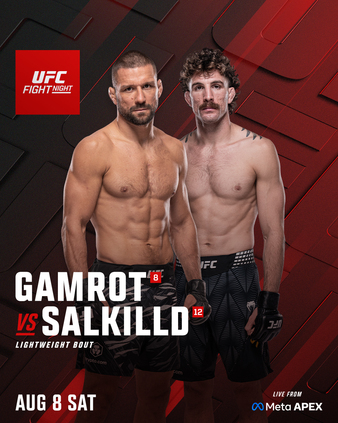
Light Heavyweight Bout • UFC Fight Night: Gamrot vs. Salkilld
Saturday, August 8, 2026 • Meta APEX, Las Vegas
Explore Detailed Fighter Profiles
Click on either the fighter's name or profile image for each fighter to access comprehensive UFC statistics including striking metrics, grappling data, clinch performance, complete fight history, offensive & defensive analytics, and round-by-round breakdowns.
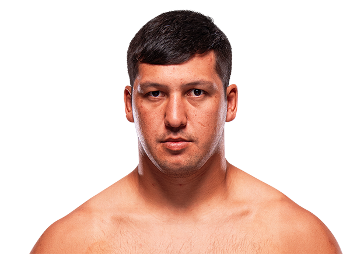
Diyar Nurgozhay
Fighter Metrics
Victory Methods
Win Round Distribution
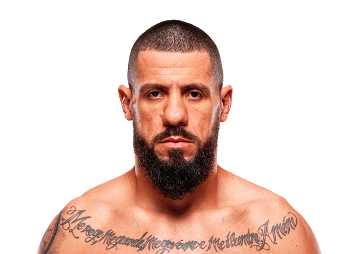
Bruno Lopes
Fighter Metrics
Victory Methods
Win Round Distribution
📋 Last 5 Fights - Diyar Nurgozhay
| Date | Opponent | Result | Method |
|---|---|---|---|
| 2026-03-07 | Rafael Tobias | W | Decision (Unanimous) (R3, 5:00) |
| 2025-08-23 | Uran Satybaldiev | L | Submission (Ezekiel Choke) (R1, 2:45) |
| 2025-03-15 | Brendson Ribeiro | L | Submission (Kimura) (R2, 1:28) |
| 2024-10-01 | Bartosz Szewczyk | W | KO/TKO (Head Kick + Punches) (R2, 3:32) |
| 2024-05-18 | Emiliano Sordi | W | KO/TKO (Punches) (R1, 4:17) |
📋 Last 5 Fights - Bruno Lopes
| Date | Opponent | Result | Method |
|---|---|---|---|
| 2026-03-28 | Navajo Stirling | L | KO/TKO (Strikes) (R2, 4:05) |
| 2025-05-31 | Dustin Jacoby | L | KO/TKO (Punches) (R1, 1:50) |
| 2025-01-11 | Magomed Gadzhiyasulov | W | Decision (Unanimous) (R3, 5:00) |
| 2024-08-13 | Mikheil Sazhiniani | W | KO/TKO (Punches) (R2, 4:14) |
| 2024-01-27 | Marcos Brigagão | W | Submission (Arm-Triangle) (R2, 4:58) |
Technical Analysis
Technical Score
Cardio Score
Overall Rating
📊 Technical Score
Average of Striking Composite and Grappling Composite. Diyar Nurgozhay computes at ~62 striking / ~50 grappling (Technical Score ~56); Bruno Lopes at ~44 striking / ~55 grappling (Technical Score ~50). All figures are estimated from three-fight UFC samples per UFC.com — directional, not stable.
💪 Cardio Score
Based on average fight duration, striking rate per minute, takedown rate, and finish rate. Measures cardiovascular endurance and ability to maintain pace throughout fights.
🎯 Overall Rating
Simple average of Technical Score and Cardio Score. Provides a holistic view of fighter capabilities combining skill level with physical conditioning and fight performance.
Striking Composite
Grappling Composite
Technical Radar Comparison
Visual comparison of key performance metrics between both fighters
📊 Detailed Statistical Comparison
🥊 Fight Analysis Breakdown
🧩 Diyar Nurgozhay Key Advantages
On the UFC three-fight samples Nurgozhay out-strikes Lopes on every axis: more volume (4.52 vs 2.88 SLpM), far better accuracy (59% vs 43%), better defense (61% vs 54%), and less absorption (2.81 vs 4.21) — plus the only proven octagon knockdown power in the cage (0.46 KD avg to Lopes' 0.00). The southpaw-vs-orthodox geometry compounds it, handing him a free straight-left lane down the middle of an orthodox guard. Standing — the most probable version of this fight — is his by a wide margin, and it is the single widest edge on the board.
Lopes' three career losses are all knockouts, and two came in his last three fights — Dustin Jacoby in 110 seconds (R1) and Navajo Stirling on strikes (R2). Nurgozhay is a 55%-KO-rate finisher with a first-round starching of former PFL 205-pound champion Emiliano Sordi on his résumé. A puncher with octagon-proven power meeting a chin that has failed three times — and been cracked twice in the last year — is the most bankable dynamic in the fight. The chin clock starts running the moment the fight stays vertical, which the data says is most of it.
At 29 to Lopes' 33, with less hard mileage — Lopes had a six-year competitive gap and a harder regional road — Nurgozhay is the fresher athlete, an edge that grows if the fight reaches a grueling third round. Just as important, he has already solved his own puzzle once: the 15-minute decision over Rafael Tobias at UFC 326 proved he can keep a fight standing, resist over-hunting the finish, and win rounds on skill. That disciplined blueprint — stay vertical, stay sharp, don't gift the scramble — is precisely how a sharp striker beats a black-belt grappler.
⚠️ Unfavorable Scenarios
Nurgozhay's front-runner instinct is also his trap: if he over-commits to the early finish, over-extends on a power shot, and Lopes catches the level change into a scramble, the black belt goes to work — exactly the script that ended the Ribeiro (kimura) and Satybaldiev (Ezekiel choke) fights. Both of his only two professional losses are submissions, and both came the moment a UFC opponent survived and grappled. A careless clinch or a stuffed takedown he doesn't disengage from can hand a superior grappler the back and the neck.
His striking edge rests on a three-fight sample — a 59% accuracy padded by a 15-minute Tobias decision where he could pick his shots. If those rates regress toward the mean, the standup gap narrows, and a physically-equal, harder-schooled veteran with a black belt has every incentive to drag the fight into the trenches. A single completed takedown flips the entire premise: the phase Nurgozhay dominates on paper vanishes, and he is fighting in the exact water — bottom position, scramble, caught neck — where both of his career nights have already ended.
📋 Likely Gameplan
Nurgozhay's whole edge — striking, stance, power, youth — lives vertical, so every scramble he refuses is a round he is winning. He should treat every Lopes level change as a threat to neutralize, not a grappling exchange to enjoy: stuff the shot, disengage, and reset to open space. He does not need to win on the mat; he needs to win the decision to stand back up. Discipline over the early kill is the lesson of his two losses — the Tobias fight showed the mature version that picks shots and stays balanced.
The open-stance geometry gifts him the straight left down the middle and the outside low kick; he should use them to bank rounds and hunt the chin without over-extending. He is the harder hitter facing the more crackable chin — three career KO losses, two in the last three fights — so sustained, accurate pressure is a genuine stoppage path, patiently applied. Trust the chin advantage, trust the power (0.46 KD avg to Lopes' 0.00), and let the finish come off volume and accuracy rather than a reckless hunt that invites the scramble.
🚀 Bruno Lopes Key Advantages
This is the whole upset. Lopes is a legitimate BJJ black belt with five career submissions, including an arm-triangle finish; Nurgozhay's only two professional losses are both submissions (a kimura and an Ezekiel choke), both in the UFC. No advantage in this fight is more surgically aimed at an opponent's flaw. One takedown, one scramble, one caught neck, and the fight is over — his UFC 0.00 sub average reflects two standup KO losses, not the pedigree, which sits far above the three-fight sample.
Lopes attempts more takedowns than Nurgozhay (1.93 vs 1.37 per 15) and has a 100% UFC takedown-defense record — he has never been dragged into anyone else's grappling and wants the phase himself. If he can dictate where the fight lives, he can steer it toward the mat. And he is not helpless standing: six career knockouts and a Muay Thai black belt mean a single hard counter or clinch shot can hurt Nurgozhay or force the level change. He does not have to win the striking outright — only land hard enough, once, to change the game.
⚠️ Unfavorable Scenarios
The data says the fight most likely lives standing — and standing, Nurgozhay's sharper, southpaw striking simply out-lands him and then finds the chin that has already failed three times. At 33 and on a two-KO skid, the first clean straight left can do to Lopes exactly what Jacoby and Stirling did. His 22% UFC takedown accuracy against an 80%-TDD, vertical-minded opponent means he may never reach the phase where he is dangerous, spending fifteen minutes — or ninety seconds — in the phase where he gets hurt.
Every route to a Lopes win runs through a takedown, and his 22% UFC entry rate is the problem: against a switched-on southpaw with 80% takedown defense and a game built to stay vertical, the grappling phase may simply never happen. If the entries stall, he spends the fight losing the striking exchanges on the cards while never reaching the mat where he is the more dangerous man. His late-fight path is a submission, not a points rally — so a failure to close the distance is, functionally, a decision loss.
📋 Likely Gameplan
Nurgozhay's most dangerous window is the opening five minutes — the phase where Jacoby finished Lopes in 110 seconds. Step one is to weather it: don't trade in the pocket with a sharper southpaw, get past the round that has ended him before. Then the entire fight opens up if it hits the floor. He should chain entries, use the clinch as the on-ramp, tie Nurgozhay up on the fence and drag him down — improving on that 22% conversion, because one completed takedown flips the whole premise.
Once it is on the mat, the target is obvious: Nurgozhay taps. Get to dominant position and make him defend the exact thing he has twice failed to defend — the neck and the back. What Lopes must not do is get drawn into a straight kickboxing match; trading with the more accurate, higher-volume, harder-hitting man is how he loses. Every exchange on the feet should be a means to a takedown, not an end in itself — a hard shot or a clinch that becomes a level change, not a firefight he is statistically built to lose.
🎯 Fight Prediction Analysis
Data-driven prediction model based on statistical analysis
📊Detailed Analysis Summary
🏟️Standing Probability Is the Master Variable
Every sub-analysis collapses into one number: what fraction of the fight is spent standing? Standing, Nurgozhay wins nearly every exchange — better striker, better stance, better power, fresher. Grounded, Lopes is the more dangerous man the instant it hits the mat. Lopes' 22% UFC takedown accuracy against a 29-year-old with 80% takedown defense and a game built to stay vertical suggests the fight lives standing far more often than not. That single tilt — the difficulty of Lopes getting it down — is the backbone of the lean; the pick is fundamentally a wager on how often it hits the mat.
🎯The Mirror-Flaw Structure
The defining pattern is a symmetry of weakness: the striker who gets submitted meets the grappler who gets knocked out. Nurgozhay is 0-2 losing to submissions; Lopes is 0-3 losing to strikes. Each man's single best weapon is a direct answer to the other's single proven failure — a black-belt submission threat for the striker who taps, a sharp-shooting southpaw for the grappler who gets starched. This is why the finish should be modeled high and the decision low: both men are far more likely to be stopped than out-pointed, and the only question is which vulnerability the fight exposes first.
🧩The Chin Clock, and Sample Humility
Both men are finishable, but the durability evidence is lopsided in recency: Lopes has been knocked out in two of his last three, while Nurgozhay has never been knocked out at all — his losses are taps, not lights-out. In a standup fight only one of those clocks is running. The honest counterweight is sample size: six UFC fights of combined data, three per man, four ending in early finishes. The lean is real and defensible, but it rests on small samples and style-versus-style logic more than stable rates — a single successful early takedown can rewrite the entire projection.
🏁Final Prediction
Nurgozhay's single most likely outcome is a KO/TKO (27%) — the cleanest expression of a sharper puncher facing a chin knocked out twice in three fights — backed by the disciplined "Tobias blueprint" decision (22%) that stays standing and banks rounds. Lopes' best and most dangerous path is the submission (16%), the black-belt threat aimed squarely at Nurgozhay's only proven way of losing; his own Muay Thai power keeps a KO (15%) live, with the grappling-grind decision (14%) rounding it out. Overall: Nurgozhay 55%, Lopes 45% — a modest, honest lean, not a confident call, because one completed takedown can flip the entire premise.
💰 Betting Analysis: Model vs Market
Detailed value assessment in the betting market
📊Market Odds
🤖Analytical Model
💎Value Opportunities
MAXIMUM VALUE
Model: 55% | Fair: -140 — the striking, stance, power, youth and standing-probability edges all stack the same way; the market may price him higher.
GOOD VALUE
Model: ~64% | Fair: -178 — two finishers whose only losses are all finishes; the decision is the worst bet on the board.
SLIGHT VALUE
Model: 16% | Fair: +525 — his best path: the black-belt threat aimed at Nurgozhay's only proven way of losing.
⚠️Key Market Discrepancies
- • No public market line – these are model-derived prices; treat them as fair-value estimates, not observed market edges.
- • The finish is underpriced – two finishers whose only losses are all finishes make the 64% inside-the-distance read; the decision is the worst bet.
- • Live dog on the mat – Lopes at +120 is live purely on the 16% submission path against Nurgozhay's only proven weakness.
🎯 Comprehensive Probabilistic Analysis
100 hypothetical fight simulation based on statistical data
🏆Outcome Distribution - Diyar Nurgozhay
His most likely outcome: sharper puncher vs a cracked chin
The Tobias blueprint: out-strike and bank rounds
Deliberately low — not his game, he shouldn't hunt the mat
💥Outcome Distribution - Bruno Lopes
His best path: the black-belt threat vs a proven tapper
Real Muay Thai power — but standing is his risky phase
The grappling-grind script that won him Gadzhiyasulov
⏰Fight Timeline Analysis
⚡Window of Opportunity - Bruno Lopes
- • The mat: every second grounded is his.
- • Level changes: improve on the 22% UFC entry rate.
- • The neck: Nurgozhay's only losses are submissions.
🎯Progressive Dominance - Diyar Nurgozhay
- • Standing: sharper on every axis, every minute.
- • Southpaw straight: splits the orthodox guard.
- • The chin: a 55% KO rate vs a chin cracked twice.
🎯 Final Confidence Assessment
Confidence level and uncertainty factors
Confidence Level
A genuine but soft lean on a low-sample, finish-heavy pick-'em between two flawed, finishable prospects
✅Supporting Factors
- • Across-the-board striking edge + southpaw geometry
- • Lopes' chin: 3 losses all KO/TKO, two in his last three
- • Standing probability favors Nurgozhay (Lopes 22% TD acc vs 80% TDD)
- • Youth and freshness — 29 vs 33, the fresher legs
⚠️Risk Factors
- • The submission trap is real and perfectly aimed (0-2 by sub)
- • Three-fight samples for both — the rates will regress
- • Lopes can punch (6 career KOs); no public market line
🏁Executive Summary
A modest lean on the sharper, younger southpaw. In roughly 55 of 100 simulations, Nurgozhay's striking decides the night — most often (27) by finding the freshly-cracked chin for the stoppage, his single most likely outcome, and often enough (22) by banking rounds behind volume and accuracy the way he did against Tobias. In the roughly 45 where Lopes' hand is raised, the mechanism is almost always the grappling doing what the striking can't: a completed takedown or scramble that lets the black belt hunt the neck against a man who has twice failed to defend it (16 by submission), or one clean Muay Thai shot catching a front-running opponent (15 by KO), with the grinding grappling-led decision (14) rounding it out. This is a finish-heavy fight where the decision is the least likely single outcome, and the winner is decided almost entirely by whether it stays standing.
Prediction: Diyar Nurgozhay by KO/TKO most likely (27%), the sharper puncher finding a chin that has failed three times; his disciplined decision (22%) is a very live second path if it stays standing. Lopes' most dangerous lane is the submission (16%) — the black-belt threat aimed at Nurgozhay's only proven way of losing — with his own Muay Thai power (15% KO) keeping the upset real. The numbers lean toward the younger southpaw keeping it vertical, but Bruno Lopes is one completed takedown away from dragging this into the exact water where Nurgozhay drowns. Final line: Nurgozhay 55%, Lopes 45%.