Kyoji Horiguchi vs Asu Almabayev: analysis & prediction

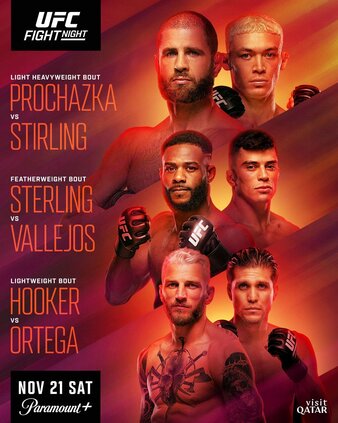
MAIN CARD · FLYWEIGHT · 3 ROUNDSUFC Fight Night: Procházka vs. Stirling
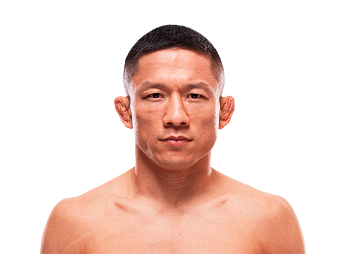
Kyoji Horiguchi — Flyweight fighter

Kyoji Horiguchi

“Karate Kid”
36W6L
Blitzing Karate Striker
VS
Asu Almabayev — Flyweight fighter

Asu Almabayev

“Zulfikar”
24W3L
Chain Wrestler

Every standing minute is Horiguchi's. The first-round takedown is Almabayev's.

FlyweightABHA Arena, Doha, QatarNovember 21, 2026Standard 30ft Octagon

Fight overview

The fight in 30 seconds

The opening round is Almabayev's window: his best wrestling round, and the only one in which anyone but Demetrious Johnson has taken Horiguchi down in the UFC. If Horiguchi stays upright or gets up fast, the standing minutes after that belong to the karate blitzer, and Almabayev's chain wrestling has stalled against Kape, Nicolau and Perez. The third round is the swing, when Almabayev's control peaks and his submissions arrive.

Paths that change the fight

  • Kyoji HoriguchiSurvive Round 1 on his feet or get up fast, then make it a striking fight. From Round 2 on, non-Johnson opponents are 0 for 18 on takedowns against him, and he lands roughly 60% more per minute than Almabayev.
  • Asu AlmabayevBank Round 1 on a takedown and a long ride, then win one of the next two on control, most likely the third, where his control share peaks at 62%.
What limits this estimate · Analyst conviction: 5/10
  • The Round-1 window: Almabayev's best wrestling round lines up with Horiguchi's only takedown-vulnerable round (5 of 9 non-Johnson attempts landed).
  • 48.9% of Almabayev's UFC cage time is spent in control, rising to 62% in Round 3. A 1-1 fight going into the last round is his kind of fight.

Editorial assessment of the evidence, not a win probability or a calibrated confidence interval.

Kyoji Horiguchi

Insufficient price data
Model win probability
58%
Fair odds
-138
Reference quote
—
Fair decimal odds
1.72

Asu Almabayev

Insufficient price data
Model win probability
42%
Fair odds
+138
Reference quote
—
Fair decimal odds
2.38
Price freshness & calculation notes

Quotes older than 48 hours are marked outdated. EV at an old or undated price is a historical calculation, not a current opportunity. Quotes listed with a date but no time are treated as undated.

Sources and data limitations

Career records, full UFC bout logs, round-by-round figures and rate lines cover every UFC round both men have fought through June 2026 (Horiguchi 555 of 1,166 and Almabayev 238 of 463 significant strikes; 17 of 42 and 33 of 72 takedowns); rankings are current through late September 2026. Composite scores, simulations, probabilities and fair prices are MMA Analytics model outputs.

Model methodology
01

The Frame

What this fight is really about — and the measurements that shape it

The Analyst's Take

Kyoji Horiguchi's second UFC run looked like a returning champion's until Manel Kape stopped him in June, and at 36 he now has to show the chin still matches the skill. Asu Almabayev arrives on three straight wins, but his chain wrestling has run cold against the division's top tier, and Horiguchi sits squarely inside it. Their shared loss to Kape tells the story: Horiguchi was stopped while leading, Almabayev after never getting him to the mat. The swing is whether that knockout has left Horiguchi a half-beat slow on the counters that punish every level change.

Kyoji Horiguchi
Attribute
Asu Almabayev
36
Age
Almabayev 3.3 years younger32
5'4"
Height
5'4"
63"
Reach
+2" Almabayev65"
38"+2" Horiguchi
Leg Reach
36"
Orthodox
Stance
Orthodox
American Top Team (Coconut Creek, FL)
Team
Dar Team (Almaty)
Oct 19, 2013
Octagon Debut
Aug 5, 2023
11 (9-2)
UFC Bouts
8 (7-1)
#5
Division Rank
#7
125.0 lbs
Last Weigh-In
125.5 lbs
2nd-degree black belt, Shotokan karate
Base
Wrestling from age five; BJJ champion of Kazakhstan and Asia
In-and-out karate blitzer with a counter-wrestling layer
Fighting Style
Chain wrestling into rides and submissions

The frames are identical. Both men are 5'4", both are orthodox, and both weigh in right on 125. Almabayev has two inches of reach (65" to 63"), but reach carries no weight in this projection. Leg reach gives Horiguchi +2" (38" vs 36"), which fits his long, bladed karate stance. Almabayev has the age: he was born three years and three and a half months after Horiguchi, and at flyweight 36 is a real number. Horiguchi's hand speed and entry timing are the basis of his whole game, and he arrives five months after being knocked out for the third time in his career. The real profile gap is where each man spends his time. Almabayev has spent nearly half of his UFC minutes (48.9%) on top of someone. Horiguchi has thrown 70% of his significant strikes at distance.

Venue Factor
Both men have already won in this exact building. On November 22, 2025, at UFC's first Qatar card at ABHA Arena, Horiguchi submitted Tagir Ulanbekov at 2:18 of Round 3 (Performance of the Night), and Almabayev guillotined Alex Perez 22 seconds into Round 3. Neither gets a venue edge. This is an arena event, not the 25-foot Meta APEX cage where Horiguchi fought Kape and Albazi. Arena cards normally use the full-size Octagon, and more canvas is worth something to the man who wants to stay off the fence. Almabayev's takedowns are not purely fence-derived, though: only 10% of his significant strikes come from the clinch, versus 25% from the ground. More room gives Horiguchi more exits, but it also gives Almabayev more space for open-field shots and body-lock chains.
02

The Fighters

Careers, chins, schedules — and the form they bring into the cage

Kyoji Horiguchi celebrates his unanimous-decision win over Amir Albazi, February 2026

Kyoji Horiguchi

Pro Record
36-6-0 (1 NC)
UFC Record
9-2 across eleven bouts in two stints (2013–16 and 2025–26)
Streak
Lost his last: TKO by Manel Kape (R3 2:42, Jun 2026), ending a 7-0 (1 NC) run from 2022
Finish Rate
58.3% (21 of 36 wins): 15 KO/TKO, 6 submissions
Avg Fight Time
13:53
Chin · Declining: three KO/TKO losses (2019, 2021, 2026) and a 2022 knockdown, three of those four events in his last 12 boutsSOS · ChampionshipBlitzing karate striker with a counter-wrestling layer

A returning champion. Horiguchi left the UFC in 2016 at 7-1 in the Octagon and went 16-3 (1 NC) across RIZIN and Bellator, winning the Bellator bantamweight title, the RIZIN bantamweight title twice, the RIZIN flyweight title and the 2017 RIZIN bantamweight Grand Prix. He re-signed in March 2025 and came back at 35, and his first two fights back were exactly what the UFC paid for. He dropped Tagir Ulanbekov twice and choked him out in Round 3 as a +163 to +195 closing underdog, then beat Amir Albazi on all three cards (30-27, 30-27, 29-28), out-landing him 73 to 16. The Manel Kape rematch was his first UFC main event in eleven years. It went his way for ten minutes: 8-5 and 11-2 on significant strikes in the first two rounds, two takedowns, 3:45 of Round-2 control. Then a right hand in the centre of the cage wobbled him in Round 3, an uppercut followed as he tried to recover, and the fight was stopped at 2:42 over his protest. On the evidence, the second-stint version is a more efficient striker than the 2013–16 one: 56% landed, 73% defended, 1.02 absorbed per minute, and +36.0 significant strikes per fight against +16.2. That came against opponents with a combined 18-5 UFC record going in. The power and the chin have gone the other way. His last KO/TKO win was Kai Asakura in December 2020, and three of his four documented knockdown-or-KO events came in his last 12 bouts. The open question is durability at 36.

Asu Almabayev attacks Charles Johnson's leg on the way to a Suloev-stretch submission in Baku, June 2026

Asu Almabayev

Pro Record
24-3-0
UFC Record
7-1 across eight bouts since August 2023
Streak
Three straight wins: Ochoa (UD), Perez (guillotine R3), Charles Johnson (Suloev stretch R3)
Finish Rate
58.3% (14 of 24 wins): 11 submissions, 3 KO/TKO
Avg Fight Time
13:03
Chin · Durable: never knocked down in 8 UFC bouts; two career TKO losses, both in Round 3SOS · Ranked contenderChain wrestler and control grappler

A steadier arc than Horiguchi's, and a narrower one. Almabayev has 20 wins in his last 21 fights and seven wins in eight UFC bouts: four decisions and three submissions, all built on the same engine of takedown, ride, then attack the neck or a leg. He was interim M-1 Global and Naiza FC flyweight champion before the UFC, and he spends 48.9% of his UFC cage time in control. His only UFC loss came in his only main event. Manel Kape stuffed all six of his takedown attempts, allowed zero seconds of control, out-landed him 61-40 and finished him at 2:16 of Round 3, seconds after an open-hand graze to the eye that the referee did not see. Since then he has beaten Ochoa (a late replacement; decision, 9:26 of control), #7 Perez (a comeback counter-guillotine at 0:22 of Round 3 after losing Round 2 on the mat) and #14 Charles Johnson (a Suloev stretch at 3:33 of Round 3, reported as the first in UFC flyweight history). The trend underneath the streak is mixed. His shot volume is up to 11.56 attempts per fifteen over the last three fights, but his striking differential has fallen from +7.4 per fight to −0.3. He withdrew from a February 2026 main event against Brandon Moreno with a hand injury; the June win shows no lingering effect.

Kyoji Horiguchi
0 dealt · 0 absorbed
Knockdown Exchange
Knockdowns dealt vs absorbed.
Asu Almabayev
0 dealt · 0 absorbed

Kyoji Horiguchisignature weapons

First-Round Karate BlitzAll ten of his first-round finishes are KO/TKOs, from McCall in 0:09 to Asakura (2:48) and Jon delos Reyes in the UFC (3:48)
×10
Rear-Naked ChokeOugikubo, Takahashi and Ulanbekov (R3 2:18, Nov 2025, after two knockdowns)
×3
Arm-TriangleHokamura (2022) and Manel Kape (R3 4:27, RIZIN 2017)
×2

Asu Almabayevsignature weapons

Rear-Naked ChokeErik, Skakov, Fomenkov, Doskalchuk, Maningat and Ode Osbourne (R2 3:11, his UFC debut)
×6
Guillotine ChokeLudet, and Alex Perez at 0:22 of Round 3 in Doha, jumped on a standing opponent's shot
×2
Suloev StretchCharles Johnson, R3 3:33, Jun 2026, reported as the first in UFC flyweight history
×1

Kyoji Horiguchi

L
Manel Kape
KO/TKO — Punches

Opponent context: elite

R3 (2:42)
UFC Fight Night: Kape vs. Horiguchi — Jun 20, 2026 (five-round main event; Kape ranked #2)
W
Amir Albazi
Decision — Unanimous (30-27, 30-27, 29-28)

Opponent context: ranked

R3
UFC Fight Night: Bautista vs. Oliveira — Feb 7, 2026 (Albazi #6, off a 15-month layoff)
W
Tagir Ulanbekov
Submission — Rear-naked choke

Opponent context: ranked

R3 (2:18)
UFC Fight Night: Tsarukyan vs. Hooker — Nov 22, 2025 (Ulanbekov #11; Performance of the Night)
W
Nkazimulo Zulu
Decision — Unanimous

Opponent context: ufc adjacent

R3
RIZIN 49 — Dec 31, 2024 (RIZIN flyweight title defence)
W
Sergio Pettis
Decision — Unanimous

Opponent context: veteran

R3
RIZIN 47 — Jun 9, 2024 (bantamweight rematch)
Pattern

The trend splits three ways. His defence is rising: over his last three UFC fights he absorbed 1.02 significant strikes per minute with 73% striking defence and conceded 1 of 9 takedowns, against 2.45, 62% and 18 of 40 in 2013–16. His volume is stable: 3.73 per minute against a career 3.64. His durability is falling: the knockdown Kape landed was the first he has absorbed in 11 UFC bouts. The tape behind those numbers is strong. Ulanbekov (#11) took him down once in Round 1, then was controlled for 3:32 of Round 2, dropped twice and choked out, 49-6 on significant strikes. Albazi (#6) went 0 for 7 on takedowns and was out-landed 73-16. Against Kape (#2) he was up 19-7 with two takedowns after two rounds, then one right hand and an uppercut ended it at 2:42 of Round 3. The loss is about durability at 35, not about being out-fought.

Asu Almabayev

W
Charles Johnson
Submission — Suloev stretch

Opponent context: ranked

R3 (3:33)
UFC Fight Night: Fiziev vs. Torres — Jun 27, 2026 (Baku; Johnson #14; Performance of the Night)
W
Alex Perez
Submission — Guillotine choke

Opponent context: ranked

R3 (0:22)
UFC Fight Night: Tsarukyan vs. Hooker — Nov 22, 2025 (Perez #7, off a 17-month layoff)
W
Jose Ochoa
Decision — Unanimous

Opponent context: ufc

R3
UFC on ABC: Whittaker vs. de Ridder — Jul 26, 2025 (Abu Dhabi; late replacement, 1-1 in the UFC)
L
Manel Kape
KO/TKO — Punches

Opponent context: ranked

R3 (2:16)
UFC Fight Night: Kape vs. Almabayev — Mar 1, 2025 (five-round main event; Kape #6)
W
Matheus Nicolau
Decision — Unanimous (29-28 x3)

Opponent context: ranked

R3
UFC Fight Night: Hernandez vs. Pereira — Oct 19, 2024 (Nicolau #7, off two losses)
Pattern

Two trends pull against each other. The wrestling volume is rising: 11.56 attempts and 5.78 takedowns per fifteen over his last three, against 9.63 and 4.13 before, with control steady at about half the fight. The striking is falling: −0.3 significant strikes per fight over the last three against +7.4 in his first five, out-landed by Ochoa (26-22), Perez (39-33 over two rounds) and Kape (61-40). The opposition split explains most of it. Against #14 Charles Johnson and the unranked field the ride ran to plan: 30 of 55 takedowns, 67% control. Against the top-8 trio of Kape, Nicolau and Perez it did not: 3 of 17, 17% control. Perez even took him down 3 of 4 times in Round 2, and the Nicolau decision was 29-28 on every card. His wins over better opposition have come from opportunism, a third-round knockdown ride and a counter-guillotine, rather than from imposing the ride.

Kyoji Horiguchi

Win Methods
Wins by Round

Asu Almabayev

Win Methods
Wins by Round
Critical Insight
Horiguchi: 15 KO/TKOs, 6 submissions and 15 decisions in 36 professional wins. Of Horiguchi's 21 finishes, ten in round one, seven in round two, three in round three and one in round four or later. Almabayev: 3 KO/TKOs, 11 submissions and 10 decisions in 24 professional wins. Of Almabayev's 14 finishes, four in round one, seven in round two and three in round three. The round bars count every professional win, with decisions in the DEC column.

Common Opponents

OpponentKyojiAsu
Manel KapeL· TKO R3 (2:42), Jun 2026 UFC main event; led 19-7 in sig. strikes after two rounds, 2 of 5 takedowns. Also W · SUB (arm-triangle) R3 4:27, RIZIN 2017L· TKO R3 (2:16), Mar 2025 UFC main event; 32-33 after two rounds, then out-landed 28-8 in Round 3; 0 of 6 takedowns
Same opponent, same round of defeat, different fights. After two rounds Horiguchi was +12 and Almabayev −1. The real gap was on the mat: Horiguchi got through Kape's takedown defence (79% career) twice, and Almabayev went 0 for 6. Almabayev's finish came seconds after an eye poke the referee missed
Tagir UlanbekovW· SUB (rear-naked choke) R3 (2:18), Nov 2025, ABHA Arena; two knockdowns, 49-6 in sig. strikesL· TKO (submission to punches) R3 (4:51), Jan 2017, when Almabayev was 23 and 4-0
A weak second bridge: nine years separate the two results, so it is a footnote rather than evidence. Ulanbekov was #11 and 6-1 in the UFC when Horiguchi beat him
03

The Numbers

Composites, division benchmarks and round-by-round evidence

Composite scores summarize selected statistics on a 0–100 scale. They are not win probabilities. Compare the underlying metrics, opponent quality and UFC experience before interpreting a score difference as a matchup advantage.

Striking

SLpM 25% · StrAcc 30% · StrDef 30% · SApM 15%

0
Kyoji
0
Asu

A nine-point edge to Horiguchi, and it understates him. His career volume (3.64) and accuracy (47%) sit right on the flyweight means of 3.63 and 47.4%. His defence (64%, 10.8 points above the benchmark), absorption (2.08, 40% below the mean) and knockdown rate (0.59) carry the score. His second-stint line (56% landed, 73% defended, 1.03 absorbed) would score higher. Almabayev lands 2.28 per minute, 37% below the mean, with one UFC knockdown in eight fights. His 1.94 absorption is partly structural: he is rarely standing to be hit, and against Kape, Nicolau and Perez it rose to 3.11 per minute.

Grappling

TD/15 25% · TDAcc 25% · TDDef 30% · Sub/15 20%

0
Kyoji
0
Asu

Almabayev's category on profile, by eighteen points. 4.74 takedowns per fifteen (2.7x the division mean) on 10.35 attempts, 133 seconds of control per round and a 1.4 submission rate, adjusted up for control and down for the tier split. Horiguchi's raw formula scores about 38 on the official 61% takedown defence and about 53 on the 81% he has posted outside the Demetrious Johnson fight; we carry a blended 48. On this matchup the category narrows to one question: can Almabayev win the first-round takedown and hold it?

Technical

(Striking + Grappling) / 2

0.0
Kyoji
0
Asu

Almabayev by about four and a half points, because the formula weights grappling equally with striking and his grappling numbers are big. The volume behind those numbers came mostly against opponents who could not stop the first shot. The pick in the verdict comes from the matchup layer, not from this gap.

Cardio

Fight time · pace · R3/R1 output · champ rounds

0
Kyoji
0
Asu

Almabayev by four, on age (32 against 36) and a control share that climbs from 44% of Round-1 time to 62% of Round-3 time. Horiguchi's output rises every round (3.09, 4.22, 4.35 significant strikes per minute), and he has fought six career bouts scheduled for five rounds. His concern is late durability, not gas: his last two losses came after he had built the fight his way. Over three rounds this is not a decisive edge.

Overall

(Technical + Cardio) / 2

0.0
Kyoji
0
Asu

Almabayev by about 4.25 on profile (61.75 unrounded for Horiguchi). Re-score his grappling at about 50, on what it produced against Kape, Nicolau and Perez, and the gap closes to 61.75 against 62. The composites describe a coin flip that depends on how much you trust Almabayev's wrestling against top-8 resistance. The 58-42 pick comes from the round split of Horiguchi's takedown defence, the common-opponent tape and the striking asymmetry.

MetricKyojiAsu
Avg Fight Time13:5313:03
Pace Tier3.64 SLpM, division average (3.73 in his second stint)2.28 SLpM, 37% below the mean; 10.35 TD attempts per 15
R3/R1 Output128% per round (19.3 vs 15.1 sig); 4.35 vs 3.09 per minute64% per round (7.7 vs 12.1 sig); 2.06 vs 2.42 per minutefew UFC fights
Slow Start %R1 is his quietest round (15.1 sig) and the only one non-Johnson opponents have taken him down in (5 of 9)R1 is his best wrestling round: 2.12 TDs on 3.50 attempts, 132 sec of control
Control Share21.7% of UFC cage time48.9% of UFC cage time, 62% of Round-3 time
Champ RoundsAt least six career bouts went to or were scheduled for five rounds; UFC R4-R5 only against Demetrious Johnson (2015)Five-round M-1 interim title decision (Kelades, 2019); his UFC main event ended in R3

Archetype Base Rate

Technical Striker 39%61% Wrestler

41-fight sample, shown for context only · Archetype history cannot settle this, and the model does not use it: the answer flips with the labels. Wrestler vs Technical Striker is 61.0% for the wrestler (n=41), the pairing shown here. Label Almabayev a Submission Artist (he is a BJJ champion of Kazakhstan and Asia) and the same history gives the striker 62.3% (n=355). Wrestler vs Well-Rounded is 60.2% for the wrestler (n=83). A prior that swings from 38% to 62% on a labelling choice is not a prior.

Kyoji HoriguchiAsu Almabayev

Flyweight

· 33 fighters

Rank bars use the recorded division cohort. Where no rank is shown, the comparison shows the difference from the published division average; the white marker denotes equality. Percentage differences are percentage points (pp). Higher is not always better: fewer strikes absorbed is preferable.

StatKyojiKyoji comparisonDiv avgAsu comparisonAsu
SLpM3.64
+0.01 vs avg
3.63
-1.35 vs avg
2.28
Str Acc47%
-0.40 pp vs avg
47.4%
+3.60 pp vs avg
51%
Str Def64%
+10.80 pp vs avg
53.2%
-0.20 pp vs avg
53%
SApM2.08
-1.40 vs avg
3.48
-1.54 vs avg
1.94
KD Avg0.59
+0.16 vs avg
0.43
-0.29 vs avg
0.14
Damage Ratio1.75
+0.63 vs avg
1.12
+0.06 vs avg
1.18
TD/151.67
-0.07 vs avg
1.74
+3.00 vs avg
4.74
TD Acc40% (17 of 42)
—
~40%
—
45.8% (33 of 72)
TD Def61% (81% excl. D. Johnson)
—
~65%
—few UFC fights
44% (5 of 9 conceded)
Sub/150.1
-0.78 vs avg
0.88
+0.52 vs avg
1.4
Control / Round62 sec
—
—
—
133 sec
Avg Fight Time13:53
—
—
—
13:03
Statistical Verdict
Every striking marker belongs to Horiguchi: volume, defence, damage ratio (1.75 against 1.18) and knockdowns (0.59 against 0.14), plus a second-stint line of 56% landed, 73% defended and 1.03 absorbed that is elite at any weight. Every positional marker belongs to Almabayev: 2.8x the takedowns, 2.1x the control time, fourteen times the submission rate, never submitted and never knocked down in the UFC. The deciding stat sits between those two columns. Takedowns landed on Horiguchi after Round 1 by anyone not named Demetrious Johnson: 0 of 18. Almabayev can get Horiguchi down in Round 1 and bank that round. He then has to win one of the next two rounds against a man nobody has taken down in them since 2015.

Significant Strikes Landed per Round

Control Time per Round (sec)

Kyoji Horiguchi

  • His output climbs every round: 15.1 significant strikes in an average first round, 20.6 in the second, 19.3 in the third. Per minute fought that is 3.09, 4.22 and 4.35. He does not fade in three-round fights.
  • Round 2 is his wrestling round too: 0.90 takedowns and 104 seconds of control on average, his best of the fight. Against Kape it was 3:45 of control and 7 of 10 ground strikes.
  • His targeting moves upstairs as the fight goes on. 24.7% of his Round-1 strikes go to the body, then 83.3% of his Round-3 strikes go to the head, and his Round-3 knockdown average (0.22) is his highest.

Asu Almabayev

  • The wrestling peaks in Round 1: 2.12 takedowns on 3.50 attempts and 132 seconds of control. It is the round he most needs to win, and his best.
  • His control keeps building while his striking fades. Control share goes from 44% of Round-1 time to 45% in Round 2 and 62% in Round 3, while his standing output falls from 2.42 to 2.28 to 2.06 significant strikes per minute.
  • Round 3 is his finishing round: 0.57 submission attempts on average (his highest), 29.6% of his strikes landed on the ground, and his last two wins ended there. Three of his seven Round 3s were cut short (Perez 0:22, Kape 2:16, C. Johnson 3:33), so per-round averages understate his rate.
Critical Insight
The two profiles meet in Round 1. It is Almabayev's best wrestling round, and it is the only round in which anyone other than Demetrious Johnson has taken Horiguchi down: Pague, Montague, Bagautinov (twice) and Ulanbekov, 5 of 9 attempts. After Round 1 the picture flips. Non-Johnson opponents are 0 for 18 on Horiguchi in Rounds 2 and 3, and his own output jumps from 3.09 to 4.22 significant strikes per minute. The first five minutes are the fight in miniature: an Almabayev takedown, and Horiguchi's ability to get back up from it.

Strike targeting

Kyoji

Head
75%
Body
16%
Legs
9%

Asu

Head
54%
Body
24%
Legs
22%

Head hunting vs body work vs leg attack — the shape of the damage.

Striking range — distance, clinch and ground

KyojiAsu
70%Distance65%
13%Clinch10%
17%Ground25%

Share of significant strikes landed at distance, in the clinch and on the ground across each fighter's UFC rounds, weighted by strike volume.

04

The Story of the Fight

Advantages, worst cases, gameplans — and the patterns underneath

Where the fight lives

Who owns each phase — and by how much
Open SpaceKyoji owns it

3.64 vs 2.28 SLpM and 64% vs 53% defence; 70% of Horiguchi's significant strikes land at distance

Pocket / ExchangesKyoji owns it

0.59 vs 0.14 knockdowns per fifteen and six UFC knockdowns dealt, against a man never knocked down in the UFC

ClinchAsu owns it

Body-lock chains off the fence, and Albazi banked 3:50 of cage-clinch control on Horiguchi without a takedown

GroundAsu owns it

4.74 TD/15, 133 sec of control per round and 11 career submissions, into 0 of 18 non-Johnson R2-R3 takedowns conceded

The Deep Read

Start with the number everyone will quote: Horiguchi's 61% takedown defence. Demetrious Johnson landed 14 of the 19 takedowns he has conceded in the UFC, in the 2015 title fight. The other ten UFC opponents went 5 of 27, all in Round 1. Johnson is not an outlier to be thrown away, though. He is the only opponent who attacked Horiguchi at Almabayev-like volume (13.2 attempts per fifteen against Almabayev's 10.35), and he got in 64% of the time. The counterweights: it was 2015, Horiguchi was 24, Johnson is the best flyweight in history, and Almabayev's volume against top-8 opposition drops to 6.8 per fifteen. The model puts Almabayev much closer to the field than to Johnson, which is the single largest reason Horiguchi is the pick.

Almabayev's wrestling has a tier split of its own, and the line is sharp. Kape was #6, Nicolau #7 and Perez #7 when he fought them. Against those three he is 2-1 with 3 of 17 takedowns, 17% control and an out-landed 117-98. That is despite Nicolau arriving off two straight losses and Perez off a 17-month layoff. Against everyone else he is 5-0 with 30 of 55 and 67% control, and that group includes #14 Charles Johnson (6 of 9, 8:48 of control). So the wall is the top eight, not the rankings as a whole, and Horiguchi is #5. He won two of the three top-8 fights anyway, on a third-round knockdown and ride against Nicolau and a counter-guillotine on a Perez shot. That is a real skill: he is dangerous even when the plan fails. But it is not the skill his rate line advertises. Meanwhile his striking differential has fallen to −0.3 per fight over his last three, while Horiguchi's second run sits at +36.0.

The Kape bridge completes the picture, though it is thinner than the fight totals suggest. Kape beat both men in Round 3 of a five-round main event. After two rounds Horiguchi led 19-7 with 2 of 5 takedowns and 4:00 of control; Almabayev trailed 32-33, 0 for 6 on takedowns, with no control. Both were then out-landed heavily in Round 3 (8-12 and 8-28). The gap between them was the wrestling, not the striking. There are two caveats. Almabayev's loss was materially affected by an eye poke the referee missed. And the Kape fight also showed Horiguchi's durability problem. He has no KO/TKO win since December 2020, and three of his four documented knockdown-or-KO events (Pettis 2021, a Hokamura knockdown in 2022, Kape 2026) came in his last 12 bouts. But Almabayev is the least equipped opponent of his recent run to exploit that, with one knockdown in eight UFC fights, no UFC knockout wins and 2.28 significant strikes per minute. The risk shows up as cumulative time on his back, not as a one-punch branch.

Path to Victory

Kyoji Horiguchi

Survive Round 1 on his feet or get up fast, then make it a striking fight. From Round 2 on, non-Johnson opponents are 0 for 18 on takedowns against him, and he lands roughly 60% more per minute than Almabayev.

Why they win
01
The standing exchange is lopsided

3.64 significant strikes per minute against 2.28, 64% defence against 53%, 0.59 knockdowns per fifteen against 0.14, and a second-stint line of 56% landed and 73% defended. Every standing minute is his.

02
Takedown defence after Round 1

Opponents other than Demetrious Johnson are 0 for 18 on him in Rounds 2 and 3, and he has conceded one takedown in nine attempts since returning to the UFC.

03
Counter-wrestling

17 UFC takedowns, 2 of 5 on Kape (79% career takedown defence) and 104 seconds of Round-2 control on average. Almabayev's 44% defence and the round Perez took him down three times say he can be put on his back.

04
The Kape tape favours him

Same opponent, same round of defeat. After two rounds Horiguchi was +12 (19-7) with two takedowns and 3:45 of Round-2 control. Almabayev was −1 (32-33) and 0 for 6 on takedowns.

05
Elite-level experience and a rising output curve

A UFC title fight, belts in three promotions, and wins over Caldwell, Pettis, Asakura, Albazi and Ulanbekov, who beat Almabayev in 2017. His output climbs from 3.09 to 4.22 to 4.35 per minute across three rounds.

The gameplan
  1. 1
    Survive Round 1 on your feet

    The only round where non-Johnson opponents have ever taken him down. Stay light, keep the hips back, circle off the fence, and do not throw the long kick that gives up a leg.

  2. 2
    Punish every level change

    A knee or a straight right on the entry. Almabayev's shots are high-volume and moderate-accuracy (18% against Kape, Nicolau and Perez), and every miss is a free counter.

  3. 3
    Win the minutes at range

    Keep output near four significant strikes per minute from Round 2 on. Almabayev lands 2.28, and 70% of Horiguchi's own offence already lands at distance.

  4. 4
    Reverse the wrestling when it is there

    Almabayev's 44% takedown defence is soft. A takedown of his own in Round 2, his best control round at 104 seconds, flips the scoring and makes Almabayev carry the weight.

  5. 5
    Do not chase the finish

    His realistic win is the Albazi fight: three rounds of clean volume. The finish comes if Almabayev's head drops into a counter. If the first-round shots are landing, get up fast rather than prevent them, as he did against Ulanbekov: concede a 1:25 ride to deny a 3:00 one.

Path to Victory

Asu Almabayev

Bank Round 1 on a takedown and a long ride, then win one of the next two on control, most likely the third, where his control share peaks at 62%.

Why they win
01
Takedown volume

10.35 attempts and 4.74 takedowns per fifteen minutes. Even if Horiguchi defends at 80%, that is roughly two takedowns across a full fight.

02
The first-round window

His best wrestling round (2.12 takedowns, 132 seconds of control) lines up with the only round where Horiguchi has historically been takeable: 5 of 9 non-Johnson attempts landed.

03
Control that compounds

48.9% of his UFC cage time spent on top, rising to 62% of Round-3 time. Judges reward it, and it is the signature of a grinder who gets stronger as opponents tire.

04
Never submitted, never knocked down in the UFC

Horiguchi's finishing paths run straight into Almabayev's most durable traits: 27 pro fights without being tapped, eight UFC bouts without a knockdown absorbed.

05
Age, momentum and a late submission threat

32 against 36, three wins in a row against a man five months off a knockout, and Round-3 finishes in his last two fights. One of them was a counter-guillotine on a panicked shot.

The gameplan
  1. 1
    Shoot early and often

    Round 1 is his window. Get the first takedown inside two minutes and ride; he needs a clear 10-9 in the bank.

  2. 2
    Chain, do not dive

    Body-lock and single-leg sequences that start in the clinch, not open-field shots from range into a karate counter. Perez's guillotine came from Perez shooting blind, and Almabayev cannot repeat that mistake from the other side.

  3. 3
    Use body and leg kicks to disguise entries

    About 46% of his significant strikes go to the body and legs. Make Horiguchi's hands drop before shooting.

  4. 4
    Protect the position over the submission until Round 3

    Horiguchi has been submitted once in 43 fights. The ride wins rounds; the Suloev stretch comes when the defence is gone. If the shots are being stuffed by the middle of Round 1, trade for the clinch and win minutes against the fence the way Albazi did.

  5. 5
    Make Round 3 a grinder's round

    His control share peaks there at 62%, and Horiguchi's last two losses both came after the midpoint of a fight.

Danger Zone

How Kyoji Horiguchi loses

  • The first shot lands and the fight never resets. Almabayev gets a Round-1 body lock, rides three minutes and repeats it in Round 3. It becomes the Ochoa fight (9:26 of control) with a better opponent underneath, and the cards read 29-28 Almabayev whatever the striking totals say.

  • The Kape knockout left a mark. At 36, five months after going limp from an uppercut, his timing on entries and counters is half a beat slow, and Almabayev's volume shots stop getting punished and start getting completed.

  • He wins the round standing and loses it on the fence. Albazi banked 3:50 of cage-clinch control without a single takedown, and a chain wrestler who never lets go can win minutes without ever finishing a shot.

Danger Zone

How Asu Almabayev loses

  • Kape 2.0. The shots are stuffed, every reset costs him, and he spends ten minutes at range with a faster, harder-hitting striker, out-landed at the Kape rate of 61-40 by a man whose striking defence (64%) is better than Kape's (57%).

  • He is taken down himself. Horiguchi turns a stuffed single into top position, as Perez did three times in one round, and the ride goes the other way. That is the Kape Round-2 picture: 3:45 of control and ground strikes.

  • He shoots from too far out in Round 1 and runs onto a blitz. He has never been knocked down in the UFC, but he has never shot into a man with ten first-round knockouts either.

What 61% takedown defence really means

The Demetrious Johnson Distortion

Nineteen takedowns conceded in eleven UFC bouts, fourteen of them to Demetrious Johnson in one 2015 title fight. Outside that fight Horiguchi has conceded 5 of 27 (81% defence), every one of them in Round 1, and 1 of 9 since returning in 2025. The caveat cuts the other way too: Johnson is the only man who attacked him at Almabayev-like volume, and he got in 64% of the time.

0 of 18
non-Johnson takedowns landed on Horiguchi in Rounds 2 and 3
Almabayev's opposition split, by rank at the time

The Top-8 Wall

Against the three top-8 opponents he has faced (Kape #6, Nicolau #7, Perez #7 at the time), Almabayev landed 3 of 17 takedowns, controlled 17% of the fight time and was out-struck by 6.3 per fight. Against everyone else he landed 30 of 55 with 67% control, and that includes #14 Charles Johnson (6 of 9). The line sits at the top eight, not at 'ranked', and Horiguchi is #5.

3 of 17
Almabayev takedowns against top-8 opponents (6 of 9 against #14 C. Johnson)
Last three fights against the rest of the career

Diverging Form Lines

Horiguchi's second UFC run is his most efficient striking: +36.0 significant strikes per fight and 1.02 absorbed per minute, against +16.2 and 2.45 in 2013–16, and his last three opponents went in a combined 18-5 in the UFC. Almabayev is going the other way on the feet. He is −0.3 per fight over his last three against +7.4 in his first five, out-landed in three of his last four, even as his shot volume climbs to 11.56 attempts per fifteen.

+36.0 vs −0.3
sig. strike differential per fight: Horiguchi since 2025, Almabayev's last three
Horiguchi's age curve at 36

Power Down, Defence Up

At 26–30 he finished 8 of 11 wins, 6 by KO/TKO. Since December 2020 he has 7 wins in 11 bouts, and none by KO/TKO: three submissions and four decisions. His chin has faded in parallel. Pettis KO'd him in 2021, Hokamura dropped him in 2022 and Kape stopped him in 2026, against one such event in his first 31 bouts. That is why the model holds his KO/TKO share to 13 points and leans his wins toward the cards.

0
Horiguchi KO/TKO wins in 11 bouts since December 2020
The Manel Kape bridge, round by round

Same Round, Different Fights

Kape stopped both men in Round 3. After two rounds Horiguchi was 19-7 with two takedowns and 4:00 of control; Almabayev was 32-33 and 0 for 6 on takedowns. The gap was in the wrestling, not the striking. Both were then out-landed heavily in Round 3 (8-12 and 8-28), and Almabayev's finish came seconds after an undetected eye poke.

+12 vs −1
sig. strike margin after two rounds against Kape (Horiguchi vs Almabayev)

The Five-Round Clock

Kyoji Horiguchi danger windowAsu Almabayev danger windowNeutral / contested
R1 · 0:00–5:00Almabayev's window

His best wrestling round (2.12 takedowns, 132 seconds of control) against the only round in which anyone but Demetrious Johnson has taken Horiguchi down (5 of 9). It is also Horiguchi's most dangerous striking round, ten career first-round KO/TKOs, and a shot from too far out gets hit coming in.

Critical Insight
The clock does not tilt one way; it alternates. Round 1 leans to Almabayev, whose wrestling peak meets Horiguchi's only takedown-vulnerable round. Round 2 leans to Horiguchi, whose output and control peak while conceding no non-Johnson takedowns. Round 3 is the swing round, with Almabayev's control peak against Horiguchi's cleanest takedown-defence round. A fight tied 1-1 going into Round 3 is the modal path, which is why the decision buckets carry 62 of the 100 simulations and why conviction stops at 5.

Finish Threat by Round

Share of each fighter's wins that end in each round — early finishers spike left, grinders rise right.

05

The Verdict

One hundred simulated fights, the betting market, and our conviction

If you only read 3 things
1

Horiguchi's 61% takedown defence is one fight wide. Outside Demetrious Johnson's 14 takedowns in 2015, opponents are 5 of 27 against him, all in Round 1, and 0 for 18 in Rounds 2 and 3.

2

Almabayev's wrestling is elite against the field, #14 Charles Johnson included (30 of 55 takedowns, 67% control), and ordinary against the top eight (3 of 17 and 17% against Kape, Nicolau and Perez). On the feet the form lines diverge: Horiguchi is +36.0 per fight since his return, Almabayev −0.3 over his last three.

3

Model: Horiguchi 58% / Almabayev 42%, conviction 5/10. Horiguchi by decision (40 of 100) is the most likely single outcome; Almabayev's best paths are a Round-1-and-Round-3 grinder's decision (22) and a late submission (12). No market line has been posted.

Model outcomes per 100 fights

Each square represents one percentage point of the model distribution, not an observed fight. This visualization does not measure model accuracy or reduce uncertainty in the inputs.

Horiguchi Decision — 40%Horiguchi KO/TKO — 13%Horiguchi Submission — 5%Almabayev Decision — 22%Almabayev Submission — 12%Almabayev KO/TKO — 8%

Each square = 1 model percentage point. Kyoji Horiguchi gold · Asu Almabayev orange · color opacity: 100% = decision, 70% = submission, 45% = KO/TKO.

The Round-1 takedown exchange

Almabayev averages 2.12 takedowns and 132 seconds of control in a first round, and non-Johnson opponents have landed 5 of 9 first-round takedowns on Horiguchi. This is the single most important variable. If Almabayev wins Round 1 clearly the fight becomes a genuine coin flip; if he loses it, his equity drops sharply.

Horiguchi's Round-2 and Round-3 defence

0 of 18 conceded to non-Johnson opponents, 14 of 22 to Johnson at 13.2 attempts per fifteen. Almabayev's volume against top-8 opposition is 6.8 attempts per fifteen, much closer to the field. It is the largest reason Horiguchi is the pick.

The top-8 split and the Kape tape

18% takedown accuracy and 17% control against the three top-8 opponents (Kape #6, Nicolau #7, Perez #7), against 55% and 67% against the rest, #14 Charles Johnson included. Horiguchi is #5. Against the common opponent, Horiguchi was +12 after two rounds with two takedowns; Almabayev was −1 and 0 for 6.

The standing differential

3.64 against 2.28 significant strikes per minute, 64% against 53% defence, and a second-stint Horiguchi line of +36.0 per fight, against Almabayev's −0.3 over his last three. It feeds the largest bucket on the page, Horiguchi by decision at 40.

Durability, power and finishing asymmetry

Horiguchi is 36 and five months off a TKO, with no KO/TKO win since December 2020, but the man across from him has a 0.14 knockdown rate and no UFC knockouts. Almabayev has never been submitted or knocked down in the UFC, and Horiguchi has been submitted once in 43 bouts. Both finishing paths are dampened, so 62 of 100 fights reach the cards.

Fight Scripts

0%
of simulations

The Albazi Template

Round 1 is hard and maybe lost, but Horiguchi is up inside thirty seconds whenever Almabayev gets in. From Round 2 the karate distance game takes over: entries meet knees and straight rights, output climbs past four significant strikes a minute, and the cards read 29-28 or 30-27, the way they did against Albazi.

Scripted outcomes for Kyoji Horiguchi vs Asu Almabayev — how each version of this fight unfolds.

Kyoji Horiguchi win probability
0%
13%
40%
5%
KO/TKODECSUB
  • Thirteen points for real counter-power (0.59 knockdowns per fifteen, two knockdowns on Ulanbekov last November) against a man with no UFC knockdowns absorbed who changes levels constantly. It stays at thirteen because his last KO/TKO win came in December 2020, and his three finishes since are submissions. It tilts toward Round 3 (6 of 13), where the Ulanbekov knockdowns came and where both of Almabayev's stoppage losses happened.

  • The largest bucket, and it is the Albazi fight: Almabayev's shots stuffed or reversed after Round 1, a 60% output edge at range, and 29-28 or 30-27 on the cards. Six of Horiguchi's nine UFC wins and four of his seven wins since 2021 are decisions, and Almabayev has never been knocked down or submitted in the Octagon.

  • Five points: a back-take after a scramble or a knockdown, the Ulanbekov sequence. It stays low because Almabayev has never been submitted in 27 pro fights and is an elite grappler himself.

Asu Almabayev win probability
0%
8%
22%
12%
KO/TKODECSUB
  • Eight points, almost entirely ground-and-pound from a dominant ride, plus a small allowance for the post-Kape durability question. His standing power (0.14 knockdowns per fifteen, no UFC KO wins) is not the threat.

  • The Ochoa and Charles Johnson path at a higher level of resistance: win Round 1 on a takedown and ride, lose Round 2 on the feet, win Round 3 on a 62% control share. It is a real path; the model simply gives him the Round-3 control battle less often than his profile suggests.

  • Twelve points from eleven career submissions, Round-3 finishes in his last two fights and the counter-guillotine threat on Horiguchi's own takedown attempts. It is discounted because Horiguchi has been submitted once in 43 pro fights.

Projected Scorecards

How the model scores each round
R1
Asu
R2
Kyoji
R3
Kyoji
29-28 Horiguchi
Almabayev banks Round 1 on a takedown; Horiguchi takes Rounds 2 and 3 at range
The modal card, and the core of Horiguchi's 40 decision wins
30-27 Horiguchi
The first-round shots are stuffed and the Albazi fight repeats
His cleanest decision, live whenever Almabayev comes up empty in Round 1
29-28 Almabayev
Rounds 1 and 3 on control, Round 2 lost on the feet
Almabayev's 22 decision wins, the grinder's card

Model and price

Kyoji Horiguchi

Insufficient price data
Model win probability
58%
Fair odds
-138
Reference quote
—
Fair decimal odds
1.72
Estimated EV
—
Edge vs no-vig market
—

Asu Almabayev

Insufficient price data
Model win probability
42%
Fair odds
+138
Reference quote
—
Fair decimal odds
2.38
Estimated EV
—
Edge vs no-vig market
—

EV uses the displayed price: probability × decimal odds − 1. Edge is a percentage-point difference from a proportionally de-vigged, same-book pair. A dash marks a price without a same-book pair to compare.

Price freshness & calculation notes

Quotes older than 48 hours are marked outdated. EV at an old or undated price is a historical calculation, not a current opportunity. Quotes listed with a date but no time are treated as undated.

Fair odds are the break-even price under this estimate, not a recommended entry price. Model uncertainty can erase a small edge.

What price would change the calculation? · Kyoji Horiguchi

Change the assumptions to see how the required price moves. This does not update the published model or recommend an entry price.

Required decimal price: 1.73 or higher. At the exact unrounded break-even price, estimated EV is zero.

What price would change the calculation? · Asu Almabayev

Change the assumptions to see how the required price moves. This does not update the published model or recommend an entry price.

Required decimal price: 2.39 or higher. At the exact unrounded break-even price, estimated EV is zero.

Original analyst price notes

These notes describe the original analysis and may refer to older prices.

Until a line opens, the lean is expressed as thresholds against our fair prices. Horiguchi's moneyline at anything better than −138 is the position. The public story this autumn (36 years old, fresh off a knockout, against a younger wrestler on a three-fight streak) could plausibly open him near a pick'em. Horiguchi by decision at longer than +150 (model 40%) is the cleanest expression of the model, since the decision bucket carries 40 of his 58 points. On the other side, Almabayev by submission (model 12%, fair +733) is a live underdog prop only at prices well above that. Avoid Horiguchi by submission at any short price: Almabayev has never been submitted in 27 pro fights. Other model fair prices: goes the distance 62% (−163), Almabayev by decision 22% (+355), Horiguchi by KO/TKO 13% (+669), fight ends in Round 3 18% (+456).

Conviction
0
5/10

Editorial confidence in the evidence, not a win probability or a calibrated confidence interval.

A real lean on the striking asymmetry and its trend, the round split of Horiguchi's takedown defence and Almabayev's top-8 wrestling split. It is capped because the profile composites point the other way (66 against 61.75 before the matchup adjustment), because the one opponent who attacked Horiguchi's takedown defence at Almabayev-like volume took him down 14 times, and because Horiguchi is 36, five months removed from being knocked unconscious, with a chin that has been cracked three times in 12 bouts. The evidence sharpens the lean about as much as it weakens it, so conviction sits at 5. The limit is the matchup itself. Lean: Kyoji Horiguchi.

What backs the lean
  • 0 of 18 takedowns conceded in Rounds 2 and 3 to anyone but Demetrious Johnson, and 1 of 9 conceded in his second UFC stint.

  • A standing edge of about 60% in output and 11 points in defence, plus the only knockdown power in the fight (0.59 against 0.14).

  • Almabayev's wrestling against top-8 opposition: 3 of 17 takedowns and 17% control against Kape, Nicolau and Perez; Horiguchi is #5.

  • Diverging form: Horiguchi +36.0 significant strikes per fight since his return, Almabayev −0.3 over his last three and out-landed in three of his last four.

What limits it
  • The Round-1 window: Almabayev's best wrestling round lines up with Horiguchi's only takedown-vulnerable round (5 of 9 non-Johnson attempts landed).

  • 48.9% of Almabayev's UFC cage time is spent in control, rising to 62% in Round 3. A 1-1 fight going into the last round is his kind of fight.

  • Never submitted and never knocked down in the UFC, which dampens both of Horiguchi's finishing paths, and he wins even when the plan fails (Perez, Nicolau).

  • Age (32 against 36), momentum (three straight wins against one loss), rising shot volume (11.56 attempts per fifteen over his last three) and a Horiguchi chin cracked three times in 12 bouts. The profile composites also favour Almabayev by about four points.

Final Assessment

In roughly 58 of 100 simulations, Kyoji Horiguchi turns the takedown fight into a striking fight. Round 1 is hard and sometimes lost: Almabayev gets in on a leg or a body lock, and the question is whether Horiguchi gets up in thirty seconds or two minutes. From Round 2 on, the karate distance game takes over. Almabayev's entries meet knees and straight rights, Horiguchi's output climbs past four significant strikes per minute, and the cards read the way they did against Albazi (40%). In the louder version, one of those counters lands as Almabayev dips, most often late once his output has faded (13%), though his power has not produced a KO/TKO win since 2020. Occasionally a knockdown or a scramble gives up the back, and the Ulanbekov sequence repeats (5%).

In the other 42, Asu Almabayev proves the first-round window is a door. He wins Round 1 on a takedown and a long ride, survives Round 2 on the feet, and takes Round 3 with the late control surge that finished his last two opponents: a 29-28 grinder's decision (22%). When he gets the back or a leg late in the fight, the submission that has never been done to him is done to a man tapped only once in 43 fights (12%). Less often, the ride turns into ground-and-pound on a 36-year-old who went limp five months ago, and the referee steps in (8%).

The data gives Almabayev the takedown volume, the control time, the age, the momentum and the profile composite. It gives Horiguchi the striking and its trend, the takedown defence that matters (after Round 1), the counter-wrestling, the better Kape tape and the top-8 tier of opponent that Almabayev's wrestling has struggled against. On November 21 in Doha, the model takes Kyoji Horiguchi at 58%, most likely by decision. The first five minutes will tell you whether that number is too low or too high.

Skip to main content
Use Tab to navigate through elements, Enter to activate buttons and links.