Davey Grant vs Elijah Smith: analysis & prediction

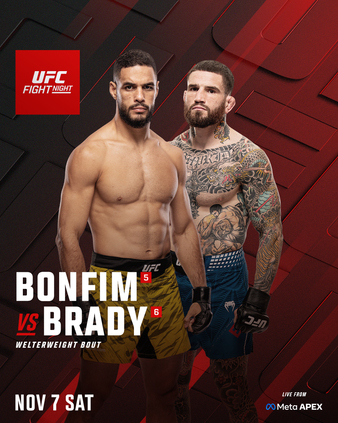
PRELIM · BANTAMWEIGHT · 3 ROUNDSUFC Fight Night: Bonfim vs. Brady
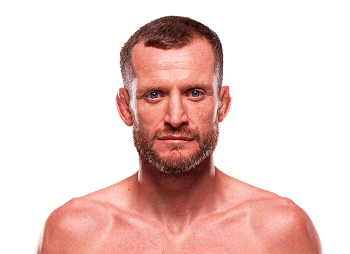
Davey Grant — Bantamweight fighter

Davey Grant

“Dangerous”
16W8L
Muay Thai Technician
VS
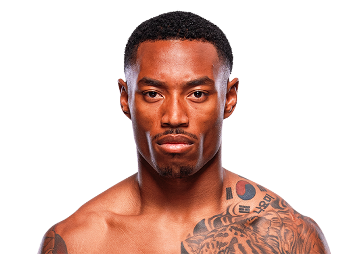
Elijah Smith — Bantamweight fighter

Elijah Smith

“Swift”
10W1L
Control Wrestler

Five submission losses meet a top-five takedown rate

BantamweightMeta APEX, Las Vegas, Nevada, United StatesNovember 7, 2026Meta APEX — small, neutral, no-crowd room

Fight overview

The fight in 30 seconds

Smith's wrestling and submission attempts target a relevant part of Grant's record: five of his eight career losses came by submission. Smith still needs to secure position after the entry; Grant can make the route harder through separation, defensive hand-fighting and striking before the next attempt.

Paths that change the fight

  • Davey GrantBe unfinishable for ten minutes while the young man's control time drains from 108 seconds to 28, then take a third round he cannot mathematically afford to have needed.
  • Elijah SmithClinch, walk him to the fence, drag. Eighty-three seconds of top position a round in a silent APEX is a decision that scores itself, and the back is there in Round 2 if he wants it.
What limits this estimate · Analyst conviction: 6/10
  • Takedown defence of 65%, verified across forty-one opponent attempts over thirteen years — the one metric that negates Smith's one elite skill, and the largest sample in the fight.
  • Zero knockout losses in twenty-four professional fights, an Elite chin tier and 100% knockdown recovery. The finish Smith is best equipped to produce standing simply does not happen to this man.

Editorial assessment of the evidence, not a win probability or a calibrated confidence interval.

Davey Grant

Insufficient price data
Model win probability
37%
Fair decimal odds
2.70
Reference quote—

Elijah Smith

Insufficient price data
Model win probability
63%
Fair decimal odds
1.59
Reference quote—
Price freshness & calculation notes

Quotes older than 48 hours are marked outdated. EV at an old or undated price is a historical calculation, not a current opportunity. Date-only snapshots have no verified capture time.

Sources and data limitations

Sources cited in this analysis: UFC.com. Statistics reflect the sample and reporting dates available for this matchup. Coverage can differ between fighters and may include bouts outside the UFC where noted. Unavailable measurements are not zeros. Projections, composite scores and analyst conviction are estimates, not observed outcomes.

Model methodology
01

The Frame

What this fight is really about — and the measurements that shape it

The Analyst's Take

This fight reduces to one brutal overlap. Davey Grant has never been knocked out in twenty-four professional fights — but five of his eight career losses are submissions, four of his seven UFC losses are submissions, and the most recent of them was a Charles Jourdain guillotine at 3:05 of the first round in October 2025. Submission is the only mechanism that reliably beats him, and grappling is the only elite skill Elijah Smith has: 2.98 takedowns per fifteen minutes (4th of 52 bantamweights), 1.12 submission attempts per fifteen (10th of 52), and eighty-three seconds of control per round against Grant's thirty-three. Against that, Grant carries 55% striking defence, a verified 65% takedown defence, an Elite chin tier and an off-the-back submission game that once inverted-triangled Raphael Assuncao from bottom side control. Our composites make this a coin flip with a hair to the veteran — 59.5 to 58.0 — and the matchup mechanics break the tie the other way: Elijah Smith 63%, Davey Grant 37%, conviction 6 out of 10.

Davey Grant
Attribute
Elijah Smith
40
Age
24
5'8"
Height
5'9"
69"
Reach
+2" Smith71"
40"
Leg Reach
40"
Not published
Stance
Not published
SBG Manchester — Bishop Auckland, England
Team
Factory X — Colorado Springs, Colorado
Nov 30, 2013
Octagon Debut
Feb 15, 2025
Muay Thai fighter — 89% of significant strikes land standing
Fighting Style
Control wrestler — 29% of significant strikes land on the ground

The usual compensation for a forty-year-old is size and frame, and Grant does not have it. Smith is an inch taller and two inches longer, in his physical prime, with double the control time per round. What Grant has instead is density of experience — 190 UFC minutes and 38 archived rounds against 30 minutes and 6 rounds — and a chin that has survived twenty-four professional fights with zero knockout losses. Smith is the more physically imposing bantamweight; Grant is the more proven one. The leg reaches are identical at 40 inches, which matters more than it looks, because Grant's most distinctive weapon is a leg-kick game that eats 27% of his total career strike volume — an unusually high share for the division.

Venue Factor
The Meta APEX is a neutral, small, no-crowd building — the venue that historically flatters pace and control over atmosphere and momentum. There is no home cage to buy Grant an extra round, no travelling English crowd and no altitude wrinkle. In the APEX, judges reward the fighter who is visibly doing something to the other man, and eighty-three seconds of control per round is a visible thing. This is the worst possible room for a forty-year-old who wins by out-touching people at range for fifteen minutes.
02

The Fighters

Careers, chins, schedules — and the form they bring into the cage

Davey Grant landing a knee on Jonathan Martinez

Davey Grant

Pro Record
16-8-0
UFC Record
9-7 across sixteen bouts since 2013 — five post-fight bonuses
Streak
Won his last — unanimous decision over Adrián Luna Martinetti (Apr 25, 2026, at this same venue)
Finish Rate
69% — 11 of 16 wins (4 KO/TKO, 7 submission)
Avg Fight Time
11:54
Chin · Elite — zero knockout losses in 24 professional fights, 100% knockdown recovery, a knockdown-exchange ratio of 4.00SOS · Elite tierMuay Thai Fighter / clinch-heavy Nak Muay

Grant has been in the UFC since the Obama administration's second term and has never strung together more than two consecutive wins in the modern half of his run. His Octagon ledger is 9-7 and reads like a metronome: win, lose, win, win, lose. He is not declining so much as oscillating — the Luna Martinetti decision in April 2026 was a clean, competent, entirely unremarkable veteran performance six months after Charles Jourdain choked him out in three minutes. His eight defeats contain zero knockouts and five submissions: Holdsworth by rear-naked choke, Stasiak by armbar, Bermudez by triangle, Jourdain by guillotine, plus his 2009 professional debut. On the evidence of twenty-four fights he is unkillable standing and gettable on the floor.

Elijah Smith fighting in the Octagon

Elijah Smith

Pro Record
10-1-0
UFC Record
3-0 — two finishes
Streak
8-fight win streak since March 2023 · 5-0 in his last five
Finish Rate
70% — 7 of 10 wins (5 KO/TKO, 2 submission)
Avg Fight Time
10:04
Chin · Iron on the UFC ledger — zero knockdowns absorbed across three Octagon bouts, though that count is UFC-only and quietly omits a Round-3 TKO loss on the regional circuitSOS · Strong tier — zero elite-level fightsWrestler / control wrestler

Smith is the opposite shape to his opponent: eight straight wins, a Contender Series contract off a decision over Aaron Tau in September 2024, and a UFC run that has escalated in quality of finish — a grinding decision over Vince Morales, a slam-to-ground-strikes TKO of Toshiomi Kazama, and a rear-naked choke of SuYoung You sixty-four seconds into the second round. He has fought eleven times since August 2022. His single professional defeat is a Round-3 TKO to Reyes Cortez Jr. at 2:17 in March 2023 — the one fight of his career that stayed a striking contest into the final five minutes. He has not yet been asked a hard question, and Grant is the hardest question available to him at this stage.

Davey Grant
0 dealt · 0 absorbed
Knockdown Exchange
KD dealt vs absorbed. A dash means that figure was not published.
Elijah Smith
0 dealt · 0 absorbed

Davey Grantsignature weapons

Guard Submissions — Triangle, Guillotine, Armbar7 career submissions and technique rates of triangle 0.17, guillotine 0.13, armbar 0.13 — the Assuncao finish was an inverted triangle from bottom side control, R3 4:43, Mar 2023
×7
Late-Round Accumulation TKO4 career KO/TKO wins — Smolka R3 0:49, Day R3 2:38, Martinez R2 3:03 — off 27% of career volume to the legs, 33% to the body and a leg-kick technique rate of 0.77
×4

Elijah Smithsignature weapons

Rear-Naked Choke off the BackSuYoung You, R2 1:04, Mar 2026 — RNC technique rate 0.33 is his highest finishing pattern, and 100% of his archived submission attempts came in Round 2
×1
First-Round Finishing off Top Control4 career first-round stoppages — Kazama R1 4:10, Josh Walker R1 1:44, Christian Strong R1 1:18, Jacob Kreitel R1 0:37 — the Kazama slam produced 36 of 43 ground strikes landed in one round
×4

Davey Grant

W
Adrián Luna Martinetti
Decision — Unanimous

Opponent context: prospect

RR3
UFC Fight Night — Apr 25, 2026 · Meta APEX
L
Charles Jourdain
Submission — Guillotine choke from guard

Opponent context: veteran

RR1 (3:05)
UFC FN: De Ridder vs. Allen — Oct 18, 2025
W
Da'Mon Blackshear
Decision — Unanimous

Opponent context: veteran

RR3
UFC FN: Whittaker vs. De Ridder — Jul 26, 2025
W
Ramon Taveras
Decision — Unanimous

Opponent context: prospect

RR3
UFC FN: Covington vs. Buckley — Dec 14, 2024
L
Daniel Marcos
Decision — Split

Opponent context: prospect

RR3
UFC FN: Aspinall vs. Tybura — Jul 22, 2023
Pattern

Four of his last five went the full fifteen minutes; the fifth ended in 185 seconds on the floor. That is the entire Davey Grant thesis in one table. When the fight stays vertical he is durable, busy and hard to separate from — against Ramon Taveras he landed 147 significant strikes across three rounds at roughly 50% accuracy, and against Da'Mon Blackshear he out-landed his man in every round while defending five takedown attempts. When a grappler gets a grip it is over fast: Jourdain, a featherweight-sized opponent with no wrestling reputation, dropped him and had a guillotine locked from guard inside three minutes. Note also the seventeen-month layoff between Marcos in July 2023 and Taveras in December 2024, and the two-fights-a-year cadence since. He is not a high-activity forty-year-old.

Elijah Smith

W
SuYoung You
Submission — Rear-naked choke

Opponent context: prospect

RR2 (1:04)
UFC FN: Emmett vs. Vallejos — Mar 14, 2026
W
Toshiomi Kazama
KO/TKO — Slam to ground strikes

Opponent context: prospect

RR1 (4:10)
UFC FN: Dolidze vs. Hernandez — Aug 9, 2025
W
Vince Morales
Decision — Unanimous

Opponent context: veteran

RR3
UFC FN: Cannonier vs. Rodrigues — Feb 15, 2025
W
Aaron Tau
Decision — Unanimous

Opponent context: prospect

RR3
DWCS Season 8, Week 6 — Sep 18, 2024 (not a UFC bout)
W
Josh Walker
KO/TKO

Opponent context: prospect

RR1 (1:44)
Fury FC 92 — Jun 16, 2024
Pattern

Five straight wins, three by finish, none past the third round. The Morales fight is the most instructive of the three UFC outings and the only one with a full round-by-round archive: Smith landed 19 of 43 in the first, collapsed to 1 of 5 in the second while spending 2:08 in control — he abandoned striking entirely to grapple — then rebounded to 20 of 49 in the third at 90% distance. That is a fighter with two separate modes and no bridge between them. The Kazama finish, a slam that ended in 36 of 43 ground strikes landed inside a single round, is the purest expression of his ceiling; the SuYoung You choke shows the back-take is real. What he does not have is one round of tape against a durable, technically sound veteran who refuses to be taken down.

Davey Grant

Win Methods
Wins by Round

Elijah Smith

Win Methods
Wins by Round
Critical Insight
The donuts are career method shares — Grant 4 KO/TKO, 7 submissions and 5 decisions in sixteen wins, Smith 5, 2 and 3 in ten. The round bars beneath them are scoped to UFC wins only, Grant's nine and Smith's three, because the rounds of two of Smith's regional finishes are not published and a half-known career bar is worse than an honest Octagon one. Read that way the clock runs backwards from the usual script. Grant's four UFC finishes are Louis Smolka by ground-and-pound at R3 0:49, Raphael Assuncao by inverted triangle from bottom side control at R3 4:43, Jonathan Martinez by overhand left at R2 3:03 and Martin Day by left hook at R3 2:38 — not one of them in the first round, and all seven of his career first-round finishes came on the regional circuit before 2014. Smith's UFC finishes are Kazama at R1 4:10 and SuYoung You at R2 1:04, off four career first-round stoppages and an opening-round control average of 108 seconds. The twenty-four-year-old's equity is front-loaded; the forty-year-old's is back-loaded.

Opposition strength (no shared opponents)

Without a reliable shared-opponent table, compare who each fighter has been tested against using SOS tier, UFC sample size, and recent elite-tier form — not raw records alone.

FactorDaveyElijah
Strength of schedule (SOS tier)Elite tier — Marlon Vera twice, Raphael Assuncao, Jonathan Martinez, Daniel Marcos, Da'Mon Blackshear, Charles JourdainStrong tier — zero elite-level fights — Vince Morales, Toshiomi Kazama, SuYoung You — legitimate UFC bantamweights, no gatekeeper and no ranked opponent yet
UFC sample9-7 across sixteen bouts since 2013 — five post-fight bonuses3-0 — two finishes
Recent ranked / elite touches (last 5)0 elite · 2 veteran tier0 elite · 1 veteran tier
Form-window difficulty edge: Fighter A (7 vs 6 tier points in listed bouts).
Last three opponentsAdrián Luna Martinetti, Charles Jourdain, Da'Mon BlackshearSuYoung You, Toshiomi Kazama, Vince Morales
  • Charles Jourdain (style proxy): A career featherweight with no wrestling reputation dropped Grant and had a guillotine from guard inside three minutes — the freshest, ugliest proof that the mechanism still works on this specific fighter
  • Reyes Cortez Jr. (style proxy): Smith's only professional defeat, in the one fight of his career he could not put on the floor — a third round that stayed a striking contest, which is precisely the fight Grant is trying to create
03

The Numbers

Composites, division ranks and round-by-round evidence

Composite scores summarize selected statistics on a 0–100 scale. They are not win probabilities. Compare the underlying metrics, opponent quality and sample flags before interpreting a score difference as a matchup advantage.

Striking

SLpM 25% · StrAcc 30% · StrDef 30% · SApM 15%

0
Davey
0
Elijahsmall sample

Grant throws 5.58 a minute against a 4.45 division mark (16th of 52), defends 55% (19th) and absorbs 4.04 against a 4.19 average, with a damage ratio of 1.71 to the division's 1.20. Smith's 48% headline accuracy is a ground artifact — 35.3% at distance against 78.2% on the mat — and his 47% striking defence ranks 42nd of 52, the worst number either man carries in.

Grappling

TD/15 25% · TDAcc 25% · TDDef 30% · Sub/15 20%

0
Davey
0
Elijahsmall sample

Smith is the better grappler by every published rate and it is not close on the sheet: 2.98 takedowns to 0.95, 1.12 submissions to 0.16, 83 seconds of control per round to 33. But the decisive grappling number belongs to Grant — 65% takedown defence, verified across 41 opponent attempts over thirteen years — and Grant's composite is debited for five career submission defeats.

Technical

(Striking + Grappling) / 2

0
Davey
0
Elijahsmall sample

Perfectly inverted profiles separated by three points. Grant is the better striker, Smith the better grappler, and neither gap is large enough to decide a fight by itself. What decides it is which skill gets to be the fight.

Cardio

Fight time · pace · R3/R1 output · champ rounds

0
Davey
0
Elijahsmall sample

The one axis where the forty-year-old is the safer projection — not because he is fitter, but because there are twelve archived third rounds of evidence for him and exactly one for his opponent. Smith's control time falls 108 → 72 → 28 seconds and his ground-strike share collapses to zero by the third; his only career loss is a Round-3 TKO.

Overall

(Technical + Cardio) / 2

0.0
Davey
0
Elijahsmall sample

Read this carefully, because it is the most honest number on the page: our composites make this a coin flip with a hair to the veteran. The 63-37 line comes from matchup mechanics and a 66.7% archetype base rate, not from the rate sheet — which is exactly why conviction is capped at six.

MetricDaveyElijah
Avg Fight Time11:5410:04
Pace TierHigh volume — 5.58 SLpM (16th of 52)Below par — 4.18 SLpM (27th of 52)small sample
R3/R1 OutputRises — 27.6 sig in R3 against 21.6 in R1, over 12 archived third roundsFlat — 20.0 in R3 against 19.7 in R1, on a single archived third roundsmall sample
Slow Start %33.3% — he gives away opening rounds a third of the time0.0% across three fightssmall sample
Champ RoundsN/A — 3-round boutN/A — 3-round bout

Archetype Base Rate

Muay Thai Fighter 33.3%66.7% Wrestler

36-fight archetype sample — wrestlers 24-12 · The archetype_matchups table has wrestlers at 24-12, 66.7%, over thirty-six recorded meetings with Muay Thai fighters — the single cleanest historical prior available for this exact stylistic pairing, and it lands almost precisely on our final number. It is a prior, not a projection: it knows nothing about Grant's 65% takedown defence or Smith's three-fight sample.

Davey GrantElijah Smith

Bantamweight

· 52 fighters
StatDaveyDavey rankDiv avgElijah rankElijah
SLpM5.58
16/52
~4.45
27/52small sample
4.18
Str Acc45%
28/52
~46.2%
21/52small sample
48% (35.3% at distance)
Str Def55%
19/52
~53.7%
42/52small sample
47%
SApM4.04
26/52
~4.19
18/52small sample
2.96
KD Avg0.32
27/52
~0.42
41/52small sample
0.37
Damage Ratio1.71
15/52
~1.20
19/52small sample
3.80
TD/150.95
29/52
~1.49
4/52elitesmall sample
2.98
TD Def65% — 15 of 41 opponent attempts conceded———53%
Sub/150.16
38/52
~0.51
10/52small sample
1.12
Avg Fight Time11:54———10:04
Statistical Verdict
Grant owns the striking-defence, takedown-defence, experience and schedule markers; Smith owns the takedown, submission, control, size, age and form markers. Neither man wins the sheet outright — but count the major flags and it is five to Grant, six to Smith, and Smith's are the ones that determine where the fight physically takes place. Eighty-three seconds of control a round against thirty-three, 29% of significant strikes landing on the ground against 5%, and 2.98 takedowns per fifteen against 0.95: every location metric belongs to the younger man, and the team that decides the location of the fight usually decides the fight.

Significant Strikes Landed per Round

⚠ R3: single-fight sample for Elijah Smith

Control Time per Round (sec)

Davey Grant

  • He opens on the legs and migrates upstairs as the damage accumulates: 38.4% of his first-round volume goes low and only 25.0% to the head, and by the third those figures are 21.0% and 48.2% — a +23.1 point head-targeting shift.
  • Output rises from 21.6 to 27.6 significant strikes while accuracy falls from 48.2% to 43.1%. He gets busier and looser late — a fatigue signature rather than a collapse.
  • His third-round knockdown average of 0.17 is nearly triple his first-round figure of 0.06, and both of his most recent stoppage wins landed in the third.
  • Sixteen, fourteen and twelve rounds of archive behind those three lines. Nothing here is a projection.

Elijah Smith

  • 108 seconds of control in the opening round, falling to 72 and then to 28 by the third. His grappling pressure is a Round-1 asset that evaporates.
  • 60.9% of his first-round strike locations are on the ground and 0.0% of his third-round locations are — a −61.0 point ground shift that is either fatigue, opponent adjustment, or the accident of a single archived round.
  • The second-round line is the most revealing row on the page: 7.0 strikes landed, 1.00 submission attempts and 0.50 knockdowns. Round 2 is when he stops striking and starts hunting the finish.
  • Three, two and one rounds of data. The third-round row is a sample of one and should be read as a direction, not a level.
Critical Insight
These two tables describe opposite fighters moving in opposite directions. Grant's equity is back-loaded — output up in the third, a knockdown rate that nearly triples, twelve archived third rounds, and both of his recent stoppages landing after the ten-minute mark. Smith's is front-loaded — 108 seconds of first-round control, a Round-2 submission signature, four career first-round finishes, and a ground game that measurably vanishes by the third. Grant does not need to survive early; he always survives early, and he has never been finished by strikes. He needs to survive the mat, and specifically Round 2, which is simultaneously Smith's submission window and the round where Grant's own head-hunting finally begins.

Strike targeting (available rounds)

Davey

Head
40%
Body
33%
Legs
27%

Elijah

Head
84%
Body
5%
Legs
11%

Head hunting vs body work vs leg attack — the shape of the damage.

Striking range — distance, clinch and ground

DaveyElijah
89%Distance63%
6%Clinch8%
5%Ground29%

Approximate share of significant strikes by range in available rounds, weighted by strike volume. Incomplete splits are excluded. Debutants / fighters without Octagon samples show as N/A.

04

The Story of the Fight

Advantages, worst cases, gameplans — and the patterns underneath

Where the fight lives

Who owns each phase — and by how much
Open SpaceDavey owns it

5.58 SLpM at 55% defence and a three-target attack, against 35.3% distance accuracy and a striking defence ranked 42nd of 52

Pocket / ExchangesDavey owns it

Damage ratio 1.71 to the division's 1.20, knockdown-exchange ratio 4.00, 100% recovery — though KD 0.32 is below the 0.42 divisional mark

ClinchElijah owns it

53.3% clinch takedown accuracy is Smith's whole entry; only 6% of Grant's career volume lands in the tie-up

GroundElijah owns it

83 control seconds a round to 33 and Sub/15 1.12 to 0.16 — into a guard that inverted-triangled Assuncao from bottom side control

Path to Victory

Davey Grant

Be unfinishable for ten minutes while the young man's control time drains from 108 seconds to 28, then take a third round he cannot mathematically afford to have needed.

Why they win
01
Takedown defence 65%, verified over thirteen years

Fifteen of forty-one opponent attempts conceded across his archived UFC rounds. This is the only number in the fight that directly negates Smith's only elite skill, and it is backed by the largest sample either man owns. Smith has never faced anything remotely like it.

02
Zero knockout losses in twenty-four professional fights

Elite chin tier, a knockdown-exchange ratio of 4.00, 100% knockdown recovery. Smith carries a UFC knockdown average of 0.37 — 41st of 52 — and exactly one Octagon knockdown. Grant is, on the evidence, not stoppable by strikes.

03
The three-target attack

Grant distributes 40% head, 33% body and 27% legs; Smith distributes 83% to the head. A wrestler who has to defend leg kicks, body kicks and knees while setting up level changes is a wrestler whose entries slow down — and Grant's leg-kick technique rate of 0.77 is the highest single-technique figure in his profile.

04
An eight-point striking-defence edge

55% against 47%, 19th of 52 against 42nd of 52, in the direction that matters. Add the distance-accuracy gap — Grant's 45% career figure against Smith's 35.3% at range — and every minute the fight spends upright is a minute Grant is winning on rate.

05
Round 3 is his round and Smith's documented weakness

Grant's third-round output rises to 27.6 significant strikes, his third-round knockdown rate of 0.17 nearly triples his first-round figure, and he has twelve archived third rounds. Smith has one, and his only career defeat came in a third round he could not take to the floor.

06
Off-the-back submission equity the rate line hides

A Sub/15 of 0.16 is a lie of context. Seven career submissions, guard-submission technique rates across triangle, guillotine and armbar, and a UFC win by inverted triangle from bottom side control over Raphael Assuncao. A wrestler who dives into that guard carelessly is at genuine risk.

The gameplan
  1. 1
    Fight in the middle of the cage, never with your back to the fence

    Smith's takedown entry is the clinch — 53.3% clinch takedown accuracy against a man who does not shoot from distance. Deny the tie-up and you deny the bulk of his offence before it starts.

  2. 2
    Open on the legs immediately

    The first-round profile already does this at 38.4% leg volume. Against a wrestler, chopping the lead leg degrades level changes faster than it degrades anything else, and Grant's leg-kick technique rate of 0.77 is his signature number.

  3. 3
    Punish every failed entry

    A wrestler who shoots and misses is a wrestler with his head down. Grant's counter-technique rate is 0.47 and his knee rate 0.60 — the tools for exactly that moment, against a striking defence ranked 42nd of 52.

  4. 4
    If taken down, attack immediately — do not survive passively

    Threaten the guillotine on the way down and the triangle from guard. Smith postures up to strike at 78.2% ground accuracy, and posturing men get triangled — which is precisely how Raphael Assuncao lost.

  5. 5
    Bank Round 1 rather than feeling it out

    A 33% slow-start rate is affordable against strikers and fatal against a control wrestler who will bank the round on 108 seconds of top position regardless of damage done.

  6. 6
    Contingency — if the takedowns land anyway

    Stop backing up and start initiating the clinch himself. His clinch accuracy is 62.7% and his knee rate 0.60, and being the man who walks into the tie-up beats being the man walked into the fence. Failing that, accept bottom position and hunt the finish; a forty-year-old down two rounds does not get paid for surviving.

Path to Victory

Elijah Smith

Clinch, walk him to the fence, drag. Eighty-three seconds of top position a round in a silent APEX is a decision that scores itself, and the back is there in Round 2 if he wants it.

Why they win
01
Takedown rate 2.98 per fifteen — 4th of 52

Two hundred percent of the division benchmark, pointed directly at a man whose eight career losses include five submissions. This is not a stylistic clash; it is a lock and a key.

02
Control time 83 seconds a round against 33

In a no-crowd APEX undercard scored by three judges watching who is imposing what on whom, that ratio is close to a decision by itself. His standing-time percentage of 72.4% means more than a quarter of his cage time is spent with someone underneath him.

03
Submission rate 1.12 per fifteen — 10th of 52

With an RNC technique rate of 0.33, against an opponent whose losses read rear-naked choke, armbar, triangle, guillotine. The finishing mechanism and the failure mode are the same technique family, and 100% of his archived submission attempts came in Round 2.

04
Sixteen years younger, an inch taller, two inches longer

He gets the youth and the frame. The veteran has no physical compensation to fall back on — no reach, no height, no home cage, and half the control time per round.

05
Form and trajectory

An eight-fight win streak, 5-0 in his last five, 3-0 in the UFC with two finishes — against a forty-year-old who is 3-2 in his last five and was choked out inside three minutes ten months ago.

06
The archetype base rate

Wrestlers are 24-12, 66.7%, over thirty-six recorded meetings with Muay Thai fighters. It is the single cleanest historical prior available for this exact pairing and it lands almost exactly on our final number.

The gameplan
  1. 1
    Get to the clinch inside the first minute of every round

    Do not shoot from distance into a 65% defence. Tie up, walk him to the fence and drag from there — 53.3% clinch takedown accuracy is the entry that actually works.

  2. 2
    Hold, do not hunt

    Against a man with seven career submissions and a guard that has finished a UFC veteran, top control and posture discipline beat aggressive passing. Take the round, not the risk.

  3. 3
    Attack the back, not the guard

    Every submission threat Grant owns is a guard submission; every submission Smith owns is a back submission. Take the back off turtle and scramble, exactly as against SuYoung You.

  4. 4
    Respect the leg kicks early

    Twenty-seven percent of Grant's volume goes low. A compromised lead leg by the third round is how a wrestler loses a fight he was winning — and it is the shape of the Reyes Cortez defeat.

  5. 5
    Front-load everything

    His own data says his control halves by the second round and vanishes by the third. Win the fight in the first ten minutes and coast; the deep water has never been kind to him.

  6. 6
    Contingency — if the takedowns are not landing by mid-R2

    Abandon the level change entirely and fight a jab-and-knee kickboxing match — jab rate 0.67, knee rate 0.50, uppercut rate 0.50 — rather than burning gas on failed entries. Failed entries are exactly how a 47% striking defence turns into a Round-3 stoppage.

Danger Zone

How Davey Grant loses

  • The Jourdain repeat, but competent. Smith closes the clinch inside the first ninety seconds, drags him down and takes the back off a scramble — the rear-naked choke at R2 1:04 he already ran on SuYoung You. Ten months after being guillotined, the forty-year-old is choked out again and the conversation turns to retirement.

  • Death by control. No finish, no damage, no drama — just eighty-three seconds a round of top position, a 29-28 or 30-27 on all three cards, and a veteran who was never in danger and never in the fight.

  • The slow start compounds. His 33% slow-start rate costs him the first round, Smith's second-round grappling window costs him the second, and by the time his third-round engine arrives he needs a finish he has not produced since May 2022.

Danger Zone

How Elijah Smith loses

  • He cannot get him down. Grant defends at 65%, the takedowns become fence stalls, and Smith — a 35.3% distance striker with 47% striking defence — is forced into a fifteen-minute kickboxing match against a man who has done exactly that a dozen times.

  • The Reyes Cortez echo. His ground share falls to zero by the third round, his control drops to twenty-eight seconds, and the accumulated leg and body damage from 27% and 33% of Grant's volume turns the final five minutes into a repeat of the only loss on his record — stopped at 2:17 of R3.

  • He dives into the guard. He gets the takedown he wanted, postures up carelessly in a guard that has produced a UFC submission win from bottom side control, and gets triangled — an eight-fight win streak ended by the one thing his own striking never had to worry about.

The fight's central axis

The Lock and the Key

This is the rarest kind of matchup in the archive: one where a fighter's entire documented failure mode is the opponent's entire documented success mode, with almost no overlap elsewhere. Grant has lost eight professional fights — five submissions, three decisions, zero knockouts. Smith's UFC identity is takedowns at twice the division rate and submissions at more than double it. There is no version of this fight where Smith knocks Grant out cleanly on the feet, and no version where Grant is safe on the mat.

5 of 8
Grant losses by submission, against a 10th-of-52 submission rate
A Round-3 warning written in Smith's own data

The Ground Shift

Smith's first-round strike locations are 60.9% ground; his third-round locations are 0.0%. His control time falls 108 → 72 → 28 seconds. Whether that reflects fatigue, opponent adjustment or the small-sample accident of a single archived third round, the pattern is consistent with the only loss on his ledger — a Round-3 TKO at 2:17 against Reyes Cortez Jr. Grant is the exact opposite creature: output up in the third, twelve archived third rounds, a third-round knockdown rate nearly triple his first, and both recent stoppage wins landing after the ten-minute mark.

−61.0
Smith's Round-1 to Round-3 ground-location shift
And why it is not the whole story

The Jourdain Shadow

On October 18, 2025 a career featherweight with no wrestling reputation dropped Grant and finished him with a guillotine from guard at 3:05 of the first. It is the freshest, ugliest data point available and it is the reason Smith should be favoured. Two qualifications matter. Grant answered it six months later with a competent three-round decision over Adrián Luna Martinetti at this same venue — he did not disappear. And the Jourdain finish came off a knockdown, where Smith's knockdown production is modest: 0.37 average, one UFC knockdown, 41st of 52. Smith is very likely to get Grant to the floor; he is much less likely to get him there hurt.

Two numbers that must be quarantined

Reading Three Fights as a Career

Grant's Sub/15 of 0.16 describes a Muay Thai fighter's thirteen-year choice, not his capability — the man has seven career submissions and a guard-submission technique profile. Smith's entire rate line describes three UFC bouts, thirty minutes and six archived rounds: his 48% striking accuracy is inflated by 78.2% ground-strike accuracy, his 53% takedown defence rests on a handful of attempts, and his Iron chin tier reflects zero UFC knockdowns absorbed while quietly omitting a regional TKO loss. Neither man's headline numbers survive contact with context, and they fail in opposite directions — Grant's undersell him, Smith's oversell him.

The prospect-versus-veteran information gap

Elite Schedule Against Zero Elite Fights

Smith's is classified Strong with a flat zero elite-level fights. We know precisely what Grant beats and precisely what beats him, and we know almost nothing about Smith's ceiling. That uncertainty is symmetric: it caps how confidently we can favour Smith, and it also means his true level may be considerably higher than three fights can show.

The Five-Round Clock

Davey Grant danger windowElijah Smith danger windowNeutral / contested
R1 · 0:00–5:00Smith's best round on every metric he owns

108 seconds of average first-round control, 53.3% clinch takedown accuracy, four career first-round finishes — into a 33% slow-start rate. But Grant has never been finished by strikes and Smith has never met a 65% takedown defence. Most likely a close, ugly, control-flavoured round that Smith edges.

Critical Insight
The equity curve crosses somewhere around minute eight. Smith wins the fight that is decided in the first two rounds; Grant wins the fight that is still genuinely undecided in the third. Grant's most realistic path to victory is not a highlight — it is being unfinishable for ten minutes while the young man's control time drains from 108 seconds to 28, and then taking a round he cannot mathematically afford to have needed. That is a real path. It is just narrower than the one where a top-five divisional takedown rate meets a fighter who has been submitted five times.

Finish Threat by Round

Share of each fighter's wins that end in each round — early finishers spike left, grinders rise right.

05

The Verdict

One hundred simulated fights, the betting market, and our conviction

If you only read 3 things
1

Five of Davey Grant's eight career losses are submissions and he has never been knocked out in twenty-four professional fights. Elijah Smith's only elite skill is grappling — 2.98 takedowns per fifteen minutes (4th of 52) and 1.12 submissions (10th of 52). The failure mode and the success mode are the same technique family.

2

Our composites actually favour Grant, 59.5 to 58.0, on the back of 55% striking defence, 65% takedown defence and twelve archived third rounds against Smith's one. The 63-37 line is a matchup argument and a 66.7% archetype base rate, not a talent argument — which is exactly why conviction stops at six.

3

Model: Elijah Smith 63% / Davey Grant 37%, conviction 6/10. Smith by decision is the modal outcome at 32%, Smith by submission is the single largest finish bucket at 21%, and Grant's 24% decision path needs no finish at all — just a takedown defence that has held for thirteen years.

Model outcomes per 100 fights

Each square represents one percentage point of the model distribution, not an observed fight. This visualization does not measure model accuracy or reduce uncertainty in the inputs.

Grant Decision — 24%Grant KO/TKO — 8%Grant Submission — 5%Smith Decision — 32%Smith Submission — 21%Smith KO/TKO — 10%

Each square = 1 simulated fight. Davey Grant gold · Elijah Smith orange · full color = decision, 70% = submission, 45% = KO/TKO.

Loss-mechanism overlap

Grant's five career submission losses — four of his seven UFC defeats — against Smith's 1.12 submissions per fifteen minutes and an RNC technique rate of 0.33. This single overlap is the largest input in the model and the reason Smith's submission bucket is the biggest finish bucket on the page at 21.

The takedown-defence stress test

Smith's 2.98 per fifteen, 4th of 52, against Grant's 65% defence verified over forty-one opponent attempts. Sixty-five percent still concedes roughly one takedown a round to a man attempting three per fifteen — so the question is not whether Smith gets him down, it is what he does with it.

Control scoring in a neutral APEX

Eighty-three seconds a round against thirty-three, in a silent hundred-seat room with no crowd to swing and nothing to reward but visible imposition. This is what makes Smith's decision bucket the modal outcome at 32 — it requires nothing to go unusually right.

Striking defence and the iron chin

Grant 55% and 19th of 52 against Smith 47% and 42nd, with Smith at only 35.3% distance accuracy — set against zero knockout losses in twenty-four fights, an Elite chin tier and 100% knockdown recovery. Together these keep Smith's KO bucket deliberately restrained at 10, nearly all of it ground-and-pound from top position rather than a clean standing knockout.

The Round-3 crossover

Grant's third-round output at its career high and twelve archived third rounds, against Smith's −61.0 ground shift, control falling to twenty-eight seconds, and a single archived third round that is also the round he was once stopped in. This is what funds Grant's 24-point decision bucket and his 8-point late-TKO branch.

Base rate against sample discount

Wrestlers are 24-12, 66.7%, over thirty-six meetings with Muay Thai fighters — a prior that lands almost exactly on 63-37. Pulling the other way: three UFC bouts, six archived rounds and zero elite opponents on Smith's side against sixteen bouts and an Elite-tier schedule on Grant's. The base rate sets the number; the sample discount caps the conviction.

Fight Scripts

0%
of simulations

Death by Control

Smith arrives, clinches, walks him to the fence and drags. Eighty-plus seconds of top position a round for fifteen minutes, no damage worth the name, and three judges in a silent APEX with nothing else to write down. The modal outcome in the simulation and the one that requires nothing unusual to happen.

Scripted outcomes for Davey Grant vs Elijah Smith — how each version of this fight unfolds.

Davey Grant win probability
0%
8%
24%
5%
KO/TKODECSUB
  • Accumulation, not power. A knockdown average of 0.32 and four career KO/TKO wins in sixteen do not describe a finisher — but Smith's 47% striking defence and a Round-3 TKO loss on his record keep a late stoppage genuinely live. This is the Reyes Cortez branch.

  • Larger than it looks, and his realistic path. It absorbs every simulation where the takedowns do not land: 65% defence, a three-target striking attack, an eight-point striking-defence edge and a young opponent whose ground pressure demonstrably fades. It does not require a finish.

  • Small but not token. The inverted triangle over Raphael Assuncao from bottom side control is a real, documented, level-appropriate finish, and a wrestler who postures carelessly in that guard is the exact victim profile.

Elijah Smith win probability
0%
10%
32%
21%
KO/TKODECSUB
  • Deliberately restrained. Grant has never been knocked out in twenty-four professional fights and Smith's knockdown average ranks 41st of 52. Nearly all of this bucket is ground-and-pound stoppage from top position — the Kazama pattern — not a clean standing knockout.

  • The modal outcome of the whole fight. Three rounds of eighty-three-second control in a neutral APEX against a fighter who cannot stop him is the cleanest, most repeatable path in the simulation, and it requires nothing to go unusually right.

  • The highest single-method finish bucket in the fight, and the direct product of the lock-and-key overlap: five career submission losses meeting a top-ten divisional submission rate and a 0.33 RNC technique rate, with Smith's own archive placing every one of his submission attempts in Round 2.

Projected Scorecards

How the model scores each round
R1
Elijah
R2
Elijah
R3
Davey
29-28 Smith
Control banks the first two, Grant takes the third
The modal card in a fight that reaches them
30-27 Smith
Death by control — three rounds of visible top position
Common in a silent APEX where control is the only thing to score
29-28 Grant
The takedowns fail and the leg and body damage compounds
His realistic path, and it does not require a finish

Model and price

Davey Grant

Insufficient price data
Model win probability
37%
Fair decimal odds
2.70
Reference quote—
Estimated EV
—
Edge vs no-vig market
—

Elijah Smith

Insufficient price data
Model win probability
63%
Fair decimal odds
1.59
Reference quote—
Estimated EV
—
Edge vs no-vig market
—

EV uses the displayed price: probability × decimal odds − 1. Edge is a percentage-point difference from a proportionally de-vigged, same-book pair. A dash means that comparison is unavailable.

Price freshness & calculation notes

Quotes older than 48 hours are marked outdated. EV at an old or undated price is a historical calculation, not a current opportunity. Date-only snapshots have no verified capture time.

Fair odds are the break-even price under this estimate, not a recommended entry price. Model uncertainty can erase a small edge.

What price would change the calculation? · Davey Grant

Change the assumptions to see how the required price moves. This does not update the published model or recommend an entry price.

Required decimal price: 2.71 or higher. At the exact unrounded break-even price, estimated EV is zero.

What price would change the calculation? · Elijah Smith

Change the assumptions to see how the required price moves. This does not update the published model or recommend an entry price.

Required decimal price: 1.59 or higher. At the exact unrounded break-even price, estimated EV is zero.

Full prop table (0)Expand for odds, model %, implied % and analyst verdict per prop

No prop prices recorded in this analysis.

Original analyst price notes

These notes describe the original analysis and may refer to older prices.

Smith by submission is the standout at a model 21% — it prices the single cleanest structural overlap in the matchup, five career submission losses against a top-ten divisional submission rate with a Round-2 timing signature, and it is the bucket most likely to be underpriced relative to the generic "young wrestler decisions old striker" narrative. Grant on the moneyline at plus-money is the sober contrarian position: a 37% dog with a verified 65% takedown defence, an eight-point striking-defence edge, twelve archived third rounds to his opponent's one, and an opponent whose only career loss came in precisely the fight Grant is trying to create. The model reads the distance at 56% and the finish clusters at roughly 11% in Round 1, 17% in Round 2 and 16% in Round 3. Two fades: Smith by KO/TKO, which asks for a first knockout loss in twenty-four fights from a man ranked 41st of 52 in knockdown average; and Grant by submission at short prices, which is a real path but a 5% one.

Conviction
0
6/10

Editorial confidence in the evidence, not a win probability or a calibrated confidence interval.

A clear, structurally grounded lean to the wrestler — the loss-mechanism overlap, the sixteen-year age gap, the 66.7% archetype base rate and the control-time chasm all point the same direction — capped hard by the fact that our own composites read this as a coin flip, that Smith's entire rate line rests on three UFC bouts against zero elite opponents, and that Grant has never once been finished by strikes in twenty-four professional fights. Lean: Elijah Smith.

What backs the lean
  • Five of Grant's eight career losses and four of his seven UFC losses are submissions — against a fighter ranked 10th of 52 in submission rate with a 0.33 RNC technique rate and a Round-2 signature.

  • A takedown rate of 2.98 per fifteen (4th of 52, 200% of benchmark) and eighty-three seconds of control a round against thirty-three — the location metrics that decide APEX cards.

  • Sixteen years younger, an inch taller, two inches longer. The veteran gets no physical compensation anywhere on the tape.

  • An eight-fight win streak and 3-0 in the UFC with two finishes, against a 3-2 recent stretch that includes being choked out in three minutes.

  • Wrestlers are 24-12, 66.7%, over thirty-six meetings with Muay Thai fighters — a prior that lands almost exactly on our number.

  • The Jourdain finish in October 2025 proves the mechanism still works on this specific fighter, ten months ago.

What limits it
  • Takedown defence of 65%, verified across forty-one opponent attempts over thirteen years — the one metric that negates Smith's one elite skill, and the largest sample in the fight.

  • Zero knockout losses in twenty-four professional fights, an Elite chin tier and 100% knockdown recovery. The finish Smith is best equipped to produce standing simply does not happen to this man.

  • Striking defence 55% (19th of 52) against 47% (42nd of 52), and a 35.3% distance-accuracy opponent once the fight is at range.

  • Round 3 is Grant's and it is Smith's documented weak point: rising third-round output, twelve archived third rounds and a 0.17 knockdown rate, against a −61.0 ground shift, control falling to twenty-eight seconds, and a career loss by third-round TKO.

  • Our composites favour Grant 59.5 to 58.0. The lean is a matchup argument, not a talent argument.

  • Off-the-back submission equity the 0.16 Sub/15 completely conceals: seven career submissions and an inverted triangle from bottom side control over Raphael Assuncao.

  • Smith has never faced elite opposition. Zero elite fights on the record — the unknown cuts both ways, but it caps confidence.

Final Assessment

In roughly sixty-three of one hundred simulations, Elijah "Swift" Smith solves the veteran the way the data says he should — most often by simply arriving, clinching, dragging Grant to the fence and banking eighty-plus seconds of top control a round until three judges in a silent APEX have nothing else to write down (32%); frequently by finding the back in the Round-2 window his own archive says is his (21%), the same shape as the SuYoung You choke and the same shape as four of Grant's seven UFC defeats; and occasionally by posturing up in top position and turning ground-and-pound into the first strikes-based stoppage of Davey Grant's career (10%). The lock and the key fit, the age gap is sixteen years, and the historical base rate for this exact archetype pairing is 66.7%.

In the other thirty-seven, the thirteen-year veteran refuses to be the story anyone wrote for him — most often by defending at the sixty-five-percent clip he has defended at for a decade, keeping the fight in the centre of the cage, and taxing a one-target opponent with legs, body and knees until a 47% striking defence and a fading ground game hand him the cards (24%); sometimes by finding the Reyes Cortez branch in the third round, when Smith's control has drained to twenty-eight seconds and the accumulated damage finally shows (8%); and occasionally by inviting the takedown he cannot stop and finishing from underneath it, exactly as he did to Raphael Assuncao from bottom side control (5%).

The data gives Smith the takedowns, the control, the submissions, the youth, the frame and the base rate; it gives Grant the chin, the takedown defence, the striking defence, the third round and the only Elite-tier schedule in the cage. Our own composites call it a coin flip and the matchup mechanics break the tie — so on November 7 at the Meta APEX in Las Vegas we take Elijah Smith to grind out the veteran, most likely on the cards and very plausibly with a choke in Round 2, while refusing to fade Davey Grant at plus-money in a fight that has never once ended with him unconscious.

Skip to main content
Use Tab to navigate through elements, Enter to activate buttons and links.