

Ryan Gandra vs Ozzy Diaz: analysis & prediction

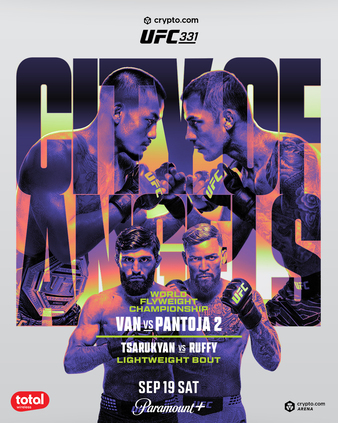
PRELIM · MIDDLEWEIGHT · 3 ROUNDSUFC 331: Van vs. Pantoja 2
Ryan Gandra — Middleweight fighter

Ryan Gandra

“Problema”
10W1L
Volume KO Pressure
VS
Ozzy Diaz — Middleweight fighter

Ozzy Diaz

10W4L
Long-Range Finisher

11.71 landed a minute into 6.52 absorbed

MiddleweightCrypto.com Arena, Los Angeles, CaliforniaSeptember 19, 2026Standard 30ft Octagon

Fight overview

The fight in 30 seconds

Gandra's 11.71 SLpM and two first-round UFC TKOs run into Diaz's 6.52 absorption and a 79-inch reach. Model 59–41 Gandra. No BetOnline line is posted — treat every rate as a direction, not a price.

Paths that change the fight

  • Ryan GandraClose the distance inside the first five minutes. Both of his UFC wins ended in round one, both inside 1:15, and 11.71 significant strikes a minute arriving at a man who absorbs 6.52 is a stoppage waiting on a referee.
  • Ozzy DiazFifteen minutes at 79 inches. His output goes 14.5, 51, 64 across three rounds and 100% of it lands at range — every minute he keeps this a kickboxing match is a minute the fight becomes his.
What limits this estimate · Analyst conviction: 6/10
  • Every Gandra figure on this page comes from two Octagon fights and 2:51 of cage time; regression is the base case, not a risk.
  • Diaz is three inches taller with five inches more reach, and 100% of his early-round Octagon striking has landed at distance.

Editorial assessment of the evidence, not a win probability or a calibrated confidence interval.

Ryan Gandra

Insufficient price data
Model win probability
59%
Fair odds
-144
Reference quote
—
Fair decimal odds
1.69

Ozzy Diaz

Insufficient price data
Model win probability
41%
Fair odds
+144
Reference quote
—
Fair decimal odds
2.44
Price freshness & calculation notes

Quotes older than 48 hours are marked outdated. EV at an old or undated price is a historical calculation, not a current opportunity. Quotes listed with a date but no time are treated as undated.

Sources and data limitations

Career statistics and fight results through September 2026. Statistics may include bouts outside the UFC where noted. Composite scores, win probabilities, fair prices and analyst conviction are MMA Analytics estimates, not observed outcomes.

Model methodology
01

The Frame

What this fight is really about — and the measurements that shape it

The Analyst's Take

Two numbers describe this fight and both belong to the same collision. Ryan Gandra lands 11.71 significant strikes per minute against a middleweight division that averages 4.19, and absorbs 2.30 against an average of 3.70. Ozzy Diaz absorbs 6.52 per minute — near the bottom of the 72-fighter active middleweight pool — and gives up nothing on volume in return, at 5.33 landed. What Diaz owns is the tape measure: 6'4" to 6'1", a 79-inch reach to 74, and a hundred per cent of his Octagon striking landed at distance rather than in a phone booth. Gandra is 2-0 in the UFC and both wins ended in the first round. Diaz has never finished a UFC opponent, and both men who have stopped him in the Octagon did it inside two rounds — Zhang Mingyang in 2:25 and Ateba Gautier at 1:10 of the second.

Ryan Gandra
Attribute
Ozzy Diaz
31DOB May 8, 1995 vs Nov 22, 1990
Age
35
6'1"
Height
+3" Diaz6'4"
74"
Reach
+5" Diaz79"
—
Leg Reach
—
Orthodox
Stance
—
—
Team
—
Feb 28, 2026
Octagon Debut
Nov 23, 2024
Jul 11, 2026 — UFC 329
Last Bout
May 9, 2026 — UFC 328
Hyper-volume pressure, first-round finisher
Fighting Style
Long-range volume striker, KO-or-lose

Diaz wins the tape measure outright and it is not close: three inches of height and five of reach, which at middleweight is a genuine structural edge rather than a rounding error. He also fights like a man who knows it — 100% of his significant strikes in the first and second rounds of his Octagon career landed at distance, and 92.2% in the third. Gandra gives up every physical column except one, and it is the one that has decided both of his UFC fights: he is four years younger and he closes. Leg reach matters less than usual here because neither man kicks much — 13.8% of Diaz's opening-round targeting went to the legs, and it falls to 5.9% and then zero as his fights go on.

Venue Factor
A standard 30ft Octagon in a 20,000-seat arena is the version of this fight Diaz wants, because space is his equaliser and there is a lot of it. But three rounds is not a lot of time. The cage gives Diaz room to use 79 inches. The clock gives Gandra a fight that only has to go right once.
02

The Fighters

Careers, chins, schedules — and the form they bring into the cage

Ryan Gandra landing a strike in the cage

Ryan Gandra

Pro Record
10-1-0
UFC Record
2-0 — both first-round TKOs (Medina 0:41, Reese 1:15)
Streak
Two straight UFC finishes — TKO Reese, TKO Medina, both in round one
Finish Rate
80% (8 of 10 wins) — 6 KO/TKO, 2 submissions
Avg Fight Time
2:51 — one bout
Chin · Untested at this level — one career loss, no UFC defeatSOS · Regional plus two UFC winsHyper-volume KO pressure

Everything on Gandra's record is violent and almost none of it is long. Ten wins, one loss, eight finishes — seven knockouts and one submission — and then a UFC arrival that produced two first-round TKOs in two attempts, over Reese and over Medina. His career line reads 11.71 significant strikes landed a minute against a divisional average of 4.19, with 2.30 absorbed, 73% striking defence and three knockdowns dealt across Reese, Medina and Miller. That pace rests on a denominator small enough that regression is the base case rather than a risk. The one number that will not regress is the shape of the wins: neither fight needed a second round.

Ozzy Diaz in a fighting stance in the Octagon

Ozzy Diaz

Pro Record
10-4-0 — the fourth defeat is the Gautier knockout of May 2026
UFC Record
1-2 across three Octagon bouts — Zhang, Santos and the Gautier knockout of May 2026
Streak
Lost his last — Ateba Gautier stopped him at 1:10 of the second at UFC 328 (May 2026)
Finish Rate
90% (9 of 10 wins) — 7 KO/TKO, 2 submissions, 1 decision
Avg Fight Time
8:01
Chin · Stopped in 2:25 on debut by Zhang MingyangSOS · Thin UFC sampleLong-range volume striker

Diaz is the rarer kind of prospect: a 6'4" middleweight with nine finishes in ten career wins whose Octagon record so far contains none of them. His debut on November 23, 2024 came at light heavyweight against Zhang Mingyang and lasted 2:25 before the referee stepped in. His answer four months later at UFC 313 was the opposite performance entirely — fifteen minutes against Djorden Santos, 51 significant strikes in the second round and 64 in the third, a unanimous decision, and not one second of control time conceded or taken. Then Ateba Gautier stopped him at 1:10 of the second round at UFC 328 in May 2026. That is the tension in his profile. He absorbs 6.52 significant strikes per minute — among the worst marks in the 72-fighter active middleweight pool — and lands 5.33, with two UFC knockdowns absorbed and none dealt. Both are true because he stands at range and trades: 97% of his career significant strikes have landed standing, 3% in the clinch, none on the ground. At 35 he is the older man here by four years, and the version of him that wins fights takes all three rounds to do it.

Ryan Gandra
0 dealt · 0 absorbed
Knockdown Exchange
Knockdowns dealt vs absorbed.
Ozzy Diaz
0 dealt · 0 absorbed

Ryan Gandrasignature weapons

First-Round TKOReese and Medina — both UFC wins ended inside the opening round, at 1:15 and 0:41
×2
Volume PressureSeven career KO/TKO wins. 11.71 significant strikes landed per minute against a 4.19 middleweight average, with 22% of his output landing in the clinch
×6
SubmissionsOne of ten career wins: an arm-triangle choke of Leonardo Bezerra at 2:30 of round one
×1

Ozzy Diazsignature weapons

KO/TKO (all forms)70% of ten career wins. None of the seven came in the UFC, where he has dealt no knockdowns and absorbed two
×7
Deep-Water Volume51 significant strikes in a second round and 64 in a third against Djorden Santos at UFC 313 — his output more than quadruples from round one to round three
×1
SubmissionsTwo of ten career wins, including a first-round rear-naked choke of Andre Walker at Bellator 228
×2

Ryan Gandra

W
Zach Reese
TKO — Left hook into ground strikes

Opponent context: ufc

R1 (1:15)
UFC 329: McGregor vs. Holloway 2 — Jul 11, 2026
W
José Medina
TKO — Punches

Opponent context: ufc

R1 (0:41)
UFC FN: Moreno vs. Kavanagh — Feb 28, 2026
W
Trent Miller
TKO — Punches

Opponent context: ufc adjacent

R1 (2:51)
Contender Series 2025 — Aug 26, 2025
W
Vladimir Calvo
TKO — Right hook

Opponent context: prospect

R1 (2:28)
LFA 197 — Nov 22, 2024
W
Alessandro Gambulino
TKO — punches

Opponent context: prospect

R2 (2:38)
LFA 171 — Nov 3, 2023
Pattern

What survives the thinness is a pattern with no counter-example.

Ozzy Diaz

L
Ateba Gautier
TKO — punches

Opponent context: prospect

R2 (1:10)
UFC 328 — May 9, 2026
W
Djorden Santos
Decision — Unanimous

Opponent context: prospect

R3
UFC 313 — Mar 8, 2025
L
Zhang Mingyang
TKO — elbow and punches

Opponent context: prospect

R1 (2:25)
UFC FN: Yan vs. Figueiredo — Nov 23, 2024
W
Bevon Lewis
TKO — punches
R2 (3:24)
LFA 184 — May 17, 2024
W
Chuck Campbell
KO — punches
R1 (4:59)
LFA 178 — Mar 8, 2024
Pattern

3-2 in the last five. Wins over Santos (decision), Lewis (TKO) and Campbell (knockout). Losses to Gautier (TKO) and Mingyang (TKO). Most recent: a loss to Gautier, May 9, 2026.

Ryan Gandra

Win Methods
Wins by Round

Ozzy Diaz

Win Methods
Wins by Round
Critical Insight
Gandra: 7 KO/TKOs, 1 submission and 2 decisions in 10 professional wins. All eight of Gandra's finishes came inside the first two rounds, seven in round one. Diaz: 7 KO/TKOs, 2 submissions and 1 decision in 10 professional wins. All nine of Diaz's finishes came inside the first two rounds, six in round one. The round bars count every professional win, with decisions in the DEC column.

Opposition strength (no shared opponents)

Without a reliable shared-opponent table, compare who each fighter has been tested against using SOS tier, UFC sample size, and recent elite-tier form — not raw records alone.

FactorRyanOzzy
Strength of schedule (SOS tier)Regional plus two UFC wins — Both Octagon wins by first-round TKO (Reese, Medina); the rest of the 10-1 record came through the Contender Series, LFA and the Brazilian regional circuitThin UFC sample — KO/TKO loss to Zhang Mingyang at light heavyweight (Nov 2024), unanimous decision over Djorden Santos (UFC 313, Mar 2025), TKO loss to Ateba Gautier (UFC 328, May 2026); two UFC knockdowns absorbed and none dealt
UFC sample2-0 — both first-round TKOs (Medina 0:41, Reese 1:15)1-2 across three Octagon bouts — Zhang, Santos and the Gautier knockout of May 2026
Recent ranked / elite touches (last 5)0 elite · 0 veteran tier0 elite · 0 veteran tier
Form-window difficulty edge: Fighter B (3 vs 2 tier points in listed bouts).
Last three opponentsZach Reese, José Medina, Trent MillerAteba Gautier, Djorden Santos, Zhang Mingyang
  • No shared opponents: There is not one name in common across the two records. The rows below are style proxies, not genuine common opponents
  • Zhang Mingyang (style proxy): The only time Diaz has faced a fighter whose game is early violence, he lasted 145 seconds — and that bout was at light heavyweight, where the shots are heavier but the man throwing them was not landing 11.71 a minute
  • Djorden Santos (style proxy): The fifteen-minute version Diaz wins: 51 significant strikes in round two, 64 in round three, zero control time in either direction — a pure range fight he took over as it got longer
03

The Numbers

Composites, division ranks and round-by-round evidence

Composite scores summarize selected statistics on a 0–100 scale. They are not win probabilities. Compare the underlying metrics, opponent quality and UFC experience before interpreting a score difference as a matchup advantage.

Striking

SLpM 25% · StrAcc 30% · StrDef 30% · SApM 15%

0
Ryanfew UFC fights
0
Ozzyfew UFC fights

A twenty-four point gap, the widest on the page, and the accuracy column is nearly dead even at 50% against 49%. The separation is entirely volume and damage taken: Gandra lands 11.71 per minute and absorbs 2.30; Diaz lands 5.33 and absorbs 6.52. That is a damage ratio of 5.09 against 0.82 — Diaz is the rarer thing at this weight, a fighter who loses the exchange count while winning fights.

Grappling

TD/15 25% · TDAcc 25% · TDDef 30% · Sub/15 20%

0
Ryanfew UFC fights
0
Ozzyfew UFC fights

Neither man has attempted a takedown or a submission in the Octagon — both read 0.00 across every offensive grappling column. The twelve points come from defence alone: Gandra's takedown defence reads 100% off one bout, Diaz's 50%, against a divisional average of 69.9%. Diaz has also logged zero seconds of control time, in either direction, across four Octagon rounds.

Technical

(Striking + Grappling) / 2

0
Ryanfew UFC fights
0
Ozzyfew UFC fights

Eighteen technical points. On measured rates this is not a competitive matchup — which is exactly why the sample flags matter, because one of those rate lines comes from 2:51 of cage time and the other from roughly sixteen minutes.

Cardio

Fight time · pace · R3/R1 output · champ rounds

0
Ryanfew UFC fights
0
Ozzyfew UFC fights

The narrowest gap on the page and the one place Diaz has actual evidence. His output rises from 14.5 significant strikes in a first round to 51 in a second and 64 in a third; Gandra has never been past the opening five minutes in the Octagon and 11.71 a minute is not a rate anyone sustains for fifteen. Four points to Gandra is generous to a man with no deep-water data at all.

Overall

(Technical + Cardio) / 2

0
Ryanfew UFC fights
0
Ozzyfew UFC fights

Eleven composite points and a 59-41 model line that sits on top of them. the editorial assessment strengthened the site's original 55 to 59 after the rate pass, and stopped there rather than going to 65 precisely because of the denominators.

MetricRyanOzzy
Avg Fight Time2:51 — one boutfew UFC fights8:01
Pace TierOutlier — 11.71 SLpM vs a 4.19 division averagefew UFC fightsAbove average — 5.33 SLpM vs ~4.19few UFC fights
R3/R1 OutputNo UFC third round yetfew UFC fights441% — 64.0 sig in R3 against 14.5 in R1
Slow Start %Very low — 32 sig and three career knockdowns (Reese, Medina, Miller)few UFC fightsLow volume early — 14.5 sig per opening round, one of which ended at 2:25few UFC fights
Champ Rounds3-round bout3-round bout

Archetype Base Rate

Hyper-Volume KO Pressure 59%41% Long-Range KO Hunter

Matchup-specific read of this booking · The 59-41 line is the editorial assessment's own upgrade from the site model's original 55, driven by an efficiency gap of 11.71 landed against 6.52 absorbed. The range is capped at 58-60 rather than going higher, because one 2:51 fight is not a level.

Ryan GandraOzzy Diaz

Middleweight

· 72 fighters

Rank bars use the recorded division cohort. Where no rank is shown, the comparison shows the difference from the published division average; the white marker denotes equality. Percentage differences are percentage points (pp). Higher is not always better: fewer strikes absorbed is preferable.

StatRyanRyan comparisonDiv avgOzzy comparisonOzzy
SLpM11.71
—few UFC fights
~4.19
—few UFC fights
5.33
Str Acc50%
—few UFC fights
~51.8%
—few UFC fights
49%
Str Def73%
—few UFC fights
~51.3%
—few UFC fights
61%
SApM2.30
—few UFC fights
~3.70
—few UFC fights
6.52
KD (career)3 dealt / 0 absorbed
—few UFC fights
~0.84 avg
—few UFC fights
0 dealt / 3 absorbed
Damage Ratio5.09
—few UFC fights
~1.13
—few UFC fights
0.82
TD/150.00
—few UFC fights
~2.12
64/72few UFC fights
0.00
TD Def100%
—few UFC fights
~69.9%
54/72few UFC fights
50%
Sub/150.00
—few UFC fights
~0.60
48/72few UFC fights
0.00
Avg Fight Time2:51 — one bout
—few UFC fights
—
—
8:01
UFC Record2-0
—
—
—
1-2
Pro Record10-1-0
—
—
—
10-4-0
KO Win %60% (6 of 10)
—
—
—
70% (7 of 10)
Height / Reach6'1" / 74"
—
—
—
6'4" / 79"
Statistical Verdict
Read the two columns that actually separate these men and they point the same way. Diaz's 5.33 significant strikes a minute sits above the ~4.19 middleweight average; his 6.52 absorbed sits near the bottom of the 72-fighter pool, which is genuinely bad, and no amount of output covers a damage ratio of 0.82 against a divisional 1.13. His striking defence at 61% is not the problem — it sits above the 51.3% average — but blocking well and standing in front of volume are different skills, and he does the first while failing the second. Three career knockdowns absorbed against Gandra's three dealt (Reese, Medina, Miller) is the chin ledger that matches that absorption line. Gandra's column has no ranks in it at all, deliberately, because a 2:51 fight would place him first of 72 in three separate categories. What his column does show is direction: 11.71 landed against a 4.19 average and 2.30 absorbed against 3.70, from a fighter who has never needed a second round in the UFC.

Significant Strikes Landed per Round

⚠ R2, R3: single-fight sample for Ozzy Diaz

Control Time per Round (sec)

Ryan Gandra

  • Two UFC fights, two first rounds: Reese lasted 1:15 and Medina 0:41. He has never needed a second.

Ozzy Diaz

  • His output more than quadruples across a fight: 14.5 significant strikes in an opening round, 51 in a second, 64 in a third. The first-round figure is an average across two bouts and is depressed by the 2:25 stoppage on his debut.
  • Accuracy runs the other way — 60% in the first, 53% in the second, 50% in the third — so the late rounds are a volume story rather than a precision one.
  • His head share climbs from 69.0% to 90.2% and 89.1%, and his leg kicks disappear entirely by the third.
Critical Insight
The charts on this page are asymmetric because the evidence is, and the shape of that asymmetry is the fight. Diaz has four rounds on record and they describe a fighter who gets better the longer he is upright — 14.5 to 51 to 64 significant strikes, all of it at distance, none of it on the ground. Gandra has only first rounds, because neither of his UFC fights produced a second one. There is no version of this matchup where both men's best evidence applies: either Diaz reaches minute ten and starts landing 51 a round, or he does not reach it.

Strike targeting

Ryan

Head
92%
Body
8%
Legs
0%

Ozzy

Head
85%
Body
10%
Legs
5%

Head hunting vs body work vs leg attack — the shape of the damage.

Striking range — distance, clinch and ground

RyanOzzy
75%Distance97%
0%Clinch3%
25%Ground0%

Share of significant strikes landed at distance, in the clinch and on the ground across each fighter's UFC rounds, weighted by strike volume.

04

The Story of the Fight

Advantages, worst cases, gameplans — and the patterns underneath

Where the fight lives

Who owns each phase — and by how much
Open SpaceOzzy owns it

+5" reach and 100% of his first- and second-round Octagon strikes landed at distance

Pocket / ExchangesRyan owns it

11.71 SLpM against 6.52 absorbed — Diaz sits near the bottom of the middleweight pool in strikes taken per minute

ClinchRyan owns it

22% of Gandra's output lands in the clinch against Diaz's 3% Octagon share

GroundRyan owns it

Neither man has a UFC takedown or submission attempt; TDDef 100% (one bout) against 50%, and zero control seconds for Diaz across four rounds

Path to Victory

Ryan Gandra

Close the distance inside the first five minutes. Both of his UFC wins ended in round one, both inside 1:15, and 11.71 significant strikes a minute arriving at a man who absorbs 6.52 is a stoppage waiting on a referee.

Why they win
01
The efficiency gap is not subtle

11.71 significant strikes landed per minute against 5.33, and 2.30 absorbed against 6.52. That is a damage ratio of 5.09 to 0.82, in a division whose average is 1.13.

02
Two UFC fights, two first-round finishes

Reese and Medina, both stopped inside five minutes. The only fighter in Diaz's record who came at him early — Zhang Mingyang — needed 2:25.

03
He absorbs almost nothing

73% striking defence and 2.30 absorbed per minute, against a division that averages 51.3% and 3.70. Diaz's whole path requires landing on him, and his line says that is the hardest thing about him.

04
Four years younger

31 against 35 on fight night.

05
The clinch is his and empty for the other man

22% of Gandra's strikes landed in the clinch. Diaz's Octagon clinch share is 3%, and he has never logged a second of control time in four rounds.

The gameplan
  1. 1
    Crash immediately, do not kickbox

    Standing at the end of a 79-inch jab is the one configuration where he loses. Feint, close, and make it a phone-booth fight in the first sixty seconds.

  2. 2
    Make the clinch the fight

    22% of his output already lands there, against Diaz's 3%. Every second on the fence is a second the reach advantage is switched off.

  3. 3
    Bank the finish equity early

    Both UFC wins ended in round one. His knockout probability is 42 of 100 and almost all of it lives before the ten-minute mark, because that is where his evidence lives.

  4. 4
    Attack the body

    Only 3.9% of Diaz's second-round targeting went to the body and 10.9% of his third — he fights high and stays tall. A body-first entry drops the hands he needs at 79 inches.

  5. 5
    Sprawl anything desperate

    Diaz has attempted zero takedowns in four Octagon rounds and defends 50%. If a shot comes it comes from a losing position, and it is the one thing that could stall the pressure.

Path to Victory

Ozzy Diaz

Fifteen minutes at 79 inches. His output goes 14.5, 51, 64 across three rounds and 100% of it lands at range — every minute he keeps this a kickboxing match is a minute the fight becomes his.

Why they win
01
Three inches and five inches

6'4" to 6'1", 79-inch reach to 74. At middleweight that is a real length gap, and it is the only physical column Gandra does not win.

02
He gets better as fights get longer

14.5 significant strikes in a first round, 51 in a second, 64 in a third. Gandra has never fought a second round in the Octagon and 11.71 a minute is not a fifteen-minute pace.

03
Nine finishes in ten career wins

Seven knockouts and two submissions. One clean shot from 79 inches rewrites a two-fight sample, and the model gives that branch 28 of his 41 win-shares.

04
The sample cuts his way too

Gandra's 11.71, 73% and 100% takedown defence come from 2:51 of Octagon time. Regression toward the mean against a bigger, longer opponent is the structural argument for the underdog.

05
He has already won a fifteen-minute fight here

Unanimous decision over Djorden Santos at UFC 313, taken by out-working him in the last ten minutes. That is proof of a path Gandra has never had to defend.

The gameplan
  1. 1
    Jab, teep, frame — for fifteen minutes

    100% of his first- and second-round Octagon strikes landed at distance. The entire plan is to keep the number at 100%.

  2. 2
    Survive the first ninety seconds

    Both of Gandra's UFC wins ended inside 1:15 of round one. Nothing about the length game requires trading early, and everything about it requires reaching minute six.

  3. 3
    Let the output curve do the work

    14.5 to 51 to 64. If the fight is still standing at the ten-minute mark, his own record says the third round is where he takes over.

  4. 4
    Never accept the clinch

    3% of his strikes land there against Gandra's 22%. Frame, turn out, and reset to range every single time the distance closes.

  5. 5
    Take the shot when it appears

    Seven knockouts in ten wins. His KO bucket is 28 of 100 — the second-largest outcome on the page and more than three times his decision bucket.

Danger Zone

How Ryan Gandra loses

  • He respects 79 inches for three minutes, gets picked off on the way in, and the fight becomes the range kickboxing match Diaz has already won once.

  • The rate line regresses hard. 11.71 landed and 2.30 absorbed from 2:51 of cage time is a projection, and against a genuinely bigger man the real numbers could be half of it.

  • The fight reaches round three, where Diaz landed 64 significant strikes in his only UFC third round and Gandra has not fought one since a regional decision in 2023.

Danger Zone

How Ozzy Diaz loses

  • The pocket collapses in the first ninety seconds. 6.52 absorbed per minute meets 11.71 landed and the referee has seen enough before minute three.

  • He is stopped early for the second time in three Octagon appearances, having already lasted 2:25 against the last man who fought him at that tempo.

  • The 79 inches never matter because the fight is fought in the clinch, where his share of output is 3% and his opponent's is 22%.

The fight's central axis

Eleven Landed Against Six Absorbed

Ryan Gandra lands 11.71 significant strikes per minute against a middleweight average of 4.19. Ozzy Diaz absorbs 6.52 per minute — near the bottom of the 72-fighter active middleweight pool — against an average of 3.70. Those two numbers point at each other, and neither of them is a defensive statistic — they are both descriptions of what happens when the fight is inside a phone booth.

5.09
Gandra damage ratio vs Diaz's 0.82 — division average 1.13
Two mutually exclusive fights

Length Versus Blender

Diaz gives up nothing on the tape measure: 6'4" to 6'1", 79 inches to 74, and 100% of his first- and second-round Octagon strikes landed at distance. Gandra lands 22% of his in the clinch against Diaz's 3%. There is no shared middle ground here — one of these two geometries wins and the other never happens.

+5"
Diaz reach advantage · 22% vs 3% clinch share the other way
Why the clock is the whole story

The Output Curve

Diaz's significant strikes go 14.5, 51, 64 across rounds one, two and three. His accuracy goes 60%, 53%, 50%. He is not sharper late, he is busier — and busier is enough when the other man has never been past round one in the Octagon. Gandra has zero rounds of round-by-round data because both of his UFC fights ended in the first.

441%
Diaz R3 output as a share of R1 — 64.0 against 14.5
A striking match by mutual consent

Neither Man Wrestles. At All.

Takedowns per fifteen minutes: 0.00 and 0.00, against a divisional average of 2.12. Submission attempts: 0.00 and 0.00. Diaz has logged zero seconds of control time in either direction across four Octagon rounds. The only grappling number that differs is defensive — 100% against 50% — and it exists to stop a takedown neither man has ever attempted.

The honest caveat

Two Fights and Two Fifty-One

That single bout would rank him first of 72 middleweights in three separate categories, which is why no rank for him appears anywhere on this page. The direction of this matchup is not in question. The magnitude is entirely a denominator argument, and it is why conviction stops at 6.

The Five-Round Clock

Ryan Gandra danger windowOzzy Diaz danger windowNeutral / contested
R1 · 0:00–5:00The blender's window

Zhang Mingyang needed 2:25 to stop Diaz, and Ateba Gautier finished him at 1:10 of the second in May 2026. Gandra's 42-point knockout bucket is concentrated in these five minutes.

Critical Insight
This is an inverted clock and it is unusually clean. Gandra's evidence is 2:51 long; Diaz's best evidence starts at the ten-minute mark. There is no round in which both men's records say the same thing. If the fight is still alive at minute six, the model's 59-41 line is already stale in Diaz's favour, and if it is not, it never got there.

Finish Threat by Round

Share of each fighter's wins that end in each round — early finishers spike left, grinders rise right.

05

The Verdict

One hundred simulated fights, the betting market, and our conviction

If you only read 3 things
1

Ryan Gandra lands 11.71 significant strikes per minute and absorbs 2.30. Ozzy Diaz absorbs 6.52 — near the bottom of the 72-fighter middleweight pool — and lands 5.33. That is a damage ratio of 5.09 against 0.82 in a division that averages 1.13.

2

Diaz's counter is the tape measure and the clock: three inches of height, five of reach, and an output curve that runs 14.5, 51, 64 significant strikes across three rounds. Gandra has never fought a second round in the UFC — both of his Octagon wins ended in the first.

3

Model: Gandra 59% / Diaz 41%, conviction 6/10. Every Gandra rate on this page comes from 2:51 of cage time, so no division rank is shown for him at all, and the honest ceiling on this lean is the size of that denominator.

Model outcomes per 100 fights

Each square represents one percentage point of the model distribution, not an observed fight. This visualization does not measure model accuracy or reduce uncertainty in the inputs.

Gandra KO/TKO — 42%Diaz KO/TKO — 28%Gandra Decision — 12%Diaz Decision — 9%Gandra Submission — 5%Diaz Submission — 4%

Each square = 1 model percentage point. Ryan Gandra gold · Ozzy Diaz orange · color opacity: 100% = decision, 70% = submission, 45% = KO/TKO.

The absorption mismatch

6.52 significant strikes absorbed per minute sits near the bottom of the 72-fighter middleweight pool, with three career knockdowns absorbed. Against 11.71 landed, Gandra's knockout bucket is 42 of 100 — the largest single outcome on the page by a distance.

Five inches of reach

79 inches against 74, plus three inches of height. In every branch where the first round is fought at range rather than in the pocket, the fight tilts toward the 28-point Diaz knockout bucket or the nine-point decision.

Sample regression

A 2:51 rate line produced 11.71 landed, 2.30 absorbed and 73% blocked. The model discounts all three; an undiscounted read would price this closer to 70-30.

The output curve

Diaz goes 14.5, 51, 64 significant strikes across three rounds. Gandra has never contested a second round in the Octagon. Every simulated fight that reaches minute ten moves probability from the KO bucket to Diaz's decision bucket.

No grappling in either direction

0.00 takedowns and 0.00 submission attempts per fifteen minutes for both men, and zero control seconds for Diaz in four rounds. The submission buckets, 5 and 4, are scramble artefacts rather than hunted paths.

Fight Scripts

0%
of simulations

The Blender

Gandra closes inside the first ninety seconds and the exchange count does the rest — 11.71 a minute arriving at a man who absorbs 6.52, with a referee watching. Both of his UFC wins looked like this and neither needed a second round. The largest single bucket on the page.

Scripted outcomes for Ryan Gandra vs Ozzy Diaz — how each version of this fight unfolds.

Ryan Gandra win probability
0%
42%
12%
5%
KO/TKODECSUB
  • The largest bucket on the page. Seven career knockouts, two UFC wins both ending in round one, three career knockdowns dealt (Reese, Medina, Miller), and an opponent who sits near the bottom of the middleweight pool in strikes absorbed per minute. Almost all of it lives before the ten-minute mark.

  • Only twelve points, and that is deliberate. Reaching the cards means the pressure failed, and a fifteen-minute fight is the version where a 2:51 rate line regresses and 79 inches of reach starts to matter.

  • Five points. He has one career submission win and 0.00 submission attempts per fifteen minutes in the Octagon — this is a scramble outcome off a hurt opponent, not a hunted path.

Ozzy Diaz win probability
0%
28%
9%
4%
KO/TKODECSUB
  • Second-largest bucket on the page and more than three times his decision number. Seven knockouts in ten career wins, thrown from 79 inches at a man who has to walk through them to do anything at all.

  • Nine points, and the shape of the Djorden Santos win at UFC 313: fifteen minutes of range work, 51 significant strikes in the second round and 64 in the third. It requires surviving five minutes he has already failed to survive once.

  • Four points. Two career submission wins, 0.00 attempts per fifteen minutes in the Octagon and zero seconds of control time across four Octagon rounds.

Projected Scorecards

How the model scores each round
R1
Ryan
R2
Ryan
R3
Ozzy
29-28 Gandra
Gandra banks the first two, Diaz's third-round volume takes the last
The most likely card in a fight that reaches them
30-27 Gandra
The pressure never lets the reach advantage switch on
Common when the fight stays in the pocket but the stoppage does not come
29-28 Diaz
Length controls the opening ten minutes and the output curve finishes the job
His only realistic path to the cards — 9 of his 41 win-shares

Model and price

Ryan Gandra

Insufficient price data
Model win probability
59%
Fair odds
-144
Reference quote
—
Fair decimal odds
1.69
Estimated EV
—
Edge vs no-vig market
—

Ozzy Diaz

Insufficient price data
Model win probability
41%
Fair odds
+144
Reference quote
—
Fair decimal odds
2.44
Estimated EV
—
Edge vs no-vig market
—

EV uses the displayed price: probability × decimal odds − 1. Edge is a percentage-point difference from a proportionally de-vigged, same-book pair. A dash marks a price without a same-book pair to compare.

Price freshness & calculation notes

Quotes older than 48 hours are marked outdated. EV at an old or undated price is a historical calculation, not a current opportunity. Quotes listed with a date but no time are treated as undated.

Fair odds are the break-even price under this estimate, not a recommended entry price. Model uncertainty can erase a small edge.

What price would change the calculation? · Ryan Gandra

Change the assumptions to see how the required price moves. This does not update the published model or recommend an entry price.

Required decimal price: 1.70 or higher. At the exact unrounded break-even price, estimated EV is zero.

What price would change the calculation? · Ozzy Diaz

Change the assumptions to see how the required price moves. This does not update the published model or recommend an entry price.

Required decimal price: 2.44 or higher. At the exact unrounded break-even price, estimated EV is zero.

Original analyst price notes

These notes describe the original analysis and may refer to older prices.

Gandra by KO/TKO is the modal outcome in the run at 42 of 100 and the shape both of his Octagon wins have taken. On the other side, Diaz by knockout at 28 is the live dog and the place the model is least confident — if the market prices Gandra as a heavy favourite on the strength of a rate line built from 2:51 of cage time, the underdog's inside-the-distance side is where this desk disagrees most.

Conviction
0
6/10

Editorial confidence in the evidence, not a win probability or a calibrated confidence interval.

A clear efficiency mismatch with a real size counter. Six out of ten because the gap in the numbers is wide and one-directional, and no higher because the favourite's entire rate line comes from 2:51 of cage time and the underdog is three inches taller with five inches of reach. Lean: Ryan Gandra.

What backs the lean
  • 11.71 significant strikes landed per minute against 5.33, and 2.30 absorbed against 6.52 — a damage ratio of 5.09 to 0.82.

  • Diaz absorbs 6.52 significant strikes per minute with three career knockdowns absorbed, against a fighter whose whole game is volume in the pocket.

  • Two UFC fights, two first-round TKOs, and 22% of his output landing in the clinch against Diaz's 3%.

  • Four years younger, and the only time an early finisher fought Diaz it took 2:25.

What limits it
  • Every Gandra figure on this page comes from two Octagon fights and 2:51 of cage time; regression is the base case, not a risk.

  • Diaz is three inches taller with five inches more reach, and 100% of his early-round Octagon striking has landed at distance.

  • His output goes 14.5, 51, 64 across three rounds — and Gandra has never contested a second round in the UFC.

  • Seven knockouts in ten career wins mean one clean shot from 79 inches ends the argument regardless of the rate lines.

Final Assessment

This is a matchup between a measurement and a projection. Ozzy Diaz's numbers are small but real: three Octagon bouts, 5.33 significant strikes landed per minute and 6.52 absorbed, an output curve that runs 14.5 to 51 to 64 and a unanimous decision to show for it. Direction and magnitude are different questions, and this page only answers the first with confidence.

What makes it a genuine fight rather than a stat sheet is that both men's evidence is real and neither can be applied in the same five minutes. Diaz is three inches taller with five inches more reach and has landed 100% of his early-round strikes at distance; Gandra lands 22% of his in the clinch against Diaz's 3%. The one time an early-violence fighter came at Diaz he lasted 2:25, and the one time he was allowed to fight fifteen minutes he took over the last ten. Nothing about this bout is contested — it is simply two different fights waiting to see which one starts.

The model takes Gandra at 59%, with 42 of those points in the knockout bucket, and the conviction sits at 6 rather than 8 for one reason: a 2:51 denominator. Take Problema to close the distance early and end it inside the first ten minutes, understand that the 41% is concentrated in a single long right hand from a man with seven career knockouts, and treat any number on this page carrying a small-sample flag — which is nearly all of them — as a direction rather than a level.

Skip to main content
Use Tab to navigate through elements, Enter to activate buttons and links.