
Robert Whittaker vs Nikita Krylov
Light Heavyweight Bout • UFC 329: McGregor vs. Holloway 2
Saturday, July 11, 2026 • T-Mobile Arena, Las Vegas
Explore Detailed Fighter Profiles
Click on either the fighter's name or profile image for each fighter to access comprehensive UFC statistics including striking metrics, grappling data, clinch performance, complete fight history, offensive & defensive analytics, and round-by-round breakdowns.
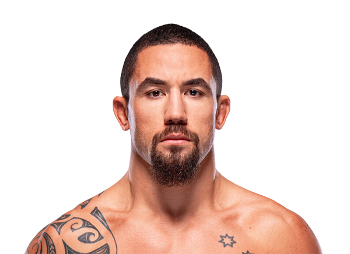
Robert Whittaker
Fighter Metrics
Victory Methods
Win Round Distribution
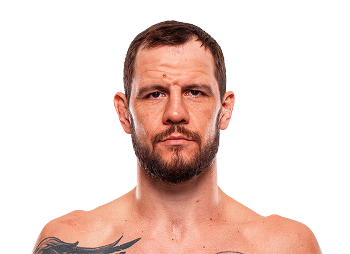
Nikita Krylov
Fighter Metrics
Victory Methods
Win Round Distribution
📋 Last 5 Fights - Robert Whittaker
| Date | Opponent | Result | Method |
|---|---|---|---|
| 2025-07-26 | Reinier de Ridder | L | Decision (Split) (R5, 5:00) |
| 2024-10-26 | Khamzat Chimaev | L | SUB - Rear Naked Choke (R1, 3:34) |
| 2024-06-22 | Ikram Aliskerov | W | KO/TKO - Punch at Distance (R1, 1:49) |
| 2024-02-17 | Paulo Costa | W | Decision (Unanimous) (R3, 5:00) |
| 2023-07-08 | Dricus Du Plessis | L | KO/TKO - Punches at Distance (R2, 2:23) |
📋 Last 5 Fights - Nikita Krylov
| Date | Opponent | Result | Method |
|---|---|---|---|
| 2026-02-07 | Modestas Bukauskas | W | KO/TKO - Punch at Distance (R3, 4:57) |
| 2025-07-26 | Bogdan Guskov | L | KO/TKO - Punches on Ground (R1, 4:18) |
| 2025-04-12 | Dominick Reyes | L | KO/TKO - Punch at Distance (R1, 2:24) |
| 2024-11-09 | Ryan Spann | W | SUB - Triangle from Bottom Guard (R1, 3:38) |
| 2024-03-09 | Alexander Gustafsson | W | KO/TKO - Punch in Clinch (R1, 1:07) |
Technical Analysis
Technical Score
Cardio Score
Overall Rating
📊 Technical Score
Calculated as the average of Striking Composite (54.4 vs 56.8) and Grappling Composite (49.5 vs 59.7). Balances overall striking effectiveness with grappling ability to measure complete technical skills. Note: Whittaker's percentiles are drawn from the Middleweight pool, Krylov's from Light Heavyweight — composites are directional, not head-to-head precise.
💪 Cardio Score
Based on average fight duration, striking rate per minute, takedown rate, and finish rate. Measures cardiovascular endurance and ability to maintain pace throughout fights.
🎯 Overall Rating
Simple average of Technical Score and Cardio Score. Provides a holistic view of fighter capabilities combining skill level with physical conditioning and fight performance.
Striking Composite
Grappling Composite
Technical Radar Comparison
Visual comparison of key performance metrics between both fighters
📊 Detailed Statistical Comparison
🥊 Fight Analysis Breakdown
🧩 Robert Whittaker Key Advantages
Whittaker's 82% takedown defense and 92.4% standing-time are the master key to this fight. Krylov's entire path that isn't a clean knockout runs through the clinch and the mat — and Whittaker is built specifically to keep fights standing at range. His one catastrophic exception (the Chimaev submission) came against a generational wrestler; Krylov is a dangerous opportunistic grappler, not a Chimaev-level top-control wrestler, so the elite TDD is far more likely to hold here. Unless Krylov can use pure size to drag Whittaker into the clinch against his will, the fight stays in Whittaker's world.
The projection is stark. Whittaker fires roughly 10.2 sig strikes per minute; against Krylov's leaky 45% striking defense (rank 20/26) he should land ~55% of them, about ~5.6/min — above his own career rate because Krylov is so hittable. Krylov fires ~7.8/min, but against Whittaker's elite 60% defense (rank 5/46) he lands only ~40%, about ~3.1/min — below his career rate. Over three full rounds that projected ~5.6-vs-~3.1 landed gap is the statistical engine of a Whittaker volume decision, and his 1.88 career damage ratio confirms he wins exchanges on a margin.
Whittaker's 13:37 average fight time is the longest in this matchup by far, backed by six 25-minute fights and a 103% R3/R1 output ratio — his output does not decline, it builds (R1 19.8 → R2 21.9 → R3 21.5 sig landed). Krylov has zero championship rounds logged and a 6:34 average fight time architected around early closure. In a 3-round fight conditioning is a non-issue for Whittaker: he can push a relentless pace knowing his tank is built for 25 minutes, and his rising output diverges precisely from Krylov's mild fade (18.1 → 16.6 → 15.2) in the rounds that decide a competitive fight.
⚠️ Unfavorable Scenarios
The single most important worry: Whittaker is climbing to 205 with a chin rated only "Average" and a 0% knockdown- recovery rate — across four fights in which he was dropped, he won none. He has never absorbed Light Heavyweight power, and Krylov is the bigger, harder puncher with genuine R1 knockdown threat (KD 0.19) and a history of one-shot finishes (Gustafsson 1:07, Walt Harris 0:25, Ed Herman 0:40). A flush counter or clinch shot that drops him before he settles into his range game is the cleanest path to the upset — and his recovery history says he doesn't come back from it.
If Krylov uses his size to fence-pin Whittaker, he can neutralize the footwork that powers the 82% takedown defense and turn the fight into a clinch-and-ground grind where his elite, two-way submission game (Sub/15 1.37, rank 2/26) comes alive. The Chimaev tape in miniature: a hurt Whittaker shells up, a scramble develops, and Krylov — who is dangerous off both top and bottom, as the Spann triangle from guard proves — finds the neck. Any moment a hurt or grounded Reaper hits the mat, the submission ceiling becomes the most dangerous tool in the cage.
📋 Likely Gameplan
Whittaker should fight at the end of his strikes, stay off the fence, and circle off the centerline to deny Krylov the body-lock entries that are the bigger man's only realistic route into the grappling phase. Every second at open- distance range is a second Whittaker is winning. Behind the jab he can chop the lead leg early (his documented R1 22.7% leg targeting) to compromise the base Krylov needs to drive takedowns and clinch trips, eroding the engine that powers Krylov's only winning phase while his counter game punishes a man who must come forward to close distance.
Krylov's danger is front-loaded — R1 sub attempts 0.48, his fastest finishing window, paired with R1 KD threat. The plan is to survive clean to the midpoint without trading in a phone-booth war where the Average chin is exposed, then let the cardio chasm and rising output do the work. Once past the variance spike, Whittaker pushes a championship pace Krylov has never been asked to match, picking apart a 45% defense over the back half while keeping exchanges short and winning on the margins rather than in a brawl.
🚀 Nikita Krylov Key Advantages
Krylov brings +3" of height, +4" of reach, roughly 20 lb of natural fighting weight, and genuine two-way knockout pop against a man moving up to a brand-new weight class. Whittaker has never absorbed Light Heavyweight power, and his Average chin / 0% recovery profile is the central worry. Krylov's single cleanest path needs no setup: land flush on a smaller man's questionable chin and end it. His R1 KD threat (0.19) and one-shot finishing history make this live from the opening bell — the variance the favorite cannot fully erase.
Krylov's Sub/15 of 1.37 (rank 2/26, ~+407% vs the LHW average) is the only finishing threat on the mat in this fight, and crucially it works from both top and bottom — the Spann triangle from guard proves he is dangerous even if a scramble puts him underneath. His ground accuracy (81.0%) and clinch accuracy (75.6%) mean that at close quarters he is devastatingly efficient. If Whittaker is ever hurt and a scramble breaks out — exactly the failure mode the Chimaev loss exposed — Krylov's submission ceiling becomes the most dangerous tool in the cage.
⚠️ Unfavorable Scenarios
If Whittaker keeps it at range for 15 minutes, the ~5.6-vs-~3.1 landing math plays out and Krylov's 45% striking defense (rank 20/26) bleeds points every round against a high-feint, high-volume technician. Krylov's problem is volume and defense, not precision — his fights are short, so he doesn't accumulate absorbed damage, but a high percentage of strikes thrown at him connect. Over three disciplined rounds he loses a clear decision he was never close to finishing, exactly the fight Whittaker's profile is built to impose.
Krylov's entire game is architected around early closure: 6:34 average fight time, zero championship rounds, and a genuinely untested deep-water tank. If his fast start doesn't produce the finish, his output fades (R1 18.1 → R3 15.2) while Whittaker's rises (21.9, 21.5). Should he commit to takedowns, he risks hitting the 82% wall and gassing on failed entries — then getting picked apart by a fresh, countering Whittaker whose Aliskerov-style counter right finds a now-tired, defensively-leaky target in the championship-pace back half.
📋 Likely Gameplan
Krylov's statistical identity is a 6:34 fighter — the longer it goes, the worse his odds. He should press the pace in Round 1, load up on the size advantage, and look to land flush on a chin that has never tasted 205-lb power. His finishing window is the first round and a half (R1 sub attempts 0.48, KD 0.19), and his accuracy stays clean throughout (50–61%). The opening five minutes are the single highest-variance window of the fight: Krylov at his most dangerous against a Whittaker who, by design, is still calibrating his range.
Rather than chase open-space takedowns into the 82% wall, Krylov should use his frame to corner Whittaker and initiate from the clinch — body-lock trips (38% clinch TD accuracy) and short clinch strikes (75.6% accuracy) are the realistic route to neutralizing footwork-based takedown defense. He should also invest in the body (R1 24.3%, R3 31.6% targeting) to tax the marathon man's cardio, and keep the submission gun loaded from anywhere — the rank-2/26 game works off his back too, so he need not fear a takedown exchange the way most strikers would.
🎯 Fight Prediction Analysis
Data-driven prediction model based on statistical analysis
📊Detailed Analysis Summary
⬆️The Move-Up Question
The structural heart of this matchup is that Whittaker, a former Middleweight champion, is moving UP to Light Heavyweight against a true 205er who has fought as high as Heavyweight. His elite metrics — 60% striking defense, 82% takedown defense, 1.88 damage ratio, championship cardio — are skill-based and largely weight-portable. What erodes is relative power (his 24 career knockdowns came against 185-lb chins) and durability margin: an Average chin absorbs more force per shot at 205, and his 0% knockdown-recovery rate is a flashing light. The encouraging precedent inside his own data is that he absorbs little (SApM 3.36) and is genuinely hard to hit — the best possible profile to carry up a division.
🎯Technical Breakdown
These are near-mirror-image profiles. Whittaker is elite exactly where Krylov is weak — striking defense 60% vs 45%, takedown defense 82% vs 53%, cardio 85 vs 58 — and weak where Krylov is elite — submission offense 0.00 vs 1.37/15, accuracy 43% vs 55%, plus size and power. The striking math is the engine: ~5.6 landed/min for Whittaker against Krylov's leaky guard versus ~3.1 for Krylov against Whittaker's elite defense. Read the raw composites with the cross-division caveat: Krylov grades higher in a vacuum (58.3 vs 52.0) and the archetype baseline tilts 51.5% his way, but those pools differ (Krylov scored vs 26 LHWs, Whittaker vs 46 of the deepest division in MMA), and neither cardio nor quality of competition is captured there.
🧩Key Battle Areas
Three areas decide it. First, the takedown-defense firewall: Whittaker's 82% TDD and 92.4% standing-time deny Krylov the grappling phase that is his only non-KO route, so Krylov's realistic path is the size-driven clinch on the fence, not the open-space shot. Second, the first-round variance spike: Krylov's R1 is his peak (sub attempts 0.48, top KD threat, fast-start identity) while Whittaker's R1 is his most measured round — survive clean to R2 and the distribution shifts hard toward the favorite. Third, the cardio chasm (85 vs 58): Whittaker's output rises into the rounds where Krylov's declines, and over even a 15-minute fight that asymmetry is enormous.
🏁Final Prediction
The model lands on Robert Whittaker at 58% to Nikita Krylov's 42%. Whittaker's single most probable path is Decision (38%) — a disciplined 15-minute range battle where he wins the volume math comfortably — with KO/TKO equity (19%) via his steady, Aliskerov-style knockdown power finding Krylov's leaky guard, and a near-zero submission share (1%). Krylov's largest single category is KO/TKO (22%): bigger man, harder puncher, Average chin moving up — one flush shot, especially early, ends it. He adds a live submission lane (12%, off both top and bottom) and a low decision share (8%), because a points fight is exactly the fight Whittaker's cardio and volume win.
💰 Betting Analysis: Model vs Market
Detailed value assessment in the betting market
📊Market Odds
🤖Analytical Model
💎Value Opportunities
MAXIMUM VALUE
Model: 46% | Implied: 43.5%
GOOD VALUE
Model: 38% | Implied: 36.4%
SLIGHT VALUE
Model: 73% | Implied: 66.7%
⚠️Key Market Discrepancies
- • Underprices Whittaker's cardio math – The ~5.6-vs-~3.1 landed gap compounds over 3 rounds.
- • Overrates Krylov's deep finishing – Once R1 is survived, his fade and thin late sample bite.
- • Move-up unknown – Caps the favorite's conviction but does not erase the technician's edge.
🎯 Comprehensive Probabilistic Analysis
100 hypothetical fight simulation based on statistical data
🏆Outcome Distribution - Robert Whittaker
Most likely path: disciplined 15-min range battle
Steady knockdown power vs a 45% leaky guard
Near-zero: 0 career sub attempts in the sample
💥Outcome Distribution - Nikita Krylov
Largest lane: bigger puncher vs an Average chin at 205
Elite two-way threat (rank 2/26) in any scramble
Low by design: only 2 career decision wins in 31
⏰Fight Timeline Analysis
⚡Window of Opportunity - Nikita Krylov
- • First 5–6 minutes: Peak KO + submission window (R1 sub att 0.48).
- • Fence-pin clinch: Use size to drag the smaller man into the trenches.
- • One flush shot: Average chin moving up to unfamiliar 205-lb power.
🎯Progressive Dominance - Robert Whittaker
- • TDD firewall: 82% TDD + 92.4% standing- time keep it at range.
- • Volume math: ~5.6 vs ~3.1 landed/min against a 45% defense.
- • Rising output: R2–R3 build as Krylov's output fades.
🎯 Final Confidence Assessment
Confidence level and uncertainty factors
Confidence Level
Clear-but-capped lean; the move-up is a genuine unknown
✅Supporting Factors
- • Volume/defense math: ~5.6 vs ~3.1 landed/min
- • Elite cardio edge (85 vs 58); output rises as Krylov fades
- • 82% takedown defense + 92.4% standing-time deny the clinch
- • 18 elite-competition fights vs 6 — big-stage composure
⚠️Risk Factors
- • Move-up: Average chin, 0% KD recovery, untested at 205
- • Krylov's elite two-way submissions (off top and bottom)
- • Raw in-division composites + archetype baseline lean Krylov
🏁Executive Summary
The better, more complete, better-conditioned fighter is Robert Whittaker, and over three rounds his volume, defense, and gas tank should win more often than not. In roughly 58 of 100 simulations he survives a dangerous opening round, settles into range, and turns the fight into the technical, high-volume, championship-pace striking match his profile is built to win — picking apart Krylov's leaky 45% defense over 15 minutes for a clear decision or catching him with the steady knockdown power that has defined his career. His 82% takedown defense keeps the fight in his world, and his cardio buries Krylov in the back half. But the move to 205 strips away his margin for error against a bigger man who only needs one clean exchange — and Nikita Krylov, with elite two-way submissions and real KO power, is precisely the kind of opponent who provides one. The data favors the technician; the scale favors the finisher.
Prediction: Whittaker (58%) by Decision most likely (38%) through range volume, elite defense, and championship cardio over 3 rounds, with KO/TKO equity (19%) if his counter power finds Krylov's guard; Krylov's upset lane (42%) is front-loaded KO/TKO (22%) on an Average chin moving up plus a live two-way submission threat (12%). The whole fight hinges on the first round and a half: the first man to land clean and heavy could rewrite the story, and at 205 that man is more likely to be the bigger one.