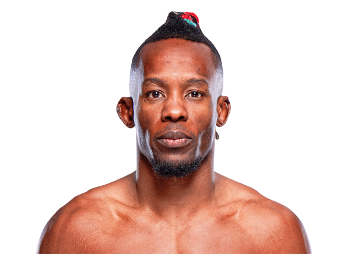
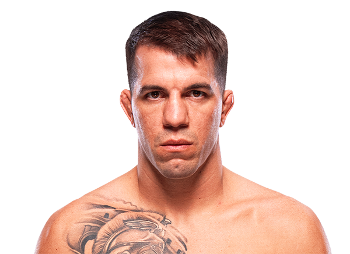
Ode Osbourne vs Cody Durden: analysis & prediction

MAIN CARD · FLYWEIGHT · 3 ROUNDSUFC Fight Night: Moicano vs. Nolan
Ode Osbourne — Flyweight fighter

Ode Osbourne

“The Jamaican Sensation”
13W9L
Long Southpaw Counter-Puncher
VS
Cody Durden — Flyweight fighter

Cody Durden

“Custom Made”
18W11L1D
Chain-Wrestling Grinder

A long, heavy-handed southpaw against the kind of wrestling that has decided his last three decisions.

FlyweightMeta APEX, Las VegasOctober 31, 202625ft Octagon (Small Cage)

Fight overview

The fight in 30 seconds

Osbourne out-landed Rodríguez, Erceg and Idiris and still lost all of those cards, because each of them spent long stretches on top of him. Durden wins decisions exactly that way, and both shared opponents, Charles Johnson and Jafel Filho, lost to him on the mat. Osbourne's path is early, with his reach and power landing before the takedowns pile up.

Paths that change the fight

  • Ode OsbourneKeep it standing through the first ten minutes and land on Durden's entries: three of Osbourne's four UFC knockdowns came in Round 1, and all seven of Durden's UFC stoppage losses came in Rounds 1 and 2.
  • Cody DurdenLand two or three takedowns a round and keep Osbourne on his back — the formula that won Rodríguez, Erceg and Idiris the cards against him and won Durden all five of his UFC decisions.
What limits this estimate · Analyst conviction: 4/10
  • Knockdown power into a cracked chin: 0.56 knockdowns per fifteen, three of his four UFC knockdowns in Round 1, against Durden's four knockdowns absorbed and two strike stoppages.
  • Durden's second round: five of his seven UFC stoppage losses, the last five in a row, all came there.

Editorial assessment of the evidence, not a win probability or a calibrated confidence interval.

Ode Osbourne

Quote age unknown
Model win probability
44%
Fair odds
+127
Reference quote
+100 (BetOnline)
Fair decimal odds
2.27

Cody Durden

Quote age unknown
Model win probability
56%
Fair odds
-127
Reference quote
-117 (BetOnline)
Fair decimal odds
1.79
Price freshness & calculation notes

Quotes older than 48 hours are marked outdated. EV at an old or undated price is a historical calculation, not a current opportunity. Quotes listed with a date but no time are treated as undated.

Sources and data limitations

Career statistics and fight results through September 2026. Composite scores, probabilities and fair prices are MMA Analytics model outputs.

Model methodology
01

The Frame

What this fight is really about — and the measurements that shape it

The Analyst's Take

This is a rebooking with an edge to it. Ode Osbourne and Cody Durden were first matched for the UFC 329 prelims in July; Osbourne withdrew in late June, Durden publicly accused him of running, took a late replacement in Alessandro Costa and was choked out in the second round. Now they meet in the same slot at the Meta APEX. Osbourne (13-9, with two no contests) is a long southpaw with genuine first-round power and one of the longest reaches at 125 pounds, but the division has learned to wrestle him. In his last three decisions he out-landed Ronaldo Rodríguez, Steve Erceg and Alibi Idiris and lost all three on the cards to control time; the Idiris result was later overturned to a no contest after Idiris failed a drug test. Durden (18-11-1) is exactly that kind of opponent: a career wrestler whose five UFC decision wins all came behind four or more takedowns, and who beat both of the men these two share, Charles Johnson and Jafel Filho, on the mat. He also arrives 2-6 since July 2024, has been stopped seven times in the UFC — every one of them inside the first two rounds — and gives up six inches of reach to a man who has dropped four UFC opponents. The model makes Durden a narrow favorite, 56% to 44%, with a conviction of 4 out of 10. The takedown-and-ride script is the most repeatable path over fifteen minutes; Osbourne's power and Durden's second-round collapses keep the underdog very much alive.

Ode Osbourne
Attribute
Cody Durden
34
Age
35
5'7"
Height
5'7"
73"+6" Osbourne
Reach
67"
39"+1.5" Osbourne
Leg Reach
37.5"
Southpaw
Stance
Southpaw
Black Kobra MMA, Las Vegas
Team
American Top Team, Atlanta
Jan 18, 2020 (UFC 246)
Octagon Debut
Aug 1, 2020
13 (5-7, 1 NC)
Octagon Bouts
17 (7-9-1)
2
UFC Knockdowns Absorbed
4
17 sec (held down 89)
Control Time per Round
95 sec (held down 36)
252 (no contest)
Days Since Last Fight
112 (submission loss)
Long southpaw counter-striker with early power
Fighting Style
Chain wrestler and top-control grinder

Both men stand 5'7", but Osbourne's 73-inch reach is six inches longer than Durden's 67 — an enormous gap at 125 pounds — with a 1.5-inch leg-reach edge to match. That length is what keeps Durden's shots long and his entries dangerous. Both are southpaws, so neither gets the open-stance angles he usually works with: Durden's level changes come off a closed stance, and Osbourne's straight left meets a same-side lead. Age is a wash at 34 and 35. Activity is not. Durden has fought three times in 2026, including a fifteen-minute win at bantamweight on six days' notice, while Osbourne returns after 252 days and a camp he withdrew from in June.

Venue Factor
The Meta APEX's 25-foot cage is the worst possible canvas for a long striker trying to stay off the fence against a chain wrestler. Durden's best UFC wins — Charles Johnson (11 takedowns, 9:33 of control), Carlos Mota (12:32 of control), Aoriqileng and Jafel Filho — all came in this building. Osbourne's two best wins, Adashev in 61 seconds and Gurule in Round 2, also came here, but both were early strike finishes before any wrestling developed. The small cage shortens the distance Durden has to close and takes away the space Osbourne needs to reset after stuffing a shot.
02

The Fighters

Careers, chins, schedules — and the form they bring into the cage

Ode Osbourne throws a punch at Ronaldo Rodríguez during their flyweight bout at UFC 306 at Sphere, September 2024

Ode Osbourne

Pro Record
13-9-0 (2 NC)
UFC Record
5-7 with 1 no contest across 13 bouts since January 2020, plus a Contender Series win
Streak
1-4 with a no contest since August 2023 — last result a no contest with Alibi Idiris (Feb 2026)
Finish Rate
77% (10 of 13 wins) — 6 KO/TKO, 4 submissions
Avg Fight Time
8:12
Chin · Average — knocked out twice in 2021–22 (Kape, Nam), not dropped sinceSOS · UFC mid-tierTechnical Striker / Counter Striker

Osbourne arrived through the 2019 Contender Series with a first-round armbar and built his early UFC reputation on length and sudden power: Jerome Rivera knocked out in 26 seconds, Zarrukh Adashev in 61, then decisions over CJ Vergara and Charles Johnson. The losses in that stretch were early and violent — Brian Kelleher's guillotine on his debut, Manel Kape's flying knee, Tyson Nam's right hands. Since August 2023 the losses have changed shape, because opponents stopped standing with him and started wrestling him. Across his first seven UFC fights they tried seven takedowns and held him down for about six minutes in total; across his last six they tried 37, landed 13, and controlled him for 31 of 65 minutes. That run reads Almabayev (rear-naked choke), Filho (rear-naked choke), Rodríguez (decision), a second-round knockout of the debutant Luis Gurule, Erceg (decision, at bantamweight on short notice) and Idiris (a decision loss on all three cards, later overturned to a no contest after Idiris failed a drug test). In all three of those decisions he out-landed his opponent. He is still dangerous early — a knockdown in four of his 13 UFC fights, three of them in the first round — but his only win since early 2023 came against a debutant he dropped in the second round.

Cody Durden (right) lands a straight punch on Carlos Mota at the UFC APEX, October 2022

Cody Durden

Pro Record
18-11-1
UFC Record
7-9-1 across 17 bouts since August 2020
Streak
Lost his last — submitted by Alessandro Costa in Round 2 (Jul 2026); 2-6 since July 2024
Finish Rate
67% (12 of 18 wins) — 6 KO/TKO, 6 submissions
Avg Fight Time
9:56
Chin · Vulnerable — 4 UFC knockdowns absorbed, stopped by strikes twice (Silva 2024, Ochoa 2025)SOS · UFC mid-tierWrestler / Top-Control Grinder

Durden took his UFC debut on six days' notice at bantamweight, fought Chris Gutierrez to a draw, and then built a career as a flyweight grinder who beats the strikers he can hold down. From 2020 to 2023 he controlled opponents for almost half of his time in the cage and won unanimous decisions over Aoriqileng, Carlos Mota, Charles Johnson and Jake Hadley behind four to eleven takedowns each. The last two years have been harder. Since July 2024 he is 2-6: stopped by Bruno Silva's uppercuts while ahead, out-landed 165–70 by Joshua Van, knocked out by Jose Ochoa 11 seconds into Round 2 in front of his home crowd in Atlanta, choked by Allan Nascimento and Alessandro Costa, and out-wrestled by Nyamjargal Tumendemberel. Against that better opposition his share of control fell to under a quarter of his cage time. The two wins in the stretch show what still works: an anaconda choke of Matt Schnell on under a week's notice, and a 5-for-5 takedown decision over Jafel Filho — the man who submitted Osbourne — taken on six days' notice at bantamweight as a heavy underdog. He has been stopped seven times in 17 UFC fights, five of them in Round 2.

Ode Osbourne
0 dealt · 0 absorbed
Knockdown Exchange
Knockdowns dealt vs absorbed.
Cody Durden
0 dealt · 0 absorbed

Ode Osbournesignature weapons

Early Punching FinishesJerome Rivera at 0:26 of Round 1 (2021), Zarrukh Adashev at 1:01 of Round 1 (2022) and Luis Gurule at 1:54 of Round 2 after a knockdown (2025) — two Performance of the Night bonuses, and three more knockout finishes before the UFC
×3
Triangle ChokeAurtan Daley (2018) and Kelly Offield (2019), both in Round 1. It is his favorite grappling technique, and Jimmy Flick finished Durden with one
×2
ArmbarArmando Villarreal at 4:39 of Round 1 on the 2019 Contender Series — the win that earned his UFC contract
×1
Rear-Naked ChokeBrent Lee in Round 2 of his 2015 professional debut
×1

Cody Durdensignature weapons

Takedown-and-Ride DecisionsNot a finisher on its own: 43 UFC takedowns and 61:43 of control. All five of his UFC decision wins came with four or more takedowns, including 11 against Charles Johnson
×0
Front-Headlock ChokesAn anaconda choke of Matt Schnell at 0:29 of Round 2 (2024, Performance of the Night) and a first-round guillotine of Dave Morgan (2017)
×2
ArmbarTodd Monroe at 4:56 of Round 3 (2018) and Jeremy Rogers at 0:59 of Round 1 (2019)
×2
Punches, Slams and Ground StrikesFive KO/TKO finishes before the UFC plus JP Buys at 1:08 of Round 1 in 2022 — his only UFC strike finish and his only UFC knockdown
×6

Ode Osbourne

NC
Alibi Idiris
No contest — overturned (originally a unanimous-decision loss, 29-28, 30-27, 30-27)

Opponent context: ufc

R3 (5:00)
UFC Fight Night: Strickland vs. Hernandez, Houston — Feb 21, 2026
L
Steve Erceg
Decision — Unanimous

Opponent context: veteran

R3 (5:00)
UFC on ESPN: Dolidze vs. Hernandez — Aug 9, 2025 (bantamweight, short notice)
W
Luis Gurule
KO/TKO — Punches after a knockdown

Opponent context: prospect

R2 (1:54)
UFC on ESPN: Emmett vs. Murphy — Apr 5, 2025 (Performance of the Night)
L
Ronaldo Rodríguez
Decision — Unanimous

Opponent context: ufc

R3 (5:00)
UFC 306 at Sphere — Sep 14, 2024
L
Jafel Filho
Submission — Rear-naked choke

Opponent context: ufc

R1 (4:27)
UFC Fight Night: Tuivasa vs. Tybura — Mar 16, 2024
Pattern

One win, three losses and a no contest, and the numbers explain every result. Filho took him down once and finished a rear-naked choke at 4:27 of the first round before Osbourne had landed a significant strike. Rodríguez was dropped in Round 1 and still won the cards on 9:14 of control. Gurule, a debutant, was dropped and stopped in Round 2. Erceg won at bantamweight on 4:47 of control while Osbourne out-landed him 35–20, and Idiris rode him for 6:10 while being out-landed 32–30 before the result was voided. When opponents stand with Osbourne he wins or finishes; when they hold him down he loses, even with the better strike count.

Cody Durden

L
Alessandro Costa
Submission — Rear-naked choke

Opponent context: veteran

R2 (2:19)
UFC 329: McGregor vs. Holloway 2 — Jul 11, 2026 (Costa replaced Osbourne)
W
Jafel Filho
Decision — Unanimous

Opponent context: ufc

R3 (5:00)
UFC Fight Night: Sterling vs. Zalal — Apr 25, 2026 (bantamweight, six days' notice)
L
Nyamjargal Tumendemberel
Decision — Unanimous

Opponent context: ufc

R3 (5:00)
UFC 326: Holloway vs. Oliveira 2 — Mar 7, 2026
L
Allan Nascimento
Submission — Anaconda choke

Opponent context: ufc

R2 (3:13)
UFC Fight Night: Garcia vs. Onama — Nov 1, 2025 (130-lb catchweight)
L
Jose Ochoa
KO — Punches

Opponent context: ufc

R2 (0:11)
UFC on ESPN: Usman vs. Buckley, Atlanta — Jun 14, 2025
Pattern

One win in five, and the losses cover every route. Ochoa out-landed him 25–9 in the first round and knocked him out 11 seconds into the second. Nascimento, behind 57–52 on strikes, caught an anaconda in Round 2. Tumendemberel went 4 for 4 on takedowns, controlled him for 6:52 and out-landed him 25–8. Costa trailed on the strike count and choked him out at 2:19 of Round 2 after Durden missed both of his shots. The Filho win in between is the template for this fight: six days' notice, a weight class up, 5 for 5 on takedowns and a clear decision. When Durden's takedowns land he wins; when they do not, the second round is where it goes wrong.

Ode Osbourne

Win Methods
Wins by Round

Cody Durden

Win Methods
Wins by Round
Critical Insight
Both donuts and both round charts cover career wins, so they sum to each pro record: Osbourne's 13 (6 KO/TKO, 4 submissions, 3 decisions) and Durden's 18 (six of each). The shapes are opposites where it counts. All ten of Osbourne's finishes came in the first two rounds, eight of them in the first, and he has never won a fight in Round 3. Durden finished nine regional opponents in the first round, but in the UFC five of his seven wins went to the scorecards, all unanimous. Osbourne's route to victory lives in the first ten minutes; Durden's lives with the judges.

Common Opponents

OpponentOdeCody
Charles JohnsonW· Split decision — Feb 2023 (130-lb catchweight)W· Unanimous decision — Apr 2023
Two months apart. Osbourne edged a split decision while losing the strike count 60–48; Durden landed 11 of 18 takedowns and controlled Johnson for 9:33 of the 15 minutes.
Jafel FilhoL· Submission (rear-naked choke) R1 4:27 — Mar 2024W· Unanimous decision — Apr 2026 (bantamweight)
Filho took Osbourne down once and finished him inside a round. Two years later Durden, on six days' notice, went 5 for 5 on takedowns against him and out-landed him 34–23.
03

The Numbers

Composites, division ranks and round-by-round evidence

Composite scores summarize selected statistics on a 0–100 scale. They are not win probabilities. Compare the underlying metrics, opponent quality and UFC experience before interpreting a score difference as a matchup advantage.

Striking

SLpM 25% · StrAcc 30% · StrDef 30% · SApM 15%

0.0
Ode
0.0
Cody

Level, and below the division midpoint for both. Durden lands a little more (3.27 per minute to 2.88) and a little more accurately (44% to 40%); Osbourne gets hit less (3.24 absorbed per minute to 3.89). The gauge leaves out power, the one striking number that separates them: Osbourne's knockdown rate is six times Durden's, against a man who has been dropped four times in the UFC.

Grappling

TD/15 25% · TDAcc 25% · TDDef 30% · Sub/15 20%

0.0
Ode
0.0
Cody

The widest gap in the matchup, and the center of the fight. Durden takes opponents down 3.82 times per fifteen minutes at 48% (4th of 34 flyweights) and controls them for 95 seconds a round; Osbourne lands 0.84 at 26% and is controlled for 89 seconds a round. His 66% takedown defense looks fine as a percentage, but his last six opponents tried 37 takedowns and held him down for nearly half the fight. What the gauge does not show is Durden's scramble problem: five UFC submission losses.

Technical

(Striking + Grappling) / 2

0
Ode
0.0
Cody

Durden by almost 14 points, nearly all of it from grappling. The standing exchange is close; the wrestling is not.

Cardio

Fight time · pace · R3/R1 output · late control

0
Ode
0
Cody

Durden by eight, on activity (three fights in 2026 against a 252-day layoff) and a third round that is his most controlling (131 seconds). Osbourne's own output holds steady by round, but his opponents' output climbs 46% from the first round to the third and their control peaks there. Both men are in their mid-30s.

Overall

(Technical + Cardio) / 2

0
Ode
0.0
Cody

About 11 points to Durden, which on its own would point to roughly 60/40. The model pulls it back to 56/44 because the gauges leave out Osbourne's power against a durability record that includes two knockout losses, Durden's five UFC submission losses in scrambles, and a six-inch reach gap.

MetricOdeCody
Avg Fight Time8:12 (13 UFC bouts)9:56 (17 UFC bouts)
Pace TierLow — 2.88 landed per minute (24th of 34)Below average — 3.27 (19th of 34)
Early PowerKnockdown in 4 of 13 UFC fights, 3 in Round 11 knockdown in 17 UFC fights
R3/R1 Output12.4 vs 12.5 landed — opponents climb to 18.212.8 vs 15.7 landed — control climbs to 131 sec
Fights Reaching Round 32-2, plus a no contest lost on the cards5-2-1

Archetype Base Rate

Technical Striker 39%61% Wrestler

41-fight sample · Technical strikers have won 39.0% of 41 meetings with wrestlers. The model's 44% for Osbourne sits a little above that base rate because of his knockout power and Durden's durability record.

Ode OsbourneCody Durden

Flyweight

· 34 fighters

Rank bars use the recorded division cohort. Where no rank is shown, the comparison shows the difference from the published division average; the white marker denotes equality. Percentage differences are percentage points (pp). Higher is not always better: fewer strikes absorbed is preferable.

StatOdeOde comparisonDiv avgCody comparisonCody
SLpM2.88
24/34
3.63
19/34
3.27
Str Acc40%
27/34
47.4%
20/34
44%
Str Def49%
25/34
53.2%
21/34
51%
SApM3.24
15/34
3.48
24/34
3.89
KD Avg0.56
11/34
0.43
24/34
0.09
Damage Ratio0.89
24/34
1.12
25/34
0.84
TD/150.84
21/34
1.74
4/34elite
3.82
TD Acc26% (6 of 23)
23/34
36.0%
8/34
48% (43 of 89)
TD Def66% (15 conceded of 44)
15/34
62.7%
20/34
57% (10 conceded of 23)
Sub/150.28
24/34
0.88
18/34
0.62
Avg Fight Time8:12
—
—
—
9:56
Statistical Verdict
Durden leads every wrestling and control number and both volume numbers; Osbourne leads power, absorbed strikes and reach. Neither is a good striker by division standards — both damage ratios sit in the bottom third — so the fight will not be decided by who wins exchanges over fifteen minutes. It will be decided by whether Durden's 4th-ranked takedown rate meets a man whose recent opponents held him down for nearly half the fight, or whether Osbourne's 11th-ranked knockdown rate finds a chin that has been dropped four times.

Significant Strikes Landed per Round

Control Time per Round (sec)

Ode Osbourne

  • His output barely moves by round — 12.5, 11.9 and 12.4 significant strikes — but his danger does. Three of his four UFC knockdowns came in Round 1, where 20.4% of his output lands on the ground, most of it following knockdowns.
  • The first round is also where he gets taken down: opponents average 87 seconds of control on him in Round 1, and Rodríguez, Filho, Almabayev and Idiris each controlled him for two minutes or more of the opening round.
  • Round 3 is his weakest. Opponents land 18.2 on him there, 46% more than in Round 1, and control him for 100 seconds. He has lost three straight decisions in which he won the overall strike count.

Cody Durden

  • Round 1 is his wrestling round: 25 of 39 takedowns landed (64%), 103 seconds of control on average, and his busiest striking (15.7 landed at 47.7%).
  • Round 2 is where he breaks. Opponents land 18.1 at 51.7% — his worst defensive round — his takedown accuracy drops to 34%, and five of his seven UFC stoppage losses happened here.
  • When he reaches Round 3 he takes it back on the mat: 131 seconds of control, the most of any round, and a 5-2-1 record in UFC fights that go that far.
Critical Insight
Read the first round side by side. Durden lands 64% of his opening-round takedowns and Osbourne's opponents already control him for 87 seconds of an average first round — but three of Osbourne's four UFC knockdowns came in that same round. Then Round 2: opponents land 18.1 at 51.7% on Durden, and it is where five of his seven UFC stoppage losses happened. By Round 3 the balance swings firmly back to Durden, whose control peaks at 131 seconds while Osbourne's opponents land more on him than in any other round.

Strike targeting

Ode

Head
65%
Body
20%
Legs
15%

Cody

Head
73%
Body
13%
Legs
14%

Head hunting vs body work vs leg attack — the shape of the damage.

Striking range — distance, clinch and ground

OdeCody
83%Distance86%
4%Clinch4%
13%Ground10%

Share of significant strikes landed at distance, in the clinch and on the ground across each fighter's UFC rounds, weighted by strike volume.

04

The Story of the Fight

Advantages, worst cases, gameplans — and the patterns underneath

Where the fight lives

Who owns each phase — and by how much
Open SpaceOde owns it

73" reach against 67", and a knockdown in 4 of 13 UFC fights against a man who has absorbed 4

Pocket / ExchangesEven

Durden lands more (3.27 vs 2.88 per minute) and more accurately; Osbourne absorbs less (3.24 vs 3.89) and hits far harder

Clinch / FenceCody owns it

A 25-foot cage and 7.9 takedown attempts per 15 minutes; Osbourne's last six opponents landed 13 takedowns on him

GroundCody owns it

95 sec of control per round against 89 conceded per round and two rear-naked choke losses — offset by Durden's five UFC submission losses in scrambles

The Deep Read

This fight was supposed to happen in July. Osbourne and Durden were booked for the UFC 329 prelims; Osbourne withdrew in late June, saying he needed to rest up after an eight-week camp, and Durden answered publicly that his opponent "has officially went running" before asking who wanted to fight him on short notice. Alessandro Costa did, and choked him out in the second round. The rebooking raises two practical questions. One is Osbourne's condition after 252 days out and a camp he walked away from. The other is Durden's: three fights in four months in 2026, one of them on six days' notice at bantamweight, and two of his last four results were second-round submission losses.

The central pattern in this matchup comes from how judges have scored Osbourne. Against Ronaldo Rodríguez at UFC 306 he scored a first-round knockdown, out-landed him 37–35 and still lost a unanimous decision to 9:14 of control. Against Steve Erceg he out-landed him 35–20 and lost to 4:47 of control. Against Alibi Idiris he out-landed him 32–30 and lost 29-28, 30-27, 30-27 to five takedowns and 6:10 of control, a result later voided because of Idiris' failed drug test. In the two decisions Osbourne won, opponents held him down for less than three minutes. Durden's UFC decision wins look the same from the other side: Aoriqileng out-landed him and Charles Johnson won two rounds on the strike count, and Durden won both clearly on takedowns. That is why the model sends 36 of its 50 simulated decisions to Durden.

Osbourne's case is concentrated and real. He has dropped four UFC opponents, three of them in the first round, and he has six inches of reach on a man who has been knocked down four times and stopped by strikes twice. Durden's second round is the soft spot: five of his seven UFC stoppage losses came there, including the last five in a row, while opponents land 18.1 significant strikes on him at 51.7% in that round. Osbourne's submission threat is thinner in the UFC than on his regional record, but Durden's scrambles have produced five UFC tap-outs. The model keeps half of all simulated fights ending inside the distance and gives Osbourne 30 of those 50 finishes, almost all of them in the first ten minutes.
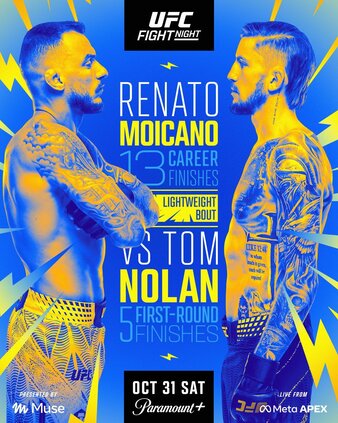
Official UFC Fight Night: Moicano vs. Nolan event poster
Official event poster, Meta APEX, October 31, 2026
Path to Victory

Ode Osbourne

Keep it standing through the first ten minutes and land on Durden's entries: three of Osbourne's four UFC knockdowns came in Round 1, and all seven of Durden's UFC stoppage losses came in Rounds 1 and 2.

Why they win
01
Six inches of reach

73 inches against 67 at 125 pounds. Durden has to cross the longest gap he has faced at flyweight to reach his game, and every level change starts from farther out than he is used to.

02
Power into a cracked chin

A knockdown in four of 13 UFC fights (0.56 per fifteen minutes, 11th of 34) against a man who has absorbed four knockdowns and been stopped by Jose Ochoa and Bruno Silva — both in Round 2.

03
The early window

All ten of his career finishes came in Rounds 1 and 2, eight in the first. All seven of Durden's UFC stoppage losses also came in Rounds 1 and 2.

04
Guard attacks against a shooter

Durden has five UFC submission losses, including a flying triangle and two front-headlock chokes. Osbourne's regional and Contender Series wins include two triangles and an armbar — the attacks a shooting wrestler walks into.

05
Better damage control standing

He absorbs 3.24 significant strikes per minute to Durden's 3.89. Durden has been out-landed 165–70 by Joshua Van, 25–9 in a round by Jose Ochoa and 25–8 by Nyamjargal Tumendemberel.

The gameplan
  1. 1
    Own the center and the distance

    Every exchange at the end of a 73-inch reach is one Durden cannot join without shooting from range. Stay off the fence of a 25-foot cage.

  2. 2
    Punish the entries

    The straight left and the knee are the answers to level changes from distance; knees and head kicks are his own favorite strikes, and three of his four UFC knockdowns came in the first round.

  3. 3
    Get up the right way

    No giving up his back on the way to his feet — the Filho and Almabayev finishes both ended with rear-naked chokes after takedowns. Underhook, wall-walk, reset.

  4. 4
    Attack from guard

    If he is taken down, threaten triangles and armbars immediately. The threat alone slows Durden's ground work, and Durden has been caught in scrambles five times in the UFC.

  5. 5
    Win the first two rounds clearly

    His third rounds are his weakest and the judges have scored control over his striking three straight times. A clear 20-18 lead after ten minutes is his cleanest decision path.

Path to Victory

Cody Durden

Land two or three takedowns a round and keep Osbourne on his back — the formula that won Rodríguez, Erceg and Idiris the cards against him and won Durden all five of his UFC decisions.

Why they win
01
The takedown volume Osbourne cannot handle

3.82 takedowns per fifteen minutes at 48% (4th of 34 flyweights) against a man whose last six opponents took him down 13 times and held him down for 48% of his time in the cage.

02
The judges

Osbourne out-landed Rodríguez, Erceg and Idiris and lost all three on the cards. Durden is 5-2-1 in UFC fights that reach Round 3, and all five of his UFC decision wins came with four or more takedowns.

03
Both shared opponents

Durden beat Charles Johnson with 11 takedowns, where Osbourne needed a split decision, and went 5 for 5 on takedowns against Jafel Filho, who submitted Osbourne in the first round.

04
The back

Two of Osbourne's three UFC submission losses were rear-naked chokes after he had been taken down (Almabayev, Filho). Durden's control game ends on the back.

05
Activity and late control

Three fights in 2026 against Osbourne's 252-day layoff and withdrawn camp, and a third-round control average of 131 seconds — the round where Osbourne's opponents also do their best work.

The gameplan
  1. 1
    Shoot early and often

    He lands 64% of his first-round takedowns. Waiting lets Osbourne find his range and his power.

  2. 2
    Enter behind strikes, never from range

    Close the six-inch gap with punches first, then change levels on the fence. A long shot into a sprawl is how he gets caught.

  3. 3
    Ride first, hunt later

    Position before submissions. Rodríguez, Erceg and Idiris beat Osbourne on control alone, and Filho and Almabayev took the back only after long stretches on top.

  4. 4
    Protect the neck on every entry

    Four of his five UFC submission losses were chokes (triangle, guillotine, anaconda, rear-naked choke). Hips in, head up, no half-committed shots.

  5. 5
    Bank Round 3

    His control peaks at 131 seconds in the third round, where Osbourne's opponents also control him the longest. If it is close after ten minutes, the last five belong to him.

Danger Zone

How Ode Osbourne loses

  • Rodríguez again: he lands the better shots in Round 1, even drops Durden, then spends Rounds 2 and 3 on his back — out-lands him and loses 29-28 on control.

  • Filho again: an early takedown, his back exposed, and a rear-naked choke before his reach ever comes into play.

  • Rust: 252 days out and a camp abandoned in June, against a man who has fought three times this year and puts him on the fence from the opening bell.

Danger Zone

How Cody Durden loses

  • Ochoa again: he loses the first-round exchanges at range, walks into a straight left on an entry, and the fight ends early in Round 2 — his worst round.

  • The shots do not land: six inches shorter and failing to land takedowns as he did against Costa, he ends up striking with a longer, harder puncher and loses on the cards or on his back.

  • The scramble: a stuffed shot, a front headlock or a triangle off Osbourne's guard — his seventh career submission loss, against a fighter whose favorite grappling technique is the triangle.

Osbourne's last three decisions

Out-Landed, Out-Scored

Osbourne out-landed Ronaldo Rodríguez 37–35 (with a first-round knockdown), Steve Erceg 35–20 and Alibi Idiris 32–30, and lost all three on the cards. Rodríguez controlled him for 9:14, Erceg for 4:47 and Idiris for 6:10. The Idiris result was later overturned to a no contest after a failed drug test, but the judges' verdict matched the other two: control beat his striking. In his two UFC decision wins, opponents held him down for 2:41 and 1:18.

0-3
Osbourne on the cards in his last three decisions despite winning the strike count
How every Durden decision win was built

The Four-Takedown Rule

All five of Durden's UFC decision wins — Aoriqileng, Mota, Johnson, Hadley and Filho — came with four or more takedowns (5, 4, 11, 4 and 5). Across his UFC career he is 5-1 when he lands three or more takedowns and 2-8-1 when he does not. He was out-landed by Aoriqileng and lost the second and third rounds on strikes to Johnson, and still won both fights clearly.

5-1
Durden's UFC record with three or more takedowns landed (2-8-1 otherwise)
The division learned to wrestle Osbourne

Held Down Half the Time

In his first seven UFC fights, opponents tried seven takedowns and controlled Osbourne for 14% of the time. In his last six they tried 37, landed 13, and controlled him for 48% — and he went 1-4 with a no contest. His takedown defense percentage barely moved; what changed is how often opponents shot and how long they stayed on top once they got there. Durden attempts 7.9 takedowns per fifteen minutes across his UFC career.

14% → 48%
share of Osbourne's cage time spent controlled, first seven UFC fights vs last six
Where his stoppage losses cluster

Round Two Breaks Durden

Durden's seven UFC stoppage losses: Flick and Mokaev in Round 1, then Ulanbekov, Silva, Ochoa, Nascimento and Costa — five in a row, all in Round 2. Opponents land 18.1 significant strikes per second round on him at 51.7%, against 13.8 at 44.8% in the first, and his own takedown accuracy falls from 64% to 34%. The first round is his best; the second is where his fights turn.

5 of 7
Durden's UFC stoppage losses that came in Round 2
Charles Johnson and Jafel Filho

Two Shared Opponents, One Answer

Osbourne edged Charles Johnson on a split decision while losing the strike count 60–48; two months later Durden took Johnson down 11 times and won clearly. Jafel Filho submitted Osbourne in the first round in 2024; in 2026 Durden, on six days' notice at bantamweight, went 5 for 5 on takedowns against him and won a unanimous decision. Different years and weights, same direction: both shared opponents were beaten by the wrestling Durden brings.

11 · 5/5
Durden's takedowns against Johnson and Filho

The Five-Round Clock

Ode Osbourne danger windowCody Durden danger windowNeutral / contested
R1 · 0:00–5:00Osbourne's power window

Three of his four UFC knockdowns and both of his UFC first-round knockouts (inside 61 seconds) came here, and Durden has been stopped in Round 1 twice. The catch: Durden lands 64% of his first-round takedowns. The model ends the fight here about 22 times in 100 — 15 Osbourne finishes to 7.

Critical Insight
The first ten minutes are Osbourne's danger windows — all ten of his career finishes and all seven of Durden's UFC stoppage losses happened inside them. The last five minutes, and the scorecards, belong to Durden. Osbourne needs the fight to end; Durden needs it to last.

Finish Threat by Round

Share of each fighter's wins that end in each round — early finishers spike left, grinders rise right.

05

The Verdict

One hundred simulated fights, the betting market, and our conviction

If you only read 3 things
1

Durden 56% / Osbourne 44%, conviction 4 of 10. The lean rests on one repeating pattern: Osbourne has lost every recent decision in which an opponent held him down, and holding people down is how Durden wins.

2

Osbourne's case is early and violent. He has the longer reach and the real power, and every one of Durden's seven UFC stoppage losses came inside the first two rounds.

3

This is a coin flip between a finish and a decision — the fight ends inside the distance in half of the model's simulations — but when it goes to the cards, Durden takes most of them.

Model outcomes per 100 fights

Each square represents one percentage point of the model distribution, not an observed fight. This visualization does not measure model accuracy or reduce uncertainty in the inputs.

Osbourne KO/TKO — 23%Osbourne Decision — 14%Osbourne Submission — 7%Durden KO/TKO — 7%Durden Decision — 36%Durden Submission — 13%

Each square = 1 model percentage point. Ode Osbourne gold · Cody Durden orange · color opacity: 100% = decision, 70% = submission, 45% = KO/TKO.

The control problem

Durden takes opponents down 3.82 times per fifteen minutes and controls them for 95 seconds a round; Osbourne's last six opponents controlled him for 48% of the fight. This is the core of the 56/44 lean.

How the judges have scored Osbourne

He out-landed Rodríguez, Erceg and Idiris and lost all three cards to control time. If the fight goes fifteen minutes, the model sends 36 of its 50 decisions to Durden.

Power against a chin that has been dropped four times

Osbourne has a knockdown in four of 13 UFC fights, three in Round 1, and six inches of reach. Durden has absorbed four knockdowns and been stopped by strikes twice. That is why Osbourne's KO/TKO share is 23%, the largest finishing bucket in the fight.

Durden's second round and his neck

Five of his seven UFC stoppage losses came in Round 2, and five were submissions. Osbourne has attempted only two submissions in 13 UFC fights, so the model holds that bucket at 7%, but Durden's fragility keeps Osbourne's finishing equity alive through the first ten minutes.

Shared opponents, form and activity

Both shared opponents went Durden's way on the mat. Against that, Durden is 2-6 since July 2024 and Osbourne 1-4 with a no contest since August 2023, while Durden is far more active (112 days out against 252). Two declining fighters whose weaknesses match each other's strengths cap conviction at 4.

Fight Scripts

0%
of simulations

Control Wins the Cards

Durden walks through the reach behind punches, locks his hands on the fence and spends most of each round on top. Osbourne wins the strike count from underneath, as he did against Rodríguez, Erceg and Idiris, and loses 29-28 or 30-27 on control. The single most likely outcome.

Scripted outcomes for Ode Osbourne vs Cody Durden — how each version of this fight unfolds.

Ode Osbourne win probability
0%
23%
14%
7%
KO/TKODECSUB
  • Osbourne's best path and the largest finishing bucket in the fight. Three of his four UFC knockdowns came in Round 1, he has six inches of reach, and Durden has been knocked down four times and stopped by Silva and Ochoa — both in Round 2.

  • Requires him to stay upright, or get up quickly, for most of fifteen minutes. He did it against Vergara and Johnson, but he has lost three straight decisions on control since, while out-landing all three opponents.

  • Durden has five UFC submission losses, including a flying triangle and two front-headlock chokes, and Osbourne's early wins include two triangles and an armbar. Discounted because he has attempted only two submissions in 13 UFC fights.

Cody Durden win probability
0%
7%
36%
13%
KO/TKODECSUB
  • One UFC knockout in 17 fights. Mostly volume from top position against a man who has never been stopped by ground strikes.

  • The largest single outcome: takedowns and control across three rounds — the formula behind all five of his UFC decision wins and behind Osbourne's last three losses on the cards.

  • Filho and Almabayev both finished Osbourne with rear-naked chokes after taking him down, and Durden's control game ends on the back — six career submission wins, including an anaconda in the UFC.

Projected Scorecards

How the model scores each round
R1
Cody
R2
Even
R3
Cody
29-28 Durden
Durden takes Rounds 1 and 3 on control; Osbourne wins the second on the feet
Most likely card if it goes the distance — the model sends 36 of its 50 decisions to Durden
30-27 Durden
Takedowns in every round and a clean sweep on control, the Johnson and Filho template
The dominant version of Durden's decision path
29-28 Osbourne
Osbourne stays upright, wins the first two rounds at range and survives a third round on his back
His decision path — 14 of the model's 50 decisions

Model and price

Ode Osbourne

Quote age unknown
Model win probability
44%
Fair odds
+127
Reference quote
+100 (BetOnline)
Fair decimal odds
2.27
Estimated EV
-12.0%
Edge vs no-vig market
-4.1 pp

Cody Durden

Quote age unknown
Model win probability
56%
Fair odds
-127
Reference quote
-117 (BetOnline)
Fair decimal odds
1.79
Estimated EV
+3.9%
Edge vs no-vig market
+4.1 pp

EV uses the displayed price: probability × decimal odds − 1. Edge is a percentage-point difference from a proportionally de-vigged, same-book pair. A dash marks a price without a same-book pair to compare.

Price freshness & calculation notes

Quotes older than 48 hours are marked outdated. EV at an old or undated price is a historical calculation, not a current opportunity. Quotes listed with a date but no time are treated as undated.

Fair odds are the break-even price under this estimate, not a recommended entry price. Model uncertainty can erase a small edge.

What price would change the calculation? · Ode Osbourne

Change the assumptions to see how the required price moves. This does not update the published model or recommend an entry price.

Required decimal price: 2.28 or higher. At the exact unrounded break-even price, estimated EV is zero.

What price would change the calculation? · Cody Durden

Change the assumptions to see how the required price moves. This does not update the published model or recommend an entry price.

Required decimal price: 1.79 or higher. At the exact unrounded break-even price, estimated EV is zero.

Original analyst price notes

These notes describe the original analysis and may refer to older prices.

Durden on the moneyline is a bet only at −127 or better; if the market makes the longer, more explosive Osbourne the favorite, Durden becomes the value side. Durden by decision is the single most likely outcome (model 36%, fair +178), so anything at +200 or longer is value. Osbourne by KO/TKO (model 23%, fair +335) is the right underdog play at +350 or longer. The distance itself is a true coin flip in the model (50%, fair even money). Avoid Osbourne by decision below its +614 fair price: his last three decisions all went against him on control.

Conviction
0
4/10

Editorial confidence in the evidence, not a win probability or a calibrated confidence interval.

A real lean built on the fight's one clear structural edge — Durden's takedown volume against a fighter who has lost every recent decision on control — and capped at 4 because Durden is 2-6 in his last eight, has been stopped seven times in the UFC, gives up six inches of reach to a man with genuine first-round power, and has a habit of giving up his neck in scrambles. With 13 and 17 UFC bouts behind them, the uncertainty is not the sample; it is two declining fighters whose weaknesses line up with each other's strengths. Lean: Cody Durden.

What backs the lean
  • 3.82 takedowns per fifteen minutes (4th of 34) and 95 seconds of control per round, against a man controlled for 48% of his cage time in his last six fights.

  • The scorecard pattern: Osbourne out-landed Rodríguez, Erceg and Idiris and lost all three on control, while Durden is 5-2-1 when his UFC fights reach Round 3.

  • Both shared opponents — Johnson (11 takedowns and a clear decision, where Osbourne needed a split) and Filho (5 of 5 takedowns, where Osbourne was submitted in the first round).

  • Osbourne's back exposure once taken down (Filho, Almabayev), plus activity — 112 days out against 252 — and a third-round control average of 131 seconds.

What limits it
  • Knockdown power into a cracked chin: 0.56 knockdowns per fifteen, three of his four UFC knockdowns in Round 1, against Durden's four knockdowns absorbed and two strike stoppages.

  • Durden's second round: five of his seven UFC stoppage losses, the last five in a row, all came there.

  • Six inches of reach and a first-round window in which Osbourne has two UFC knockouts inside 61 seconds.

  • Durden's form and scramble defense: 2-6 since July 2024, five UFC submission losses, and opponents who attempt submissions on him at 1.7 times the division rate.

Final Assessment

In roughly 56 of 100 simulations, Cody Durden turns this into the fight Osbourne keeps losing. He closes the reach behind punches, changes levels on the fence and spends the rest of each round on top — most often banking a 29-28 or 30-27 decision on control while Osbourne wins the strike count from his back (36%), sometimes taking the back and finishing the choke Filho and Almabayev found (13%), and occasionally stopping him with volume from top position (7%). It is the likeliest path because it only asks the pattern of Osbourne's last six fights to continue.

In the other 44, Ode Osbourne makes the reach count. The most likely version is sudden: a straight left or a knee catches Durden on an entry in the first round, or during the second-round fade that has ended five of his seven UFC stoppage losses (23%). A quieter version is Osbourne staying upright, getting back to his feet quickly and out-landing Durden for three rounds, as he did against Vergara and Johnson (14%). The long shot is Durden's neck — a triangle or front choke in a scramble, the kind of finish Flick, Mokaev and Nascimento found (7%).

Durden has the takedowns, the control, the judges' recent history, both shared opponents and the activity. Osbourne has the reach, the power, an early-finish record and the opponent with the more fragile chin. On October 31 at the Meta APEX the model takes Cody Durden narrowly, because the last three times someone held Osbourne down, the judges gave them the fight — and it treats Osbourne by knockout as the most likely way the favorite loses.

Skip to main content
Use Tab to navigate through elements, Enter to activate buttons and links.