Randy Brown vs Carlos Leal (cancelled): bout cancelled

MAIN CARD · WELTERWEIGHT · 3 ROUNDSUFC Fight Night: Moicano vs. Nolan
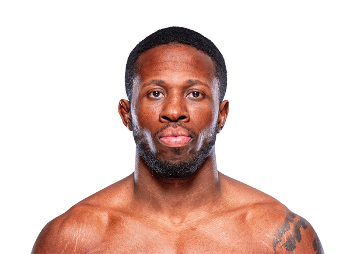
Randy Brown — Welterweight fighter

Randy Brown

“Rudeboy”
20W8L
Long Counter-Striker
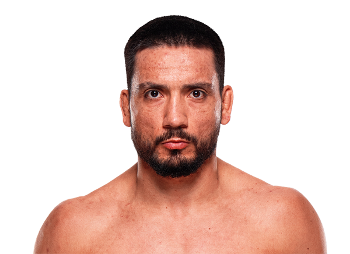
Carlos Leal — Welterweight fighter

Carlos Leal

“The Lion”
23W7L
Volume Muay Thai Puncher

Ten years of length and craft against the busiest puncher Brown has ever faced.

WelterweightMeta APEX, Las VegasOctober 31, 202625ft Octagon (Small Cage)
01

The Frame

What this fight is really about — and the measurements that shape it

The Analyst's Take

This fight asks whether a long, experienced veteran can keep a relentless volume puncher at the end of his reach for fifteen minutes in the smallest cage the UFC uses. Randy Brown is 20-8 with 22 UFC fights behind him, a four-inch edge in height and reach, and a résumé that includes two future champions. He is also 36, has lost two in a row, and has a very particular weakness: every time he has been knocked down in the Octagon, the man across from him was throwing at a frantic pace. Carlos Leal is 23-7, a former LFA champion and a two-time PFL playoff semifinalist, and in four UFC fights he has landed at double the division's average rate while absorbing almost as much in return. The one opponent they share points the other way. Brown knocked Muslim Salikhov out in the first round in 2024; Salikhov knocked Leal out in 42 seconds in 2025. The first round is Leal's, the second is where Brown's fights have always broken, and the third is Brown's best. The model lands at Carlos Leal 54% / Randy Brown 46% with a conviction of 3 out of 10 — a lean built on how Brown gets hurt, held down by how often Leal gets hit.

Randy Brown
Attribute
Carlos Leal
36
Age
4-year gap32
6'3"+4" Brown
Height
5'11"
78"+4" Brown
Reach
74"
45.5"+5.5" Brown
Leg Reach
40"
Orthodox
Stance
Orthodox
Budokan Martial Arts Academy, New York
Team
Thai Brasil, Curitiba
Jan 30, 2016
Octagon Debut
Oct 26, 2024 (UFC 308)
22 (14-8)
Octagon Bouts
4 (2-2)
9.3
Strike Attempts per Minute
Leal throws twice as often18.6
6
UFC Knockdowns Absorbed
1
203 (decision loss)
Days Since Last Fight
252 (decision win)
Long counter-striker, jiu-jitsu black belt
Fighting Style
Muay Thai volume puncher, heavy body work

Brown is four inches taller, four inches longer and has five and a half inches more leg reach. When he gets room, he uses it: 77% of his significant strikes land at distance, and his best nights — 115 landed against Jared Gooden, 89 against Bryan Barberena — were long, patient striking performances. But length only works if the opponent respects it, and Leal has already beaten a taller, longer striker by refusing to. He threw 276 significant strikes in fifteen minutes against the 6'3" Chidi Njokuani and won a unanimous decision. The four-year age gap runs the other way: Brown is 36 with 22 UFC fights of mileage and three knockout losses, Leal is 32. Both are orthodox, so there are no open-stance angles to exploit — this is a fight about distance and durability.

Venue Factor
The 25-foot APEX cage is a hard place for a long outside fighter to meet a pressure puncher. Brown is 3-2 there, and both losses — Vicente Luque in 2020, Gabriel Bonfim in 2025 — were second-round stoppages that began with a knee. The small cage shortens the distance Brown needs to reset after each exchange, and Leal's long, unbroken combinations are built to pin opponents on the fence. Brown's best answer is the same short-range weapon that has beaten him twice: the knee up the middle as Leal walks in.
02

The Fighters

Careers, chins, schedules — and the form they bring into the cage

Randy Brown throws a punch at Jared Gooden at the UFC APEX, October 2021

Randy Brown

Pro Record
20-8-0
UFC Record
14-8 across 22 bouts since January 2016
Streak
Lost his last two — Bonfim (TKO, Nov 2025) and Holland (decision, Apr 2026)
Finish Rate
65% (13 of 20 wins) — 8 KO/TKO, 5 submissions
Avg Fight Time
10:31
Chin · Vulnerable under pace — 6 UFC knockdowns absorbed, 3 KO/TKO lossesSOS · StrongTechnical Striker / Outside Fighter

Brown has spent a decade as one of the welterweight division's measuring sticks. Discovered on Dana White: Lookin' for a Fight as an unbeaten Ring of Combat champion, he went 9-2 from June 2019 to June 2024 on patient distance striking and opportunistic submissions — a one-armed choke of Alex Oliveira, a triangle on Warlley Alves, a first-round knockout of Muslim Salikhov — losing only to Vicente Luque and a future champion, Jack Della Maddalena. Since then he is 1-3. He lost a split decision to Bryan Battle, who missed weight by four pounds; knocked out Nicolas Dalby in the second round after being dropped himself; was stopped by a Gabriel Bonfim knee in a five-round main event; and lost every round to Kevin Holland on all three cards. The offense has held up — 4.70 landed per minute over his last three fights, above his career rate — but the defence has not: 48.9% over that span against 54.1% across his first seventeen UFC fights. The pattern underneath is sharp. In the fifteen UFC fights where opponents threw fewer than about ten significant strikes a minute, he is 11-4 and has never been knocked down. In the seven where they threw more, he is 3-4 and absorbed all six of his UFC knockdowns.

Carlos Leal in competition

Carlos Leal

Pro Record
23-7-0
UFC Record
2-2 across four bouts since October 2024
Streak
Won his last — unanimous decision over Chidi Njokuani (Feb 2026)
Finish Rate
57% (13 of 23 wins) — 11 KO/TKO, 2 submissions
Avg Fight Time
8:45
Chin · Durable under volume, dropped once — 1 UFC knockdown absorbed (the Salikhov KO)SOS · UFC veteransMuay Thai Volume Striker

Leal took the long road to the UFC. A professional at 18, he won the LFA welterweight title by winning two fights on the same night in 2021 — a first-round knockout of Diego Dias and a decision over Uyran Carlos — then spent two PFL seasons reaching the playoffs, beating former champion Ray Cooper III along the way and losing both semifinals to Sadibou Sy. He arrived in the UFC as a replacement against Rinat Fakhretdinov in October 2024 and has fought the same way four times since: at a pace roughly double the division norm, landing 8.75 significant strikes per minute on 18.6 attempts while absorbing 7.78. The results have alternated. He lost a close decision to Fakhretdinov despite stopping 17 of 19 takedown attempts; landed 79 significant strikes in 4:16 to stop Alex Morono; was knocked out by a single Muslim Salikhov punch at 0:42; and beat the 6'3" Chidi Njokuani on all three cards despite being out-landed 120 to 115 overall, on the strength of a 60-46 first round and a controlled second. Ten of his 13 career finishes came in the first round, and he has yet to score a knockdown in the UFC.

Randy Brown
0 dealt · 0 absorbed
Knockdown Exchange
Knockdowns dealt vs absorbed.
Carlos Leal
0 dealt · 0 absorbed

Randy Brownsignature weapons

Counter PunchesMuslim Salikhov at 3:17 of Round 1 (Feb 2024, Performance of the Night) and Nicolas Dalby at 1:39 of Round 2 (Apr 2025, Fight of the Night) — the Dalby finish came after Brown had been knocked down himself
×2
Knee Up the MiddleBrian Camozzi (knee and punches, Round 2, Dec 2016) and Robert Plotkin (knee, Round 1, 2015) — the weapon that punishes an opponent walking forward
×2
Chokes From ScramblesGuillotines on Erick Montaño and Ben Brewer, a triangle on Warlley Alves (Performance of the Night) and a one-armed rear-naked choke on Alex Oliveira — a jiu-jitsu black belt who finishes off opponents' grappling
×4
Third-Round FinishBryan Barberena at 2:54 of Round 3 after out-landing him 38-10 in that round — his most accurate round is also his latest stoppage
×1

Carlos Lealsignature weapons

First-Round Punching SwarmTen of his 13 career finishes came in Round 1, including Alex Morono at 4:16 of UFC 313 after 79 significant strikes, Manuel Mena (3:09) and Diego Dias (1:39, the first of his two wins on LFA Grand Prix night)
×10
Body Work in the Clinch28 of his 79 landed against Morono went to the body and 25 came in the clinch; almost a third of his first-round output across four UFC fights goes to the body
×1
ChokesA rear-naked choke in 2015 and an arm-triangle in 2019 — no submission attempts in the UFC
×2

Randy Brown

L
Kevin Holland
Decision — Unanimous (30-27, 30-27, 30-27)

Opponent context: veteran

R3 (5:00)
UFC 327: Procházka vs. Ulberg — Apr 11, 2026
L
Gabriel Bonfim
KO/TKO — Knee

Opponent context: prospect

R2 (1:40)
UFC Fight Night: Bonfim vs. Brown — Nov 8, 2025 (five-round main event)
W
Nicolas Dalby
KO — Punch

Opponent context: veteran

R2 (1:39)
UFC on ESPN: Machado Garry vs. Prates, Kansas City — Apr 26, 2025 (Fight of the Night)
L
Bryan Battle
Decision — Split (28-29, 29-28, 29-28)

Opponent context: ufc

R3 (5:00)
UFC 310: Pantoja vs. Asakura — Dec 7, 2024 (175-lb catchweight; Battle missed weight)
W
Elizeu Zaleski dos Santos
Decision — Unanimous (29-28, 29-28, 29-28)

Opponent context: veteran

R3 (5:00)
UFC 302: Makhachev vs. Poirier — Jun 1, 2024
Pattern

Two wins and three losses, and the trend is defensive rather than offensive. Brown's output is steady — 4.46 landed per minute across these five fights — but over the last three he has absorbed 4.13 per minute at 48.9% defence, against opponents who threw only about eight attempts a minute. The Holland loss is the clearest warning: Holland is nowhere near Leal's pace, yet Brown lost all three rounds on the strike count (18-20, 14-19, 14-17), spent 4:05 under control and landed none of his four takedown attempts. The Dalby win is the counter-argument. Dropped in the first round by a pressure striker throwing eleven attempts a minute, he recovered to win the second round 32-11 and knock Dalby out at 1:39. The chin cracks under pace; the fighter often survives it.

Carlos Leal

W
Chidi Njokuani
Decision — Unanimous (30-27, 29-28, 29-28)

Opponent context: veteran

R3 (5:00)
UFC Fight Night: Strickland vs. Hernandez, Houston — Feb 21, 2026
L
Muslim Salikhov
KO — Punch

Opponent context: veteran

R1 (0:42)
UFC on ABC: Whittaker vs. de Ridder, Abu Dhabi — Jul 26, 2025
W
Alex Morono
TKO — Punches

Opponent context: veteran

R1 (4:16)
UFC 313: Pereira vs. Ankalaev — Mar 8, 2025
L
Rinat Fakhretdinov
Decision — Unanimous (29-28, 29-28, 30-27)

Opponent context: ufc

R3 (5:00)
UFC 308: Topuria vs. Holloway, Abu Dhabi — Oct 26, 2024 (UFC debut as a replacement)
W
Manuel Mena
TKO — Punches

Opponent context: ufc adjacent

R1 (3:09)
LFA 187 — Jul 6, 2024
Pattern

Loss, win, loss, win in the UFC, and the pattern inside the results matters more than the record. In both fifteen-minute fights the strike count was almost level — 107-109 against Fakhretdinov, 115-120 against Njokuani — and the judges went against the count both times, rewarding Fakhretdinov's takedowns and control, then Leal's 60-46 first round and 2:17 of cage control against Njokuani. The Morono stoppage (79 landed in 4:16, 28 of them to the body) is the ceiling. The 42-second Salikhov knockout is the floor, and it came the only time he has met a patient, heavy-handed counter-puncher in the UFC. Before the call-up he stopped Manuel Mena and Marcio Braga in the first round in 2024.

Randy Brown

Win Methods
Wins by Round

Carlos Leal

Win Methods
Wins by Round
Critical Insight
Brown: 8 KO/TKOs, 5 submissions and 7 decisions in 20 professional wins. Of Brown's 13 finishes, four in round one, seven in round two and two in round three. Leal: 11 KO/TKOs, 2 submissions, 8 decisions, 1 disqualification and 1 other result in 23 professional wins. Of Leal's 15 finishes, twelve in round one, two in round two and one in round three. The round bars count every professional win, with decisions in the DEC column.

Common Opponents

OpponentRandyCarlos
Muslim SalikhovW· KO R1 3:17 — Feb 2024 (Performance of the Night)L· KO R1 0:42 — Jul 2025
The only opponent they share. Brown landed 13 of 46 with a knockdown before the finish; Salikhov ended Leal's night with one punch in the first exchange. The fights were seventeen months apart and never alike, but it is the one direct line between these two, and it runs toward Brown.
03

The Numbers

Composites, division averages and round-by-round evidence

Composite scores summarize selected statistics on a 0–100 scale. They are not win probabilities. Compare the underlying metrics, opponent quality and UFC experience before interpreting a score difference as a matchup advantage.

Striking

SLpM 25% · StrAcc 30% · StrDef 30% · SApM 15%

0.0
Randy
0.0
Carlosfew UFC fights

Two and a half points apart, and built completely differently. Brown's inputs sit almost exactly on the division average, and his best one is the number Leal is worst at: 3.35 strikes absorbed per minute. Leal lands double the division average and absorbs exactly double the average too; the gauge nets those extremes to 'slightly above average', which undersells how differently these two fight.

Grappling

TD/15 25% · TDAcc 25% · TDDef 30% · Sub/15 20%

0.0
Randy
0.0
Carlosfew UFC fights

Brown by 14, mostly on submission threat and takedown accuracy — a jiu-jitsu black belt with three UFC submissions against a man with no UFC submission attempts. It matters less than it looks: Leal stopped 17 of 19 takedowns against Fakhretdinov and rarely wrestles himself, and Brown's submissions come off opponents' grappling.

Technical

(Striking + Grappling) / 2

0
Randy
0.0
Carlos

Brown by about six, almost entirely from grappling inputs this matchup is unlikely to use. Standing, the two gauges are within three points.

Cardio

Fight time · pace · R3/R1 output · age

0
Randy
0
Carlosfew UFC fights

Leal by eight. He throws 18.6 significant strikes a minute and held that pace through the third round of both fifteen-minute UFC fights (97 and 125 attempts), at 32. Brown's third round is his best and he is 7-3 in UFC decisions, but he is 36 and lost every round of his last fifteen-minute fight on the count.

Overall

(Technical + Cardio) / 2

0.0
Randy
0.0
Carlos

About one point to Leal — a coin flip on the gauges. The model's lean comes from what they leave out: all six of Brown's UFC knockdowns absorbed came against high-pace opponents, and Leal is the highest-pace opponent he will have faced. What keeps it close is also left out: Leal absorbs 7.78 per minute and was knocked out by the man Brown knocked out.

MetricRandyCarlos
Avg Fight Time10:31 (22 UFC bouts)8:45 (4 UFC bouts)
Pace TierModerate — 4.39 landed, 9.3 thrown per minExtreme — 8.75 landed, 18.6 thrown per minfew UFC fights
R3/R1 Output22.1 vs 19.4 sig — 114%46.0 vs 43.0 sig — 107%few UFC fights
Slow Start %36% — out-landed in R1 in 8 of 220% — won all 4 UFC first rounds on the countfew UFC fights
Knockdowns Absorbed6 in 22 UFC bouts — all against high-pace opponents1 in 4 UFC bouts (Salikhov)few UFC fights

Archetype Base Rate

Technical Striker 48.7%51.3% Muay Thai Fighter

526-fight sample · Archetype history barely moves this fight. Brown is a technical outside striker and Leal a Muay Thai-trained volume puncher, and technical strikers have won 48.7% of 526 such meetings — about a point toward Leal. Read as two technical strikers, it is a flat 50.0% across 1,252 fights. The 54/46 lean comes from pace, durability and form, not from the labels.

Randy BrownCarlos Leal

Welterweight

· 54 fighters

Rank bars use the recorded division cohort. Where no rank is shown, the comparison shows the difference from the published division average; the white marker denotes equality. Percentage differences are percentage points (pp). Higher is not always better: fewer strikes absorbed is preferable.

StatRandyRandy comparisonDiv avgCarlos comparisonCarlos
SLpM4.39
+0.01 vs avg
4.38
+4.37 vs avgfew UFC fights
8.75
Str Acc47%
-1.70 pp vs avg
48.7%
-1.70 pp vs avgfew UFC fights
47%
Str Def54%
+0.30 pp vs avg
53.7%
-4.70 pp vs avgfew UFC fights
49%
SApM3.35
-0.54 vs avg
3.89
+3.89 vs avgfew UFC fights
7.78
KD Avg0.39
-0.13 vs avg
0.52
-0.52 vs avgfew UFC fights
0.00
Damage Ratio1.31
+0.09 vs avg
1.22
-0.09 vs avgfew UFC fights
1.13
TD/150.71
-0.93 vs avg
1.64
-1.21 vs avgfew UFC fights
0.43
TD Acc34% (11 of 32)
—
—
—few UFC fights
11% (1 of 9)
TD Def75% (16 conceded of 63)
—
—
—few UFC fights
91% (2 conceded of 22)
Sub/150.52
+0.05 vs avg
0.47
-0.47 vs avgfew UFC fights
0.00
Avg Fight Time10:31
—
—
—
8:45
Statistical Verdict
Brown owns the efficiency columns — defence, absorption, damage ratio, knockdowns — and Leal owns output by a distance, landing twice the division average. Leal's absorption is the most exploitable number in the fight: 7.78 significant strikes per minute, exactly double the welterweight mean, against a four-inch-longer and far more experienced opponent. Brown's defence is the most fragile: 54% for his career but 48.9% over his last three fights, and every knockdown he has absorbed came when opponents threw at roughly half Leal's pace or more. The numbers do not pick a winner. They frame the question: whose extreme breaks first.

Significant Strikes Landed per Round

Control Time per Round (sec)

Randy Brown

  • Brown builds: 19.4 significant strikes in an average first round, 17.1 in the second, then 22.1 at 54.3% accuracy in the third — his busiest and most accurate round, and the one where opponents land least on him (13.5).
  • The first round is where he is most exposed. He has been out-landed in 8 of 22 UFC opening rounds and absorbed three of his six UFC knockdowns there (Luque, Della Maddalena, Dalby).
  • His clinch work rises by round, from 10.1% of his output in Round 1 to 20.8% in Round 3, and his clinch strikes land at 81%. Knees on an opponent walking forward are his most efficient weapon.

Carlos Leal

  • Leal starts at a sprint: 43.0 landed on 80.8 attempts in an average UFC first round, 31.4% of it to the body. He has won all four UFC opening rounds on the strike count.
  • His second round drops to 21.0 landed across two fights, most of it the Njokuani round in which he landed 5 while holding 2:17 of cage control.
  • His third-round output comes back (46.0 landed), but so does the damage: opponents land 52.0 per third round on him, and he lost both UFC third rounds on the count (42-52, 50-52).
Critical Insight
Read Round 1 side by side: Leal lands 43.0 and absorbs 28.3; Brown lands 19.4 and absorbs 14.9. Then read Round 3: Brown's output and accuracy peak (22.1 at 54.3%) while his opponents land their fewest, and Leal's opponents land their most (52.0). The first five minutes favour the volume puncher; the last five favour the long, accurate veteran — if he reaches them unhurt.

Strike targeting

Randy

Head
62%
Body
21%
Legs
17%

Carlos

Head
64%
Body
24%
Legs
12%

Head hunting vs body work vs leg attack — the shape of the damage.

Striking range — distance, clinch and ground

RandyCarlos
77%Distance87%
15%Clinch13%
8%Ground0%

Share of significant strikes landed at distance, in the clinch and on the ground across each fighter's UFC rounds, weighted by strike volume.

04

The Story of the Fight

Advantages, worst cases, gameplans — and the patterns underneath

Where the fight lives

Who owns each phase — and by how much
Open SpaceRandy owns it

Four inches of reach and five and a half of leg reach, with 77% of his output at distance — narrowed by the 25-foot cage

Pocket / ExchangesCarlos owns it

18.6 attempts per minute against a fighter whose six UFC knockdowns absorbed all came under pace — offset by Leal's 7.78 absorbed per minute

ClinchRandy owns it

Brown's clinch strikes land at 81%, with knees; Leal's clinch body work (82%) broke Morono — close

GroundRandy owns it

Jiu-jitsu black belt with three UFC submissions against no UFC submission attempts — but Leal's 91% takedown defence keeps it standing

The Deep Read

The most useful fact about Randy Brown in this matchup is where his knockdowns come from. Across 22 UFC fights his opponents have thrown about seven significant strikes a minute at him. In fifteen of those fights they threw fewer than about ten, and he went 11-4 without once being knocked down. In the other seven — Belal Muhammad, Vicente Luque, Jared Gooden, Khaos Williams, Jack Della Maddalena, Nicolas Dalby and Gabriel Bonfim — he went 3-4 and absorbed all six of his UFC knockdowns. The losses to Luque, Della Maddalena and Bonfim were stoppages; the wins over Williams and Dalby came after he got up. Carlos Leal throws 18.6 significant strikes a minute. He is not a one-punch knockout artist in the UFC — he has not scored a knockdown in 35 minutes — but his style produces exactly the conditions under which Brown has been hurt.

The case for Brown is just as specific. Leal absorbs 7.78 significant strikes a minute, exactly double the welterweight average, and the only patient, heavy-handed counter-puncher he has met in the UFC — Muslim Salikhov — stopped him in 42 seconds. Brown knocked out that same Salikhov in the first round seventeen months earlier. He is four inches taller and four inches longer, his clinch strikes land at 81%, and he has finished opponents with knees and counters when they came forward. If Leal enters the way he entered against Salikhov, Brown is the kind of fighter who makes that mistake expensive.

The rest is about time and place. Leal is most dangerous in the first round — ten of his thirteen career finishes, four of four UFC opening rounds won on the count — and Brown's fights break in the second, where 11 of the 18 stoppages in his career happened. If Brown reaches the third round unhurt, it is his best round and Leal's leakiest. The 25-foot APEX cage leans toward Leal, because it shortens the room Brown needs to reset, and both of Brown's losses there were second-round stoppages started by knees. The direction of travel matters too: Brown is 36 and on a two-fight skid with his defence slipping, while Leal is 32 and beat a 6'3", 80"-reach striker in February by owning the opening round. The model takes Leal narrowly and keeps conviction low, because nearly every piece of evidence for him has a matching piece for Brown.

Randy Brown salutes the crowd after knocking out Nicolas Dalby in Kansas City, April 2025
Brown after his Fight of the Night knockout of Nicolas Dalby, Kansas City, April 26, 2025
Path to Victory

Randy Brown

Survive the opening surge without being dropped, then use four inches of reach, the jab and the knee to make every entry cost Leal something — and let the third round, his most accurate, do the rest.

Why they win
01
Four inches of reach, five of leg reach

78" against 74", 45.5" against 40" of leg reach, and a four-inch height edge. Brown can land from a range where Leal can only step in.

02
The Salikhov line

Brown knocked Muslim Salikhov out at 3:17 of Round 1; Salikhov knocked Leal out at 0:42. The one time Leal met a patient, heavy-handed counter-puncher in the UFC, the fight lasted 42 seconds.

03
A defence that gives up half

Leal absorbs 7.78 significant strikes per minute — double the division average — at 48.8% defence. Brown lands 47% of what he throws, and his clinch strikes land at 81%: the right punishment for a man who walks forward.

04
Round 3

His busiest and most accurate round (22.1 landed at 54.3%, 13.5 absorbed), against the round in which Leal's opponents land most (52.0).

05
Experience and the ground

22 UFC fights, two future champions among his opponents, 7-3 in UFC decisions, and a jiu-jitsu black belt with three UFC submissions if a knockdown turns into a scramble.

The gameplan
  1. 1
    Own the centre

    Every knockdown he has absorbed came when an opponent had him moving backwards under pace. The fence is where Leal's volume turns into damage.

  2. 2
    Jab, teep and knee the entry

    Leal comes in on straight lines behind combinations. A long jab and a knee up the middle are the counters that stopped Salikhov and Camozzi.

  3. 3
    Punish the end of each combination

    Leal's defence is most exposed right after he throws, and Brown's counters land hardest on opponents who keep coming forward.

  4. 4
    Keep the guard high in Round 1

    Three of his six UFC knockdowns absorbed came in the opening round. Reaching Round 2 clean changes the fight.

  5. 5
    Invest in Round 3

    His most accurate round against Leal's leakiest one. If it is close after ten minutes, the third is his.

Path to Victory

Carlos Leal

Start at full pace, walk Brown to the fence behind long combinations and body shots, and bank the first two rounds before Brown's range and third-round gear can matter.

Why they win
01
Pace Brown has never faced

18.6 significant-strike attempts per minute. Brown's busiest opponent threw 14.9 in their fight, and all six knockdowns Brown has absorbed in the UFC came in the seven fights where opponents threw 9.6 or more.

02
Brown's trend

36 years old, two straight losses, and 48.9% striking defence with 4.13 absorbed per minute over his last three fights — against opponents who threw only about eight attempts a minute.

03
The opening round

Four of four UFC first rounds won on the count, 43.0 landed per opening round with almost a third to the body, and 10 first-round finishes in his career. Brown has lost 8 of 22 UFC first rounds on the count.

04
Takedown defence that removes Brown's grappling

91% — 17 of 19 stopped against Fakhretdinov. Brown's submissions come off opponents' wrestling, and Leal will not give him any.

05
The small cage and a template

The 25-foot APEX cage shortens Brown's escape routes — both of his losses there were second-round stoppages started by knees — and Leal already beat a 6'3", 80"-reach striker in Njokuani by owning the first round.

The gameplan
  1. 1
    Start at full speed

    Eighty-plus attempts in the first round. Make Brown decide in the first minute whether he can cover up for fifteen.

  2. 2
    Combinations, not single shots

    The Salikhov loss came from a single straight entry; the Morono win came from combinations that never stopped.

  3. 3
    Go to the body

    Almost a third of his first-round output goes to the body. Against a 36-year-old whose best round is the third, the body is the cardio tax.

  4. 4
    Keep it standing

    Stop any clinch-level takedown and never follow Brown to the ground; the black belt is Brown's best way back into a fight he is losing.

  5. 5
    Bank the first two rounds

    His win over Njokuani came from a dominant first round and a controlled second. Two banked rounds mean Brown's third-round surge only matters if it ends the fight.

Danger Zone

How Randy Brown loses

  • The Luque script at double speed: Leal backs him to the fence early, the combinations keep coming, and the knockdown that arrived in five of his seven high-pace UFC fights arrives again.

  • Death by output: never badly hurt, but out-landed two to one in every round and swept on the cards the way Holland swept him in April.

  • The body attack drains him, and the third round — his best — never arrives.

Danger Zone

How Carlos Leal loses

  • Salikhov again: he walks straight into a long counter or a knee in the first exchange, and one clean shot does what 109 and 120 strikes in fifteen minutes could not.

  • The Barberena finish: Brown survives the surge, takes over at range, and stops a tired, marked-up Leal in the third round.

  • The scramble: a knockdown sends him to the mat against a black belt with two guillotines and a one-armed choke on his record.

Brown's durability, split by his opponents' work rate

Every Knockdown Came Against Pace

In the fifteen UFC fights where opponents threw fewer than about ten significant strikes a minute, Brown is 11-4 and has never been knocked down. In the seven where they threw more — Muhammad, Luque, Gooden, Williams, Della Maddalena, Dalby, Bonfim — he is 3-4 and absorbed all six of his UFC knockdowns. Leal throws 18.6 a minute, a quarter more than the busiest opponent Brown has faced (Williams, 14.9 in their fight).

6 of 6
Brown's UFC knockdowns absorbed against high-pace opponents
The one opponent they share

The Salikhov Line

Brown knocked Muslim Salikhov out at 3:17 of Round 1 in February 2024 for a Performance of the Night. Salikhov knocked Leal out at 0:42 of Round 1 in July 2025, also for a Performance of the Night. Seventeen months apart and never the same fight twice, but it is the only direct link, and it says Leal's straight-line entries are vulnerable to exactly the kind of patient counter-puncher Brown is.

3:17 vs 0:42
Brown's win and Leal's loss against Muslim Salikhov, both in Round 1
Where his finishes and his rounds come from

Leal Owns the First Five Minutes

Leal has won all four of his UFC first rounds on the strike count, averaging 43.0 landed on 80.8 attempts, and ten of his thirteen career finishes came in Round 1. Brown has been out-landed in 8 of 22 UFC first rounds and absorbed half of his UFC knockdowns there. Since 2021, every Leal fight that got past the first round has gone to the cards except one.

4 of 4
UFC first rounds Leal has won on the strike count
In both directions

Brown's Fights Break in Round 2

Seven of Brown's 13 career finishes came in the second round — Camozzi, Alves and Dalby in the UFC — and so did four of his five stoppage losses (Graves, Price, Luque, Bonfim). Eleven of the 18 stoppages in his career, won or lost, ended in Round 2. It is the round where his fights stop being competitive, one way or the other.

11 of 18
stoppages in Brown's career, won or lost, that ended in Round 2
Brown's best round against Leal's leakiest

The Third-Round Crossover

Brown's third round is his busiest and most accurate (22.1 landed at 54.3%) and the one where opponents land least on him (13.5). Leal's third round is where opponents land most on him — 52.0 on average across his two fifteen-minute UFC fights, both third rounds lost on the count (42-52 to Fakhretdinov, 50-52 to Njokuani). If the fight reaches the last five minutes close, the numbers turn toward Brown.

13.5 vs 52.0
significant strikes absorbed per third round, Brown vs Leal

The Five-Round Clock

Randy Brown danger windowCarlos Leal danger windowNeutral / contested
R1 · 0:00–5:00Leal's surge

Leal lands 43.0 per UFC opening round and has 10 career first-round finishes; Brown has absorbed three of his six UFC knockdowns in Round 1. The model ends the fight here about 19 times in 100 — 10 Leal finishes to 9 Brown, because this is also where Brown's counters meet Leal's straight entries.

Critical Insight
The first five minutes are Leal's, the last five are Brown's, and the middle five are where Brown's fights have always broken. Leal needs the fight decided by volume from the opening bell — a first-round stoppage or two banked rounds. Brown needs to reach the second round unhurt; every minute after that moves the fight toward his accuracy and away from Leal's pace.

Finish Threat by Round

Share of each fighter's wins that end in each round — early finishers spike left, grinders rise right.

05

The Verdict

One hundred simulated fights, the betting market, and our conviction

If you only read 3 things
1

Carlos Leal 54%, Randy Brown 46%, conviction 3 of 10. Leal's edge is the specific way Brown gets hurt: every knockdown he has suffered in the UFC came against opponents who kept throwing, and Leal throws more than anyone Brown has faced.

2

Brown's case is just as specific. Leal gets hit about as often as he hits, and the one patient counter-puncher he has met in the UFC, Muslim Salikhov, stopped him in under a minute — the same Salikhov that Brown knocked out in the first round.

3

Watch the clock. The first round is Leal's, the second is where Brown's fights have always broken, and the third is Brown's best. If Brown reaches it unhurt, the fight turns his way.

Model outcomes per 100 fights

Each square represents one percentage point of the model distribution, not an observed fight. This visualization does not measure model accuracy or reduce uncertainty in the inputs.

Brown KO/TKO — 21%Brown Decision — 21%Brown Submission — 4%Leal KO/TKO — 22%Leal Decision — 30%Leal Submission — 2%

Each square = 1 model percentage point. Randy Brown gold · Carlos Leal orange · color opacity: 100% = decision, 70% = submission, 45% = KO/TKO.

Pace against durability

All six of Brown's UFC knockdowns absorbed came in the seven fights where opponents threw about ten or more significant strikes a minute; against everyone else he is 11-4 without a knockdown. Leal throws 18.6. This is the core of the lean.

Leal's absorption

7.78 absorbed per minute at 48.8% defence, against a four-inch-longer opponent who lands 47% and whose clinch strikes land at 81%. It is why Brown's knockout share (21%) is nearly level with Leal's (22%).

The Salikhov line

Brown stopped Salikhov in the first round; Salikhov stopped Leal in 42 seconds. The only direct link between them favours Brown and caps the lean.

Brown's trajectory

Two straight losses at 36, with his defence down to 48.9% and his absorption up to 4.13 per minute over his last three fights while his output holds at 4.70. The decline is defensive — exactly the wrong decline against Leal.

Round structure and the cards

Leal owns Round 1 (four of four on the count) and his win over Njokuani shows judges rewarding early volume and control; Brown owns Round 3. That split is why Leal carries the larger decision bucket, 30% to 21%.

Fight Scripts

0%
of simulations

Volume on the Cards

Leal comes out at full speed, banks the first round on output and body work, makes the second ugly along the fence, and survives Brown's third-round surge for a 29-28 or 30-27 decision — the Njokuani fight against a longer, more dangerous man. The model's largest single outcome.

Scripted outcomes for Randy Brown vs Carlos Leal — how each version of this fight unfolds.

Randy Brown win probability
0%
21%
21%
4%
KO/TKODECSUB
  • Nearly level with Leal's knockout share. It reflects Leal's 7.78 absorbed per minute, his 42-second knockout loss to the Salikhov that Brown stopped in Round 1, Brown's six UFC knockdowns dealt, and a knee-and-counter game built for opponents who walk forward.

  • Seven UFC decision wins and a third round that is his best. This bucket is Brown surviving the first round unhurt and out-landing a tiring Leal late — the Holland fight is the reason it is not larger.

  • A jiu-jitsu black belt with three UFC submissions, discounted because Leal does not wrestle; the live path is a scramble after a knockdown.

Carlos Leal win probability
0%
22%
30%
KO/TKODECSUB
  • Prices the pattern at the centre of the fight — all six of Brown's UFC knockdowns absorbed came against high-pace opponents — discounted because Leal has no UFC knockdowns in 35 minutes and finishes through accumulation rather than one shot.

  • The largest single outcome. Volume wins rounds, Leal owns the first, and his win over Njokuani showed judges rewarding early output and cage control against a longer striker.

  • Two career submissions and none in the UFC — a small allowance for a finish on a hurt opponent's back.

Projected Scorecards

How the model scores each round
R1
Carlos
R2
Even
R3
Randy
29-28 Leal
Leal banks the first round on volume and edges a close second on output and cage control; Brown takes the third
Most likely card if it goes the distance — the model sends 30 of its 51 decisions to Leal
29-28 Brown
Brown survives the opening surge, wins the second on accuracy and knees, and owns the third
Brown's usual decision path — 21 of the model's 51 decisions
30-27 Leal
The pace never drops and Brown's third-round gear never arrives — the Holland fight again
The clean-sweep version of Leal's decision path

Model and price

Randy Brown

Quote age unknown
Model win probability
46%
Fair odds
+117
Reference quote
+220 (BetOnline)
Fair decimal odds
2.17
Estimated EV
+47.2%
Edge vs no-vig market
—

Carlos Leal

Insufficient price data
Model win probability
54%
Fair odds
-117
Reference quote
—
Fair decimal odds
1.85
Estimated EV
—
Edge vs no-vig market
—

EV uses the displayed price: probability × decimal odds − 1. Edge is a percentage-point difference from a proportionally de-vigged, same-book pair. A dash marks a price without a same-book pair to compare.

Price freshness & calculation notes

Quotes older than 48 hours are marked outdated. EV at an old or undated price is a historical calculation, not a current opportunity. Quotes listed with a date but no time are treated as undated.

Fair odds are the break-even price under this estimate, not a recommended entry price. Model uncertainty can erase a small edge.

What price would change the calculation? · Randy Brown

Change the assumptions to see how the required price moves. This does not update the published model or recommend an entry price.

Required decimal price: 2.18 or higher. At the exact unrounded break-even price, estimated EV is zero.

What price would change the calculation? · Carlos Leal

Change the assumptions to see how the required price moves. This does not update the published model or recommend an entry price.

Required decimal price: 1.86 or higher. At the exact unrounded break-even price, estimated EV is zero.

Original analyst price notes

These notes describe the original analysis and may refer to older prices.

This is close to a coin flip, so the value depends on where the market opens. If books lean on Brown's name, length and 22-fight résumé and make him the favourite, Leal at plus money is value — the model's fair price on Leal is −117. Brown is a bet only at +117 or longer. The outcome most likely to be mispriced is Brown by KO/TKO: the model makes it 21% (fair +376) on Leal's absorption and the Salikhov line, so anything at +450 or longer is value. The fight going the distance (51%, fair −104) is a pass unless it is offered at plus money, and Brown by submission is not worth playing below its +2400 fair price.

Conviction
0
3/10

Editorial confidence in the evidence, not a win probability or a calibrated confidence interval.

A lean, not a strong call. The pace-against-durability pattern is the most specific edge in the matchup and it favours the younger man, but it rests on seven of Brown's fights, Leal's own UFC record is four fights and 35 minutes, his absorption is double the division average, and the one direct link between these fighters — Muslim Salikhov — runs toward Brown. Lean: Carlos Leal.

What backs the lean
  • All six of Brown's UFC knockdowns absorbed came in the seven fights against opponents throwing about ten or more strikes a minute (3-4 in those fights, 11-4 in the rest). Leal throws 18.6.

  • Brown's defensive decline: 48.9% striking defence and 4.13 absorbed per minute over his last three fights, two straight losses, and age 36 against 32.

  • Round 1: Leal has won all four UFC first rounds on the count and has ten career first-round finishes; Brown has lost 8 of 22 UFC opening rounds on the count and absorbed half of his knockdowns there.

  • The Njokuani template and the small cage: Leal already beat a 6'3", 80"-reach striker on the cards, and both of Brown's losses in the 25-foot APEX cage were second-round stoppages.

What limits it
  • Leal absorbs 7.78 significant strikes per minute — double the division average — against a four-inch-longer opponent who lands 47% of what he throws.

  • The Salikhov line: Brown knocked him out at 3:17 of Round 1; Salikhov knocked Leal out at 0:42.

  • Round 3 belongs to Brown (22.1 landed at 54.3%, 13.5 absorbed) and is where Leal's opponents land most on him (52.0).

  • Sample and schedule: 22 UFC fights and two future champions among Brown's opponents, against four UFC fights for Leal, who has no UFC knockdowns in 35 minutes.

Final Assessment

In roughly 54 of 100 simulations, Carlos Leal turns the Meta APEX into the fight Randy Brown has never solved. He comes out at his usual pace — around eighty attempts in the opening five minutes, almost a third of them to the body — and forces a 36-year-old who was knocked down in five of his seven high-pace UFC fights to work going backwards in a 25-foot cage. Most often he simply out-works Brown and banks the rounds, the way he banked the first round against Njokuani (30%). Less often the pace does what it did for Luque, Della Maddalena and Bonfim: a combination lands along the fence, Brown goes down, and the volume finishes it, most likely inside two rounds (22%). Rarely, he takes the back of a hurt opponent (2%).

In the other 46, Randy Brown does to Carlos Leal what he did to Muslim Salikhov. He takes the centre, uses four inches of reach and a jab-and-knee game to make every entry cost something, and punishes a man who absorbs almost eight significant strikes a minute. The loudest version is a counter or a knee on the way in — Salikhov needed one punch and 42 seconds — or a late finish on a tired Leal in Brown's best round (21%). The quieter version is Brown surviving the first-round storm, winning the second on accuracy and the third on his late gear for a close decision (21%). And the scramble is live: a knockdown, a back take, a black belt's choke (4%).

Brown has the frame, the defence, the experience, the late rounds and the only shared opponent. Leal has the youth, the pace, the first round and the single most specific pattern in the matchup — every knockdown Brown has suffered in the UFC came against the kind of output Leal produces as a matter of course. On October 31 in Las Vegas the model takes Carlos Leal narrowly, with a conviction of 3 out of 10, and treats Brown by knockout as the most underpriced outcome on the board.

Skip to main content
Use Tab to navigate through elements, Enter to activate buttons and links.