
Nurullo Aliev vs Mike Davis
Lightweight Bout • UFC Fight Night: Ankalaev vs. Guskov
Saturday, July 25, 2026 • Etihad Arena, Abu Dhabi

Explore Detailed Fighter Profiles
Click on either the fighter's name or profile image for each fighter to access comprehensive UFC statistics including striking metrics, grappling data, clinch performance, complete fight history, offensive & defensive analytics, and round-by-round breakdowns.
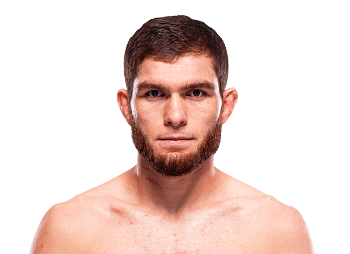
Nurullo Aliev
Fighter Metrics
Victory Methods
Win Round Distribution
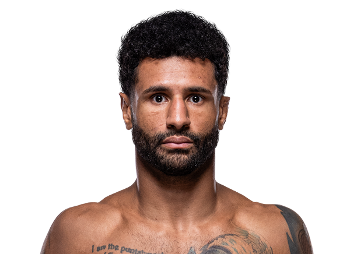
Mike Davis
Fighter Metrics
Victory Methods
Win Round Distribution
📋 Last 5 Fights - Nurullo Aliev
| Date | Opponent | Result | Method |
|---|---|---|---|
| 2025-11-22 | Shem Rock | W | Decision (Unanimous) (R3, 5:00) |
| 2025 | Joe Solecki | W | Decision (Unanimous) (R3, 5:00) |
| 2023 | Rafael Alves | W | Decision (Majority) (R3, 5:00) |
📋 Last 5 Fights - Mike Davis
| Date | Opponent | Result | Method |
|---|---|---|---|
| 2025-07-12 | Mitch Ramirez | W | KO/TKO (Knee + Punches) (R2, 4:08) |
| 2025-02-01 | Fares Ziam | L | Decision (Unanimous) (R3, 5:00) |
| 2024 | Natan Levy | W | Submission (Rear-Naked Choke) (R2, 1:43) |
| 2023 | Viacheslav Borshchev | W | Decision (Unanimous) (R3, 5:00) |
| 2021 | Mason Jones | W | Decision (Unanimous) (R3, 5:00) |
Technical Analysis
Technical Score
Cardio Score
Overall Rating
📊 Technical Score
Calculated as the average of Striking Composite (54.0 vs 60.0) and Grappling Composite (57.0 vs 64.0). Balances overall striking effectiveness with grappling ability to measure complete technical skills. On raw composites Davis grades higher (62.0 vs 55.5), but the cardio and durability pillars invert the picture over three rounds.
💪 Cardio Score
Based on average fight duration, striking rate per minute, takedown rate, and finish rate. Measures cardiovascular endurance and ability to maintain pace throughout fights.
🎯 Overall Rating
Simple average of Technical Score and Cardio Score. Provides a holistic view of fighter capabilities combining skill level with physical conditioning and fight performance.
Striking Composite
Grappling Composite
Technical Radar Comparison
Visual comparison of key performance metrics between both fighters
📊 Detailed Statistical Comparison
🥊 Fight Analysis Breakdown
🧩 Nurullo Aliev Key Advantages
Aliev controls 152 seconds per round to Davis's 81, defends takedowns at 80% to Davis's 69%, and shoots in relentless waves (2.12 TD/15, rank 12/57). He does not need clean conversions—his 19% takedown accuracy is low by design; he out-attempts and out-rides opponents into the cards, exactly how he out-wrestled the credentialed grappler Joe Solecki over fifteen minutes. In a three-round fight, control accumulation and defensive integrity—not per-attempt efficiency—are the decisive grappling metrics, and both belong to the Tajik Eagle.
Davis's path is power—and Aliev is the worst possible target for it. He owns the division's lowest strike absorption (1.63 SApM, rank 1/57), a #2 damage ratio (2.27 vs Davis's 0.90), an Iron chin, and zero career knockdowns against him. The single thing Davis does that ends fights—land the hard, clean shot—is the single thing that has never worked on Aliev. Over three rounds that armor lets him weather the early danger and bank minutes without accumulating the damage that sways judges, all while his 58% striking defense keeps the standup exchanges brief on his way to the mat.
Aliev's output rises as the fight gets deep (his R3 is 153% of his R1) while Davis's craters (59% — the DB's "Fades Late" tag). Their curves cross in Round 2, and from that point the fresher 25-year-old is ascending while the 33-year-old descends. Aliev's 12:24 average fight time, "Strong Finisher" output curve, and 152 control seconds per round are the profile of a man built for the back half—and every minute he drags Davis into a scramble spends the veteran's limited late-round tank. This is the exact mechanism that lost Davis the Ziam fight.
⚠️ Unfavorable Scenarios
Aliev's one untested variable is real power, and his slow start (66.7% of fights) collides with Davis's hot 0% start. If he eats a clean early shot from a man with 8 career knockdowns and 4 first-round finishes before the grind begins, the Iron chin faces its first genuine test at the UFC level—and "we don't know how Aliev responds to adversity" stops being theoretical. Round 1 (10.0 landed, 30.9% accuracy) is the five minutes where his profile is weakest and Davis's is most lethal.
If Aliev's takedowns stall against Davis's 69% defense and underrated scrambling, the fight stays standing—and standing, his near-bottom 2.72 SLpM cannot out-point Davis's 5.83. He would be stuck in a kickboxing match he was never built to win, hesitant to shoot after early counters, ceding volume and the cards to the bigger, cleaner striker. Worse, a lost scramble could hand Davis the back (the Ramirez/Levy template) and turn the veteran into the one threatening the finish.
📋 Likely Gameplan
Accept that Round 1 is the soft round: stay defensively tight (rank-1 absorption is the safety net), refuse the clean early exchange with the power puncher, and survive the opening three minutes intact. Then start chaining takedown attempts. Volume of entries beats clean shots here—his 19% conversion is fine, because the attempts themselves tire Davis, force scrambles, and rack control while his accuracy climbs (40.7% → 45.5% by R3) as he settles into top position.
Push the fight into Rounds 2–3 where he peaks and Davis fades. Maximize ground time (his R2 ground share is 38%), ride position to bank the 152-second-per-round average, and hunt the late submission against a tiring man—Round 3 is his documented sub window (triangle 0.56, guillotine 0.44 tendencies). Above all, never trade with the power puncher: with a 0.00 knockdown average, standing-and-banging is pure downside. His entire edge lives in not being hit.
🚀 Mike Davis Key Advantages
This is the cleanest upset path in the fight, and it requires no projection. Aliev slow-starts 66.7% of the time (R1: 10.0 landed, 30.9% accuracy) while Davis opens at 0% slow—hot and heavy (22.9 landed, R1 knockdown threat, 118 seconds of first-round control). Davis carries 8 career knockdowns and 4 first-round finishes. If he catches Aliev clean in the opening round before the grind begins, he is the one fighter in this matchup with the power to end it outright.
Davis is the more complete offensive fighter by every measure: two inches of height, three of leg reach, +30% striking volume (5.83 vs 2.72 SLpM), better accuracy (52%), and real one-shot power. If Aliev's takedowns stall—and his 19% conversion says many will—the fight stays standing, where Davis banks rounds on volume against a near-bottom output. The Muay Thai tag also undersells his wrestling: he lands takedowns at a higher rate (3.04/15) and cleaner clip (53%), took Ramirez's back and submitted Levy, so he can stuff entries and scramble up rather than concede the grind for free.
⚠️ Unfavorable Scenarios
Davis survives his own hot start without finishing, Aliev warms up, and from Round 2 the fight becomes 194 seconds of control per round while the veteran's tank drains—the Ziam loss on repeat, but against a wrestler instead of a kickboxer. Once Aliev settles on top, Davis's output drops toward zero while the Tajik banks control time and scoring minutes. The longer it goes, the more the 152-vs-81 control gap and the 80% takedown defense compound against him.
Davis's productivity craters from Round 1 to Round 3 (R3/R1 output 59%, "Fades Late"), and his division-worst-tier absorption (6.2 SApM) is amplified by grappling exchanges—being controlled, scrambling, and defending position all burn his limited late tank. He spends his early wrestling capital (118 seconds of R1 control) and has nothing left to stop the entries when it matters in Rounds 2–3. That is exactly the window where Aliev's rising output and lone late-sub threat materialize into a R3 submission or a clean 30-27 / 29-28 grind.
📋 Likely Gameplan
Davis must make Round 1 a referendum on his power before the grind ever begins—heavy hands from the opening bell, the knee-into-the-fence sequence that finished Ramirez, and first-round urgency into a documented slow starter. He should also win, or at least neutralize, the takedown battle: use the 69% takedown defense, hand-fight the entries, and threaten his own offense (back-takes, scrambles) so Aliev cannot ride freely. If he keeps it standing past R1, his striking takes over.
Knowing he fades, Davis should front-load damage and avoid burning energy in prolonged grappling scrambles he cannot sustain—pick efficient, fight-altering moments rather than the 15-minute war of attrition he is statistically built to lose. The subtext of the whole plan is to make Aliev uncomfortable for the first time: land power, force the unbeaten 25-year-old to recover, and exploit the fact that he has never had to fight off his back foot or dig out of danger at the UFC level.
🎯 Fight Prediction Analysis
Data-driven prediction model based on statistical analysis
📊Detailed Analysis Summary
⏱️The Two Clocks
The defining dynamic is a pair of opposing internal clocks. Aliev's runs slow-to-fast: a soft R1 (30.9% accuracy, 10.0 landed), peak control in R2 (194 seconds), then rising output and a submission threat by R3 (15.3 landed, 0.33 sub attempts). Davis's runs fast-to-slow: an explosive R1 (22.9 landed, 118 seconds of control, knockdown danger) followed by a steady decline in his ability to impose (R3/R1 output 59%, control falling to 53–66 seconds). The fight is a race—can Davis cash his front-loaded danger before Aliev's back-loaded grind takes over? The narrow, high-variance pocket where both are near peak is roughly the back half of Round 1, and it holds most of Davis's win equity.
🎯Power vs. Armor
Davis's only fight-ending tool is power (8 knockdowns, 4 first-round finishes), and Aliev is the division's most power-resistant target: rank-1 strike absorption, an Iron chin, zero knockdowns against, a 2.27 damage ratio. That is not a small mismatch—it is why Davis's knockout probability, despite genuine pop, has to be modeled down. Conversely, Aliev's own lack of power (0.00 KD average, rank 51) means he cannot punish Davis for the high absorption (6.2 SApM) that would get most fighters finished; his "punishment" is positional and cumulative—152 control seconds a round, an 80% takedown defense, and a damage ratio of 2.27 vs 0.90 that quietly wins the cards—rather than concussive.
🧩Key Battle Areas
Three things decide it. First, the wrestling battle is genuinely two-way: Davis has the higher takedown rate (3.04/15) and cleaner conversion (53%) and can grapple, so this is no simple "wrestler controls striker" projection—but control is a stamina-and-volume game, and Aliev's edges there (152 vs 81 control seconds, 80% vs 69% defense, rising vs falling control) compound over 15 minutes. Second, chin vs. power: Davis keeps a knockout path alive in every standing minute, but it is aimed at the worst possible chin. Third, the untested question—Aliev has never been hurt, never past a comfortable decision, never met a puncher of this pedigree—which is the live uncertainty that keeps Davis's chance from being dismissible.
🏁Final Prediction
The most likely outcome is Nurullo Aliev by Decision (42%), weathering a dangerous opening, turning the fight into wrestling, and out-controlling a fading Davis to the cards. His submission path (12%) reflects a late triangle or guillotine on a spent veteran in the R3 window, and his KO/TKO path is deliberately tiny (6%)—with a 0.00 KD average he essentially cannot finish by strike. Davis's overwhelming win path is the first-round KO/TKO (22%): 8 career knockdowns and a 0% slow start aimed at Aliev's documented soft opening, capped only by that Iron chin. His decision (12%) is the keep-it-standing, stuff-the-takedowns route, and his submission (6%) is the scramble/back-take variance.
💰 Betting Analysis: Model vs Market
Detailed value assessment in the betting market
📊Market Odds
🤖Analytical Model
💎Value Opportunities
MAXIMUM VALUE
Model: 42% | Market implied: 38.5% — best confidence play
GOOD VALUE
Model: 54% | Market implied: 48.8%
SLIGHT VALUE
Model: ~80% | Market implied: 77.8%
⚠️Key Market Discrepancies
- • Overprices Davis's early KO – Aliev owns the division's best chin (rank-1 absorption, 0 KDs against).
- • Undervalues the damage-ratio gap – 2.27 vs 0.90 quietly drives the cards toward Aliev.
- • Cardio-curve blind spot – Aliev's output rises (153%) as Davis fades (59%) over three rounds.
🎯 Comprehensive Probabilistic Analysis
100 hypothetical fight simulation based on statistical data
🏆Outcome Distribution - Nurullo Aliev
Modal outcome — control time, rising output, out-lasting a fading veteran
Rare — ground-and-pound on a broken opponent (0.00 KD avg)
Late triangle/guillotine on a spent Davis (R3 sub window)
💥Outcome Distribution - Mike Davis
Overwhelming win path — 8 KDs, 4 first-round finishes vs a slow starter
Keep it standing, stuff the takedowns, out-volume over three rounds
Scramble/back-take variance (Levy/Ramirez template)
⏰Fight Timeline Analysis
⚡Window of Opportunity - Mike Davis
- • First round: Highest KO equity into Aliev's 66.7% slow start.
- • Land the power early: 8 career KDs, 0% slow start, hot from the bell.
- • Win the takedown battle: 69% TDDef and back-takes to deny the grind.
🎯Progressive Dominance - Nurullo Aliev
- • Weather, then wrestle: Chain entries and rides for 152 sec/round of control.
- • Never trade: Rank-1 absorption and Iron chin neutralize the power.
- • Escalate late: Rising output (153%) and R3 sub threat close the cards.
🎯 Final Confidence Assessment
Confidence level and uncertainty factors
Confidence Level
Clear multi-factor lean on Aliev, but Davis's R1 power keeps it live
✅Supporting Factors
- • Elite durability: rank-1 absorption, #2 damage ratio (2.27), Iron chin
- • Control gap: 152 vs 81 control sec/round; 80% vs 69% TD defense
- • Cardio inversion: output rises 153% while Davis fades to 59%
- • 12-year age edge (25 vs 33) reinforces every late-round read
⚠️Risk Factors
- • Davis owns the only KO power in the cage (8 KDs, 4 first-round finishes)
- • Aliev slow-starts 66.7% of fights — a real early window
- • Aliev barely tested: 3 UFC fights, never hurt, never in deep water
🏁Executive Summary
Nurullo Aliev's control time, chin, and rising gas tank should decide a three-round grind against a bigger, harder-hitting but aging veteran. The statistical differentials favor Aliev: 152 control seconds per round to Davis's 81, an 80% takedown defense vs 69%, and the division's best strike absorption (rank 1) behind a #2 damage ratio (2.27 vs 0.90). Aliev's output rises (R3 is 153% of R1) while Davis fades (59%), and twelve years of age (25 vs 33) reinforce every late-round read. Davis is the more skilled, more explosive fighter and carries the only knockout power in the cage—but that power is aimed at the worst possible chin, and his losses follow a clean template (the Ziam decision) that Aliev is purpose-built to run, with added wrestling.
Prediction: Nurullo Aliev by Decision most likely (42% probability), weathering a dangerous opening, turning the fight into wrestling, and out-controlling a fading Davis to the cards—with a live late submission path (12%) on a spent veteran; Mike Davis's upset lane is a first-round KO/TKO (22%) into Aliev's documented slow start. Round 1 is the most dangerous five minutes of Aliev's career; from minute six onward, the clock belongs to the 25-year-old.