
Islam Dulatov vs Wellington Turman
Welterweight Bout • UFC Fight Night: Ankalaev vs. Guskov
Saturday, July 25, 2026 • Etihad Arena, Abu Dhabi

Explore Detailed Fighter Profiles
Click on either the fighter's name or profile image for each fighter to access comprehensive UFC statistics including striking metrics, grappling data, clinch performance, complete fight history, offensive & defensive analytics, and round-by-round breakdowns.
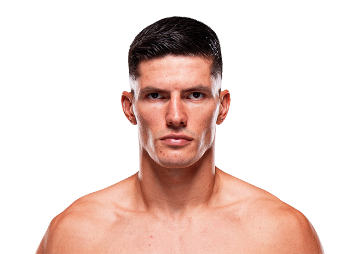
Islam Dulatov
Fighter Metrics
Victory Methods
Win Round Distribution
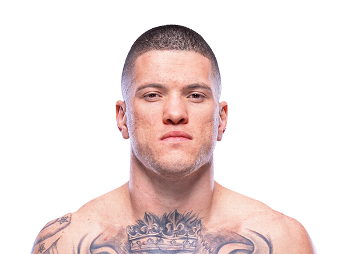
Wellington Turman
Fighter Metrics
Victory Methods
Win Round Distribution
📋 Last 5 Fights - Islam Dulatov
| Date | Opponent | Result | Method |
|---|---|---|---|
| 2025-07-19 | Adam Fugitt | W | KO/TKO (R1, 4:06) |
| 2024-10-05 | Vanilto Antunes | W | KO/TKO (Elbow) (R1, —) |
| — | Regional Opponent | W | Finish (—, —) |
| — | Regional Opponent | W | Finish (—, —) |
| — | Regional Opponent | L | — (—, —) |
📋 Last 5 Fights - Wellington Turman
| Date | Opponent | Result | Method |
|---|---|---|---|
| 2023-12-02 | Jared Gooden | L | Submission (RNC) (R2, 1:11) |
| 2023-06-24 | Randy Brown | L | Decision (Unanimous) (R3, 5:00) |
| 2022-11-12 | Andre Petroski | L | Decision (Unanimous) (R3, 5:00) |
| 2022-02-26 | Misha Cirkunov | W | Submission (Armbar) (R2, 1:29) |
| 2021-08-28 | Sam Alvey | W | Decision (Split) (R3, 5:00) |
Technical Analysis
Technical Score
Cardio Score
Overall Rating
📊 Technical Score
Calculated as the average of Striking Composite (62 vs 35) and Grappling Composite (50 vs 38). Balances overall striking effectiveness with grappling ability to measure complete technical skills.
💪 Cardio Score
Based on average fight duration, striking rate per minute, takedown rate, and finish rate. Measures cardiovascular endurance and ability to maintain pace throughout fights.
🎯 Overall Rating
Simple average of Technical Score and Cardio Score. Provides a holistic view of fighter capabilities combining skill level with physical conditioning and fight performance.
Striking Composite
Grappling Composite
Technical Radar Comparison
Visual comparison of key performance metrics between both fighters
📊 Detailed Statistical Comparison
🥊 Fight Analysis Breakdown
🧩 Islam Dulatov Key Advantages
Dulatov's 75-inch reach and 58% career KO rate attack Turman's two worst numbers directly: a bottom-tier 45% striking defense and a 4.17 SApM, meaning he absorbs more than the divisional average. Turman has already been first-round TKO'd twice (Sanchez, Bruno Silva). A long fighter who throws every shot to finish, matched against a short-range, low-volume grappler who gets hit cleanly and can be stopped, is the cleanest stylistic edge in the entire matchup — and it targets exactly what Dulatov does best.
Dulatov is three years younger and — far more importantly — the active fighter. Turman has not competed in roughly 2.5 years and turns 30 just three days before the bout, while Dulatov fought twice in the last twelve months and finished both inside a round. Rust, timing decay, and a cold gas tank are real variables in a returning veteran's first fight back, and every one of them falls on Turman's side of the cage. The freshness gap quietly compounds the physical mismatch.
The grappler's entire path runs through the mat, but Turman's takedown game is weak: 21% takedown accuracy (4 of 48 attempts) and a 0.4 completion rate in Round 1. If Dulatov owns even average takedown defense, Turman may never get to deploy his one elite skill. Dulatov does not have to be a great wrestler — he only has to stay upright against a poor one. And with five career submission wins of his own, he is not automatically helpless if a scramble does reach the floor.
⚠️ Unfavorable Scenarios
Dulatov overcommits on a finish early, gets dragged into a scramble, and Turman's jiu-jitsu finds a neck or an arm — the Cirkunov-armbar / Gooden-RNC template, only this time Turman is the one finishing. Dulatov's submission defense is entirely unmeasured, so a single bad exchange on the mat against a black belt is the fastest way this fight slips away from the favorite. It is the one scenario the whole upset thesis is built on.
Dulatov's gas tank is a complete unknown — his lone UFC bout lasted four minutes. If he cannot end it in the first two rounds and fades in Round 3, a fresher-feeling Turman can steal the fight on control time and survival, running the Petroski / Randy Brown decision template in reverse. Respecting the grappling too much and fighting tentatively carries its own cost: a low-output but accurate veteran can nick close rounds on the feet if Dulatov becomes hesitant to let his hands go.
📋 Likely Gameplan
Use the three-inch reach edge to attack from outside Turman's range, where his already-low volume and 45% striking defense make him a stationary target. Bank damage early behind the jab and step-in power shots; against a chin that has cracked twice in Round 1, the finish tends to follow. For a fighter whose own cardio is untested, urgency is an asset, not a liability — closing early removes Dulatov's single biggest question mark from the equation.
Defend the early takedown attempts — Turman shoots most in Round 1 (3.2 attempts) and completes almost nothing — stay off the fence, and the fight stays standing, where Dulatov wins. If it does hit the mat, posture and patience beat aggression: do not dive into a black belt's guard chasing a finish. The submission risk is the only thing that can lose Dulatov this fight, so managing it is the whole discipline of his night.
🚀 Wellington Turman Key Advantages
This is the entire upset thesis, and it is legitimate. Turman is a jiu-jitsu black belt with eight career submission wins and a top-third submission rate (0.78 per 15 min). If this fight hits the mat with Turman in any controlling or guard position, he is the more credentialed grappler by a wide margin — and Dulatov's submission defense is completely unmeasured. The Cirkunov armbar is the exact template for how his night can flip a fight he is losing everywhere else.
Nine Octagon bouts, five of them reaching decisions, against credible competition (Petroski, Randy Brown, Cirkunov). Turman has been in deep water repeatedly; Dulatov has never been past four minutes at this level. He is also rarely flash-dropped — the genuine part of the "Iron" chin tag — and reliably reaches the late rounds. If he can survive the opening storm, his been-there composure and championship-distance reps start to tilt the unknowns back in his favor.
⚠️ Unfavorable Scenarios
Dulatov's danger is front-loaded. A long, hard shot from range — the Fugitt / Antunes pattern — landing flush on Turman's 45% striking defense and a chin already stopped twice in Round 1 would simply add a third first-round TKO loss to his ledger. Turman has to weather the opening five minutes; if he is caught cold before he settles, the fight is over long before his grappling ever comes into play.
Turman's one path runs through the mat, but at 21% takedown accuracy against a rangy opponent with the base to stay upright, he may never complete an entry. If the fight stays standing, he gets picked apart at distance by the longer, harder-hitting man while landing only 3.23 strikes a minute himself. Ring rust only widens the gap — a half-step slow on his shots and scrambles, and his already-thin offense disappears entirely.
📋 Likely Gameplan
The entire fight is the takedown. Turman should chain entries, use the clinch — his Round 2 strength — and accept ugly positions to drag the long striker to the floor. Standing, he loses; on the mat, he is the more dangerous man. His submission attempts peak in Round 2 (the Cirkunov window), so every scramble should be hunted toward a back-take or an armbar rather than a stall on top.
Survive the first five minutes — avoid the clean exchange at range — and the fight tilts toward the veteran with every minute a cardio-untested 27-year-old is forced to carry. Turman cannot out-point anyone at 3.23 strikes per minute, so his target is a finish, not a decision: a neck in a scramble, an armbar from guard. Make Dulatov uncomfortable, force clinches, and test the gas tank nobody has seen past four minutes.
🎯 Fight Prediction Analysis
Data-driven prediction model based on statistical analysis
📊Detailed Analysis Summary
🏟️Range & Location
This fight is a referendum on where it takes place. Standing, Dulatov's 75-inch reach and 58% career KO power overwhelm a low-output, leaky-defense opponent who absorbs 4.17 strikes a minute and defends only 45%. On the mat, everything inverts: a jiu-jitsu black belt with eight career submissions becomes the more dangerous man, and length and youth mean nothing once the fight is in his guard. Dulatov wins everywhere the fight is upright; Turman wins almost nowhere else. The favorite's entire job is to keep it standing and avoid the one scramble that hands a black belt his back.
🎯Technical Breakdown
The measurable mismatch is one-directional. Turman is the only fighter we can fully grade, and his numbers are consistent and concerning: low striking volume (3.23 SLpM), bottom-tier striking defense (45%), no knockdown power (0.00 KD), and poor takedown defense (43%), redeemed by exactly one elite area — his submission rate (0.78 per 15 min, top third). Dulatov is a blank analytical row, so there is no comparative column, but his web profile (12-1, 100% finish rate, 58% KO, 75-inch reach) describes precisely the opponent built to exploit Turman's worst numbers: a long, hard puncher attacking a fighter who gets hit cleanly and has already been stopped by strikes twice.
🧩Key Battle Areas
Three questions decide everything. First, can Turman get it to the mat? His 21% takedown accuracy (4 of 48) says probably not often — and if he cannot, his one path closes. Second, can Dulatov defend submissions? Completely unmeasured; if Turman reaches top or back position, this is the only place the favorite can lose. Third, what are Dulatov's cardio and chin past four minutes? Both untested — the longer the fight lasts, the more those unknowns, and the veteran's championship-distance experience, begin to matter.
🏁Final Prediction
The most likely outcome is Islam Dulatov by KO/TKO (36%), attacking from range against a low-output, leaky-defense opponent and finding the same finish that ended Fugitt and Antunes in Round 1. A Dulatov decision (20%) covers the nights he simply out-works a rusty, powerless veteran over three rounds. Wellington Turman's upset lane is his jiu-jitsu — a submission (17%) is his single largest and most credible path, with a grinding, control-heavy decision (15%) behind it. That narrow but real route to the mat is the only reason this projection is a moderate lean rather than an emphatic one.
💰 Betting Analysis: Model vs Market
Detailed value assessment in the betting market
📊Market Odds
🤖Analytical Model
💎Value Opportunities
MAXIMUM VALUE
Model: 65% | Market: 57%
GOOD VALUE
Model: 62% | Fair: -163
SLIGHT VALUE
Model: 76% | Market: 75%
⚠️Key Market Discrepancies
- • Overrates the "Iron chin" tag – Two first-round TKO losses contradict it against a 58% KO puncher.
- • Underprices the youth-and-rust gap – A 30-year-old on a 2.5-year layoff vs an active 27-year-old finisher.
- • Prospect-showcase hype – Live market may shade Dulatov shorter than the 62/38 model.
🎯 Comprehensive Probabilistic Analysis
100 hypothetical fight simulation based on statistical data
🏆Outcome Distribution - Islam Dulatov
Long-range power against a 45% striking defense
Out-works a rusty, powerless veteran over three rounds
Five career subs — can finish in a scramble
💥Outcome Distribution - Wellington Turman
Eight career subs — his single largest win path
Grind control time into a Round 3 he survives to
No knockdown power — chaos or cut-stoppage only
⏰Fight Timeline Analysis
⚡Window of Opportunity - Wellington Turman
- • Survive the first five minutes:Dulatov's danger is front-loaded.
- • Chain takedowns: Use the clinch to drag the long striker down.
- • Hunt the submission: Back-take or armbar in the Round 2 window.
🎯Progressive Dominance - Islam Dulatov
- • Fight long: Tee off from outside a 45% striking defense.
- • Stay vertical: Stuff the weak (21%) takedown entries.
- • Close early: A first-round finish removes the cardio question.
🎯 Final Confidence Assessment
Confidence level and uncertainty factors
Confidence Level
A moderate lean on the fresher, longer, harder-hitting finisher — held with humility about an unmeasured prospect.
✅Supporting Factors
- • 75" reach + 58% KO rate vs a bottom-tier 45% defense
- • Youth-and-rust gap: active 27 vs a 30-year-old on a 2.5-year layoff
- • Turman rarely completes takedowns (21% accuracy)
- • Five career subs close the "just out-grapple him" loophole
⚠️Risk Factors
- • Dulatov is a near-total data void — one UFC bout
- • Turman's submission game is a genuine, live equalizer
- • Dulatov's chin and cardio are untested past four minutes
🏁Executive Summary
We run 100 simulations and see two competing stories. In roughly 62 of them, Islam Dulatov's youth, length, and power decide the night — most often (36) by attacking from range against a low-output, leaky-defense opponent and finding the same kind of finish that ended Fugitt and Antunes in Round 1; less often (20) by simply out-working a rusty, powerless veteran over three rounds. He is the fresher, longer, harder-hitting man, and against an opponent on a three-fight skid returning from a ~2.5-year layoff, that is enough to make him the clear lean. In the other 38, Wellington Turman's jiu-jitsu turns the fight upside down: he survives the early storm, drags the prospect to the mat despite his shaky entries, and finds the neck or the arm his eight career submissions promise — or grinds out a control-heavy decision. The path is narrow, but it is real, and it is the only reason this is a 6 and not an 8.
Prediction: Islam Dulatov by KO/TKO is the most likely single outcome (36%), with a Dulatov decision (20%) close behind; Wellington Turman's upset lane is his submission game (17%). The fight is a referendum on the floor — Dulatov wins everywhere it is upright, Turman almost nowhere else. The favorite must keep it standing and avoid the one scramble that hands a black belt his back.