
Steve Erceg vs Ramazan Temirov
Flyweight Bout • UFC Fight Night: Ankalaev vs. Guskov
Saturday, July 25, 2026 • Etihad Arena, Abu Dhabi

Explore Detailed Fighter Profiles
Click on either the fighter's name or profile image for each fighter to access comprehensive UFC statistics including striking metrics, grappling data, clinch performance, complete fight history, offensive & defensive analytics, and round-by-round breakdowns.
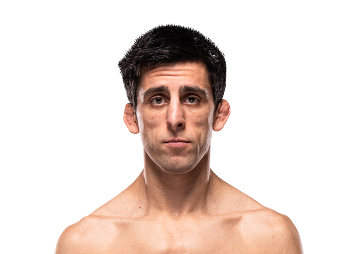
Steve Erceg
Fighter Metrics
Victory Methods
Win Round Distribution
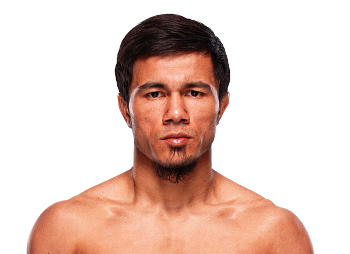
Ramazan Temirov
Fighter Metrics
Victory Methods
Win Round Distribution
📋 Last 5 Fights - Steve Erceg
| Date | Opponent | Result | Method |
|---|---|---|---|
| 2026-05-02 | Tim Elliott | W | Decision (Unanimous) (R3, 5:00) |
| 2025-07-19 | Ode Osbourne | W | Decision (Unanimous) (R3, 5:00) |
| 2025-03-29 | Brandon Moreno | L | Decision (Unanimous) (R5, 5:00) |
| 2024-08-17 | Kai Kara-France | L | KO/TKO (R1, 4:04) |
| 2024-05-04 | Alexandre Pantoja | L | Decision (Unanimous) (R5, 5:00) |
📋 Last 5 Fights - Ramazan Temirov
| Date | Opponent | Result | Method |
|---|---|---|---|
| 2025-02-22 | Charles Johnson | W | Decision (Unanimous) (R3, 5:00) |
| 2024-08-24 | CJ Vergara | W | KO/TKO (R1, 2:50) |
| Pre-UFC | Regional Opponent | W | KO/TKO (—, —) |
| Pre-UFC | Regional Opponent | W | KO/TKO (—, —) |
| Pre-UFC | Regional Opponent | W | KO/TKO (—, —) |
Technical Analysis
Technical Score
Cardio Score
Overall Rating
📊 Technical Score
Calculated as the average of Striking Composite (47.5 vs 52.0) and Grappling Composite (40.5 vs 38.0). Balances overall striking effectiveness with grappling ability to measure complete technical skills.
💪 Cardio Score
Based on average fight duration, striking rate per minute, takedown rate, and finish rate. Measures cardiovascular endurance and ability to maintain pace throughout fights.
🎯 Overall Rating
Simple average of Technical Score and Cardio Score. Provides a holistic view of fighter capabilities combining skill level with physical conditioning and fight performance.
Striking Composite
Grappling Composite
Technical Radar Comparison
Visual comparison of key performance metrics between both fighters
📊 Detailed Statistical Comparison
🥊 Fight Analysis Breakdown
🧩 Steve Erceg Key Advantages
Erceg is the structural backbone of this matchup: a 14:56 average fight time and a "Steady" cardio label (R3/R1 output 95%) against Temirov's "Slight Fade" (71%). In his two championship-distance fights Erceg's production actually rose in deep water — R4 was his busiest round of all (champ output 120%) — while Temirov has never seen a Round 4 and craters to 30.6% accuracy by Round 3. In a three-round fight the back half belongs to the man who doesn't tire, decisively Erceg, and especially so with Temirov carrying roughly 17 months of ring rust from a doping-suspension layoff.
Five inches of reach (68" vs 63"), four inches of height, and a jab he leans on more heavily than almost anyone in his file (jab rate 0.86) let Erceg fight long against a shorter pressure-puncher who has to close distance to land. He mixes in leg kicks (R1 leg-kick rate 18.9%) and head kicks, and — most important — his accuracy climbs every round (39.6% → 49.0% → 51.6%). He is a builder who gets sharper as the fight goes; the longer Temirov has to chase, the cleaner Erceg's outside game becomes.
Erceg controls roughly 36 seconds per round to Temirov's 7, and that number escalates hard — from 18 seconds in R1 to 92 seconds by R3 — behind 87.9% clinch accuracy, 95% ground accuracy, 16 career clinch takedowns and 6 career submission wins. If he wants to neutralize the power, he can drag the fight into the clinch and onto the mat, a phase where Temirov (97.7% standing time, no submission offense or defense on tape) has no documented answer. The optionality in this fight belongs entirely to the technician.
⚠️ Unfavorable Scenarios
Erceg's 20% slow-start tendency intersects dangerously with Temirov's first-round power (KD average 1.50, a 0% slow-start rate). If he calibrates too long and eats a clean head shot in the opening five minutes, his "Good" chin — 4 knockdowns absorbed and a 0% win rate after being dropped — can turn a knockdown into a finish, exactly the Kara-France pattern that produced his only UFC stoppage loss.
Erceg has almost no one-shot power (KD 0.14, roughly rank 28/32) and only modest UFC submission output, while Temirov has never been knocked down in 22 documented fights. That closes off most of Erceg's finishing routes and forces him to out-point a durable man, which raises variance. If he banks rounds but can't put the iron-chinned Temirov away, a single late knockdown could swing a close card on the judges' scorecards.
📋 Likely Gameplan
Respect the first-round power. Erceg should fight long behind the jab and leg kicks, avoid flat-footed mid-range exchanges, and use his five-inch reach to keep Temirov reaching and out of the inside pocket where his power lands. Get to minute six clean and the math flips hard: his accuracy climbs, his control builds, and Temirov's fade and 17-month rust begin to bite.
By Rounds 2 and 3 Erceg should lean on his documented pattern (control 18s → 92s), dragging the iron-chinned puncher into the one phase he has never fought in. Bank control time, invest in the body (his body targeting rises to 31% late), and pour on volume as Temirov's accuracy collapses. He shouldn't headhunt for a finish he doesn't own — the cards are his to win over 15 minutes.
🚀 Ramazan Temirov Key Advantages
This is the whole case, and it is a serious one. Temirov's knockdown rank is 1/32 in the flyweight division, built on a 58% career KO rate (11 knockouts) and a genuine fight-ending punch. Erceg's chin is only "Good" — 4 knockdowns absorbed, a 0% win rate after being dropped, and a clean R1 KO loss to Kara-France on tape. Every minute the fight stays a striking exchange, Temirov carries a live, one-punch path that can erase everything else on the scorecards.
Temirov has never been dropped (Iron chin, 0 knockdowns absorbed), and he pairs that durability with top-tier volume (SLpM 4.37, rank 8/32) and top-tier defense (StrDef 59%, rank 8/32) — he throws more and gets hit less than the division norm. That Iron chin also removes Erceg's most realistic finish. If this stays a pure kickboxing match at range, his output and power give him a real lane to bank the early rounds and hunt the knockout.
⚠️ Unfavorable Scenarios
Temirov's round-by-round profile has no grappling component in any direction — 4, 3, and 17 control seconds across three rounds, zero submission attempts, 97.7% standing time. If Erceg makes this a clinch-and-control fight (92 seconds of R3 control, body work, mat returns), Temirov has no documented answer and no counter-offense from his back, and he can drop two of three rounds without ever getting the striking match he needs.
Temirov's cardio is the mirror image of his power: front-loaded and declining. His documented R3 is a drop-off — output falls from 22.0 to 15.0 and accuracy nearly halves to 30.6% — and he is layering a ~17-month competitive layoff on top. If the first round passes without a finish, the deep waters are the last place he wants to be against a fade-proof, high-volume opponent.
📋 Likely Gameplan
Temirov's entire edge is front-loaded, so he should make Round 1 a firefight — pressure, let the hands go, and test Erceg's chin while the legs and timing are fresh. His KD average is 1.50 in the first round and his power is real (the Vergara R1 KO lives here). If he ends this fight, it is almost certainly in the first five minutes, before his cardio and 17 months of rust become factors.
To land the power he has to close the five-inch reach gap — cut the cage, force mid-range exchanges, and drag Erceg out of his long-range comfort zone. Just as important, he must stay vertical at all costs: with 7 control seconds per round and no ground game, he cannot afford to be clinched or taken down. Sprawl, frame, reset to space, and pace the output to avoid the R3 collapse the data shows.
🎯 Fight Prediction Analysis
Data-driven prediction model based on statistical analysis
📊Detailed Analysis Summary
🏟️Range & Timing Dynamics
Strip this fight to its core and it is a timing race. Erceg's five-inch reach and four-inch height let him fight long, jab from outside, and kick from a range Temirov has to close to be effective — while the shorter, compact pressure-puncher must walk into that disadvantage to land the power that defines his game. Temirov's win equity is concentrated almost entirely in the first round (KD average 1.50, a fast start, the Vergara R1 finish); Erceg's grows every minute (accuracy 39.6% → 51.6%, control 18s → 92s, Steady cardio, championship output that rises). The internal clock is clean: Temirov must finish early, Erceg must survive early, and whoever imposes his preferred timeline wins.
🎯Technical Breakdown
On the pure technical composites these two are essentially level — 45.0 for Temirov, 44.0 for Erceg — a dead heat where Temirov's volume-and-power striking and Erceg's accuracy-and-control game cancel out on the raw formula. The separation comes from two other dimensions. First, the chin asymmetry: Temirov has never been knocked down (Iron, KD rank 1/32) while Erceg's chin is only "Good" and cracked once, with a 0% recovery rate — which keeps Temirov's puncher's chance live for 15 minutes and simultaneously closes off most of Erceg's finishing routes. Second, the control edge: Erceg's game converges on the clinch (92 R3 control seconds, 87.9% clinch and 95% ground accuracy, 6 career subs) against a man with 7 control seconds a round and no grappling on tape.
🧩Key Battle Areas
Three battle areas decide it. First, the opening five minutes — Temirov's R1 kill window (KD 1.50, fast start) against Erceg's 20% slow-start tendency and breakable chin; it is the single most dangerous stretch of Erceg's night. Second, the fade-and-rust convergence — Erceg is Steady (R3/R1 95%) and climbs in deep water, while Temirov is a documented "Slight Fade" (71%, accuracy nearly halving to 30.6% by R3) layering a ~17-month layoff on top; both erode late and against pressure. Third, level and archetype — Erceg has gone championship distance with a reigning champ, a former champ, and a title-challenger, while Temirov has zero elite fights, and the Technical Striker beats the Striker 61% of the time across 362 fights.
🏁Final Prediction
The most likely outcome is Steve Erceg by Decision (38%), the single most data-supported path: a 14:56 average fight time, Steady cardio that out-lasts a fader, the only control game in the cage, and an Iron-chinned opponent he probably can't finish. His submission path (16%) rests on 6 career subs, 92 seconds of R3 control, and 95% ground accuracy against zero grappling defense; his KO/TKO path is deliberately low (8%). Ramazan Temirov's entire upset lane is his power — a 24% KO/TKO built on a division-best knockdown rank (1/32) and a fast-starting R1 window — with a thin 13% decision path if he banks the early rounds and survives his own fade. The fight is decided by the clock: Temirov must end it early, and almost everything else says Erceg is built to drag it deep.
💰 Betting Analysis: Model vs Market
Detailed value assessment in the betting market
📊Market Odds
🤖Analytical Model
💎Value Opportunities
MAXIMUM VALUE
Model: 38% | Implied: 36.4%
GOOD VALUE
Model: ~67% | Implied: 63.0%
SLIGHT VALUE
Model: 24% | Implied: 25.0%
⚠️Key Market Discrepancies
- • Undervalues the cardio + rust gap – Erceg is Steady; Temirov fades and is 17 months out.
- • Iron chin removes Erceg's KO path – Weight shifts to the decision, boosting Over 2.5.
- • Thin Temirov sample – Two UFC fights leave his true ceiling genuinely unknown.
🎯 Comprehensive Probabilistic Analysis
100 hypothetical fight simulation based on statistical data
🏆Outcome Distribution - Steve Erceg
Primary path — out-points a durable, tiring man over 15 min
Suppressed by an iron chin — a late TKO at most
6 career subs, 92s R3 control, 95% ground accuracy
💥Outcome Distribution - Ramazan Temirov
His entire case — KD rank 1/32, 58% career KO rate, R1 power
Requires banking early rounds and surviving his own fade
1 career sub win, no UFC ground game
⏰Fight Timeline Analysis
⚡Window of Opportunity - Ramazan Temirov
- • First five minutes: Highest KO equity — KD 1.50, fast start.
- • Cut the cage: Close the five-inch reach, force the pocket.
- • Find the chin: Erceg dropped before — 0% recovery after knockdowns.
🎯Progressive Dominance - Steve Erceg
- • Survive Round 1: Fight long behind the jab and leg kicks.
- • Escalate control: 18s → 92s; grind the iron-chinned puncher.
- • Win the back half: Steady cardio vs Slight Fade + 17-month rust.
🎯 Final Confidence Assessment
Confidence level and uncertainty factors
Confidence Level
A clear but measured lean — an iron-chinned puncher caps conviction
✅Supporting Factors
- • Structural cardio/experience gap — Steady vs Slight Fade, Elite SOS vs zero elite fights
- • The only Plan B in the cage — 36 vs 7 control seconds
- • Archetype tailwind — Technical Striker beats Striker 61%
- • More accurate, longer, busier vs a 17-month layoff
⚠️Risk Factors
- • Iron chin (KD rank 1/32) keeps a one-punch finish live
- • Erceg's "Good" chin: 4 KD absorbed, 0% recovery
- • His 20% slow start meets Temirov's R1 power window
🏁Executive Summary
Across 100 simulations the recurring story is a timing race that the technician usually wins. In roughly 62 of them Steve Erceg navigates Temirov's first-round power, settles into his range-and-rhythm game as his accuracy climbs, escalates to the clinch and control by the late rounds, and out-works a fading, rusty puncher — most often to a clear decision (38%), occasionally finishing late off accumulated control and ground work (16%), and rarely catching a knockout his modest power doesn't usually produce (8%). The cardio gap, the experience gap, the control game, and the archetype tailwind all compound the same direction over 15 minutes. In the other 38, Temirov's power writes a shorter story: he cuts the cage, forces the mid-range firefight, and finds Erceg's breakable chin while his own legs are fresh — most often (24%) by early knockout, less often (13%) by banking the early rounds and surviving to a decision.
Prediction: Erceg by Decision most likely (38%) as he out-points a durable, tiring man over 15 minutes; Temirov's upset lane is an early KO/TKO (24%) built on a division-best knockdown rank and a fast-starting first round. The data gives Erceg the broader, more durable edge — but Temirov carries the one weapon that can erase all of it in a single exchange, and that makes the first round the most dangerous five minutes of Steve Erceg's night.