
Mark Vologdin vs Josias Musasa
Bantamweight Bout • UFC Fight Night: Medic vs. Rodriguez
Saturday, August 1, 2026 • Belgrade Arena, Belgrade, Serbia
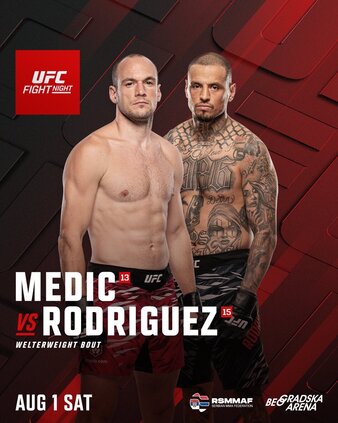
Explore Detailed Fighter Profiles
Click on either the fighter's name or profile image for each fighter to access comprehensive UFC statistics including striking metrics, grappling data, clinch performance, complete fight history, offensive & defensive analytics, and round-by-round breakdowns.
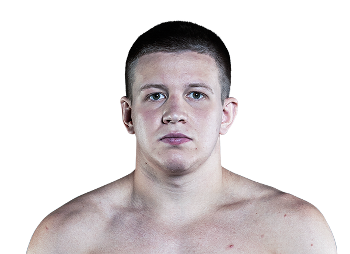
Mark Vologdin
Fighter Metrics
Victory Methods
Win Round Distribution
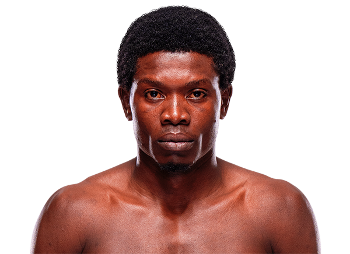
Josias Musasa
Fighter Metrics
Victory Methods
Win Round Distribution
📋 Last 5 Fights - Mark Vologdin
| Date | Opponent | Result | Method |
|---|---|---|---|
| 2026-04-18 | John Castaneda | D | Majority Draw (R3, 5:00) |
| 2025-06-01 | Cleiton Monteiro | W | Submission (AFN Title) (—, —) |
| 2024-10-01 | Renan Baptista | W | KO/TKO (AFN Title) (—, —) |
| 2024-03-01 | Ricardo Monteiro | W | KO/TKO (Vacant AFN Title) (—, —) |
| 2023-06-01 | Regional Opponent | W | Finish (—, —) |
📋 Last 5 Fights - Josias Musasa
| Date | Opponent | Result | Method |
|---|---|---|---|
| 2025-09-27 | Colby Thicknesse | L | Decision (Unanimous) (R3, 5:00) |
| 2025-03-15 | Carlos Vera | L | Submission (RNC) (R1, 3:16) |
| 2024-09-01 | DWCS (Contender Series) | W | KO/TKO (R1, —) |
| 2023-06-01 | Regional Opponent | W | KO/TKO (R1, —) |
| 2022-06-01 | Regional Opponent | W | KO/TKO (R1, —) |
Technical Analysis
Technical Score
Cardio Score
Overall Rating
📊 Technical Score
Calculated as the average of Striking Composite (66.0 vs 66.0) and Grappling Composite (78.0 vs 55.0). Balances overall striking effectiveness with grappling ability to measure complete technical skills.
💪 Cardio Score
Based on average fight duration, striking rate per minute, takedown rate, and finish rate. Measures cardiovascular endurance and ability to maintain pace throughout fights.
🎯 Overall Rating
Simple average of Technical Score and Cardio Score. Provides a holistic view of fighter capabilities combining skill level with physical conditioning and fight performance.
Striking Composite
Grappling Composite
Technical Radar Comparison
Visual comparison of key performance metrics between both fighters
📊 Detailed Statistical Comparison
🥊 Fight Analysis Breakdown
🧩 Mark Vologdin Key Advantages
Musasa carries the division's second-worst striking defense — 36%, rank 51 of 52 — and absorbs 4.39 significant strikes per minute, more than he lands. A forward Kyokushin finisher with six career KO wins is the exact archetype built to punish that. Every time Vologdin closes the distance he throws into the leakiest guard in the weight class, and the zero UFC knockdowns on Musasa's ledger say his power has deterred no one at this level.
Vologdin's four career submission wins matter enormously, because Musasa was rear-naked-choked by Carlos Vera in the first round of his UFC debut. Add the two takedowns Vologdin scored on John Castaneda and every clinch, scramble, and hurt sequence carries a finishing threat Musasa cannot reciprocate — he owns zero career submissions. A striker who can also strangle you is the worst possible style for a man who has already been tapped once.
Vologdin's lone Octagon appearance was a competitive majority draw with the established John Castaneda — a result swung by a point deduction — while Musasa is 0-2 and reeling at the UFC level. Vologdin has proven he can compete here; Musasa has proven he loses here. And Vologdin's Kyokushin base, with a 37-inch leg reach and iron-shin checking, is purpose-built to neutralize Musasa's signature Round-1 leg-kick opener (52% of his early strikes).
⚠️ Unfavorable Scenarios
If Musasa fights long and disciplined — teep, jab, long knee, leg kick from the outside — he can keep a 5'3" pressure fighter perpetually a half-step short and bank rounds at range. Nine inches of reach and five inches of height are the rawest physical gap in the fight; this is the extended, out-positioned dynamic that cost Vologdin the third round against Castaneda, now stretched across an even longer, rangier opponent.
Vologdin's 14% takedown accuracy and his inability to keep Castaneda grounded suggest his entries are containable. If Musasa leans on his 81% takedown defense, refuses the scramble, and keeps the fight standing, the submission threat never activates — and a natural flyweight's power may simply fail to move a durable, full-sized bantamweight who took a three-round war with Colby Thicknesse to a hospital and kept standing.
📋 Likely Gameplan
A 5'3" fighter must cut the cage and enter off feints and level changes rather than walk into the jab and teep. Vologdin should use Kyokushin footwork and forward pressure to close on angles, then attack the body and legs to drag the taller man down to his level and turn it into a phone-booth fight where the reach stops mattering.
Against a man with no submission-defense pedigree and a prior rear-naked-choke loss, every tie-up and every hurt sequence is a finishing opportunity — Vologdin should wrestle to submit, not to score points. And because his cardio dipped late against Castaneda, he should treat Rounds 1 and 2 as his finishing window and force the issue before Musasa's steady, no-fade third round arrives.
🚀 Josias Musasa Key Advantages
Musasa is a 5'8" bantamweight carrying a remarkable 74-inch reach — a +9" edge over Vologdin and one of the longest frames at 135. Long teeps, jabs, knees, and leg kicks from the outside can keep a short pressure fighter perpetually a half-step short. If he fights disciplined and never lets the shorter man set his feet inside, the reach alone banks rounds — it is the single biggest structural factor on the board.
Musasa's 81% takedown defense looks excellent on paper against a wrestler completing just 14% of his shots, and it can force Vologdin to win on the feet at a reach deficit. His cardio is a quiet asset too — Round-3 output actually rises to 108% of Round 1 with zero slow starts — so in the championship-minutes equivalent of a 15-minute fight, the steadier man is across the cage from an opponent who faded late against Castaneda.
⚠️ Unfavorable Scenarios
If Vologdin closes the gap early, the rank-51 striking defense does exactly what the data says it will — a clean blitz lands, and Musasa's "Good but hurtable" chin (two knockdowns absorbed, 0% recovery) is waiting. His power has produced zero UFC knockdowns while he has been dropped twice, so the exchange math in the pocket runs sharply against him.
A clinch or a scramble becoming a submission is the nightmare that has already happened once — the Vera rear-naked choke — and Vologdin owns four career submission wins to repeat it. Even in a grinding volume war like the Thicknesse fight, the difference here is that the more diverse finisher across from him can actually end it the moment Musasa is hurt.
📋 Likely Gameplan
The reach is the whole gameplan. Musasa should teep, jab, and throw the long knee and leg kick from the outside, never letting the short man plant his feet inside. He must check the entries and counter the blitz — meet Vologdin as he lunges to land, and make the nine inches of reach count on every exchange.
Musasa should lean on his 81% takedown defense, refuse the scramble, and keep the fight where a submission cannot happen. If it is close after two rounds, the steadier man should press the championship-minutes equivalent — his output rises late while Vologdin fades — and steal the decision on the cards.
🎯 Fight Prediction Analysis
Data-driven prediction model based on statistical analysis
📊Detailed Analysis Summary
🏟️Cage Dynamics
This fight is a clean collision of two opposite truths. Musasa owns the structural advantage — a nine-inch reach, a five-inch height edge, 81% takedown defense, and no-fade cardio — while Vologdin owns the flaw's natural predator: a forward, two-way Kyokushin finisher with real submission wins. The whole night reduces to one question: does range keep the strikes on the outside, or does pressure drag them into the pocket where Musasa's rank-51/52 guard fails?
🎯Technical Breakdown
Only one fighter here is measured. Musasa lands 3.19 significant strikes per minute and absorbs 4.39 — outstruck in his own fights — with a 36% striking defense that ranks 51st of 52 bantamweights and zero UFC knockdowns. His one on-paper strength, 81% takedown defense, is undercut by the very fight (the Vera RNC) that shows his neck is available in a scramble. Vologdin is a data void filled with web research and labeled as estimates, but his diverse, finishing-level résumé (6 KO + 4 submissions) targets Musasa's exact holes.
🧩Key Battle Areas
Three areas decide it: whether Vologdin's pressure can beat the nine-inch reach; whether a natural flyweight's power translates against a durable full-sized bantamweight; and how much of Vologdin — an unmeasured fighter — the model simply cannot see, which widens the error bars on his side. The Castaneda tape says beating the reach is hard but not impossible, and the Vera tape says the submission path is live the moment the fight hits the mat.
🏁Final Prediction
The single most likely outcome is Vologdin by KO/TKO (24%), built directly on Musasa's division-worst striking defense and hurtable chin meeting a six-KO Kyokushin finisher. His submission path (14%) attacks the exact hole that already cost Musasa a fight, suppressed only by the 81% takedown defense that makes the entry hard. Musasa's best lane is a decision (20%) — control range, stuff the shots, and lean on no-fade Round-3 cardio against a fader — with his own reach-aided KO (22%) close behind.
💰 Betting Analysis: Model vs Market
Detailed value assessment in the betting market
📊Market Odds
🤖Analytical Model
💎Value Opportunities
MAXIMUM VALUE
Model: 73% | Implied: 68.8%
GOOD VALUE
Model: 64% | Implied: 64.3%
SLIGHT VALUE
Model: 54% | Implied: 55.6%
⚠️Key Market Discrepancies
- • Overbets the early finish – Both men's recent UFC bouts went the distance; the reach standoff forces a feeling-out period.
- • Undervalues the defensive collapse – Musasa's rank-51/52 striking defense is the most exploitable trait on the board.
- • Overrates the tape measure – The nine-inch reach only pays if Musasa keeps it outside; forward pressure erodes it.
🎯 Comprehensive Probabilistic Analysis
100 hypothetical fight simulation based on statistical data
🏆Outcome Distribution - Mark Vologdin
Banks early rounds before the late fade
Closes the distance into the leakiest guard in the division
Scramble and clinch chokes vs a prior RNC victim
💥Outcome Distribution - Josias Musasa
Reach-aided power on a forward-pressing shorter man
Fights long, stuffs shots, steals a no-fade Round 3
Zero career submission wins
⏰Fight Timeline Analysis
⚡Window of Opportunity - Josias Musasa
- • Own the range: Teep, jab, and long knee from the outside.
- • Stuff the shots: Lean on 81% takedown defense; refuse the scramble.
- • Pour it on late: No-fade Round 3 (108% output) versus a fader.
🎯Progressive Dominance - Mark Vologdin
- • Close on angles: Cut the cage; enter off feints, not straight lines.
- • Attack the guard: Fire into rank-51/52 defense every time inside.
- • Hunt the choke: Every scramble threatens the neck of a prior RNC victim.
🎯 Final Confidence Assessment
Confidence level and uncertainty factors
Confidence Level
Low-conviction lean; one fighter is unmeasured and out-reached
✅Supporting Factors
- • Only measured fighter has rank-51/52 striking defense
- • More diverse finisher: 6 KO + 4 submissions
- • Submission game targets Musasa's prior R1 RNC loss
- • Better UFC-level result: a competitive Castaneda draw
⚠️Risk Factors
- • Vologdin is a data void — no computed DB metrics
- • Nine-inch reach + 81% takedown defense for Musasa
- • Undersized at 135; late fade vs a no-fade Round 3
🏁Executive Summary
Mark Vologdin's forward Kyokushin pressure and two-way finishing should keep dragging the fight into the pocket, where Josias Musasa's rank-51-of-52 striking defense and hurtable chin are waiting, while Musasa's best equity is the nine-inch reach and a no-fade third round that let him fight long and steal rounds at distance. The measured picture is damning for the man with the knockout nickname: 3.19 landed versus 4.39 absorbed, 36% striking defense, zero UFC knockdowns, and an 0-2 Octagon record. Vologdin is the unmeasured but more decorated finisher — six KO and four submissions — whose submission game attacks the exact hole (a Round-1 RNC to Carlos Vera) that has already cost Musasa a fight.
Prediction: Vologdin by KO/TKO is the single largest path (24%), with a live submission lane (14%) into a prior choke victim; Musasa's best routes are a range-controlled decision (20%) and his own reach-aided KO (22%). It is a genuine coin-flip we lean 54%-46% to Vologdin, held with real humility — the reach says Musasa, but the defense, the submission loss, and the more diverse finisher say Vologdin, and on August 1 in Belgrade we side cautiously with the man built to punish the flaw.