
Rei Tsuruya vs Kevin Borjas
Flyweight Bout • UFC Fight Night: Nurmagomedov vs. Song
Saturday, August 29, 2026 • SPD Bank Oriental Sports Center, Shanghai
Explore Detailed Fighter Profiles
Click on either the fighter's name or profile image for each fighter to access comprehensive UFC statistics including striking metrics, grappling data, clinch performance, complete fight history, offensive & defensive analytics, and round-by-round breakdowns.
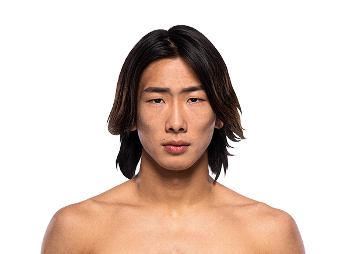
Rei Tsuruya
Fighter Metrics
Victory Methods
Win Round Distribution
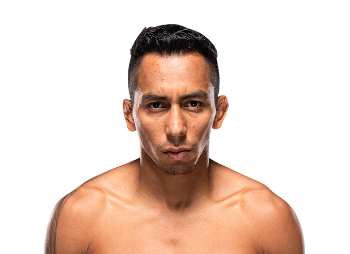
Kevin Borjas
Fighter Metrics
Victory Methods
Win Round Distribution
📋 Last 5 Fights - Rei Tsuruya
| Date | Opponent | Result | Method |
|---|---|---|---|
| 2026-05-30 | Luis Gurule | W | Submission (RNC) (R1, 3:19) |
| 2025-03-08 | Joshua Van | L | Decision (Unanimous) (R3, 5:00) |
| 2024-06-29 | Carlos Hernandez | W | Decision (Unanimous) (R3, 5:00) |
| 2024-02-03 | Jiniushiyue | W | KO/TKO (R1, 4:59) |
| 2023-08-27 | Mark Climaco | W | Decision (Unanimous) (R3, 5:00) |
📋 Last 5 Fights - Kevin Borjas
| Date | Opponent | Result | Method |
|---|---|---|---|
| 2026-06-20 | Andre Lima | W | Decision (Unanimous) (R3, 5:00) |
| 2026-02-28 | Imanol Rodriguez | L | KO/TKO (R2, 4:21) |
| 2025-08-23 | Sumudaerji | L | Decision (Unanimous) (R3, 5:00) |
| 2025-03-29 | Ronaldo Rodríguez | W | Decision (Unanimous) (R3, 5:00) |
| 2024-05-04 | Alessandro Costa | L | KO/TKO (R2, 1:35) |
Technical Analysis
Technical Score
Cardio Score
Overall Rating
📊 Technical Score
Calculated as the average of Striking Composite (52 vs 41) and Grappling Composite (58 vs 29). Balances overall striking effectiveness with grappling ability to measure complete technical skills.
💪 Cardio Score
Based on average fight duration, striking rate per minute, takedown rate, and finish rate. Measures cardiovascular endurance and ability to maintain pace throughout fights.
🎯 Overall Rating
Simple average of Technical Score and Cardio Score. Provides a holistic view of fighter capabilities combining skill level with physical conditioning and fight performance.
Striking Composite
Grappling Composite
Technical Radar Comparison
Visual comparison of key performance metrics between both fighters
📊 Detailed Statistical Comparison
🥊 Fight Analysis Breakdown
🧩 Rei Tsuruya Key Advantages
Tsuruya owns five career submission wins and a 2.01 sub/15 rate — a diversified choke-and-lock arsenal — against a man with zero submission wins, 0.00 sub offense, and no documented submission-defense pedigree. If this fight touches the mat with Tsuruya on top, it is a finishing situation, not a scramble. His first-round rear-naked choke of Luis Gurule is the blueprint, and Borjas — who cannot threaten a submission of his own if it hits the canvas — offers the softest possible target for it.
Tsuruya lands 54% of his significant strikes and absorbs just 1.91 per minute; Borjas absorbs 5.27 — a division-high torrent that has already cost him two second-round stoppages. In any exchange that stays technical rather than chaotic, Tsuruya is the cleaner, more economical fighter, and — decisively — he does not have to win the volume war to win the rounds. His level-change threat forces Borjas to fight cautiously, and his low 1.91 absorption means the accurate karate counters cost him almost nothing in return.
Four years younger and on the front end of his prime, Tsuruya carries the far better résumé of opposition — his only professional loss is a competitive decision to Joshua Van, the reigning flyweight champion, whom he took the full 15 minutes. Borjas is 2-4 in the Octagon against a more ordinary spread. And Tsuruya can win three ways — by submission, by ground-and-pound TKO, or by grinding decision — against a man with realistically one (the knockout). A fighter with three lanes against a fighter with one enjoys a structural probability edge over 15 minutes.
⚠️ Unfavorable Scenarios
If Tsuruya respects Borjas's power too much, hangs on the outside instead of committing to the level changes, and lets the more voluminous striker (3.87 vs 2.40 SLpM) bank three close rounds standing, his single biggest edge — the grappling — never operates. Or he shoots into the 73% takedown defense without setting it up, gets stuffed and reversed to the fence, and burns energy on failed entries while eating counters. A cautious grappler who refuses to engage his own game is exactly how Borjas steals it.
His low-handed karate posture (43% striking defense) invites a clean Round-1 overhand right — the shot Borjas has finished eight men with — before his grappling rhythm is established. Tsuruya has never been knocked out, but his UFC chin is untested against a puncher of this pedigree, and Round 1 is the highest-variance window in the fight. Eat the fresh power early, and the prospect's whole three-lane advantage never gets the chance to unfold.
📋 Likely Gameplan
Use the karate entries to set up level changes, not to win a kickboxing match. Feint high, change levels, and make Borjas's 73% takedown defense work on every exchange — the volume of attempts beats that defense over 15 minutes, and he only needs to convert a minority of his entries to swing the fight. Keep the hands honest and the chin off the centerline: the one way to lose is to get clipped by the overhand, so angle off after every entry.
Once the fight hits the mat, pass, flatten, and attack the neck — Borjas has no submission-defense pedigree and Tsuruya has five finishes doing exactly this. Then bank the middle rounds: Borjas fades and gets found in Round 2 (both his UFC KO losses landed there), so press the pace, force the grappling exchanges, and let the younger tank and the takedown attrition compound. If the finish isn't there, control time and accuracy win the rounds — don't force it into danger.
🚀 Kevin Borjas Key Advantages
This is the number that keeps Borjas live. His division-above-average 73% takedown defense can strand Tsuruya's entire grappling game on the outside. If Borjas stuffs the level changes and forces a striking match, he erases Tsuruya's single biggest edge and drags the fight into his own world — a competitive kickboxing bout where his power and volume are live and the prospect's untested chin hangs over every exchange. The composite gap (58 vs 29) says who wins if it hits the mat; the 73% says whether it hits the mat at all.
Borjas's 0.49 knockdown average, heavy overhand right, and 8 career KOs meet a karate striker who carries his hands low and defends only 43% of strikes. Tsuruya has never been knocked out — but he can be hit, and Borjas is the hardest single puncher he has faced. That power is at its peak in Round 1, before the cut and the absorption tax catch up, and it is his primary and nearly only path: one clean overhand in the pocket, and the veteran turns back the prospect before the grappling ever gets going.
⚠️ Unfavorable Scenarios
His takedown defense holds for a round but erodes under repeated pressure; Tsuruya gets top position in Round 2, passes, and finishes with the rear-naked choke — a straight replay of the Gurule finish. Borjas has zero submission defense to fall back on and no offense off his back, so once the grappling world opens up, there is no counter available. The 73% defense only has to fail once across 15 minutes of persistent entries.
He cannot hurt Tsuruya early, the fight becomes a grind, and his chin fails in Round 2 for the third time in his recent run — a ground-and-pound TKO on a fatiguing, over-absorbed veteran. Or the weight cut (a three-pound miss last time, rehydrating from near 170) hollows out his power and gas: he eats accurate counters all night against Tsuruya's 54% accuracy and drops a clear decision without ever landing the one equalizer his entire game depends on.
📋 Likely Gameplan
The 73% takedown defense is the whole fight, so Borjas must sprawl, frame off the cage, get up immediately, and refuse to let Tsuruya establish top position. Every minute vertical is a minute he can win. When the level changes come, meet them with knees and uppercuts and punish the failed shots — turn the grappler's entries into striking opportunities rather than surrendering the takedown that hands Tsuruya his entire game.
Round 1 is his best window — freshest power against a low-handed target before Tsuruya's grappling rhythm sets, so hunt the fight-changing overhand while he is at his most explosive. If the KO isn't there, out-work the low-volume Tsuruya standing (3.87 vs 2.40 SLpM) to bank rounds — but manage the gas and the chin. His two Round-2 KO losses are the cautionary tape; pick spots, stay defensively responsible, and don't fade into the danger window.
🎯 Fight Prediction Analysis
Data-driven prediction model based on statistical analysis
📊Detailed Analysis Summary
⚖️The Takedown-Defense Gate
Everything in this fight routes through Borjas's 73% takedown defense — the one number standing between Tsuruya and his dominant grappling world. The physical tape is a near-perfect mirror: identical 68" reach, identical 36" leg reach, both orthodox, and a single inch of height separating them. Nothing about frame or length decides this. If the takedown defense holds, it is a competitive striking match where Borjas's power is live and the prospect's untested chin is a question. If it fails — and 73% means it fails more than a quarter of the time, against a persistent grappler making repeated entries over 15 minutes — Tsuruya reaches the position where Borjas has no answer at all.
🎯Technical Breakdown
The table splits along a clean axis. Tsuruya owns the control markers: accuracy (54% vs 43%), low absorption (1.91 vs 5.27 SApM), submission threat (2.01 sub/15 and five career finishes against zero), youth, and quality of competition. Borjas owns the danger markers: raw volume (3.87 vs 2.40 SLpM), one-shot power (0.49 KD, 8 career KOs), and the elite 73% takedown defense. Two numbers read together are the whole fight: Borjas absorbs 5.27 significant strikes per minute — extremely hittable — but defends 73% of takedowns — extremely hard to ground. The first is bad news standing; the second is his lifeline. Composites: Tsuruya ~52 striking / ~58 grappling, Borjas ~41 / ~29 (all estimated, web-sourced).
🧩The Chin Question & the Weight Miss
Borjas has been knocked out twice in his 2-4 UFC run, both in Round 2 — the single most important durability data point in the fight, and it points against him: a determined opponent who survives the early power and presses into the middle rounds can break him. The coin has a Tsuruya side too — his own chin is untested against a puncher of this pedigree — but the accumulation threat runs one way. Compounding it: Borjas's best recent win (over Andre Lima) came with a three-pound weight miss while rehydrating from near 170. A made-weight Borjas at 125 may be a drained, less durable version — exactly the wrong condition for a fight whose whole task is surviving the grind.
🏁Final Prediction
The single most likely outcome is Rei Tsuruya by decision (37%) — his takedown attrition, top control, and superior accuracy bank rounds against a hittable, fading opponent even when the finish doesn't come. His submission path (23%) is elevated and genuine: Borjas has zero submission-defense pedigree, and every grounded exchange is a live finish for a five-time submission winner. His KO/TKO (5%) is modest — his stoppage power is positional, not one-shot. Borjas's 16% KO/TKO is his primary and nearly only path — genuine overhand power against a low-handed target, concentrated in Round 1. His decision (19%) is the harder win, where the 73% TDD holds and his volume banks the cards; his submission is an honest 0% — zero career subs, no path.
💰 Betting Analysis: Model vs Market
Detailed value assessment in the betting market
📊Market Odds
🤖Analytical Model
💎Value Opportunities
MAXIMUM VALUE
Model: 23% | Fair: +335
GOOD VALUE
Model: 37% | Fair: +170
SLIGHT VALUE
Model: 56% | Fair: -127
⚠️Key Market Discrepancies
- • Submission equity underpriced – Zero sub-defense pedigree for Borjas vs a five-time finisher.
- • 73% TDD is a gate, not a wall – Persistent entries convert enough over 15 minutes to swing it.
- • Chin-and-fade underweighted – Borjas KO'd twice in Round 2; the middle rounds favor the grinder.
🎯 Comprehensive Probabilistic Analysis
100 hypothetical fight simulation based on statistical data
🏆Outcome Distribution - Rei Tsuruya
Out-works and out-controls a fading Borjas to a clear card
Positional ground-and-pound TKO; his knockdown avg is 0.00
Rear-naked choke off a converted takedown — no sub defense
💥Outcome Distribution - Kevin Borjas
The overhand finds the low guard in the fresh R1 window
His likeliest path: 73% TDD holds, volume banks the cards
Zero career subs, 0.00 sub offense — no path to submit
⏰Fight Timeline Analysis
⚡Window of Opportunity - Kevin Borjas
- • Land early: Round 1 is his window — the overhand before Tsuruya's grappling rhythm sets.
- • Stuff the shots: The 73% takedown defense is the fight — sprawl, frame, stay vertical.
- • Bank volume: Out-work the low-volume Tsuruya standing (3.87 vs 2.40) if the KO isn't there.
🎯Progressive Dominance - Rei Tsuruya
- • Level changes: Make the 73% takedown defense work every exchange; convert a fraction to win.
- • Hunt the neck: Top position and the choke — Borjas has zero submission-defense pedigree.
- • Middle-round grind: Press R2–R3 where Borjas fades and his chin has twice failed.
🎯 Final Confidence Assessment
Confidence level and uncertainty factors
Confidence Level
Clear Tsuruya lean, capped by thin samples, 73% TDD and live power
✅Supporting Factors
- • Three paths to win (sub, GnP, decision) vs Borjas's one
- • Decisive grappling edge: 5 subs, 2.01/15 vs zero sub defense
- • Younger (24 vs 28), more accurate (54% vs 43%), lower absorption
- • Quality of loss: only defeat is to champion Joshua Van
⚠️Risk Factors
- • Borjas's 73% takedown defense gates the primary weapon
- • One-shot overhand power vs a low guard and untested UFC chin
- • Thin UFC samples (Tsuruya 3, Borjas 6) widen the variance
🏁Executive Summary
The physical tape is a near-perfect mirror — identical reach and leg reach, one inch of height, both orthodox — so nothing about frame decides this. It comes down to skills, styles, and two specific Borjas equalizers against a broader, younger, more complete game. Rei Tsuruya is the better fighter with more ways to win: five career submissions and a 2.01 sub/15 rate against a man with zero submission defense, 54% accuracy and 1.91 absorption against a hittable 5.27, and a résumé whose only blemish is a competitive decision to the reigning champion, Joshua Van. Kevin Borjas owns the two narrow tools that keep a better man honest — a division-above-average 73% takedown defense that can strand the grappling, and genuine one-shot overhand power against a low-handed karate guard. The middle rounds are Tsuruya's kingdom: repeated level changes wearing on the 73% defense, a proven 15-minute tank, and an opponent whose chin has already failed twice in exactly the Round-2 window a grappler wants to exploit.
Prediction: Rei Tsuruya wins ~65% of simulations — most likely by decision (37%) out-working and out-controlling a fading Borjas, with the submission (23%) close behind off a converted takedown against a man with no answer on the mat. Borjas's ~35% lives almost entirely in his overhand (16% KO/TKO, his primary and nearly only path, concentrated in Round 1) and the takedown-defense grind-out decision (19%); he cannot submit a grappler (0%). If the 73% defense holds and the overhand lands early, the gatekeeper turns back the prospect. If it doesn't, the youth, the gas tank, and the grappling take over in the rounds Borjas has historically lost — but the thin samples and the live power keep the honest number well short of a lock.