PRELIMS · HEAVYWEIGHT · 3 ROUNDSUFC 331: Van vs. Pantoja 2
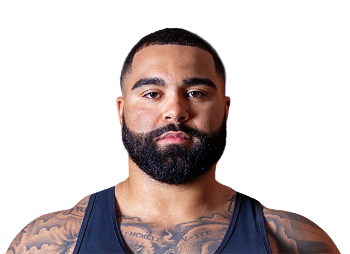
Gable Steveson — Heavyweight fighter

Gable Steveson

4W0L
Olympic Wrestler
VS
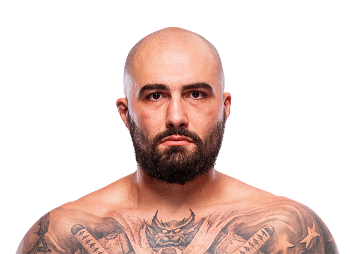
Sean Sharaf — Heavyweight fighter

Sean Sharaf

4W2L
Volume Brawler

Fifteen strikes absorbed a minute, against Olympic gold

HeavyweightCrypto.com Arena, Los Angeles, CaliforniaSeptember 19, 2026Standard 30ft Octagon
01

The Frame

What this fight is really about — and the measurements that shape it

The Analyst's Take

Sean Sharaf absorbs 9.79 significant strikes per minute. The active heavyweight pool averages 4.20, and only one of the other thirty-five men in it absorbs more — Sharaf is 35th of 36 in the single column that decides whether a fighter survives. He is also 5th of 36 for output at 7.31 landed per minute, which is the whole of him in two numbers: he throws more than almost anyone at 265 lbs and he is hit more than almost anyone at 265 lbs, and both of his Octagon fights ended with him being stopped in the second round. Gable Steveson has no row in the database at all. What can be verified is a résumé rather than a rate line — Olympic gold at 125 kg freestyle, two NCAA titles, and four professional MMA wins that all ended inside round one.

Gable Steveson
Attribute
Sean Sharaf
267 years
Age
33
5'11"
Height
+4" Sharaf6'3"
74"
Reach
+3" Sharaf77"
Not published
Leg Reach
Not published
Orthodox
Stance
Not published
Jackson-Wink MMA
Team
XCMMA, Anaheim
Jul 11, 2026 (UFC 329)
Octagon Debut
Oct 12, 2024
8:23 across four MMA bouts
Career Cage Time
7:15 average per UFC bout
Olympic gold, 125 kg freestyle · 2× NCAA champion
Credentials
Four regional knockout wins
Chain wrestling into ground-and-pound
Fighting Style
High-volume distance brawling

Sharaf owns the frame and Steveson owns the calendar. Four inches of height and three of reach belong to the Californian, who at 6'3" and 77 inches is genuinely long for the division; seven years belong to the wrestler, who turns 26 four months before the fight while Sharaf turns 34 ten months after it. The tape's most revealing row is the last one on time. Steveson's entire professional MMA career runs to eight minutes and twenty-three seconds across four fights, none of which reached the second round. Sharaf's average single Octagon fight is eight minutes and two seconds. One man has fought for less time in his whole career than the other typically fights in one night.

Venue Factor
Crypto.com Arena is neutral ground and a standard cage removes the small-Octagon variable that usually flatters a wrestler. What does not change is the geometry: at 74 inches against 77, Steveson cannot win a range fight he has no reason to take, and he does not have to. His four wins average two minutes and six seconds because distance dies immediately in all of them. Three rounds is generous framing for Sharaf, who has never been past 3:49 of a second round in the UFC — both of his Octagon appearances ended there.
02

The Fighters

Careers, chins, schedules — and the form they bring into the cage

Gable Steveson

Pro Record
4-0-0
UFC Record
1-0 — TKO of Elisha Ellison at UFC 329
Streak
Four wins, every one a first-round TKO
Finish Rate
100% (4 of 4) — none has left round one
Avg Fight Time
2:06 (8:23 total across four bouts)
Chin · Untested — his longest MMA fight is 3:50SOS · Regional plus one UFC boutNot in DB — Olympic freestyle wrestler into ground-and-pound

The credentials arrived long before the MMA record did. Steveson took Olympic gold at 125 kg freestyle and two NCAA titles at Minnesota, which is the most transferable athletic pedigree in the sport and also, precisely, not an MMA rate stat — it says what he can do to a body once he has hold of it, and nothing about what happens in the ninety seconds before that. What the four-fight professional log says is that those ninety seconds have never been a problem. Braden Peterson was stopped at 1:38 at LFA 217 in September 2025, Kevin Hein by a left hook in twenty-four seconds at APFC that November, Hugo Lezama from mount at 3:50 at MFL 3 in February 2026, and Elisha Ellison by knees and punches at 2:31 on UFC 329 in July. Four fights, four first-round finishes, eight minutes and twenty-three seconds of total cage time, and a Jackson-Wink camp building striking around a wrestling core that already does not need much help. The gap in the file is enormous and worth stating plainly: no output rate, no accuracy, no defensive percentage, no round-by-round record, because none of it has ever been entered.

Sean Sharaf

Pro Record
4-2-0
UFC Record
0-2 — stopped in round two twice
Streak
Two straight losses, both KO/TKO in the second
Finish Rate
100% of wins by KO/TKO (4 of 4) — all pre-UFC
Avg Fight Time
7:15
Chin · Stopped in both Octagon appearancesSOS · Regional, then two contracted UFC opponentsFreestyle — high-volume brawler

Four career wins, all by knockout, none of them in the UFC — and then two Octagon fights that both ended the same way. Junior Tafa stopped him at 2:15 of the second in October 2024 and Steven Asplund at 3:49 of the second in December 2025, and the round-by-round file explains why with unusual clarity. Across four Octagon rounds Sharaf has been out-landed in the aggregate without ever being formally knocked down. Neither loss came from a single shot. Both came from accumulation, which is what 9.79 absorbed per minute against a divisional average of 4.20 buys you. He is genuinely dangerous in the first five minutes — 44.5 significant strikes landed per opening round is a startling number at heavyweight — and he has yet to convert any of it into an Octagon knockdown, let alone a finish.

Gable Steveson
0 dealt · 0 absorbed
Knockdown Exchange
KD dealt vs absorbed
Sean Sharaf
0 dealt · 0 absorbed

Gable Stevesonsignature weapons

First-Round TKOEvery MMA win he has — Ellison 2:31, Lezama 3:50, Hein 0:24, Peterson 1:38. No opponent has heard the second horn
×4
Chain Wrestling into Ground-and-PoundOlympic gold at 125 kg freestyle and two NCAA titles; the Ellison and Lezama finishes both came from top position
×2
Left HookKevin Hein, APFC, November 2025 — twenty-four seconds, and the reason he cannot be treated as a pure grappler
×1

Sean Sharafsignature weapons

KO/TKO100% of his career wins, all of them pre-UFC. Zero knockdowns recorded across four Octagon rounds
×4
Opening-Round Volume44.5 significant strikes landed per first round across two UFC fights, 89.9% of them at distance — 5th of 36 heavyweights at 7.31 per minute
×0

Gable Steveson

W
Elisha Ellison
TKO — Knees & punches
RR1 (2:31)
UFC 329 — Jul 11, 2026
W
Alexandr Romanov
Tech Fall — freestyle wrestling rules, not an MMA bout
RR2
RAF 9 — May 30, 2026
W
Hugo Lezama
TKO — Mount
RR1 (3:50)
MFL 3 — Feb 2026
W
Kevin Hein
TKO — Left hook
RR1 (0:24)
APFC — Nov 2025
W
Braden Peterson
TKO
RR1 (1:38)
LFA 217 — Sep 2025
Pattern

Five entries, five wins, and one of them is not an MMA fight — the Romanov result came under freestyle wrestling rules at RAF 9 and is why the card carries him at 4-0 while the analysis file carries him at 5-0. Strip it out and the pattern is unbroken: four MMA wins, four first-round TKOs, at 1:38, 0:24, 3:50 and 2:31. The Hein finish is the one worth pausing on, because a twenty-four-second left hook is not a wrestling result. The honest caveat is opposition. Three of the four came on the regional circuit, and Elisha Ellison is a single UFC data point, so the level at which this blueprint has been tested remains shallow.

Sean Sharaf

L
Steven Asplund
KO/TKO
RR2 (3:49)
UFC FN: Royval vs. Kape — Dec 13, 2025
L
Junior Tafa
KO/TKO
RR2 (2:15)
UFC FN: Royval vs. Taira — Oct 12, 2024
W
Regional bout — opponent not published
KO/TKO
RR1
Pre-UFC
W
Regional bout — opponent not published
KO/TKO
RRound not published
Pre-UFC
W
Regional bout — opponent not published
KO/TKO
RRound not published
Pre-UFC
Pattern

The three regional wins are real but the database holds neither their opponents nor, for two of the three, their rounds — only that all four career wins came by knockout. What is fully documented is the part that matters most: two Octagon fights, two second-round stoppage defeats, thirteen months apart, against Junior Tafa and Steven Asplund. Round two has been his death window both times, and the round-by-round file shows the mechanism rather than the misfortune — his output falls from 44.5 significant strikes in the first to 15.0 in the second, and his accuracy from 47% to 38%. He does not get caught. He runs out.

Gable Steveson

Win Methods
Wins by Round

Sean Sharaf

Win Methods
Wins by Round
Critical Insight
The donuts are identical and completely uninformative: both men have finished every opponent they have ever beaten, neither has a decision win, neither has a submission win. The bars are where the difference lives, and they are scoped to the wins whose rounds are actually published — all four of Steveson's, but only one of Sharaf's four, because his three other regional knockouts have no round recorded anywhere in the database. Read the columns that exist. Steveson has never needed a second round in his life. Sharaf has one documented first-round knockout and two documented second-round knockout losses, which is the same round arriving from opposite directions.

Common Opponents

OpponentGableSean
No shared opponentsLFA, APFC, MFL, plus UFC 329regional circuit, plus two UFC bouts
There is not one name in common across the two records. The rows below are style proxies, not genuine common opponents
Junior Tafa (style proxy)(blueprint for Steveson)L· TKO R2 2:15 (Oct 12, 2024)
A composed finisher who did not need to out-work Sharaf, only to outlast the first round — the closest thing to a preview of the accumulation path
Steven Asplund (style proxy)(blueprint for Steveson)L· TKO R2 3:49 (Dec 13, 2025)
Same round, same method, thirteen months later. Sharaf landed 23 significant strikes in that round and absorbed 99
Elisha Ellison (style proxy)W· TKO R1 2:31 (UFC 329, Jul 11, 2026)(blueprint for Sharaf)
The Octagon version of Steveson's blueprint on tape: level change, top position, knees and punches, done inside three minutes
03

The Numbers

Composites, division ranks and round-by-round evidence

Striking

Steveson: scouting estimate, no UFC rate line exists · Sharaf: SLpM 25% · StrAcc 30% · StrDef 30% · SApM 15%

0
Gablesmall sample
0
Seansmall sample

The closest column on the page, and the least trustworthy. Sharaf has measured numbers and they cut both ways — 7.31 landed per minute is 5th of 36, but 45% accuracy is 24th, 45% defence is 25th and 9.79 absorbed is 35th. Steveson's 52 is an estimate built on a twenty-four-second left hook and a UFC debut finish, with no rate line behind it at all.

Grappling

Steveson: pedigree estimate · Sharaf: TD/15 25% · TDAcc 25% · TDDef 30% · Sub/15 20%

0
Gablesmall sample
0
Seansmall sample

Thirty-three points and the widest gap in the UFC 331 book. Olympic freestyle gold against 13% takedown accuracy (24th of 36), 2.07 takedowns per fifteen minutes, zero submission attempts and a takedown defence the database does not publish at all. Steveson's 75 is a credential rather than a measurement, but it is the most predictive credential in the sport.

Technical

(Striking + Grappling) / 2

0.0
Gablesmall sample
0
Seansmall sample

An eighteen-and-a-half point technical gap, almost all of it grappling. On measured technique alone this is not close, and the only reason the model does not price it wider is that half the inputs on the favourite's side are estimates.

Cardio

Fight time · pace · R2/R1 output · finish timing

0
Gablesmall sample
0
Seansmall sample

Steveson's Olympic conditioning is structural and completely unproven in MMA — his longest professional fight is 3:50. Sharaf's is measured and unflattering: his output falls 66% from the first round to the second, 44.5 significant strikes to 15.0, and his accuracy from 47% to 38%.

Overall

(Technical + Cardio) / 2

0
Gablesmall sample
0.0
Seansmall sample

Thirteen and a half composite points, and a 68-32 model line sitting directly on top of them. Every gauge on this page carries a flag on both sides — one man has no data, the other has two fights of it.

MetricGableSean
Avg Fight Time2:06 — 8:23 total careersmall sample7:15 per UFC boutsmall sample
Pace TierNo rate line — absent from databasesmall sampleElite volume — 7.31 SLpM (5th of 36)small sample
AbsorptionNo rate linesmall sample9.79 SApM — 35th of 36, div avg 4.20small sample
R2/R1 OutputNo round data — never reached R2small sample44.5 → 15.0 sig strikes (−66%)small sample
Champ RoundsN/A — 3-round boutN/A — 3-round bout

Archetype Base Rate

Olympic Freestyle Wrestler 68%32% Volume Brawler

No archetype base-rate row — Steveson has no database archetype · No historical archetype win-rate is applied here, because the favourite has no database row from which to draw one. The 68-32 line comes from the analysis file and rests on three things it can evidence: a wrestling pedigree against 13% takedown accuracy and unpublished takedown defence, a form ledger of four first-round finishes against two second-round stoppage losses, and 9.79 significant strikes absorbed per minute.

Gable StevesonSean Sharaf

Heavyweight

· 36 fighters
StatGableGable rankDiv avgSean rankSean
SLpMN/A — not in database~4.79
5/36small sample
7.31
Str AccN/A — not in database~52.2%
24/36small sample
45%
Str DefN/A — not in database~50.8%
25/36small sample
45%
SApMN/A — not in database~4.20
35/36small sample
9.79
Damage RatioN/A — not in database~1.140.75
KD AvgN/A — not in database~0.86
24/36small sample
0.00
TD/15N/A — not in database~1.60
10/36small sample
2.07
TD AccN/A — not in database~36.8%
24/36small sample
13%
TD DefN/A — not in database~71.0%Not published
Sub/15N/A — not in database~0.36
16/36small sample
0.00
Avg Fight Time2:06 (8:23 career total)7:15
Career Record4-0-04-2-0
UFC Record1-00-2
Statistical Verdict
One column decides this table and it is not the wrestling one. Sharaf absorbs 9.79 significant strikes per minute against a heavyweight average of 4.20 — 35th of 36, second-worst in the division — and lands 7.31, which is 5th. His damage ratio of 0.75 means he takes more than he gives every time he fights, and both of his Octagon appearances ended with him being stopped on accumulation in the second round. The grappling row that should frighten him is the one the database cannot even fill: his takedown defence is unpublished, his takedown accuracy is 13% against a divisional 36.8%, and he has never attempted a submission. Steveson's entire column is empty, which is its own finding — there is no measured baseline for the favourite anywhere on this page.

Significant Strikes Landed per Round

R1, R2, R3: single-fight sample for Gable Steveson

R3: single-fight sample for Sean Sharaf

Control Time per Round (sec)

Gable Steveson

  • Every row is empty because Steveson has no round-by-round record in the database — his UFC 329 debut has not been ingested and his three regional fights never would be.
  • The four-fight log fills the gap in outline only: 2:31, 3:50, 0:24 and 1:38, all first-round TKOs, and no second round anywhere on his professional card.
  • Nothing here is estimated. There is no output rate, no accuracy, no control time and no knockdown figure for him, and this page does not invent one.

Sean Sharaf

  • His first round is genuinely dangerous: 44.5 significant strikes landed at 47% accuracy, which is elite heavyweight output — 89.9% of it at distance, only 1.1% in the clinch.
  • His second round is a collapse. Output falls to 15.0, accuracy to 38%, control time to zero, and 100% of what he throws is at distance. Both of his UFC fights ended in this round.
  • Zero knockdowns dealt and zero absorbed across all four rounds. Neither stoppage came from a single shot — both came from accumulation, which is what 9.79 absorbed significant strikes per minute buys.
Critical Insight
The most useful chart on this page is half empty, and that is the honest state of the matchup. What the filled half shows is that Sharaf's danger is not distributed — it is loaded entirely into the first five minutes, where he lands 44.5 significant strikes, and it evaporates in the second, where he lands 15.0 at 38% and has twice been stopped. His clinch share is 1.1% in round one and 0% in round two, and his control time across two full fights totals twenty-three seconds. That is the profile of a man who has never had to grapple, about to meet an Olympic freestyle gold medallist.

Strike Targeting (career avg)

Head hunting vs body work vs leg attack — the shape of the damage.

Range Profile — where the minutes go

GableSean
0%Distance95%
0%Clinch1%
0%Ground4%

Share of strike volume by range — who lives in open space and who lives chest-to-chest or on the mat.

04

The Story of the Fight

Advantages, worst cases, gameplans — and the patterns underneath

Where the fight lives

Who owns each phase — and by how much
Open SpaceSean owns it

77" reach against 74", 7.31 SLpM (5th of 36) and 89.9% of his round-one offence landing at distance

Pocket / ExchangesGable owns it

Sharaf's 45% striking defence and 9.79 SApM is where both of his UFC fights ended; Steveson's Hein finish was a 24-second left hook

ClinchGable owns it

Olympic freestyle body-lock against 1.1% of Sharaf's round-one output and 23 seconds of career control time

GroundGable owns it

Olympic gold plus two NCAA titles against 13% TDAcc, 0.00 Sub/15 and a takedown defence the database cannot fill

Path to Victory

Gable Steveson

One level change. He has finished four of four inside round one and the Ellison blueprint — shot, top position, knees and punches — is already on UFC tape against a man who defends 45% of strikes and has twenty-three seconds of career control time.

Why they win
01
The largest grappling gap on the card

Olympic gold at 125 kg freestyle and two NCAA titles against 13% takedown accuracy (24th of 36), zero submission attempts and a takedown defence the database does not publish at all.

02
Four fights, four first-round finishes

Peterson 1:38, Hein 0:24, Lezama 3:50, Ellison 2:31. His entire professional MMA career runs eight minutes and twenty-three seconds, and no opponent has heard a second horn.

03
The blueprint is already on UFC tape

The Ellison finish at UFC 329 was a level change into top control into knees and punches. Sharaf is a statistically friendlier target than Ellison — 45% striking defence and 9.79 absorbed per minute.

04
Seven years younger

26 against 33, and the younger man is the one who has taken almost no damage. Sharaf absorbs 9.79 significant strikes per minute across his four Octagon rounds.

05
He is not only a wrestler

The Kevin Hein finish was a left hook in twenty-four seconds. A wrestler who can punch removes the one counter-strategy — sprawling and swinging — that Sharaf's length would otherwise support.

The gameplan
  1. 1
    Level change before the range fight starts

    At 74 inches against 77 he has no reason to spend time outside. His four wins average two minutes and six seconds because distance dies immediately in all of them.

  2. 2
    Chain, do not force

    The one shot Sharaf can punish is a single telegraphed entry. Doubles off a feint, body-lock from the clinch — the phase where Sharaf lands 1.1% of his offence.

  3. 3
    Ride and land elbows

    Sharaf has zero submission attempts per fifteen minutes and no documented guard. Top position against him is not a scramble, it is a resting place with a finish attached.

  4. 4
    Respect the opening two minutes

    44.5 significant strikes per first round is the number that keeps this off 80-20. Nothing about the wrestling plan requires standing in front of him first.

  5. 5
    Let the second round arrive if it must

    Sharaf's output falls 66% into round two and he has been stopped there twice. Even the version where Steveson's own cardio is untested favours him on the historical curve.

Path to Victory

Sean Sharaf

Five minutes of clean distance work and one clean counter. He lands 44.5 significant strikes in an opening round; if the first takedown fails and the shot he times is the right hand, the wrestling never happens.

Why they win
01
Four inches and three of reach

6'3" against 5'11" and 77 inches against 74. If the fight stays at distance, the geometry is entirely his, and 89.9% of his opening-round output already lands there.

02
Elite opening-round volume

44.5 significant strikes landed per first round at 47% accuracy, and 7.31 per minute overall — 5th of 36 active heavyweights against a divisional 4.79.

03
Every win by knockout

Four for four. It is the only heavyweight variable that never goes away, and it is worth 28 of his 32 win-shares on this page.

04
The favourite has no measured baseline

Steveson returns zero database rows. There is no evidence of how he handles being hit, being hurt, or a second round — because he has never had one.

05
Experience where it is measurable

Two Octagon fights and 7:15 of average fight time against a man whose entire career totals 8:23. Sharaf has felt UFC lights; Steveson has felt them once, for 151 seconds.

The gameplan
  1. 1
    Jab and keep the fight beyond 74 inches

    Three inches of reach is the only structural edge he owns. 89.9% of his opening-round offence already lands at distance — that share needs to stay there.

  2. 2
    Sprawl everything, then hit the head

    The uppercut on the shot is his single highest-value strike and it is the entire content of his 28% knockout equity.

  3. 3
    Do not chase the clinch

    1.1% of his round-one offence lands there and his career control time is twenty-three seconds. Every second spent tied up is a second played on Olympic terms.

  4. 4
    Solve round two before it arrives

    44.5 strikes to 15.0 is not a tactical choice, it is a gas-tank problem. Front-loading everything into five minutes is exactly what got him stopped twice.

  5. 5
    Make it a first-round fight

    The model gives him three decision points out of one hundred. His win condition is not a plan for fifteen minutes; it is a plan for five.

Danger Zone

How Gable Steveson loses

  • He shoots into an uppercut. Sharaf lands 44.5 significant strikes in an opening round and every one of his four career wins ended with someone unconscious — the timing window on a telegraphed entry is real.

  • The takedown does not come cheaply against 6'3" and 77 inches, and a round spent kickboxing at range is a round played entirely on the other man's terms.

  • He has never been past 3:50 in a professional MMA fight. If this reaches the second round with the wrestling stalled, nobody — including his own corner — knows what happens next.

Danger Zone

How Sean Sharaf loses

  • The first takedown lands and the Ellison sequence repeats: top position, knees, punches, stoppage inside three minutes, against a man whose four wins average 2:06.

  • He survives round one, arrives in round two where his output has historically fallen to 15.0 significant strikes at 38% accuracy, and gets stopped there for the third consecutive time.

  • His twenty-three seconds of career control time and 0.00 submission attempts mean he has no reversal, no guard game and no escape — only sprawl or lose, against Olympic freestyle gold.

The fight's central axis

Fifteen Absorbed a Minute

Sean Sharaf absorbs 9.79 significant strikes per minute against a heavyweight division average of 4.20 — 35th of 36 active fighters, second-worst in the pool. He is not out-struck occasionally; he is out-struck structurally, in every fight he has had at this level, and both of those fights ended with him stopped on accumulation in the second round.

9.79
Sharaf SApM — 35th of 36 heavyweights (div avg 4.20)
The favourite's entire career

Eight Minutes and Twenty-Three Seconds

Steveson's four professional MMA fights total 8:23 of cage time — 1:38, 0:24, 3:50 and 2:31, all first-round TKOs. Sharaf's average single UFC fight is 7:15. One man has fought for less time in his whole career than the other typically fights in one night, which is simultaneously the case for him and the case against him.

8:23
Steveson's total professional MMA cage time, across four wins
Where both his UFC fights ended

The Round-Two Collapse

Sharaf lands 44.5 significant strikes in a first round at 47% accuracy. In the second that falls to 15.0 at 38%, with zero control time and 100% of his output at distance. Junior Tafa stopped him at 2:15 of round two; Steven Asplund at 3:49. The pattern is not bad luck, it is a measured 66% output collapse.

−66%
Sharaf's output drop from round one to round two
The honest caveat on the favourite

Credentials Are Not Rate Stats

Olympic gold at 125 kg freestyle and two NCAA titles are real, verified and the most transferable athletic pedigree in the sport. They are also not MMA data. Steveson has no row in the fighters table, no round-by-round record and no division rank — his composites on this page are scouting estimates, and every gauge says so.

How the stoppages actually happened

Nobody Has Been Knocked Down

Sharaf has zero knockdowns dealt and zero absorbed across four Octagon rounds. Neither of his second-round defeats came from a single shot — both were accumulation stoppages. That matters here, because accumulation is exactly what a top-position wrestler produces, and it does not require him to land the perfect punch.

The Five-Round Clock

Gable Steveson danger windowSean Sharaf danger windowNeutral / contested
R1 · 0:00–5:00The only round either man has won

All four of Steveson's MMA wins ended here, at an average of 2:06. Sharaf lands 44.5 significant strikes here, his best five minutes by a distance. Whoever imposes the phase in the first ninety seconds probably ends it.

Critical Insight
This is a five-minute fight with ten minutes attached. Sharaf's entire live equity — 28 of his 32 win-shares — sits in the opening round, where he throws 44.5 significant strikes and where every knockout on his record was scored. Steveson's finishing equity sits in the same round, and his is the one backed by four consecutive first-round stoppages. Past 5:00 the historical curve bends hard toward the wrestler, because the only man in the cage with a documented second-round record has lost both of his.

Finish Threat by Round

Share of each fighter's wins that end in each round — early finishers spike left, grinders rise right.

05

The Verdict

One hundred simulated fights, the betting market, and our conviction

If you only read 3 things
1

Sean Sharaf absorbs 9.79 significant strikes per minute — 35th of 36 active heavyweights against a division average of 4.20 — against 7.31 landed, and has been out-landed across all four of his Octagon rounds. Both of his UFC fights ended with him being stopped in the second.

2

Gable Steveson has no row in the UFC database at all. What is verifiable is Olympic gold at 125 kg freestyle, two NCAA titles, and four MMA wins that every one of them ended in round one — 8 minutes 23 seconds of career cage time, less than Sharaf's average single fight.

3

Model: Steveson 68% / Sharaf 32%, conviction 6/10 — the clearest lean on the UFC 331 prelims, capped because the favourite has no measured rate stats of any kind and one clean heavyweight punch never stops existing.

100 Simulated Fights

Steveson KO/TKO 48%Steveson Decision 12%Steveson Submission 8%Sharaf KO/TKO 28%Sharaf Decision 3%Sharaf Submission 1%

Each square = 1 simulated fight. Gable Steveson gold · Sean Sharaf orange · full color = decision, 70% = submission, 45% = KO/TKO.

The wrestling chasm

Olympic gold at 125 kg freestyle and two NCAA titles against 13% takedown accuracy, 2.07 takedowns per fifteen minutes, zero submission attempts and no published takedown defence. It is the widest grappling gap in the UFC 331 book and it drives the 48-point knockout bucket.

Ten absorbed per minute

Sharaf's 9.79 SApM is 35th of 36 heavyweights against a division average of 4.20. A ground-and-pound finisher does not need to out-strike him — the accumulation path is already the one that ended both of his Octagon fights.

The round-two collapse

44.5 significant strikes in the first, 15.0 in the second; 47% accuracy falling to 38%; zero control time either way. Tafa stopped him at 2:15 of the second and Asplund at 3:49. The model prices a third repeat as more likely than not.

One clean heavyweight punch

All four of Sharaf's career wins came by knockout, and he throws 44.5 significant strikes in an opening round at 77 inches of reach. That is 28 of his 32 win-shares, and it is why the conviction sits at six rather than eight.

No measured baseline for the favourite

Steveson returns zero rows from every table. His composites are estimates, his chin is untested, his cardio is unproven past 3:50, and the model's discount for that is the difference between this line and 80-20.

Fight Scripts

0%
of simulations

The Ellison Remake

Level change inside ninety seconds, top position, knees and punches, and the referee steps in before the first round is out. It is already on UFC tape from July, and Sharaf — 45% striking defence, twenty-three seconds of career control time — is a friendlier version of the same target.

Scripted outcomes for Gable Steveson vs Sean Sharaf — how each version of this fight unfolds.

Gable Steveson win probability
0%
48%
12%
8%
KO/TKODECSUB
  • The largest bucket on the page by a distance. Four of four career wins by first-round TKO, a ground-and-pound blueprint already on UFC tape, and an opponent who absorbs 9.79 significant strikes per minute and defends 45%.

  • Twelve points, and it needs the finish to stall rather than the plan to fail. Steveson has never seen a second round in his career, so a decision here is as unmapped for him as it is for Sharaf.

  • Eight points. He has no MMA submission wins, but Olympic freestyle top control against a man with 0.00 submission attempts and no documented guard produces neck exposure whether or not it is hunted.

Sean Sharaf win probability
0%
28%
KO/TKODECSUB
  • Almost all of his equity, and legitimately earned: every one of his four career wins came by knockout, he lands 44.5 significant strikes in an opening round, and he has three inches of reach on a man who must close the distance to win.

  • Three points. He has no decision win anywhere on his record, his output falls 66% into round two, and he has never reached a third round in the Octagon. This is close to dead equity.

  • One point. Zero submission attempts per fifteen minutes and no submission win on his record — this is a scramble artefact, not a path.

Projected Scorecards

How the model scores each round
R1
Gable
R2
Gable
R3
Gable
30-27 Steveson
Control time in all three rounds
The most likely card in the 12% of fights that reach them
29-28 Steveson
Sharaf banks the first on volume before the wrestling settles
The competitive version, and plausible given 44.5 sig strikes per opening round
29-28 Sharaf
The takedowns stall and the reach wins two rounds standing
The shape of his 3-point decision bucket — structurally close to dead

Moneyline

Gable Steveson
Not posted
Sean Sharaf
Not posted

No BetOnline line has been published for this bout yet and none is invented here. Converting the model's 68-32 split into no-vig American prices gives Steveson -213 and Sharaf +213; the analysis file separately quotes a vig-inclusive market-shaped line of Steveson -210 / Sharaf +175. Live odds appear in the hero above once the books post UFC 331.

Props: model vs market

PropOddsImplied %Model %FairEdgeVerdict
Best Value
Steveson inside the distance is the modal outcome on the page at 48 of 100 — four for four by first-round TKO, against an opponent who absorbs 9.79 significant strikes per minute and has been stopped in the second round twice. The live dog side is Sharaf by knockout, worth 28 of his 32 win-shares, and it should be priced as a first-round bet rather than a fight-long one. Sharaf on the cards at three points is the one line to avoid outright: he has no decision win anywhere on his record and has never reached a third round in the Octagon.
Conviction
0
6/10

The clearest structural mismatch on the UFC 331 prelims — Olympic freestyle gold against 13% takedown accuracy and no published takedown defence — held at six out of ten because the favourite has no measured rate stats of any kind and the underdog has knocked out everyone he has ever beaten. Lean: Gable Steveson.

What backs the lean
  • Olympic gold at 125 kg freestyle and two NCAA titles against 13% takedown accuracy, 2.07 takedowns per fifteen minutes and unpublished takedown defence.

  • Sharaf absorbs 9.79 significant strikes per minute, 35th of 36 heavyweights against a divisional average of 4.20.

  • Four wins, four first-round TKOs, and the ground-and-pound blueprint already on UFC tape from the Ellison finish in July.

  • Sharaf's output collapses 66% into round two — the round in which both of his Octagon fights were stopped.

What limits it
  • Steveson has zero rows in the UFC database: no rate line, no round-by-round record, no division rank, and every composite on this page is an estimate.

  • His chin and cardio are entirely unmapped — his longest professional MMA fight is 3:50 and he has never contested a second round.

  • All four of Sharaf's career wins came by knockout, and he lands 44.5 significant strikes in an opening round with three inches of reach.

  • Two of the underdog's measured columns are genuinely good: 7.31 SLpM is 5th of 36, and at heavyweight one clean punch has never needed a rate line.

Final Assessment

This is the widest structural mismatch on the UFC 331 prelims and also the page with the least data on it, which is an uncomfortable combination. Sean Sharaf's file is short but unambiguous: 9.79 significant strikes absorbed per minute against 7.31 landed, 35th of 36 active heavyweights in the column that decides survival, a 13% takedown accuracy and a takedown defence the database does not publish because he has never had to show one. Gable Steveson's file does not exist. He returns zero rows from every table, and everything on his side of this page is a résumé rather than a rate.

But it is a very good résumé, and it points at exactly the columns Sharaf cannot fill. Olympic gold at 125 kg freestyle and two NCAA titles are not MMA statistics, and this desk has labelled them as credentials throughout — they are, however, the most transferable credentials in the sport, and the Ellison finish at UFC 329 already showed the Octagon version: level change, top position, knees and punches, 2:31. Sharaf has twenty-three seconds of career control time and zero submission attempts. He does not have a reversal, a guard or an escape. He has a sprawl and a right hand.

The right hand is real, which is why 28 of his 32 win-shares sit on it and why this reads 68-32 rather than 80-20. He throws 44.5 significant strikes in an opening round and all four of his career wins ended with somebody unconscious. Take the wrestler, take him inside the distance, and understand that the first ninety seconds are the only part of this fight where the numbers stop helping him — because past round one, the only man in the cage with a documented second round has lost both of his.

Skip to main content
Use Tab to navigate through elements, Enter to activate buttons and links.