
Alvin Hines vs RJ Harris
Heavyweight Bout • UFC Fight Night: Du Plessis vs. Usman
Saturday, July 18, 2026 • Paycom Center, Oklahoma City, Oklahoma, United States
Explore Detailed Fighter Profiles
Click on either the fighter's name or profile image for each fighter to access comprehensive UFC statistics including striking metrics, grappling data, clinch performance, complete fight history, offensive & defensive analytics, and round-by-round breakdowns.
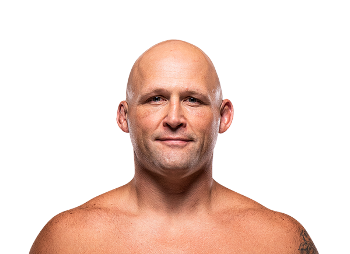
Alvin Hines
Fighter Metrics
Victory Methods
Win Round Distribution
RJ Harris
Fighter Metrics
Victory Methods
Win Round Distribution
📋 Last 5 Fights - Alvin Hines
| Date | Opponent | Result | Method |
|---|---|---|---|
| 2025-06-28 | Jhonata Diniz | L | Decision (Unanimous) (R3, 5:00) |
| 2025-04-11 | Billy Ray Valdez | W | KO/TKO (R3, 2:09) |
| 2025-02-15 | Junior Hicks | W | Submission (Arm Triangle) (R1, 1:40) |
| 2025-01-25 | Mark Currier | W | KO/TKO (R1, 1:48) |
| 2024-09-20 | Taylor Escamilla | W | KO/TKO (R2, 2:40) |
📋 Last 5 Fights - RJ Harris
| Date | Opponent | Result | Method |
|---|---|---|---|
| 2026-04-17 | Phillip Latu | W | Submission (Standing Guillotine) (R2, 4:01) |
| Early 2026 (est.) | Al Marro | W | KO/TKO (N/R, N/R) |
| Late 2025 (est.) | Austin Green | W | Decision (N/R, N/R) |
| Mid 2025 (est.) | Charlie Cleveland | W | Submission (Keylock) (N/R, N/R) |
| Mar 2025 (est.) | Quentin Campbell | W | Submission (Forearm Choke) (N/R, N/R) |
Technical Analysis
Technical Score
Cardio Score
Overall Rating
📊 Technical Score
Calculated as the average of Striking Composite (50.0 vs 62.0) and Grappling Composite (58.0 vs 68.0) — both estimated, not DB-computed. Balances overall striking effectiveness with grappling ability to measure complete technical skills.
💪 Cardio Score
Based on average fight duration, striking rate per minute, takedown rate, and finish rate. Measures cardiovascular endurance and ability to maintain pace throughout fights.
🎯 Overall Rating
Simple average of Technical Score and Cardio Score. Provides a holistic view of fighter capabilities combining skill level with physical conditioning and fight performance.
Striking Composite
Grappling Composite
Technical Radar Comparison
Visual comparison of key performance metrics between both fighters
📊 Detailed Statistical Comparison
🥊 Fight Analysis Breakdown
🧩 Alvin Hines Key Advantages
Hines can end the night two completely different ways: three KO/TKO wins (Currier R1, Escamilla R2, Valdez R3) and three submissions of three different flavors — an arm-triangle (Hicks), a keylock (Will Johnson) and a rear-naked choke (Latu). Harris is also a two-way finisher — one KO and three submissions across five pro wins — so this isn't the one-directional mismatch it might look on paper. The real separator is level of competition: Hines's varied finishing arsenal has already been tested against a live UFC opponent, while every one of Harris's stoppages came on the regional/LFA circuit before he ever set foot in the Octagon.
Hines has already survived the exact test Harris is about to face for the first time: live, high-level UFC pressure. He went the full fifteen minutes with former Glory kickboxer Jhonata Diniz at UFC 317 and was never hurt. Harris, by contrast, has never fought past the second round — his deepest test on record is a three-round regional decision (Green) — and he is taking this fight on short notice, several levels up in competition from the LFA and regional cages where he built his 5-0 record.
Harris built his unbeaten record against Ohio Combat League and Caged Thunder opposition before a two-fight LFA run (KO of Al Marro, then a standing guillotine of Phillip Latu) earned him the UFC call. That is a real, legitimate finishing résumé — but it is also a steep jump in class to make on short notice, against a fighter who has already tested himself inside the Octagon and come out the other side.
⚠️ Unfavorable Scenarios
Harris is billed as a genuine power striker, even though his finishing ledger leans toward the mat (three of his four stoppages are submissions, only one is a knockout). Heavyweight remains the highest-knockdown division in the sport, and Hines's own chin is "functional," not proven granite — he has never actually needed to prove it, having gone the full fifteen minutes with Diniz on the feet rather than absorbing a fight-changing shot. One clean connection early and the entire file flips, regardless of who's "supposed" to have the cleaner hands.
If Hines respects the length and power too much and fights tentatively, the taller, longer, seven-years- younger Harris can control range and let the rounds tick by. Unlike a pure front-runner, Harris has already shown he can go the distance and win on the cards (the Green decision), so there's no guarantee a long fight favors Hines by default. If Hines can't close the distance to grapple against a longer opponent, a fresher, rangier athlete could edge a decision he should otherwise win.
📋 Likely Gameplan
Don't get baited into a firefight against a live power striker with a real finishing rate. Use jab and footwork to control range early rather than trading recklessly in open space, and let the fight develop into rounds two and three, where Hines's proven UFC-pace conditioning becomes the deciding factor against an opponent who has never been asked to sustain that pace before.
Grappling is no longer free real estate the way it would have been against a one-dimensional striker — Harris hunts submissions himself, so scrambles carry two-way risk. Hines's edge is volume and variety: mix striking combinations with entries to the clinch and the mat, bank rounds behind output, and push the pace toward the championship minutes, where his fifteen-minute track record is the biggest unknown Harris has yet to answer.
🚀 RJ Harris Key Advantages
Harris is undefeated and has finished four of his five pro opponents — a forearm choke (Campbell), a keylock (Cleveland), a knockout (Marro), and the standing guillotine of Phillip Latu at LFA 231 that earned him the UFC call. Billed by his camp as a power striker with a deep submission game, he's a live threat everywhere the fight goes, not a fighter with a single dimension to defend against.
Four inches taller (6'6" vs 6'2"), the same estimated four-inch reach edge, and seven years younger — Harris is the significantly bigger, fresher athlete in the cage. Unlike a fighter relying on length alone, he isn't a pure size mismatch: his frame simply gives him more room to work the strikes and set up the submissions that have already finished four of his five pro opponents.
⚠️ Unfavorable Scenarios
Harris built his 5-0 record entirely against Ohio Combat League, Caged Thunder, and LFA competition — and he's stepping in on short notice for an injured Frye, a real jump in class without a full training camp built specifically around Hines. Against a fighter who has already tasted UFC-level pressure and survived it, that inexperience at the highest level is the single biggest swing risk in the bout.
Only one of Harris's five fights — a decision over Austin Green — has required him to go deep into a fight; the other four were finishes, three of them inside the first two rounds. Whether his gas tank and durability hold up across a full three-round UFC pace, against a durable opponent proven to produce for all fifteen minutes, is a genuine unknown he has never had to answer.
📋 Likely Gameplan
Unlike a pure striker, Harris doesn't need to avoid the clinch or the mat — three of his four finishes came by submission, so he can comfortably initiate exchanges anywhere the fight goes. Use the four-inch reach and six-inch height edge to strike from range, and if the fight closes, hunt the finish rather than play defense — the choke-and-lock combination that has already ended three regional careers.
With four finishes in five fights and no fight beyond the Green decision going deep, Harris's proven formula is pressure and finish before the bout reaches unfamiliar territory. Landing early, initiating scrambles, and hunting the stoppage rather than banking rounds plays to his actual strengths and avoids testing an unproven gas tank against a UFC-tested opponent in the championship minutes.
🎯 Fight Prediction Analysis
Data-driven prediction model based on statistical analysis
📊Detailed Analysis Summary
🏟️The Experience Gap
Strip the noise and this is a rare two-way heavyweight prelim: two finishers, neither a pure one-trick banger, but separated by circumstance. Hines already lost a competitive UFC decision to Jhonata Diniz — going the full fifteen minutes without being hurt — while Harris has never fought outside the regional and LFA circuit, and takes this fight on short notice for the injured Allen Frye Jr. That gap in level of competition, more than any single stat, is the fight's real fulcrum.
🎯Technical Breakdown
Both fighters are data-voids in the analytics engine — no career stats, no computed metrics, no round-by-round — so every composite here is a labeled estimate anchored to the DB-confirmed Heavyweight baseline (22 fighters: SLpM 4.54, StrAcc 53%, KD 1.14, Sub/15 0.45). On paper, Harris actually grades out slightly better on both axes — an estimated 62 striking composite to Hines's 50, and a 68 grappling composite to Hines's 58 — reflecting his four-inch reach edge, younger frame, and 80% regional finish rate. The model's lean toward Hines isn't a stats argument; it's an experience argument, discounting Harris's superior raw numbers for the untested jump from regional cages to a live UFC opponent.
🧩Key Battle Areas
Three critical battle areas will decide it: the early striking exchanges (Harris is a real power threat even though only one of his four finishes is a knockout), the grappling scrambles (both men hunt submissions, so this is a genuine two-way threat rather than a mismatch), and the championship minutes (Hines has proven he can produce for fifteen straight minutes; Harris has done so only once, in a regional decision). The lone factors that genuinely favor Harris — youth, reach, a higher finish rate — are non-trivial in the sport's most violent division, which is exactly why this is a lean and not a lock.
🏁Final Prediction
Hines's single largest path is a decision (22%) — the more UFC-tested fighter out-working an opponent facing a steep step up in competition over three rounds. His 18% submission and 15% KO/TKO reflect a genuinely two-way finishing game, just tested at a higher level than Harris has faced. Harris's dominant lane is submission (20%), mirroring his 3-of-4 regional finishing rate, with 15% decision equity if his superior physical tools translate and 10% KO/TKO reflecting real but unproven power at this level. Combined finish rate sits near 63%, appropriate for two career heavyweight finishers.
💰 Betting Analysis: Model vs Market
Detailed value assessment in the betting market
📊Market Odds
🤖Analytical Model
💎Value Opportunities
MAXIMUM VALUE
Model: 18% | Implied: 15.4%
GOOD VALUE
Model: ~80% | Implied: 71.4%
SLIGHT VALUE
Model: 63% | Implied: 60.0%
⚠️Key Market Discrepancies
- • Underprices Hines's experience edge – the market may be seduced by Harris's finishing highlight reel and undervalue Hines's own proven, multi-method submission game against a UFC-tested opponent.
- • Slow to price the step-up-in-class risk – Harris's unbeaten record came entirely against regional and LFA competition; a short-notice jump straight to the UFC is a real volatility factor the market may not fully discount.
- • Treats regional dominance as transferable – an 80% finish rate on the regional circuit doesn't guarantee the same production against a durable, UFC-tested opponent.
🎯 Comprehensive Probabilistic Analysis
100 hypothetical fight simulation based on statistical data
🏆Outcome Distribution - Alvin Hines
Largest single path — UFC-level pace over three rounds
Real but not elite power vs an unproven chin
Proven multi-method threat, tested at the UFC level
💥Outcome Distribution - RJ Harris
Dominant path — 3 of 4 career finishes are submissions
Size and reach edge translate if it goes the distance
Real pop, but only 1 of 5 career wins is a knockout
⏰Fight Timeline Analysis
⚡Window of Opportunity - RJ Harris
- • Use the frame: Four extra inches of height and reach let Harris strike first and set the terms of engagement.
- • Hunt the finish: Three of his four career stoppages are submissions — initiate scrambles rather than avoiding them.
- • Don't let it get to Round 3: His deepest test on record is a single regional decision, so the finish needs to come before the championship rounds.
🎯Progressive Dominance - Alvin Hines
- • Manage range early: Avoid a firefight against a live power striker before finding a rhythm.
- • Mix in grappling entries: Harris is a live threat on the mat too, so use variety rather than forcing a one-dimensional plan.
- • Late minutes: Lean on proven fifteen-minute conditioning as the fight moves into territory Harris has rarely had to survive.
🎯 Final Confidence Assessment
Confidence level and uncertainty factors
Confidence Level
A clear but humble lean on the more complete fighter — the only man here with a Plan B and a proven 15-minute tank
✅Supporting Factors
- • The only fighter here with a proven fifteen-minute UFC-level tank — a full competitive decision with Diniz
- • Harris is walking into a significant step up in competition on short notice, the kind of jump that has derailed regional standouts before
- • Grappling is no longer a mismatch, but Hines's submission game has already been tested against live UFC opposition; Harris's has not
- • A longer, more tested résumé overall — eight professional fights, including one in the UFC, to Harris's five
⚠️Risk Factors
- • Both fighters are data-voids — every composite here is an estimate
- • Heavyweight variance is the sport's highest, and Harris is a genuine power striker even though only one of his five wins came by knockout
- • Harris is younger, bigger, and longer — his estimated composites actually grade out ahead of Hines's on paper
🏁Executive Summary
Across 100 simulations two stories recur. In roughly 55, Alvin Hines's UFC-level experience decides the night — most often by managing Harris's early length and power before taking over: out-working him for the cards (22), finding a submission of his own against a grappler who has never faced this level of competition (18), or landing his own power once the pace climbs into the championship rounds (15). He is the more battle-tested fighter, the only one here who has already gone the distance under UFC lights. In the other 45, RJ Harris's superior physical tools and finishing instincts get there first — most often a submission (20) mirroring the three-of- four finishing rate that got him signed out of the LFA, a decision built on his four-inch reach and seven-year youth edge (15), or a knockout that would confirm his billing as a genuine power striker (10).
Prediction: Alvin Hines by decision (22%) or submission (18%) — his proven ability to produce for a full fifteen minutes against live UFC competition is the matchup's deciding edge; RJ Harris's live upset lane is his own submission game (20%), the same three-finish-in-four formula that carried him from the regional circuit to a UFC contract. This bout is decided by class: the short-notice debutant with the better paper stats has to prove they translate against a tested opponent, or a more experienced, better-conditioned veteran drags it into territory Harris has never had to survive. A measured lean on Hines.