
PRELIM · WELTERWEIGHT · 3 ROUNDSUFC Fight Night: Nurmagomedov vs. Song
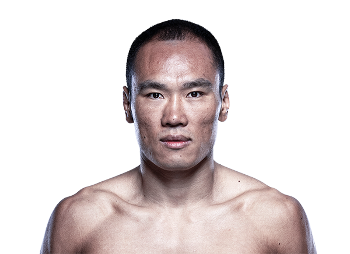
Meng Ding — Welterweight fighter

Meng Ding

The Assassin
35W10L
Sanda Knockout Artist
VS
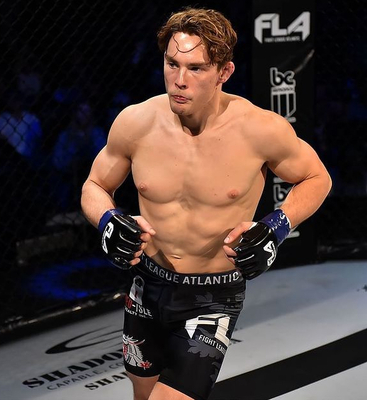
Cam Nelson — Welterweight fighter

Cam Nelson

7W1L
Renzo Gracie Grappler

Twenty-eight knockouts against four submission losses

WelterweightSPD Bank Oriental Sports Center, Shanghai, ChinaAugust 29, 2026Standard 30ft Octagon
01

The Frame

What this fight is really about — and the measurements that shape it

The Analyst's Take

Forty-five professional fights against eight. Meng Ding — listed on ufc.com as Ding Meng — owns one of the biggest knockout tallies on the roster at 28 KO/TKO wins, 17 of them in Round 1, but exactly one UFC bout, which he lost by split decision. Cam Nelson has never fought outside the Canadian Atlantic regional circuit and has no published rate statistics of any kind. The number that keeps this from being a formality is buried in the veteran's loss column: four of his ten career defeats came by submission and only two by knockout — and submissions are how Cam Nelson wins 43% of his fights.

Meng Ding
Attribute
Cam Nelson
31
Age
28
6'2" (74")
Height
Not published
73"
Reach
Not published
41.5"
Leg Reach
Not recorded
Orthodox
Stance
Not listed
Team Oyama / Black Tiger Fight Club
Team
Renzo Gracie PEI / Lot 36 BJJ
May 30, 2026
Octagon Debut
August 29, 2026 — this bout
Sanda / kickboxing — volume knockout artist
Fighting Style
BJJ-based submission finisher

One frame is fully documented and the other is not measured at all — that is the honest headline of this section. Ding is listed at 6'2" with a 73-inch reach, a tall welterweight with a short-for-the-height wingspan, and a confirmed 41.5-inch leg reach. Nelson has no published height or reach anywhere in the public record; the site's event file carries zeros for both and this page will not invent them. What Ding's tape does say is that he uses length downward rather than outward: 51% of his measured significant strikes went to the legs, 26% to the body and only 23% to the head — a Sanda-rooted low-line attack rather than a jab-and-move game. One caveat on the listing: the UFC Macau report of his debut described him as the shorter man and as struggling to close distance against José Souza's jab, so 74 inches should be read as ufc.com's figure rather than as an established range advantage.

Venue Factor
Three rounds is the shape that suits the veteran, and the round data says so twice over. Seventeen of Ding's 35 career wins ended in Round 1 and nine more in Round 2 — 74% of his wins finished inside ten minutes. But six of his ten defeats arrived in Round 3, five of those on the scorecards, including both of his international-level auditions (Rami Hamed on the Contender Series and José Souza in the Octagon). His whole career says the fight is won early or lost late, and a Shanghai crowd on home soil is the environment most likely to push him to start fast.
02

The Fighters

Careers, chins, schedules — and the form they bring into the cage

Meng Ding

Pro Record
35-10-0
UFC Record
0-1 — split-decision loss on debut
Streak
Lost his last — split decision to José Henrique Souza at UFC Macau
Finish Rate
85.7% (30 of 35 wins) — 28 KO/TKO, 2 submission
Avg Fight Time
15:00 (one UFC bout, went the distance)
Chin · AverageSOS · Regional-heavySanda volume knockout artist

A late-career debutant rather than a prospect. Ding turned pro around 2015 and built almost his entire résumé on the Chinese domestic circuit — Dacheng Wuyi's Chinese MMA Super League, WLF's W.A.R.S. and E.P.I.C. series, and above all JCK's Night Cage Series, where he fought roughly fifteen times between 2020 and 2023. He won a WLF world title over five rounds in January 2017, went 1-1 in ONE Championship's Hero Series in 2019, lost a unanimous decision to Rami Hamed on Dana White's Contender Series in August 2024 without earning a contract, rebuilt with a second-round knockout of Mirali Huseynov at A1 Combat 30 in October 2025, and was finally signed for UFC Macau on May 30, 2026 — where he lost a split decision (30-27, 28-29, 29-28) to newcomer José Henrique Souza. At 31 with 45 fights of mileage, the record is enormous and the relevant sample is four fights, of which he has won one.

Cam Nelson

Pro Record
7-1-0
UFC Record
0-0 — Octagon debut
Streak
Won his last — TKO for the vacant FLA welterweight title
Finish Rate
71.4% (5 of 7 wins) — 3 submission, 2 KO/TKO
Avg Fight Time
Not published
Chin · Never finishedSOS · RegionalBJJ-based submission finisher (estimated)

A compressed, eight-fight regional arc and a call-up from the other side of the world. Nelson is a former hockey player from North Rustico, Prince Edward Island, who converted to combat sports and trains under Matt MacGrath at Renzo Gracie PEI. His entire professional career has taken place inside Fight League Atlantic and the surrounding Canadian Atlantic scene, culminating in the vacant FLA welterweight title — won in the co-main event of FLA 25 on June 6, 2026 by second-round TKO over Luis Guerrero — and a UFC booking roughly eleven weeks later. There is no Contender Series appearance, no Road to UFC run, and no international-level opponent anywhere on his log. What the aggregate does say is that three of his seven wins are submissions, that his single defeat came on the scorecards, and that nobody has ever finished him.

Meng Ding
0 dealt · 0 absorbed
Knockdown Exchange
KD dealt vs absorbed
Cam Nelson
0 dealt · 0 absorbed

Meng Dingsignature weapons

Low Kicks51% of his measured Octagon strikes went to the legs — the highest low-line share on this card
×0
Knockout Power28 of 35 career wins by KO/TKO, 17 of them in Round 1
×28
Rear-Naked ChokeHis only two career submissions, in 45 professional fights — both pre-2021
×2

Cam Nelsonsignature weapons

Submission Game3 of 7 career wins (43%) — the highest submission share in this matchup, from a Renzo Gracie affiliate
×3
Ground-and-Pound TKOMost recently Luis Guerrero, R2, for the vacant FLA welterweight title
×2

Meng Ding

L
José Henrique Souza
Decision — Split (30-27, 28-29, 29-28)
RR3
UFC Macau — May 30, 2026 (Octagon debut)
W
Mirali Huseynov
KO/TKO
RR2 (2:45)
Urijah Faber's A1 Combat 30 — Oct 4, 2025
L
Rami Hamed
Decision — Unanimous
RR3
Dana White's Contender Series S8 W1 — Aug 13, 2024
W
Kuerbanjiang Tuluosibake
KO/TKO
RR3 (0:24)
JCK Fight Night 72 — Oct 28, 2023
W
Qi Wang
KO/TKO
RR2 (1:31)
JCK Night Cage Series Finals — Jul 9, 2023
Pattern

Ding finishes the men he is supposed to finish and loses decisions to the men who can manage distance. Every win in this window is a knockout; every loss is a scorecard. The Kuerbanjiang result is the standout — a 24-second third-round knockout that avenged a unanimous-decision defeat to the same man six months earlier and squared their four-fight rivalry at 2-2. The Contender Series and UFC results are the sobering half: two separate auditions against international-caliber opponents, two decision losses, both times as the fighter unable to solve a longer, more disciplined jab. Per the UFC Macau round-by-round, he pressed and landed leg kicks but could not close range in the first, nearly landed a takedown off a caught kick in the second, and was cut by a spinning attack in the third while chasing the finish he needed.

Cam Nelson

W
Luis Guerrero
TKO — punches (vacant FLA welterweight title)
RR2
FLA 25 — Jun 6, 2026
Pattern

Only one of Nelson's eight professional bouts is documented in enough detail to table, and it is the most recent and most important: a second-round TKO of Luis Guerrero in the co-main event of FLA 25 on June 6, 2026, winning the vacant Fight League Atlantic welterweight title. His earlier opponents are known by name in scattered bout listings — Ryan Rohovich at FLA 16, Irving Molina at FLA 9, a co-main against Garcia at FLA 18 — but the dates, rounds and methods are not retrievable through any source this page can verify, so those rows are omitted rather than guessed. What the aggregate confirms: 7-1 with three submissions, two knockouts and two decisions, one decision loss, and no stoppage defeat in his career.

Meng Ding

Win Methods
Wins by Round

Cam Nelson

Win Methods
Wins by Round
Critical Insight
The two donuts are near-perfect mirrors, and the mirror is the fight. Eighty percent of Ding's wins are knockouts and just 6% are submissions; 43% of Nelson's are submissions and just 29% are knockouts. Now read the loss column, which no donut shows: Ding's ten career defeats break down as 2 KO/TKO, 4 submission and 4 decision. He has been tapped twice as often as he has been knocked out — armbar twice, arm-triangle once, rear-naked choke once — across a decade, five promotions and three countries. Nelson's single most common path to victory is the single most common way Ding loses. Ding's round bars are tallied fight-by-fight from a complete 45-bout log and reconcile exactly with ufc.com's aggregates; Nelson's account for only three of his seven wins, because the rounds of the other four are not published anywhere.

Common Opponents

OpponentMengCam
Kuerbanjiang Tuluosibake (Ding's four-fight rival)2-2 — L sub R2, W dec R5, L dec R3, W KO R3(no shared opposition exists)
Both of Ding's defeats in the rivalry came by submission or scorecard; both of his wins came by knockout or a five-round title decision
José Henrique Souza (style proxy)L· SD3 (May 2026)(blueprint for Nelson)
A longer man who jabbed, managed distance and refused the exchange took Ding's Octagon debut on the cards
03

The Numbers

Composites, division ranks and round-by-round evidence

Striking

SLpM 25% · StrAcc 30% · StrDef 30% · SApM 15%

0
Mengsmall sample
0
Camsmall sample

Ding's one measured Octagon performance was negative in both directions — 3.80 landed per minute against 4.33 absorbed, with 46% accuracy and 51% defence, all below welterweight baselines. The 28 career knockouts are the evidence the low-line game works; the zero knockdowns in fifteen Octagon minutes are the evidence it did not work at this level, once. Nelson has no striking measurements at all.

Grappling

TD/15 25% · TDAcc 25% · TDDef 30% · Sub/15 20%

0
Mengsmall sample
0
Camsmall sample

The table that keeps the underdog live. Two submission wins in 45 fights against four submission losses is a decade-long, repeatedly-tested asymmetry. Nelson's composite is estimated above Ding's purely on method evidence — 43% of his wins are submissions and he has never been finished — and it carries enormous uncertainty.

Technical

(Striking + Grappling) / 2

0
Mengsmall sample
0.0
Camsmall sample

The composites tie or slightly favour the debutant, which is an honest reflection of the evidence rather than a hedge: Ding's ratings come from one measured fight that he lost, and Nelson's come from no measured fights at all.

Cardio

Fight time · pace · R3/R1 output · champ rounds

0
Mengsmall sample
0
Camsmall sample

Ding's one Octagon bout went the full 15:00 and he was still pressing in the third — real if singular evidence of a 15-minute tank, on top of 45 pro fights and a five-round title bout in 2017. Nelson has two decision wins and has never been finished, but a three-round FLA title fight and a three-round UFC fight thirteen time zones from home are different physiological events.

Overall

(Technical + Cardio) / 2

0
Mengsmall sample
0.0
Camsmall sample

Effectively level. The model's 56-44 lean to Ding therefore comes from what these composites cannot capture — 45 fights, 28 knockouts, and having already stood in an Octagon once — not from any technical edge the numbers show.

MetricMengCam
Avg Fight Time15:00 (1 UFC bout)small sampleNot publishedsmall sample
Pace TierModerate — 3.80 SLpMsmall sampleNo datasmall sample
R3/R1 OutputNo round data (1 bout)small sampleNo round datasmall sample
Slow Start %Low — 17 of 35 wins end in R1Not measuredsmall sample
Champ RoundsN/A — 3-round boutN/A — 3-round bout

Archetype Base Rate

Sanda Knockout Artist 56%44% BJJ-Based Submission Finisher

No archetype base-rate row exists for this pairing · No historical archetype win-rate is applied. The 56-44 line is the experience and knockout-power edge, discounted hard for a 0-1 UFC record, below-baseline rates across every measured column, and a four-submission loss history pointed at a submission specialist.

Meng DingCam Nelson

Welterweight

· 54 fighters
StatMengMeng rankDiv avgCam rankCam
SLpM3.804.38No data
Str Acc46%48.7%No data
Str Def51%53.7%No data
SApM4.333.89No data
KD Avg0.000.52No data
Damage Ratio0.88~1.13No data
TD/150.501.64No data
TD DefNot publishedNo data
Sub/150.000.47No data
Avg Fight Time15:00No data
Statistical Verdict
Every single measured rate Ding carries sits below the welterweight division baseline — output, accuracy, defence, knockdowns, takedowns, submissions — and he absorbs more per minute than the average welterweight (4.33 against 3.89). Read only from this table, he grades as a below-average UFC welterweight who lost his debut. What the table cannot see, and what carries the entire lean, is the 45-fight résumé sitting behind it: 28 knockouts, 17 of them in Round 1, against opponents Nelson has never encountered a tier of. Nelson's column is genuinely empty because no source publishes rate statistics for him, and this page will not manufacture them.

Significant Strikes Landed per Round

R1, R2, R3: single-fight sample for Meng Ding

R1, R2, R3: single-fight sample for Cam Nelson

Control Time per Round (sec)

Meng Ding

  • No round-by-round rows exist. One Octagon bout is far below the threshold for a computed round profile, so nothing is drawn rather than estimated from a single fight.
  • The verified substitute is the finish log, and it is unusually complete: 17 of Ding's 35 career wins ended in Round 1 and nine more in Round 2 — 74% of his wins finished inside ten minutes.
  • The counter-evidence sits in the same column. Three of his ten losses also came in Round 1 (two by submission, one by knockout), and six came in Round 3 — five of those on the scorecards.
  • His career aggregate splits are known even though his round splits are not: 51% of his measured strikes went to the legs, 26% to the body and 23% to the head, with 94% landed standing.

Cam Nelson

  • No round-by-round rows exist. Nelson is a UFC debutant with no measured statistics of any kind, so his side of every chart on this page is intentionally blank.
  • Round and time data is not published for seven of his eight professional bouts. The one documented result is a Round 2 TKO of Luis Guerrero for the vacant FLA welterweight title.
  • His lone career defeat is known to have gone to a decision, meaning at least one of his fights has reached the final bell — and no opponent has ever finished him.
Critical Insight
With only one side's round data available, the honest read is directional rather than symmetric. Round 1 is unambiguously Ding's window — nearly half his career wins have ended there, and Nelson will be experiencing an Octagon, a Shanghai crowd and a jump of several competition tiers all at once in those first five minutes. Rounds 2 and 3 progressively favour the debutant, not because of anything measured about Nelson but because of what is measured about Ding: six of his ten defeats have arrived in the third, five on the cards, and both of his international-level auditions ended exactly that way. The central question is whether the veteran's Round 1 finishing rate outruns his own Round 3 fade rate.

Strike Targeting (career avg)

No UFC strike-target data for either fighter — nothing is estimated.

Head hunting vs body work vs leg attack — the shape of the damage. Fighters without UFC samples are omitted rather than shown as 0%.

Range Profile — where the minutes go

Meng · N/ACam · N/A

No UFC range-share data for either fighter — nothing is estimated.

Share of significant-strike volume by range from UFC career data. Debutants / fighters without Octagon samples show as N/A.

04

The Story of the Fight

Advantages, worst cases, gameplans — and the patterns underneath

Where the fight lives

Who owns each phase — and by how much
Open SpaceMeng owns it

51% of Ding's measured strikes went to the legs; Nelson has no measured striking defence of any kind

Pocket / ExchangesMeng owns it

28 career knockouts and an 80% KO rate among wins, against 2 knockouts in 7 wins

ClinchEven

Only 5% of Ding's Octagon strikes landed in the clinch and Nelson has no clinch data — genuinely unmapped for both

GroundCam owns it

4 of Ding's 10 career losses are submissions and he has 0.00 subs per 15; 43% of Nelson's wins are submissions

The Deep Read

The instinct with a 35-10 record against a 7-1 record is to price the veteran heavily. The reason this model does not is that Ding's forty-five fights are almost entirely a measurement of how good he is against Chinese regional opposition, and the four times he has stepped outside that pool the answer has been mixed: a knockout win and a knockout loss in ONE Championship's Hero Series, a decision loss on the Contender Series, and a split-decision loss in the Octagon. His sample is enormous and his relevant sample is four fights, of which he has won one. Nelson's sample is tiny and his relevant sample is zero. Neither man has demonstrated much at this level — one has simply demonstrated a great deal at a level below it.

Almost every statistical claim on this page comes with a sample-size caveat. One does not. Across ten years, forty-five fights, five promotions and three countries, Ding has been submitted four times and knocked out twice. That ratio held on the Chinese regional circuit and it held against a Brazilian in the ONE cage. It is the most durable, most repeatedly-tested finding in his entire file — and the opponent is a Renzo Gracie affiliate who submits 43% of the men he beats. When a decade-old vulnerability meets a specialist in exactly that vulnerability, the market's instinct to price on win-loss records is exactly the instinct a model should correct.

Ding is also two different fighters depending on the clock. In Round 1 he is one of the most dangerous men on this card: seventeen first-round wins, an 80% knockout rate among his victories, a low-line attack that compounds from the opening bell. By Round 3 he is a fighter whose last four significant defeats — Rae Yoon Ok, Kuerbanjiang, Rami Hamed, José Souza — all arrived there, three of them on the cards. There is no ambiguity about which round each man should be trying to reach.

Path to Victory

Meng Ding

One clean low-line-into-power sequence inside the first ten minutes, where 26 of his 35 career wins have already ended — and no time spent on the mat.

Why they win
01
Twenty-eight knockouts and a Round 1 habit

80% of his wins are knockouts and 49% of them ended in the opening round. Against a debutant with no measured striking defence, one clean sequence in the first five minutes ends the night.

02
A 37-fight experience bank

45 professional bouts including a five-round world-title fight, a ONE Championship run, a Contender Series audition and one Octagon walk. Nothing about the occasion will be new to him.

03
Home soil in Shanghai

The closest thing to a hometown card he will ever get, on a China-heavy roster, against an opponent travelling from Prince Edward Island across roughly thirteen time zones for his first fight at this level.

04
A documented low-line attack

51% of his measured strikes went to the legs. Leg kicks compound, are hard to check without specific preparation, and degrade exactly the base a grappler needs to shoot.

05
The only man in the cage with Octagon minutes

It is one fight and it was a loss, but he has now felt the pace, the canvas and the referee standard of a UFC bout. Nelson has not.

The gameplan
  1. 1
    Start fast and hunt the Round 1 finish

    Nearly half his career wins are there, and it is the round in which a debutant is least settled.

  2. 2
    Attack the legs relentlessly and early

    The low line is his measured signature at 51% of strikes and the fastest way to take away a grappler's shot without engaging in grappling.

  3. 3
    Refuse the mat entirely

    With four career submission losses and 0.00 submissions per fifteen of his own, every second on the ground is negative expected value. Sprawl, disengage, restart.

  4. 4
    Do not chase the kick catch

    The Souza fight showed him conceding position off caught kicks. Against a submission-first opponent that is the exact error that ends the night.

  5. 5
    If it reaches Round 3, change something

    Six of his ten losses arrived in the third, five on the scorecards. A level third round is historically a losing third round for him.

Path to Victory

Cam Nelson

Any grappling exchange at all. Four of the veteran's ten losses are submissions, and 43% of Nelson's wins are.

Why they win
01
Ding's submission defence is a decade-long hole

Four of his ten career losses are submissions — armbar, armbar, arm-triangle, rear-naked choke — against only two knockouts. The single most repeatable way to beat him is the thing this opponent does best.

02
He has never been finished

Eight professional fights, one loss, and that loss came on the scorecards. Whatever level he has faced, nobody has stopped him — which directly blunts the favourite's primary weapon.

03
Every measured Ding rate is below division average

Output, accuracy, defence, knockdowns — and he absorbs 4.33 significant strikes per minute against a 3.89 welterweight norm. Nelson does not have to be elite to hit him.

04
Youth, freshness and zero tape

28 to Ding's 31, eight fights of wear against 45, and essentially no scoutable footage available to an opposing camp.

05
Momentum and a title in hand

He arrives as a reigning regional champion off a second-round title-winning stoppage, on the shortest possible upward trajectory. Ding arrives off a loss.

The gameplan
  1. 1
    Survive the first five minutes

    Everything downstream depends on it. The veteran's finishing pattern is front-loaded and his fade pattern is back-loaded.

  2. 2
    Get it to the mat — that is the entire fight

    Four submission losses on a 45-fight log is not variance, it is a pattern, and Nelson's best skill points directly at it.

  3. 3
    Catch kicks and convert

    Ding throws to the legs more than anywhere else and has already been caught doing it once in the Octagon. Each low kick is a takedown entry offered up.

  4. 4
    Do not trade at range

    Two knockouts in seven wins against twenty-eight in thirty-five is not a striking exchange worth having, however hittable the rate stats suggest the veteran is.

  5. 5
    Bank the late rounds

    Ding's losses cluster in Round 3. A fight still alive at the ten-minute mark is a fight tilting toward the fresher man.

Danger Zone

How Meng Ding loses

  • The fight hits the mat and the pattern repeats for a fifth time — an early scramble, a neck or an arm, and a fourth submission loss added to the four already on the log.

  • His leg-kick game is caught. Souza's camp already showed the counter, and Ding nearly conceded position off a caught kick in Round 2 of that fight; against this opponent a kick catch is a takedown into the phase where he loses.

  • The knockout does not arrive inside ten minutes, the fight drifts into Round 3, and it ends the way six of his ten losses have ended — on the cards, chasing.

Danger Zone

How Cam Nelson loses

  • He walks into a Round 1 knockout — the single most likely individual outcome in the whole simulation — from a man with 17 first-round finishes, in front of a hostile crowd, in his first fight at this level.

  • The leg kicks land unanswered from the opening bell, his base degrades, and by Round 2 he cannot shoot, cannot circle and cannot reach the phase where he wins.

  • The step up is simply too large: Fight League Atlantic to a UFC prelim in Shanghai is several tiers in one jump, thirteen time zones from home, and the tape says nothing because there is no tape at this level.

A decade-long submission vulnerability

The Loss Column Is the Whole Fight

Ding's ten career defeats break down as 2 KO/TKO, 4 submission and 4 decision. He has been tapped twice as often as he has been knocked out, across ten years, five promotions and three countries. Cam Nelson's single most common win method is the submission, at 43% of his victories, out of a Renzo Gracie affiliate gym.

4 of 10
Ding's career losses that came by submission
Why the favourite is the favourite

Seventeen First-Round Finishes

Seventeen of Ding's thirty-five career wins ended in Round 1 and nine more in Round 2 — 74% of his wins finished inside ten minutes, at an 80% knockout rate. Against a debutant with no measured striking defence, that is the most dangerous single tool in the cage.

28
career knockouts in 45 professional fights
The experience discount

A Huge Sample of the Wrong Kind

Forty-five fights sounds decisive until you notice that four of them came outside the Chinese regional circuit, and Ding is 1-3 in those. A knockout win and a knockout loss in ONE, a Contender Series decision loss, and a split-decision loss on Octagon debut.

Round 1 versus Round 3

Two Opposite Clocks in One Fighter

Seventeen of Ding's wins end in the opening round. Six of his ten defeats arrive in the third, five of those on the scorecards — including both of his international-level auditions. Whether his finishing rate outruns his own fade rate is the fight.

Why the uncertainty band is unusually wide

The Unmeasurable Debutant

Nelson is making a professional debut at the highest level of the sport, on another continent, thirteen time zones from home, against a hostile crowd, off a regional title fight ten weeks earlier — with no published height, reach or rate statistics of any kind. Every one of those factors historically cuts against a debutant, and none of them appears in a single number on this page.

The Five-Round Clock

Meng Ding danger windowCam Nelson danger windowNeutral / contested
R1 · 0:00–5:00The veteran's kill zone

Seventeen of Ding's thirty-five career wins ended here, at an 80% knockout rate, against a man fighting his first Octagon minutes thirteen time zones from home. Three of Ding's ten losses also came in the first, two of them submissions.

Critical Insight
The fight has an inverted clock and both men should know it. Ding's chances are highest in the opening five minutes and decay with every exchange; Nelson's rise with every minute the fight stays alive. Seventy-four percent of Ding's wins are already over by the ten-minute mark, and 60% of his losses have arrived after it. If the debutant is still upright and unhurt entering the third, the historical evidence points one direction only.

Finish Threat by Round

Share of each fighter's wins that end in each round — early finishers spike left, grinders rise right.

05

The Verdict

One hundred simulated fights, the betting market, and our conviction

If you only read 3 things
1

Meng Ding has 28 knockouts in 45 professional fights and 17 of his 35 wins ended in Round 1 — but he is 0-1 in the UFC, 1-3 outside the Chinese regional circuit, and every measured rate he owns sits below the welterweight baseline.

2

Four of Ding's ten career losses came by submission and only two by knockout. Cam Nelson wins 43% of his fights by submission, out of a Renzo Gracie affiliate — the vulnerability and the specialty match exactly.

3

Model: Ding 56% / Nelson 44%, conviction 4/10. Nelson has no published height, reach or rate statistics of any kind, so the uncertainty band here is unusually wide in both directions.

100 Simulated Fights

Ding KO/TKO 32%Ding Decision 20%Ding Submission 4%Nelson Submission 18%Nelson KO/TKO 13%Nelson Decision 13%

Each square = 1 simulated fight. Meng Ding gold · Cam Nelson orange · full color = decision, 70% = submission, 45% = KO/TKO.

Does the Round 1 knockout land?

Ding's front-loaded finishing profile — nearly half his career wins inside five minutes at an 80% knockout rate — meets a debutant in his first Octagon minutes. This produces the single most probable individual outcome in the whole distribution, at 32 of 100.

Does it reach the mat?

Ding has four career submission losses and 0.00 submissions per fifteen of his own. When the fight hits the ground in these sims it is almost always bad news for the favourite — this is where the majority of Nelson's 44 win-shares come from.

The Round 3 fade

Six of Ding's ten defeats arrived in the third, five on the scorecards. In sims where nobody finishes early, the late rounds drift meaningfully toward the fresher man, though a debutant's difficulty winning close rounds abroad caps how far.

How much of the tier jump does Nelson absorb?

A slice of outcomes has him overwhelmed by the level, the crowd and the travel inside two rounds. An offsetting slice has him unbothered — a durable, never-finished grappler is a bad matchup for anyone regardless of tier.

Simulating an opponent with no rates

By widening the variance rather than assuming a mean. Nelson's outcomes are more dispersed here than a typical underdog's, which is why the favourite does not price above 56%.

Fight Scripts

0%
of simulations

The Opening Storm

Ding presses from the bell, chops at the lead leg the way he has for a decade, and finds the knockout that has ended 28 of his 35 career wins. Most of these end inside the first two rounds — the single most likely outcome on the page.

Scripted outcomes for Meng Ding vs Cam Nelson — how each version of this fight unfolds.

Meng Ding win probability
0%
32%
20%
4%
KO/TKODECSUB
  • The single most likely outcome on the page — the direct expression of 28 career knockouts, an 80% knockout rate among his wins, and 17 first-round finishes, against an opponent with no measured striking defence.

  • Capped deliberately below his knockout share. His one Octagon appearance did prove he can go fifteen minutes at this level, but five of his ten career losses have come on the cards, and both of his international auditions ended that way.

  • His thinnest path by design: two submissions in forty-five professional fights and 0.00 submissions per fifteen minutes in the Octagon.

Cam Nelson win probability
0%
13%
13%
18%
KO/TKODECSUB
  • Real but modest — two career knockouts including a Round 2 title-winning stoppage, against a man who has been knocked out only twice in forty-five fights.

  • Captures Ding's Round 3 fade pattern and Nelson's never-been-finished durability, discounted for a debutant's difficulty winning close rounds on foreign soil.

  • His single most likely path to the win, and the largest underdog method share on this card for a reason: a 43%-submission fighter aimed squarely at a four-time submission loser.

Projected Scorecards

How the model scores each round
R1
Meng
R2
Meng
R3
Cam
29-28 Ding
Two rounds of leg kicks and pressure, one round given away late
The most likely card in a fight that reaches them
29-28 Nelson
The debutant survives the storm and takes the last two
The competitive flip, and entirely live given Ding's Round 3 record
30-27 Ding
A full fifteen minutes of low kicks with no grappling exchange
Requires Nelson never getting the fight to the mat

Moneyline

Meng Ding
Not posted
Cam Nelson
Not posted

No BetOnline line has been published for this bout yet and none is invented here. The model's fair, no-vig prices from the 56-44 split are Ding -127 and Nelson +127. Live odds appear in the hero above once the books post the Shanghai card.

Props: model vs market

PropOddsImplied %Model %FairEdgeVerdict
Best Value
Nelson by submission is the structural best value on this page — 18 of 100 simulations at a fair price of roughly +456. Any market pricing that prop off the raw 35-10 versus 7-1 record comparison, which is how a 45-fight veteran with 28 knockouts gets priced, will be systematically too long, because the record comparison is blind to the four submission losses buried inside it. Ding by KO/TKO (fair ≈ +213) is the cleanest expression of the favourite's actual strength and a better bet than his moneyline; a market pricing him beyond about -160 would be paying for an experience gap the Octagon evidence does not yet support.
Conviction
0
4/10

A thin lean on a genuine data-void fight. The favourite has one UFC bout, which he lost, and every measured rate he owns is below the divisional baseline. The underdog has no measured rates at all. Lean: Meng Ding.

What backs the lean
  • Twenty-eight career knockouts and a 49% Round 1 finishing rate — the most dangerous single tool in the cage.

  • A 37-fight experience advantage including a five-round title bout, ONE Championship exposure and an Octagon appearance.

  • Home soil in Shanghai against an opponent travelling from Atlantic Canada for his first fight at this level.

  • A documented low-line attack — 51% of his measured strikes to the legs — aimed at an opponent with no measured striking defence.

What limits it
  • Four of Ding's ten losses are submissions and 43% of Nelson's wins are submissions — the vulnerability and the specialty match exactly.

  • Every one of Ding's measured Octagon rates sits below the welterweight baseline, and he absorbs more per minute than the division average.

  • He is 0-1 in the UFC and 1-3 outside the Chinese regional circuit — the enormous sample mostly measures a level below this one.

  • Nelson has never been finished in eight professional fights, which directly attacks the favourite's only clear weapon.

  • Nelson's data void is total — no rates, no round data, no published height or reach — so the uncertainty band is unusually wide in both directions.

Final Assessment

Run the hundred simulations and the most common shape is Ding pressing forward from the opening bell, chopping at the lead leg the way he has for a decade, and finding the knockout that has ended 28 of his 35 career wins. Roughly 32 of 100 sims end exactly there, most inside the first two rounds. The next most common shape is the one the veteran's own file warns about: the finish does not come, a leg kick gets caught or a scramble goes wrong, and a Renzo Gracie-system grappler finds the neck or the arm that four other men have found before him. That path accounts for 18 sims on its own and is the largest single underdog outcome on this card.

What this page reflects, that a glance at 35-10 versus 7-1 cannot, is that the veteran's record is a measurement taken almost entirely at a level below this one — and that the one pattern in it which has survived every level, every promotion and every decade is being submitted. That is precisely the thing his opponent does best.

Cam Nelson is a genuine unknown with no published rate statistics, no measured frame and no opponent on his log within several tiers of this one. That is a real reason to fade him, and it is priced in. It is not a reason to price him out — one caught kick in the opening round is all it takes for the veteran's oldest weakness to end his second Octagon appearance the way it ended four of his previous ten losses.

Skip to main content
Use Tab to navigate through elements, Enter to activate buttons and links.