
Erin Blanchfield vs Jasmine Jasudavicius
Women's Flyweight Bout • UFC 330: Makhachev vs. Machado Garry
Saturday, August 15, 2026 • 3-Round Prelim
Explore Detailed Fighter Profiles
Click on either the fighter's name or profile image for each fighter to access comprehensive UFC statistics including striking metrics, grappling data, clinch performance, complete fight history, offensive & defensive analytics, and round-by-round breakdowns.
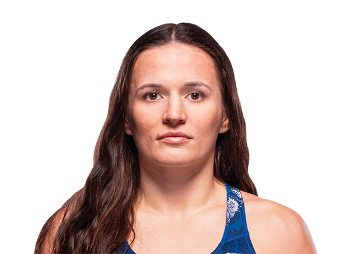
Erin Blanchfield
Fighter Metrics
Victory Methods
Win Round Distribution

Jasmine Jasudavicius
Fighter Metrics
Victory Methods
Win Round Distribution
📋 Last 5 Fights - Erin Blanchfield
| Date | Opponent | Result | Method |
|---|---|---|---|
| 2025-11-15 | Tracy Cortez | W | Submission (RNC) (R2, 4:44) |
| 2024-03-30 | Manon Fiorot | L | Decision (Unanimous) (R5, 5:00) |
| 2023-12-02 | Rose Namajunas | W | Decision (Unanimous) (R5, 5:00) |
| 2023-08-26 | Taila Santos | W | Decision (Unanimous) (R3, 5:00) |
| 2023-02-04 | Jessica Andrade | W | Submission (RNC) (R2, 1:37) |
📋 Last 5 Fights - Jasmine Jasudavicius
| Date | Opponent | Result | Method |
|---|---|---|---|
| 2025-07-19 | Manon Fiorot | L | KO/TKO (Ground Strikes) (R1, 1:14) |
| 2025-05-10 | Jessica Andrade | W | Submission (RNC) (R1, 2:40) |
| 2025-02-01 | Mayra Bueno Silva | W | Decision (Unanimous) (R3, 5:00) |
| 2024-11-16 | Fatima Kline | W | Decision (Unanimous) (R3, 5:00) |
| 2024-05-04 | Ariane da Silva | W | Submission (D'Arce) (R3, 2:28) |
Technical Analysis
Technical Score
Cardio Score
Overall Rating
📊 Technical Score
Calculated as the average of Striking Composite (55.9 vs 38.9) and Grappling Composite (67.7 vs 71.5). Balances overall striking effectiveness with grappling ability to measure complete technical skills — Blanchfield is the more balanced fighter, Jasudavicius the lopsided wrestling specialist.
💪 Cardio Score
Based on average fight duration, striking rate per minute, takedown rate, and finish rate. Measures cardiovascular endurance and ability to maintain pace throughout fights.
🎯 Overall Rating
Simple average of Technical Score and Cardio Score. Provides a holistic view of fighter capabilities combining skill level with physical conditioning and fight performance.
Striking Composite
Grappling Composite
Technical Radar Comparison
Visual comparison of key performance metrics between both fighters
📊 Detailed Statistical Comparison
🥊 Fight Analysis Breakdown
🧩 Erin Blanchfield Key Advantages
The fight's first counterintuitive truth is that the grappler is the better striker. Blanchfield out-ranks Jasudavicius in significant volume (5/23 vs 14/23), striking defense (9/23 vs 19/23), and damage ratio (11/23 vs 17/23). Her 5.24 SLpM against Jasudavicius's leaky 51% defense projects a clear standing edge, while Jasudavicius's 3.71 SLpM against Blanchfield's sturdier 59% defense projects very little coming back. A distance kickboxing fight is a losing proposition for Jasudavicius, which strips her of any "just out-point her standing" fallback and forces her to grapple to compete — and grappling is the exact phase Blanchfield finishes people in.
This is the fight's central mechanism. Jasudavicius wants top control — 135 seconds per round, 175 in R2. Blanchfield's rank-3 submission rate (0.80 Sub/15, +90% over the division), 78.8% ground accuracy, and back-take/counter-grappling fingerprint (RNC 0.15, counter-grappling 0.50, body-lock 0.22) mean that every minute Jasudavicius spends grinding on top of Blanchfield is a minute spent inside her finishing zone. She submitted Tracy Cortez and Jessica Andrade doing exactly this. The more Jasudavicius grapples, the more submission exposure she accepts — her greatest strength routes directly into Blanchfield's.
Both women lost to Manon Fiorot — Blanchfield went the full 25 minutes without being hurt and got busier late; Jasudavicius was finished by ground-and-pound in 74 seconds. Against shared elite competition, Blanchfield showed a durability and championship-round floor Jasudavicius has not. At 26 to Jasudavicius's 36, Blanchfield owns the younger scramble speed, the faster recovery, and the only proven deep-water motor in the cage (output up ~25% in the championship rounds of two five-round fights). Layer on her 80% takedown defense — the tool that denies Jasudavicius's entire plan — and an Elite strength of schedule versus a Strong one, and every stuffed entry is a round the older fighter cannot bank.
⚠️ Unfavorable Scenarios
The scenario Blanchfield must avoid is extended clinch battles against the fence where Jasudavicius's size wins. As the naturally bigger woman — three inches taller, a former bantamweight — Jasudavicius can pin the smaller Blanchfield, lie heavy, and neutralize the scramble speed that fuels the submission game. If she is pinned, controlled, and out-worked on the cards for 15 minutes the way Mayra Bueno Silva and Fatima Kline were, the bigger woman's division-elite 135 seconds of control per round can quietly bank a decision Blanchfield never felt in danger in.
Blanchfield's 20% slow-start tendency is the crack Jasudavicius can pry open. If it triggers, she cedes a clear R1 to Jasudavicius's fast pace and control, then finds herself chasing a finish against a durable, never-submitted opponent who is banking rounds. The other trap is her own aggression: shoot a sloppy takedown or scramble carelessly late and she can swim into a D'Arce or anaconda — Jasudavicius's exact R3 finishing pattern — turning Blanchfield's offense into the underdog's upset button.
📋 Likely Gameplan
Blanchfield is the sharper, higher-volume striker (rank 5 vs 14) against a rank-19 defense. She should establish the jab and the distance game early, win the standing minutes, and force Jasudavicius to shoot from disadvantage rather than dictate the clinch on her terms. The fight she must avoid is being pinned and ground down by the bigger woman: frame, deny the body lock, circle off the fence, and make Jasudavicius pay for every failed level change with her 80% takedown defense.
When the fight hits the mat, Blanchfield's edge isn't out-controlling Jasudavicius — it's finishing her. She should attack scrambles, threaten the RNC and body-lock-to-back, and treat every top-control attempt by Jasudavicius as a submission opportunity rather than a position to survive. Her "Opportunistic" timing (0% of subs in R3) says the window is R1–R2: push the finish before the late-round control grind becomes the fallback. If it goes long, the fresher 26-year-old should simply out-work the veteran across three rounds.
🚀 Jasmine Jasudavicius Key Advantages
Jasudavicius is three inches taller, two inches longer in reach, and the naturally bigger woman — a former bantamweight. In the clinch and the wrestling exchanges that size translates to real control strength. If she can use her frame to pin the smaller Blanchfield against the cage and lie heavy, she can neutralize the scramble speed that fuels Blanchfield's submission game and turn the fight into a grind Blanchfield cannot escape. Size is the mechanism by which the upset happens: she smothers, she controls, she avoids the scramble, and she out-physicals a smaller woman for 15 minutes.
Jasudavicius is rank 4/23 in takedowns, has landed 52 clinch takedowns on 116 attempts (44.8% clinch TD accuracy, well above Blanchfield's 31.8%), and controls a division-elite 135 seconds per round. If she wins the clinch battles she can bank rounds on control time and positional dominance even without a finish — the exact template that won her decisions over Bueno Silva, Kline, and Fernandes. Nor is the grappling threat one-way: her front-headlock chokes (anaconda, D'Arce, RNC) are live any time Blanchfield shoots a sloppy takedown, and her total pace (8.6 strikes/min) is the highest in the fight.
⚠️ Unfavorable Scenarios
Jasudavicius's instinct is to drag opponents to the mat and lie on top of them — and that is the single most dangerous place in this division to be. Being on top of Erin Blanchfield is where careers get submitted: Jasudavicius ground down and choked lesser grapplers (Cachoeira, da Silva), while Blanchfield choked out better ones (Cortez, Andrade). If she gets the fight down and then gets reversed or back-taken in a scramble, she is submitted the way Cortez and Andrade were, in the first two rounds. Her greatest strength points directly at her own chin.
If Blanchfield's 80% takedown defense stuffs the entries, the fight stays at range and Jasudavicius's rank-19 striking defense (3.71 SLpM, 51% defense) gets picked apart by Blanchfield's rank-5 volume — a slower-motion version of the Fiorot standing beating. And at 36 against a 26-year-old, the pace can tell late: she can't finish her control sequences, tires in R3, and Blanchfield's accelerating championship motor takes over the final five minutes. Every minute she can't safely control is a minute the younger, fresher fighter reclaims.
📋 Likely Gameplan
Jasudavicius's path is to win the clinch with size, not the scramble with speed. She should use her frame to pin Blanchfield on the cage, break her rhythm, and grind — turning the fight into a strength-and-control contest rather than a scramble-and-submit one where Blanchfield is faster. Blanchfield starts slowly 20% of the time and Jasudavicius rarely does, so she should come out fast, steal R1 with pace and a takedown, and put Blanchfield in chase mode where she has to force the entries that expose her.
The single most important discipline: when Jasudavicius gets top position, stay heavy and posture-safe. She must not chase her own submissions into Blanchfield's counters. Bank control time, chip the body from top position (her body targeting climbs every round), and win the rounds on the cards — a control decision is her most realistic route. Every striking sequence should be a means to close the distance, not a firefight she loses. The late D'Arce/anaconda/RNC is the upset button, but only off dominant position she has earned safely first.
🎯 Fight Prediction Analysis
Data-driven prediction model based on statistical analysis
📊Detailed Analysis Summary
🌀The Grappler's Paradox
The defining oddity of this fight is that both women want to grapple, and the one with the higher grappling volume is the one taking the greater risk by grappling. Jasudavicius's whole game is control — 135 seconds per round, rank-4 takedowns. Blanchfield's whole game is finishing off the mat — rank-3 submissions, 78.8% ground accuracy, a back-take fingerprint. When a control-wrestler meets a submission-hunter, minutes-on-top do not equal safety; they equal exposure. Jasudavicius ground down and choked out lesser grapplers (Cachoeira, da Silva); Blanchfield choked out better ones (Cortez, Andrade). The tape says what the metrics do: being on top of Erin Blanchfield is where careers get submitted, and Jasudavicius's instinct is to go exactly there.
🎯Technical Breakdown
Read the sheet honestly and it splits cleanly. Jasudavicius wins the two categories that measure grappling volume — takedown rate (rank 4 vs 8) and control time (135 vs 109 seconds) — plus clinch-takedown accuracy. Blanchfield wins essentially everything about quality and finishing: significant striking volume (rank 5 vs 14), striking defense (9 vs 19), damage ratio (11 vs 17), and the decisive one, submission rate (rank 3 vs 7). The composite formula weights takedown volume, accuracy and defense at 75% and submission threat at only 20%, which is why Jasudavicius's 71.5 grappling composite edges Blanchfield's 67.7 while actually underweighting the metric most likely to end this fight. Layer on an Elite strength of schedule versus a Strong one and a ten-year age gap, and the tilt sharpens.
🧩Key Battle Areas
The round-by-round profiles describe two opposite clocks. Jasudavicius's control climbs 118 → 175 → 116 seconds — she wants to bury the middle round under top control. Blanchfield's control climbs 86 → 116 → 158 seconds with her submission attempts peaking in R2 (0.50) — she escalates grappling danger as the fight goes on and finishes early when she finishes. These windows overlap in R2–R3, which is where this fight is won. If Jasudavicius's size lets her safely control those minutes, she banks a decision; if Blanchfield's technique turns those same minutes into scrambles and back-takes, she gets the finish. The whole lean reduces to one question: when these two grapple in the championship half, whose skill wins the exchange? The submission rankings (3 vs 7), the finishing résumés, the age gap, and the Fiorot tape all answer the same way.
🏁Final Prediction
The most likely single outcome is Blanchfield by Decision (30%): she wins the standing minutes (rank-5 volume vs rank-19 defense), defends enough takedowns (80% TDD), and out-works Jasudavicius late with the fresher tank. Her submission path (28%) is nearly co-equal and reflects the fight's central mechanism — a rank-3 finisher against an opponent whose game invites ground exchanges, with the RNC off scrambles (the Cortez/Andrade blueprint) as the live threat. Her KO/TKO (6%) is deliberately low: a 0.00 career knockdown average means any stoppage-by-strikes comes only as ground-and-pound from dominant top position. Jasudavicius's routes are a size-driven control decision (22%) or a late front-headlock choke (8%); her power (6% KO) is not the threat — her frame and her control time are.
💰 Betting Analysis: Model vs Market
Detailed value assessment in the betting market
📊Market Odds
🤖Analytical Model
💎Value Opportunities
MAXIMUM VALUE
Model: ~86% | Market implied: 76.2%
GOOD VALUE
Model: 52% | Market implied: 48.8%
SLIGHT VALUE
Model: 30% | Market implied: 29.4%
⚠️Key Market Discrepancies
- • Overprices early stoppages – Two Iron-chinned women, neither ever submitted; Over 1.5 rounds is underpriced.
- • Undervalues Blanchfield's finishing – A rank-3 submission threat against a grappler who invites ground exchanges is her single highest-value lane.
- • Overrates Jasudavicius's control volume – Her gaudy wrestling numbers were compiled against a Strong, not Elite, slate.
🎯 Comprehensive Probabilistic Analysis
100 hypothetical fight simulation based on statistical data
🏆Outcome Distribution - Erin Blanchfield
Out-strikes at range, defends the takedowns, out-works the veteran late
Only via ground-and-pound from dominant top position (0.00 career KD)
Reverses top control into a back-take and RNC (the Cortez/Andrade script)
💥Outcome Distribution - Jasmine Jasudavicius
Her primary path: size-driven clinch control, bank rounds without gambling
Late front-headlock choke (D'Arce/anaconda/RNC) off a scramble
Minimal power (0.10 KD); Blanchfield has never been stopped by strikes
⏰Fight Timeline Analysis
⚡Window of Opportunity - Jasmine Jasudavicius
- • Clinch control: Pin the smaller woman on the fence and grind.
- • Bank the rounds: Control time without gambling into counters.
- • Late choke: D'Arce/anaconda only off safely-earned top position.
🎯Progressive Dominance - Erin Blanchfield
- • Strike first: Rank-5 volume vs a rank-19 defense wins the standing minutes.
- • Defend the entries: 80% takedown defense denies the whole plan.
- • Hunt the back: Turn every top-control attempt into a submission chance.
🎯 Final Confidence Assessment
Confidence level and uncertainty factors
Confidence Level
A clear lean, tempered by Jasudavicius's size and elite control volume
✅Supporting Factors
- • Elite submission finishing (rank 3) aimed at the phase Jasudavicius lives in
- • The better, higher-volume striker (rank 5 vs rank-19 defense)
- • Fiorot divergence: 25 competitive minutes vs a 74-second finish
- • Ten-year age edge and the only proven championship gas tank
⚠️Risk Factors
- • Size lever: 3 inches and bantamweight strength can smother for 15 min
- • Rank-4 takedown volume and division-elite 135 sec/round control
- • Neither woman has ever been submitted
🏁Executive Summary
Across 100 simulations a consistent pattern emerges: in roughly 64 of them the fight goes to the mat and Blanchfield's superior skill in that phase decides it — either she reverses Jasudavicius's control into a back-take and rear-naked choke (the Cortez/Andrade script, ~28), or she defends the takedowns, wins the standing minutes, and out-works the older fighter across three rounds for a decision (~30). She does not have to be the bigger or the more prolific wrestler; she has to be the better one and the fresher one, and she is both. In the other 36, Jasudavicius's size and relentless clinch-wrestling win the day: she pins the smaller woman on the fence, refuses to gamble into the counters, grinds a control decision (~22), or catches a tired scramble late for one of her signature front-headlock chokes (~8). Her power isn't the threat (~6 KO) — her frame and her control time are.
Prediction: Blanchfield gets the clear nod (64%) because the fight is decided in the grappling, and the grappling favors the fighter who finishes over the fighter who merely controls — Jasudavicius's instinct is to drag Erin Blanchfield to the mat and lie on top of her, the single most dangerous place in this division to be. Add a ten-year age gap, a better striking game that denies the underdog any standing refuge, and the cleanest common-opponent evidence in the Fiorot tape, and the model lands firmly, if not overwhelmingly, on the younger technician — but at 36, tireless, and never tapped, Jasudavicius's size-and-control grind is exactly the kind of ugly, minute-stealing fight that can make a model sweat its own lean.