
Farid Basharat vs Ethyn Ewing
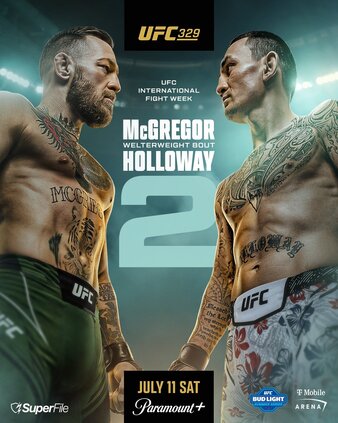
Bantamweight Bout • UFC 329: McGregor vs. Holloway 2
Saturday, July 11, 2026 • T-Mobile Arena, Las Vegas
Explore Detailed Fighter Profiles
Click on either the fighter's name or profile image for each fighter to access comprehensive UFC statistics including striking metrics, grappling data, clinch performance, complete fight history, offensive & defensive analytics, and round-by-round breakdowns.

Farid Basharat
Fighter Metrics
Victory Methods
Win Round Distribution

Ethyn Ewing
Fighter Metrics
Victory Methods
Win Round Distribution
📋 Last 5 Fights - Farid Basharat
| Date | Opponent | Result | Method |
|---|---|---|---|
| 2025-10-04 | Chris Gutierrez | W | U-DEC (3, 5:00) |
| 2025-05-17 | Jean Matsumoto | W | S-DEC (3, 5:00) |
| 2024-10-26 | Victor Hugo (FW) | W | U-DEC (3, 5:00) |
| 2024-01-13 | Taylor Lapilus | W | U-DEC (3, 5:00) |
| 2023-09-02 | Kleydson Rodrigues | W | SUB (Arm Triangle) (1, 4:15) |
📋 Last 5 Fights - Ethyn Ewing
| Date | Opponent | Result | Method |
|---|---|---|---|
| 2025-11-15 | Malcolm Wellmaker (FW) | W | U-DEC (29-28, 29-28, 30-27) (3, 5:00) |
| 2025-11-08 | A1 Combat Interim BW Title | W | KO/TKO (—, —) |
| 2025 | Regional (10-fight win streak) | W | — (—, —) |
Technical Analysis
Technical Score
Cardio Score
Overall Rating
📊 Technical Score
Calculated as the average of Striking Composite (71 vs 61) and Grappling Composite (76 vs 52). Basharat's 17-point edge is driven almost entirely by the grappling chasm — elite takedown volume against unproven takedown defense.
💪 Cardio Score
Based on average fight duration, striking rate per minute, takedown rate, and finish rate. Measures cardiovascular endurance and ability to maintain pace throughout fights.
🎯 Overall Rating
Simple average of Technical Score and Cardio Score. Provides a holistic view of fighter capabilities combining skill level with physical conditioning and fight performance.
Striking Composite
Grappling Composite
Technical Radar Comparison
Visual comparison of key performance metrics between both fighters
📊 Detailed Statistical Comparison
🥊 Fight Analysis Breakdown
🧩 Farid Basharat Key Advantages
Basharat's 3.97 takedowns per 15 minutes is nearly triple the bantamweight average (1.49) and sits around the 90th percentile of the division — and it is reinforced by elite clinch wrestling (34 clinch takedowns on 76 attempts, 44.7% clinch-TD accuracy in the fight records). It points directly at the single biggest hole in the matchup: Ewing has no measured takedown defense and no UFC tape of stopping a real wrestler. Basharat doesn't need to shoot from distance — he chains takedowns off the clinch, off leg-kick entries, and off the cage. Every minute the fight spends on the mat is a minute in his world, and his 80% takedown defense means he is just as hard to put down himself.
Ewing's only path to an upset is power. Basharat has never been knocked down — zero knockdowns absorbed across his entire documented career, the rarest durability tier in the system (Chin: IRON). On top of that he is hard to even hit cleanly: 2.57 strikes absorbed per minute (vs the 4.19 BW average, roughly 88th percentile) and 60% striking defense. His career damage ratio of 2.03 (vs 1.20 division average) means he out-lands and out-defends opponents by better than two-to-one. The one weapon that most threatens a favorite — a clean power shot — is the exact weapon Basharat is statistically best-equipped to survive.
Five of Basharat's six Octagon wins came by decision, his average fight time of 12:51 is among the longest in the division, and his control time actually rises late — to 143 seconds in Round 3, his highest of the fight. He opens with a heavy leg-kick campaign (48.5% of his R1 strikes go to the legs) to chop the base and mute the power, then climbs head-targeting from 37.9% to 62.4% across the rounds before closing with wrestling. He does not need to hurt Ewing; he needs to out-position him for 15 minutes, and his entire skill set is optimized to do exactly that. He is one of the safest "wins the rounds" bets in the division.
⚠️ Unfavorable Scenarios
Basharat's leg-kick entries get timed and countered — Ewing steps in on the kick and lands a clean power shot. The chin is iron, but his 60% striking defense is not impenetrable, and Ewing already proved against a feared one-shot finisher (Wellmaker) that he can stay composed and dangerous in the pocket. One flush counter from a genuine puncher is the single asymmetry Basharat cannot reciprocate, and his best power window for Ewing is early in Round 1, before the legs are chopped and while a slow-starting Basharat (25% of fights) is most catchable.
If Basharat's takedowns stall against the cage and Ewing's "underrated grappling" produces quick stand-ups, the fight becomes the standing boxing match Basharat cannot win on power and only narrowly contests on volume (he throws at a roughly average 4.36 SLpM with zero knockdown power). The cautionary precedent is the Jean Matsumoto split decision — the one time an opponent matched his pace and contested his wrestling, his lack of a finishing gear left the rounds on a razor's edge. Ewing is a more dangerous striker than Matsumoto, and on a massive card the close-fight variance bites the fighter who can't separate with a finish.
📋 Likely Gameplan
Open with the leg-kick barrage (48.5% of R1 strikes to the legs) to chop the base, mute the power, and slow the footwork before Ewing settles into boxing range. Refuse the pocket and fight at the end of the 71" reach behind jabs and kicks, denying Ewing the phone-booth war where his power lives. Then chain takedowns off the clinch rather than gambling on long shots from space — his 44.7% clinch-TD accuracy says tying up, tripping, and driving against the cage is exactly where his wrestling is most efficient.
From side control and mount, work the arm-triangle squeeze that finished Kleydson Rodrigues — live every time Ewing concedes position on a scramble. If it isn't there, accumulate control time and ground strikes to win the round outright. When ahead, close each round by taking Ewing down and riding (the documented blueprint: R3 control 143 seconds on 2.0 takedowns). There is no finish urgency — his game is a 15-minute clinic, so he should win the minutes rather than chase the knockout he doesn't have.
🚀 Ethyn Ewing Key Advantages
This is the most important asymmetry in the fight: Ewing can end it with one shot; Basharat cannot. Ewing knocked out a Contender Series veteran to win the A1 Combat interim bantamweight title and showed genuine pocket power against Wellmaker, while Basharat carries a 0.00 career knockdown average and an 8% career KO rate — minimal one-shot threat. Against a favorite with no knockdown history of his own, Ewing's puncher's chance is real and persistent: every exchange across three rounds carries his out, and the model keeps that KO lane firing at a live 14%.
The Wellmaker tape is the perfect stress test: on roughly 48 hours' notice and up a weight class at featherweight, Ewing out-boxed a feared, previously-undefeated finisher, stayed composed in the pocket, was never hurt, and added takedowns down the stretch to seal a clear unanimous decision. If this fight becomes a kickboxing match, his hands may be the best on the night — and Basharat's average-volume, zero-power striking is beatable in a pure striking contest. Crucially, the short-notice asterisk is gone: UFC 329 gives Ewing a full camp at his natural bantamweight, by definition a better-prepared version than the one we have already seen over-deliver.
⚠️ Unfavorable Scenarios
The fight's decisive variable is Ewing's unproven takedown defense. If it doesn't hold, Basharat clinches, trips, and grinds out 100+ control seconds per round, and Ewing spends the night carrying weight and defending instead of punching. Scoring takedowns on a fellow striker (as he did late vs Wellmaker) is a very different test than stopping a wrestler who throws nearly four per 15 minutes and chains them off the clinch. There is simply no data on how he handles a grappler of Basharat's class — and that absence is exactly where the favorite's win share lives.
If Ewing gives up his back or hips in a scramble he can walk into the arm-triangle that finished Rodrigues — Basharat's one proven finish is exactly the kind of mistake-punisher a striker can hand him on the mat. The compounding danger is the R1 leg-kick campaign: by Round 3 his base is degraded, his power is muted, and his stand-ups slow. And even in the best case where he wins the striking minutes, he can still lose the rounds — Basharat's takedowns and control time score higher with the judges, the hard lesson that out-boxing a wrestler isn't enough without takedown defense.
📋 Likely Gameplan
Ewing's optimal strategy is to cut the cage, close the two-inch reach gap, and turn it into the boxing match where his hands and power are the best weapons in the cage. He should time the leg kicks with counters — step in on Basharat's R1 leg-kick rhythm and punish the entries, making the favorite pay for his signature opener. His best window to land the equalizer is early, in Round 1, while his base and power are fresh and before Basharat's wrestling rhythm is established. Take the puncher's chance when it is at its sharpest.
The fight is won or lost on takedown defense — Ewing must sprawl, frame, hand-fight on the cage, and refuse to spend minutes on the mat, because quick stand-ups erase Basharat's primary scoring lane. He has to protect the neck and hips in every scramble (never give up side control cheaply, never panic into a front headlock) so the arm-triangle never gets live. Then he leans on the late-round strength he showed against Wellmaker: if it's close entering Round 3, out-work a fading Basharat — whose output dips 15% from R1 to R3 — to steal the championship-adjacent frame and the fight.
🎯 Fight Prediction Analysis
Data-driven prediction model based on statistical analysis
📊Detailed Analysis Summary
🔍The Information Asymmetry
This is the rare matchup where the quality of the data on each side is itself a handicapping variable. Basharat is fully measured — career stats, computed metrics (data-quality 1.00), a complete R1–R3 round-by-round profile, and a 6-0 UFC log. Ewing is almost entirely undocumented: a single UFC fight and a regional resume, with no career stats, no computed metrics, and no round-by-round data. Markets and models both tend to over-favor the well-documented fighter simply because his edges are legible and his opponent's are invisible. The discipline here is to resist treating "we haven't measured Ewing's takedown defense" as "Ewing has bad takedown defense." It is unknown — and unknowns in a fighter who just upset an undefeated finisher on two days' notice should be priced as live, not dead.
🎯Technical Breakdown
On every dimension the fight records can actually measure, Basharat is the more complete fighter — his 3.97 TD/15 (~90th pct) against the 1.49 division average is the most decisive number in the matchup, and it is reinforced by elite clinch wrestling (44.7% clinch-TD accuracy) and 80% takedown defense. He is also elite at not getting hit (2.57 SApM, 60% striking defense) and carries a rare Iron chin. The two places he is not elite matter just as much: he has zero one-shot power (0.00 KD average, 8% career KO rate) and merely average submission volume, so his realistic winning method is decision or grind-to-submission, not knockout. Ewing's entire case rests on the two things the model cannot yet grade — his power and his unproven takedown defense. If those resolve in his favor, the measured gap shrinks dramatically; if they don't, Basharat banks control minutes and rounds.
🧩Key Battle Areas
Every credible path to a Basharat win runs through his wrestling, and every credible path to an Ewing upset runs through stopping it. Basharat throws nearly four takedowns per 15 minutes and lands clinch takedowns at 44.7%; if Ewing defends 70%+ and stands up quickly, the fight becomes a striking match that is genuinely close-to-favorable for the puncher, and if he defends 50% or less the decision is academic. There is no fight records number to resolve this — it is the fight's true coin-flip. The second irreconcilable unknown is power vs Iron chin: Ewing's most reliable weapon against the one trait of Basharat's that has never been cracked (0 knockdowns absorbed). The chin is the favorite; the power is the live longshot, and the longer it stays standing the more chances the equalizer gets to fire.
🏁Final Prediction
The most likely outcome is Farid Basharat by Decision (42% probability) — the heart of his case, reflecting 5 of 6 UFC decisions, a 12:51 average fight time, elite control conditioning, and a wrestling lane against unproven takedown defense. His submission path (16%) is anchored by the proven arm-triangle from top control, live every time Ewing concedes position, while his KO/TKO lane is deliberately tiny (4%) because he has no one-shot power. Ewing's most probable winning method is a decision (18%) — branches where his takedown defense holds, the fight stays standing, and he out-boxes or late-surges past Basharat — with his most distinctive path being the live KO/TKO (14%) and a low submission tail (6%). Overall: Basharat 62%, Ewing 38%, with the distance by far the most likely destination.
💰 Betting Analysis: Model vs Market
Detailed value assessment in the betting market
📊Market Odds
🤖Analytical Model
💎Value Opportunities
MAXIMUM VALUE
Model: ~75% | Market implied: 61.5%
GOOD VALUE
Model: 42% | Fair: +135
SLIGHT VALUE
Model: 14% | Fair: +550
⚠️Key Market Discrepancies
- • Over-favors the documented fighter – Markets reward Basharat's legible edges over Ewing's invisible ones.
- • Misprices the data gap – Ewing's unknown takedown defense is priced as bad, not merely unmeasured.
- • Distance is underpriced – No KO power (0 career KDs) plus a proven chin pulls hard toward the scorecards.
🎯 Comprehensive Probabilistic Analysis
100 hypothetical fight simulation based on statistical data
🏆Outcome Distribution - Farid Basharat
The bankable outcome — out-positions for 15 minutes
Arm-triangle from top control (the Rodrigues finish)
Tiny — 0 career knockdowns, 8% career KO rate
💥Outcome Distribution - Ethyn Ewing
Most probable path — TDD holds, out-boxes or surges late
The live longshot — real power vs a favorite who can't reply
Low — not his game; scrambles keep it nonzero
⏰Fight Timeline Analysis
⚡Window of Opportunity - Ethyn Ewing
- • Round 1 power window: Land the equalizer before the legs are chopped.
- • Defend the clinch: Sprawl, hand-fight, and stand up fast to erase the wrestling lane.
- • Force the pocket: Close the reach; make it the boxing match he can win.
🎯Progressive Dominance - Farid Basharat
- • Leg-kick campaign: 48.5% R1 leg targeting chops the base.
- • Chain takedowns: 44.7% clinch-TD accuracy banks control time.
- • Close rounds wrestling: R3 control 143s to win the cards.
🎯 Final Confidence Assessment
Confidence level and uncertainty factors
Confidence Level
A clear Basharat lean held to moderate — half the matchup has never been measured
✅Supporting Factors
- • Elite takedown volume (3.97 TD/15, ~90th pct) vs unproven TDD
- • Iron chin (0 KD absorbed, ever) neutralizes Ewing's power
- • Sky-high decision floor — 5 of 6 UFC wins by decision
- • Archetype baseline: Technical Striker vs Striker = 61.0%
⚠️Risk Factors
- • Ewing essentially un-scouted; takedown defense unknown
- • Ewing has real power; Basharat has none (0 KD)
- • Matsumoto precedent — rounds turn into coin-flips
🏁Executive Summary
Run the fight 100 times and the recurring pattern is this: in roughly 62, Basharat's leg-kick-into-clinch-into-wrestle sequence wins the exchanges that matter, he banks control minutes (especially in the third round, where his control time spikes to 143 seconds on 2.0 takedowns), and he leaves with a decision — occasionally upgrading to the arm-triangle when Ewing concedes position. He does not knock Ewing out; he out-positions him for 15 minutes, the way he has out-positioned almost everyone (15-0, 6-0 UFC, never finished, never knocked down). In the remaining 38, either Ewing's "underrated grappling" is real takedown defense — he stuffs the shots, forces the boxing match, and out-lands a powerless, average-volume favorite — or his genuine power simply does what power does to a man who has to keep closing distance and wrestling. The honest framing: the data favors Basharat by a clear-but-not-overwhelming margin, and the width of the error bars on Ewing's side is the reason this fight is live.
Prediction: Farid Basharat by Decision most likely (42% of the 62% overall), with a live submission upgrade (16%) via the arm-triangle from top control; Ewing's best path is a decision of his own (18%) if his takedown defense holds, backed by a genuine puncher's chance (14% KO/TKO). This fight will be decided by Ewing's takedown defense and Basharat's inability to finish — the undefeated grinder is the pick, and the short-notice gatecrasher is the live dog the model knows the least about.