
Jackson McVey vs Wes Schultz
Middleweight Bout • UFC Fight Night: Hernandez vs. Rodrigues
Saturday, August 22, 2026 • Golden 1 Center, Sacramento
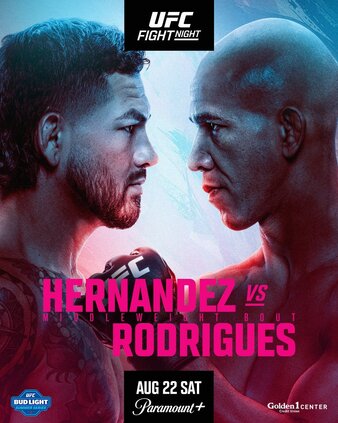
Explore Detailed Fighter Profiles
Click on either the fighter's name or profile image for each fighter to access comprehensive UFC statistics including striking metrics, grappling data, clinch performance, complete fight history, offensive & defensive analytics, and round-by-round breakdowns.
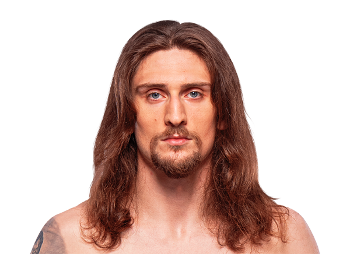
Jackson McVey
Fighter Metrics
Victory Methods
Win Round Distribution
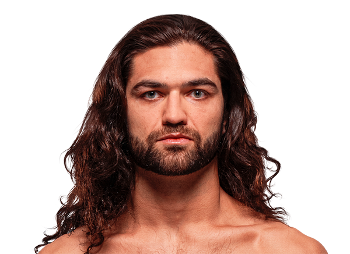
Wes Schultz
Fighter Metrics
Victory Methods
Win Round Distribution
📋 Last 5 Fights - Jackson McVey
| Date | Opponent | Result | Method |
|---|---|---|---|
| 2026-04-25 | Sedriques Dumas | W | Submission (D'Arce Choke) (R1, 2:14) |
| 2025-11-08 | Zach Reese | L | Submission (Rear-Naked Choke) (R2, 1:38) |
| 2025-07-19 | Brunno Ferreira | L | Submission (Armbar) (R1, 3:35) |
| 2025-06-13 | Mataeo Garner | W | TKO (Knees & Punches) (R1, 1:28) |
| 2024-09-20 | Ben Fowler | W | Submission (Brabo Choke) (R1, 0:33) |
📋 Last 5 Fights - Wes Schultz
| Date | Opponent | Result | Method |
|---|---|---|---|
| 2026-05-02 | Ben Johnston | W | Submission (Guillotine Choke) (R3, 1:50) |
| 2026-02-28 | Damian Pinas | L | TKO (Strikes) (R1, 2:30) |
| 2025-10-14 | Mario Mingaj | W | Submission (Suloev Stretch) (R1, 1:51) |
| 2025-04-12 | Dustin Pape | W | Submission (Guillotine Choke) (R1, 0:55) |
| 2024-08-13 | Mansur Abdul-Malik | L | TKO (Ground and Pound) (R2, 3:55) |
Technical Analysis
Technical Score
Cardio Score
Overall Rating
📊 Technical Score
Estimated from real UFC.com career rates, not a statistical record composite — neither man has a round-by-round profile, and the underlying samples are tiny (3 Octagon fights for McVey, 2 for Schultz). Treat these scores as directional. The real read still leans heavily on records, physicals, age, and the shape of each fighter's wins and losses.
💪 Cardio Score
Based on average fight duration, striking rate per minute, takedown rate, and finish rate. Measures cardiovascular endurance and ability to maintain pace throughout fights.
🎯 Overall Rating
Simple average of Technical Score and Cardio Score. Provides a holistic view of fighter capabilities combining skill level with physical conditioning and fight performance.
Striking Composite
Grappling Composite
Technical Radar Comparison
Visual comparison of key performance metrics between both fighters
📊 Detailed Statistical Comparison
🥊 Fight Analysis Breakdown
🧩 Jackson McVey Key Advantages
At 6'4" with a southpaw stance, McVey owns the outside lead foot and a straight left that arrives from Schultz's blind side — two inches of height stacked on top of a hard-to-read angle. The one measured negative on Schultz's record is a first-round TKO, which means the exact phase of the fight where McVey's frame and power are most decisive is also the phase where Schultz has already been proven breakable at this level. It is the single cleanest edge in the fight that requires no invented data — just height, stance, and the shape of Schultz's lone stoppage loss.
McVey has been submitted, but he has never been stopped by strikes — the fight log shows two submission losses and zero knockouts. In a striking exchange his chin is at worst a question mark and at best an asset, while Schultz's is the one documented liability in this fight (that first-round TKO to Pinas). Stack the two-inch height edge on top and the standing exchanges tilt McVey's way on frame, power and proven toughness. It is a qualitative lean, not a quantified one — neither man's volume or accuracy is measured — but on the feet the shape of the evidence points to the younger, taller, harder-to-hurt man.
An MMA Lab wrestler with a real offensive grappling game (the Dumas D'Arce), McVey is the more likely man to dictate where this fight happens — keeping it standing or controlling from top position rather than living in Schultz's world. He is also three years younger (27 vs 30), and in a three-round finish-or-be-finished sprint the fresher man's recovery between exchanges is a live edge. Crucially, he is a finisher, not a survivor: a 100% finish rate with both hands and submissions means he brings his own two-way ending threat rather than merely defending Schultz's — he has never needed, and has never won, a decision.
⚠️ Unfavorable Scenarios
The nightmare: McVey shoots a takedown or forces a scramble against a guillotine specialist and gets caught in the neck — the exact Ferreira/Reese pattern repeating against the worst possible opponent for that flaw. Both of McVey's UFC losses are submissions, and every level change he attempts hands Schultz the grip he finishes with. His own aggression on the mat is just as dangerous: it opened an armbar for Ferreira and a back-take for Reese, and Schultz submits people for a living.
McVey lets Schultz weather the early storm, the fight reaches Round 3, and Schultz lands the late guillotine he beat Johnston with. This is the round that most favors the older man: McVey has never fought past Round 2 and his deep-water game is a total unknown, while Schultz has already closed a fight in the third. If McVey can't turn his early edges into a finish, the fight drifts into the exact territory where Schultz's proven, late-arriving submission threat is most dangerous.
📋 Likely Gameplan
McVey should fight tall and long from the opening bell — using the southpaw straight left and the reach to punish Schultz's entries and attack the durability question the Pinas fight exposed. Rounds 1 and 2 are his window and his identity: with a 100% finish rate and a front-loaded profile (the Dumas finish came at 2:14 of the first), he wants to close the show before the older man's late guillotine threat ever matters. Pressure the chin early, hunt the finish, and don't let this become a patient waiting game.
If McVey wrestles, he must wrestle on his terms — using position and top control rather than deep, neck-exposed shots that feed the guillotine. The single recurring way he loses is giving up his arm or his back in transition (Ferreira's armbar, Reese's back-take), so discipline in the scramble is the whole fight. Make Schultz grapple from disadvantage instead of handing him the grip; stay tidy, keep the exchanges short, and never turn a control position into a submission opportunity for the better finisher.
🚀 Wes Schultz Key Advantages
No stylistic matchup in this fight is cleaner than "submission artist vs. a man elite grapplers have repeatedly tapped." McVey's only two career losses are submissions; Schultz has six career submission wins and a signature guillotine. And the guillotine punishes exactly the wrestling McVey wants to use — a shot into a guillotine specialist is how grapplers get caught, and every McVey level change carries neck-exposure risk. The Johnston finish shows the grip is money when Schultz gets it. This is his entire path, and it is a real, recurring one aimed straight at McVey's one proven flaw.
Schultz is the more decorated finisher on paper — 9-3 with an ~89% finish rate — and his danger does not evaporate if the early rounds are close: he has a Round-3 submission on his UFC ledger and can win the fight in the championship minutes, exactly the water McVey has never swum in. He is also rangy for his height (a 77" reach on a 6'2" frame lets him fight longer than he stands), and a two-try Contender Series path plus the bounce-back win over Johnston show a fighter who adjusts after adversity — precisely what he did between the Pinas loss and the Johnston finish.
⚠️ Unfavorable Scenarios
The cautionary tape: a 6'4" southpaw with power finds Schultz early and stops him on the feet before his grappling ever comes online — exactly how Damian Pinas ended his Octagon debut inside a round. Against three KO wins, length and a blind-side straight left, "was stopped early once at this level" is a flag that cannot be waved away. The opening minutes are Schultz's danger zone, and they are precisely the window where McVey's frame and power live.
Schultz can't close the distance safely against the length, eats the straight left on his entries, and never gets the grip he needs. The slow-burn version is just as real: age and the size disadvantage compound over three rounds, and the younger, bigger man simply banks the control and the clean shots. As the older fighter (30 vs 27) with no measured cardio profile to lean on, Schultz has to make something happen on the mat — if he can't, the frame, youth and stance quietly decide it against him.
📋 Likely Gameplan
Schultz's whole night starts with getting through the first five minutes intact. The Pinas loss and this size/stance matchup make the opening round the danger zone — so the priority is defensive: manage distance, don't get cracked walking in, and weather McVey's early power window. He is a grappler who has to survive to grapple, and the Johnston win is the template that works: stay in the fight early, then let his best phase arrive. Get past the storm and the fight tilts back toward him.
Get it to the mat and hunt the neck — Schultz's six career subs and the guillotine are the game, and every McVey shot is an invitation. The cleanest counter he owns is to bait the wrestler into shooting into the guillotine, then close the grip the way he did against Johnston. And he must carry the threat late: with a Round-3 finish already on tape, if the early rounds are close he should keep pressing for the submission into deep water, where his experience closing fights — and McVey's total lack of it past Round 2 — can decide it.
🎯 Fight Prediction Analysis
Data-driven prediction model based on statistical analysis
📊Detailed Analysis Summary
🕳️A Thin-Sample Data Picture
Neither Jackson McVey nor Wes Schultz has round-by-round data in the statistical record, and UFC.com's own career rates for both men rest on tiny Octagon samples — three fights for McVey, two for Schultz. We use those real, sourced rates (SLpM, accuracy, takedown and submission attempt rates) rather than showing nothing, but we do not let a thin sample masquerade as a proven skill ceiling: the composites built from them are explicitly labeled "estimated," and the projection still leans primarily on verified records, physicals, age, and the shape of each man's wins and losses. We price the sample size into a deliberately low conviction. It is a 🔴 High-Risk matchup on both sides — so the variance here is large regardless of what the rate stats say.
🪞The Mirror-Image Flaw Matchup
Strip the fight to its essence and it is astonishingly symmetrical. McVey finishes everyone (100% finish rate) and has never been KO'd — but he has been submitted twice at UFC level. Schultz finishes nearly everyone (~89%) and is a six-submission specialist — but he was stopped by strikes in Round 1 in his Octagon debut. Each man's greatest strength is aimed directly at the other's only proven weakness: McVey's power and length target Schultz's chin; Schultz's submission game targets McVey's scramble defense. The small-sample rate stats reinforce rather than contradict this picture — McVey's real edge is on the feet (SLpM 6.51, StrAcc 69% vs. Schultz's 2.91/47%), while Schultz's is on the mat (Sub/15 3.59 vs. McVey's 1.20) — which is precisely why an information-poor prospect fight is a genuine coin-flip with a lean rather than a mismatch.
🧩The Three Unknowns
Three questions decide everything. First, where does the fight live? McVey's wrestling base should let him dictate location — if he keeps it standing or controls from safe top position, his length and power win; if Schultz drags it into scrambles, the guillotine is live. Second, whose flaw shows first? A McVey KO of a chin-questioned Schultz, or a Schultz submission of a twice-tapped McVey — both are documented, recurring outcomes, and the order they arrive in is the fight. Third, does the size-and-age gap tell over three rounds? Younger, taller, southpaw vs. older, shorter, orthodox is a real but modest structural edge — enough to lean, not enough to trust.
🏁Final Prediction
McVey's single largest win path is the KO/TKO (26%) — the product of his height, southpaw power, three KO wins and Schultz's documented first-round stoppage loss; if either man ends this on the feet, it is most likely McVey. His submission (14%) reflects a real offensive grappling game (the Dumas D'Arce) but is capped because Schultz is the better grappler, and his decision path (14%) is modeled with genuine hesitation since he has never won one. Schultz's biggest category is the submission (24%) — six career subs and a guillotine aimed at a man whose only two UFC losses are submissions — ahead of his KO/TKO (12%) and decision (10%). Across the fight: KO/TKO 38%, Submission 38%, Decision 24% — roughly 76% inside the distance.
💰 Betting Analysis: Model vs Market
Detailed value assessment in the betting market
📊Market Odds
🤖Analytical Model
💎Value Opportunities
MAXIMUM VALUE
Model: 76% | Fair: -317
GOOD VALUE
Model: 24% | Fair: +317
SLIGHT VALUE
Model: 26% | Fair: +285
⚠️Key Market Discrepancies
- • Underprices inside-the-distance – One decision win in 16 combined victories; ~76% model vs 72% implied.
- • Clean finishing lanes – Each man's weapon points straight at the other's proven weakness (power vs chin, subs vs neck).
- • Both thin-sample – Real UFC.com rate stats exist for both men but rest on <3 UFC bouts each, the widest error bars in the series.
🎯 Comprehensive Probabilistic Analysis
100 hypothetical fight simulation based on statistical data
🏆Outcome Distribution - Jackson McVey
Largest path — height, southpaw power, Schultz's R1 TKO loss
Real offensive grappling (the Dumas D'Arce), but capped
Modeled with hesitation — he has never won a decision
💥Outcome Distribution - Wes Schultz
Biggest single path — six subs and a guillotine vs McVey's neck
Two career KOs and rangy standup, held down by size/stance
Least likely — unlikely to out-point the younger, bigger man
⏰Fight Timeline Analysis
🕸️Late-Fight Threat - Wes Schultz
- • Survive the storm: Get through the opening five minutes intact.
- • Bait the shot: Every McVey level change is a guillotine invitation.
- • Carry it late: R3 finisher vs a man never tested past Round 2.
⚡Early-Fight Edge - Jackson McVey
- • Fight tall early: Southpaw straight left into Schultz's chin question.
- • Dictate location: Wrestle from safe top, not into the neck.
- • Front-loaded finish: Close in R1–2 before the late guillotine matters.
🎯 Final Confidence Assessment
Confidence level and uncertainty factors
Confidence Level
A modest lean on the younger, longer, never-KO'd man — held with real humility given how thin both Octagon samples are
✅Supporting Factors
- • Younger (27 vs 30), taller (6'4" vs 6'2") and southpaw
- • Never been KO'd; Schultz's one UFC loss is an R1 TKO
- • Wrestling base lets him dictate where the fight lives
- • A two-way finisher (100%), not a survivor waiting to lose
⚠️Risk Factors
- • Both fighters' rate stats rest on a tiny Octagon sample
- • Schultz's submission game targets McVey's only proven flaw
- • 🔴 High-Risk: 3 and 2 UFC bouts — small samples, big variance
- • Lean inverts if McVey shoots into the guillotine early
🏁Executive Summary
Across 100 simulations two competing stories recur. In roughly 54 of them, McVey's size, stance and power decide the night — most often (26) by finding the finish on the feet against a fighter already stopped early once, sometimes (14) by imposing his own grappling for a submission, and occasionally (14) by wrestling out fifteen controlling minutes for the decision he has never actually won. He is younger, taller, fights from the harder angle, and has never been knocked out. In the other 46, Schultz's grappling turns McVey's own game against him: he survives the dangerous opening minutes (the phase that beat him against Pinas), drags the fight where he lives, and hunts the neck — most often (24) closing with the submission that has already beaten McVey twice at this level. Both fighters' rate stats rest on a tiny UFC sample (3 and 2 fights), so this 54/46 line still leans primarily on records, physicals, age and style — the widest error bars in our series.
Prediction: Jackson McVey at 54%, with his KO/TKO (26%) the single largest path; Wes Schultz's live route is the submission (24%) his six career subs and guillotine make real against a twice-tapped opponent. What we believe with genuine conviction is that this fight ends inside the distance and turns on whose documented flaw surfaces first — McVey's power threatens Schultz's chin, Schultz's submissions threaten McVey's neck. The younger, bigger man is the slim favorite, but the older grappler is precisely the wrong opponent for the one weakness on McVey's record — which is exactly why this is a four-and-not-higher lean.