
Steven Asplund vs Guilherme Pat
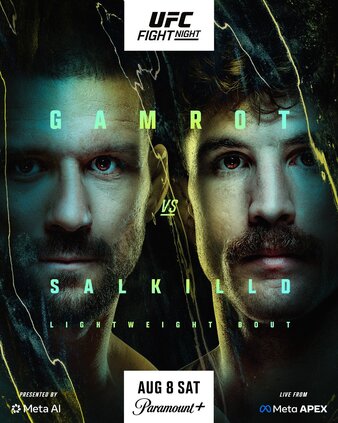
Heavyweight Bout • UFC Fight Night: Gamrot vs. Salkilld
Saturday, August 8, 2026 • Meta APEX, Las Vegas (25-foot Octagon)
Explore Detailed Fighter Profiles
Click on either the fighter's name or profile image for each fighter to access comprehensive UFC statistics including striking metrics, grappling data, clinch performance, complete fight history, offensive & defensive analytics, and round-by-round breakdowns.
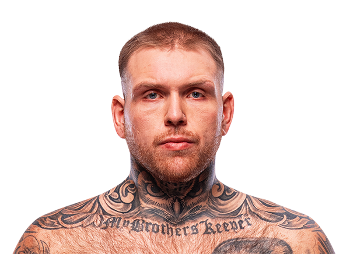
Steven Asplund
Fighter Metrics
Victory Methods
Win Round Distribution
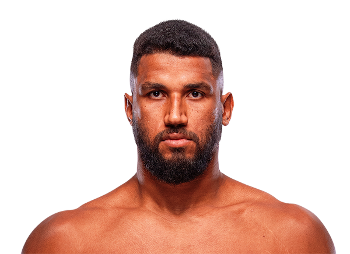
Guilherme Pat
Fighter Metrics
Victory Methods
Win Round Distribution
📋 Last 5 Fights - Steven Asplund
| Date | Opponent | Result | Method |
|---|---|---|---|
| 2026-03-14 | Vitor Petrino | L | Decision (Unanimous) (R3, 5:00) |
| 2025-12-13 | Sean Sharaf | W | KO/TKO (R2, 3:49) |
| 2025-09-09 | Anthony Guarascio | W | KO/TKO (DWCS) (R1, 0:16) |
| 2025-04-11 | Raiden Kovacs | W | KO/TKO (R2, N/A) |
| 2025-01-25 | Hammer Morton | W | KO/TKO (R3, N/A) |
📋 Last 5 Fights - Guilherme Pat
| Date | Opponent | Result | Method |
|---|---|---|---|
| 2026-04-04 | Thomas Petersen | L | Decision (Majority) (R3, 5:00) |
| 2025-12-13 | Allen Frye Jr. | W | Decision (Unanimous) (R3, 5:00) |
| 2024-08-30 | Mauricio Queiroz | W | KO/TKO (R3, N/A) |
| 2023-08-26 | Leandro Moreira | W | Decision (Unanimous) (R3, 5:00) |
| 2023-04-16 | Luis Andrade | W | TKO (Retirement) (R2, N/A) |
Technical Analysis
Technical Score
Cardio Score
Overall Rating
📊 Technical Score
Estimate-grade average of Striking Composite (~62 vs ~55) and Grappling Composite (~30 vs ~28) — small-sample, tape-derived, not DB-computed. The grappling-void formula penalizes both one-dimensional strikers; the striking sub-scores are the numbers that actually describe this fight.
💪 Cardio Score
Based on average fight duration, striking rate per minute, takedown rate, and finish rate. Measures cardiovascular endurance and ability to maintain pace throughout fights.
🎯 Overall Rating
Simple average of Technical Score and Cardio Score. Provides a holistic view of fighter capabilities combining skill level with physical conditioning and fight performance.
Striking Composite
Grappling Composite
Technical Radar Comparison
Visual comparison of key performance metrics between both fighters
📊 Detailed Statistical Comparison
🥊 Fight Analysis Breakdown
🧩 Steven Asplund Key Advantages
Power plus volume is the heavyweight cheat code, and Asplund has more of both. Six of his seven wins are knockouts, his UFC.com knockdown average (~1.25 per 15 min) sits above the heavyweight norm (1.14), and his striking output is far above division average — a genuinely high-volume approach for the weight class. In a division where one clean shot ends the night, the harder-hitting, busier man starts the fight ahead. His 50% striking defense says he will trade, but he is built to win those trades first. This is the single most tape-supported edge on the page: a documented power puncher who empties the clip early.
Asplund drops good opposition — and Pat was just dropped three times in a single round. In the Petrino fight, Asplund floored a legitimate BJJ black belt in Round 1 and nearly finished him. Pat's most recent film shows him hurt repeatedly by short right hands against the cage — from a lighter puncher than Asplund. Aim the harder man's most reliable weapon at the opponent's freshest, most exposed wound and the math points one way. This is the crux of the lean: a 6-KO finisher pressing forward into a chin that was cracked three times last month.
Three quieter edges stack in Asplund's favor. He is four years younger (28 vs 32) in a division unforgiving to aging chins and legs — and Pat's late-round output has cratered. His default mode is forward pressure, which is exactly Pat's kryptonite: physical pressure made Pat passive and backed him to the fence against Petersen. And his takedown defense is real — he stuffed a black belt's shots at 100% on the night, so nothing Pat does grappling-wise threatens him. Youth, forward pressure, and a locked takedown defense let Asplund fight his fight without fear of the mat.
⚠️ Unfavorable Scenarios
Asplund's own cardio is the fraud the Petrino fight hinted at. If he empties the tank chasing the early finish, Pat weathers Rounds 1–2 behind the jab, and a fresher-enough Pat out-points him down the stretch on the cards — the same script that just cost Asplund a competitive decision. Against Petrino his output dropped and he was outworked and bloodied over the back half. He has one UFC "deep water" data point and it went against him. Every second past Round 2 is a second closer to the pattern that already beat him.
Pat's +3" reach controls the center, Asplund eats jabs coming in, his 50% striking defense shows, and he loses a range-striking decision he could never close. Worse: his forward pressure walks him onto a clean Pat counter left hook — and Pat does have four career KOs — so the harder-to-hit man lands the fight-ending shot first. The exact tool that makes Asplund dangerous (marching forward behind heavy hands) is also the tool that hands a sharp counter-puncher his best opening. Entering behind feints rather than straight lines is the difference.
📋 Likely Gameplan
Asplund's edge is volume, power, and Pat's slow starts, so he should press from the opening bell and make Pat fight early — before he warms into his Round-2 rhythm (Pat landed just five strikes in the opening round vs. Petersen). From there, cut the cage and back Pat to the fence: physical pressure is what turns Pat passive and hittable, so reproduce the Petersen blueprint but with heavier hands. The danger to respect is the counter, not the takedown — enter behind feints, not straight lines, to avoid the clean left hook.
Pat wilts late, so investing in body work in Round 1 compounds into the third-round collapse he has already shown — target the body to accelerate the fade, then head-hunt. Above all, Asplund should finish inside ten minutes: his own tank is the risk, so urgency is strategy, not recklessness. Every second past Round 2 drifts toward the Petrino script where his output dropped and he got outworked. Close the show in Rounds 1–2, where his power, volume, and Pat's slow-starting fragility all point the same direction.
🚀 Guilherme Pat Key Advantages
The range game is Pat's clearest path. He owns +3" of reach (81" vs 78") and a documented 62% striking accuracy — the best single trait in the fight. If he fights long and disciplined behind the jab, he can pot-shot Asplund's 50% striking defense from where the shorter man cannot reach back, and never be there to be hit on the way in. The length amplifies the accuracy: he lands clean from distance and forces Asplund to cover ground behind straight lines that a sharp counter-puncher can punish. Fight from the end of the jab and the whole complexion changes.
Pat is the more distance-tested, cleaner technician. Both his UFC fights went the full 15 minutes, and he has never been finished — even dropped three times, he survived to the final bell. If Asplund's tank is the fraud, Pat is built to drag him into the championship minutes where Asplund has already faded once. His debut, a lopsided decision over the unbeaten Allen Frye Jr., showed real craft — footwork, timing, counter left hooks. And that counter is live: he owns four career KOs, so if Asplund overcommits on his volume, the left hook is a fight-ender.
⚠️ Unfavorable Scenarios
Pat's slow start is a real, recent data point — five strikes in a round vs. Petersen — and it hands Asplund the opening frame. If Asplund's Round-1–2 power then finds the same chin Petersen just cracked, this is a knockout loss inside two rounds. Pat's peak danger window (Round 2) does not arrive until after Asplund's peak danger window has already opened; ceding the first frame to a 6-KO puncher who is hunting the early finish is the fastest way for August 8 to end badly for "Kong."
If Pat drifts "too patient" again — the exact word used to describe his UFC loss — he gets backed to the cage by the heavier man and the fight becomes a pressure-and-volume beating, the Petersen third round extended over 15 minutes. From there the durability flag turns terminal: one Asplund right hand against the fence, and the man who was dropped three times last month doesn't get up this time. Passivity under forward pressure is the single thread connecting every version of this fight where Pat loses.
📋 Likely Gameplan
Pat's optimal plan is to fight long — jab, jab, angle — weaponizing the +3" reach and 62% accuracy to make Asplund cover distance to land and pay on the way in. Critically, he must NOT be "too patient": his UFC loss came from passivity, so he has to use the range actively and bank rounds with output rather than spectate behind it. And he must circle off the cage relentlessly — his nightmare is being backed up and pressured, so staying in open space, where his length rather than Asplund's mass decides exchanges, is the whole game.
Pat's win most often lives in the championship minutes. If he survives Asplund's Round-1–2 storm, the fight tilts toward the fresher-feeling fighter and his distance stamina — so make Asplund swim. The non-negotiable adjustment is defensive: he must tighten up against the right hand on the fence, the exact shot Petersen dropped him with and the exact shot Asplund throws hardest. If he has fixed that hole, he wins more of this fight than the tape suggests; if he hasn't, no amount of range keeps him upright for 15 minutes.
🎯 Fight Prediction Analysis
Data-driven prediction model based on statistical analysis
📊Detailed Analysis Summary
🏟️Cage Dynamics
Meta APEX's 25-foot Octagon — five feet tighter than the standard cage — quietly favors the pressure fighter, and that is Asplund. Less room to circle means Pat has fewer feet in which to weaponize his +3" reach and keep the fight at the end of his jab; the smaller cage makes it easier for the heavier man to cut off angles, back Pat to the fence, and reproduce the physical-pressure trap that turned him passive against Petersen. Pat can still make the space work if he circles off the cage relentlessly, but in a small Octagon the forward-marching finisher gets to his preferred range faster and more often. It is a subtle structural nudge toward the aggressor.
🎯Technical Breakdown
A hard caveat first: these are estimate-grade numbers over one-to-two UFC fights, not DB-computed composites — treat the gap as a lean, not a gulf. That said, the small samples point consistently one way. Asplund brings the volume (a sample-inflated ~10 SLpM that reads as "elite output for a heavyweight"), the documented power (~1.25 KD/15, six career KOs), and youth; Pat brings the reach (81") and the accuracy (62%). The tie-breaker is durability under pressure, and there the tape is one-directional — Pat was dropped three times in a round last month, and Asplund is a harder puncher than the man who did it. Grappling is a near-null factor: neither wrestles, and the composites cancel out.
🧩Key Battle Areas
Three swing factors decide this. First, Asplund's tank: real for 15 minutes and his volume-plus-power grinds Pat down; the fraud the Petrino fight hinted at and Pat's distance stamina steals the back half — the single biggest unknown on the page. Second, Pat's chin under pressure: a bad night against Petersen and he is live in every round; a genuine durability crack and Asplund, a harder puncher, exploits it faster. Third, who imposes rhythm first — Asplund pressing early vs. Pat establishing the jab. Both are creatures of momentum, so the man who wins the opening two minutes very likely wins the fight. The round shapes even rhyme: Asplund's peak (R1–R2) collides with Pat's slow, warming-up start.
🏁Final Prediction
The single most likely outcome is Asplund by KO/TKO (33%) — a documented power puncher meeting a man just dropped three times in a round, with no wrestler on either side to steer the fight to the cards. His decision path (21%) captures the version where his volume banks Rounds 1–2 and his tank holds just enough to out-work a too-patient Pat. Pat's best route is a disciplined range-striking decision (24%) — the Frye blueprint, surviving the early storm to out-point a fading Asplund — with a live counter KO/TKO (20%) against Asplund's 50% striking defense. Submissions are token (1% each). Held with humility: a modest lean, priced small.
💰 Betting Analysis: Model vs Market
Detailed value assessment in the betting market
📊Market Odds
🤖Analytical Model
💎Value Opportunities
MAXIMUM VALUE
Model: 33% | Implied: 34.5% (fair — his most likely method)
GOOD VALUE
Model: 20% | Implied: 19.0% — counter power vs 50% defense
SLIGHT VALUE
Model: ~82% | Implied: 75% — slight YES value
⚠️Key Market Discrepancies
- • May under-price the KO – Both men enter off decisions, so the market can lean "goes the distance"; the tape (6 KOs vs a thrice-dropped chin) argues otherwise.
- • Live-dog counter is real – Pat's four KOs vs Asplund's 50% striking defense make +425 a legitimate, under-appreciated puncher's-chance route.
- • Size all small – Two analytics-blank prospects, 1–2 UFC fights each; the whole 55/45 line is tape-driven and fragile. Small stakes only.
🎯 Comprehensive Probabilistic Analysis
100 hypothetical fight simulation based on statistical data
🏆Outcome Distribution - Steven Asplund
Primary path — heavy hands vs a thrice-dropped chin
Volume banks R1–R2; tank holds just enough
Token scramble variance — zero career subs
💥Outcome Distribution - Guilherme Pat
His best path — the Frye blueprint, out-point a fading Asplund
Clean counter left hook vs Asplund's 50% striking defense
Token — neither man threatens submissions
⏰Fight Timeline Analysis
⚡Window of Opportunity - Guilherme Pat
- • Counter power: One clean left hook flips it — 4 KOs vs a 50%-defense presser.
- • Fight long: +3" reach and 62% accuracy keep it at the end of the jab.
- • Deep water: Survive R1–R2 and distance stamina can steal the back half.
🎯Primary Path - Steven Asplund
- • Front-loaded: Highest KO equity in the first ten minutes — close early.
- • Body then head: Compound Pat's proven third-round fade.
- • Pressure & pin: Small cage + forward march reproduces the Petersen trap.
🎯 Final Confidence Assessment
Confidence level and uncertainty factors
Confidence Level
A lean, not a call — two analytics-blank prospects, held with real humility
✅Supporting Factors
- • Power + volume + youth — the right heavyweight toolkit
- • Aims straight at Pat's fresh flaw (dropped ×3 last out)
- • Grappling is null; removes the "wrestler steals rounds" path
- • His last loss was a good loss — trajectory still rising
⚠️Risk Factors
- • Both fighters analytics-blank, 1–2 UFC fights each
- • Heavyweight variance — Pat's counter flips it in a shot
- • Asplund's cardio faded once already over 15 minutes
- • Pat's reach + accuracy can win a range decision
🏁Executive Summary
This is, candidly, one of the least-quantified matchups on the card — two prospects with two UFC fights apiece, no analytics profiles, and no round-by-round data on either side. That data-void is not a footnote; it is the analytical story, and the conviction rating (4/10) reflects it honestly. Strip it down and the fight is the pressure-volume puncher vs. the long, patient counter-technician: Asplund wants a brawl, Pat wants a chess match at the end of his jab. Across 100 simulations, roughly 55 see Asplund's pressure and power decide the night — most often (33) by walking Pat down and finding the chin Thomas Petersen just cracked, less often (21) by out-working a fading, too-patient Pat on the cards. In the other 45, Pat's length and craft carry the day — the disciplined Frye-blueprint decision (24) or the clean counter left hook a 6-KO, 50%-defense presser is always vulnerable to (20).
Prediction: Steven Asplund at 55% — the pick, but a modest lean rather than a call. He is younger (28 vs 32), heavier-handed, higher-volume, defends the takedown, and — decisively — his forward-pressure style aims straight at Pat's most exposed, most recent flaw. His single most likely method is KO/TKO (33%). But "Kong" keeps this genuinely live: the +3" reach, the 62% accuracy, and a real puncher's chance can make August 8 a very short night for the analysts who counted him out. Two analytics-blank prospects, priced small — favor Asplund, but do not trust him deeply.