
Bryce Mitchell vs Victor Henry
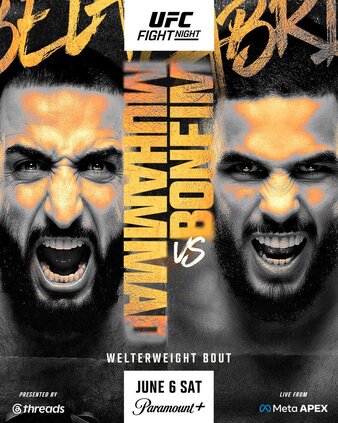
Bantamweight Bout • UFC Fight Night: Muhammad vs. Bonfim
Saturday, June 6, 2026 • UFC Apex — 25 ft cage (limited reset space)
Explore Detailed Fighter Profiles
Click on either the fighter's name or profile image for each fighter to access comprehensive UFC statistics including striking metrics, grappling data, clinch performance, complete fight history, offensive & defensive analytics, and round-by-round breakdowns.

Bryce Mitchell
Fighter Metrics
Victory Methods
Win Round Distribution

Victor Henry
Fighter Metrics
Victory Methods
Win Round Distribution
📋 Last 5 Fights - Bryce Mitchell
| Date | Opponent | Result | Method |
|---|---|---|---|
| 2025-07-26 | Said Nurmagomedov | W | Decision - Unanimous (R3, 5:00) |
| 2025-04-12 | Jean Silva | L | Submission - Ninja Choke (R2, 3:52) |
| 2024-12-07 | Kron Gracie | W | KO/TKO - Elbows From Top (R3, 0:39) |
| 2023-12-16 | Josh Emmett | L | KO/TKO - Punches (R1, 1:57) |
| 2023-09-23 | Dan Ige | W | Decision - Unanimous (R3, 5:00) |
📋 Last 5 Fights - Victor Henry
| Date | Opponent | Result | Method |
|---|---|---|---|
| 2025-04-19 | Pedro Falcão | W | Decision - Unanimous (R3, 5:00) |
| 2024-06-01 | Charles Jourdain | L | Submission - Guillotine Choke (R2, 5:00) |
| 2024-01-13 | Rani Yahya | W | KO/TKO - Punches (R3, 4:26) |
| 2023-09-23 | Javid Basharat | NC | No Contest (R2, —) |
| 2022-12-17 | Tony Gravely | W | Decision - Split (R3, 5:00) |
Technical Analysis
Technical Score
Cardio Score
Overall Rating
📊 Technical Score
Calculated as the average of Striking Composite (57 vs 65) and Grappling Composite (73 vs 58). Balances overall striking effectiveness with grappling ability to measure complete technical skills.
💪 Cardio Score
Based on average fight duration, striking rate per minute, takedown rate, and finish rate. Measures cardiovascular endurance and ability to maintain pace throughout fights.
🎯 Overall Rating
Simple average of Technical Score and Cardio Score. Provides a holistic view of fighter capabilities combining skill level with physical conditioning and fight performance.
Striking Composite
Grappling Composite
Technical Radar Comparison
Visual comparison of key performance metrics between both fighters
📊 Detailed Statistical Comparison
🥊 Fight Analysis Breakdown
🧩 Bryce Mitchell Key Advantages
Mitchell’s statistical identity is grappling rent: high takedown cadence (3.24 per 15 — more than double the men’s BW mean ~1.49) paired with submission threat well above division baseline (1.19 Sub/15 vs ~0.50 mean). Warehouse clinch-route data shows the method: ~166 narrated clinch TD attempts at ~36% conversion — he breaks dams with reps, not one perfect blast double. Signature chains: hand-fight → snap-down → front-headlock guillotine threat; fence pin → single-leg → mat return → mount → elbows (Kron R3 receipt). Against 81% official TDD, the math is entropy in a 25-foot cage where resets are expensive.
He is not trying to win pure volume races on the feet (2.27 SLpM — ~49% below BW mean ~4.45), but he is excellent at not financing combinations at full price: ~59% striking defense with just 1.60 SApM (Henry leaks at 5.19). Distance accuracy (~41%) is weaker than his headline StrAcc (59%) — his striking is setup-oriented: feint → level change → clinch/fence → mat, not out-jab you for fifteen minutes. That damage economy keeps judges from punishing him in hand-fighting minutes when Henry is trying to snowball visible volume.
Warehouse-style control metrics (~146 seconds of control per round vs Henry near ~45) align with what judges “feel” when Mitchell rides: fence pragmatism, top cycles, and violent elbows when opponents shell (tech_damage_rate ~0.09 vs Henry ~0.35 on the feet — Victor manufactures visible pain faster in striking exchanges, but Bryce wins where the scoreboard forgets to count elbows on your back). In a compact cage, wrestling intent shows up more often per hour than on a 30-foot tour—fewer clean resets for Henry to re-center his upright Muay Thai line.
⚠️ Unfavorable Scenarios
Mitchell’s recent loss to Jean Silva (ninja choke, R2) and historical Topuria arm-triangle (R2) prove “Fades Late” is not “falls over” — it is “still in danger when the fight stays volatile in front-neck space.” Henry is not primarily a grappling finisher (Sub/15 0.35), but the Jourdain guillotine loss is the exact genre Mitchell wants: front-headlock punishment when a wrestler dives with posture broken. The chaos node: Henry uppercuts on the break vs Bryce guillotine threat on the dip — both loss templates live in the same transitional lane.
Emmett-level pressure is the historical stress test: if Mitchell squares in the pocket and trades statically, he can be clipped. Henry’s ledger includes real knockdown equity in the warehouse column (~0.52 KD/15 vs Mitchell ~0.11)—not mandatory for an upset, but a live swing factor if Mitchell’s entries become predictable and Henry times clusters first.
📋 Likely Gameplan
Mitchell should deny straight lines with southpaw footwork (outside foot on your lead, long collar ties) — his low counter rate (0.09 vs Henry 0.30) says he initiates phases rather than catch-wrestles in open space. Fence entries disguised as hand-fighting are mandatory: jab feint → outside angle → snap-down or underhook → fence pin → single-leg chain. Henry’s switch stance punishes lazy shots from distance; in 25 ft, switches do not reset range cleanly once pinned.
On top, prioritize rides and short offense to open submissions when Henry panic-postures. Mitchell’s sub timing reads opportunistic on tape—he strikes when chaos exposes neck or back real estate rather than forcing romantic, pre-planned sequences. Sub attempts cluster R1–R2 in warehouse data (~45% / ~45% of logged sub shares) — front-load grappling before Henry’s R3 standing surge (~139% output vs R1).
Henry’s combo dictionary leans leg kick (0.60) + knee (0.50) to make level changes expensive. Mitchell should answer with southpaw feints and low-line threats in R1 before leg volume dies in his own targeting profile by Round 3 — keep Henry’s base busy, then change levels when kicks lift the guard.
🚀 Victor Henry Key Advantages
Henry’s output is a divisional outlier: 7.17 SLpM (~61% above BW mean ~4.45) with 53% accuracy — rank_volume 3 in a 52-fighter pool. He is the better distance technician on paper (dist accuracy ~50% vs Bryce ~41%) despite below-division StrDef (48%): volume + landed % can make losing minutes look like winning minutes. Positional strike shares (~82% standing) mean he wants the pocket and the line; combo dictionary leans leg kick (0.60) + knee (0.50) + head kick (0.25) to tax a wrestler’s base and make level changes expensive.
The clean counter-narrative to Mitchell’s thesis is Henry’s 81% takedown defense—first-layer stops and upper-body frames that can turn entries into paid strikes. Henry is still efficient per takedown shot (43% TDAcc) even if he is not a volume wrestler; the matchup hinge is whether elite defense can hold up under relentless re-attacks in a small cage.
Henry’s counter rate (0.30) and uppercut/overhand tagging (0.30 / 0.25) create intercept lanes on level-change feints — compact pocket salvos in short cages. Pace scaffolding: avg R1 output ~29.2 → R3 ~40.6 with Strong Finisher tag; Yahya R3 TKO is the visceral receipt. Both men head-hunt heavier late (Henry +25 ppt head targeting R1→R3), but Henry keeps more body work (26.1% R3) — Muay Thai body layering before head-finishing clusters. If Bryce does not bank top time early, this surge is statistically real, not narrative fan-fiction.
⚠️ Unfavorable Scenarios
Even excellent TDD can age the legs and hands when shots never stop arriving in a 25-foot cage. Mitchell’s game is built on persistence: if Henry spends too many minutes defending collar ties, level changes, and fence doubles, his best striking arcs get interrupted before they stack consecutive convincing minutes.
Jourdain’s guillotine loss is the blueprint Mitchell wants emotionally—aggressive neck exposure during transitions can invalidate Henry’s scoreboard optimism in one bad sequence. That does not mean it is automatic; it means Henry must stay disciplined on sprawls and panic shots as fatigue mounts.
📋 Likely Gameplan
Henry should use switch entries to freeze reads, then pressure in bursts—not reckless straight-line charges. When Mitchell squares, close space with upper-body defense on entries and cash clinch shots (Henry’s clinch accuracy prints strong in warehouse metrics) before disengaging.
Henry carries a flagged late-escalation profile (strong finisher + ~139% Round 3 vs Round 1 output delta in aggregates). If the fight stays standing and Mitchell does not bank early control chapters, Henry’s best equity often arrives as minutes pile up—provided the grappling tax stays manageable through Round 2.
🔄Patterns, Combos & Movement Loops
Expected exchange loops (repeat all night)
- Henry: jab / switch teep → step-in cross → collar tie → short knee → disengage.
- Mitchell: southpaw jab feint → outside angle → snap-down or underhook → fence pin → single-leg chain.
- Chaos node: Henry uppercuts on the break vs Bryce guillotine threat on the dip (Jourdain / Silva templates).
Anti-wrestling striking combos (Henry)
- Leg kick → jab → cross on exit after failed shots.
- Collar tie → short elbow → knee (~67% clinch accuracy when he accepts tie-ups without immediate level change).
- Counter uppercut on level-change feint.
Wrestling-striking combos (Mitchell)
- Hand-fight → snap-down → front-headlock guillotine threat.
- Fence pin → single → mat return → mount → elbows.
- Scramble → back take → RNC/triangle (Sayles Twister ceiling).
Submission choreography
Bryce’s sub threat clusters R1–R2 in warehouse data — waiting until Round 3 to “start grappling” is anti-data. Henry’s subs are rare but dangerous (Jourdain guillotine archetype). Pro priors: Bryce ~50% sub wins · Henry ~32% sub wins but ~86% of pro losses by decision — Henry loses long when he cannot stop the ride; Bryce loses fast when neck or power shows up.
🎯 Fight Prediction Analysis
Data-driven prediction model based on statistical analysis
📊Detailed Analysis Summary
🏟️Cage Dynamics
This bout is booked in the UFC Apex’s 25-foot cage—geometry that punishes pure “reset and re-circle” strikers more than a 30-footer. Henry still has real minutes where his Muay Thai volume and switching layers shine, but Mitchell’s +2″ height and +2″ reach with southpaw handfighting buy safer entries than a crude “bull rush” narrative. Henry cannot afford to sprint in straight lines every exchange if Bryce times collar ties → level changes; the small cage shrinks resets so Henry’s clinch envelope (~13–14% of strikes) becomes easier to access for paid knees and uppercuts—but also means fence doubles show up more often per hour than on a 30-foot tour.
The longer the fight spends in collar ties and fence doubles, the more the cage turns into Mitchell’s workplace. Mitchell’s warehouse control prior (~146 sec per round vs ~45) is the judge-feel variable: even when Henry wins visible striking bursts, Bryce can steal rounds if he banks ride time and ground offense the scoreboard underweights until it stacks.
📍Positional Geography & Round DNA
Henry’s ID is “I win where you can see me punch” (~82% standing, ~5% ground). Bryce’s is mat-strike gravity (~37% ground). Round buckets: Mitchell’s ground share climbs 27% in R1 → 58% in R3 while output may dip (Fades Late, ~64% R3 vs R1 volume); Henry stays 79–83% distance and tags Strong Finisher (~139% R3 vs R1 output). If Bryce does not bank top chapters early, Henry’s late surge is data-backed (Yahya R3 TKO); if Bryce does, Round 3 becomes elbow-and-ride even when SLpM looks sleepy.
Both head-hunt heavier late (Mitchell +27 ppt; Henry +25 ppt head targeting R1→R3). Bryce’s leg game dies by Round 3; Henry keeps more body work for Muay Thai layering before finishing clusters.
🎯Technical Breakdown
Three clocks run at once. Henry’s volume clock (7.17 SLpM; StrDef ~48%) snowballs optics in vertical minutes. Mitchell’s wrestling clock (3.24 TD15 vs 1.04) uses ~166 narrated clinch TD attempts at ~36% conversion — reps break 81% TDD, not one perfect shot. Mitchell’s submission clock (1.19 vs 0.35 Sub/15) clusters opportunistically R1–R2; waiting until Round 3 to grapple is anti-data for Bryce.
Bryce absorbs far less (1.60 vs 5.19 SApM); Henry maintains accuracy in chaos (53% at elite pace). Henry is the better distance technician (~50% dist accuracy vs ~41%) despite leaking more; both convert brutally on the ground (~77–79%). Composite paradox: Henry can rate higher overall (66.8 vs 64.5) on volume + cardio while Mitchell still owns fair price in this geometry.
🧩Key Battle Areas
First-layer defense vs re-attacks: Henry’s stuff-and-punish sequences are live (81% TDD, 43% TDAcc when he does shoot), but Mitchell thrives when entries never stop. Clinch economics: Henry’s ~67% clinch accuracy means paid shots when Bryce accepts tie-ups without immediate level change; Bryce wants collar ties as bridges to hips, not prolonged kickboxing in the pocket.
Movement layer: southpaw Mitchell initiates (counter rate 0.09); switch-stance Henry delays reads (counter rate 0.30) — intercept uppercuts punish lazy shots from space, so fence hand-fighting entries are mandatory. Tape arcs matter: Said UD validates Bryce’s disciplined scramble win; Jourdain guillotine is Henry’s nightmare template; Emmett R1 and Silva R2 are Bryce’s power/neck receipts. Late-round: Henry Strong Finisher vs Mitchell opportunistic subs — whoever banks their preferred geography in R1–2 usually owns R3’s narrative.
🏁Final Prediction
The mass sits on Bryce Mitchell (~63%) to brute-force enough entries to bank top-time and threaten neck attacks, with a thick decision lane (~33% absolute) plus meaningful inside distance equity via KO/TKO (~8%) and submission (~22%) before the trilogy of round timers expires. Victor Henry’s ~37% world includes real KO/TKO (~13%) and a still-live decision (~19%) if he keeps minutes standing and wins optics in clusters. Conviction is a 7/10: Henry’s TDD and pace are real, and Mitchell’s losses to explosive finishers remind us variance exists—but small-cage wrestling persistence plus Henry’s documented guillotine-loss taxonomy pushes the lean Mitchell-side more often than a lazy coin.
💰 Betting Analysis: Model vs Market
Detailed value assessment in the betting market
📊Market Odds
🤖Analytical Model
💎Value Opportunities
MAXIMUM VALUE
Model: 33% absolute (~52% of Mitchell wins) · vig-stripped fair anchor near −108 on “fight goes distance” when books match this mass.
GOOD VALUE
Model: 13% absolute · fair anchor near +669 pre-juice per probability budget (books widen).
SLIGHT VALUE
Model: 27% combined (22% Bryce + 5% Victor) · fair near +270 before vig.
⚠️Key Market Discrepancies
- • Surface-level “grappler vs striker” pricing – Can flatten the nuance of elite TDD (81%) vs relentless re-attacks in a 25-foot cage.
- • Volume myopia – Henry’s 7.17 SLpM can look scoreboard-heavy even when Mitchell’s minutes are quieter but wrestled.
- • Understated submission skew – Mitchell’s 1.19 Sub/15 and opportunistic timing can be mispriced relative to pure decision ladders.
🎯 Comprehensive Probabilistic Analysis
100 hypothetical fight simulation based on statistical data
🏆Outcome Distribution - Bryce Mitchell
Control + top cycles if Henry cannot keep it vertical
Elbows from top when opponents shell (e.g., Kron path)
Front-headlock / neck attacks when transitions get messy
💥Outcome Distribution - Victor Henry
Pocket swings; knockdown-aware sequences vs static frames
Needs repeated upright minutes & cleaner optics than rides
Opportunistic guillotine lanes—not his primary finish bank
⏰Fight Timeline Analysis
⚡Window of Opportunity - Victor Henry
- • Opening 8–10 minutes: Highest equity for combination bursts before grappling tax mounts.
- • Switch layers: Freeze level-change timing; punish squaring with clinch-paid shots, then disengage.
- • Late surge: If still vertical, lean on flagged Round-3 output escalation—but avoid lazy entries into neck traps.
🎯Progressive Dominance - Bryce Mitchell
- • Persistence: Treat 81% TDD as a pace problem—re-doubles and mat returns stack minutes.
- • Small cage: Compress resets; force Henry to defend rides, not theorize at range.
- • Sub gravity: Opportunistic chokes when Henry panic-postures—Jourdain template is the emotional roadmap, not a guarantee.
🎯 Final Confidence Assessment
Confidence level and uncertainty factors
Confidence Level
Solid Mitchell lean, but Henry’s TDD + pace keep honest variance
✅Supporting Factors
- • Major TD-volume edge (3.24 vs 1.04 TD15) in a 25-foot cage
- • Submission threat rate (1.19 vs 0.35 Sub/15)
- • Damage economy (1.60 vs 5.19 SApM) keeps striking optics cleaner
- • Said Nurmagomedov win shows he can still boss disciplined scrambles at a high level
⚠️Risk Factors
- • Henry’s 81% TDD can stall early narratives
- • Power / knockdown equity leans Henry if frames go static
- • Mitchell’s neck-loss template (Silva) proves submission volatility exists both ways
🏁Executive Summary
This is a fight between two different definitions of pace. Henry’s is loud on the stat sheet — 7.17 SLpM (~61% above men’s bantamweight mean), Iron / elite-activity tagging, Strong Finisher momentum, and a warehouse R3 output delta near 139% of Round 1. Mitchell’s pace is bank-robbery quiet on SLpM (2.27) until your back is on the mat and the round disappears into rides (~146 sec control per round vs ~45). The Apex’s 25-foot footprint rewards Mitchell’s insistence: fewer free resets for Henry to stencil upright Muay Thai geometry, more fence doubles and collar-tie entries per hour.
The stylistic paradox is the handicapping spine. Henry wins where you can see him punch (~82% standing); Bryce wins where judges feel control and ground offense (~37% ground strikes, elbow/triangle/mount technique density). Bryce may fade on output late yet morph into a ground-strike monster by Round 3 (27% → 58% ground share); Henry may rev hotter standing late if grappling tax never mounts. Neither man is a generic “striker vs grappler” — it is a geometry + persistence problem in a small cage, with Henry’s 81% TDD the cleanest counter- narrative and Bryce’s opportunistic neck attacks the cleanest finisher lane (22% sub equity in the model mass).
Tape and trajectory reinforce the lean without pretending it is a coronation. Mitchell’s W1 vs Said Nurmagomedov shows he can still boss disciplined scrambles; losses to Silva (ninja choke) and Emmett (R1 power) prove variance spines exist. Henry’s W1 vs Falcão shows bankable pacing; Jourdain’s guillotine is the exact headache Bryce’s catch mechanics want if entries stick. Analysis anchors on UFC public rows (warehouse pace blends noted only as behavior tags, not gospel) and avoids ELO-style ratings on-page per analyst brief.
Prediction: Bryce Mitchell 63% · Victor Henry 37% (fair −170 / +170). Modal lane: Mitchell by decision (33% absolute). Inside-distance paths: submission 22%, KO/TKO 8%. Henry’s world: KO/TKO 13%, decision 19%, submission 5%. Fight goes to decision ~52% combined (33% + 19%). Conviction 7/10 — meaningful Mitchell lean with honest counter- scenarios (elite TDD, volume optics, power pockets, neck volatility).