
Bruno Silva vs Edgar Chairez
Men's Flyweight Bout • UFC Fight Night: Muhammad vs. Bonfim
Saturday, June 6, 2026 • 25 ft cage (small octagon)

Explore Detailed Fighter Profiles
Click on either the fighter's name or profile image for each fighter to access comprehensive UFC statistics including striking metrics, grappling data, clinch performance, complete fight history, offensive & defensive analytics, and round-by-round breakdowns.

Bruno Silva
Fighter Metrics
Victory Methods
Win Round Distribution
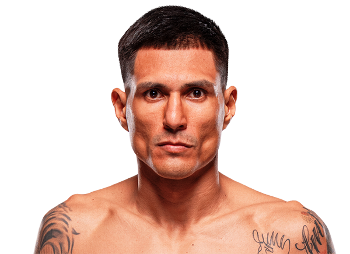
Edgar Chairez
Fighter Metrics
Victory Methods
Win Round Distribution
📋 Last 5 Fights - Bruno Silva
| Date | Opponent | Result | Method |
|---|---|---|---|
| 2026-03-14 | Charles Johnson | L | Decision - Split (R3, 5:00) |
| 2025-10-18 | Hyun Sung Park | W | Submission - RNC (R3, 2:15) |
| 2025-06-28 | Joshua Van | L | KO/TKO (R3, 4:01) |
| 2024-12-07 | Manel Kape | L | KO/TKO (R3, 1:57) |
| 2024-07-20 | Cody Durden | W | KO/TKO (R2, 4:45) |
📋 Last 5 Fights - Edgar Chairez
| Date | Opponent | Result | Method |
|---|---|---|---|
| 2026-02-28 | Felipe Bunes | W | Decision - Split (R3, 5:00) |
| 2025-03-08 | CJ Vergara | W | Submission - RNC (R1, 2:30) |
| 2024-09-14 | Joshua Van | L | Decision - Unanimous (R3, 5:00) |
| 2024-02-17 | Daniel Lacerda | W | Submission - Triangle (R1, 2:17) |
| 2023-09-16 | Daniel Lacerda | NC | No Contest (—, —) |
Technical Analysis
Technical Score
Cardio Score
Overall Rating
📊 Technical Score
Calculated as the average of Striking Composite (66.0 vs 66.0) and Grappling Composite (78.0 vs 55.0). Balances overall striking effectiveness with grappling ability to measure complete technical skills.
💪 Cardio Score
Based on average fight duration, striking rate per minute, takedown rate, and finish rate. Measures cardiovascular endurance and ability to maintain pace throughout fights.
🎯 Overall Rating
Simple average of Technical Score and Cardio Score. Provides a holistic view of fighter capabilities combining skill level with physical conditioning and fight performance.
Striking Composite
Grappling Composite
Technical Radar Comparison
Visual comparison of key performance metrics between both fighters
📊 Detailed Statistical Comparison
🥊 Fight Analysis Breakdown
This is not classic striker-vs-grappler. Silva is a counter-striker / phase-shifter (leg kicks → clinch knees → rides → late squeezes) against Chairez's low-output ambush model (jab/leg traps → front-head → triangle/RNC). The handicapping spine is geometry early vs cage compression late, the 72/38 TD-defense split, and whether Silva survives the first ~7–9 minutes without gifting the neck.
Warehouse tags sharpen the read: Chairez is an Early Hunter (~67% of logged sub attempts in R1) with iron chin and a Fades Late momentum label; Silva is a Late Round Sub Artist whose R3 output runs ~105% of R1 vs Chairez's ~57%. Control time diverges sharply (~41 sec/rd vs ~9 sec/rd) — Chairez hunts terminals, Silva banks minutes when entries stay disciplined.
🧩 Bruno Silva Key Advantages
Silva brings real takedown offense on paper (2.01 per 15 minutes at 25% accuracy) against a fighter whose offense is submission-first, not ride-the-clock wrestling. The wider handicap is denial: 72% takedown defense vs Chairez's 38% fundamentally pushes exchanges toward Silva banking top phases and fence wrestling in a 25-foot cage— exactly the geography where shorter flyweights shorten long frames if entries stay disciplined.
On the UFC ledger Silva lands slightly more volume (3.95 vs 3.65 SLpM) while connecting cleaner (51% vs 45% accuracy) and getting hit less cleanly by defense rate (51% vs 46%). Both absorb above the flyweight mean (~4.75 vs ~4.69 SApM), so this isn't a “defensive clinic” — but when exchanges stay standing, Silva is likelier to win compact minute optics, especially if he layers leg kicks → clinch knees instead of naked swings at the end of Chairez's reach.
Warehouse-style pacing tags contrast sharply: Silva's logged round output tends to hold into Round 3, while Chairez's profile flags late fade risk after front-loaded attacks — the Joshua Van RXR line (big R1 volume collapsing to thin R3 output) is the cautionary template. For a scheduled 3×5, that pushes overtime scoring toward Silva if the neck isn't found early.
⚠️ Unfavorable Scenarios
Chairez's grappling isn't conventional wrestling dominance — it's spike submissions. Guillotine and triangle lanes punish sloppy level changes and scrambling posture; Silva's willingness to wrestle creates the very grappling transitions Chairez wants. One compromised tie-up can erase prior optics.
Silva absorbs heavily for the division (4.75 SApM) and has paid for firefights against explosive flyweights (Kape/Van outcomes on the résumé). If Chairez makes early minutes messy — or if Silva lingers at the end of the long straight/lined kicks — volatility spikes despite structural edges.
📋 Likely Gameplan
Open with leg kicks + jab feints to steal base and posture — then chain disciplined shots (double off reactions / caught kicks) rather than desperate dives that expose the neck. Posture on level changes is everything against a labeled front-head hunter.
Use the small cage to cut resets after kicks, force pocket exchanges where Chairez's low-pressure shell struggles to stay long, then convert rides into short control + GNP clusters and late squeeze sequences when fatigue dulls defensive hands (Park-style RNC pathways live here).
🚀 Edgar Chairez Key Advantages
Chairez wins disproportionately by submission on his résumé, and UFC-rate sheets emphasize attempt density (1.3 subs per 15) vs Silva's modest sub-frequency on paper. The toolbox skews toward guillotine / scramble triangles / RNC spikes— finishes that don't require prolonged wrestling dominance, only one chaotic transition.
Height and 71″ reach vs 65″ buys real first-layer space for straight punches and intercepting lanes — especially early, before Silva compresses arcs with leg attacks and level changes. The matchup reward is keeping Silva at the end of the jab/leg line without standing still when resets shrink.
Model tags emphasize early submission hunting. Résumé lanes (Vergara/Lacerda templates) show fast terminals — and shared calibration vs Joshua Van highlights how dangerous the first act can be when pace spikes before Silva's denial and attrition stack minutes.
⚠️ Unfavorable Scenarios
38% takedown defense is an invitation for chain shots, fence rides, and repeated mat returns in a small cage — particularly vs an opponent who actually carries TD volume (2.01 TD15). If Silva avoids gifting front-head entries, Chairez may spend long stretches defending rides without his preferred scramble rhythms.
Low pacing tiers plus documented late-round decay signals mean Chairez can lose rounds quietly even while threading scary moments. Against a fighter whose striking optics are cleaner and whose TD threat steals geography, volume decisions skew Silva if the early neck attacks don't land.
📋 Likely Gameplan
Lead with layered jab + leg kicks to freeze entries, then punish level changes with snap-downs into guillotine/RNC series. The goal isn't to out-grind Silva on wrestling volume — it's to ambush transitions.
When exchanges hit the floor opportunistically, prioritize guard attacks and triangles off chaos rather than prolonged guard-only boxing. If rounds slip, borrow the blueprint of stealing optics with a single huge swing moment per round — judges can overweight near-finishes in tight flyweight minutes (Silva's recent split loss is a volatility reminder).
🗺️Stylistic Collision Map
Game 1 — Geometry
- Reach (71″ vs 65″): Chairez — jab + leg kick at the end of the line.
- 25 ft cage: Silva cuts exits and forces pocket trades.
- Height: Chairez on paper; Silva uses level changes and leg attacks to the base.
Game 2 — Initiation
- Reckless Silva entries → guillotine/triangle windows.
- Disciplined doubles → Chairez 38% TDDef under siege.
- Passive Chairez leg work → Silva counter uppercut lane.
Game 3 — Clock (3×5)
- R1: Chairez sub equity peak (~67% sub attempts in R1).
- R2: TD chains vs scramble traps.
- R3: Silva 105% r3/r1 output vs Chairez 57% fade (Van: 11 of 35 sig in R3).
Combination-level cheat sheet
| Chairez throws… | Silva answer… | Silva risk… |
|---|---|---|
| Leg kick | Check/catch → double-leg | Guillotine on level change |
| Jab | Slip → counter uppercut | Straight from length |
| Failed sub scramble | Posture + short GNP | Triangle from guard |
Silva: Counter-striker · leg kick/knee/jab · doubles off reactions · late RNC (Park). Chairez: Front-head predator · jab/leg traps · guillotine/triangle · iron chin — attrition or positional failure, not a one-touch KO story.
Joshua Van calibration: Silva lost on volume-then-TKO (22-22-32 RXR attempts); Chairez out-struck early then faded to 11 sig in R3 with subs that never closed.
🎯 Fight Prediction Analysis
Data-driven prediction model based on statistical analysis
📊Detailed Analysis Summary
🏟️Cage Dynamics
The bout is booked in the Meta APEX 25-foot cage— a footprint that disproportionately rewards Silva's ability to cut space after kicks, force pocket exchanges, and chain wrestling resets where Chairez's low-pressure, trap-heavy shell can't stay long indefinitely. Early, Chairez's reach layer still matters: straight punches and layered jab/leg kick lanes buy time before Silva collapses geography. Likely pattern: Chairez wins the first layer of space in R1 (48% leg targeting in opener scripts), then Silva compresses by minutes 3–5 through fence touches and TD layers when the early neck doesn't close.
🎯Technical Breakdown
Three stats anchor the macro handicap: Silva 2.01 TD15 vs Chairez 0.00, Silva 72% TDDef vs Chairez 38%, and Chairez 1.30 Sub/15 vs Silva 0.20. Translation: Silva is built to steal minutes through conventional top sequences while denying rides — Chairez is built to flip fights in bursts via neck attacks when Silva commits recklessly. Striking is not “Silva untouchable” — both bleed above flyweight means — but Silva's accuracy/defense edges matter when exchanges stay standing. Composites vs flyweight means: Silva striking 58 / grappling 64 vs Chairez 43 / 52 — Chairez's grappling score is good-but-weird (elite sub threat, catastrophic TD defense). Cardio: Silva 57 vs Chairez 52 — meaningful in 3×5 when the early hunter window expires.
🧩Key Battle Areas
Collision-map priorities: leg kick → catch/shoot vs guillotine risk; jab measure vs slip/counter uppercut lanes; scramble triangles after failed rides; and round-clock economics — Chairez's early hunter skew vs Silva's stronger Round 3 minute-winning priors in a three-round fight. Judges may spike volatility when loud submission attempts happen in rounds Silva otherwise wins on volume.
🧬Stylistic DNA & Phase Geography
Silva lives ~78% at distance but shifts phases through leg kicks (0.60 weapon rate), clinch knees (0.74), and selective doubles — not a linear pressure grinder (0.07 pressure rate). Chairez is ~97% distance on paper, but that includes trap lanes: jab (0.67) + leg kick (0.58) open guillotine (0.33) and triangle (0.42) sequences. When top is secured, Silva postures for GNP (Durden: 17 of 21 ground sig after KD); Chairez almost never rides for score (0.8% ground strike share).
⚖️Judges, Optics & Split-Decision Risk
Chairez rounds can look like fewer strikes plus one scary sub attempt; Silva rounds look like volume + control + clearer aggression — especially R3 if he avoids naked takedowns into front headlocks. Split cards are live both ways (Silva's Johnson SD loss fresh; Chairez's Bunes SD win shows steal potential). In tight flyweight minutes, one near-finish can outweigh three quiet volume minutes.
🏁Final Prediction
Model baseline clusters around Silva 63% — anchored by the TD offense/defense cross against Chairez's structural wrestling denial, filtered through small-cage geography. Method splits: Silva DEC 26% · KO 22% · SUB 15%; Chairez SUB 24% · DEC 7% · KO 6%. Live variance stays elevated because Chairez's submission distribution is genuinely frightening — Silva wins most simulations where he survives Round 1 without gifting compromised ties, then piles fence work and rides in R2–R3. Conviction: 6/10 — not a free wrestling square; a risk-managed favorite.
💰 Betting Analysis: Model vs Market
Detailed value assessment in the betting market
📊Market Odds
🤖Analytical Model
💎Value Opportunities
MAXIMUM VALUE
Model: ~26% absolute · pairs with ride minutes if neck never closes
GOOD VALUE
Model: ~24% absolute · spike early off sloppy shots
SLIGHT VALUE
Model: ~33% (Silva dec 26% + Chairez dec 7%) · finish skew still live
⚠️Key Market Discrepancies
- • Market tilt on highlight-reel subs – Can overprice early chaos vs disciplined Silva entries.
- • Underweights ride minutes – TD defense gap matters more as resets shrink in the small cage.
- • Flyweight judging noise – Loud attempts + tight volume rounds invite weird cards (recent Silva SD loss reminder).
🎯 Comprehensive Probabilistic Analysis
100 hypothetical fight simulation based on statistical data
🏆Outcome Distribution - Bruno Silva
Volume + control when submissions don't steal optics
Accumulation after KD/GNP clusters (Durden-style lanes)
Late squeeze after rides (Park RNC template)
💥Outcome Distribution - Edgar Chairez
Guillotine/triangle spikes off rushed entries
Needs big moments while volume trails Silva
Uppercut/counter lanes — lower base rate but live
⏰Fight Timeline Analysis
⚡Window of Opportunity - Edgar Chairez
- • First ~7–9 minutes: Highest guillotine / triangle spike equity before denial compounds.
- • Measure-and-trap: Jab + leg kick lanes to force naked reactions from Silva.
- • Scramble shoots: Attack instantly — bank on chaos, not prolonged rides.
🎯Progressive Dominance - Bruno Silva
- • Chain wrestling: Re-shot pressure vs 38% defensive wrestling on paper.
- • Minute optics: Cleaner accuracy/defense edges when fights stay upright.
- • Round 3 economics: Push output when Chairez's late-round priors dip on tape.
🎯 Final Confidence Assessment
Confidence level and uncertainty factors
Confidence Level
Solid structural edge — tempered by real submission volatility and Silva's own chaos-vs-power outcomes at flyweight.
✅Supporting Factors
- • Massive TD denial differential on paper (72% vs 38% TDDef)
- • Functional wrestling throughput (2.01 TD15 vs 0.00) inside a 25 ft cage
- • Striking accuracy/defense edges in standing exchanges
- • Late-round pacing signals favor Silva in a three-rounder if neck holds
⚠️Risk Factors
- • Jump-guard triangles / guillotine snaps off sloppy entries
- • Silva's high absorption + historical volatility vs explosive FLW pace
- • Split-card optics when volume battles submission attempts (Johnson SD template)
🏁Executive Summary
This isn't textbook striker-vs-grappler — it's Silva's moderate-pressure, counter-heavy phase shifting (leg kicks → clinch knees → rides → late squeezes) against Chairez's ambush submission model (jab/leg traps → front-head → triangle/RNC spikes). The handicapping spine is geometric reach early vs cage compression late, married to the stark wrestling denial gap (72/38 TDDef) and Chairez's elite-ish submission rate threat (1.3 Sub/15) that only needs one compromised tie-up to flip scoreboards.
Prediction: Silva ~63% (fair moneyline near −170). Modal Silva path: decision (~26%) on volume + control; KO (~22%) off accumulation or GNP clusters; sub (~15%) via late RNC squeezes. Chairez clearest lane: early submission (~24%) if Silva gifts guillotine/triangle mechanics in R1–early R2. Hedge for split-card volatility when Chairez threatens the neck in rounds Silva otherwise wins on optics. Conviction 6/10 — scary sub profile, but the cleanest macro handicap on the card is Silva TD offense + denial vs Chairez's 38% TDDef in a 25-foot cage.
Three statistical record truths frame the bout: (1) Chairez's ~97% distance share with 0% pressure means he waits and traps rather than dominates space; (2) Silva's R3/r1 output (~105%) vs Chairez's (~57%) is the hidden handicap in a 3×5; (3) the neck is the equalizer — Silva's wrestling creates the chaos Chairez wants, but 72/38 TDDef still tilts the ride game if entries stay disciplined.