

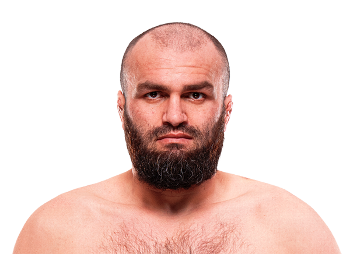
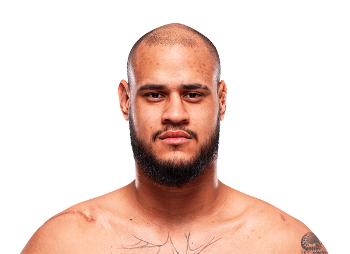


The most matchup-specific pattern in this fight is what happens when someone walks Tallison Teixeira down. In the UFC he has faced three opponents who moved forward and threw with bad intentions: Derrick Lewis for 35 seconds, Sergei Pavlovich for 39, and Tai Tuivasa for the final minutes of a third round. He was badly hurt all three times — finished twice, on his knees once. Against Lewis he landed first and was still dropped by the return left; against Pavlovich the overhand that dropped him reportedly did not land cleanly; against Tuivasa, ranked #12 but on a five-fight skid, a three-punch combination had him stumbling backwards. None were accumulation stoppages: he absorbed only 16 significant strikes across the two losses. Shamil Gaziev is not Lewis or Pavlovich, but his record rests on the same kind of shot: both of his UFC knockouts since 2025 came from the right hand. Three of three is a small sample and a 26-year-old can improve his defence, but it is the strongest single reason the model leans red.
The mirror image needs one word corrected. Gaziev has lost when he walked forward into someone faster or busier — not longer. Cortes-Acosta, backed to the fence, dropped him at 1:22; Peričić out-landed him 89-41 in 8:44; Rozenstruik landed 95-7 in Rounds 3 and 4 as Gaziev emptied. None had more than an inch of reach on him. Teixeira has the reach to counter the entry, and he did land first on Lewis. What he has not shown is the discipline to stay at range for more than a minute, or the pace — 5.5 significant attempts a minute in the UFC — that broke Gaziev in his losses. So the fight reduces to one question: does Teixeira stay long, counter and make it busy, or does he engage the way he has in every UFC fight so far? If he engages, his record says he gets hurt.
Which leaves the tension at the centre of this pick: the composites point at Teixeira and the pick is Gaziev. Teixeira is younger, longer and more accurate, owns the only ranked win in the matchup, and on a full sample a five-point composite gap would make him roughly a 55/45 favourite. We lean the other way, 55/45, because 80% of our outcomes end inside the distance, where power and durability decide and the formula measures neither; because Teixeira's rate stats come 89% from one fight plus a Contender Series bout that also manufactured his volume edge; and because his grappling edges depend on taking down a man who has stopped five of six attempts. The numbers are evidence, and the reason conviction is only 3 out of 10 — not the verdict.