
Kai Kamaka III vs Luke Riley
Featherweight Bout • UFC 329: McGregor vs. Holloway 2
Saturday, July 11, 2026 • T-Mobile Arena, Las Vegas
Explore Detailed Fighter Profiles
Click on either the fighter's name or profile image for each fighter to access comprehensive UFC statistics including striking metrics, grappling data, clinch performance, complete fight history, offensive & defensive analytics, and round-by-round breakdowns.

Kai Kamaka III
Fighter Metrics
Victory Methods
Win Round Distribution
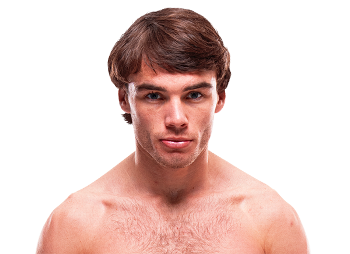
Luke Riley
Fighter Metrics
Victory Methods
Win Round Distribution
📋 Last 5 Fights - Kai Kamaka III
| Date | Opponent | Result | Method |
|---|---|---|---|
| Apr 4, 2026 | Dakota Hope | W | Split Decision (3, 5:00) |
| Jan 22, 2026 | Michel da Cruz Lima | W | KO (Punch) (2, —) |
| Oct 25, 2025 | Diego Brandão | L | Split Decision (3, 5:00) |
| Jun 29, 2025 | Sitik Muduev | W | Unanimous Decision (3, 5:00) |
| Apr 25, 2025 | Joshua Weems | W | TKO (2, —) |
📋 Last 5 Fights - Luke Riley
| Date | Opponent | Result | Method |
|---|---|---|---|
| Mar 21, 2026 | Michael Aswell Jr. | W | Unanimous Decision (3, 5:00) |
| Nov 22, 2025 | Bogdan Grad | W | KO/TKO (Punches) (2, 0:30) |
| Mar 15, 2025 | T. Abbasov | W | TKO (Knees/Punches) (2, —) |
| Sep 21, 2024 | A. Junior | W | KO/TKO (1, —) |
| Mar 16, 2024 | J. de Jesus | W | Unanimous Decision (3, 5:00) |
Technical Analysis
Technical Score
Cardio Score
Overall Rating
📊 Technical Score
Calculated as the average of Striking Composite (46 vs 80) and Grappling Composite (58 vs 12). Balances overall striking effectiveness with grappling ability to measure complete technical skills. Kamaka's figures are clearly-labeled estimates (no DB-computed metrics exist); Riley's derive from a 2-fight UFC sample benchmarked to the featherweight baseline.
💪 Cardio Score
Based on average fight duration, striking rate per minute, takedown rate, and finish rate. Measures cardiovascular endurance and ability to maintain pace throughout fights.
🎯 Overall Rating
Simple average of Technical Score and Cardio Score. Provides a holistic view of fighter capabilities combining skill level with physical conditioning and fight performance.
Striking Composite
Grappling Composite
Technical Radar Comparison
Visual comparison of key performance metrics between both fighters
📊 Detailed Statistical Comparison
🥊 Fight Analysis Breakdown
🧩 Kai Kamaka III Key Advantages
This is the entire upset thesis. Kamaka is a state-champion wrestler (HHSAA Hawaii champion, college wrestling background) attacking the single number where Riley grades near the division floor — a 38% takedown defense (UFC official, 2-fight sample). If Kamaka can change levels under Riley's pressure, plant him against the fence, and accumulate top control, he can win rounds without ever winning a striking exchange. A 30-27 / 29-28 control-grind is his single most likely path to victory and it is very live — exactly the wrestler-attacking-a-takedown-defense-hole shape that ends prospects' streaks.
Twenty-six pro fights across the UFC, Bellator, and PFL versus Riley's thirteen (eleven of them regional). Kamaka has shared the cage with names like Loughnane and Brandão and has never been submitted in his career. Under Eric Nicksick at Xtreme Couture, he should arrive with a surgical, takedown-centric game plan built specifically to exploit Riley's one hole — and the composure to execute it under fire. In a tight three-round fight, that 26-fight round-management experience is exactly the intangible that banks close decisions, the way he edged Hope and Kelley and stayed competitive with PFL-champion Loughnane.
Riley's 13-0 has been built entirely on the feet. No opponent has yet made him fight extended grappling exchanges or defend from his back, and none of his last five was a high-level wrestler. "Undefeated" can mask an unexplored failure mode, and Kamaka is precisely the fighter to go probing for it. The first time a prospect faces a real wrestler is often the night the record ends — and Kamaka's durability (never finished by submission, sees the judges routinely) means he can keep asking the question deep into the fight without burning out.
⚠️ Unfavorable Scenarios
The takedowns simply aren't there. Riley's frame, the reach parity, and a strong sprawl stuff Kamaka's entries, forcing him to strike with an elite power-puncher in the one phase he cannot win. Scouts also credit Riley's scramble and get-up ability — being takeable is not the same as being holdable — so even when Kamaka does plant him, quick restarts collapse the control-grind math and reset every exchange to Riley's striking. A wrestler who shoots, gets denied, and has to stand and trade is in serious danger here.
A single clean Riley left hand or body-to-head combination lands on a chin that has already been broken twice (including the Pearce stoppage in the UFC). Riley's 0.73 knockdown average and 57% accuracy meeting Kamaka's documented durability gap is the highest-leverage mismatch in the fight, and his finishing window is widest in rounds one and two — the way the Grad knockout ended at 0:30 of the second. If Kamaka is forced to trade, the night can end the way it did against Pearce.
📋 Likely Gameplan
Kamaka should attack the 38% takedown defense before Riley's confidence and rhythm build — ideally landing the first takedown inside round one. He must change levels off Riley's pressure rather than standing in front of it, respecting the power windows and refusing to trade in the pocket. Mixing shot entries off feints and low kicks keeps Riley from settling into his volume-into-power rhythm, and every successful entry is a chance to drag the fight into the only phase where Riley grades near the division floor.
Once Kamaka secures takedowns, the priority is control time, not finishes — establish top position, ride out rounds, and avoid the standing firefight entirely to bank 10-9s. The key is chain wrestling: re-takedowns and body locks against the cage to deny Riley the clean get-ups and scrambles that would reset the fight to striking. If it is close entering round three, he leans on 26 fights of round-management to close strong while Riley is in less-charted, off-his-back territory.
🚀 Luke Riley Key Advantages
On every measurable striking axis — 57% accuracy, 65% defense, 5.56 SLpM volume, 3.32 SApM absorption, and a 0.73 knockdown average — Riley grades near the top of the featherweight division, while Kamaka's striking is at best a round-banking tool. These are the most trustworthy numbers in the entire file (UFC-official), and they are corroborated by a 69% career finish rate. With identical 69" reach and a 2" height edge, Riley never has to fight uphill on distance: if even 60% of this fight is contested standing, he should win the exchanges clearly and threaten the finish in every one.
Riley has 9 KOs in 13 wins, four of them in the first round, and has never been finished. Kamaka has been stopped by strikes twice (web-sourced), including in the UFC against Pearce. Riley's specific weapon — volume into power, dropping opponents the way he did Grad with a left hook — is aimed directly at Kamaka's specific documented vulnerability. His 0.73 knockdown average sits 66% above the featherweight norm of 0.44, making this the highest-leverage single mismatch in the fight and his most likely route to victory.
At 27, riding a perfect 13-0 with a 2-0 UFC start, Riley is ascending. Kamaka is 31, on his second UFC tour, returning to featherweight after a short-notice lightweight cameo and coming off split decisions at regional level. In a three-round sprint, the fresher, faster, harder-hitting man holds a real physical edge — and scouts note Riley "builds strength as fights progress," so a denied early finish does not see him fade. Even Riley's documented scramble and get-up ability cuts directly against Kamaka's only winning path.
⚠️ Unfavorable Scenarios
Kamaka shoots early, Riley's 38% takedown defense fails, and he spends three rounds eating control time and short ground strikes — losing a 30-27 he never felt in danger in but never won. The worst version sees Riley over-commit on power, get countered into a level change, and end up grounded against the fence repeatedly, with his scrambling unable to fully offset the sheer volume of takedown attempts from a state-champion wrestler with a Nicksick game plan built around exactly this hole.
The "untested off his back" question gets answered the wrong way. Riley's 13-0 was built entirely on the feet against opponents who never made him grapple; the first time a prospect with a takedown-defense hole meets a real wrestler is often the night the streak ends. He may be perfectly competent standing yet simply lost once the fight is dragged to a place he has never had to operate — defending from bottom and burning energy in scrambles for fifteen minutes, a different and more taxing kind of fatigue than striking output.
📋 Likely Gameplan
The prime directive is to defend the level change and, if grounded, get up immediately using the scramble and get-up ability scouts praise — every restart is a win that resets the fight to striking. Riley should hunt the counter on the entry, because Kamaka must close distance to wrestle: the level change is the moment to land the uppercut, the knee, or the dropping left hook that ended Grad. Staying long and controlling the center with equal reach and a height edge keeps the takedown a long way away.
Riley should establish the body work early — digging to the midsection is a documented staple that slows Kamaka's shots and drains a 31-year-old's gas tank, setting up the head. The longer it stays standing, the more his power, precision, and "builds strength late" profile compound toward a finish or a clear decision. By making it a three-round firefight and refusing the extended grappling, Riley turns every phase of the fight into the one where his elite, verified striking is decisive.
🎯 Fight Prediction Analysis
Data-driven prediction model based on statistical analysis
📊Detailed Analysis Summary
🪞Reach Parity & Phase Control
This is a reach-parity matchup — identical 69" for both men — so there is no geometric puzzle to solve, only a stylistic collision. Riley adds a 2" height edge, but the real story is phase dominance: an elite striker who cannot be reached at distance against a wrestler who only matters in the clinch and on the mat. Whoever dictates where the fight happens wins it. If Riley keeps it standing — even 60% of the time — his power and precision take over; if Kamaka turns it into a wrestling match and Riley cannot get up, the veteran banks control-heavy rounds. The entire bout reduces to that single question of phase control.
🎯Technical Breakdown
This is a clean phase-vs-phase fight: strike-to-win (Riley) against wrestle-to-win (Kamaka). Every measurable striking and finishing edge belongs to Riley — 57% accuracy, 65% defense, 5.56 SLpM, a 0.73 knockdown average, a 69% finish rate, and a chin that has never failed. Every grappling and experience edge belongs to Kamaka — a state-champion wrestling pedigree attacking Riley's 38% takedown defense, plus 26 fights of veteran savvy. The numbers we trust most (Riley's verified UFC striking and his power) outweigh the numbers we can only estimate (Kamaka's wrestling efficacy against UFC-level pressure), and Riley's four-year youth edge tips a close ledger.
🧩Key Battle Areas
Three critical battle areas will decide the outcome: Kamaka's wrestling against Riley's 38% takedown defense, Riley's power against a chin stopped twice, and the "untested off his back" question. Kamaka lands at least one meaningful takedown in roughly 55-65% of simulations, but converting that into sustained, round-winning control against Riley's scrambles succeeds far less often. Where the fight spends real time standing, Riley's KO/TKO is his single largest method. The swing factor is whether Riley's documented get-up ability keeps blunting the control-grind — and whether a 31-year-old's pace and the energy cost of failed shots fade him into a third round where the younger man builds strength.
🏁Final Prediction
The most likely outcome is Luke Riley by KO/TKO (34% probability) — the direct product of elite power, a 69% career finish rate, and a Kamaka chin stopped twice, with the window widest in rounds one and two. Riley's decision path (23%) reflects out-striking Kamaka over three rounds the way he did Aswell, aided by building strength late. Kamaka's upset lane is overwhelmingly his own decision (26%): wrestle, control, and grind a 29-28 / 30-27 against Riley's takedown defense. His KO/TKO (6%) and submission (5%) tails are modest given just 3 career KOs and 1 career sub. Riley wins 63% of the time, Kamaka 37% — a clear but measured lean, not a lock.
💰 Betting Analysis: Model vs Market
Detailed value assessment in the betting market
📊Market Odds
🤖Analytical Model
💎Value Opportunities
MAXIMUM VALUE
Model: 34% | Fair: ~+194
GOOD VALUE
Model: 26% | Fair: ~+285
SLIGHT VALUE
Model: ~63% | Fair: ~-170
⚠️Key Market Discrepancies
- • Overprices Riley-by-Decision (+210) – His wins skew to finishes, not cards; the cleanest fade.
- • Data asymmetry – Riley's edge rests on a 2-fight UFC sample; Kamaka has no computed metrics at all.
- • Untested off his back – A 38% takedown defense vs a real wrestler is the live ~37% upset path.
🎯 Comprehensive Probabilistic Analysis
100 hypothetical fight simulation based on statistical data
🏆Outcome Distribution - Kai Kamaka III
His most likely path: wrestle, control, grind a 29-28 / 30-27
Modest — only 3 career KOs; the catch-in-a-scramble tail
1 career sub; a late finish off sustained top control
💥Outcome Distribution - Luke Riley
Largest method — elite power vs a twice-cracked chin
Out-strikes over three rounds; builds strength late
0 career subs — opportunistic ground-and-pound stoppage only
⏰Fight Timeline Analysis
⚡Window of Opportunity - Kai Kamaka III
- • Level-change early: Attack the 38% TDD before Riley finds rhythm.
- • Control over damage: Ride out top position and bank 10-9s.
- • Chain wrestling: Re-takedowns and body locks to deny the get-up.
🎯Progressive Dominance - Luke Riley
- • Sprawl & get up: Every restart resets the fight to striking.
- • Body work early: Drain the 31-year-old; set up the head.
- • Counter the entry: Uppercut, knee, or the dropping left hook on the shot.
🎯 Final Confidence Assessment
Confidence level and uncertainty factors
Confidence Level
A clear but measured lean to Riley — held down by real data and matchup uncertainty, not up
✅Supporting Factors
- • Large, verified striking edge (57% acc / 65% def)
- • Power vs a chin stopped twice (0.73 KD, 69% finish)
- • Youth, prime, perfect 13-0, upward momentum
- • Reach parity + height edge; no range disadvantage
⚠️Risk Factors
- • Riley's 38% TDD vs a state-champion wrestler
- • Riley untested off his back (13-0 all on the feet)
- • Thin, asymmetric data — Kamaka has no DB metrics
- • Nicksick-coached, 26-fight veteran savvy
🏁Executive Summary
Across 100 simulations the recurring pattern is this: in roughly 63, Luke Riley either lands his power on a chin that has already been broken — most often in rounds one or two, the way the Grad fight ended — or, when Kamaka survives the early storm, Riley sprawls, scrambles back to his feet, and out-strikes the older man across a three-round firefight he finishes strong. His elite, verified striking (57% accuracy, 65% defense, 0.73 knockdown average) and 69% finishing pedigree are the most trustworthy facts in the entire file, and they point one direction. In the other 37, Kamaka does what state-champion wrestlers do to prospects with takedown-defense holes: he changes levels under the pressure, plants Riley, and grinds out the control-heavy decision (his 26% single most likely outcome) that his whole career is built on — answering the "untested off his back" question the hard way.
Prediction: Luke Riley by KO/TKO most likely (34%), with his decision path (23%) close behind; Kamaka's upset lane is overwhelmingly his own decision (26%) via wrestling control against a 38% takedown defense. This fight is decided by phase control — if Riley keeps it standing, his power and precision win, probably by stoppage; if Kamaka makes it a wrestling match and Riley can't get up, the veteran banks a decision. The verified data, the power asymmetry, the twice-cracked chin, and the four-year age gap tilt it to the younger man — Riley 63%, Kamaka 37% — but the thinness of the data on both men makes this a lean, not a lock.