
Jack Jenkins vs Sean Woodson
Featherweight Bout • UFC Fight Night: Nurmagomedov vs. Song
Saturday, August 29, 2026 • SPD Bank Oriental Sports Center, Shanghai

Explore Detailed Fighter Profiles
Click on either the fighter's name or profile image for each fighter to access comprehensive UFC statistics including striking metrics, grappling data, clinch performance, complete fight history, offensive & defensive analytics, and round-by-round breakdowns.

Jack Jenkins
Fighter Metrics
Victory Methods
Win Round Distribution
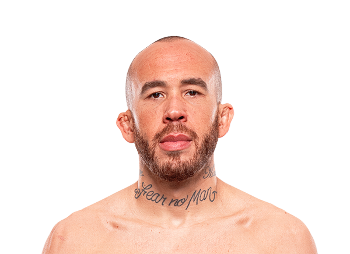
Sean Woodson
Fighter Metrics
Victory Methods
Win Round Distribution
📋 Last 5 Fights - Jack Jenkins
| Date | Opponent | Result | Method |
|---|---|---|---|
| 2025-09-28 | Ramon Taveras | W | Decision (Unanimous) (R3, 5:00) |
| 2025-02-08 | Gabriel Santos | L | Submission (Rear-Naked Choke) (R3, 2:06) |
| 2024-08-17 | Herbert Burns | W | KO/TKO (R3, 0:48) |
| 2023-09-09 | Chepe Mariscal | L | TKO (Injury Stoppage) (R2, 3:19) |
| 2023-06-24 | Jamall Emmers | W | Decision (Split) (R3, 5:00) |
📋 Last 5 Fights - Sean Woodson
| Date | Opponent | Result | Method |
|---|---|---|---|
| 2025-04-12 | Dan Ige | L | KO/TKO (R3, 1:12) |
| 2024-12-14 | Fernando Padilla | W | KO/TKO (R1, 4:58) |
| 2024-05-11 | Alex Caceres | W | Decision (Unanimous) (R3, 5:00) |
| 2024-01-20 | Charles Jourdain | W | Decision (Split) (R3, 5:00) |
| 2023-08-05 | Dennis Buzukja | W | Decision (Unanimous) (R3, 5:00) |
Technical Analysis
Technical Score
Cardio Score
Overall Rating
📊 Technical Score
Calculated as the average of Striking Composite (57 vs 55) and Grappling Composite (55 vs 50). Balances overall striking effectiveness with grappling ability to measure complete technical skills.
💪 Cardio Score
Based on average fight duration, striking rate per minute, takedown rate, and finish rate. Measures cardiovascular endurance and ability to maintain pace throughout fights.
🎯 Overall Rating
Simple average of Technical Score and Cardio Score. Provides a holistic view of fighter capabilities combining skill level with physical conditioning and fight performance.
Striking Composite
Grappling Composite
Technical Radar Comparison
Visual comparison of key performance metrics between both fighters
📊 Detailed Statistical Comparison
🥊 Fight Analysis Breakdown
🧩 Jack Jenkins Key Advantages
Jenkins lands 61% of his significant strikes — 14 points clear of Woodson's 47% — while absorbing just 2.95 per minute against Woodson's 4.18. He does not need to win the volume war (4.48 vs 5.57 SLpM) to win exchanges; he simply lands more of what he throws and pays less for it in return, a real edge in any sequence that isn't decided purely by reach.
Jenkins attempts nearly two takedowns every 15 minutes — a constant, real threat against a man who has never landed a UFC takedown himself and must therefore defend, not exchange, on every entry. Even at a modest 20% conversion rate, repeated level changes tax Woodson's energy and open striking lanes, and it is exactly this kind of scramble that has produced two of Jenkins's three career submission finishes.
Jenkins can win by knockout (6 career, three in Round 1), by submission (3 career RNC/triangle finishes), or by decision — a genuinely complete arsenal against a man whose finishing threat is almost entirely front-loaded to Round 1. He also fought and won ten months ago, while Woodson enters off a 16-month layoff and a finish loss, and in 18 professional fights Jenkins has never once been finished by a clean strike.
⚠️ Unfavorable Scenarios
Jenkins spends rounds walking forward into a jab and low kicks from a man ten inches longer, never closes clean range, and loses a clear decision to Woodson's volume (5.57 SLpM) without his superior accuracy ever mattering. Or his takedown entries get stuffed repeatedly by the 85%-TDD Woodson, burning energy and eating counters on the way in — running into a wall over and over.
Woodson's live power (0.46 KD average) catches Jenkins mid-entry in the fresh, dangerous first round — his one proven finishing window. Or a takedown attempt goes wrong in a scramble and Jenkins finds himself in exactly the kind of bad position that has produced three career submission losses, the same recurring failure mode that cost him his most recent fight against Gabriel Santos.
📋 Likely Gameplan
Use switch-stance entries to approach off-line rather than head-on into a longer man's jab and low kicks — a straight-line entry against a ten-inch reach gap is the worst version of this fight. Make the takedown a constant threat, not a one-off gamble, forcing Woodson to respect the shot on every exchange and opening striking lanes as a result.
Woodson's finishing threat is almost entirely front-loaded to Round 1 — get through the first five minutes clean and the data tilts toward Jenkins for the rest of the fight. With a proven 12:58 average UFC fight time and a career built on deep-water finishes and decisions, his path gets clearer, not harder, as the fight ages — the opposite of how Woodson's record reads late.
🚀 Sean Woodson Key Advantages
This is one of the widest length gaps on the entire card. Woodson's 78-inch reach lets him strike, retreat, and reset entirely outside Jenkins's 68-inch range — the geometric foundation his whole gameplan is built on. Backed by real volume (5.57 SLpM, the higher output in the fight), he can fight an entire three-round plan without ever entering the distance where Jenkins's superior accuracy applies.
Woodson has never landed a UFC takedown, but he doesn't need to — his 85% takedown defense directly guards against Jenkins's central weapon, a 1.98-per-15 attempt rate that converts at only 20%. He also carries genuine power of his own (0.46 knockdown average, nearly Jenkins's own 0.50), concentrated in his best, most proven window — Round 1.
⚠️ Unfavorable Scenarios
He can't find the finish in his one proven window (Round 1), and the fight drags into exactly the territory where his own record shows real cracks — every one of his non-win results (2 losses, 1 draw) has reached Round 3. Jenkins's finishing threat, by contrast, is sustained across every round and includes his two most recent wins.
The longest layoff of his UFC career and turning 34 during fight week show up as a step slower reacting to level changes, and Jenkins's volume takedown attempts start connecting more than his 20% raw accuracy suggests once Woodson's legs and reactions tire — the same fade that ended his last two competitive fights (Erosa, Ige).
📋 Likely Gameplan
Jab, low-kick, reset — never let Jenkins inside the ten inches he's spotting him. The 85% takedown defense is the whole fight's foundation, so stuff his entries decisively in Round 1 rather than playing it fight-by-fight; every exchange fought at Woodson's range is a round he is favored to win.
Four of his five career finishes have come in Round 1 — his best, most proven window — so hunt the fight-changing shot while fresh. If the finish isn't there, bank rounds on output rather than assuming the cards are won, and manage the layoff deliberately rather than trying to prove the rust is gone in the first exchange.
🎯 Fight Prediction Analysis
Data-driven prediction model based on statistical analysis
📊Detailed Analysis Summary
⚖️The Reach-and-TDD Equation
Everything in this fight routes through two measurable numbers: Woodson's 78" reach — ten inches longer than Jenkins's 68" — and his 85% takedown defense, which directly guards against Jenkins's most persistent weapon, a 1.98-per-15 takedown rate that converts at only 20%. If Woodson keeps the fight at range and stuffs the entries, he neutralizes both of Jenkins's most repeatable paths to victory. If Jenkins closes the distance and lands his superior-accuracy striking or forces a scramble, he reaches exactly the exchanges his 61%-accuracy, low-absorption profile is built to win.
🎯Technical Breakdown
The table splits along a clean axis. Jenkins owns the efficiency markers: accuracy (61% vs 47%), low absorption (2.95 vs 4.18 SApM), takedown volume (1.98 vs 0.58 TD/15), and momentum (won ten months ago vs a 16-month layoff). Woodson owns the structural markers: reach (78" vs 68"), Octagon experience (10 fights vs 6), elite takedown defense (85% vs 72%), and real power (0.46 KD, nearly Jenkins's own 0.50). Two numbers read together decide the fight: Jenkins attempts takedowns constantly (1.98/15) but converts only 20% of them — against an 85%-TDD opponent, that math favors Woodson keeping it standing. Composites: Jenkins ~57 striking / ~55 grappling, Woodson ~55 / ~50.
🧩The Round 3 Fault Line
Every one of Woodson's non-win results — two losses and one draw — has reached Round 3, the single cleanest, most repeatable pattern in the fight. Jenkins, by contrast, has reached Round 3 or later in 9 of his 14 career wins and his two most recent victories both came in the third round. The coin has a Jenkins side too: three of his four career losses are submissions, though Woodson has attempted exactly one submission in sixteen professional fights — a real vulnerability that this specific opponent isn't built to exploit.
🏁Final Prediction
The single most likely outcome is Sean Woodson by decision (26%) — his reach and volume bank rounds against a fighter who has to work harder to close distance than to win exchanges once inside it. His KO/TKO (24%) reflects real, front-loaded power (0.46 KD) concentrated in his best window, Round 1. Jack Jenkins's decision path (21%) is his most likely individual outcome, resting on superior accuracy and lower absorption winning enough exchanges — particularly late, where his record is stronger than Woodson's. His KO/TKO (19%) reflects real power (0.50 KD) once he closes distance, and his submission path (8%) stays live off his persistent, if low-percentage, takedown volume.
💰 Betting Analysis: Model vs Market
Detailed value assessment in the betting market
📊Market Odds
🤖Analytical Model
💎Value Opportunities
MAXIMUM VALUE
Model: 47% | Fair: +113
GOOD VALUE
Model: 48% | Fair: +108
SLIGHT VALUE
Model: 8% | Fair: +1150
⚠️Key Market Discrepancies
- • Two durable, well-rounded featherweights – Jenkins never finished by strikes in 18 fights; Woodson's finish threat is nearly all Round 1. A decision is the single most likely outcome (47%) and may be underpriced once a market line opens.
- • 85% TDD is a gate, not a wall – Persistent entries at 1.98/15 still tax Woodson's energy even at a modest 20% conversion rate.
- • Round 3 fault line underweighted – Every one of Woodson's non-win results has reached Round 3; the deep rounds favor the pressure fighter.
🎯 Comprehensive Probabilistic Analysis
100 hypothetical fight simulation based on statistical data
🏆Outcome Distribution - Jack Jenkins
Superior accuracy and lower absorption win enough exchanges, especially late
Real power (0.50 KD) once he closes the ten-inch reach gap
Off persistent, if low-percentage, takedown volume (1.98/15)
💥Outcome Distribution - Sean Woodson
His single most likely outcome: reach and volume bank rounds
Front-loaded finishing threat, concentrated almost entirely in Round 1
Just one submission attempt in 16 career fights — barely live
⏰Fight Timeline Analysis
⚡Window of Opportunity - Sean Woodson
- • Land early: Round 1 is his window — four of five career finishes came before the fight got deep.
- • Sprawl decisively: The 85% takedown defense is the fight — stuff entries before volume compounds.
- • Fight at range: Out-work Jenkins from the end of a ten-inch reach edge (5.57 vs 4.48 SLpM).
🎯Progressive Dominance - Jack Jenkins
- • Survive Round 1: Woodson's finishing threat is almost entirely front-loaded — get through it clean.
- • Persistent entries: Make the 85% takedown defense work every exchange; volume taxes energy regardless.
- • Grind the championship rounds: Press R2–R3, exactly where Woodson's record shows real cracks.
🎯 Final Confidence Assessment
Confidence level and uncertainty factors
Confidence Level
Deep data on both sides, but a genuinely thin 48/52 edge
✅Supporting Factors (Woodson)
- • A ten-inch reach edge (78" vs 68") — one of the widest gaps on the card
- • Elite 85% takedown defense directly guards Jenkins's central weapon
- • Deeper Octagon tenure: 10 fights over 7 years vs Jenkins's 6 over 3.5
- • Real power (0.46 KD) concentrated in his best, most proven round
⚠️Risk Factors (What Keeps Jenkins Live)
- • Jenkins leads every efficiency column: 61% acc vs 47%, 2.95 vs 4.18 SApM
- • Every one of Woodson's non-win results has reached Round 3
- • Woodson's 16-month layoff and age-34 mileage are genuine unknowns
- • Jenkins has never been finished by a clean strike in 18 fights
🏁Executive Summary
This is the deepest-data bout built for this card, and nearly every relevant number has a real counter-number on the other side of the ledger. Jack Jenkins owns every efficiency and activity column — 61% striking accuracy to Woodson's 47%, 2.95 significant strikes absorbed per minute to Woodson's 4.18, a 1.98-per-15 takedown rate, a three-lane finishing arsenal (KO, submission, decision), and a career-long resistance to being finished by strikes. Sean Woodson owns every structural and defensive column — a ten-inch reach advantage, elite 85% takedown defense that directly guards Jenkins's central weapon, nearly double the Octagon experience, and real one-shot power (0.46 KD) concentrated in his most proven round. The single most decision-relevant thread is that Woodson's two core advantages — reach and takedown defense — are positioned to directly suppress Jenkins's two most repeatable paths to victory, while Jenkins has no equivalent structural counter to Woodson's length.
Prediction: Sean Woodson wins 52% of simulations — most likely by decision (26%), controlling range and banking rounds on volume, with KO/TKO (24%) close behind off real, front-loaded power concentrated in Round 1. Jack Jenkins's 48% lives across decision (21%, resting on superior accuracy and lower absorption winning enough exchanges, particularly late), KO/TKO (19%, real power once he closes distance), and submission (8%, staying live off persistent takedown volume even at a modest 20% conversion rate). If the reach and takedown defense hold, Woodson controls the fight he wants. If Jenkins closes the distance and drags it into Round 2 or 3 — exactly the territory where Woodson's own record shows real cracks — the efficiency and pressure numbers start to tell. This is a genuine coin flip with a modest, honestly-earned lean, not a confident pick.