
Seok Hyeon Ko vs Jean-Paul Lebosnoyani
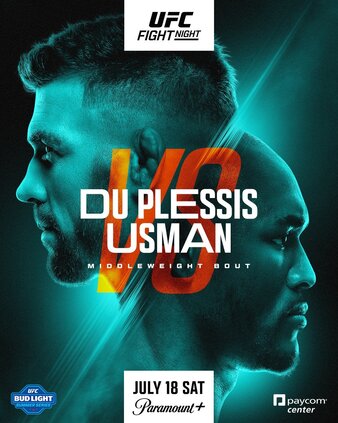
Welterweight Bout • UFC Fight Night: Du Plessis vs. Usman
Saturday, July 18, 2026 • Paycom Center, Oklahoma City
Explore Detailed Fighter Profiles
Click on either the fighter's name or profile image for each fighter to access comprehensive UFC statistics including striking metrics, grappling data, clinch performance, complete fight history, offensive & defensive analytics, and round-by-round breakdowns.

Seok Hyeon Ko
Fighter Metrics
Victory Methods
Win Round Distribution
Jean-Paul Lebosnoyani
Fighter Metrics
Victory Methods
Win Round Distribution
📋 Last 5 Fights - Seok Hyeon Ko
| Date | Opponent | Result | Method |
|---|---|---|---|
| 2025-11-01 | Phil Rowe | W | Decision (Unanimous) (R3, 5:00) |
| 2025-06-21 | Oban Elliott | W | Decision (Unanimous) (R3, 5:00) |
| 2024-09-03 | Igor Cavalcanti | W | Decision (Unanimous) (R3, 5:00) |
| 2023-12-08 | Alwin Kincai | W | KO/TKO (R1, 0:58) |
| 2023-04-06 | Ryuta Sakurai | W | KO/TKO (R2, 0:56) |
📋 Last 5 Fights - Jean-Paul Lebosnoyani
| Date | Opponent | Result | Method |
|---|---|---|---|
| 2026-02-21 | Phil Rowe | W | Decision (Split) (R3, 5:00) |
| 2025-09-02 | Jack Congdon | W | KO/TKO (R1, 1:08) |
| 2025-04-11 | Kegan Gennrich | W | Submission (Triangle) (R1, 4:00) |
| 2024-05-17 | Victor Kuiks | W | Decision (Unanimous) (R3, 5:00) |
| 2024-03-08 | Adam Wamsley | W | KO/TKO (R1, 3:46) |
Technical Analysis
Technical Score
Cardio Score
Overall Rating
📊 Technical Score
Calculated as the average of Striking Composite (63.9 vs 55.0 est.) and Grappling Composite (79.0 vs 62.0 est.). Only Ko is DB-computed; Lebosnoyani is a data void, so his composites are qualitative estimates. Balances overall striking effectiveness with grappling ability to measure complete technical skills.
💪 Cardio Score
Based on average fight duration, striking rate per minute, takedown rate, and finish rate. Measures cardiovascular endurance and ability to maintain pace throughout fights.
🎯 Overall Rating
Simple average of Technical Score and Cardio Score. Provides a holistic view of fighter capabilities combining skill level with physical conditioning and fight performance.
Striking Composite
Grappling Composite
Technical Radar Comparison
Visual comparison of key performance metrics between both fighters
📊 Detailed Statistical Comparison
🥊 Fight Analysis Breakdown
🧩 Seok Hyeon Ko Key Advantages
Ko's 4.00 takedowns per 15 minutes (rank 5/54 in the welterweight division) feed roughly 234 seconds of control per round — nearly four of every five minutes spent on top. His 53% completion rate blends Judo trips with clinch entries, and Lebosnoyani's takedown defense is entirely unmeasured. Against a guard-based opponent who lives off his back, being ridden for four minutes a round simply loses the round on the cards. This is the exact script Ko ran on Oban Elliott and Phil Rowe — two clean unanimous decisions built on control time rather than damage.
The load-bearing fact of this matchup: Ko has never been knocked down (0 KD absorbed, Iron chin) and has never been submitted in his career. Lebosnoyani's two highest-percentage finishing paths are the early KO and the triangle from bottom — and they are aimed squarely at the two things Ko has never surrendered. His 82.8% ground accuracy reflects posture-sound, controlled top play, and a Sambo World Championship implies elite scramble and submission defense. The best possible answers to Mufasa's two best weapons are already written on Ko's record.
Ko's output rises from Round 1 to Round 3 (105% R3/R1) across a 15:00 average fight time — both UFC bouts went the full distance and he showed no late fade. The classic underdog path against an older grappler, dragging him into deep water to capitalize on a gas tank, simply does not exist here; the longer this fight goes, the more it favors Ko. Add the common-opponent signal — both men beat Phil Rowe, Ko unanimously where Lebosnoyani edged a split — and the archetype baseline (Wrestler beats Submission Artist 70% of the time across a 40-fight sample), and every structural arrow points the same direction.
⚠️ Unfavorable Scenarios
The single worst case for Ko is the Gennrich finish replayed: he shoots, passes carelessly, stacks into Lebosnoyani's guard, and walks into a Round-1 triangle. Ko has never been submitted, but he has also never had to defend a guard this dangerous — five career subs, three of them triangles. Every minute he spends passing top-heavy is a minute Mufasa is hunting the choke, and one careless posture-up is all it takes against a finisher this opportunistic.
Ko's standing volume is very low (SLpM rank 49/54), so if he cannot get the fight to the mat, Lebosnoyani can control distance and land the cleaner, harder shots in the rare standing exchanges — stealing a close round Ko cannot grapple back. A failed takedown in open space hands the younger man a scramble and a clean counter, the one moment Ko's KD-rank-45 striking can't deter. And his thin two-fight UFC sample came against rangy point-strikers, not a guard-hunting finisher who threatens a submission every time Ko engages.
📋 Likely Gameplan
Ko should not trade volume — he can't win that — and instead use Judo clinch entries and the double to put Mufasa on his back, where the rounds are won. The entire fight then hinges on disciplined, posture-aware passing: avoid the guard-stacking that feeds the triangle and work directly to half-guard, side control, mount and back, where Lebosnoyani's submissions dry up. His 53% completion rate and 75% takedown defense let him decide where the fight happens, and where it happens is where he is elite.
With an 82.8% ground accuracy and R2 head-targeting, Ko should bank damage and control time and let any finish come if it comes — win every round 10-9 the way he did against Elliott and Rowe. Lean on the Iron chin and the clock: accept the occasional clean shot, never panic in a scramble, and let a Steady cardio profile bury a younger finisher in the championship minutes. The Rowe and Elliott blueprint already worked twice in the UFC against the very same common opponent — the gameplan is simply to run it again.
🚀 Jean-Paul Lebosnoyani Key Advantages
This is the upset blueprint, and it requires no invented data — it is on Lebosnoyani's record five times over: three triangle chokes, a guillotine, and a scarf-hold armlock. A wrestler who lives in your guard and postures to ground-and- pound is feeding the triangle, the armbar and the guillotine. Ko has never been submitted, but he has also never shared a cage with a guard this dangerous. Every minute Ko spends passing is a minute Mufasa is hunting the choke, and the Gennrich finish (Round-1 triangle) is the template for exactly how he beats a man who wants to be on top of him.
A 67-second Contender Series knockout of Jack Congdon and three first-round LFA finishes establish that Lebosnoyani can end a night before Ko's grind ever gets going — seven of his eight finishes came in Round 1. Ko is a slow-volume starter who concedes the opening exchanges to set up takedowns; if Mufasa lands clean in a scramble or off a takedown attempt gone wrong, his power is real. He is also the younger, fresher athlete (27 vs 32) and the unmeasured man — the model has Ko computed on a thin two-fight sample while Lebosnoyani's ceiling is genuinely unmapped.
⚠️ Unfavorable Scenarios
The worst case for Mufasa is the cleanest case for Ko: he gets taken down at will, ridden for 234 seconds a round, and the triangle never materializes because Ko's posture and passing are too disciplined — a 30-27 grind identical to the Elliott and Rowe fights. His distance-cardio, untested past Round 1 in most of his bouts, fades under the weight of carrying a Sambo champion for fifteen minutes. Out-grappling a control wrestler over three rounds on the cards is the one thing his profile is simply not built to do.
If Lebosnoyani's early-finish window (Round 1) passes without a finish, he runs straight into Ko's strongest stretch — the R2 peak of 264 seconds of control and 73% ground striking — the worst possible round to be underneath this man. From there his chin, already cracked twice by KO (Spike Carlyle, Jacobi Jones), is tested by accumulated ground-and-pound, and a referee stoppage from mount can end a fight he was already losing on position. The longer it goes, the more the unmeasured cardio and the documented chin become liabilities.
📋 Likely Gameplan
Mufasa should not fear the takedown — he should weaponize the guard. Every pass attempt is a triangle entry; every posture-up is an armbar look. The job is to make Ko's control time expensive: bait the shot, then immediately attack the triangle or guillotine before Ko settles his top game. If any wrestling exists in his toolkit (unknown), he should use it to keep the fight standing where his power lives; if not, he has to hit the scramble the instant he is planted, turning Ko's greatest strength into the trap.
His entire history says the first five minutes are his most dangerous, so he has to win or threaten early — land the power shot, or bait the takedown and immediately attack the triangle/guillotine before Ko's grind takes hold. He should pressure a low-volume striker, force exchanges his takedown-first opponent would rather avoid, and test the chin and the pace. Above all he must not let it become a quiet grind: a clean, uneventful Ko decision is the most likely outcome, so Mufasa has to inject chaos, urgency and submission threat to drag this into his variance.
🎯 Fight Prediction Analysis
Data-driven prediction model based on statistical analysis
📊Detailed Analysis Summary
🧬Style Collision & Information Gap
This fight is two things at once: a clean archetype collision (control wrestler vs. guard-based submission finisher) and an asymmetric-information matchup (one fighter fully measured, the other a roster row). Both framings push the same way. The archetype data says the wrestler wins 70% of the time; the information gap says our confidence in Ko's exact edge should be tempered by his thin two-fight sample and by the fact that we cannot see Lebosnoyani's ceiling at all. Strip away the noise and Ko is a clean archetype — a Judo/Sambo control wrestler with an Iron chin, elite top time, steady cardio and zero submission losses, who wins decisions by smothering. The result is a confident lean held with genuine humility: the texture of a 62/38 fight, not a 75/25 one.
🎯Technical Breakdown
The numbers can only rank one fighter, and Ko's profile is crystal clear and internally consistent: an elite takedown wrestler (4.00 TD/15, rank 5/54) with top-tier striking defense (8/54), elite low absorption (2.00 SApM, rank 4/54), 234 seconds of control per round and an Iron chin. The price he pays is volume (SLpM rank 49/54) and a near-zero distance- KO threat (KD rank 45/54) — he wins by control and accumulation, not by blowing you out early. Lebosnoyani is a blank statistical column, so there is no comparative line to draw; the contrast is qualitative. His web profile is the photographic negative of Ko's: a high-finish, submission-first early closer (80% finish rate, five career subs) who has also been knocked out twice. Measured, durable grinder versus unmeasured, high-variance finisher.
🧩The Triangle Question & the R2 Convergence
Everything turns on one exchange repeated across fifteen minutes: Ko on top, passing — Lebosnoyani off his back, hunting. Mufasa's three triangles, guillotine and armlock are not theoretical; they are how he wins. But Ko's counter- evidence is just as concrete: never submitted, 82.8% ground accuracy (a marker of posture-sound top play), and a Sambo world title implying elite scramble and submission defense. The read: Mufasa gets one, maybe two real triangle/armbar looks across the fight — hit one and he wins by submission; defend them, as Ko's record suggests he will more often than not, and those same exchanges become Ko's control-and-damage rounds. There is also a timing wrinkle: Ko's control and output peak in Round 2 (264 sec control, 73% ground striking), exactly the window in which Lebosnoyani has done most of his finishing. If Mufasa doesn't threaten in the opening five minutes, the fight flows straight into Ko's single strongest stretch.
🏁Final Prediction
The single most likely outcome is Seok Hyeon Ko by Decision (36%) — taking Lebosnoyani down, passing with the discipline his Sambo pedigree implies, banking control time and ground- and-pound, and walking off with a unanimous nod exactly as he did against Oban Elliott and Phil Rowe. Ko's KO/TKO path (18%) is ground-and-pound from top, not a distance KO, and his submission path (8%) is modest by design — he has zero career sub finishes. Lebosnoyani's best route is the submission (16%), the triangle/guillotine off his back that is on his record five times, ahead of his early KO (13%) and a distant decision (9%). Ko 62%, Lebosnoyani 38%, with the favorite being the only measured man and the better-credentialed grappler.
💰 Betting Analysis: Model vs Market
Detailed value assessment in the betting market
📊Market Odds
🤖Analytical Model
💎Value Opportunities
MAXIMUM VALUE
Model: 45% | Market implied: 42.6%
GOOD VALUE
Model: 72% | Market implied: 66.7%
SLIGHT VALUE
Model: 62% | Fair: -163
⚠️Key Market Discrepancies
- • Overweights two finishers' reputations – Ko's six KOs and Mufasa's 80% finish rate inflate the inside-distance lines in a control-first fight.
- • Underprices the grind – Ko is 2-for-2 in UFC unanimous decisions; the Decision prop (+135) sits below its true probability.
- • 3-round format aids Ko – Less room for the early Lebosnoyani finish the market is partly pricing in.
🎯 Comprehensive Probabilistic Analysis
100 hypothetical fight simulation based on statistical data
🏆Outcome Distribution - Seok Hyeon Ko
Largest single path — control time and the cards
Ground-and-pound stoppage from top, not a distance KO
Opportunistic choke from back/mount — 0 career sub finishes
💥Outcome Distribution - Jean-Paul Lebosnoyani
Best lane — the triangle/guillotine off his back
Real power in a scramble or failed-takedown exchange
Least likely — out-grappling a control wrestler on the cards
⏰Fight Timeline Analysis
⚡Window of Opportunity - Jean-Paul Lebosnoyani
- • First five minutes: Highest finish equity — land power or hit the triangle early.
- • Weaponize the guard: Every Ko pass is a triangle/armbar entry; make control expensive.
- • Inject chaos: Scrambles and urgency — never let it become a quiet grind.
🎯Progressive Dominance - Seok Hyeon Ko
- • Trip and pass clean: 4.00 TD/15 into 234 sec control; avoid the guard-stack.
- • Iron chin & clock: Never panic in a scramble; let Steady cardio bury the finisher.
- • Mirror Rowe/Elliott: Bank every round 10-9 from top position.
🎯 Final Confidence Assessment
Confidence level and uncertainty factors
Confidence Level
A measured lean — Ko is proven and measured, but his opponent is a genuine data void
✅Supporting Factors
- • Elite takedowns (4.00 TD/15, rank 5/54) into 234 sec control per round
- • Iron chin — never knocked down, never submitted
- • Elite low absorption (2.00 SApM, 4/54) and top-tier striking defense (8/54)
- • Steady cardio, zero fade; clearer common-opponent win over Phil Rowe
⚠️Risk Factors
- • Opponent is a data void — Mufasa's ceiling is unmapped
- • Ko's own UFC sample is thin (2 fights, both decisions)
- • The triangle is a live, repeatable equalizer (5 career subs)
- • Youth and finishing variance favor the dog early
🏁Executive Summary
In roughly 62 of 100 simulations, Seok Hyeon Ko's control game decides the night — most often (36%) by taking Lebosnoyani down, passing with the discipline his Sambo pedigree implies, banking control time and ground-and-pound for a unanimous decision exactly as he did against Oban Elliott and Phil Rowe; less often by grinding a TKO from mount (18%) or stealing a back-take choke in a scramble (8%). His Iron chin and Steady cardio mean the longer it goes, the more it is his. The data hands the Korean a clear, structural edge — control, chin, cardio, and an archetype (Wrestler vs. Submission Artist) that wins this matchup seven times in ten.
In the other 38, Jean-Paul "Mufasa" Lebosnoyani's variance takes over. The triangle he has hit five times finds Ko's neck the one time his posture slips (16% submission), or his real power catches a low-volume striker in an early scramble (13% KO), or — least likely — he out-works the grinder on the cards (9%). Every one of those paths is live; none of them is the likely path. He is the unmeasured man with the single weapon built to punish exactly how Ko fights, and that keeps this welterweight grind more dangerous than the scorecards will probably show.
Prediction: Seok Hyeon Ko by Decision is the single most likely result (36%), built on elite control time and a Steady cardio grind; Jean-Paul Lebosnoyani's upset lane is the triangle from bottom (16% submission). Model line Ko 62% / Lebosnoyani 38% — Conviction 5/10, a measured lean on the only fully-measured fighter, held with the humility a one-sided information gap demands.