
Chase Hooper vs Mitch Ramirez
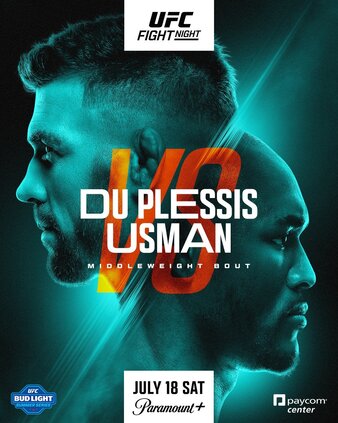
Lightweight Bout • UFC Fight Night: Du Plessis vs. Usman
Saturday, July 18, 2026 • Paycom Center, Oklahoma City
Explore Detailed Fighter Profiles
Click on either the fighter's name or profile image for each fighter to access comprehensive UFC statistics including striking metrics, grappling data, clinch performance, complete fight history, offensive & defensive analytics, and round-by-round breakdowns.

Chase Hooper
Fighter Metrics
Victory Methods
Win Round Distribution
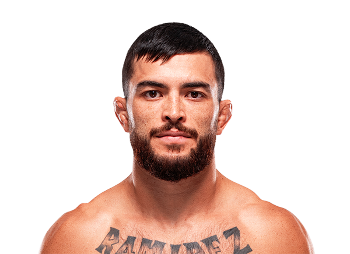
Mitch Ramirez
Fighter Metrics
Victory Methods
Win Round Distribution
📋 Last 5 Fights - Chase Hooper
| Date | Opponent | Result | Method |
|---|---|---|---|
| 2026-03-28 | Lance Gibson Jr. | L | TKO (Knees) (R1, 2:56) |
| 2025-08-16 | Alexander Hernandez | L | TKO (Punches) (R1, 4:58) |
| 2025-04-12 | Jim Miller | W | Decision (Unanimous) (R3, 5:00) |
| 2024-12-07 | Clay Guida | W | Submission (Armbar) (R1, 3:41) |
| 2024-05-11 | Viacheslav Borshchev | W | Submission (Brabo Choke) (R2, 3:00) |
📋 Last 5 Fights - Mitch Ramirez
| Date | Opponent | Result | Method |
|---|---|---|---|
| 2025-07-12 | Mike Davis | L | TKO (Strikes) (R2, 4:08) |
| 2024-03-16 | Thiago Moisés | L | TKO (Strikes) (R3, 0:15) |
| 2023-12-15 | Aireon Tavarres | W | KO/TKO (R1, 2:19) |
| 2023-08-29 | Carlos Prates | L | TKO (Strikes) (R2, 1:14) |
| 2023-05-03 | Jeremie Holloway | W | KO/TKO (R3, 0:59) |
Technical Analysis
Technical Score
Cardio Score
Overall Rating
📊 Technical Score
Calculated as the average of Striking Composite (50 vs 25) and Grappling Composite (62 vs 28). Balances overall striking effectiveness with grappling ability to measure complete technical skills.
💪 Cardio Score
Based on average fight duration, striking rate per minute, takedown rate, and finish rate. Measures cardiovascular endurance and ability to maintain pace throughout fights.
🎯 Overall Rating
Simple average of Technical Score and Cardio Score. Provides a holistic view of fighter capabilities combining skill level with physical conditioning and fight performance.
Striking Composite
Grappling Composite
Technical Radar Comparison
Visual comparison of key performance metrics between both fighters
📊 Detailed Statistical Comparison
🥊 Fight Analysis Breakdown
🧩 Chase Hooper Key Advantages
Hooper's submission rate of 2.13 per 15 minutes is second in the entire 57-man lightweight division — more than four times the divisional average — against a man whose takedown defense is 25% with zero documented ground time. This is the matchup. He does not need to be a perfect wrestler: he attempts takedowns at a high rate (63 career attempts) and works trips and body locks from the clinch, and the math only needs to work once per round. Once it hits the mat, his 78.5% ground accuracy and diverse finishing portfolio (triangle, armbar, RNC, D'Arce) make the finish a matter of time against an opponent with no submission defense on record.
At 6'1" with roughly a 75" reach against a 5'11", 71"-reach opponent, Hooper can fight long, jab into his takedown entries, and control distance. For a fighter whose entire game is built on length-driven grappling entries, clinch control, and long-limbed submission chains, the frame advantage is not cosmetic — it directly feeds his best tools. And at 26 versus 32, with a far more active recent schedule against a man coming off a roughly one-year layoff, he is the fresher athlete in any fight that lasts.
The Submission Artist vs. Striker baseline runs 61.4% in favor of the grappler across a 223-fight sample. Layer on Hooper's Elite Activity pace (7.0 strikes/min) against Ramirez's Low Output (3.4/min), and the "Slight Fade" (71% R3/R1) versus "Fades Late" trajectories, and Hooper projects to out-work Ramirez in every minute the fight is not ended by a single punch. His losses have all come by strikes or decision — his grappling has never been his undoing — so he is being asked to do the one thing he is elite at against a man who has never had to defend it.
⚠️ Unfavorable Scenarios
Hooper shoots a telegraphed, low-percentage takedown (33% career accuracy), Ramirez sprawls and lands a clean knee or uppercut on the exit — the exact Lance Gibson Jr. (knees) and Alexander Hernandez (punches) sequences that ended his last two fights inside a single round. Both losses followed the same script: a pressure striker found Hooper's chin before he could implement his grappling. Ramirez, a forward-moving finisher with five career KO wins, is built to attack precisely that dimension.
Hooper chooses to strike with Ramirez to "set up" the takedown, eats a leg-kick-to-overhand combination, and his collapsing chin does what it has done twice in a row. His rank-55 striking defense, 10 career knockdowns absorbed, and 0% recovery rate (0 wins in 3 fights after being dropped) paint a consistent, worrying picture: he can be hurt, and when hurt he does not recover. Get dropped early, fail to recover, and the fight is waved off in Round 1 for a third straight time.
📋 Likely Gameplan
Hooper should close behind his length and grapple immediately — his division-leading R1 sub attempts (0.75, "Early Hunter") and 0% slow-start rate confirm the first-minute identity. Use the reach to enter, tie up, and trip against a 25% takedown defense with no ground game, and lean on clinch trips and body locks rather than telegraphed level changes that expose him to knees on the exit. Above all, avoid the standing firefight: his chin, not his skill, is the liability, and every second in range is a second in Ramirez's only winning phase.
Once the fight is down, Hooper should attack the submission early rather than ride for control. Ramirez has no documented submission defense, and Hooper's portfolio is diverse enough to take whatever opens up — any ground exchange, from top or bottom, in scrambles or from control, is a finishing opportunity given his 78.5% ground accuracy. If it does stay standing, his Elite Activity pace against a Low Output opponent wins rounds on the cards — but the mat is the safer plan, and the longer the fight lasts the more it lives in his world.
🚀 Mitch Ramirez Key Advantages
This is real and it is dangerous. Ramirez has five career KO wins, and Hooper has been stopped in the first round in each of his last two fights, with a 0% recovery rate after being knocked down and 10 career knockdowns absorbed. Hooper's striking defense is rank 55/57. If Ramirez lands clean early — and Hooper's defensive numbers say he will get chances — the knockout is genuinely on the table. This single factor is the entire reason this fight is not a formality.
Ramirez's 64.3% R1 leg targeting is a documented opener. Repeated hard leg kicks can compromise the base a wrestler needs to change levels and shoot, potentially slowing Hooper's entries and keeping the fight standing where his power matters. And both men share the division's worst trait — bottom-tier striking defense (Hooper 55/57, Ramirez 56/57) — which guarantees clean shots land. Ramirez doesn't have to out-box Hooper; he has to land one clean shot, and in a phone-booth exchange the harder hitter has the edge.
⚠️ Unfavorable Scenarios
Hooper closes the distance in the first two minutes, secures a clinch trip against the 25% takedown defense, and submits Ramirez before he ever sets his feet to throw the one punch that wins him the fight. Against the division's #2 submission threat, Ramirez has no documented answer at any point in the sequence: no takedown defense, no guard, no scrambling, and no submission defense on record. His two career submission wins were both rear-naked chokes against regional strikers — nothing that survives an elite grappler.
Ramirez empties his power early looking for the KO, misses, and fades — his "Fades Late" profile and 3.4 strikes/min Low Output tier give him no second gear. As Hooper's control time climbs, he is ground out and submitted in Rounds 2–3. Ramirez is also 32 years old and entering on a roughly one-year layoff against a younger, busier opponent; every time he has stepped up to UFC-level competition he has been finished in the later rounds, which is exactly where this fight slips into Hooper's world.
📋 Likely Gameplan
Ramirez must make it a striking match at all costs: sprawl-and-brawl, defend the clinch, and force Hooper to beat him standing where the chin gap favors Ramirez. He should hunt the chin early — Hooper is most vulnerable to the clean early shot, with both of his last two losses coming by first-round TKO — loading up on the leg-kick-to-power-hand combination and looking to land before Hooper can grapple. Every exchange he keeps standing is a second away from the phase he cannot survive.
Ramirez should punish takedown entries: meet level changes with knees and uppercuts — the Lance Gibson Jr. blueprint — turning Hooper's offense into his own finishing opportunity. His cardio fades and Hooper's control grows with time, so the urgency must be front-loaded. If the KO doesn't come early, the fight slips into Hooper's world; Ramirez must win in the first ten minutes or, in all likelihood, not at all. A fighter on the brink is dangerous precisely because he must take risks to land his only realistic win condition.
🎯 Fight Prediction Analysis
Data-driven prediction model based on statistical analysis
📊Detailed Analysis Summary
🏟️The Race: Takedown vs Knockout
This fight has one axis. Hooper's win equity lives on the ground; Ramirez's lives in a clean standing exchange. Hooper's submission rate (rank 2/57) and Ramirez's takedown defense (25%) make the grappling outcome nearly deterministic if the fight gets there — Ramirez has spent 0.0% of his tracked career on the canvas and has no tools for it. The contest is therefore a sequencing problem: Hooper must traverse the standing phase, where his rank-55 striking defense and collapsing chin meet Ramirez's one elite trait, and reach the phase he dominates. The longer Hooper survives standing, the more inevitable the takedown-and-finish becomes; the more he lingers in range, the more likely Ramirez catches him as Hernandez and Gibson Jr. did.
🎯Technical Breakdown
Hooper's path is not contingent on a perfect wrestling performance. With a high attempt rate (2.49 TD/15, 63 career attempts), clinch trips, and an opponent at 25% takedown defense, he projects to land at least one takedown in the large majority of rounds — and his submission portfolio (triangle, armbar, RNC, D'Arce, 78.5% ground accuracy) converts top or bottom position into a finish. Ramirez has no documented answer at any point in the sequence: no takedown defense, no guard, no scrambling, no submission defense on record. This is the rare matchup where one fighter is elite at exactly what the other has never had to do — a 62-vs-28 grappling-composite chasm that is the real and decisive separation.
🧩Why Hooper's Chin Is The Whole Ballgame
Strip the fight to its core and it is "can Hooper take a punch long enough to grapple?" His last two fights say the risk is real: two first-round TKO losses, 10 career knockdowns absorbed, 0% recovery rate. But context matters — Hernandez and Gibson Jr. are sharper, more well-rounded strikers than Ramirez, who is a low-output (3.4/min) regional finisher with rank-56 striking defense of his own and a one-year layoff. Ramirez has the power to exploit Hooper's chin but not the volume or polish of the men who just did. He needs a clean, committed shot in a short window, against an opponent actively trying to take the fight to the mat from the first second.
🏁Final Prediction
The most likely outcome is Chase Hooper by Submission (38% probability) — his single largest path and the most data-supported outcome in the fight, with a rank-2 submission rate and 78.5% ground accuracy against an opponent with 25% takedown defense and zero ground game. Hooper's decision path (18%) captures the sims where Ramirez survives the grappling but is out-worked over three rounds, and his ground-and-pound KO/TKO (9%) rounds out his case. Ramirez's entire realistic lane is the early KO/TKO (26%): five career KO wins against a chin that has folded in Round 1 twice running. The decision (7%) and submission (2%) counters are remote — the question is purely whether the takedown comes before the knockout punch.
💰 Betting Analysis: Model vs Market
Detailed value assessment in the betting market
📊Market Odds
🤖Analytical Model
💎Value Opportunities
MAXIMUM VALUE
Model: 75% | Implied: 71.4%
GOOD VALUE
Model: 38% | Implied: 40.0%
SLIGHT VALUE
Model: 68% | Implied: 64.3%
⚠️Key Market Discrepancies
- • Two finish routes on one bout – Hooper's sub game and Ramirez's power both end fights inside distance.
- • Ramirez's KO path understated – His regional power is unmeasured in his percentile metrics.
- • Grappling mismatch is decisive – Rank-2 sub rate vs 25% TDD and 0.0% ground time.
🎯 Comprehensive Probabilistic Analysis
100 hypothetical fight simulation based on statistical data
🏆Outcome Distribution - Chase Hooper
Rank-2 sub rate vs zero ground game
Out-works Ramirez over three rounds
Ground-and-pound on a rank-56 defense
💥Outcome Distribution - Mitch Ramirez
Five KO wins vs a collapsing chin
Must stuff takedowns he has never shown he can stop
Two regional RNCs; near-token vs an elite grappler
⏰Fight Timeline Analysis
⚡Window of Opportunity - Mitch Ramirez
- • First ten minutes: Highest KO equity before grappling sets in.
- • Sprawl-and-brawl: Defend the clinch; force a standing fight.
- • Leg-kick-to-overhand: Hunt the chin that has folded twice.
🎯Progressive Dominance - Chase Hooper
- • Close distance: Clinch trips vs a 25% takedown defense.
- • Finish early: Attack subs from top or bottom (78.5% ground accuracy).
- • Late rounds: Control climbs as Ramirez fades.
🎯 Final Confidence Assessment
Confidence level and uncertainty factors
Confidence Level
A clear lean held back by Hooper's failing chin vs a puncher
✅Supporting Factors
- • Cleanest grappling mismatch: rank-2 sub rate vs 25% TDD
- • Archetype baseline: Submission Artist vs Striker 61.4%
- • Ramirez 0-2 UFC, 0-3 vs this level, all by KO/TKO
- • Every late-round trend (output, control, fade) favors Hooper
⚠️Risk Factors
- • Hooper's chin: two straight R1 TKO losses, 0% recovery
- • Ramirez's regional KO power is unmeasured — danger understated
- • Both men have bottom-of-division striking defense
🏁Executive Summary
Across 100 simulations the dominant story is a grappling one. In roughly 65 of them, Chase Hooper survives the opening exchanges, closes the distance behind his length, and drags Mitch Ramirez into the phase he has never had to fight in — finishing by submission in 38, grinding out a decision in 18, or finding ground-and-pound in 9. Ramirez's 25% takedown defense and zero documented ground game offer no answer to the division's #2 submission threat, and the longer the fight lasts, the more inevitable that outcome becomes against a fading, older opponent off a layoff. In the other 35, the race tips the other way: Ramirez lands the one clean shot his power makes possible — most often a leg-kick-to-overhand or a knee on a telegraphed takedown entry — and Hooper's chin does what it has done in each of his last two fights, ending the night by KO/TKO in 26 of those sims.
Prediction: Chase Hooper by submission is the single most likely result (38%) and the cleanest expression of the fight's central mismatch; Ramirez's entire realistic upset lane is the early KO/TKO (26%). The data hands Hooper a decisive grappling edge against a one-lane striker who can't wrestle — but Hooper has been knocked out in the first round twice in a row, and Ramirez hits hard enough to make him pay for it. Grappler beats striker here more often than not, but the punch that ends it is always one exchange away.