
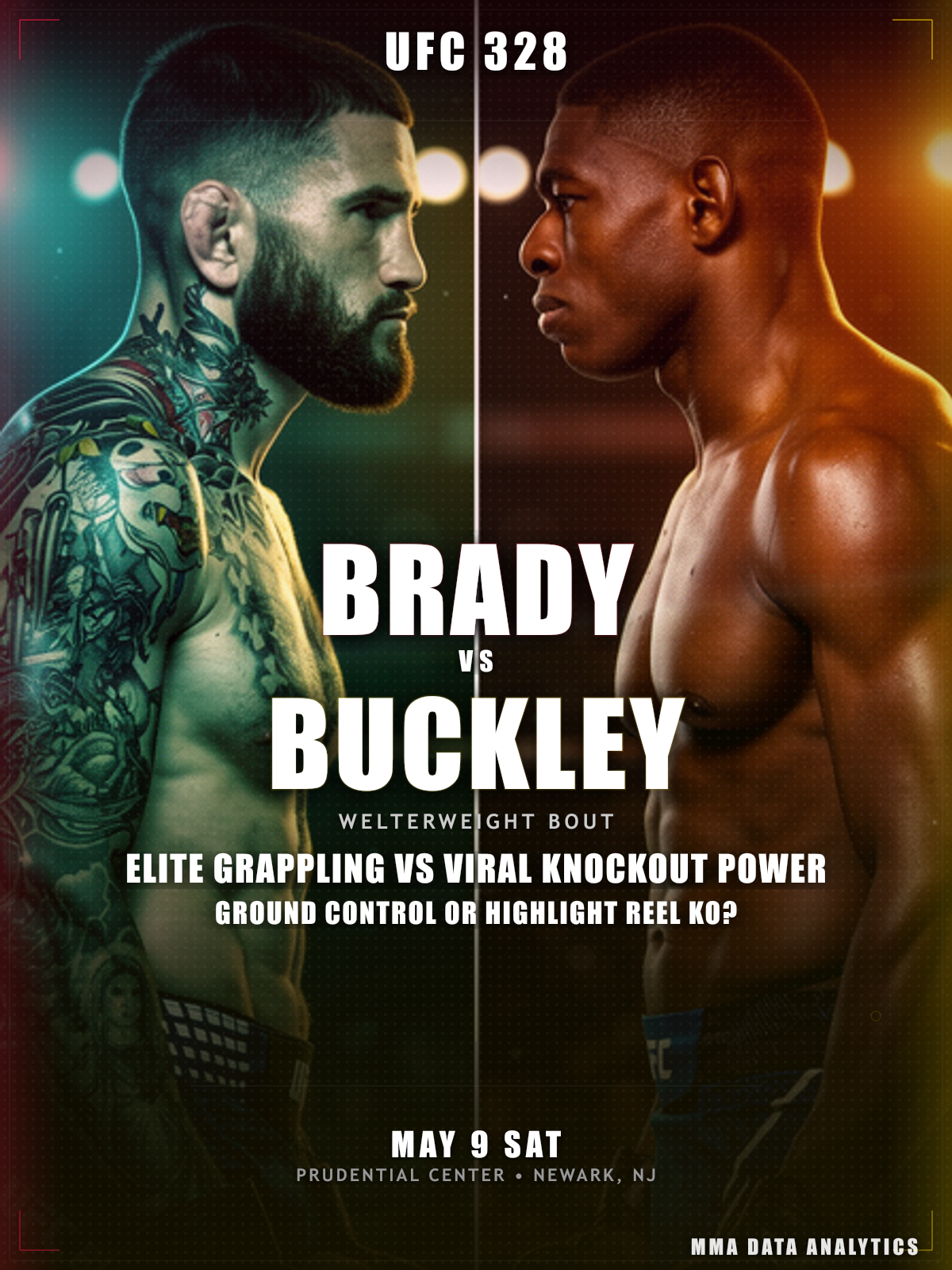
Sean Brady vs Joaquin Buckley
Men's Welterweight Bout • UFC 328: Chimaev vs. Strickland
Saturday, May 9, 2026 • 30ft Octagon (Large Cage)
Explore Detailed Fighter Profiles
Click on either the fighter's name or profile image for each fighter to access comprehensive UFC statistics including striking metrics, grappling data, clinch performance, complete fight history, offensive & defensive analytics, and round-by-round breakdowns.
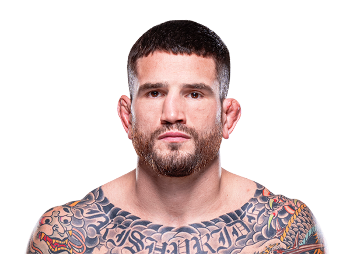
Sean Brady
Fighter Metrics
Victory Methods
Win Round Distribution
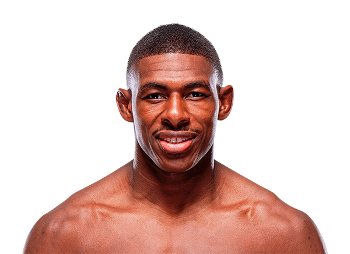
Joaquin Buckley
Fighter Metrics
Victory Methods
Win Round Distribution
📋 Last 5 Fights - Sean Brady
| Date | Opponent | Result | Method |
|---|---|---|---|
| 2025-11-15 | Michael Morales | L | TKO - Punches (R1, 3:27) |
| 2025-03-22 | Leon Edwards | W | Submission - Guillotine Choke (R4, 1:39) |
| 2024-09-07 | Gilbert Burns | W | Decision - Unanimous (R3, 5:00) |
| 2023-12-02 | Kelvin Gastelum | W | Submission - Kimura (R3, 1:43) |
| 2022-10-22 | Belal Muhammad | L | TKO - Punches (R2, 4:47) |
📋 Last 5 Fights - Joaquin Buckley
| Date | Opponent | Result | Method |
|---|---|---|---|
| 2025-06-14 | Kamaru Usman | L | Decision - Unanimous (R3, 5:00) |
| 2024-12-14 | Colby Covington | W | TKO - Doctor Stoppage (R3, 4:42) |
| 2024-10-05 | Stephen Thompson | W | TKO - Right Hook (R3, 2:17) |
| 2024-05-11 | Nursulton Ruziboev | W | Decision - Unanimous (R3, 5:00) |
| 2024-03-30 | Vicente Luque | W | TKO - Ground & Pound (R2, 3:17) |
Technical Analysis
Technical Score
Cardio Score
Overall Rating
📊 Technical Score
Calculated as the average of Striking Composite (78 vs 75) and Grappling Composite (89 vs 68). Balances overall striking effectiveness with grappling ability to measure complete technical skills.
💪 Cardio Score
Based on average fight duration, striking rate per minute, takedown rate, and finish rate. Measures cardiovascular endurance and ability to maintain pace throughout fights.
🎯 Overall Rating
Simple average of Technical Score and Cardio Score. Provides a holistic view of fighter capabilities combining skill level with physical conditioning and fight performance.
Striking Composite
Grappling Composite
Technical Radar Comparison
Visual comparison of key performance metrics between both fighters
📊 Detailed Statistical Comparison
🥊 Fight Analysis Breakdown
🧩 Sean Brady Key Advantages
Brady's 3.62 takedowns per 15 minutes versus Buckley's 1.78 creates a 2x differential that can dictate where this fight takes place. Brady's chain-wrestling sequences—single legs into doubles, mat returns off the cage, and relentless pressure wrestling—create minute-winning cycles that accumulate control time. His 54% takedown accuracy against Buckley's 74% defense suggests Brady can breach the initial takedown defense through persistence and varied entries. Once on the mat, Brady's 89 grappling composite versus Buckley's 68 creates a massive skill gap where he can rack up control time, attempt submissions, and drain Buckley's energy reserves.
Brady's 0.93 submission attempts per 15 minutes represents a legitimate finishing threat that Buckley must constantly defend against. With 6 career submission wins including guillotine chokes and kimuras, Brady forces opponents to dedicate mental and physical resources to submission defense even when he's controlling position. Buckley has zero submission wins and 0.09 Sub/15, meaning any grappling exchange heavily favors Brady's skill set. The threat of submissions also opens up ground-and-pound opportunities as Buckley defends chokes and armlocks, creating a multi-layered offensive game on the mat.
Brady absorbs only 2.94 strikes per minute compared to Buckley's 3.13, while landing at a higher accuracy rate (56% vs 37%). This striking efficiency means Brady takes less cumulative damage while landing cleaner shots. His 59% striking defense matches Buckley's, but Brady's lower output approach combined with his grappling transitions means he spends less time in dangerous striking exchanges. Over three rounds, this damage economy advantage compounds—Brady stays fresh and accurate while Buckley accumulates damage from both strikes and the energy expenditure of defending takedowns.
⚠️ Unfavorable Scenarios
Buckley carries devastating knockout power with 15 KO/TKO wins (71% of his victories). His explosive hooks and spinning techniques can end fights in an instant. If Brady is careless in his entries or gets caught during level changes, Buckley's power can be fight-ending. The first round presents the highest danger window when Buckley is freshest and his timing is sharpest—as demonstrated by his viral spinning back kick KO of Impa Kasanganay. Brady's 2 TKO losses (both via punches to Morales and Muhammad) show he can be hurt when opponents connect cleanly.
If Brady fails to close distance and implement his wrestling, Buckley's 76-inch reach advantage (vs Brady's 72) gives him significant tools to control range. Buckley's 4.22 SLpM output with explosive combinations can overwhelm Brady if the fight stays on the feet. The 30-foot cage provides space for Buckley to circle, reset, and maintain his preferred striking distance. Brady's lower output approach (4.0 SLpM) needs grappling integration to be effective—without takedown success, he can be out-pointed in pure striking exchanges.
📋 Likely Gameplan
Brady should implement early cage pressure to cut off Buckley's movement and establish wrestling control. His 54% takedown accuracy works best against the fence where Buckley's explosive defense is neutralized. By mixing level changes with clinch work and body shots, Brady can create multiple entry points for takedowns. The key is establishing the wrestling threat early to force Buckley into a reactive defensive mindset rather than allowing him to load up on power shots. Brady's methodical pressure-first approach against Burns and Edwards demonstrates his ability to grind out wins through relentless positional control.
Once Brady secures takedowns, his priority should be establishing dominant positions and threatening submissions. His kimura against Gastelum and guillotine against Edwards show his ability to finish fights from various grappling positions. By maintaining heavy top pressure and threatening chokes and armlocks, Brady forces Buckley to expend energy on escape attempts while accumulating scoring time. This approach maximizes Brady's 89 grappling composite advantage and minimizes Buckley's knockout threat.
🚀 Joaquin Buckley Key Advantages
Buckley's 15 KO/TKO wins represent one of the most dangerous power profiles in the welterweight division. His ability to generate fight-ending power from both orthodox and southpaw stances, utilizing hooks, uppercuts, and spectacular spinning techniques, makes him a constant knockout threat. Buckley's viral KO of Kasanganay and his recent finishes of Thompson, Covington, and Luque demonstrate his ability to end fights against elite competition. His 4.22 SLpM output combined with devastating power means every exchange carries fight-ending potential, forcing Brady to be extremely careful in his striking approach and takedown entries.
Buckley's 76-inch reach versus Brady's 72 creates a significant 4-inch differential that he can exploit with jabs, straight shots, and front kicks to maintain distance. This reach advantage allows Buckley to control the striking range and punish Brady's entries before he can close distance for takedowns. In the 30-foot cage, Buckley can use his length to circle, reset, and dictate where the fight takes place on the feet. His ability to switch stances adds another dimension to his range management, making it harder for Brady to time his level changes and close the distance safely.
⚠️ Unfavorable Scenarios
Brady's chain-wrestling and mat control represent Buckley's worst nightmare. With zero submission attempts and limited offensive grappling (1.78 TD15 at 45% accuracy), Buckley struggles to create offense once the fight hits the mat. Brady's 87% takedown defense means Buckley's own takedown attempts are unlikely to succeed, while Brady's 3.62 TD15 creates consistent top position opportunities. Once Brady establishes control, Buckley's striking power becomes neutralized and his primary weapons are taken away. The longer the fight stays on the ground, the more Brady's grappling advantage compounds.
Buckley's 9:45 average fight duration and reliance on early finishes suggest potential cardio concerns in later rounds. His high-output striking approach (4.22 SLpM) becomes increasingly difficult to sustain when combined with takedown defense and grappling scrambles. Brady's pressure wrestling deliberately targets this weakness—by forcing Buckley to carry weight, defend submissions, and work off his back, Brady can drain Buckley's gas tank and create finish opportunities in the third round. Buckley's losses to Usman and Imavov both came via decision, suggesting struggles when he can't secure the early knockout.
📋 Likely Gameplan
Buckley's best path to victory involves establishing his power early and hunting for the knockout before Brady can implement his wrestling. His explosive combinations, spinning techniques, and counter-striking should target Brady during entry attempts. Buckley should look to load up on power shots in the first two rounds when he's freshest, using his reach advantage to keep Brady at the end of his punches. By threatening knockdowns early, Buckley can force Brady into a more cautious approach and prevent the systematic pressure wrestling that defines Brady's game.
When Brady inevitably shoots for takedowns, Buckley needs to prioritize getting back to his feet quickly rather than engaging in extended grappling exchanges. His 74% takedown defense provides a solid foundation, but against Brady's persistent chain-wrestling, Buckley must invest in underhooks, cage work, and explosive hip movement to deny the takedown or immediately scramble back to standing. Every second spent on the mat plays to Brady's strengths, so Buckley's urgency in returning to his feet is critical to maintaining his knockout threat.
🎯 Fight Prediction Analysis
Data-driven prediction model based on statistical analysis
📊Detailed Analysis Summary
🏟️Cage Dynamics
The 30-foot octagon creates an interesting dynamic in this welterweight bout—initially favoring Buckley's reach advantage and explosive striking, but gradually shifting toward Brady's pressure wrestling as the fight progresses. Buckley's 76-inch reach and power-oriented approach give him significant advantages when he can maintain distance and load up on shots. However, Brady's relentless forward pressure and chain-wrestling gradually compress the available space, forcing Buckley into increasingly uncomfortable positions against the cage. Brady's ability to cut off angles and force clinch exchanges transforms the cage from Buckley's striking playground into Brady's wrestling arena.
🎯Technical Breakdown
The statistical analysis reveals the classic grappler vs striker dynamic. Brady's 3.62 TD15 vs Buckley's 1.78 creates a 2x differential in takedown activity that can fundamentally alter fight control. While Buckley's 15 KO/TKO wins (71% finish rate) create explosive threat, Brady's superior grappling composite (89 vs 68) and striking accuracy (56% vs 37%) suggest more efficient, controlled offense. Brady's 87% takedown defense versus Buckley's 74% means Brady can dictate where the fight takes place while defending Buckley's occasional level changes. The key metric is Brady's 0.93 Sub/15—this submission threat adds a finishing dimension to his grappling that can end the fight from dominant positions.
🧩Key Battle Areas
Three critical battle areas will determine the outcome: takedown entry defense vs chain wrestling, early knockout power vs disciplined pressure, and third-round cardio. Buckley's 74% takedown defense provides solid initial resistance, but Brady's persistent chain-wrestling and varied entries typically break through over three rounds. Buckley's explosive power represents his most dangerous weapon—his 15 KO/TKO wins show he can end fights against anyone who gets careless. However, Brady's measured approach and wrestling-first mentality limit clean power shot opportunities. The third round becomes the critical juncture: if Brady has established wrestling control and accumulated damage, Buckley's diminishing cardio (9:45 avg duration) leaves him vulnerable to submission finishes or dominant ground control that seals the decision.
🏁Final Prediction
The most likely outcome is Sean Brady by Decision (30% probability), achieved through consistent wrestling pressure, control time accumulation, and superior grappling over three rounds. Brady's submission path (18%) becomes viable through guillotines and kimuras from dominant positions, particularly as Buckley tires in the later rounds. Buckley's primary path to victory is via KO/TKO (28%)—his explosive power and 4-inch reach advantage give him legitimate fight-ending tools, especially in the first two rounds when he's freshest. The fight ultimately comes down to whether Buckley can land the fight-ending shot before Brady's wrestling control becomes decisive.
💰 Betting Analysis: Model vs Market
Detailed value assessment in the betting market
📊Market Odds
🤖Analytical Model
💎Value Opportunities
MAXIMUM VALUE
Model: 18% | Fair: +456
GOOD VALUE
Model: 15% | Fair: +567
SLIGHT VALUE
Model: 38% | Fair: -163
⚠️Key Market Discrepancies
- • Undervalues Brady's submission threat – Guillotine and kimura from top control provide finishing paths beyond decision.
- • Overweights Buckley's early KO equity – Brady's wrestling-first approach limits clean power shot opportunities.
- • Big-cage bias – Space helps early range work, but Brady's pressure compresses space over three rounds.
🎯 Comprehensive Probabilistic Analysis
100 hypothetical fight simulation based on statistical data
🏆Outcome Distribution - Sean Brady
Primary path via wrestling control and top pressure
Guillotine and kimura opportunities from top control
Ground-and-pound accumulation in late rounds
💥Outcome Distribution - Joaquin Buckley
Best lane via explosive power and counter-striking
Requires sustained range control over 3 rounds
Minimal historical submission profile
⏰Fight Timeline Analysis
⚡Window of Opportunity - Joaquin Buckley
- • First 5-7 minutes: Highest knockout equity.
- • Perimeter control: Use reach + front kicks to stall entries.
- • Explosive bursts: Load up power shots then reset.
🎯Progressive Dominance - Sean Brady
- • Chain wrestling: Fence takedowns and rides bank control.
- • Damage economy: Keep exchanges short; minimize risk.
- • Late round: Wrestling pressure exploits cardio gap.
🎯 Final Confidence Assessment
Confidence level and uncertainty factors
Confidence Level
Classic grappler vs striker matchup with clear paths for both fighters
✅Supporting Factors
- • Significant grappling composite edge (89 vs 68)
- • Higher striking accuracy (56% vs 37%)
- • Submission finishing threat (0.93 Sub/15)
- • Superior takedown defense (87% vs 74%)
⚠️Risk Factors
- • Buckley's devastating knockout power (15 KO/TKO)
- • 4-inch reach disadvantage at range
- • Brady coming off a TKO loss to Morales
🏁Executive Summary
Sean Brady's systematic pressure wrestling approach should gradually compress the 30-foot octagon and establish grappling control against Joaquin Buckley's explosive but volume-dependent striking game. The statistical differentials favor Brady's grappling-dominant style: his 3.62 TD15 versus Buckley's 1.78 creates a 2x takedown volume advantage, while his 89 grappling composite versus Buckley's 68 represents a massive skill gap on the mat. Brady's 56% striking accuracy versus Buckley's 37% ensures more efficient striking when the fight is standing, while his 0.93 Sub/15 adds a legitimate finishing dimension that Buckley (0.09 Sub/15) simply cannot match. However, Buckley's 15 KO/TKO wins and explosive power make him dangerous at every moment—his 71% finish rate via KO/TKO means Brady must be disciplined in his entries and avoid careless exchanges.
Prediction: Brady by Decision most likely (30% probability) through consistent wrestling pressure and control time accumulation; Buckley's primary upset lane is early KO/TKO (28%) via explosive power and counter-striking as Brady commits to takedown entries. This fight's outcome hinges on whether Buckley can land the fight-ending shot before Brady's wrestling pressure and superior grappling become the decisive factors.