

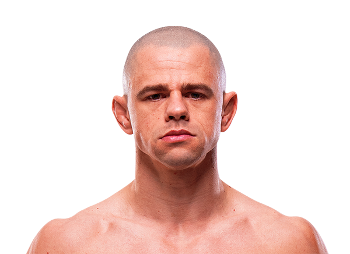
Luke Riley vs Bogdan Grad
UFC Fight Night: Tsarukyan vs Hooker • Saturday, November 22, 2025

Click each fighter's name or profile image to open their full analytics profile with striking, grappling and round-level history.

Fighter Metrics
Victory Methods
Win Round Distribution
Fighter Metrics
Victory Methods
Win Round Distribution
Last 5 Fights – Luke Riley
| Date | Opponent | Result | Method |
|---|---|---|---|
| 2025-03-15 | Tariel Abbasov | W | TKO - Knee and Punches (R2, 3:09) |
| 2024-09-21 | Alexandre dos Santos Junior | W | KO - Punches (R1, 2:05) |
| 2024-03-16 | John de Jesus | W | Decision - Unanimous (R3, 5:00) |
| 2023-09-29 | Alexander Loof | W | TKO - Punches (R3, 0:58) |
| 2023-07-21 | Matheus Malta | W | Decision - Unanimous (R3, 5:00) |
Last 5 Fights – Bogdan Grad
| Date | Opponent | Result | Method |
|---|---|---|---|
| 2025-06-21 | Muhammadjon Naimov | L | Decision - Unanimous (R3, 5:00) |
| 2025-02-01 | Lucas Alexander | W | TKO - Elbows and Punches (R2, 4:22) |
| 2024-08-27 | Michael Aswell | W | Decision - Split (R3, 5:00) |
| 2024-03-15 | Caiona Batista | W | Submission - Guillotine Choke (R1, 1:03) |
| 2023-11-10 | Breno Marinho | W | KO - Flying Knee (R2, 0:38) |
Technical Analysis
Technical Score
Cardio Score
Overall Rating
📊Technical Score
Average of striking and grappling composites (76/59 vs 64/60). Highlights how much more polished Riley's standup is, while Grad closes the gap through wrestling.
💪Cardio Score
Encodes average fight duration, pace and finishing tendencies. Riley projects slightly better late, but Grad's grappling pace can still stress test a debutant over extended scrambles if he succeeds in forcing wrestling rounds.
🎯Overall Rating
Simple mean of technical and cardio scores – a compact view of who is more likely to be winning combinations of minutes rather than isolated moments in a three-round scenario.
Striking Composite
Grappling Composite
🥊Striking Composite
Combines SLpM, accuracy, defense and damage absorbed. Riley's efficient 5.0 SLpM with ~60% defense vs Grad's 5.4 SApM creates a strong standing edge in a large cage.
🤼Grappling Composite
Built from TD volume, accuracy, defense and submissions. Grad brings the far more proven wrestling engine (3.31 TD/15) and choke threat, while Riley is largely a first-layer sprawl and stand-up fighter at this stage.
Technical Radar Comparison
Detailed Statistical Comparison
🎯 Fight Prediction Analysis
Prospect striker vs tested wrestler in a 30 ft cage – balancing Riley's finishing upside against Grad's control paths.
📊Detailed Analysis Summary
🏟️Matchup Dynamics & Cage Geometry
This is a three-round featherweight bout in a 30-foot cage that emphasizes space, angles and reset opportunities. Riley enters as an undefeated prospect with compact boxing and sharp counters against a hittable but durable Grad who brings UFC experience and layered wrestling. The larger surface area makes Grad's job of corralling Riley to the fence harder, while giving Riley more real estate to draw out entries and punish them. The macro picture: the cage slightly magnifies Riley's strengths while demanding more disciplined, energy-intensive pressure from Grad.
🎯Technical Breakdown
Riley's striking profile (≈5.0 SLpM, 50% accuracy, 60% StrDef, 3.0 SApM) is significantly more efficient than Grad's: while Grad throws plenty (4.44 SLpM, 51% accuracy), he gives up 5.4 strikes absorbed per minute with just 49% StrDef. That defensive spread is the key statistical red flag; it means Riley can land clean with far less risk per exchange. Grad's TD15 of 3.31 with 36% accuracy and 75% TDDef gives him a legitimate grappling lever, but Riley's strong first-layer TDD (~85%) and ability to scramble back to his feet in regional footage suggest Grad must work exceptionally hard to turn this into a wrestling match for long stretches of time.
⚡Key Battle Areas
The fight crystallizes around three axes: (1) mid-cage entries, where Grad must enter on angles and hide his shots behind feints rather than naked level changes; (2) back-fence sequences, where his chain wrestling and rides can bank control time and sap Riley's cardio; and (3) Round 2 adjustments, where either man can flip momentum based on who solved the other's initial approach. If Riley consistently forces clean exits and punishes over-committed entries, volume and damage trend his way. If Grad succeeds in turning this into a fence and mat fight for even 7–8 minutes, he drags the probabilities closer to 50–50 on scorecards.
🏁Final Prediction
Our model leans 63–37 toward Riley on the back of his cleaner striking, better defense and large-cage dynamics that favor distance fighting. Grad is absolutely live through wrestling pressure and top control, but his defensive metrics and tendency to be hit clean make him statistically fragile against a finisher of Riley's quality. In most simulations, Riley either finds a stoppage off counters and broken entries or wins a clear decision on range control and damage, while Grad's wins cluster around sustained fence rides and judges heavily weighting control time.
💰 Betting Analysis: Model vs Market
How the bookmaker pricing on Riley–Grad compares to our projected probabilities and finishing splits.
📊Market Odds (BetOnline)
🤖Analytical Model (Moneyline Fair Lines)
💎Value Opportunities (Directional)
Defensive spread (SApM 5.4, 49% StrDef) and large cage geometry create frequent clean looks; model clusters nearly half of Riley's wins into standing finishes.
Secondary but meaningful route when Grad's durability holds – volume and damage still trend Riley in three-round minutes, especially if wrestling stalls.
Live hedge only if Grad is clearly winning fence positions early; requires judges heavily valuing control time over striking margins.
🎯 Comprehensive Probabilistic Analysis
100 hypothetical fight simulations based on underlying stats and matchup dynamics
🏆Outcome Distribution – Luke Riley
Primary finishing route from clean counters and break sequences as Grad's defense degrades.
Minute-winning at range when Grad survives but cannot secure sustained control.
Very low reliance on submissions; modeled mainly as scramble accidents.
💥Outcome Distribution – Bogdan Grad
Counter shots or GNP from dominant top positions.
Control-heavy performance with fence rides and mat returns.
Opportunistic chokes in scrambles or off tired entries late.
⏰Fight Timeline Analysis (3-Round Fight)
⚡Window of Opportunity – Bogdan Grad
- • First 5 minutes: best chance to force back-fence sequences before Riley's reads sharpen.
- • Fence wrestling: chain single-to-double entries and mat returns to bank control.
- • Damage over subs: focus on GNP and optics instead of low-percentage submissions.
🎯Progressive Dominance – Luke Riley
- • Distance control: jab, feints and angle exits to keep Grad at arm's length.
- • Sprawl-and-brawl: stuff first-layer shots and immediately circle off the fence to deny ride time.
- • Counter windows: punish predictable entries and straight-line retreats with compact combinations.
🎯 Final Confidence Assessment (3-Round Fight)
Conviction level around a Riley lean with acknowledged wrestling and debut variance.
Strong but not absolute lean; Grad's wrestling plus debut unknowns keep a real underdog path alive.
Supporting Factors
- • Clear striking efficiency and defensive edge for Riley.
- • Large cage amplifies his counter and exit game.
- • Grad's high SApM and middling StrDef invite damage.
- • Riley carries real finishing power into later minutes.
Risk Factors
- • Grad's chain wrestling and fence rides stealing rounds.
- • UFC debut pressure and step-up in opposition for Riley.
- • Judges potentially overvaluing control time vs damage.
- • Scramble-heavy sequences that tax Riley's cardio.
🏁Executive Summary
Riley profiles as the cleaner, more efficient striker in a geometry that favors his game, while Grad relies on forcing the kind of grinding wrestling match that judges sometimes reward disproportionately. Our numbers support a Riley-centric approach with an emphasis on KO/TKO and some coverage on decision, with Grad decision functioning as a modest hedge if control optics dominate the scoring.
Prediction: Riley by KO/TKO most often, especially in R1–R2 as defensive gaps show, with Riley by Decision as the secondary outcome and Grad by Decision as the primary upset path in scripts where his wrestling frontier holds up across all three rounds.