

Alexander Volkanovski vs Diego Lopes
Men's Featherweight Title Bout • UFC 325
Saturday, January 31, 2026 • Qudos Bank Arena, Sydney, Australia • 30ft Octagon (Large Cage)
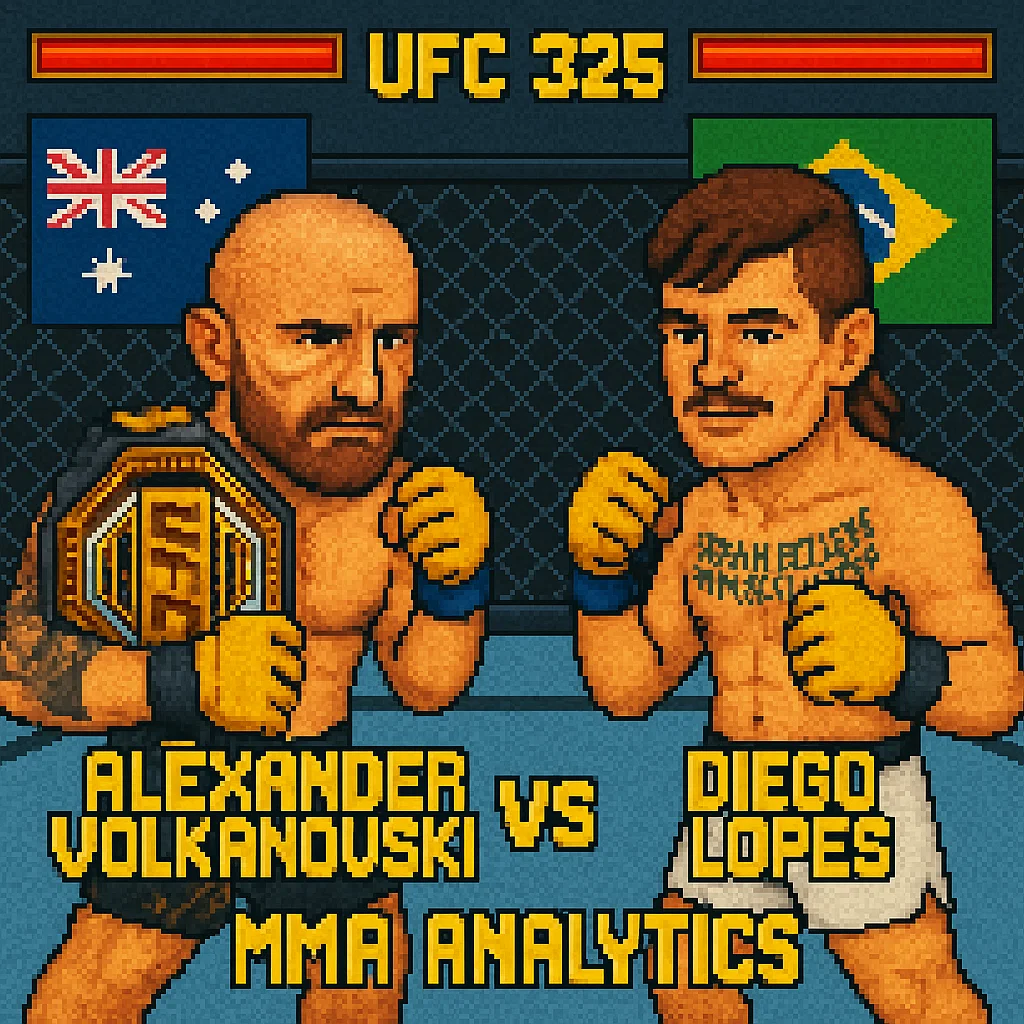
Explore Detailed Fighter Profiles
Click on either the fighter's name or profile image for each fighter to access comprehensive UFC statistics including striking metrics, grappling data, clinch performance, complete fight history, offensive & defensive analytics, and round-by-round breakdowns.
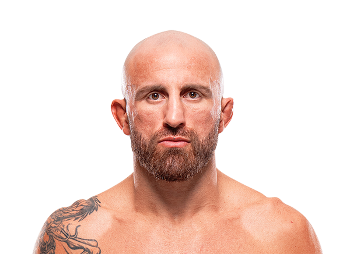
Alexander Volkanovski
Fighter Metrics
Victory Methods
Win Round Distribution

Diego Lopes
Fighter Metrics
Victory Methods
Win Round Distribution
📋 Last 5 Fights - Alexander Volkanovski
| Date | Opponent | Result | Method |
|---|---|---|---|
| 2024-10-12 | Diego Lopes | W | Decision - Unanimous (R5, 5:00) |
| 2024-02-17 | Ilia Topuria | L | KO/TKO - Punches (R2, 3:32) |
| 2023-10-21 | Islam Makhachev | L | KO/TKO - Head Kick (R1, 3:06) |
| 2023-07-08 | Yair Rodriguez | W | TKO - Punches (R3, 1:01) |
| 2023-02-12 | Islam Makhachev | L | Decision - Unanimous (R5, 5:00) |
📋 Last 5 Fights - Diego Lopes
| Date | Opponent | Result | Method |
|---|---|---|---|
| 2024-12-14 | Jean Silva | W | TKO - Spinning Elbow (R5, 4:42) |
| 2024-10-12 | Alexander Volkanovski | L | Decision - Unanimous (R5, 5:00) |
| 2024-09-14 | Brian Ortega | W | Decision - Unanimous (R3, 5:00) |
| 2024-06-29 | Dan Ige | W | Decision - Unanimous (R3, 5:00) |
| 2024-04-13 | Sodiq Yusuff | W | TKO - Punches (R1, 3:25) |
Technical Analysis
Technical Score
Cardio Score
Overall Rating
📊 Technical Score
Calculated as the average of Striking Composite (92.0 vs 78.0) and Grappling Composite (78.0 vs 92.0). Balances overall striking effectiveness with grappling ability to measure complete technical skills.
💪 Cardio Score
Based on average fight duration, striking rate per minute, takedown rate, and finish rate. Measures cardiovascular endurance and ability to maintain pace throughout fights.
🎯 Overall Rating
Simple average of Technical Score and Cardio Score. Provides a holistic view of fighter capabilities combining skill level with physical conditioning and fight performance.
Striking Composite
Grappling Composite
📊 Technical Radar Comparison
📊 Metrics Legend
📊 Detailed Statistical Comparison
🥊 Fight Analysis Breakdown
🧩 Alexander Volkanovski Key Advantages
Volkanovski's 6.18 SLpM vs Lopes' 4.0 represents a massive 55% volume differential that creates scoring advantages across all five rounds. In UFC 314, this translated to 158 vs 63 significant strikes landed (61% vs 32% accuracy), creating a 2.5x output ratio that fundamentally shifts fight optics. Volk's ability to maintain this pace while moving and defending creates a point-scoring machine that judges consistently reward. His jab-heavy approach with low kicks and feints keeps Lopes guessing and unable to establish his preferred rhythm. The statistical breakdown reveals Volk's volume isn't just higher—it's more efficient. His 57% striking accuracy means he's landing clean shots at a higher rate than Lopes' 48%, compounding the volume advantage into a significant damage differential. Over five rounds, this creates a cumulative scoring framework where Volk banks minutes through consistent output while Lopes struggles to match pace. The champion's ability to throw combinations off his jab—right hand, left hook, low kick sequences—keeps Lopes in defensive mode, preventing the Brazilian from settling into his preferred counter-striking rhythm. This volume supremacy becomes particularly decisive in championship rounds where Volk's cardio advantage allows him to maintain or even increase output while Lopes' pace naturally declines.
Volkanovski's 59% striking defense combined with only 3.36 strikes absorbed per minute creates a significant damage economy advantage that compounds exponentially over five rounds. Compared to Lopes' 47% defense and 4.7 SApM, Volk absorbs approximately 1.34 fewer significant strikes per minute—a differential that translates to roughly 6-7 fewer clean shots per round. Over five championship rounds, this means Lopes takes 30-35 more significant strikes than Volk, creating visible damage accumulation that judges consistently reward. The champion's defensive efficiency stems from multiple technical layers: his head movement creates angles that make him difficult to hit cleanly, his footwork allows him to exit exchanges before taking return fire, and his distance management keeps him in optimal range for offense while minimizing defensive exposure. This defensive mastery becomes particularly valuable against Lopes' power shots—Volk's ability to slip overhands, roll under hooks, and parry straight shots means Lopes must work harder to land clean, draining his energy reserves while Volk maintains his pace. The damage economy advantage also extends to recovery: taking fewer shots means less facial swelling, clearer vision, and better decision-making in later rounds when fights are often decided.
Volkanovski's 16:21 average fight duration with extensive championship experience (Max Holloway x3, Brian Ortega, Korean Zombie, Islam Makhachev x2, Ilia Topuria) gives him unmatched 5-round pacing and fight IQ that Lopes simply cannot replicate. In UFC 314, his R4-R5 performance (39+43 significant strikes) demonstrated he actually increases output as fights progress, a phenomenon rarely seen in championship fights. His compact frame and low center of gravity enable efficient movement without gas tank depletion—every step, every feint, every combination is calculated to maximize effectiveness while minimizing energy expenditure. This championship experience is invaluable beyond just cardio: he knows exactly when to push and when to recover, when to engage and when to reset, when to pressure and when to counter. His ability to read opponent fatigue and capitalize in championship rounds is elite-level fight intelligence. The 30-foot cage becomes his ally in later rounds—more space to circle, reset, and control distance as Lopes' output naturally declines. Volk's cardio advantage isn't just about lasting five rounds; it's about maintaining technical precision, defensive awareness, and offensive output when opponents fade. This becomes particularly dangerous for Lopes, whose finish-heavy career (10:36 average duration) suggests he's less accustomed to the grueling pace of elite 5-round championship fights.
⚠️ Unfavorable Scenarios
Lopes dropped Volkanovski once in UFC 314 despite losing clearly, proving he possesses the power and timing to hurt the champion even in losing positions. His power in close-range exchanges, combined with knees and elbows, represents real knockout danger that cannot be ignored. If Volk gets too comfortable in the pocket and doesn't exit cleanly, he exposes himself to the same type of power shots that Topuria capitalized on—overhand rights, uppercuts, and hooks that land with fight-ending force. The accumulated damage from recent KO losses (Makhachev's head kick, Topuria's right hand) may have reduced his chin durability, creating a vulnerability that didn't exist in his prime. Lopes' 5-inch height advantage enables different angles—downward elbows, knees to the body, and overhand shots from angles Volk rarely faces. The Brazilian's ability to generate power in short spaces means even defensive exchanges carry risk. If Volk becomes overconfident after dominating early rounds and starts trading in the pocket, Lopes can capitalize with the type of power shot that changes fights instantly. The champion must maintain discipline and distance control throughout, never allowing Lopes to close distance and unload his power arsenal.
Lopes' 1.83 submission attempts per 15 minutes represents elite-level grappling activity that creates constant threat throughout the fight. His guillotines, triangles, and back-takes from scrambles are dangerous even in losing positions—he's proven capable of finding submissions when opponents least expect them. If Volk attempts takedowns and gets caught in transition, Lopes can capitalize instantly with chokes that require minimal setup. His long frame enables creative submission entries that shorter fighters struggle to escape: body triangles that lock opponents in place, anaconda chokes from front headlock positions, and D'arce setups from failed takedown attempts. The Brazilian's ability to chain submissions—guillotine to triangle, triangle to armbar, back-take to rear-naked choke—means even successful defenses can lead to more dangerous positions. Volk's wrestling background provides some defense, but Lopes' submission creativity and opportunistic style mean any grappling exchange carries significant risk. The champion must be extremely selective about when to engage in clinch or ground exchanges, preferring to keep the fight at distance where his striking advantages are maximized and submission threats minimized.
📋 Likely Gameplan
Volkanovski should replicate and refine the UFC 314 blueprint: establish the jab early to control distance and set up combinations, utilize low kicks to Lopes' lead leg to slow his movement and limit his ability to close distance, and employ feints to keep the Brazilian guessing and prevent him from establishing rhythm. The 30-foot cage provides ample space to circle, reset, and maintain optimal striking distance, negating Lopes' advantages in scrambles and clinch exchanges. Use takedown feints strategically to freeze Lopes' feet and create openings for strikes without committing to actual shots that expose submission vulnerability. The key is maintaining constant movement and angle changes—never staying in one position long enough for Lopes to set up his power shots or clinch entries. Volk's footwork should create a circular pattern that keeps Lopes turning and resetting, draining his energy while the champion maintains his pace. When Lopes attempts to close distance, Volk should use his jab to create space and reset, preventing the Brazilian from establishing the close-range exchanges where his power and submission threats are most dangerous.
With superior cardio and championship round experience, Volk should strategically increase output in R4-R5 when Lopes typically fades and his output naturally declines. The gameplan should focus on accumulating damage early (R1-R3) to establish scoring advantages and create visible damage, surviving any moments of danger (knockdowns, submission attempts) without panicking, then putting the fight away with increased volume in championship rounds when Lopes' pace drops. His ability to push pace when opponents tire is one of his greatest weapons— in UFC 314, he threw 39 and 43 significant strikes in R4 and R5 respectively, showing he can maintain or increase output when others fade. This late-round surge serves multiple purposes: it banks additional scoring minutes, creates visible damage accumulation that judges reward, and potentially opens finish opportunities through accumulative damage. The champion's cardio advantage becomes a strategic weapon in championship rounds, allowing him to pressure, control distance, and maintain technical precision when Lopes' output and defensive awareness naturally decline.
🚀 Diego Lopes Key Advantages
Lopes' 1.83 submission attempts per 15 minutes combined with 12 career submission wins makes him one of the most dangerous grapplers in the featherweight division, creating a constant threat that opponents must respect throughout every exchange. His guillotines from clinch entries, triangles from guard, and back-takes from scrambles represent a diverse submission arsenal that can end fights from multiple positions. Against a shorter opponent like Volk, his long frame enables creative entries that are difficult to defend: body triangles that lock opponents in place and prevent escapes, anaconda chokes from front headlock positions that capitalize on failed takedown attempts, and D'arce setups that catch opponents transitioning between positions. The Brazilian's ability to chain submissions—guillotine to triangle, triangle to armbar, back-take to rear-naked choke—means even successful initial defenses can lead to more dangerous positions. His 85.2% finish rate demonstrates he doesn't just threaten submissions; he completes them at an elite level. This submission threat fundamentally changes how opponents approach grappling exchanges, creating hesitation that Lopes can exploit with strikes or more submission attempts. The constant danger of being submitted means Volk must be extremely selective about when to engage in clinch or ground exchanges, potentially limiting his offensive options and creating openings for Lopes' counter-striking.
Lopes already knocked down Volkanovski once in UFC 314, proving he possesses the power, timing, and technique to hurt the champion even in losing positions. This knockdown wasn't a fluke—it demonstrated Lopes' ability to find openings and land fight-altering shots against elite competition. His ability to mix finishes (11 KO/TKO + 12 submissions) creates complete unpredictability—opponents must defend everything, creating defensive openings that Lopes can exploit. The spinning elbow TKO of Jean Silva in R5 shows he can find creative power shots even when fatigued, proving his finishing ability extends beyond early rounds. His 5-inch height advantage enables different angles that Volk rarely faces: downward elbows in clinch exchanges, knees to the body from longer range, and overhand shots from angles that shorter fighters struggle to defend. Lopes' power isn't just raw strength—it's technical: he generates force through proper weight transfer, hip rotation, and timing that maximizes impact. His ability to land power shots in combination (overhand-right, left hook, knee sequences) creates cumulative damage that can overwhelm opponents. The Brazilian's knockout threat means Volk cannot become complacent in any exchange, even when dominating on the scorecards, as one clean shot can instantly change the fight's trajectory.
⚠️ Unfavorable Scenarios
In UFC 314, Lopes was comprehensively outworked 158-63 in significant strikes across five rounds, creating a 2.5x volume differential that fundamentally shifted fight optics and scoring. His 47% striking defense means he absorbs significant damage while trying to find his openings, creating a dangerous cycle where he takes more shots than he lands while searching for fight-ending opportunities. If Volk maintains distance and picks his shots with precision, Lopes struggles to establish rhythm or create the chaotic exchanges needed for his finish game to flourish. The 30-foot cage exacerbates this problem— more space for Volk to circle, reset, and maintain optimal striking distance while Lopes must cover more ground to close distance. This volume accumulation creates visible damage (swelling, cuts, facial marking) that judges consistently reward, making it increasingly difficult for Lopes to win rounds even if he lands the harder shots. The Brazilian's high-risk, high-reward style means he must land significant damage or secure finishes to overcome these volume deficits, creating pressure that can lead to mistakes or over-aggression that Volk can capitalize on.
While Lopes showed he can finish in R5 (vs Silva), his 10:36 average fight duration and mostly early-finish career create legitimate questions about sustained 5-round performance against elite volume strikers like Volk. His 47% striking defense combined with high-risk offense burns energy quickly—defending takedowns, attempting submissions, and throwing power shots all require significant energy expenditure. If he can't secure the finish early or mid-fight, he's fighting Volk's fight by R4-R5, where the champion's cardio advantage becomes decisive. The Brazilian's finish-heavy career means he's less accustomed to the grueling pace of elite 5-round championship fights where volume and consistency often trump power and finishing attempts. Volk's ability to maintain or increase output in championship rounds (39+43 sig strikes in R4-R5 of UFC 314) creates a pace that Lopes may struggle to match, especially after absorbing significant damage in earlier rounds. The cumulative effect of taking more shots while throwing fewer creates a cardio drain that compounds over five rounds, making it increasingly difficult for Lopes to find the energy for explosive finishing attempts or submission setups.
📋 Likely Gameplan
Lopes must dramatically increase grappling activity from UFC 314, where he attempted zero takedowns and secured only 0:05 of control time. Force clinch exchanges by cutting off the cage and closing distance, threaten takedowns (even if unsuccessful) to freeze Volk's feet and create openings for strikes, and actively look for scramble submissions in every transition. His best path to victory is creating the chaotic, unpredictable exchanges where his finishing ability shines— scrambles, clinch battles, and ground transitions where his submission creativity and opportunistic style can capitalize on momentary openings. The longer this stays a technical striking match at distance, the more Volk's volume, accuracy, and defensive advantages compound into an insurmountable lead. Lopes needs to disrupt Volk's rhythm, prevent him from settling into his jab-heavy approach, and force the champion into uncomfortable positions where his advantages are minimized. This requires calculated aggression—not reckless charging, but strategic pressure that creates opportunities for finishes while limiting exposure to Volk's volume striking.
Rather than only hunting the head with power shots, Lopes should invest heavily in body kicks, knees, and teeps to slow Volk's movement, limit his ability to circle and reset, and tax his legendary gas tank. His longer frame enables teeps and front kicks from ranges that Volk hasn't faced from many opponents, creating different angles and timing that can disrupt the champion's rhythm. Attacking the body serves multiple strategic purposes: it creates openings upstairs as Volk drops his hands to defend, it drains his cardio by forcing him to absorb impact to his core, and it slows his footwork by damaging his legs and limiting his ability to maintain distance. The body attack also sets up submission opportunities—damaged ribs and core make it harder to defend guillotines and body triangles, while slowed movement makes it easier for Lopes to close distance and initiate clinch exchanges. This multi-layered approach (body damage → slowed movement → clinch entries → submission opportunities) creates a strategic framework that maximizes Lopes' advantages while minimizing his exposure to Volk's volume striking.
🎯 Fight Prediction Analysis
Data-driven prediction model based on statistical analysis
📊Detailed Analysis Summary
🏟️UFC 314 Data Points
The first fight at UFC 314 provided crucial data points that inform this rematch analysis. Volkanovski comprehensively dominated in volume (158 vs 63 significant strikes, a 2.5x differential) and accuracy (61% vs 32%), creating a scoring framework that judges consistently rewarded. However, Lopes proved he can hurt the champion with one knockdown in R2, demonstrating that even in losing positions, his power and timing create real danger. The scorecards (49-46, 49-46, 48-47) suggest a clear Volk win but with competitive moments that prevented a complete shutout. Importantly, Lopes showed he could go 5 rounds with an elite cardio fighter—his 59 strike attempts in R5 indicate he wasn't broken or completely outclassed, just outworked. The fight breakdown by rounds reveals Volk's progressive dominance: R1 (27-8), R3 (25-9), R4 (39-16), R5 (43-14), with R2 being the most competitive (24-16) due to Lopes' knockdown. This data suggests Volk's gameplan worked effectively, but Lopes' finishing threat remained present throughout, creating a dynamic where the champion couldn't become complacent despite clear advantages.
🎯Key Statistical Gaps
The statistical analysis reveals clear advantages for Volk across multiple metrics that compound over five rounds. His +55% volume advantage (6.18 vs 4.0 SLpM) creates a scoring framework where he consistently outworks opponents, while his superior accuracy (57% vs 48%) means he's landing clean shots at a higher rate. His significantly better defense (59% vs 47% StrDef, 3.36 vs 4.7 SApM) creates a damage economy where he absorbs approximately 1.34 fewer significant strikes per minute, translating to 6-7 fewer clean shots per round. Over five championship rounds, this compounds into 30-35 fewer significant strikes absorbed, creating visible damage differentials that judges consistently reward. However, Lopes has the clear grappling composite edge (92 vs 78) with his elite submission rate (1.83/15min vs 0.16), representing an 11x differential in submission activity. This creates a classic striker vs finisher dynamic where Volk needs to survive moments of danger (knockdowns, submission attempts) while outworking Lopes on the scorecards through volume and consistency. The statistical gaps favor Volk in sustained exchanges, but Lopes' finishing threat means any single moment can change the fight's outcome, creating a strategic tension where the favorite must maintain discipline throughout while the underdog searches for fight-ending opportunities.
🧩Evolution Since UFC 314
Since their first meeting at UFC 314, both fighters have evolved in ways that impact this rematch. Lopes has proven his durability and finishing ability with the R5 TKO of Jean Silva—a performance that showed he can navigate adversity, absorb damage, and find finishes late when opponents least expect them. This victory demonstrated growth in his 5-round cardio and fight IQ, addressing questions about his ability to compete in championship rounds. Meanwhile, Volk enters this fight off a dominant victory over Lopes but with legitimate questions about accumulated wear from back-to-back KO losses to Makhachev (head kick) and Topuria (right hand) prior to their first meeting. At 36 years old, each fight for Volk carries more risk—the cumulative damage from multiple wars, combined with the natural decline in recovery and durability that comes with age, creates vulnerability that didn't exist in his prime. Lopes at 30 is theoretically still improving, with his best performances potentially ahead of him. The Brazilian's growth since UFC 314, combined with Volk's age and accumulated damage, narrows the gap between them, making this rematch more competitive than the first fight's scorecards might suggest.
🏁Final Prediction
The most likely outcome is Alexander Volkanovski by Decision (37% probability), achieved through volume striking, distance control, and superior cardio over five championship rounds. This path replicates the UFC 314 blueprint where Volk outworks Lopes 158-63 in significant strikes while maintaining defensive discipline and avoiding dangerous exchanges. Volk's KO/TKO path (19%) becomes viable through accumulative damage and late-round pressure—as Lopes absorbs more shots and his output declines, Volk can increase his pace and potentially secure a TKO through doctor stoppage, referee intervention, or ground-and-pound after knockdowns. Lopes' primary upset lane is submission (20%) via guillotine, triangle, or back-take from scrambles—his elite submission rate (1.83/15min) and opportunistic style mean any grappling exchange carries significant finish potential. His KO/TKO path (12%) is secondary but real—he already dropped Volk once in UFC 314, and his power combined with Volk's accumulated damage from recent KO losses creates vulnerability. The 30-foot cage favors Volk's movement and distance control, but Lopes' finish threat makes this a genuine title fight where any single moment can change the outcome, regardless of scorecard advantages.
💰 Betting Analysis: Model vs Market
Detailed value assessment in the betting market
📊Market Odds
🤖Analytical Model
💎Value Opportunities
MAXIMUM VALUE
Model: 20% | Fair: +400
GOOD VALUE
Model: 37% | Fair: +170
SLIGHT VALUE
Model: 45% | Fair: +122
⚠️Key Market Discrepancies
- • Recency bias on first fight – Market may undervalue Lopes' adjustments and growth since UFC 314.
- • Accumulated wear on Volk – Two KO losses and age (36) may not be fully priced into the line.
- • Lopes' submission threat – His 1.83 sub/15min rate creates real upset equity that may be underpriced.
🎯 Comprehensive Probabilistic Analysis
100 hypothetical fight simulation based on statistical data
🏆Outcome Distribution - Alexander Volkanovski
Primary path via volume and distance control
Accumulative damage and late-round pressure
Low probability - not his primary finish method
💥Outcome Distribution - Diego Lopes
Best path via guillotine, triangle, or back-take
Secondary path - already dropped Volk once
Requires multiple knockdowns to outpoint Volk
⏰Fight Timeline Analysis
⚡Window of Opportunity - Diego Lopes
- • First 10 minutes: Highest KO/Sub equity before Volk establishes rhythm.
- • Scramble entries: Clinch-to-submission or post-knockdown chokes.
- • R5 Hail Mary: If still competitive, showed vs Silva he can find late finishes.
🎯Progressive Dominance - Alexander Volkanovski
- • Volume accumulation: Each round builds scoring advantage and cumulative damage.
- • Damage economy: Minimize exchanges, exit cleanly, score from range.
- • Championship rounds: R4-R5 surge when Lopes' output typically drops.
🎯 Final Confidence Assessment
Confidence level and uncertainty factors
Confidence Level
Clear favorite but significant upset equity for Lopes
✅Supporting Factors
- • Already beat Lopes clearly in UFC 314 (158-63 sig strikes)
- • Superior volume, accuracy, and defense metrics
- • Extensive championship round experience
- • Home crowd advantage in Sydney
⚠️Risk Factors
- • Lopes already knocked Volk down once in first fight
- • Accumulated damage from Makhachev/Topuria KO losses
- • Age factor at 36 vs Lopes' prime at 30
- • Elite submission threat (1.83 sub/15min)
🏁Executive Summary
Alexander Volkanovski enters this rematch as a clear but not overwhelming favorite, with statistical advantages that favor him but finishing threats that keep this competitive. His victory in UFC 314 demonstrated comprehensive advantages across multiple metrics: volume dominance (158-63 significant strikes, a 2.5x differential), superior accuracy (61% vs 32%), and control time (1:18 vs 0:05). The scorecards (49-46, 49-46, 48-47) reflected these advantages while acknowledging competitive moments, particularly Lopes' R2 knockdown that proved the Brazilian can hurt the champion even in losing positions. However, the knockdown Lopes scored and his subsequent growth (R5 TKO of Jean Silva) warrant significant respect—the Brazilian has proven he can navigate adversity, absorb damage, and find finishes late when opponents least expect them. At 36, Volk carries more accumulated damage from back-to-back KO losses to elite lightweights (Makhachev's head kick, Topuria's right hand), creating vulnerability that didn't exist in his prime. Lopes at 30 represents a rising threat who now has championship round experience and has demonstrated growth since their first meeting. The statistical gaps favor Volk in sustained exchanges, but Lopes' elite submission rate (1.83/15min) and proven knockout power create a dynamic where any single moment can change the fight's outcome, regardless of scorecard advantages.
The fight's outcome hinges on whether Volk can replicate his UFC 314 performance—maintaining distance, controlling pace, and outworking Lopes on the scorecards while avoiding the dangerous exchanges where the Brazilian's finishing ability shines. The 30-foot cage favors Volk's movement and distance control, providing space to circle, reset, and maintain optimal striking range while negating Lopes' advantages in scrambles and clinch exchanges. However, Lopes' finish threat means the champion cannot become complacent, even when dominating on the scorecards, as one clean shot or well-timed submission can instantly change the fight's trajectory. The Brazilian's ability to create chaos and find finishes from losing positions makes this a genuine title fight with real upset potential, despite Volk's clear statistical advantages.
Prediction: Volkanovski by Decision most likely (37% probability) through volume striking and distance management over five rounds, replicating the UFC 314 blueprint where he outworks Lopes while maintaining defensive discipline. Volk's KO/TKO path (19%) becomes viable through accumulative damage and late-round pressure, particularly if Lopes' output declines in championship rounds. Lopes' primary upset path is submission (20%) via guillotine, triangle, or back-take from scrambles— his elite submission rate and opportunistic style mean any grappling exchange carries significant finish potential. His KO/TKO path (12%) is secondary but real, building on the knockdown success from their first meeting and his proven power against elite competition. The 30-foot cage favors Volk's movement, but Lopes' finish threat makes this a genuine title fight where any single moment can change the outcome, regardless of statistical advantages or scorecard leads.