

Thiago Moises vs Gauge Young
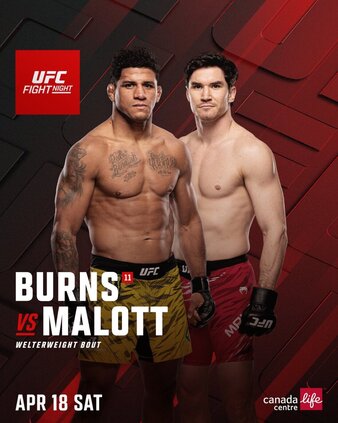
Men's Lightweight Bout • UFC Fight Night: Burns vs. Malott
Saturday, April 11, 2026 • 30ft Octagon (Large Cage)
Explore Detailed Fighter Profiles
Click on either the fighter's name or profile image for each fighter to access comprehensive UFC statistics including striking metrics, grappling data, clinch performance, complete fight history, offensive & defensive analytics, and round-by-round breakdowns.
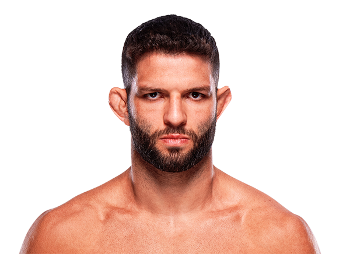
Thiago Moises
Fighter Metrics
Victory Methods
Win Round Distribution

Gauge Young
Fighter Metrics
Victory Methods
Win Round Distribution
📋 Last 5 Fights - Thiago Moises
| Date | Opponent | Result | Method |
|---|---|---|---|
| 2025-05-17 | Jared Gordon | L | TKO - Overhand Right to Ground Punches (R1, 3:37) |
| 2025-01-11 | Trey Ogden | W | Decision - Unanimous (R3, 5:00) |
| 2024-06-08 | Ľudovít Klein | L | Decision - Unanimous (R3, 5:00) |
| 2024-03-16 | Mitch Ramirez | W | TKO - Leg Kicks (R3, 0:15) |
| 2023-09-02 | Benoit Saint-Denis | L | TKO - Ground & Pound (R2, 4:44) |
📋 Last 5 Fights - Gauge Young
| Date | Opponent | Result | Method |
|---|---|---|---|
| 2025-08-23 | Maheshate | W | Decision - Unanimous (R3, 5:00) |
| 2025-04-26 | Evan Elder | L | Decision - Unanimous (R3, 5:00) |
| 2024-12-06 | Eric Grant | W | TKO - Left Hook (R2, 0:11) |
| 2024-09-03 | Quillan Salkilld | L | Decision - Unanimous (R3, 5:00) |
| 2024-05-03 | Josh Tully | W | TKO - Strikes (R1, 5:00) |
Technical Analysis
Technical Score
Cardio Score
Overall Rating
📊 Technical Score
Calculated as the average of Striking Composite (50.0 vs 63.0) and Grappling Composite (60.0 vs 45.0). Balances overall striking effectiveness with grappling ability to measure complete technical skills.
💪 Cardio Score
Based on average fight duration, striking rate per minute, takedown rate, and finish rate. Measures cardiovascular endurance and ability to maintain pace throughout fights.
🎯 Overall Rating
Simple average of Technical Score and Cardio Score. Provides a holistic view of fighter capabilities combining skill level with physical conditioning and fight performance.
Striking Composite
Grappling Composite
📊 Technical Radar Comparison
📊 Metrics Legend
📊 Detailed Statistical Comparison
🥊 Fight Analysis Breakdown
🧩 Thiago Moises Key Advantages
Moises averages 1.14 submission attempts per 15 minutes with 7 career submission victories (36.8% of wins), including rear naked chokes, guillotines, armbars, and leg locks. This represents a massive grappling differential against Young, who has 0.00 SubPer15 and virtually no submission offense. Once on the ground, Moises has multiple paths to finish—his diverse submission arsenal means any scramble or positional shift creates danger. Young has never been submitted professionally, but he has also never faced a BJJ specialist of this caliber in the UFC.
Moises brings 13 UFC fights of experience compared to Young's 2 octagon appearances. He has faced elite competition including Islam Makhachev, Justin Gaethje, and Benoit Saint-Denis—a level of opposition that provides invaluable cage IQ and composure under pressure. This experience advantage becomes particularly significant in a 3-round fight where Moises can employ veteran tactics like clinch control, cage grinding, and pace manipulation that Young may not have answers for at the UFC level.
Despite being the less prolific striker, Moises carries a 5-point striking defense advantage (53% vs 48%). This becomes critical against Young's high-volume approach—while Young lands 5.71 SLpM, he also absorbs 5.82, creating a near-zero damage differential. Moises' superior defensive awareness and ability to mitigate damage while closing distance for clinch entries gives him a sustainability edge over three rounds.
⚠️ Unfavorable Scenarios
Young's 5.71 SLpM output is 2.3x higher than Moises' 2.48, creating a massive volume gap on the feet. If Moises cannot establish takedowns or clinch control, the striking differential becomes overwhelming. Young's 52% accuracy combined with relentless output can rack up significant strikes that dominate the scorecards, especially in early rounds before Moises establishes his grappling rhythm.
Moises has lost 5 of his last 9 fights, with 3 TKO losses suggesting potential durability concerns. His most recent loss to Jared Gordon (TKO R1) showed vulnerability to power shots on the feet. At 31, the Brazilian may be past his physical peak, while Young at 25 brings youth, speed, and athleticism advantages that could exploit Moises' aging reflexes.
📋 Likely Gameplan
Moises should look to close distance quickly and establish clinch positions against the cage, using body-lock takedowns and trips to bring the fight to the mat where his BJJ advantage is decisive. His 1.31 TD15 against Young's 72% takedown defense means persistence will be key—chain wrestling and repeated attempts to wear down Young's defensive base.
Once on the mat, Moises should prioritize advancing position and hunting submissions rather than settling for top control. Young's ground game is untested at the UFC level, and Moises' diverse submission arsenal—including guillotines off scrambles, armbars from guard, and back-takes—can end the fight from multiple positions. The key is accumulating ground time while threatening finishes.
🚀 Gauge Young Key Advantages
Young's 5.71 SLpM is one of the highest outputs in the lightweight division, landing 2.3x more significant strikes per minute than Moises. His 52% striking accuracy means this volume translates into clean, scoring shots. With 6 of his 10 wins coming via KO/TKO, Young carries legitimate finishing power in his hands. This output advantage becomes especially dangerous in a standing fight where Moises' 42% striking accuracy makes it difficult to compete in volume exchanges.
Young's 72% takedown defense is significantly higher than Moises' 36% takedown accuracy, creating a statistical mismatch that favors keeping the fight standing. Having wrestled since age 12, Young's defensive wrestling provides a solid foundation for stuffing takedown attempts and returning to his feet quickly. This TDDef advantage is the critical battleground—if Young can maintain his defensive wrestling, Moises' primary path to victory via submissions becomes increasingly difficult to access.
⚠️ Unfavorable Scenarios
Young's 0.00 SubPer15 and limited offensive grappling mean that if Moises successfully completes takedowns, the fight shifts entirely to the Brazilian's domain. Young has never been submitted, but he has also never faced a high-level BJJ practitioner in the UFC. Once on the ground, Young lacks the offensive tools to threaten from bottom position, making him vulnerable to Moises' diverse submission game.
With only 2 UFC fights (1-1), Young is still adjusting to the highest level of competition. His loss to Evan Elder showed he can be outpointed by tactical fighters, and Moises' veteran savvy and cage IQ could create situations Young hasn't encountered before. The pressure of a big-stage fight and an experienced opponent who knows how to exploit weaknesses could overwhelm the young prospect.
📋 Likely Gameplan
Young's optimal strategy is to keep the fight standing using his wrestling base to defend takedowns while unleashing his high-volume striking. His 72% TDDef should allow him to stuff most of Moises' entries, and his 5.71 SLpM output can overwhelm the Brazilian on the feet. The key is maintaining distance, using footwork to avoid clinch entries, and punishing Moises with combinations as he tries to close distance.
Young should look to establish pace early, using his speed and volume advantage to overwhelm Moises before the veteran can settle into his grappling rhythm. With 4 first-round finishes in his career, Young has shown the ability to end fights quickly when opponents are still adjusting. Maintaining high output and forcing Moises to fight at range prevents the Brazilian from establishing the clinch positions he needs for takedowns.
🎯 Fight Prediction Analysis
Data-driven prediction model based on statistical analysis
📊Detailed Analysis Summary
🏟️Cage Dynamics
The 30-foot octagon provides ample space for Young to maintain distance and utilize his volume striking advantage, which initially favors his approach. However, the large cage also means more fence to work with for Moises' clinch-heavy gameplan. If Moises can cut off angles and pin Young against the cage, the extra space becomes irrelevant. The cage dynamics create a battle of range management—Young wants to circle and maintain distance while Moises needs to close space and establish clinch positions.
🎯Technical Breakdown
This fight presents a classic grappler-vs-striker matchup. Moises' 1.14 SubPer15 and 60.0 grappling composite represent his primary path to victory, while Young's 5.71 SLpM and 63.0 striking composite define his. The critical stat is Young's 72% takedown defense vs Moises' 36% takedown accuracy—this suggests Young can stuff roughly 2 out of 3 takedown attempts, keeping the fight on the feet where he dominates. However, Moises only needs one successful takedown to shift the momentum entirely, and his persistence with 1.31 TD15 means he will create multiple opportunities.
🧩Key Battle Areas
Three critical areas will determine the outcome: (1) takedown defense vs clinch entries at the cage, (2) striking volume differential on the feet, and (3) ground control if takedowns land. Young's 72% TDDef is strong but Moises' persistence and chain wrestling could break through over 15 minutes. Both fighters absorb heavy damage (4.08 and 5.82 SApM respectively), creating potential for momentum swings. The fighter who dictates where this fight takes place will likely win.
🏁Final Prediction
The most likely outcome is Thiago Moises by Submission (20% probability), achieved through persistent takedown attempts that eventually break through Young's defensive wrestling. Moises' Decision path (22%) requires consistent clinch control and top position time. Young's primary win path is by KO/TKO (25%) via his high-volume striking overwhelming Moises on the feet, while his Decision path (15%) requires maintaining distance control throughout all three rounds. This is a competitive matchup where the fight location determines everything.
💰 Betting Analysis: Model vs Market
Detailed value assessment in the betting market
📊Market Odds
🤖Analytical Model
💎Value Opportunities
MAXIMUM VALUE
Model: 20% | Fair: +400
GOOD VALUE
Model: 25% | Fair: +300
SLIGHT VALUE
Model: 45% | Fair: +122
⚠️Key Market Discrepancies
- • Undervalues submission threat – Moises' 1.14 SubPer15 against a non-grappler creates real finish equity.
- • Overweights UFC debut hype – Young's small UFC sample size may inflate perception.
- • Experience premium – 13 UFC fights vs 2 provides cage IQ edge in close rounds.
🎯 Comprehensive Probabilistic Analysis
100 hypothetical fight simulation based on statistical data
🏆Outcome Distribution - Thiago Moises
Clinch control and top position time
Primary path via diverse BJJ arsenal
Ground-and-pound or leg kick accumulation
💥Outcome Distribution - Gauge Young
Best lane via volume striking and power shots
Requires maintaining distance and TDD for 15 min
0.00 SubPer15 makes this extremely unlikely
⏰Fight Timeline Analysis
⚡Window of Opportunity - Gauge Young
- • First 5–8 minutes: Highest KO equity via volume and power.
- • Sprawl & punish: Stuff takedowns then land combinations.
- • Circle away: Use footwork to avoid clinch engagement.
🎯Progressive Dominance - Thiago Moises
- • Chain wrestling: Persistent takedown attempts wear down TDD.
- • Ground time: Accumulate control and hunt submissions.
- • Late rounds: Young's TDD fades as cardio depletes.
🎯 Final Confidence Assessment
Confidence level and uncertainty factors
Confidence Level
Competitive matchup with clear stylistic clash
✅Supporting Factors
- • Massive submission threat differential (1.14 vs 0.00)
- • 13 UFC fights experience vs 2 provides cage IQ edge
- • Better striking defense (53% vs 48%)
- • Diverse path to victory via grappling
⚠️Risk Factors
- • 2.3x striking volume disadvantage on the feet
- • Young's 72% TDDef limits takedown entries
- • Moises' declining form (5 losses in last 9)
- • Small UFC sample for Young adds uncertainty
🏁Executive Summary
This fight presents a classic grappler-vs-striker dynamic in a 3-round lightweight bout. Thiago Moises' path to victory runs through his elite BJJ and submission game (1.14 SubPer15, 7 career submissions), while Gauge Young's best chance lies in his explosive striking volume (5.71 SLpM, 52% accuracy) and solid takedown defense (72%). The statistical differentials create a polarized matchup—Moises dominates on the ground while Young dominates on the feet. The critical battleground is the takedown exchange: Moises' 36% TDAcc against Young's 72% TDDef suggests Young can stuff most attempts, but Moises' persistence creates cumulative opportunities as the fight progresses.
Prediction: Moises by Submission is the most likely specific outcome (20%) if he can establish ground control, while Young by KO/TKO (25%) is the most probable specific path for the younger fighter. The fight's outcome hinges entirely on where it takes place—if Moises gets it to the ground, his BJJ is likely decisive; if Young keeps it standing, his volume overwhelms. Slight edge to Moises (57-43) due to the fight-ending nature of his submission game and veteran experience.