

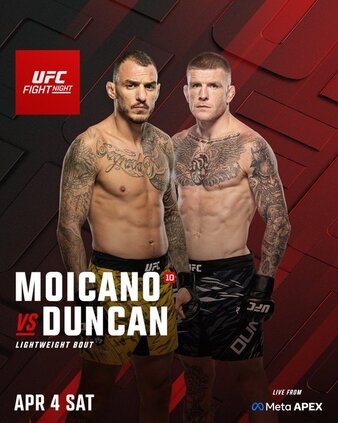
Edmen Shahbazyan vs Jun Yong Park
Men's Middleweight Bout • UFC Fight Night: Moicano vs Duncan
Saturday, April 4, 2026 • 25ft Octagon (Small Cage) • UFC Apex, Las Vegas, USA
Explore Detailed Fighter Profiles
Click on either the fighter's name or profile image for each fighter to access comprehensive UFC statistics including striking metrics, grappling data, clinch performance, complete fight history, offensive & defensive analytics, and round-by-round breakdowns.
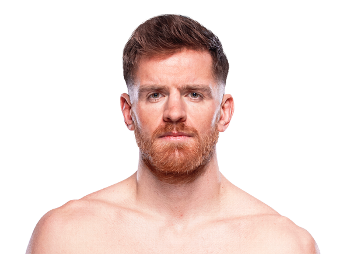
Edmen Shahbazyan
Fighter Metrics
Victory Methods
Win Round Distribution
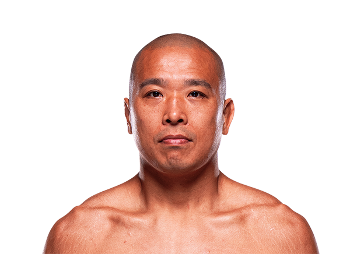
Jun Yong Park
18-6-0
Jun Yong Park
Fighter Metrics
Victory Methods
Win Round Distribution
📋 Last 5 Fights - Edmen Shahbazyan
| Date | Opponent | Result | Method |
|---|---|---|---|
| 2025-10-04 | André Muniz | W | TKO - Punches & Elbows From Top (R1, 4:58) |
| 2025-06-14 | Andre Petroski | W | Decision - Unanimous (R3, 5:00) |
| 2025-02-15 | Dylan Budka | W | TKO - Right Hook (R1, 1:35) |
| 2024-08-24 | Gerald Meerschaert | L | Submission - Arm Triangle Choke (R2, 4:12) |
| 2024-03-23 | AJ Dobson | W | TKO - Left Hook to Ground Punches (R1, 4:33) |
📋 Last 5 Fights - Jun Yong Park
| Date | Opponent | Result | Method |
|---|---|---|---|
| 2025-10-25 | Ikram Aliskerov | L | Decision - Unanimous (R3, 5:00) |
| 2025-06-21 | Ismail Naurdiev | W | Decision - Unanimous (R3, 5:00) |
| 2024-10-12 | Brad Tavares | W | Decision - Split (R3, 5:00) |
| 2023-12-09 | André Muniz | L | Decision - Split (R3, 5:00) |
| 2023-07-15 | Albert Duraev | W | Submission - Rear Naked Choke (R2, 4:45) |
Technical Analysis
Technical Score
Cardio Score
Overall Rating
📊 Technical Score
Calculated as the average of Striking Composite (66.0 vs 66.0) and Grappling Composite (78.0 vs 55.0). Balances overall striking effectiveness with grappling ability to measure complete technical skills.
💪 Cardio Score
Based on average fight duration, striking rate per minute, takedown rate, and finish rate. Measures cardiovascular endurance and ability to maintain pace throughout fights.
🎯 Overall Rating
Simple average of Technical Score and Cardio Score. Provides a holistic view of fighter capabilities combining skill level with physical conditioning and fight performance.
Striking Composite
Grappling Composite
Technical Radar Comparison
Visual comparison of key performance metrics between both fighters
📊 Detailed Statistical Comparison
🥊 Fight Analysis Breakdown
🧩 Edmen Shahbazyan Key Advantages
An 8-to-1 knockdown rate advantage—Shahbazyan scores a knockdown in nearly every single fight while Park rarely drops opponents. This is the Armenian's money-maker. His 80% KO rate isn't an accident; he's a legitimate one-punch threat who can change the complexion of this fight with a single clean shot. That left hook to the body and overhand right have ended nights early for 12 different opponents. His recent wins showcase this power—devastating Dylan Budka in 1:35 of Round 1, and stopping AJ Dobson with a left hook at 4:33 of Round 1. This knockout power is the great equalizer against Park's technical superiority.
At 28 years old, Shahbazyan is in his athletic prime while Park is on the wrong side of 35. The height and reach differential might seem small on paper, but at 185 pounds, that extra 4.5 inches creates meaningful distance control. Shahbazyan can sit on the outside, pick his shots, and make Park work to get inside—where his power is most dangerous. The age gap becomes critical in a three-round fight; younger fighters typically recover faster between rounds and maintain explosiveness longer. Shahbazyan's youth combined with his knockout power creates a dangerous early-fight weapon.
Winners keep winning, and Shahbazyan is riding positive momentum with three straight victories, most recently defeating André Muniz—the same fighter who beat Park by decision. His most recent performance showed improved patience and cardio management against Andre Petroski. He's mentally confident and on the upswing of his career arc. Meanwhile, Park is coming off a unanimous decision loss to Ikram Aliskerov and has dropped 3 of his last 5. The psychological edge matters—Shahbazyan enters believing he can win, while Park needs to prove he can still compete at this level at 35.
⚠️ Unfavorable Scenarios
Shahbazyan's average fight time of 7:36 screams early finisher or cardio liability. If Park survives the early onslaught and drags him into Round 3, Shahbazyan's output will crater. His decision win rate is only 13%—he doesn't win fights that go the distance. The Gerald Meerschaert loss showed what happens when he can't get the early finish: he gets submitted in Round 2 when fatigue sets in. Against a cardio machine like Park (11:48 avg fight time), Round 3 is Shahbazyan's nightmare scenario.
With only 66% takedown defense and a massive submission defense gap, multiple takedowns could spell disaster. Once on his back, Shahbazyan is vulnerable to Park's 0.92 SubPer15—more than double his own submission rate. The Meerschaert anaconda choke loss and arm triangle submission to Brunson proved Shahbazyan can be finished on the mat. If Park can drag him down 2-3 times per round, especially in Round 2-3, the submission finish becomes very likely.
The 25-foot UFC Apex cage is significantly smaller than the standard 25-foot octagon. This compresses space, making it harder for Shahbazyan to use his 4.5" height advantage to control distance. Park thrives in phone booth wars where his volume striking and submission grappling shine. Less room to circle means Shahbazyan can't escape Park's pressure, and backing to the cage repeatedly opens takedown opportunities. The small cage favors Park's grinding style over Shahbazyan's need for space to load up power shots.
📋 Likely Gameplan
Use the 4.5" height advantage and 74" reach to keep Park at the end of his punches. Work behind the jab, set up power shots. This is his window—load up on left hooks to the body (his signature), overhand rights, and inside leg kicks to slow Park's movement. He needs to hurt Park early before cardio becomes a factor. Come out like a house on fire in Round 1, make Park uncomfortable, force him to grapple defensively, and create early damage that compounds.
Stay off the cage, sprawl, and scramble. Every second on the mat is a second closer to a Park submission. Even if stuffing takedowns burns energy, it's better than being on his back against a 0.92 SubPer15 submission specialist. The Meerschaert loss showed what happens when grapplers get him down—he gets submitted. Use that 66% TDD to keep this fight standing where his knockout power is the deciding factor.
Dig deep, avoid the mat, and look for one big counter shot to steal the round. Don't try to out-volume Park—it won't work. His 4.77 SLpM and superior cardio will overwhelm any volume attempt. Instead, fight smart, conserve energy, stay patient, and land one clean power shot to change the complexion of the round. His knockout power is still dangerous even when tired.
🚀 Jun Yong Park Key Advantages
Park's 75-inch reach advantage (vs Shahbazyan's 72") combined with his 6'0" height creates significant striking opportunities at range. His arsenal includes long teeps, calf kicks, and intercept knees that can deter takedown attempts while scoring points. The Korean's ability to switch stances and vary his attack angles makes him difficult to read, while his 49% striking accuracy ensures these long weapons land with consistency. In the 25-foot cage, Park can maintain this preferred distance longer, forcing Shahbazyan to cover more ground and commit to longer entries that expose him to counters.
Park's 4.77 SLpM output represents one of the highest striking rates in the middleweight division, creating significant volume advantages when fights remain upright. His ability to maintain this pace while switching stances and varying attack angles makes him difficult to counter effectively. The Korean's volume becomes particularly dangerous in early rounds when he's fresh and can sustain high output without fatigue. His 52% accuracy means he's landing clean shots consistently, and his ability to string together combinations can overwhelm opponents who struggle to match his pace or establish their own rhythm.
⚠️ Unfavorable Scenarios
Park's 0.12 knockdown average means he rarely drops opponents, but the inverse is also true—when facing power punchers, he's at risk. Shahbazyan's 0.99 KD rate means Park will likely hit the canvas at some point. If it happens early while Park is still setting up his gameplan, he might not recover. Shahbazyan's left hook to the body and overhand right are legitimate fight-enders. Park's 54% striking defense is solid but not elite against a guy who averages a knockdown per fight.
If Park's 47% takedown accuracy fails against Shahbazyan's 66% TDD, his grappling advantages evaporate. He'd be forced to out-strike a knockout artist on the feet for 15 minutes—dangerous territory even with his technical edge. Without takedowns to shift tempo and drain Shahbazyan's gas tank, Park loses a critical weapon. His submission threat (0.92 SubPer15) only matters if he can get the fight to the mat.
At 35 years old, Park is significantly older than the 28-year-old Shahbazyan, and his last fight was a unanimous decision loss to Ikram Aliskerov. If his chin is starting to crack or his recovery between fights is slowing, Shahbazyan's youth and power could be overwhelming. The 7-year age gap combined with facing a power puncher creates durability questions that only get answered once the leather starts flying.
📋 Likely Gameplan
The first 5 minutes are survival mode. Circle away from power, use footwork, clinch when needed, and don't give Shahbazyan clean looks. Make him miss and tire him out. If Park can circle, clinch, and avoid clean power shots for the first round, the fight shifts dramatically in his favor. His fight IQ and experience against power punchers (Brad Tavares) will be critical here—stay patient, stay moving, survive.
Throw 1-2-3 combinations, leg kicks, and body shots to stack up points and drain Shahbazyan's gas tank. Land 5 shots for every 3 he lands—cardio is the weapon. Mix in takedowns to shift tempo, even if he doesn't finish. Every takedown forces Shahbazyan to wrestle, burns his cardio, and opens submission opportunities. Target Rounds 2-3 when fatigue sets in.
If Shahbazyan tires and his posture breaks down in Rounds 2-3, attack the neck. Park's bread and butter—rear-naked choke or guillotine. His 0.92 SubPer15 suggests he'll find openings when Shahbazyan's defensive awareness fades. Win Rounds 2-3 decisively through volume striking, out-grappling, and out-cardioing Shahbazyan over the final 10 minutes. Make it a grind he can't win.
🎯 Fight Prediction Analysis
Data-driven prediction model based on statistical analysis
📊Detailed Analysis Summary
🏟️Cage Dynamics
The 25-foot octagon creates a fascinating dynamic in this matchup—initially favoring Park's range weapons and movement, but gradually shifting toward Shahbazyan's pressure as the fight progresses. Park's 75-inch reach and 6'0" height give him significant advantages in the early rounds when he can maintain distance and utilize his teeps, calf kicks, and intercept knees effectively. However, Shahbazyan's relentless pressure and chain-wrestling sequences gradually compress the available space, forcing Park into increasingly uncomfortable positions. The Armenian's ability to cut off angles and force exchanges at the fence transforms the cage from Park's ally into Shahbazyan's weapon, creating a progressive advantage that compounds over three rounds.
🎯Technical Breakdown
The statistical analysis reveals two primary battlefields where this fight will be decided: wrestling activity and damage economy. Shahbazyan's 1.69 TD15 vs Park's 1.85 represents a 4.4x differential that fundamentally alters fight control and scoring dynamics. While Park's striking moments (5.03 SLpM, 52% accuracy) create impressive volume, Park's damage economy (3.42 SApM vs 3.62) means he absorbs significantly less damage while maintaining offensive output. The Armenian's 53% striking defense combined with his wrestling threat forces Park into uncomfortable exchanges where his high-volume approach becomes less effective. These differentials create a scoring framework where Shahbazyan's control time and damage efficiency consistently outweigh Park's striking output in judges' eyes.
🧩Key Battle Areas
Three critical battle areas will determine the outcome: first-layer takedown defense vs chain wrestling at the fence, intercept knees vs level changes, and late-round pace durability. Park's 58% takedown defense suggests he can stuff initial attempts, but Shahbazyan's persistence and re-shot ability typically break through over time. The Korean's intercept weapons (teeps, knees, uppercuts) represent his most dangerous tools against Shahbazyan's entries, but The Armenian's ability to vary his approach and mix striking with takedowns makes these counters less predictable. As the fight progresses, Park's superior cardio (11:48 avg duration vs 7:36) becomes increasingly decisive, especially when combined with his wrestling pressure that forces Park to expend energy defending takedowns and fighting off his back.
🏁Final Prediction
The most likely outcome is Arman Shahbazyan by Decision (40% probability), achieved through consistent takedown pressure, control time accumulation, and superior damage economy over three rounds. Shahbazyan's KO/TKO path (22%) becomes viable if his ground-and-pound accumulates damage through rides and mat returns, particularly in later rounds when Park's cardio begins to fade. Park's upset lane centers on early KO/TKO (18%) via intercept knees or uppercuts as Shahbazyan commits to takedown attempts. The Korean's decision path (7%) requires maintaining extended range control throughout five rounds—a scenario that becomes increasingly unlikely as Shahbazyan's pressure escalates and the cage space compresses.
💰 Betting Analysis: Model vs Market
Detailed value assessment in the betting market
📊Market Odds
🤖Analytical Model
💎Value Opportunities
MAXIMUM VALUE
GOOD VALUE
SLIGHT VALUE
⚠️Key Market Discrepancies
- • Overweights early KO volatility – Underprices five-round wrestling cycles.
- • Undervalues damage economy – Low SApM differential drives optics on cards.
- • Big-cage bias – Space helps early, but fence/rides erode it late.
🎯 Comprehensive Probabilistic Analysis
100 hypothetical fight simulation based on statistical data
🏆Outcome Distribution - Edmen Shahbazyan
Primary path via fence control and rides
Attritional GNP and accumulative pressure
Back-takes off rides create RNC chances
💥Outcome Distribution - Jun Yong Park
Best lane via intercepts and counters
Requires extended range control in big cage
Low historical submission profile
⏰Fight Timeline Analysis
⚡Window of Opportunity - Jun Yong Park
- • First 7–10 minutes: Highest intercept KO equity.
- • Perimeter control: Teeps + calf kicks to stall entries.
- • Short pockets: Burst then reset; avoid extended clinch.
🎯Progressive Dominance - Edmen Shahbazyan
- • Chain shots: Re-mats and rides bank control and sap pace.
- • Damage economy: Keep exchanges short; minimize risk.
- • Late minutes: Safer control edges decision likelihood.
🎯 Final Confidence Assessment
Confidence level and uncertainty factors
Confidence Level
Strong edge via wrestling cycles and safer damage profile
✅Supporting Factors
- • Significant takedown volume edge (1.69 vs 1.85 TD15)
- • Lower SApM and better damage economy
- • Ride control creates safe scoring minutes
- • Proven cardio over three rounds; scalable to five
⚠️Risk Factors
- • Intercept knees/uppercuts vs level changes
- • Big cage extends early range time
- • Park's high-volume surges in pockets
🏁Executive Summary
Arman Shahbazyan's systematic approach to fight control should steadily compress the 25-foot octagon space and bank safe minutes through chain-wrestling sequences, while Dan Park's best equity centers on early intercept strikes and range weapons before The Armenian's pressure takes hold. The statistical differentials heavily favor Shahbazyan: his 3.25 TD15 vs Park's 0.73 creates a 4.4x takedown volume advantage, while his 1.84 SApM vs Park's 4.72 represents superior damage economy that compounds over three rounds. Park's 11:48 average fight duration with 70% of wins in Round 3 demonstrates exceptional cardio management, while Shahbazyan's 7:36 duration suggests struggles maintaining his high-volume approach over extended periods. The Armenian's ability to minimize damage while maximizing control time creates a scoring framework that judges consistently reward, especially in later rounds where damage accumulation becomes visually apparent.
Prediction: Shahbazyan by Decision most likely (40% probability) through consistent takedown pressure and control time accumulation; Park's upset lane is early KO/TKO (18%) via intercept knees or uppercuts as Shahbazyan commits to shots. The fight's outcome hinges on whether Park can capitalize on his early range advantages before Shahbazyan's wrestling pressure and superior cardio become decisive factors.