

Jonathan Micallef vs Themba Gorimbo
Men's Welterweight Bout • UFC Fight Night: Della Maddalena vs. Prates
Saturday, April 18, 2026 • 30ft Octagon (Large Cage) • Canada Life Centre, Winnipeg
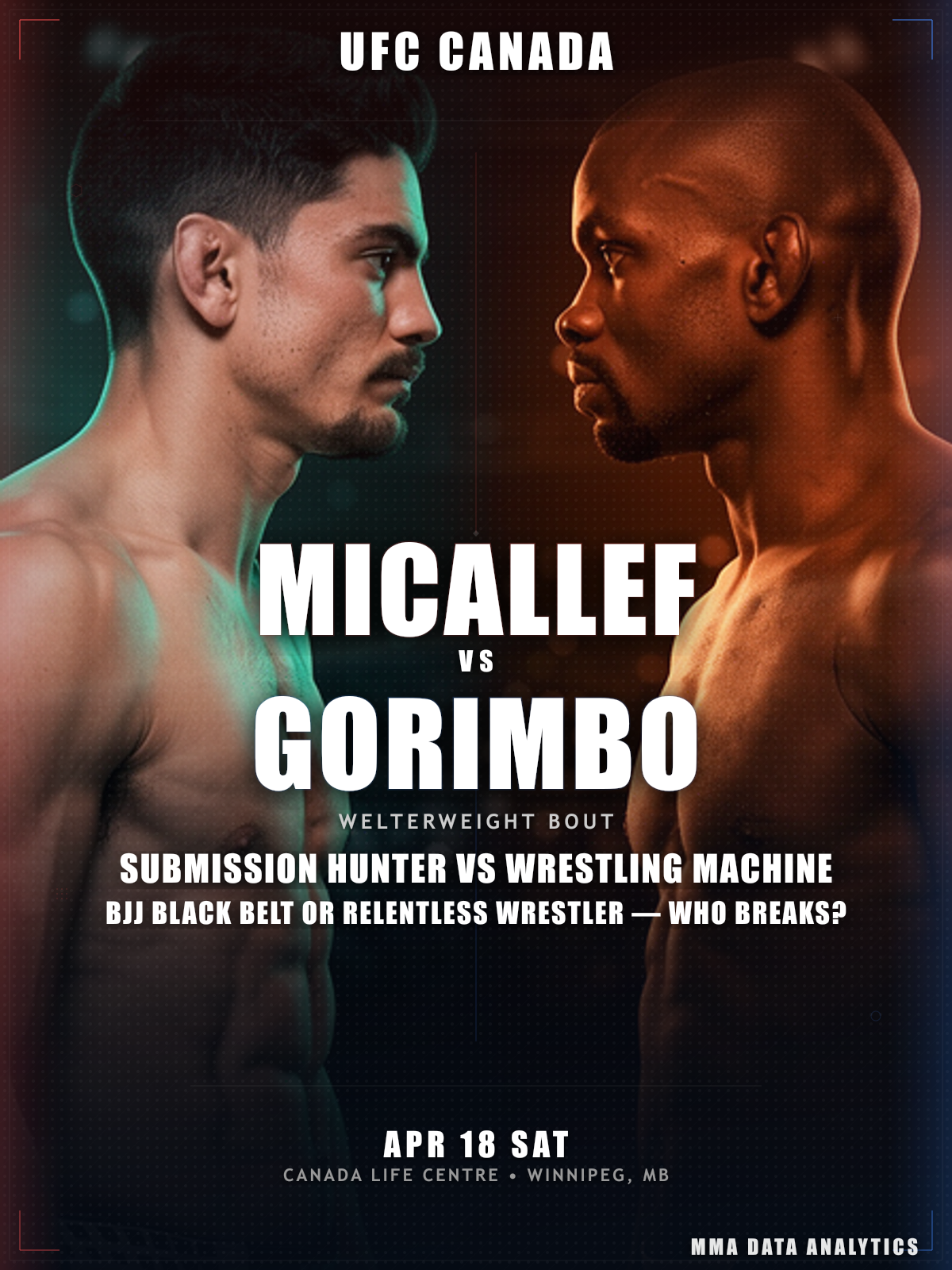
Explore Detailed Fighter Profiles
Click on either the fighter's name or profile image for each fighter to access comprehensive UFC statistics including striking metrics, grappling data, clinch performance, complete fight history, offensive & defensive analytics, and round-by-round breakdowns.
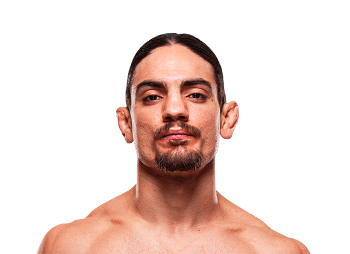
Jonathan Micallef
Fighter Metrics
Victory Methods
Win Round Distribution
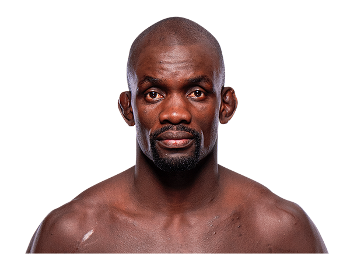
Themba Gorimbo
Fighter Metrics
Victory Methods
Win Round Distribution
📋 Last 5 Fights - Jonathan Micallef
| Date | Opponent | Result | Method |
|---|---|---|---|
| Jan 31, 2026 | Oban Elliott | W | Submission (Technical RNC) (R2, 3:31) |
| Feb 8, 2025 | Kevin Jousset | W | Decision (Unanimous) (R3, 5:00) |
| Oct 15, 2024 | Mohamed Ado | W | Submission (Triangle Choke) (R1, 3:01) |
| Sep 7, 2024 | Matt Vaile | W | Submission (Rear Naked Choke) (R1, 4:12) |
| Mar 2, 2024 | Aldin Bates | L | TKO (Punches) (R4, 3:00) |
📋 Last 5 Fights - Themba Gorimbo
| Date | Opponent | Result | Method |
|---|---|---|---|
| Nov 1, 2025 | Jeremiah Wells | L | Decision (Unanimous) (R3, 5:00) |
| Dec 7, 2024 | Vicente Luque | L | Submission (Anaconda Choke) (R1, 0:52) |
| Oct 12, 2024 | Niko Price | W | Decision (Unanimous) (R3, 5:00) |
| May 18, 2024 | Ramiz Brahimaj | W | Decision (Unanimous) (R3, 5:00) |
| Feb 3, 2024 | Pete Rodriguez | W | TKO (Overhand Right & GNP) (R1, 0:32) |
Technical Analysis
Technical Score
Cardio Score
Overall Rating
📊 Technical Score
Calculated as the average of Striking Composite (52.0 vs 45.0) and Grappling Composite (65.0 vs 75.0). Balances overall striking effectiveness with grappling ability to measure complete technical skills.
💪 Cardio Score
Based on average fight duration, striking rate per minute, takedown rate, and finish rate. Measures cardiovascular endurance and ability to maintain pace throughout fights.
🎯 Overall Rating
Simple average of Technical Score and Cardio Score. Provides a holistic view of fighter capabilities combining skill level with physical conditioning and fight performance.
Striking Composite
Grappling Composite
Technical Radar Comparison
Visual comparison of key performance metrics between both fighters
📊 Detailed Statistical Comparison
🥊 Fight Analysis Breakdown
🧩 Jonathan Micallef Key Advantages
Micallef's submission arsenal is the defining weapon in this matchup. With 4 of his 9 wins by submission—including a rear naked choke finish of Oban Elliott and a slick triangle choke against Mohamed Ado—he has demonstrated elite ground finishing ability. His 0.80 submissions per 15 minutes is significantly higher than Gorimbo's 0.44, indicating more active submission hunting. Against Gorimbo, who has been submitted 3 times in his career (50% of losses), this creates a dangerous dynamic. Gorimbo's wrestling-heavy approach will bring the fight to the ground, but Micallef is comfortable operating from bottom position and can transition to back-takes and chokes from scrambles. His ability to finish from multiple positions (RNC, triangle, arm triangle) means Gorimbo must be cautious even when achieving dominant positions.
At just 27 years old with a 9-1 record, Micallef is on a steep improvement curve. His 4-fight winning streak— including 2 UFC wins to start his octagon career—shows he's peaking at the right time. His 90% career win rate is among the highest in the welterweight division. The 8-year age gap over Gorimbo (35) could be a significant factor in a 3-round fight, particularly in cardio and recovery between exchanges. Micallef's southpaw stance creates awkward angles that many fighters struggle to handle, and his 4.77 SLpM output significantly outpaces Gorimbo's 2.72—nearly double the striking volume. This combination of youth, momentum, and southpaw angles makes Micallef a dangerous opponent for an aging veteran.
Micallef's 44-inch leg reach (1 inch longer than Gorimbo's 43") combined with his southpaw stance creates an uncomfortable dynamic for Gorimbo's orthodox approach. Southpaw fighters traditionally give wrestlers trouble because the lead-leg positioning disrupts standard double-leg and single-leg entries. Gorimbo's 5.07 TD per 15 minutes relies heavily on orthodox-vs-orthodox setups— against a southpaw with longer legs, his entry timing and angles need adjustment. Micallef can use his lead right hand to parry and redirect Gorimbo's level changes while his lead right leg threatens kicks that discourage forward pressure. The 77-inch reach parity (both at 77") means neither fighter has a boxing range advantage, but Micallef's southpaw angles give him first-mover advantage in striking exchanges.
⚠️ Unfavorable Scenarios
Gorimbo's 5.07 takedowns per 15 minutes is a massive wrestling volume that Micallef has never faced at the UFC level. With only 50% takedown defense, Micallef is vulnerable to Gorimbo's relentless chain wrestling. If Gorimbo can secure early takedowns and establish top control, Micallef's striking and submission game may be neutralized by grinding cage work. Gorimbo's 66% takedown accuracy against Micallef's 50% TDDef creates a probabilistic edge where roughly 1 in 3 takedown attempts should succeed. With Gorimbo shooting 3-4 times per round, this translates to consistent mat time that wins rounds.
Micallef has only 2 UFC fights compared to Gorimbo's 7. This experience gap becomes critical in high-pressure moments and against UFC-caliber wrestling. Micallef's stats are based on a small sample size—his 50% takedown defense, for example, may not accurately reflect how he handles elite grapplers. His only career loss came via TKO in round 4 against Aldin Bates, showing he can be stopped when pressured and fatigued. Gorimbo has competed against much higher-level competition (Luque, Wells, Price) and has experience in the deepest division in the UFC.
📋 Likely Gameplan
Micallef's best path to victory runs through keeping the fight on the feet. His 4.77 SLpM significantly outpaces Gorimbo's 2.72, and his southpaw stance creates angle problems for Gorimbo's orthodox wrestling entries. Micallef should use his lead right hand to establish range, target body kicks to sap Gorimbo's cardio, and circle away from the cage to avoid being trapped. When Gorimbo shoots, Micallef needs to use frames, sprawls, and hip escapes to get back to the feet quickly. The key is making Gorimbo pay for failed takedown entries with counter strikes that discourage continued wrestling attempts.
If taken down, Micallef should not simply defend—he should attack. His 0.80 Sub/15 rate and 4 career submission wins (triangle choke, RNC) show he's most dangerous when opponents enter his guard. Against Gorimbo—who has been submitted 3 times including by Vicente Luque's anaconda choke in under a minute—Micallef can use active guard to hunt submissions while Gorimbo tries to maintain top position. Triangle chokes are particularly effective against wrestlers who posture up in guard, and Micallef's finish against Mohamed Ado proves he can execute under pressure. This transforms Gorimbo's wrestling from an advantage into a submission trap.
🚀 Themba Gorimbo Key Advantages
Gorimbo's 5.07 takedowns per 15 minutes is one of the highest rates in the welterweight division—a staggering 6.1x more than Micallef's 0.83 TD/15. Combined with 66% takedown accuracy, Gorimbo can dictate where this fight takes place. Against Micallef's 50% takedown defense, Gorimbo's wrestling creates a clear path to victory through sustained control. His victories over Niko Price and Ramiz Brahimaj were built on this foundation—grinding decisions where his wrestling neutralized his opponents' offense. Gorimbo's chain wrestling allows him to rattle off 3-4 takedown attempts per round, and even when Micallef defends, the energy expenditure of constant sprawling will sap his cardio and reduce his striking output over three rounds.
Gorimbo's 73% takedown defense is significantly higher than Micallef's 50%, creating a 23-point defensive gap that prevents Micallef from reversing the grappling dynamic. With 7 UFC fights against high-level competition (Luque, Wells, Price), Gorimbo has been tested against elite opposition and survived. His experience advantage is compounded by Micallef's thin UFC resume (2 fights). Gorimbo's striking efficiency (61% accuracy vs Micallef's 44%) means he makes his shots count even with lower volume (2.72 SLpM). His remarkably low absorption rate (1.32 SApM) indicates elite defensive awareness—he avoids damage effectively, which is crucial against a higher-volume striker like Micallef. Over 7 UFC fights, Gorimbo has absorbed far less cumulative damage than most welterweights.
⚠️ Unfavorable Scenarios
Gorimbo has been submitted 3 times—50% of his career losses. Most notably, Vicente Luque submitted him in just 52 seconds with an anaconda choke at UFC 310. Against a submission specialist like Micallef (4 sub wins, 0.80 Sub/15), Gorimbo's wrestling-heavy approach could backfire. Every time Gorimbo takes the fight to the ground, he enters Micallef's world. Micallef's triangle choke and rear naked choke are proven finishers, and if Gorimbo gets lazy in top position or allows transitions, he risks being submitted. This is the classic risk-reward dilemma for a wrestler facing a jiu-jitsu specialist.
Gorimbo's 2.72 SLpM is nearly half of Micallef's 4.77, which creates a serious problem if the fight stays on the feet. Even with Gorimbo's 61% accuracy, the raw volume deficit means Micallef will outlander him significantly in striking exchanges. Gorimbo's 52% striking defense (vs Micallef's 59%) compounds this issue—he absorbs a higher percentage of incoming strikes. If Gorimbo fails to secure takedowns early and the fight becomes a kickboxing match, Micallef's southpaw volume and activity will dominate the scorecards.
📋 Likely Gameplan
Gorimbo must establish his wrestling immediately in R1. His 5.07 TD/15 rate means he should be shooting within the first minute and maintaining constant takedown pressure throughout. Against Micallef's 50% TDDef, Gorimbo can expect to land roughly half his attempts. The key is cage work—pushing Micallef against the fence where his southpaw angles are neutralized, then working body-lock takedowns and trips. Early control time builds confidence and forces Micallef into a reactive defensive posture. Gorimbo's 32-second TKO of Pete Rodriguez shows he can also finish explosively when the opening presents.
Once Gorimbo secures takedowns, he must prioritize positional control over advancing to submissions or ground-and-pound. Micallef's 3 submission wins from bottom position mean Gorimbo cannot get sloppy in top position. Heavy hips, wrist control, and minimal exposure to guard sweeps and triangles are essential. Gorimbo should focus on short ground-and-pound from half-guard rather than passing to full mount where Micallef could trap an arm or take the back. The goal is to accumulate control time safely and win rounds 10-9 without giving Micallef scramble opportunities.
🎯 Fight Prediction Analysis
Data-driven prediction model based on statistical analysis
📊Detailed Analysis Summary
🏟️Cage Dynamics
The 30-foot octagon creates an interesting dynamic in this matchup. The larger cage benefits Micallef's southpaw striking (4.77 SLpM), giving him space to circle and use angles while avoiding Gorimbo's clinch entries. However, Gorimbo's relentless wrestling pressure (5.07 TD/15) means he can cut off the cage and trap Micallef against the fence where southpaw advantages diminish. The key dynamic is whether Micallef can maintain center-cage positioning or whether Gorimbo's pressure backs him into fence wrestling situations.
In the cage game, Gorimbo excels at pinning opponents against the fence for body-lock takedowns. Micallef's best defense is maintaining distance with his 77-inch reach and using lateral movement to avoid being cornered. The larger cage gives Micallef more escape routes but also more fence to be pushed against. In a 3-round fight, whichever fighter dictates the range—Gorimbo in the clinch or Micallef at kicking distance—will likely control the narrative.
🎯Technical Breakdown
This fight presents a classic striker vs wrestler dynamic with a submission twist. Gorimbo's 5.07 TD/15 vs Micallef's 0.83 represents a 6.1x wrestling volume differential, while Micallef's 50% takedown defense is the statistical weakness that Gorimbo will target. However, Micallef's 0.80 Sub/15 and proven submission finishing ability (4 career subs) transforms Gorimbo's wrestling from a safe path into a calculated risk. Gorimbo has been submitted 3 times—50% of his losses—including the devastating 52-second anaconda choke by Vicente Luque.
The striking comparison heavily favors Micallef in volume (4.77 SLpM vs 2.72), but Gorimbo's accuracy is superior (61% vs 44%). Gorimbo's remarkably low absorption rate (1.32 SApM vs Micallef's 4.00) suggests a defensive, wrestling- first approach that minimizes time in striking exchanges. Micallef's cardio profile (13:44 avg fight duration) vs Gorimbo's (09:43) suggests Micallef is more accustomed to longer fights, which could matter in rounds 2-3.
The fight will be decided by whether Gorimbo can wrestle safely enough to accumulate control time without exposing himself to Micallef's submission game. Micallef needs to either keep the fight standing where his volume dominates, or turn Gorimbo's takedowns into submission opportunities.
🧩Key Battle Areas
1) Takedown Defense vs Chain Wrestling: This is the defining battleground. Micallef's 50% TDDef against Gorimbo's 66% TDAcc and 5.07 TD/15 volume creates a probabilistic framework where Gorimbo should land 1-2 takedowns per round. Whether Micallef can stuff enough attempts and get back to his feet quickly determines the fight's trajectory. Micallef needs to defend at least 60-70% of attempts to keep the fight competitive.
2) Submission Threat from Bottom: Micallef's 4 career submission wins include triangle chokes and RNCs— weapons that work from bottom position. Every time Gorimbo takes Micallef down, he enters a danger zone. Gorimbo must maintain positional awareness and avoid giving up his neck or arms. His 3 career submission losses show this is a real vulnerability, not a theoretical one.
3) Striking Volume vs Wrestling Control:Micallef's 4.77 SLpM nearly doubles Gorimbo's 2.72. In standing exchanges, Micallef will outlander Gorimbo significantly. The question is how much standing time actually occurs—Gorimbo's wrestling should consume 60-70% of each round in grappling exchanges, limiting Micallef's ability to leverage his striking advantage.
Verdict: Gorimbo is the slight favorite due to his wrestling dominance and UFC experience, but Micallef's submission game creates genuine upset equity. This is a competitive fight where the style matchup produces inherent risk for both fighters—Gorimbo risks submission hunting into his takedowns, while Micallef risks being ground out on the scorecards.
🏁Final Prediction
Most Likely Outcome: Gorimbo by Decision (30%)— Gorimbo implements his wrestling gameplan, secures 2-3 takedowns per round, and accumulates enough control time to win on the scorecards. His experience against higher-level competition and disciplined positional control limit Micallef's submission opportunities. Gorimbo wins a clear but not dominant decision through grinding wrestling.
Micallef by Submission (22%) — Gorimbo takes the fight to the ground but gets caught in a transition. Micallef's triangle choke or RNC from scrambles has proven effective, and Gorimbo's 3 career submission losses show genuine vulnerability. This could happen in any round, likely R1-R2 before Gorimbo adjusts his positional awareness.
Micallef by Decision (13%) — Micallef defends enough takedowns to keep the fight mostly standing, where his 4.77 SLpM volume overwhelms Gorimbo's 2.72. His southpaw angles frustrate Gorimbo's entries and he outscores him on the feet in rounds where wrestling fails.
Gorimbo by TKO/GNP (15%) — Gorimbo secures dominant wrestling positions and delivers sustained ground-and-pound. Similar to his 32-second TKO of Pete Rodriguez, Gorimbo can finish explosively when he achieves top position and Micallef cannot escape.
Assessment: This is a closely contested fight where Gorimbo's wrestling volume makes him the slight favorite, but Micallef's submission game is the great equalizer. Gorimbo must wrestle intelligently to avoid the same fate he suffered against Luque. Micallef's youth, momentum (4-fight streak), and finishing ability make him a live underdog with genuine upset potential.
💰 Betting Analysis: Model vs Market
Detailed value assessment in the betting market
📊Market Odds
🤖Analytical Model
💎Value Opportunities
MAXIMUM VALUE
Model: 22% | Fair: +355
GOOD VALUE
Model: 30% | Fair: +233
SLIGHT VALUE
Model: 48% | Fair: +108
⚠️Key Market Discrepancies
- • Micallef's submission threat is underpriced – 4 career subs (44% of wins) against a fighter submitted 3 times (50% of losses) creates real upset equity.
- • Gorimbo's recent form concerning – Coming off a decision loss to Wells and a 52-second submission loss to Luque raises durability questions.
- • Micallef's momentum – 4-fight win streak including 2 UFC wins with a 90% career win rate suggest a rising contender.
🎯 Comprehensive Probabilistic Analysis
100 hypothetical fight simulation based on statistical data
🏆Outcome Distribution - Jonathan Micallef
Primary path via triangle choke or RNC from scrambles
Southpaw volume outscoring on the feet
Volume striking accumulation on the feet
💥Outcome Distribution - Themba Gorimbo
Primary path via wrestling control and grinding decisions
Ground-and-pound from dominant wrestling positions
Opportunistic submission from top control
⏰Fight Timeline Analysis
R1: Micallef's Best Window
R1 is critical for Micallef. His southpaw stance creates immediate angle problems for Gorimbo's orthodox wrestling entries, and his 4.77 SLpM volume can overwhelm Gorimbo's 2.72 in early exchanges. Gorimbo will look to establish wrestling immediately with his 5.07 TD/15 rate, but R1 is where Micallef is freshest and most dangerous. If Micallef can stuff early takedowns and land significant strikes, he establishes the tone for a standing fight. Conversely, if Gorimbo secures an early takedown and achieves control, Micallef must be dangerous off his back—his triangle choke and RNC threats force Gorimbo to be cautious in top position. This round is the most dangerous for submission finishes from either fighter.
R2: Wrestling Grind Begins
If Gorimbo established his wrestling in R1, R2 is where the grind intensifies. His chain wrestling (5.07 TD/15) means relentless pressure that saps Micallef's energy even when defended. Micallef's 50% TDDef will be tested repeatedly as Gorimbo increases volume. However, if Micallef kept the fight standing in R1 and landed significant strikes, Gorimbo may become more cautious about shooting—opening up space for Micallef's striking. The submission threat remains live: Gorimbo's 3 career submission losses mean any scramble carries risk. Micallef's cardio (13:44 avg fight duration) should hold through R2, but constant takedown defense is more exhausting than striking exchanges.
R3: Decision Round
If Gorimbo has established wrestling control, R3 becomes about sustaining pressure and banking the final round. His experience in 3-round decisions (6 career decision wins) gives him composure in close fights. Micallef, if behind on the scorecards, must take greater risks—either hunting submissions aggressively from bottom position or loading up on strikes when standing. Gorimbo's 09:43 average fight duration suggests his fights often don't reach the final bell, but his grinding decisions against Price and Brahimaj show he can execute the full 15-minute gameplan. If Micallef is competitive entering R3, his youth and conditioning could be the difference—but against Gorimbo's relentless wrestling pressure, staying competitive requires elite defensive wrestling that Micallef hasn't yet demonstrated at the UFC level.
⚡Window of Opportunity - Themba Gorimbo
- • First 5 minutes: Highest wrestling and control equity before Micallef adjusts defense.
- • Cage pressure: Push Micallef to the fence to neutralize southpaw angles.
- • Chain wrestling: Relentless takedown attempts to accumulate control time.
🎯Upset Path - Jonathan Micallef
- • Southpaw volume: Use 4.77 SLpM output to outwork Gorimbo's 2.72 on the feet.
- • Submission hunting: Attack from guard when taken down—triangle and RNC threats.
- • Scramble offense: Turn transitions into back-takes and choke opportunities.
🎯 Final Confidence Assessment
Confidence level and uncertainty factors
Confidence Level
Close fight with clear stylistic clash — wrestling vs submissions
✅Supporting Factors (Gorimbo)
- • Massive takedown volume edge (5.07 vs 0.83 TD/15)
- • Superior takedown defense (73% vs 50% TDDef)
- • More UFC experience (7 fights vs 2 fights)
- • Higher striking accuracy (61% vs 44%) and lower absorption (1.32 SApM)
⚠️Risk Factors (Micallef upset)
- • Micallef's elite submission game (4 sub wins, 0.80 Sub/15)
- • Gorimbo submitted 3 times in career (50% of losses)
- • Micallef's nearly 2x striking volume (4.77 vs 2.72 SLpM)
- • Youth advantage (27 vs 35) and 4-fight win streak momentum
🏁Executive Summary
This welterweight clash pits Gorimbo's elite wrestling (5.07 TD/15, 66% accuracy) against Micallef's dangerous submission game (4 career subs, 0.80 Sub/15). Gorimbo's path runs through relentless takedown pressure and grinding decisions — his bread and butter against Price and Brahimaj. However, Micallef's submission finishing ability creates a genuine risk-reward dilemma: every takedown Gorimbo attempts could end with him in a triangle choke or rear naked choke. Gorimbo's 3 career submission losses (including the 52-second anaconda choke by Luque) highlight this vulnerability. On the feet, Micallef's 4.77 SLpM nearly doubles Gorimbo's 2.72, giving him clear volume advantages in striking exchanges. The 30-foot cage gives both fighters space — Micallef to utilize his southpaw angles, and Gorimbo to work his chain wrestling along the fence.
Prediction: Gorimbo by Decision is the most likely outcome (30%) through consistent wrestling pressure and safe top control. Micallef's primary upset path is Submission (22%) via triangle choke or RNC from scrambles. This fight hinges on whether Gorimbo can wrestle safely without exposing himself to Micallef's submission game, or whether the young Australian can capitalize on the same vulnerability that cost Gorimbo against Luque.