

Erik Silva vs Francis Marshall
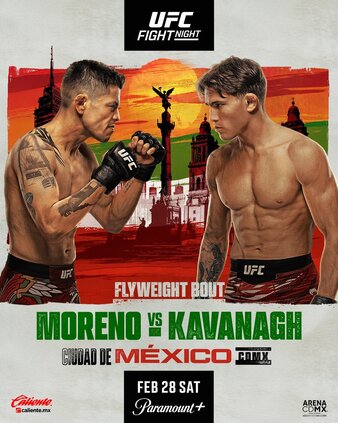
Men's Featherweight Bout • UFC Fight Night: Moreno vs. Kavanagh
Saturday, February 28, 2026 • Large Cage (30 ft) • Mexico City, Mexico
Explore Detailed Fighter Profiles
Click on either the fighter's name or profile image for each fighter to access comprehensive UFC statistics including striking metrics, grappling data, clinch performance, complete fight history, offensive & defensive analytics, and round-by-round breakdowns.

Erik Silva
Fighter Metrics
Victory Methods
Win Round Distribution
Francis Marshall
Fighter Metrics
Victory Methods
Win Round Distribution
📋 Last 5 Fights - Erik Silva
| Date | Opponent | Result | Method |
|---|---|---|---|
| 2024-02-24 | Muhammad Naimov | L | TKO (Leg Injury) (R1, 0:44) |
| 2022-12-10 | TJ Brown | L | SUB (Arm Triangle Choke) (R3, 3:41) |
| 2022-08-09 | Anvar Boynazarov | W | TKO (Ground & Pound) (R1, 1:32) |
| 2022-02-11 | Edgar Cabello | W | SUB (Rear Naked Choke) (R1, 3:50) |
| 2021-08-06 | Daniel Vega | W | SUB (Rear Naked Choke) (R1, 2:21) |
📋 Last 5 Fights - Francis Marshall
| Date | Opponent | Result | Method |
|---|---|---|---|
| 2025-03-08 | Mairon Santos | L | Decision (Split) (R3, 5:00) |
| 2024-08-24 | Dennis Buzukja | L | Decision (Split) (R3, 5:00) |
| 2023-08-12 | Isaac Dulgarian | W | TKO (Ground & Pound) (R1, 4:48) |
| 2023-04-22 | William Gomis | L | Decision (Split) (R3, 5:00) |
| 2022-12-03 | Marcelo Rojo | W | KO (Punches) (R2, 1:14) |
Technical Analysis
Technical Score
Cardio Score
Overall Rating
📊 Technical Score
Calculated as the average of Striking Composite (66.0 vs 66.0) and Grappling Composite (78.0 vs 55.0). Balances overall striking effectiveness with grappling ability to measure complete technical skills.
💪 Cardio Score
Based on average fight duration, striking rate per minute, takedown rate, and finish rate. Measures cardiovascular endurance and ability to maintain pace throughout fights.
🎯 Overall Rating
Simple average of Technical Score and Cardio Score. Provides a holistic view of fighter capabilities combining skill level with physical conditioning and fight performance.
Striking Composite
Grappling Composite
Technical Radar Comparison
Visual comparison of key performance metrics between both fighters
📊 Detailed Statistical Comparison
🥊 Fight Analysis Breakdown
🧩 Erik Silva Key Advantages
Silva's 3.76 takedowns per 15min vs Marshall's 2.75 gives him a clear grappling activity advantage. His 80% takedown accuracy is elite-level and dramatically outpaces Marshall's 45%. Silva's DWCS-era dominance was built on smothering grappling and rear-naked choke finishes. Against Marshall—whose 67% takedown defense is respectable but not airtight—Silva's chain-wrestling and mat returns could create extended top-time control sequences that score heavily on judges' cards if the fight reaches the mat.
Silva's 77.8% career finish rate with 7 of 9 wins coming in Round 1 makes him an extreme early-fight threat. If Silva can close distance quickly, secure a takedown, and begin working for submissions or ground-and-pound, he could end this fight before Marshall's cardio and volume game ever get started. The 5:19 average fight duration tells the story—Silva either finishes fast or struggles. This all-or-nothing profile creates a scenario where Marshall must survive the opening minutes at all costs.
Silva's 4 career submission wins (including back-to-back rear-naked chokes on DWCS) make him a legitimate threat from back control or scramble positions. His 70% striking accuracy—while based on limited UFC data—suggests he picks his shots carefully and uses strikes to set up grappling entries rather than engage in prolonged striking exchanges. If Silva can establish the clinch or back control against Marshall, the submission danger is real and persistent, especially in early scrambles before Marshall settles into the fight.
⚠️ Unfavorable Scenarios
At 38 with a 2-year layoff, Silva's cardio is a massive question mark—especially at Mexico City's 7,349 ft altitude. His 5:19 average fight duration and Round 1 heavy finish distribution suggest he has very little in the tank beyond the opening minutes. If Marshall can weather the early storm, Silva's output will likely drop dramatically, leaving him vulnerable to Marshall's superior late-fight pace and volume.
Silva's 40% striking defense is alarmingly low and represents his most critical vulnerability. Against Marshall's 3.46 SLpM output, this poor defensive efficiency could result in Silva absorbing significant damage whenever the fight stays on the feet. Marshall's ability to land knockdowns (as demonstrated against Dulgarian and Rojo) combined with Silva's defensive deficiencies creates real knockout danger for the Venezuelan, particularly if he becomes fatigued from failed takedown attempts.
📋 Likely Gameplan
Silva needs to close distance immediately and shoot for takedowns within the first 30 seconds. His 80% takedown accuracy gives him good odds of securing early control, and from there he should work ground-and-pound to set up rear-naked choke attempts. Every minute on the feet benefits Marshall, so Silva must treat this like a sprint and try to end the fight in Round 1.
If the initial shot fails, Silva should use the clinch against the cage to neutralize Marshall's striking advantage. Inside trips, body locks, and cage-assisted takedowns should be his secondary avenue. The large cage makes this harder—Silva must cut off the octagon effectively to prevent Marshall from circling and maintaining range. Fence control burns less energy than open-mat wrestling and keeps the fight in Silva's preferred grappling range.
🚀 Francis Marshall Key Advantages
Marshall's 11:50 average fight duration vs Silva's 5:19 tells the whole story. Marshall has proven he can go three full rounds and maintain output—his three split decision losses all went the distance, demonstrating durability even against tough opposition. At Mexico City altitude, this cardio edge becomes even more decisive. If Marshall can survive Silva's early onslaught, the fight increasingly tilts in his favor as Silva's gas tank depletes. Training at Kill Cliff FC with championship- caliber training partners has built Marshall for late-round scenarios.
Marshall's 3.46 SLpM output is 67% higher than Silva's 2.07, creating significant volume advantages when the fight stays on the feet. With 5 UFC fights to Silva's 2, Marshall has substantially more Octagon experience and has competed against consistently higher-level opposition (Gomis, Buzukja, Santos). His 54% striking defense vs Silva's 40% means he absorbs proportionally fewer clean shots. Marshall's youth (26 vs 38) and broader experience base give him the tools to adapt mid-fight—something Silva's limited UFC sample makes uncertain.
⚠️ Unfavorable Scenarios
Marshall's biggest vulnerability is in early grappling exchanges. Silva's back-to-back RNC finishes and 80% takedown accuracy create genuine submission danger in the first 5 minutes. If Marshall gets taken down and Silva establishes back control, the fight could end before Marshall's cardio and striking advantages ever come into play. Marshall's 33% striking accuracy also suggests he may struggle to land the deterrent shots needed to keep Silva at range early.
Marshall's 33% striking accuracy is the lowest among comparable featherweights and means a significant portion of his output misses. Against Silva's grappling-first approach, wasted strikes could lead to energy depletion and positional compromises—overcommitting on missed punches opens up takedown lanes that Silva can exploit. If Marshall can't convert his volume into clean, meaningful strikes, his primary path to victory becomes less reliable.
📋 Likely Gameplan
Marshall's optimal strategy is to survive the first round, maintain distance with footwork and jabs, and avoid the clinch at all costs. The large cage helps him circle and reset. Once past the danger zone of Round 1, Marshall should increase his output and look to rack up volume from range. His 67% takedown defense should be enough to stuff some of Silva's shots, and every minute on the feet drains Silva's limited gas tank further.
Marshall's best chance for a decisive victory is in Rounds 2-3 where Silva's cardio is expected to crater. By pushing the pace and maintaining high-volume output, Marshall can potentially earn a late TKO against a gassed Silva or secure clear round wins for a decision. His Kill Cliff FC training has prepared him for altitude cardio demands. The altitude amplifies Silva's cardio issues while Marshall's youth and conditioning allow him to maintain output throughout the full 15 minutes.
🎯 Fight Prediction Analysis
Data-driven prediction model based on statistical analysis
📊Detailed Analysis Summary
🏟️Cage Dynamics
The 30-foot octagon at Mexico City altitude creates a unique dynamic in this matchup. The large cage benefits Marshall's movement and footwork, giving him space to circle and maintain distance from Silva's takedown entries. However, the 7,349-foot altitude is the X-factor—it amplifies Silva's existing cardio concerns (5:19 avg fight duration) while Marshall's superior conditioning (11:50 avg) should allow him to sustain output. If Silva can't close distance early, the cage size becomes his enemy as Marshall uses the space to stay at range and pick his shots.
🎯Technical Breakdown
This matchup pits Silva's grappling pedigree (3.76 TD15, 80% TDAcc) against Marshall's striking volume (3.46 SLpM) and durability. The key statistical divergence is in finishing profiles: Silva's 77.8% career finish rate with 7 of 9 wins in Round 1 vs Marshall's tendency to go the distance (11:50 avg). Silva's 40% striking defense is alarming against Marshall's output, while Marshall's 33% striking accuracy limits the efficiency of his volume. The technical question becomes whether Silva can convert his grappling advantage before his cardio fades, or whether Marshall can survive the early storm and capitalize on his conditioning advantage.
🧩Key Battle Areas
Three critical battle areas will determine the outcome: early takedown success vs scramble ability, cardio management at altitude, and striking volume vs grappling control. Marshall's 67% takedown defense gives him a fighting chance against Silva's elite accuracy, but Silva's 80% TDAcc suggests he'll find openings. The altitude factor heavily favors Marshall—his 11:50 average fight duration indicates conditioning built for three full rounds, while Silva's 5:19 average raises serious questions about his ability to sustain output beyond the first round at 7,349 feet. At age 38 with a 2-year layoff, Silva's physical decline adds another layer of uncertainty.
🏁Final Prediction
The most likely outcome is Francis Marshall by Decision (38% probability), achieved through superior cardio, volume striking, and late-round dominance as Silva's output fades. Marshall's KO/TKO path (15%) becomes viable in Rounds 2-3 against a gassed Silva, especially given Silva's 40% striking defense. Silva's primary lane is early Submission (20%) via rear-naked choke from back control in the opening minutes. Silva's decision path (10%) requires sustained grappling control over three rounds—unlikely given his cardio profile and the altitude. The fight hinges on whether Silva can finish early before his physical limitations become decisive.
💰 Betting Analysis: Model vs Market
Detailed value assessment in the betting market
📊Market Odds
🤖Analytical Model
💎Value Opportunities
MAXIMUM VALUE
Model: 20% | Fair: +400
GOOD VALUE
Model: 38% | Fair: -150
SLIGHT VALUE
Model: 62% | Fair: -163
⚠️Key Market Discrepancies
- • Overprices Silva's grappling – Market may undervalue his cardio limitations at altitude.
- • Undervalues Marshall's durability – Three split decision losses show he doesn't get finished.
- • Altitude wild card – Mexico City elevation amplifies Silva's cardio concerns beyond normal.
🎯 Comprehensive Probabilistic Analysis
100 hypothetical fight simulation based on statistical data
🏆Outcome Distribution - Erik Silva
Primary path via RNC from back control
Ground-and-pound accumulation
Requires sustained grappling control over 3 rounds
💥Outcome Distribution - Francis Marshall
Primary path via volume and late-round dominance
Late TKO against gassed Silva
Low but non-zero submission threat
⏰Fight Timeline Analysis
⚡Early Danger Zone - Erik Silva
- • First 5 minutes: Silva's highest submission equity via takedown-to-back-control.
- • Chain wrestling: 80% TDAcc means early mat time is nearly guaranteed.
- • RNC threat: Career finisher from back control makes early grappling exchanges high-stakes.
🎯Late-Round Takeover - Francis Marshall
- • Survive Round 1: Weather Silva's best shots and maintain composure.
- • Volume escalation: Increase output as Silva's cardio fades at altitude.
- • Late TKO window: Against gassed, 38-year-old with 40% StrDef in Rounds 2-3.
🎯 Final Confidence Assessment
Confidence level and uncertainty factors
Confidence Level
Significant unknowns around Silva's layoff and altitude effects
✅Supporting Factors
- • Marshall's superior cardio and durability (11:50 avg)
- • Silva's age (38) and 2-year layoff
- • Mexico City altitude amplifies cardio gap
- • Marshall's UFC experience edge (5 fights vs 2)
⚠️Risk Factors
- • Silva's elite 80% TDAcc could find early submissions
- • Limited data on both fighters (small UFC samples)
- • Marshall's 33% striking accuracy limits volume impact
🏁Executive Summary
This is a classic grappler-vs-volume-striker matchup complicated by significant environmental and physical factors. Erik Silva's elite grappling credentials (3.76 TD15, 80% TDAcc) give him a dangerous early window, but his 5:19 average fight duration, age 38, and 2-year layoff create serious questions about sustainability over three rounds at Mexico City's 7,349-foot altitude. Francis Marshall's superior conditioning (11:50 avg fight duration), durability (never been finished in the UFC), and Kill Cliff FC training environment position him as the favorite once the fight extends beyond the opening minutes. Marshall's 33% striking accuracy is a concern, but his volume (3.46 SLpM) should compensate against a fading opponent.
Prediction: Marshall by Decision most likely (38% probability) through superior cardio and late-round volume; Silva's best lane is early Submission (20%) via rear-naked choke from back control. The fight hinges on whether Silva can finish in the first round before altitude and age combine to drain his elite but time-limited grappling threat.