

Jean-Paul Lebosnoyani vs Phil Rowe
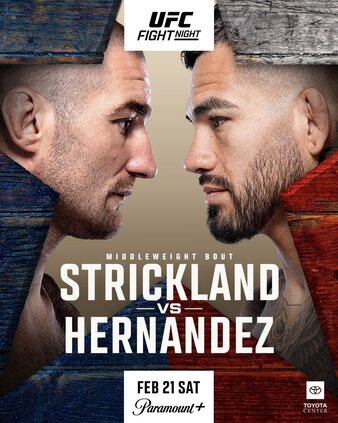
Welterweight Bout • UFC Fight Night: Strickland vs Hernandez
Saturday, February 21, 2026 • 30ft Octagon (Large Cage) • Houston, Texas
Explore Detailed Fighter Profiles
Click on either the fighter's name or profile image for each fighter to access comprehensive UFC statistics including striking metrics, grappling data, clinch performance, complete fight history, offensive & defensive analytics, and round-by-round breakdowns.
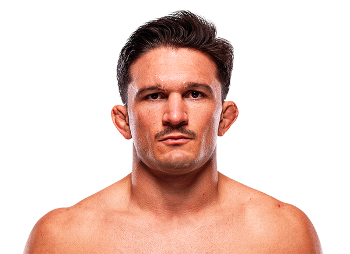
Jean-Paul Lebosnoyani
Fighter Metrics
Victory Methods
Win Round Distribution
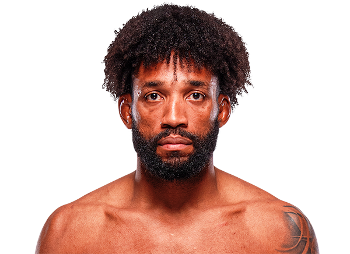
Phil Rowe
Fighter Metrics
Victory Methods
Win Round Distribution
📋 Last 5 Fights - Jean-Paul Lebosnoyani
| Date | Opponent | Result | Method |
|---|---|---|---|
| 2025-09-02 | Jack Congdon | W | KO (Head Kick + R. Hook) (R1, 1:08) |
| 2025-04-11 | Kegan Gennrich | L | SUB (Triangle Choke) (R1, 4:00) |
| 2024-05-17 | Victor Kuiks | W | Decision (Unanimous) (R3, 5:00) |
| 2024-03-08 | Adam Wamsley | W | TKO (Punches) (R1, 3:46) |
| 2023-05-19 | JaCobi Jones | W | TKO (Referee Stoppage) (R2, 2:18) |
📋 Last 5 Fights - Phil Rowe
| Date | Opponent | Result | Method |
|---|---|---|---|
| 2025-11-01 | Seokhyeon Ko | L | Decision (Unanimous) (R3, 5:00) |
| 2025-06-14 | Ange Loosa | W | TKO (Punches) (R3, 4:03) |
| 2024-06-01 | Jake Matthews | L | Decision (Unanimous) (R3, 5:00) |
| 2023-06-24 | Neil Magny | L | Decision (Split) (R3, 5:00) |
| 2022-12-03 | Niko Price | W | TKO (Punches) (R3, 3:26) |
Technical Analysis
Technical Score
Cardio Score
Overall Rating
📊 Technical Score
Calculated as the average of Striking Composite (78.0 vs 53.0) and Grappling Composite (65.0 vs 46.0). Balances overall striking effectiveness with grappling ability to measure complete technical skills.
💪 Cardio Score
Based on average fight duration, striking rate per minute, takedown rate, and finish rate. Measures cardiovascular endurance and ability to maintain pace throughout fights.
🎯 Overall Rating
Simple average of Technical Score and Cardio Score. Provides a holistic view of fighter capabilities combining skill level with physical conditioning and fight performance.
Striking Composite
Grappling Composite
Technical Radar Comparison
Visual comparison of key performance metrics between both fighters
📊 Detailed Statistical Comparison
🥊 Fight Analysis Breakdown
🧩 Jean-Paul Lebosnoyani Key Advantages
At 8 years younger, JPL holds a massive physiological advantage. His switch-stance movement, head kick finishing ability, and explosive first-step are the attributes of a young athlete in his prime. Against a 35-year-old who has absorbed considerable damage over 17 professional fights, speed and reaction time differences will be noticeable from the opening bell. His DWCS performance—a 68-second head kick knockout—showed the kind of explosive power that can end fights in an instant.
JPL fights from an orthodox/southpaw switch stance, which creates constant targeting problems for Rowe. As a conventional boxer, Rowe's timing, distance management, and lead-hand weapons are calibrated against orthodox opponents. Every time JPL switches southpaw, Rowe has to recalculate his entire offensive approach—where the power hand is, which angle to circle to, how to thread the jab. Switch-stancers historically give one-dimensional boxers severe problems.
JPL's 5 career submission wins via multiple techniques (triangles, guillotines, armbars, scarf hold armlock) give him a dangerous fallback if the fight goes to the ground. Against Rowe—who has 50% takedown defense and has been controlled on the mat in his decision losses—this is a legitimate path to victory. His Combat Jiu-Jitsu background means he's comfortable striking into submission transitions, making the ground genuinely dangerous for anyone who grapples with him.
⚠️ Unfavorable Scenarios
If Rowe successfully uses his 8-inch reach advantage and JPL cannot close the distance, this becomes a frustrating, lopsided jab-fest where JPL eats shots trying to get inside. Rowe's length could make that approach punishing over 15 minutes, especially in the spacious 30-foot Houston cage where Rowe has room to circle and reset.
JPL's 1:08 average UFC fight time and first-round finisher profile raise legitimate concerns about what happens when his initial burst doesn't produce a finish. His loss to Gennrich at 4:00 of R1 could indicate cardio problems or decision-making deterioration when fights extend. He has never been tested in deep waters at the UFC level.
📋 Likely Gameplan
JPL should come out with early pressure, looking to close the distance with angle changes and switch-stance entries. His primary weapons should be the head kick from southpaw stance (his DWCS finish) and the straight right from orthodox. Feint-heavy approaches to draw Rowe's jab and then blitz inside with overhands or level changes are key. Urgency without recklessness is crucial.
If JPL can get into clinch range, he should immediately look for trips, body locks, or snap-down guillotine attempts to take the fight to the mat where his submission game becomes the dominant factor. Against Rowe's 50% TDDef, a clinch-to-takedown-to-submission sequence is entirely viable. His Combat Jiu-Jitsu background enables seamless striking-to-grappling transitions.
🚀 Phil Rowe Key Advantages
Rowe's 80-inch reach versus JPL's 72 inches is one of the largest reach differentials in welterweight MMA. At 6'3" with those long arms, Rowe can jab JPL's face off from a distance where JPL literally cannot reach him. This creates a fundamental range problem—JPL has to cross a massive no-man's-land where Rowe's straight right and jab rule. In the 30-foot Houston cage, Rowe can maintain this preferred distance and circle away from JPL's aggressive entries.
Rowe's 12:42 average fight duration proves he can sustain pace through 3 rounds. His 4 decision losses show he goes the distance regularly—while those are losses, they demonstrate the cardio to compete for 15 minutes. Against JPL, whose profile screams first-round finisher with a 1:08 UFC average, Rowe's path is clear: survive the early storm and make it a fight of attrition where his conditioning and experience take over.
⚠️ Unfavorable Scenarios
If this fight hits the mat, Rowe is in serious trouble. JPL's 5 career submission wins via multiple techniques represent a threat Rowe has never faced at this level. Rowe's 50% TDD and lack of submission offense (0.26 Sub/15) mean he's purely defensive on the ground, where JPL's Combat Jiu-Jitsu background creates a massive disparity in grappling exchanges.
At 35, Rowe's physical tools are declining while JPL at 27 is in his absolute athletic prime. JPL's 9.71 SLpM output is nearly 3x Rowe's 3.50 SLpM—a staggering volume differential that overwhelms defensive fighters. When JPL gets inside the reach advantage, his combination speed and power create finishing sequences that Rowe's 52% striking defense may not survive.
📋 Likely Gameplan
Rowe's optimal strategy is to fight behind his jab and use his 8-inch reach advantage to control range. His primary objective should be keeping JPL at the end of straight punches, using lateral movement in the large cage to deny JPL his preferred close-range exchanges. Every time JPL tries to close distance, Rowe should pop the jab, straight right, and immediately circle off the fence. Making this a three-round point fight is Rowe's best path to victory.
Rowe must treat the clinch and any wrestling exchanges as red-alert situations. His 50% TDD means he needs to prioritize underhook battles and frame defense to keep the fight standing. If JPL closes distance successfully, Rowe should look for separation immediately rather than trying to dirty box—the longer he stays in clinch range, the higher the probability of a takedown or guillotine attempt from JPL. Survival in these moments defines whether Rowe wins or loses.
🎯 Fight Prediction Analysis
Data-driven prediction model based on statistical analysis
📊Detailed Analysis Summary
🏟️Cage Dynamics
The 30-foot octagon in Houston creates a fascinating push-pull dynamic. For Rowe, the large cage is ideal —he can circle, reset, and use his 80-inch reach to keep JPL at distance. For JPL, the extra space is a problem because he needs to close an 8-inch reach differential before his weapons become effective. However, JPL's switch-stance movement and angle-cutting ability can compress the effective fighting area even in a large cage. The key question is whether JPL can cut angles fast enough to negate Rowe's superior range before cardio becomes a factor.
🎯Technical Breakdown
The statistical comparison reveals extreme contrasts. JPL's 9.71 SLpM vs Rowe's 3.50 is a near 3x volume differential that overwhelms most opponents. His 79% striking accuracy dwarfs Rowe's 50%, meaning JPL wastes almost nothing while Rowe misses half his shots. The grappling composites (65.00 vs 46.00) further tilt toward JPL and represent the submission threat that Rowe has no answer to. However, Rowe's 52% striking defense and 8-inch reach advantage create a natural shield that partially neutralizes JPL's volume advantage at range.
🧩Key Battle Areas
Three critical areas determine the outcome: distance management (can Rowe maintain his preferred jab range or will JPL close the gap?), clinch dynamics (if JPL gets inside, does Rowe have the wrestling tools to separate before the fight goes to the ground?), and fight duration (does JPL finish early or does Rowe grind it into the later rounds where his cardio gives him the edge?). JPL's switch-stance approach disrupts conventional boxing patterns, while Rowe's length creates a fundamental geometry problem that JPL has never faced against comparable reach at the UFC level.
🏁Final Prediction
The most likely single outcome is Lebosnoyani by KO/TKO (30% probability), achieved through switch-stance angle changes and explosive finishing sequences once inside Rowe's range. JPL's submission path (18%) is viable via clinch-to-takedown transitions exploiting Rowe's 50% TDD. Rowe's best chance is a Decision victory (25%) by using his massive reach to out-point JPL over 15 minutes. Rowe's KO/TKO path (10%) requires catching JPL clean with his power right behind the jab —possible but improbable given JPL's 65% striking defense and evasive movement.
💰 Betting Analysis: Model vs Market
Detailed value assessment in the betting market
📊Market Odds
🤖Analytical Model
💎Value Opportunities
MAXIMUM VALUE
Model: 30% | Fair: +233
GOOD VALUE
Model: 18% | Fair: +456
SLIGHT VALUE
Model: 55% | Fair: -122
⚠️Key Market Discrepancies
- • Reach overweight – Market overprices Rowe's 8" reach; JPL's angles negate it.
- • Volume differential underpriced – 9.71 vs 3.50 SLpM creates overwhelming scoring pace.
- • Submission threat ignored – Rowe's 50% TDD vs JPL's elite ground game is undervalued.
🎯 Comprehensive Probabilistic Analysis
100 hypothetical fight simulation based on statistical data
🏆Outcome Distribution - Jean-Paul Lebosnoyani
Possible but unlikely given JPL's finish rate
Primary path via switch-stance combinations
Clinch-to-takedown transitions exploit 50% TDD
💥Outcome Distribution - Phil Rowe
Catch JPL clean behind the jab at distance
Best path via reach-based distance control
Unlikely; Rowe is not a submission fighter
⏰Fight Timeline Analysis
⚡Window of Opportunity - Phil Rowe
- • First 5 minutes: Highest KO/TKO danger from JPL's explosive entries.
- • Distance management: Use jab + reach to maintain range.
- • Anti-wrestling priority: Stay off the fence; deny clinch entries.
🎯Progressive Dominance - Jean-Paul Lebosnoyani
- • Switch-stance pressure: Disrupt Rowe's jab timing with angle changes.
- • Clinch-to-sub threat: Use wrestling to access ground game advantage.
- • First-round finish: Maximize early explosiveness before cardio fades.
🎯 Final Confidence Assessment
Confidence level and uncertainty factors
Confidence Level
Moderate edge via volume and multi-surface attack
✅Supporting Factors
- • Extreme striking volume edge (9.71 vs 3.50 SLpM)
- • Elite submission depth from 5 career sub wins
- • Switch-stance approach disrupts range fighters
- • Youth and explosiveness advantage at 27 vs 35
⚠️Risk Factors
- • Massive 8-inch reach deficit to navigate
- • Limited UFC sample (1 fight, 1:08 avg)
- • Cardio unknown beyond early finishes
🏁Executive Summary
Jean-Paul Lebosnoyani's explosive multi-angle attack and elite submission game should give him consistent advantages in close-range exchanges and any grappling sequences, while Phil Rowe's massive 8-inch reach advantage creates a fundamental distance puzzle that JPL must solve. The statistical contrasts are stark: JPL's 9.71 SLpM vs Rowe's 3.50 represents a near 3x volume differential, while his 79% striking accuracy dwarfs Rowe's 50%. The ground game disparity (65.00 vs 46.00 grappling composite) further favors JPL. However, Rowe's durability and 12:42 average fight duration suggest he can survive into later rounds where JPL's cardio becomes questionable given his 1:08 UFC average.
Prediction: Lebosnoyani by KO/TKO most likely (30% probability) through switch-stance angle changes and explosive finishing sequences; Rowe's best path is Decision (25%) via reach-based distance control over 15 minutes. The fight's outcome hinges on whether JPL can close the massive reach gap before his cardio becomes a liability in the later rounds.