

Jasmine Jasudavicius vs Karine Silva
Women's Flyweight Bout • UFC Fight Night: Burns vs. Malott
Saturday, April 18, 2026 • 30ft Octagon (Large Cage) • Canada Life Centre, Winnipeg, Canada

Explore Detailed Fighter Profiles
Click on either the fighter's name or profile image for each fighter to access comprehensive UFC statistics including striking metrics, grappling data, clinch performance, complete fight history, offensive & defensive analytics, and round-by-round breakdowns.

Jasmine Jasudavicius
Fighter Metrics
Victory Methods
Win Round Distribution
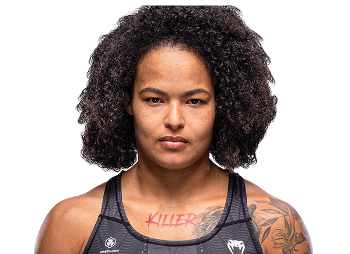
Karine Silva
Fighter Metrics
Victory Methods
Win Round Distribution
📋 Last 5 Fights - Jasmine Jasudavicius
| Date | Opponent | Result | Method |
|---|---|---|---|
| 2025-10-18 | Manon Fiorot | L | TKO - Punches (R2, 3:45) |
| 2025-05-10 | Jessica Andrade | W | Submission - Rear Naked Choke (R1, 2:40) |
| 2025-02-01 | Mayra Bueno Silva | W | Decision - Unanimous (R3, 5:00) |
| 2024-10-26 | Ariane Lipski | W | Submission - D'arce Choke (R3, 2:28) |
| 2024-07-13 | Fatima Kline | W | Decision - Unanimous (R3, 5:00) |
📋 Last 5 Fights - Karine Silva
| Date | Opponent | Result | Method |
|---|---|---|---|
| 2025-12-06 | Maycee Barber | L | Decision - Unanimous (R3, 5:00) |
| 2025-08-16 | Dione Barbosa | W | Decision - Unanimous (R3, 5:00) |
| 2024-11-16 | Viviane Araujo | L | Decision - Unanimous (R3, 5:00) |
| 2024-04-27 | Ariane Lipski | W | Decision - Unanimous (R3, 5:00) |
| 2023-08-19 | Maryna Moroz | W | Submission - Guillotine Choke (R1, 4:59) |
Technical Analysis
Technical Score
Cardio Score
Overall Rating
📊 Technical Score
Calculated as the average of Striking Composite (66.0 vs 66.0) and Grappling Composite (78.0 vs 55.0). Balances overall striking effectiveness with grappling ability to measure complete technical skills.
💪 Cardio Score
Based on average fight duration, striking rate per minute, takedown rate, and finish rate. Measures cardiovascular endurance and ability to maintain pace throughout fights.
🎯 Overall Rating
Simple average of Technical Score and Cardio Score. Provides a holistic view of fighter capabilities combining skill level with physical conditioning and fight performance.
Striking Composite
Grappling Composite
Technical Radar Comparison
Visual comparison of key performance metrics between both fighters
📊 Detailed Statistical Comparison
🥊 Fight Analysis Breakdown
🧩 Jasmine Jasudavicius Key Advantages
The 75% vs 11% takedown defense differential is the most lopsided statistic in this entire matchup—a catastrophic 64-point gap that fundamentally shapes every aspect of fight dynamics and creates a unilateral control environment. Jasudavicius can dictate where the fight takes place with near-total authority: she defends takedowns at an elite rate (75% success stopping opponents' attempts) while Silva struggles immensely to keep fights standing, failing to defend nearly 9 out of every 10 takedown attempts (11% TDDef is one of the lowest rates in the women's flyweight division). This means Jasudavicius controls all grappling exchanges—she can take Silva down at will (2.61 TD/15min offensive rate should translate to multiple successful takedowns per round against 11% defense) while being nearly impossible to take down herself. Silva has virtually no pathway to force grappling on her terms, cannot create offensive wrestling opportunities, and will be forced to fight Jasudavicius's fight. The Canadian's pressure wrestling style—constant forward movement, cage-cutting to limit escape angles, level changes off striking combinations—becomes exponentially more effective when the opponent cannot defend takedowns. Jasudavicius can accumulate significant control time (3-4 minutes per round through top position) and scoring opportunities (judges reward both the takedown itself AND subsequent control) that Silva has no counter for. This takedown defense chasm isn't just an advantage—it's a structural mismatch that permeates the entire 15-minute fight, creating a grinding, demoralizing experience for Silva who will spend most rounds on her back defending position.
Jasudavicius lands 3.71 significant strikes per minute compared to Silva's 2.73—a 36% volume advantage that translates to nearly 1 extra significant strike landed every single minute of standing exchanges. Over a full three-round fight with even modest standing time (say 5 minutes total on the feet across all rounds), this differential means Jasudavicius lands approximately 5 more significant strikes just from volume output. Her 46% striking accuracy also outperforms Silva's 38% by 8 percentage points, meaning she not only throws more strikes but lands them at a significantly higher rate—demonstrating superior striking technique, timing, and setup work. This dual advantage (volume + accuracy) creates clear round-winning output on the feet that judges readily recognize. The striking differential allows Jasudavicius to win rounds even when takedowns are briefly defended or scrambled out of—she accumulates points through jabs, leg kicks, and combinations that out-pace Silva's offensive output. The Canadian's jab-low kick combinations serve double duty: they score points on the feet while also setting up takedown entries (jab draws attention high, low kick compromises base, level change exploits compromised stance). This creates a dual-threat approach that Silva struggles to counter effectively—defend the strikes and get taken down, defend the takedowns and get out-struck. Jasudavicius's ability to out-point Silva while constantly threatening wrestling forces Silva into a reactive, defensive posture that limits her offensive options and prevents her from imposing her submission-oriented game. Silva must simultaneously defend multiple threats without the luxury of focusing on any single aspect, creating a mental and physical drain that compounds over 15 minutes.
At 5'7" with a 68" reach, Jasudavicius holds meaningful physical advantages over Silva's 5'5" frame and 67" reach—dimensions that create tangible tactical benefits across both striking and grappling domains. These measurements allow her to establish effective range management on the feet, maintaining striking distance where her jab and kicks can land cleanly while Silva must close additional distance to counter, exposing herself to more strikes in the process. The 2-inch height advantage provides superior sight lines and better defensive head movement angles, making it easier for Jasudavicius to see strikes coming and harder for Silva to land clean shots to the head. The 1-inch reach edge, while seemingly modest, translates to approximately 2 inches of striking range advantage (both arms combined), allowing Jasudavicius to touch Silva first in exchanges and maintain advantageous distance control. The height differential becomes particularly important in clinch battles and fence work, where Jasudavicius can use her taller frame to establish underhooks from superior angles, control Silva's posture with downward pressure, and set up takedowns from dominant hand-fighting positions. Her longer torso provides better leverage for defending Silva's clinch attempts and for driving forward with takedown shots—the angle of penetration on double-leg and single-leg entries benefits from the height advantage as Jasudavicius can get lower and under Silva's center of gravity more effectively. In the 30-foot octagon at Canada Life Centre, her longer reach allows her to maintain striking distance while threatening level changes, keeping Silva guessing about her intentions and unable to commit fully to either striking or takedown defense. The physical dimensions also provide advantages in top control on the ground: longer limbs create better frames for maintaining distance in Silva's guard, reducing submission danger, while the height advantage makes it harder for Silva to elevate hips for triangle chokes or create angles for omoplatas. These physical advantages aren't fight-deciding on their own, but they compound Jasudavicius's technical and statistical edges, creating a cumulative advantage across all phases of the fight.
⚠️ Unfavorable Scenarios
Silva's 1.89 submission attempts per 15 minutes is elite-level threat rate—over 3x Jasudavicius's 0.60 rate—and her 11 career submission victories demonstrate she is extremely dangerous off her back, a rare quality in MMA where most fighters are weakest from bottom position. Even when Jasudavicius secures takedowns (which she will repeatedly), she enters Silva's most comfortable domain where the Brazilian's Brazilian Jiu-Jitsu black belt credentials shine. Silva's guard work is among the best in the women's flyweight division—she can threaten triangle chokes when Jasudavicius's posture breaks or she posts hands for base, armbars when passing attempts expose extended limbs, and omoplatas/sweeps when defensive positions open up scrambling opportunities. Every second Jasudavicius spends in Silva's guard carries inherent finishing risk—a single moment of carelessness, one overcommitted pass attempt, one broken posture can result in a triangle choke or armbar that ends the fight instantly. Jasudavicius must be perpetually cautious about advancing position aggressively, as overcommitting to ground-and-pound to impress judges exposes her to submission traps. Silva's active guard—constant hip movement, underhook battles, grip fighting—creates a dangerous environment even when she's technically in the inferior position. This means Jasudavicius cannot simply relax and coast in top position; she must maintain constant postural awareness, avoid extending limbs carelessly, and prioritize safe control over aggressive advancement. Silva's ability to threaten from bottom position neutralizes some of Jasudavicius's top control advantage by transforming what should be dominant position into a high-risk environment requiring constant defensive attention. The psychological element compounds this: knowing Silva can submit her at any moment creates hesitation in Jasudavicius's top game, preventing the aggressive ground-and-pound that would maximize scoring and potentially lead to TKO finishes.
Silva's 68.4% finish rate compared to Jasudavicius's 42.9% represents a massive 25.5-point gap in finishing ability—meaning that when Silva finds openings, she converts them into stoppages at a much higher rate than Jasudavicius converts her own opportunities. Silva's 19-6 record includes 13 finishes (11 submissions, 2 KOs), demonstrating a fighter who doesn't just win—she stops opponents and removes all doubt. Her combination of submission skills and occasional knockout power shows she can end fights from multiple positions and situations, creating constant finishing threat regardless of where the fight takes place. If Jasudavicius gets careless during transitions—standing up from top position, scrambling out of guard, changing positions—Silva has the finishing instinct and technical skills to capitalize on brief windows that appear and disappear in seconds. Silva's experience in 25 professional fights, with over half ending in finishes, provides the composure to stay patient and recognize submission opportunities that less experienced fighters might miss. Her 8 first-round finishes demonstrate an ability to end fights early before opponents settle into their rhythm—a particularly dangerous quality in a three-round format where early finishes prevent Jasudavicius from banking rounds through safe control. The Brazilian's finishing ability means that even if Jasudavicius is winning every moment of the fight up until a specific sequence, a single transition error can result in a sudden stoppage that invalidates all previous scoring. Any momentary lapse in positional awareness—posting a hand carelessly, breaking posture to land strikes, overcommitting to a pass—can lead to a triangle choke or armbar that ends the fight instantly. This finishing threat creates a psychological burden for Jasudavicius throughout the entire 15 minutes: she must maintain perfect defensive awareness and risk management even while accumulating control time, never allowing herself to relax or assume safety.
📋 Likely Gameplan
Jasudavicius should establish early takedowns against Silva's historically poor 11% takedown defense—one of the lowest defensive rates in the women's flyweight division—and immediately transition to maintaining top position with controlled ground-and-pound rather than chasing submissions or aggressive position advancement. Her 2.61 TD/15min offensive rate combined with Silva's abysmal defensive numbers should yield frequent takedowns (2-3 per round minimum), and the key to victory is staying disciplined in top position once takedowns are secured. Jasudavicius must avoid the temptation to pass into mount or attack submissions, as these aggressive actions create exactly the scrambles and extended-limb situations where Silva's submission game thrives (1.89 Sub/15min, 11 career sub wins). Instead, by maintaining heavy half-guard or side control—using shoulder pressure to limit hip movement, cross-face control to prevent Silva from turning into position, and conservative ground-and-pound with short strikes to stay active for judges—Jasudavicius can accumulate safe scoring minutes (3-4 minutes of control per round) while minimizing submission exposure. The gameplan prioritizes control time over damage output, position over advancement, and safety over finishing attempts. This conservative approach maximizes scoring while avoiding the high-risk scenarios that could result in upset submission losses. Jasudavicius's 0.60 Sub/15min rate (compared to Silva's 1.89) suggests she's naturally a control-oriented grappler rather than submission hunter—the perfect stylistic approach for this matchup. Her corner should emphasize staying heavy, maintaining posture, avoiding extended limbs, and landing just enough strikes to keep judges scoring the control time favorably. The three-round format supports this strategy: bank Round 1 through takedowns and control (likely 10-9), repeat the pattern in Round 2 (likely 10-9), then coast through Round 3 with minimal risk knowing the fight is essentially secured.
With a significant striking volume advantage (3.71 vs 2.73 SLpM, nearly 1 extra significant strike per minute) and superior accuracy (46% vs 38%, an 8-point edge), Jasudavicius can win exchanges on the feet while mixing in takedown attempts to create a dual-threat approach that forces Silva to defend multiple levels simultaneously. This multi-dimensional offensive strategy makes Silva reactive rather than proactive—she must defend strikes, defend level changes, and try to create her own offense all while dealing with physical disadvantages (2" shorter, 1" less reach). Jasudavicius should use her reach advantage (68" vs 67") to establish her jab early, controlling distance and scoring points while keeping Silva at the end of her range. Low kicks to Silva's lead leg serve double duty: they score points, compromise Silva's base and mobility, and set up takedown entries by forcing Silva to stand more upright or shift weight off the targeted leg. The striking setup sequence should look like: jab to establish range and draw Silva's attention high → low kick to compromise base → level change when Silva's stance is compromised or she overcommits to defending strikes. This combination of winning the striking exchanges (through volume + accuracy) and controlling on the ground (through takedowns + top position) creates a comprehensive scoring approach that's difficult for Silva to counter—she can't focus solely on striking defense without getting taken down, and she can't focus solely on takedown defense without getting out-struck. The constant threat of both attacks creates decision-making paralysis where Silva is always defending rather than imposing her own game. Even in rounds where Jasudavicius doesn't secure prolonged control time on the ground, the threat of takedowns shapes Silva's striking approach (forcing more conservative, defensive striking) while the actual strikes landed on the feet accumulate scoring moments. This gameplan maximizes Jasudavicius's physical and technical advantages across all phases of the fight.
🚀 Karine Silva Key Advantages
Silva's 1.89 submission attempts per 15 minutes is over 3x Jasudavicius's 0.60 rate—a massive 215% differential that represents elite-level submission threat and constant offensive activity from the ground. With 11 career submission victories out of 19 total wins (57.9% of her victories via submission), Silva is dangerous from virtually any grappling position and has built her entire fighting identity around finishing opponents with submissions. Her Brazilian Jiu-Jitsu black belt credentials translate directly to MMA application—she can threaten triangles from closed guard when opponents break posture or post hands, armbars when passing attempts expose extended limbs, omoplatas from defensive positions that create sweeping opportunities, and guillotine chokes during scrambles and transitions. Silva's guard work is among the best in the women's flyweight division—her active hips, constant grip fighting, and chain submission attempts (triangle to armbar to sweep sequences) create a dangerous environment for top fighters who must maintain perfect defensive awareness throughout every second of ground engagement. This submission arsenal means that every grappling exchange carries significant finishing risk for Jasudavicius—a single mistake in positioning (overcommitting to a pass), posture (breaking forward to land strikes), or limb extension (posting hands for base) can lead to a fight-ending submission in seconds. Silva's ability to attack from disadvantageous positions makes her uniquely dangerous: most fighters are weakest from bottom position, but Silva's guard game transforms what should be inferior position into an offensive launching point. Her 8 first-round finishes demonstrate an ability to end fights early before opponents can establish their rhythm—a quality that adds constant upset potential throughout the entire 15-minute fight. Even when losing rounds on the scorecards, Silva remains one submission away from victory at all times, creating psychological pressure on Jasudavicius to maintain perfect risk management and never relax in top position.
Silva's 68.4% finish rate dwarfs Jasudavicius's 42.9%—a 25.5-point gap that indicates when Silva finds her openings, she converts them into stoppages at an exceptional rate that places her among the elite finishers in the women's flyweight division. Her 19-6 record includes 13 finishes (11 submissions, 2 KOs), demonstrating a fighter who doesn't just win fights—she stops opponents and removes all doubt from judges' scorecards. This finishing ability means Silva always carries upset potential regardless of how the fight is going on the scorecards at any given moment—she remains one submission away from victory throughout the entire 15 minutes. Even in rounds where Jasudavicius is controlling 95% of the action and seemingly cruising to a round victory, a single transition error (careless hand post, broken posture, overcommitted pass) can result in a triangle choke or armbar finish that instantly invalidates all previous scoring and ends the fight. Silva's experience in 25 professional fights (significantly more than many women's flyweights) provides the mental composure to stay patient during extended periods of defensive grappling, conserve energy while being controlled, and then capitalize explosively when submission windows open for brief seconds. Her 8 first-round finishes demonstrate she doesn't need extended time to find stoppages—she can end fights in the opening minutes if opportunities present themselves, adding constant early-finish threat that prevents Jasudavicius from settling into a comfortable rhythm. The psychological impact of Silva's finishing reputation creates additional pressure on Jasudavicius: knowing that one mistake can cost the entire fight forces conservative top control rather than aggressive advancement, potentially limiting Jasudavicius's ability to maximize her scoring through damage output. Silva's combination of elite submission skills (1.89 Sub/15min) and elite conversion rate (68.4% finishes) makes her the most dangerous fighter in this matchup in terms of instant fight-changing ability—Jasudavicius can dominate for 14 minutes and still lose in the final 60 seconds if Silva secures a submission.
⚠️ Unfavorable Scenarios
With only 11% takedown defense—one of the lowest defensive rates in the women's flyweight division—Silva will likely be taken down repeatedly (2-3 times per round minimum against Jasudavicius's 2.61 TD/15min offensive rate) and spend the majority of the 15-minute fight on her back defending position. If Jasudavicius maintains disciplined, conservative top control without overcommitting to aggressive passing or heavy ground-and-pound, Silva's elite submission game becomes largely neutralized—her triangles require posture breaks, her armbars require extended limbs, her sweeps require scrambles, and none of these opportunities materialize when Jasudavicius plays safe. The Canadian's pressure wrestling style—characterized by heavy shoulder pressure, maintaining half-guard or side control, landing just enough short strikes to stay active for judges, and prioritizing positional control over advancement—limits Silva's ability to create the scrambles, transitions, and chaotic moments where her submission game thrives. This grinding, smothering approach can result in Silva spending entire 5-minute rounds (potentially all three rounds) on her back without meaningful offensive output, creating clear 10-9 round losses on all three judges' scorecards. Silva's 1.89 Sub/15min rate becomes irrelevant if she cannot create the positional opportunities to attempt submissions—conservative top control from a disciplined wrestler transforms her elite guard game from dangerous weapon into neutralized threat. The psychological impact compounds over time: spending Round 1 under control is frustrating but manageable, but entering Round 3 already down 20-18 on the scorecards with the same grinding pattern repeating creates desperation that leads to mistakes or resignation. Silva's inability to defend takedowns means she cannot force the fight to stay in areas where her skills shine (submission scrambles, standing exchanges where she can draw takedown attempts), resulting in a fight fought entirely on Jasudavicius's terms from opening bell to final horn.
Silva's 2.73 significant strikes landed per minute and 38% striking accuracy are significantly lower than Jasudavicius's 3.71 SLpM and 46% accuracy—a double-disadvantage (36% less volume + 8 points lower accuracy) that creates decisive striking deficits during standing exchanges. If the fight stays standing for extended periods (which seems unlikely given Silva's 11% TDDef, but still relevant for the 2-3 minutes per round spent on the feet between takedown attempts), Silva will be consistently out-struck and out-scored, landing fewer total strikes while also connecting at a lower percentage. Her shorter reach (67" vs 68") and height disadvantage (5'5" vs 5'7") compound the technical deficits, as Jasudavicius can maintain effective range with her jab and kicks—touching Silva first in exchanges while staying outside Silva's countering range. Silva must close an extra 2-3 inches of distance to land her own strikes, exposing herself to more incoming strikes during the closing process and making her more predictable in her attack entries. The physical disadvantages also affect defensive capabilities: Silva's shorter stature provides smaller margin for error in head movement and creates worse angles for seeing strikes coming from the taller Jasudavicius. In a three-round fight where each minute on the feet matters for judges' scoring, consistently losing the standing exchanges creates cumulative deficits that compound the control time disadvantages from takedowns. Even if Silva defends half of Jasudavicius's takedown attempts (unrealistic given her 11% TDDef, but hypothetically), she would still be losing the standing time on strikes landed and volume output, resulting in clear 10-9 round losses across all three judges' scorecards. Silva's only viable striking path is to use standup exchanges purely as submission setups—drawing takedown attempts through striking threats, then attempting guillotines or guard pulls during the level changes—rather than trying to win rounds through standup scoring alone. Trying to out-strike Jasudavicius is a losing proposition given the volume, accuracy, and physical disadvantages, meaning Silva must find submission opportunities quickly or face a clear decision loss with no competitive standing exchanges to fall back on.
📋 Likely Gameplan
Silva's best—and perhaps only—path to victory runs through her elite submission game (1.89 Sub/15min, 11 career sub wins, 68.4% finish rate), which means she must actively create submission opportunities rather than passively defending takedowns she cannot stop anyway (11% TDDef provides virtually no reliable defensive capability). Rather than wasting energy fighting the inevitable takedowns, Silva may benefit from accepting—or even initiating—grappling exchanges and immediately working from active guard to create submission opportunities. Her 1.89 Sub/15min rate shows she's constantly hunting for finishes on the ground, and her Brazilian Jiu-Jitsu black belt credentials provide the technical foundation to threaten submissions even from inferior positions. The Brazilian should look to create scrambles off takedown attempts rather than simply defending them: when Jasudavicius shoots, Silva should use underhooks to establish closed guard immediately, employ active hip movement to prevent Jasudavicius from settling into safe half-guard, and threaten triangle chokes or guillotines during the transition from standing to ground. Once on her back, Silva must maintain constant offensive activity—grip fighting for wrist control, moving hips to create angles for triangle setups, fishing for armbars when Jasudavicius posts hands for base, and attempting sweeps to create scrambles where more submission opportunities emerge. Making Jasudavicius uncomfortable and hesitant on the ground is key to neutralizing the Canadian's wrestling advantage: even failed submission attempts drain energy, create positional hesitation, and set up future opportunities. Silva's gameplan should prioritize submission attempts over defensive survival—accept being on her back but turn bottom position into an offensive platform rather than purely defensive posture. Her 11 career submission victories (57.9% of her wins) demonstrate she can finish from disadvantageous positions when opportunities arise, making aggressive guard work more viable than passive defense that merely delays the inevitable round losses.
In a three-round fight where each round carries 33% weight toward the final decision, Silva cannot afford to let rounds slip by under Jasudavicius's grinding control—losing Round 1 likely means she's down 10-9, and losing Round 2 puts her in a desperate 20-18 hole with no comeback path available in the decision format. Silva should be maximally aggressive with submission attempts from the opening bell, using her elite finishing instinct (68.4% finish rate, 1.89 Sub/15min) and 25-fight professional experience to create early chaos before Jasudavicius can settle into her methodical wrestling rhythm. Silva's Round 1 finish rate is impressive—8 of her 19 career victories came in the opening round—demonstrating she's capable of finding early stoppages before opponents establish their gameplans and adjust to her submission threats. By attacking immediately when grappling exchanges occur (which will be frequently given her 11% TDDef), Silva can catch Jasudavicius in the early minutes when both fighters are still warming up, defensive awareness isn't fully activated, and transitional scrambles create brief submission windows. The first takedown of the fight is particularly critical: if Silva can threaten a legitimate submission (triangle, armbar, guillotine) early, she plants seeds of hesitation in Jasudavicius's mind for the remainder of the fight, potentially making the Canadian more conservative in her top control and limiting her scoring output. The urgency of the three-round format fundamentally favors Silva's high-risk, high-reward submission-hunting approach over Jasudavicius's methodical point-accumulation control game: Silva only needs one successful submission in 15 minutes to win, while Jasudavicius needs to win 2-3 full rounds through sustained control. Silva's corner should emphasize attacking every single grappling exchange with finishing intent—no passive guard work, no waiting for better positions, no conserving energy for later rounds. The Brazilian's career trajectory shows she either finishes opponents or loses decisions, suggesting her skillset is optimized for finishing rather than point-fighting, making early aggression her most viable path to victory.
🎯 Fight Prediction Analysis
Data-driven prediction model based on statistical analysis
📊Detailed Analysis Summary
🏟️Cage Dynamics
The 30-foot octagon at Canada Life Centre in Winnipeg provides ample space that initially benefits standing exchanges but becomes a wrestling canvas once Jasudavicius establishes cage pressure. Her ability to cut off angles and drive Silva toward the fence sets up takedown sequences that exploit Silva's historically poor 11% takedown defense—one of the lowest defensive rates in the women's flyweight division. However, the large cage also gives Silva room to circle and attempt to keep the fight at range where her submission threat is less relevant. Jasudavicius's height advantage (5'7" vs 5'5") and reach edge (68" vs 67") allow her to effectively manage distance while threatening level changes, creating a dual-threat dynamic that keeps Silva reactive rather than proactive. The Canadian's pressure wrestling style—characterized by persistent forward movement and cage-cutting ability—gradually compresses the available space, transforming the octagon from Silva's ally into Jasudavicius's weapon. Silva must utilize lateral movement and footwork to maintain separation, but her inferior cardio compared to Jasudavicius's proven gas tank means this strategy becomes increasingly difficult to sustain over 15 minutes. The key dynamic is whether Jasudavicius can close distance quickly enough to negate the space advantage and establish her grinding top control, or whether Silva can maintain enough separation in the early rounds to land her submission attempts before fatigue limits her defensive movement.
🎯Technical Breakdown
This matchup pits Jasudavicius's well-rounded pressure wrestling against Silva's elite submission game in a fascinating stylistic clash. The statistical analysis reveals the central tension: Jasudavicius holds significant advantages across multiple domains—striking volume (3.71 vs 2.73 SLpM, a 36% edge), striking accuracy (46% vs 38%, representing 8 percentage points of cleaner connections), takedown offense (2.61 vs 2.37 TD/15min), and most crucially, takedown defense (75% vs 11%, a catastrophic 64-point gap that fundamentally shapes the fight). Jasudavicius's 75% takedown defense means she can dictate where the fight takes place—keeping it standing when beneficial, taking Silva down at will when necessary. Silva's abysmal 11% TDDef means she will spend significant time on her back, forced to work from guard against a disciplined wrestler. However, Silva's 1.89 Sub/15min (over 3x Jasudavicius's 0.60 rate) and 68.4% finish rate (compared to Jasudavicius's 42.9%) mean that every grappling exchange carries inherent risk for Jasudavicius—one positional error, one overcommitted pass attempt, one moment of carelessness in posture can result in a triangle choke or armbar finish. Silva's 11 career submission victories demonstrate she's constantly hunting for finishes even from inferior positions. The Brazilian's guard game includes active hip movement, underhooks from bottom, and the ability to chain submission attempts—triangles to armbars to sweeps—creating a dangerous environment for top fighters who get complacent. The fight essentially becomes a question of whether Jasudavicius can maintain positional control through patient half-guard and side control work without falling into Silva's submission traps—a balance that requires tactical discipline, postural awareness, and risk management throughout all three rounds. Jasudavicius must prioritize control over damage, safe positions over aggressive passing, and point accumulation over finish attempts.
🧩Key Battle Areas
Four critical battle areas will determine the outcome. First, Jasudavicius's top control discipline vs Silva's guard submission attempts—can Jasudavicius maintain position without overcommitting to passing? The Canadian must stay heavy in half-guard or side control, using shoulder pressure and cross-face control to limit Silva's hip movement. Any attempt to pass into mount or advance position risks exposing limbs to armbars or creating space for triangle setups. Jasudavicius's 0.60 Sub/15min suggests she's not a submission hunter herself, meaning her top game emphasizes control and ground-and-pound rather than finish attempts—the ideal approach against a dangerous guard player. Second, the striking exchanges where Jasudavicius holds clear advantages in both volume (3.71 vs 2.73 SLpM, nearly 1 extra significant strike per minute) and accuracy (46% vs 38%, meaning Jasudavicius lands 8% more of her attempts). Silva's 52% striking defense is marginally better than Jasudavicius's 51%, suggesting she can limit some damage, but the volume differential means Jasudavicius will accumulate more total strikes landed in standing exchanges. The Canadian's jab-low kick combinations set up her takedown entries while scoring points on the feet, creating a comprehensive offensive approach that's difficult to counter. Third, scramble situations where Silva's submission instincts (11 career sub wins, 1.89 Sub/15min rate) can turn transitions into fight-ending moments. When Jasudavicius shoots or Silva attempts to stand from guard, these transitional moments create opportunities for Silva to secure underhooks, threaten guillotines, or establish triangle positions. Silva's Brazilian Jiu-Jitsu background gives her superior scrambling awareness and the ability to recognize submission openings in chaotic positions. Fourth, cardio and pace management over three rounds. Jasudavicius's proven ability to maintain her wrestling pressure over full fights contrasts with Silva's need to find finishes before accumulating too large a scorecard deficit. The 75% vs 11% takedown defense gap is the most decisive stat—a 64-point chasm that suggests Silva will be taken down repeatedly—but Silva's ability to threaten submissions from bottom position makes this less one-sided than the numbers suggest. Every takedown creates dual outcomes: control time for Jasudavicius or submission danger from Silva.
🏁Final Prediction
The most likely outcome is Jasmine Jasudavicius by Decision (32% probability), achieved through consistent takedown pressure (exploiting Silva's 11% TDDef), patient top control avoiding submission dangers, and superior striking output during standing exchanges over three rounds. Jasudavicius banks rounds through a combination of control time on the ground and cleaner striking on the feet—judges reward both the takedowns themselves and the subsequent positional control, even without significant damage. Her path to victory emphasizes safety over aggression: maintain top position, land short strikes to stay active, avoid passing into dangerous positions, and stand up when Silva creates too much scramble danger. This conservative approach maximizes scoring while minimizing submission risk. Jasudavicius's submission path (12%) becomes viable through positional dominance leading to back-takes—if she can advance to Silva's back during scrambles or off failed sweep attempts, rear-naked choke opportunities emerge. Her 6 career submission wins (compared to 7 decision wins) show she can finish when opportunities arise, though it's not her primary weapon. Silva's primary upset lane is submission (25%) via guard attacks when taken down—triangles from closed guard when Jasudavicius's posture breaks, armbars when the Canadian posts hands to maintain base, and sweeps that create scrambles where submission opportunities appear. Silva's 68.4% finish rate (compared to Jasudavicius's 42.9%) means when she finds openings, she capitalizes at a much higher rate. The Brazilian's 11 career submission victories demonstrate elite finishing instinct—she doesn't just threaten submissions to create scrambles, she completes them. Silva's decision path (8%) requires keeping the fight standing through lateral movement and circling, then out-pointing Jasudavicius in striking exchanges—a highly unlikely scenario given both the striking volume differential (3.71 vs 2.73 SLpM) and Silva's inability to defend takedowns. Even if Silva wins the striking exchanges, one takedown per round likely gives Jasudavicius the round on the scorecards through control time. The three-round format (rather than five) adds significant urgency for both fighters: Jasudavicius needs to establish her wrestling control early without getting submitted, banking rounds through safe top position rather than chasing finishes that create risk, while Silva must find submission openings in each round before falling too far behind on the scorecards—a 10-9, 10-9, 10-9 decision loss offers no comeback opportunity in a three-round format.
💰 Betting Analysis: Model vs Market
Detailed value assessment in the betting market
📊Market Odds
🤖Analytical Model
💎Value Opportunities
MAXIMUM VALUE
Model: 32% | Fair: +213
GOOD VALUE
Model: 25% | Fair: +300
SLIGHT VALUE
Model: 49% | Fair: +104
⚠️Key Market Discrepancies
- • Undervalues TDDef gap – 75% vs 11% takedown defense creates dominant control time.
- • Overweights submission danger – Silva's guard game is real but disciplined top control limits it.
- • Striking edge underpriced – Jasudavicius's 36% SLpM advantage wins standing rounds clearly.
🎯 Comprehensive Probabilistic Analysis
100 hypothetical fight simulation based on statistical data
🏆Outcome Distribution - Jasmine Jasudavicius
Primary path via wrestling control and striking volume
Top control transitions to back-takes or chokes
Ground-and-pound accumulation from top position
💥Outcome Distribution - Karine Silva
Primary path via guard attacks and scramble subs
Requires keeping fight standing and out-pointing
Limited KO power but ground strikes possible
⏰Fight Timeline Analysis
• Early takedowns exploit 11% TDDef — Jasudavicius establishes wrestling control immediately
• Fresh athleticism — Both fighters at peak energy, Jasudavicius uses speed to close distance
• Striking setups — Jab-low kick combinations force Silva defensive
• Control time banking — Safe top position accumulates round-winning minutes
• Silva's sub danger peaks — Guard work most threatening as Jasudavicius shows fatigue
• Scramble opportunities — Transitions create submission windows for Silva
• Urgency factor — Silva must capitalize knowing she's likely down 10-9
• Jasudavicius adapts — More conservative top control, less aggressive passing
• Accumulated control secures decision — Two rounds likely banked, plays safe
• Silva's desperation — Must find finish, creates scramble opportunities
• Cardio disparity emerges — Jasudavicius maintains pressure, Silva fades
• Risk management — Jasudavicius prioritizes position over damage
⚡Window of Opportunity - Karine Silva
- • Grappling transitions and scrambles: Silva's highest submission equity occurs during chaotic transitional moments—when Jasudavicius shoots for takedowns, when Silva attempts to stand from guard, or when position changes create brief openings. During these scrambles, Silva's Brazilian Jiu-Jitsu background and superior submission instincts (1.89 Sub/15min vs 0.60) allow her to recognize and capitalize on openings that appear and disappear in seconds. Underhook battles, failed guard passes, and scrambles off the cage wall create the perfect environment for Silva's guillotine setups, triangle entries, and armbar traps. Her 11 career submission victories demonstrate that she doesn't just threaten submissions to create scrambles—she finishes them when windows open.
- • Early aggression and first-round urgency: Silva must hunt finishes from the opening bell, as each round under Jasudavicius's control makes the decision path increasingly unlikely. Her fight history shows 8 of her victories came in Round 1, demonstrating an ability to finish early before opponents settle into their rhythm. In this matchup, Silva should attack submission openings aggressively in the first two rounds, accepting higher risk in exchange for early finish attempts. The three-round format leaves no room for feeling out processes or gradual adjustments—Silva's submission game must be activated immediately and maintained with constant offensive threat throughout 15 minutes. Waiting until Round 3 likely means she's already down 20-18 on the scorecards with no comeback path available.
- • Guard attacks from bottom position: When inevitably taken down (given her 11% TDDef), Silva must immediately transition into active guard work rather than defensive shell tactics. Her triangle chokes from closed guard—set up when Jasudavicius's posture breaks or she posts hands for base—represent her highest-percentage finishing path. Armbars become available when Jasudavicius commits to ground-and-pound or attempts to pass guard, exposing extended limbs. Omoplata setups from defensive positions can create sweeps that lead to scrambles where Silva's submission instincts shine. The key is making Jasudavicius pay for every second of top control by creating constant submission threats—even failed attempts drain energy, create hesitation, and set up future opportunities. Silva's 68.4% finish rate means when she finds these openings, she converts them into stoppages at an elite level.
- • Round 2 desperation zone: If Silva loses Round 1 (highly likely given the statistical matchup), Round 2 becomes a must-finish situation. Down 10-9, she cannot afford another round of control time on her back. This urgency creates a double-edged dynamic: Silva must be more aggressive with submissions, but Jasudavicius can gameplan for conservative top control knowing Silva's desperation will create openings for mistakes. The Brazilian's higher finish rate (68.4% vs 42.9%) suggests that when the fight enters high-leverage moments, Silva is more likely to convert—but only if she can create those opportunities before fatigue and accumulated control time limit her offensive capabilities.
🎯Progressive Dominance - Jasmine Jasudavicius
- • Takedown pressure and fight location control: Jasudavicius's massive takedown defense advantage (75% vs 11% TDDef) creates a unilateral control dynamic—she can take Silva down at will (2.61 TD/15min offensive rate) while Silva cannot take her down in return. This 64-point takedown defense gap is perhaps the most lopsided statistic in the entire matchup and fundamentally shapes the fight narrative. Jasudavicius can dictate where the fight takes place: stay standing when she wants to out-strike Silva (3.71 vs 2.73 SLpM advantage), or shoot for takedowns when she wants to accumulate control time. Silva has virtually no ability to force grappling exchanges on her own terms, meaning she must react to Jasudavicius's decisions rather than imposing her own game. The Canadian's wrestling-first approach—pressure forward, cut angles, drive toward fence, shoot takedowns—creates a grinding, demoralizing experience for opponents who cannot keep the fight standing or create offensive opportunities from bottom position.
- • Disciplined top game and submission risk management: Once Jasudavicius secures takedowns (which she will repeatedly), the key to victory is maintaining safe top position without overcommitting to advancement or finish attempts. Silva's elite submission game (1.89 Sub/15min, 11 career submission victories) means every aggressive guard pass creates openings for armbars, every posture break risks triangle chokes, and every scramble gives Silva opportunities to establish dominant grips. Jasudavicius's optimal strategy is staying heavy in half-guard or side control, using shoulder pressure and cross-face control to limit Silva's hip movement, landing short strikes to stay active for the judges, and prioritizing positional control over damage output. Her 0.60 Sub/15min rate (compared to Silva's 1.89) suggests she's naturally a control-oriented grappler rather than submission hunter—the perfect stylistic approach against a dangerous guard player. Safe, patient, grinding top control accumulates scoring minutes while minimizing the submission risk that could instantly reverse the fight outcome.
- • Striking volume advantage and point accumulation: Between takedown sequences, Jasudavicius can out-strike Silva on the feet to bank additional scoring moments that compound the control time advantage. Her 36% edge in striking volume (3.71 vs 2.73 SLpM) and 8-point advantage in accuracy (46% vs 38%) mean she lands nearly 1 extra significant strike per minute AND connects at a higher rate. This dual-threat capability—winning standing exchanges while threatening takedowns—forces Silva into a reactive defensive posture where she's simultaneously defending strikes, defending level changes, and trying to create offensive opportunities. Jasudavicius's jab-low kick combinations set up takedown entries: the jab draws Silva's attention high, the low kick compromises her base, then the level change exploits her compromised position. Even if Silva defends individual takedowns, the constant threat creates mental fatigue and defensive hesitation that opens up more striking opportunities. This comprehensive offensive approach—damage on the feet, control on the ground—creates multiple scoring pathways that are difficult for Silva to counter simultaneously.
- • Round-by-round accumulation and cardio advantage: Jasudavicius's proven ability to maintain wrestling pressure for full fights (evidenced by her 14 career victories, 7 by decision requiring full-duration output) contrasts with Silva's need to find early finishes before point deficits become insurmountable. In a three-round format, Jasudavicius can afford to play it safe in Rounds 1 and 2, banking conservative 10-9 rounds through takedowns and control time, then coast through Round 3 knowing the fight is essentially secured. Her cardio—built through pressure wrestling and constant forward movement—allows her to maintain pace throughout 15 minutes while Silva's energy gets drained defending takedowns, working from bottom position, and attempting submissions that don't materialize. By Round 3, if Jasudavicius has already banked two rounds (highly likely given the statistical matchup), she can fight even more conservatively, taking minimal risks and simply running out the clock with position over damage. This progressive control accumulation—Round 1 establishes wrestling dominance, Round 2 confirms the pattern, Round 3 secures the decision—represents Jasudavicius's most probable victory path (32% by decision in the model).
🎯 Final Confidence Assessment
Confidence level and uncertainty factors
Confidence Level
Moderate edge via TDDef gap, but Silva's sub game adds variance
✅Supporting Factors
- • Massive takedown defense gap (75% vs 11% TDDef)
- • Superior striking volume and accuracy
- • Physical size advantages (height, reach)
- • Higher ELO rating (2926 vs 2768)
⚠️Risk Factors
- • Silva's elite submission game (1.89 Sub/15min, 11 sub wins)
- • Silva's higher finish rate (68.4% vs 42.9%)
- • Guard attacks can end fights from bottom position
🏁Executive Summary
Jasmine Jasudavicius's pressure wrestling and superior striking output should allow her to control the fight location against Karine Silva's historically poor takedown defense (11%). The Canadian holds clear advantages in striking volume (3.71 vs 2.73 SLpM), accuracy (46% vs 38%), and crucially takedown defense (75% vs 11%), creating a comprehensive scoring framework. However, Silva's elite submission game (1.89 Sub/15min, 11 career sub wins) means every grappling exchange carries inherent risk—her ability to threaten from guard with triangles, armbars, and sweeps adds significant variance to this matchup. The key dynamic is whether Jasudavicius can maintain disciplined top control without falling into Silva's submission traps, a balance that requires tactical awareness throughout all three rounds.
Prediction: Jasudavicius by Decision most likely (32% probability) through wrestling control and striking volume; Silva's best path is submission (25%) via guard attacks when taken down. The three-round format adds urgency for both fighters—Jasudavicius needs to bank rounds through safe control, while Silva must find submission opportunities before falling behind on the scorecards.