
Mauricio Ruffy vs Michael Chandler
Lightweight Bout • UFC Freedom 250: Topuria vs Gaethje
Sunday, June 14, 2026 • 30ft Octagon (Large Cage)

Explore Detailed Fighter Profiles
Click on either the fighter's name or profile image for each fighter to access comprehensive UFC statistics including striking metrics, grappling data, clinch performance, complete fight history, offensive & defensive analytics, and round-by-round breakdowns.

Mauricio Ruffy
Fighter Metrics
Victory Methods
Win Round Distribution
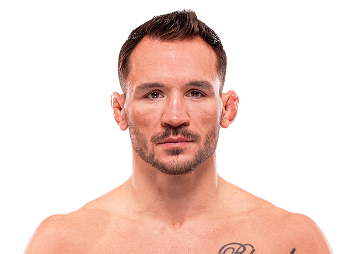
Michael Chandler
Fighter Metrics
Victory Methods
Win Round Distribution
📋 Last 5 Fights - Mauricio Ruffy
| Date | Opponent | Result | Method |
|---|---|---|---|
| 2026-01-31 | Rafael Fiziev | W | KO/TKO — Punches (R2, 4:30) |
| 2025-09-06 | Benoît Saint-Denis | L | SUB — Rear-Naked Choke (R2, 2:56) |
| 2025-03-08 | Bobby Green | W | KO/TKO — Spinning Heel Kick (R1, 2:07) |
| 2024-11-16 | James Llontop | W | Decision (Unanimous) (R3, 5:00) |
| 2024-05-04 | Jamie Mullarkey | W | KO/TKO — Flying Knee (R1, 4:42) |
📋 Last 5 Fights - Michael Chandler
| Date | Opponent | Result | Method |
|---|---|---|---|
| 2025-04-12 | Paddy Pimblett | L | KO/TKO — Punches (R3, 3:07) |
| 2024-11-16 | Charles Oliveira | L | Decision (Unanimous) (R3, 5:00) |
| 2022-11-12 | Dustin Poirier | L | SUB — Rear-Naked Choke (R3, 2:00) |
| 2022-05-07 | Tony Ferguson | W | KO/TKO — Front Kick (R2, 0:17) |
| 2021-11-06 | Justin Gaethje | L | Decision (Unanimous) (R3, 5:00) |
Technical Analysis
Technical Score
Cardio Score
Overall Rating
📊 Technical Score
Calculated as the average of Striking Composite (73 vs 38) and Grappling Composite (32 vs 57). Balances overall striking effectiveness with grappling ability to measure complete technical skills.
💪 Cardio Score
Based on average fight duration, striking rate per minute, takedown rate, and finish rate. Measures cardiovascular endurance and ability to maintain pace throughout fights.
🎯 Overall Rating
Simple average of Technical Score and Cardio Score. Provides a holistic view of fighter capabilities combining skill level with physical conditioning and fight performance.
Striking Composite
Grappling Composite
Technical Radar Comparison
Visual comparison of key performance metrics between both fighters
📊 Detailed Statistical Comparison
🥊 Fight Analysis Breakdown
🧩 Mauricio Ruffy Key Advantages
This is the fight in one number. Ruffy ranks 4th of 57 lightweights in striking defense (61%) and 4th in accuracy (57%); Chandler ranks 51st of 57 in defense (43%)—one of the leakiest guards in the division. Point Ruffy's top-six knockdown rate (1.01, while never having been dropped himself—a 6:1 knockdown-exchange ratio and an "Iron" chin) at that porous guard and the math turns brutal. Twelve of his thirteen wins (92%) come by KO/TKO, and the finishing is technique-diverse—a spinning heel kick (Green), a flying knee (Mullarkey), and clean boxing (Fiziev). Against a 40-year-old whose chin was just cracked by Pimblett, the most efficient striker in this cage is aiming at the most hittable target.
Ruffy owns every physical lever: a 75-inch reach against 71.5, a 41-inch leg reach against 38, and three inches of height—and he is eleven years younger at 29 to Chandler's 40. In a 30-foot cage that distance edge is amplified; there is room to keep a shorter pressure fighter pinned at the end of a long jab and a 41-inch kicking range. Ruffy's output also climbs as fights go on (Round 1 → Round 3 trending up, a "Steady" profile with a 0% slow-start rate), while Chandler's collapses. The younger, longer, fresher man controls where the fight happens—and time is on his side.
Ruffy is built to punish commitment—his 0.44 counter rate is among the highest in the division, and his knockdown round historically is Round 2 (0.67 KD average) once he has read the timing. Chandler's entire identity is the headfirst blitz: 67.7% head-targeting in Round 1, lunging entries, and a willingness to brawl. Reckless entries are exactly what an elite counter-striker feeds on. Every time Chandler loads up and lunges, he hands Ruffy the slip-and-rip counter that has ended fights—and he does it against a man who has never tasted the canvas.
⚠️ Unfavorable Scenarios
Ruffy's only two career losses share one theme—he gets grappled. Benoît Saint-Denis didn't out-strike him; he dragged him down and choked him out, holding Ruffy to five significant strikes. Ruffy lands 0.00 takedowns per 15 minutes himself and has logged zero submission attempts, so his back-and-mat game is unproven and his lone exploitable hole. Chandler is a D1 All-American and former Bellator champion with a 1.96 TD/15 rate and seven career submissions. If "Iron" resists the urge to brawl and commits to level changes early and often, he attacks the exact dimension where Ruffy is beatable.
Ruffy is a "Low Output" fighter (3.84 significant strikes per minute, 38th in the division). In a tight three-round fight, patience can backfire: if he's too passive early, Chandler can steal Round 1 with raw volume plus a takedown on the scorecards, or catch him with the one-punch left in the round where "Iron" is most explosive. A counter-striker who waits too long against a fast starter can find himself down a round before he has found his range—and there are only three to work with.
📋 Likely Gameplan
Ruffy's blueprint is clean: use the jab and the cage to keep Chandler at the end of his 75-inch reach, never give him a stationary target, and let him lunge. The instant Chandler commits to a blitz, slip the angle and fire the straight right—his 0.44 counter rate and top-four accuracy are built for exactly this exchange. Keep it long, keep it patient, and make every Chandler entry expensive.
Hands are secondary to hips here—Ruffy must sprawl, frame, and above all not get put on his back, because that is the only proven path to his defeat. The plan is to weather Chandler's most dangerous five minutes (Round 1), stay off the fence, then take over in Round 2—historically his knockdown round (0.67 KD average)—as the 40-year-old's output fades. Survive the storm, then drown the fade.
🚀 Michael Chandler Key Advantages
Chandler is the live threat precisely because he owns the one toolset that has beaten Ruffy. A two-time NCAA D1 All-American and former Bellator lightweight champion, he averages 1.96 takedowns per 15 minutes with seven career submissions and a real clinch-takedown game. The Saint-Denis tape is the roadmap: change levels, put Ruffy on his back, and attack the unproven scramble and submission defense. On the mat the grappling ledger flips entirely—this is the dimension that exists for only one man, and it's Chandler.
Chandler is a Round 1 fighter. His output (22.3 significant strikes), control time (72 seconds—by far his peak), and takedown volume all front-load into the opening five minutes, before Ruffy has built his rhythm. He carries genuine one-punch power (first-round KO of Hooker, second-round front-kick KO of Ferguson) and decades of big-stage experience—multiple world-title fights, a documented 153% championship-output surge. If he's going to bank a dominant round or land the fight-changing left hook, it happens early and violently.
⚠️ Unfavorable Scenarios
Chandler's recent self brawls—our model now classifies him as a Striker (Boxing-Heavy), not a wrestler, because he keeps choosing the firefight. That is the worst possible choice here. His 51st-ranked striking defense and a chin freshly cracked by Pimblett (TKO at age 39) walking forward into Ruffy's 4th-ranked accuracy and 6th-ranked knockdown power is a recipe for the Pimblett finish, repeated. If ego pulls him into a kickboxing match, the data says he loses it.
Chandler's output collapses as fights wear on—from 22.3 significant strikes in Round 1 to 10.8 in Round 2, a 48% drop, with a "Fades Late" label and a 25% slow-start rate. Add 40 years of age, a 14-month layoff since the Pimblett loss, and the deep wear of a punishing career, and the picture sharpens: if he can't finish or bank rounds early, he empties the tank while Ruffy is still climbing. A fight that reaches the back half belongs to the younger man.
📋 Likely Gameplan
Chandler must check his ego and grapple. His highest-percentage path is on top of Ruffy, not in front of him—change levels behind his blitz, chain takedowns, and grind out control minutes while neutralizing the counter game. Disguising the level change behind a committed strike is the entry that gets him there. Every minute on the mat is a minute Ruffy's striking can't hurt him.
If a finish is coming, it comes in the first five minutes—while Chandler is fresh, explosive, and Ruffy is still measuring range. He should front-load his power and his takedown attempts in Round 1, hunt the early left hook or the dominant wrestling round, and bank scorecard equity before the fade hits. The longer this fight lasts, the worse his odds; his entire blueprint is urgency.
🎯 Fight Prediction Analysis
Data-driven prediction model based on statistical analysis
📊Detailed Analysis Summary
🏟️Cage Dynamics
The 30-foot octagon tilts this matchup toward Ruffy. The larger the cage, the more room the longer, fresher striker has to keep a shorter pressure fighter pinned at the end of a 75-inch reach and a 41-inch kicking range—and the more ground Chandler has to cover to make his wrestling and his one-punch power matter. Space is the counter-striker's ally: it lets Ruffy circle, reset, and pick his moments rather than being trapped against the fence where Chandler's clinch and level changes live. For Chandler, the big cage is a tax—he has to close distance through Ruffy's threat zone, repeatedly, at 40 years old, while his Round-1 burst is the only window his cardio reliably gives him. The geometry rewards the man who wants the fight long and at range.
🎯Technical Breakdown
The numbers split into two opposing stories. On the feet, the gap is a chasm: Ruffy ranks 4th of 57 in striking defense to Chandler's 51st, and 4th in accuracy (57% vs 50%), while carrying the 6th-best knockdown rate in the division (1.01) and a 6:1 knockdown-exchange ratio behind an "Iron" chin that has never been dropped. Aim that at the leakiest guard in the weight class—a chin just cracked by Pimblett—and the standup math is decisive. On the mat, the ledger reverses: Chandler's 1.96 takedowns per 15 minutes and seven career submissions tower over Ruffy's 0.00 TD/15 and zero submission attempts. That single reversal—the Saint-Denis blueprint—is the entire case for the upset. The fight is therefore not about who is better, but about where it is fought.
🧩Key Battle Areas
Three questions decide it. First, does Chandler wrestle or brawl? Our archetype data is blunt: a Technical Striker beats a Striker 61% of the time (221-141 across 362 bouts), but a Wrestler beats a Technical Striker 64.6%. Chandler owns the second path yet keeps choosing the first. Second, the Round-1 hinge—Chandler's only statistically dominant window (peak output, 72 seconds of control, peak takedown volume) versus Ruffy's Round-2 knockdown spike (0.67). If Ruffy survives the opening five minutes, the trajectories cross hard in his favor. Third, the chin and the clock: a 29-year-old who has never been dropped against a 40-year-old coming off a knockout loss and a 14-month layoff, whose output craters 48% by Round 2. Win two of those three and you win the fight.
🏁Final Prediction
The most likely outcome is Mauricio Ruffy by KO/TKO (46% probability), his counters and one-shot power finding the 51st-ranked guard in the division. Ruffy's decision path (22%) opens if Chandler survives the early exchanges but fades and gets out-pointed, while a Ruffy submission (2%) would be a rare scramble outcome given zero career subs. Chandler's upset lanes are real but narrow: an early KO/TKO (14%) on the back of his Round-1 power, and—his single best route—a submission (7%) by running the Saint-Denis blueprint, putting Ruffy on his back and hunting the rear-naked choke. A Chandler decision (9%) means he wrestled with discipline and banked control minutes before the fade. The hinge, again: does "Iron" grapple, or brawl into the counter.
💰 Betting Analysis: Model vs Market
Detailed value assessment in the betting market
📊Market Odds
🤖Analytical Model
💎Value Opportunities
MAXIMUM VALUE
Model: 46% | Fair: +117
GOOD VALUE
Model: 48% | Fair: +108
SLIGHT VALUE
Model: 62% | Fair: -163
⚠️Key Market Discrepancies
- • Overweights Chandler's name & pedigree – Recent tape shows he brawls, not wrestles.
- • Undervalues the defense gap – #4 vs #51 striking defense is the decisive, under-priced edge.
- • Slow to price age & form – A 40-year-old on a 3-fight skid vs an ascending finisher.
🎯 Comprehensive Probabilistic Analysis
100 hypothetical fight simulation based on statistical data
🏆Outcome Distribution - Mauricio Ruffy
Out-points a fading Chandler over three rounds
Counters into the division's #51-ranked guard
Rare scramble finish; no career submissions
💥Outcome Distribution - Michael Chandler
Round-1 one-punch power before Ruffy settles
Banks rounds via disciplined wrestling control
The Saint-Denis blueprint: RNC off a takedown
⏰Fight Timeline Analysis
⚡Window of Opportunity - Michael Chandler
- • First 5 minutes: Highest KO and takedown equity.
- • Wrestle, don't brawl: Best path is top control, not a firefight.
- • Land the left early: One-punch power before Ruffy finds his range.
🎯Progressive Dominance - Mauricio Ruffy
- • Survive Round 1: Weather Chandler's one genuinely dangerous window.
- • Counter the blitz: Punish every committed, headfirst entry.
- • Late rounds: Chandler fades while Ruffy's output climbs.
🎯 Final Confidence Assessment
Confidence level and uncertainty factors
Confidence Level
Decisive lean on the younger, sharper striker — capped by Chandler's live wrestling path
✅Supporting Factors
- • Striking-defense mismatch: #4 vs #51 of 57
- • Elite accuracy + #6 KD power vs a porous, cracked chin
- • Length & youth: +3.5" reach, 29 vs 40
- • Momentum: W1 vs a 3-fight skid (last win 2022)
⚠️Risk Factors
- • Wrestling path is real (the Saint-Denis blueprint)
- • Chandler's Round-1 one-punch power
- • Ruffy's deep-water cardio is unproven
🏁Executive Summary
Mauricio Ruffy is the younger, longer, fresher and far more efficient striker, and he points the division's 6th-ranked knockdown power at its 51st-ranked guard. The statistical gaps are decisive where this fight most likely lives—on the feet: 4th vs 51st in striking defense, 57% vs 50% accuracy, and a 6:1 knockdown-exchange ratio behind a chin that has never been dropped. Layer on a 3.5-inch reach edge, an eleven-year age gap, and opposite trajectories—Ruffy "Steady" and ascending (W1), Chandler "Fades Late" on a three-fight skid with no win since 2022—and the picture is one-sided in nearly every phase. The one exception is the entire reason this isn't a lock: Chandler's wrestling. His 1.96 TD/15 and seven career submissions are the exact tools that produced Ruffy's only clean loss, the Saint-Denis choke.
Prediction: Ruffy by KO/TKO is the most likely single outcome (46%), with his overall win probability at 70%. Chandler's path is narrow and behavioral—he must rediscover the wrestler he keeps abandoning, put Ruffy on his back early, and either grind out control or find the rear-naked choke before his Round-1 tank empties. If he brawls, as his recent tape says he will, he walks into the counter. We side with the younger man and the cleaner metrics.