
Modestas Bukauskas vs Christian Edwards
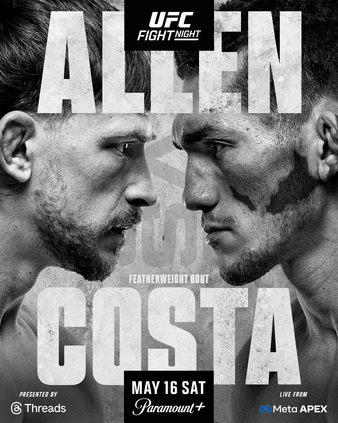
Men's Light Heavyweight Bout • UFC Fight Night: Allen vs. Costa
Saturday, May 16, 2026 • 25ft Octagon (Small Cage)
Re-booked after Bukauskas vs Bellato (cancelled).
Explore Detailed Fighter Profiles
Click on either the fighter's name or profile image for each fighter to access comprehensive UFC statistics including striking metrics, grappling data, clinch performance, complete fight history, offensive & defensive analytics, and round-by-round breakdowns.
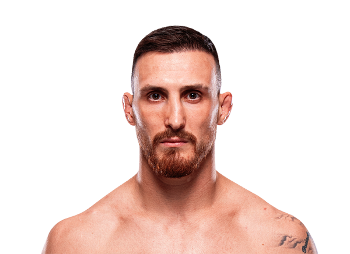
Modestas Bukauskas
Fighter Metrics
Victory Methods
Win Round Distribution
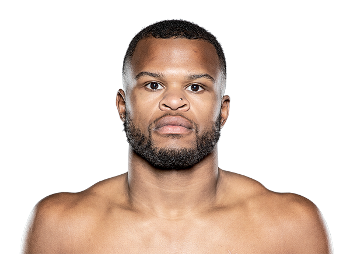
Christian Edwards
Fighter Metrics
Victory Methods
Win Round Distribution
📋 Last 5 Fights - Modestas Bukauskas
| Date | Opponent | Result | Method |
|---|---|---|---|
| Jan 24, 2026 | Nikita Krylov | L | KO/TKO (R3, 4:57) |
| Sep 6, 2025 | Paul Craig | W | KO/TKO (Elbow) (R1, 5:00) |
| May 10, 2025 | Ion Cutelaba | W | Decision (SD) (R3) |
| Feb 22, 2025 | Raffael Cerqueira | W | KO/TKO (R1, 2:12) |
| Jul 27, 2024 | Marcin Prachnio | W | Submission (R3, 3:12) |
📋 Last 5 Fights - Christian Edwards
| Date | Opponent | Result | Method |
|---|---|---|---|
| 2025-11-07 | Glendal Whitney | W | KO/TKO (R2, 4:22) |
| 2025-05-24 | Luke Fernandez | L | Decision (UD) (R3, 5:00) |
| 2024-03-22 | Jake Collier | W | Submission / Injury Verbal Tap (R1, 2:38) |
| 2023-11-10 | Jarome Hatch | W | KO/TKO (R1, 4:15) |
| 2023-06-02 | Rakim Cleveland | L | Submission (R3, 3:55) |
Technical Analysis
Technical Score
Cardio Score
Overall Rating
📊 Technical Score
Built from Bukauskas' UFC-tracked data and a report-based projection for Edwards. Bukauskas grades at 58.5/100 because his 56 striking composite pairs with a quietly important 61 grappling composite, driven by 79% takedown defense and efficient opportunistic wrestling. Edwards is projected at 42.5/100 because his finishing profile is dangerous, but his pace, defense, and accuracy are not yet validated against UFC-level opposition.
💪 Cardio Score
Bukauskas owns the stronger late-fight reliability grade at 64/100. He has won and lost deep UFC rounds, recently submitted Marcin Prachnio in Round 3, and has already managed different light heavyweight problems. Edwards is projected at 55/100: dangerous early, but less reliable if the fight becomes a layered round-by-round adjustment battle.
🎯 Overall Rating
Overall rating lands at 61.3 for Bukauskas versus a projected 48.8 for Edwards. The gap is not about Bukauskas being flawless; it is about reliability. Edwards has the tools to win moments, but Bukauskas is more likely to win sequences once entries, exits, clinch breaks, and second exchanges start repeating.
Striking Composite
Grappling Composite
Technical Radar Comparison
Visual comparison of key performance metrics between both fighters
📊 Detailed Statistical Comparison
🥊 Fight Analysis Breakdown
This is a competitive fight in danger but not in reliability. Bukauskas owns the cleaner UFC résumé, validated technical base, and measurable defensive wrestling; Edwards brings finishing upside, athletic burst, and a lower-mileage profile with less predictive data at UFC speed. The 25-foot Meta APEX cage tilts the first act toward contact and pressure, then rewards whoever can turn repeated collisions into controlled sequences rather than one-off swings.
🧩 Modestas Bukauskas Key Advantages
Bukauskas has already solved very different UFC light heavyweight problems: Paul Craig's trap grappling, Ion Cutelaba's physical pressure, Marcin Prachnio's long-range striking, and the higher-tier danger of Nikita Krylov and Vitor Petrino. That experience matters because Edwards is not bringing a totally new problem; he is bringing athleticism, finishing threat, and pressure, all things Bukauskas has seen against more proven opposition.
The deeper read is adaptation under stress. Beating Craig by TKO matters because Craig punishes sloppy top control and panic wrestling; beating Cutelaba on a split shows Bukauskas can survive awkward, force-forward aggression; the Krylov loss is a reminder that elite closers still hurt him late. Edwards must ask whether he can show Bukauskas something Bukauskas has not already had to survive at a higher level — not just whether he can be dangerous in a vacuum.
Bukauskas' switch stance is a genuine equalizer in the small cage. Edwards wants to step in hard, force Bukauskas backward, and attack exits. Changing stance, framing, and countering the second exchange can turn those entries into resets, clinch turns, short knees, or counter hooks. Edwards may win isolated moments, but Bukauskas should be better at winning the sequence after first contact.
In practice, the stance work is less about flashy kicks and more about denying a stable targeting solution: different lead legs change straight-line geometry, and mid-round stance switches can interrupt combination preload. If Bukauskas stays disciplined, he can turn Edwards' pressure into a predictable rhythm — blitz, reset, blitz — and then meet that rhythm with intercepting shots, clinch frames, or fence turns before Edwards stacks clean damage.
Bukauskas does not need to become a wrestler to make grappling matter. His 79% takedown defense and 66% accuracy on rare attempts can interrupt Edwards' pressure, punish over-entries, and force the newcomer to spend energy hand-fighting instead of freely building pocket combinations.
Even low-frequency grappling threat changes the striking math. If Edwards has to respect level changes and clinch entries, his forward pressure becomes more expensive: he cannot simply march forward with wide combinations without risking underhooks, turns, or reactive mat returns. That matters most when Edwards is hunting a chaotic first round — the exact window where discipline and defensive wrestling quietly shave away upside.
⚠️ Unfavorable Scenarios
Bukauskas absorbs 4.05 significant strikes per minute and owns only 50% striking defense. At light heavyweight, that is the data point that keeps Edwards live. If Bukauskas exits in straight lines, lingers on the fence, or switches stance lazily, Edwards does not need to be the cleaner overall technician to hurt him.
Judges and viewers also react to perceived impact. If Bukauskas is "managing" distance without landing clean counters or visible fence turns, he can still absorb heavy-looking shots that swing optics in a close round. The defensive issue is not only raw numbers — it is that Bukauskas sometimes lives in exchanges long enough for variance to spike, which is exactly the environment Edwards wants to manufacture before reads stabilize.
Edwards' best upset lane is pressure-to-damage, not a slow technical read. The small APEX cage helps him force early collisions, and Bukauskas has five career KO/TKO losses. The danger window is most real across the opening seven minutes before Bukauskas has fully mapped speed, rhythm, and exit patterns.
The Krylov loss is instructive: Bukauskas can be hurt when an opponent sustains danger across phases and lands late when fatigue and defensive structure dip. Edwards is not Krylov on paper, but the lesson still applies — sustained pressure that denies comfortable reset space is how you stress Bukauskas' defensive striking profile without needing perfect technique for all fifteen minutes.
📋 Likely Gameplan
Bukauskas should fight behind long kicks, straight shots, lateral exits, and stance transitions. The goal is not to run; it is to make Edwards restart. Every forced reset gives Bukauskas another read and creates chances to intercept the entry, turn off the fence, or clinch before Edwards can convert pressure into damage.
Visible scoring matters in the Apex: clean counters to the body, step-in knees in the clinch, and short elbows on the break all register as control even when the fight is messy. Bukauskas should avoid extended phone-booth stretches unless he is initiating them on his terms — otherwise he feeds Edwards the exact chaos profile that narrows the skill gap fastest.
Bukauskas should add friction without over-wrestling: clinch when Edwards overcommits, make him carry weight, and punish breaks with short strikes. If he is still composed late in Round 2, the fight should increasingly favor his broader UFC reference library and better round-to-round decision-making.
Late-fight layers favor the veteran: third-round submission equity exists off a tired opponent's bad posture, and Bukauskas has recent deep-round finishing proof. The gameplan is not to chase a highlight — it is to tighten the screws so Edwards' early aggression becomes a liability as timing, distance, and defensive reads converge across rounds.
🚀 Christian Edwards Key Advantages
Edwards has finished 75% of his pro wins and brings the kind of athletic burst that matters against a fighter who absorbs over four significant strikes per minute. The upside is real, but it probably depends on physical respect early; if his first hard blitzes do not badly move Bukauskas, the fight can tilt quickly toward the veteran's reads.
Recent tape also shows multiple early-round finishing lanes: first-round stoppages and a second-round TKO on his ledger path signal that Edwards is not a slow starter by habit. Against regional competition that can look like dominance; against Bukauskas it must translate into UFC-speed timing — landing clean on the way in, not just winning the crowd with forward motion.
The 25-foot cage gives Edwards a better chance to compress space, trap Bukauskas near the fence, and create the kind of pocket exchanges that make defensive metrics matter. It also raises Bukauskas' finishing chances later if Edwards becomes linear, but early it gives the underdog a cleaner route to contact.
Fence cycles are where Edwards can bank minutes even without a finish: heavy-looking shots, clinch rides, and forward steps can sway close judging if Bukauskas is too passive. Conversely, if Bukauskas repeatedly turns Edwards and exits with strikes, the small cage becomes a trap for the pressurer — less room to circle out cleanly after a failed blitz.
Edwards' submission wins should not be ignored, but his strongest underdog angle is pressure into damage. If strikes make Bukauskas shell, clinch, or shoot reactively, then opportunistic grappling becomes more realistic. As a primary weapon against Bukauskas' 79% takedown defense, it is less trustworthy.
The finishing upside is therefore sequencing: land enough to change posture, then attack the follow-up layer — clinch breaks, reactive takedowns, or front-headlock scrambles — when Bukauskas is defending strikes first. Without that damage layer first, grappling can become a low-yield energy spend against a defender who has already banked dozens of UFC minutes in clinch and scramble situations.
⚠️ Unfavorable Scenarios
Edwards' losses are more concerning than his wins are reassuring. The Luke Fernandez decision loss shows he can be extended and managed over rounds, while the Rakim Cleveland submission loss flags defensive decision-making when late grappling gets messy. Bukauskas has the generalist skill set to expose both issues.
Half of Edwards' career losses coming by decision also matters stylistically: it suggests that when he cannot overwhelm physically, the fight can normalize into a paced contest where minute-winning and layer-stacking decide rounds. That is a bad trade against a UFC veteran who can strike, clinch, defend takedowns, and opportunistically finish without needing one perfect weapon.
Edwards likely needs aggression without recklessness: enough pressure to deny Bukauskas rhythm, but enough discipline to avoid easy clinches, counters, and reset traps. That is a narrow lane. If he burns energy chasing one big moment, Bukauskas can start winning the second exchange and the late optics.
The page's projected striking inputs for Edwards are not UFC-validated, so the safest handicapping assumption is volatility rather than efficiency. That cuts both ways: Edwards might be sharper than projections, or he might look slower once Bukauskas feints and feints and refuses to stand still for clean entries. Either outcome increases the value of early initiative — waiting rarely helps the underdog in this matchup shape.
📋 Likely Gameplan
Edwards needs to pressure behind feints, step into combinations rather than single shots, and attack Bukauskas' exits. The goal is to make Bukauskas react before he can think: force fence exchanges, test the chin early, and mix grappling only after damage or scrambles have compromised the veteran's base.
Layering is the difference between pressure and effective pressure: double up the same side, crash behind a committed feint, and exit at angles so Bukauskas cannot always meet him with the same counter line. If Edwards becomes predictable — single shots, long exits, repeated straight lines — Bukauskas' switch stance and veteran timing turn the small cage from a weapon into a liability.
A slow Edwards fight is probably a losing Edwards fight. He should not accept a clean long-range kickboxing rhythm where Bukauskas can touch, reset, and collect reads. His best path is volatility: pressure, damage, fence optics, and enough follow-up discipline to keep Bukauskas from turning chaos into control.
If Edwards cannot force the fight into repeated high-impact exchanges, he should still hunt swing moments on the feet rather than drifting into a technical kickboxing match. The decision path for Edwards in the model is real but narrow — it usually requires fence control and damage-adjacent optics across multiple rounds, not a low-output staring contest that lets Bukauskas pile up clean touches from the outside.
🎯 Fight Prediction Analysis
Data-driven prediction model based on statistical analysis
📊Detailed Analysis Summary
🏟️Cage Dynamics
The 25-foot Meta APEX cage increases contact frequency. That helps Edwards force collisions early, but it also helps Bukauskas cut exits and punish predictable resets once patterns appear. The cage is not a one-way Edwards edge; it increases Edwards' upset chance and Bukauskas' finishing chance at the same time.
Early, the reduced floor space rewards the fighter who initiates with conviction: fewer diagonal escape lanes mean Bukauskas cannot indefinitely play matador without accepting some fence time. That is where Edwards' burst and willingness to trade matter most — if he can turn contact into sequences that keep Bukauskas reacting instead of setting range.
Late, the same geometry can flip: a smaller cage makes it easier for the more composed fighter to trap linear resets. If Edwards' pressure becomes repetitive — step in, reset, step in — Bukauskas can start meeting the same entry with counters, clinch turns, or short strikes that accumulate without requiring a perfect one-shot knockout.
🎯Technical Breakdown
Bukauskas lands a moderate 3.24 significant strikes per minute at 42% accuracy, but the concern is defensive: 4.05 absorbed per minute and 50% striking defense. Edwards has the right kind of danger to test that weakness, yet his UFC pace, accuracy, and defensive numbers are not validated. The most stable metric on the page is Bukauskas' 79% takedown defense, which can keep the fight in the phases he understands best.
Offensively, Bukauskas does not need to out-volume Edwards to win — he needs to win the cleaner moments and deny extended pocket stretches. His moderate SLpM is compatible with a measured kickboxing approach where he touches, exits, and forces Edwards to pay a toll on every entry. The risk is always the same at 205 lbs: one clean connection can erase prior minutes, which is why defensive responsibility in the first seven minutes is central to the handicap.
For Edwards, the projection-based composites (44 striking / 41 grappling on this page) frame him as dangerous but less bankable minute-to-minute. That uncertainty is not neutral in modeling: it lowers confidence that he can exploit Bukauskas' defensive striking issues consistently across three rounds without giving back counters, clinch rides, or defensive wrestling stops.
🧩Key Battle Areas
Key inflection points: (1) Can Edwards damage Bukauskas before the veteran reads the entries? (2) Who wins the second exchange after first contact? (3) Does the fight stay chaotic or become repetitive? Edwards wants volatility; Bukauskas wants pattern recognition.
First-layer vs second-layer striking: the first exchange is the initial blitz or counter; the second is what happens after contact — exits, clinch fights, fence turns, and counter windows. Edwards may win flashes; Bukauskas is structurally better positioned to win sequences if he avoids panic exits and keeps his hands and frames disciplined on the fence.
Grappling as friction, not identity: Bukauskas is not a high-volume wrestler, but opportunistic clinch and mat entries can break rhythm even when they do not produce long control. Edwards must treat every clinch as a scoring and energy event, not a pause — because those pauses are where veterans steal minutes and drain explosiveness.
Judging optics in the Apex: if Edwards marches forward with heavier-looking swings without landing clean, Bukauskas can still lose close rounds if he is too passive. Clean counters, visible fence turns, and meaningful clinch strikes are tiebreakers that keep the fight from becoming a pure "forward motion" referendum.
🏁Final Prediction
Bukauskas is the firm pick because he has more validated paths: technical decision, late attritional finish, opportunistic top-position damage, or a submission against a compromised opponent. Edwards remains live because his best weapons line up with Bukauskas' biggest weakness, but he needs a more specific fight built on pressure, damage, and chaos.
The model's 68/32 split reflects reliability more than dominance: Bukauskas can lose if he backs straight to the fence and trades in extended pockets, but across many simulated fight shapes he wins more often because his toolbox scales across rounds and his defensive wrestling stabilizes the worst-case grappling swings.
Most likely outcome remains Bukauskas by KO/TKO — often cumulative rather than a single walk-off shot — with Bukauskas by decision as the secondary lane when he controls space without forcing a finish. Edwards' primary upset needle remains KO/TKO in a pressure-heavy fight where Bukauskas' defensive striking numbers show up under fire early enough to change the rest of the bout.
💰 Betting Analysis: Model vs Market
Detailed value assessment in the betting market
📊Market Odds
🤖Analytical Model
💎Value Opportunities
BEST VALUE
Model: 34% probability
FAIRLY PRICED
Model: 25% probability
PACE VALUE
Model: 52% probability
⚠️Key Market Discrepancies
- • Fair moneyline — Bukauskas 68% translates to -213; Edwards 32% translates to +213.
- • Decision split — fight goes to decision projects at 39% (+156), while no decision projects at 61% (-156).
- • Method pricing — Bukauskas by KO/TKO projects best among fighter-specific props at 34% (+194), with Edwards by KO/TKO still live at 12% (+733).
🎯 Comprehensive Probabilistic Analysis
100 hypothetical fight simulation based on statistical data
🏆Outcome Distribution - Modestas Bukauskas
Clean minutes, cage turns, and visible late-round scoring if Edwards cannot create damage
Most likely win method: cumulative damage, counters after overcommitments, or top-position strikes
Opportunistic submission if Edwards is hurt, tired, or caught scrambling
💥Outcome Distribution - Christian Edwards
Primary upset threat: early pressure, clean pocket damage, and Bukauskas backing straight up
More likely after damage or a scramble than as a clean primary grappling plan
Pressure optics, cage control, and making Bukauskas fight backward across close rounds
⏰Fight Timeline Analysis
⚡Window of Opportunity — Christian Edwards
- • First seven minutes: Highest damage equity before Bukauskas maps speed and entry rhythm.
- • Pressure to damage: Force fence exchanges, then attack exits with combinations rather than single shots.
- • Urgency with discipline: Edwards must be aggressive without giving away easy clinches or counters.
🎯Progressive Dominance — Modestas Bukauskas
- • Win the second exchange: Counter, clinch, or turn after Edwards' first entry instead of retreating straight back.
- • Make it layered: Long kicks, stance shifts, defensive wrestling, and short clinch breaks all widen the skill gap.
- • Late conversion: If Edwards fades, Bukauskas can turn pattern recognition into cumulative damage or a decision.
🎯 Final Confidence Assessment
Confidence level and uncertainty factors
Confidence Level
Solid Bukauskas side, capped by light heavyweight volatility and his hittable striking defense
✅Supporting Factors
- • 12 UFC fights and a 7-5 UFC record against a far more validated opponent sample
- • More complete recent win profile: TKO, split decision, TKO, and submission across the last five
- • 79% takedown defense gives Bukauskas a stabilizer if Edwards tries to layer pressure with wrestling
⚠️Risk Factors
- • Bukauskas absorbs 4.05 significant strikes per minute with only 50% striking defense
- • The 25-foot cage makes it easier for Edwards to force early fence exchanges and collisions
- • Edwards' 75% finish rate means one clean pressure sequence can matter more than the broader data gap
🏁Executive Summary
Modestas Bukauskas carries the proven UFC résumé, better recent form, stronger defensive wrestling, and more ways to win across three rounds. Christian Edwards is dangerous enough to make the fight uncomfortable, especially early in the small cage, but his best outcomes depend on a narrower script: pressure, damage, chaos, and Bukauskas making defensive mistakes.
Prediction: Model pick is Bukauskas 68/32. Most likely outcome is Bukauskas by KO/TKO, with Bukauskas by decision as the secondary path. Edwards' clearest upset threat is a pressure-heavy KO/TKO before Bukauskas turns the fight into a layered veteran rhythm.