
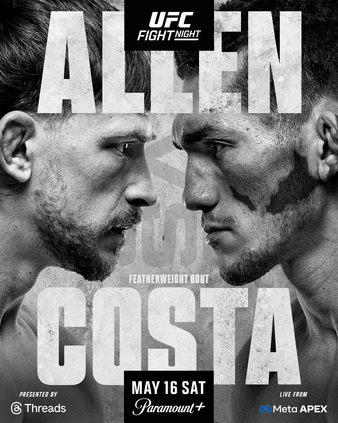
Andre Petroski vs Cody Brundage
Men's Middleweight Bout • UFC Fight Night: Allen vs. Costa
Saturday, May 16, 2026 • 25 ft small cage • UFC Apex, Las Vegas
Explore Detailed Fighter Profiles
Click on either the fighter's name or profile image for each fighter to access comprehensive UFC statistics including striking metrics, grappling data, clinch performance, complete fight history, offensive & defensive analytics, and round-by-round breakdowns.
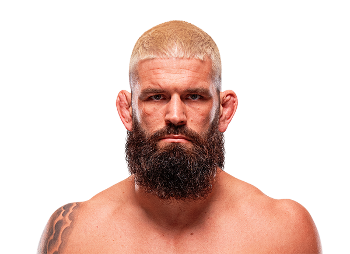
Andre Petroski
Fighter Metrics
Victory Methods
Win Round Distribution
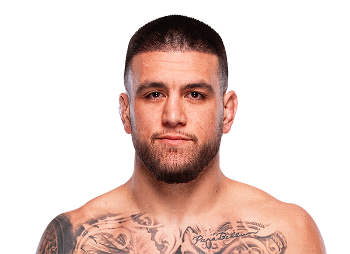
Cody Brundage
Fighter Metrics
Victory Methods
Win Round Distribution
📋 Last 5 Fights - Andre Petroski
| Date | Opponent | Result | Method |
|---|---|---|---|
| 2025-09-27 | Cam Rowston | L | TKO - Strikes (R1, 4:29) |
| 2025-06-14 | Edmen Shahbazyan | L | Decision - Unanimous (R3, 5:00) |
| 2025-02-15 | Rodolfo Vieira | W | Decision - Unanimous (R3, 5:00) |
| 2024-09-07 | Dylan Budka | W | Decision - Unanimous (R3, 5:00) |
| 2024-07-13 | Josh Fremd | W | Decision - Unanimous (R3, 5:00) |
📋 Last 5 Fights - Cody Brundage
| Date | Opponent | Result | Method |
|---|---|---|---|
| 2026-03-07 | Donte Johnson | L | Decision - Split (R3, 5:00) |
| 2026-01-31 | Cam Rowston | L | TKO - Strikes (R2, 4:08) |
| 2025-08-09 | Eric McConico | L | Decision - Split (R3, 5:00) |
| 2025-06-14 | Mansur Abdul-Malik | NC | No Contest (overturned) (R3, 5:00) |
| 2025-03-01 | Julian Marquez | W | TKO - Strikes (R1, 4:45) |
Technical Analysis
Technical Score
Cardio Score
Overall Rating
📊 Technical Score
Averaging Striking Composite (61 vs 52) and Grappling Composite (83 vs 62) from UFC metrics and recent form — not Elo-based. Balances striking effectiveness with grappling to approximate complete technical ability.
💪 Cardio Score
Weighted toward average fight time (~12:30 vs ~11:48 in recent samples), pace maintenance, and how often each athlete forces extended grappling. Rewards fighters who keep structure through rounds, not just early bursts.
🎯 Overall Rating
Simple average of Technical Score and Cardio Score. Provides a holistic view of fighter capabilities combining skill level with physical conditioning and fight performance.
Striking Composite
Grappling Composite
Technical Radar Comparison
Visual comparison of key performance metrics between both fighters
📊 Detailed Statistical Comparison
🥊 Fight Analysis Breakdown
Classic control wrestler vs explosive chaos wrestler: Petroski wants structure, minutes, and repeatable grappling sequences; Brundage wants disorder, early collisions, and fight-changing swings. The breakdown below maps those identities to concrete advantages, failure modes, and likely tactical choices — not just the stat table, but how those stats tend to express inside a 25-foot cage over three rounds.
🧩 Andre Petroski Key Advantages
Petroski chains entries into clinch rides, mat returns, and re-attacks when shots stall. Against Brundage's 68% takedown defense, volume and accuracy (51%) matter as much as the first attempt. Petroski's 86% takedown defense also makes it harder for Brundage to flip positional roles in scrambles. A failed first shot is not automatically a lost exchange: it can still become fence time, fatigue for the defender, and optics that Petroski is dictating where the fight is fought — all of which stack across three rounds.
Petroski's UFC profile shows he can win structured, grappling-heavy fights without needing a finish. On tape and results, he handled Vieira on the scorecards — the same opponent who submitted Brundage — and submitted Nick Maximov quickly while Brundage lost a decision to Maximov. Those are directional (not deterministic), but they align with the stylistic read here. In other words, Petroski has repeatedly shown he can win the kind of ugly, positional minutes that Brundage has more often needed to break with a spike rather than out-structure across fifteen minutes.
Higher submission activity means Petroski can attack front chokes and transitions when Brundage overextends. Still, the fight IQ note is to avoid over-chasing finishes — reckless aggression creates the scrambles where Brundage's explosiveness pays best. The submission layer is as much about keeping Brundage's hands busy and his hips flat as it is about actually getting the tap: even credible threats open mat returns and short strikes that pad control scores.
Petroski is not a high-volume kickboxer, but the UFC stat profile is quietly stabilizing: slightly higher significant striking per minute, marginally better accuracy, better defense, and fewer strikes absorbed than Brundage. That matters because it lets him feint, touch, and occupy without needing to win a firefight — he can strike just enough to close distance, change levels credibly, and avoid standing in the pocket long enough for Brundage to load full power.
⚠️ Unfavorable Scenarios
Petroski's losses cluster around being hurt or finished — and Brundage's upside is concentrated in Round 1. If Brundage lands clean while Petroski enters with his head high, the fight can swing on one sequence. In the small cage, that danger window can arrive faster because there is less room to bail out after a bad exchange — one squared stance and a heavy right can compress the whole fight into a few seconds.
If Brundage keeps popping up and forcing exhausting re-lifts, Petroski may burn his tank and get stuck in more striking exchanges later — exactly where his durability history is least comfortable. The worst version is not "no takedowns" — it is half-takedowns that become clinch stalemates where Brundage still lands short, ugly shots while Petroski pays for every lift.
If Petroski telegraphs the same level changes, Brundage can time sprawls, circle off the fence, and reset into power. Switching stances helps — but only if entries stay varied. Repetition without disguise turns Petroski's biggest weapon into a liability the same way it does for any wrestler against an explosive counterpuncher.
📋 Likely Gameplan
In the small cage, steer Brundage to the fence, then layer body locks and chain wrestling. Keep head position disciplined on shots to deny guillotine and front-headlock chaos. The goal is not always immediate completion — it is to make Brundage carry weight, answer multiple threats, and spend mental energy defending the next link in the chain.
Control-first scoring: heavy top, wrist rides, short ground strikes, and mat returns. Attack submissions only when the position is truly secure — don't donate scrambles that reset Brundage's power.
A lot of this fight will be decided chest-to-chest: who has inside position, who turns the corner on the cage, and who keeps the head on the correct side during rides. Petroski should prioritize underhooks and chest pressure over chasing big throws — small positional wins accumulate into the kind of rounds judges remember as "Petroski was controlling the grappling."
🚀 Cody Brundage Key Advantages
Brundage is most dangerous when the fight is still messy — big overhands, slams, and ground-and-pound bursts before reads settle. Petroski was stopped early by Cam Rowston; Brundage lasted deeper into that same matchup but still lost — a reminder both can fold under heavy offense, but Brundage's chaos profile directly targets Petroski's durability downside. The nuance is timing: Brundage does not need to "out-grapple" fifteen minutes — he needs one or two sequences where Petroski is hurt, off-balance, or forced to panic-wrestle upright.
Brundage has more Octagon repetitions than the typical opponent at this career stage — useful composure when the fight gets weird. He has repeatedly shown he can stay live in split decisions even when the process breaks down, though he still lacks a UFC decision win in the data used here. That paradox matters: he can hang around on cards when chaos spikes, yet he still has not proven the clean, minute-winning template Petroski brings when the fight settles into grappling optics.
Brundage is not volume-safe on the stat sheet, but he can convert bad entries into front chokes and wild scrambles. If Petroski reaches with his head outside, Brundage can threaten the guillotine or use the threat to flip top and hammer from above. Even when the choke is not fully locked, the threat can force Petroski to bail on a finishable ride — which is exactly how Brundage steals momentum without winning a long wrestling phase.
Brundage's profile is front-loaded: when he is landing and forcing scrambles, he looks like a different athlete than when he is backing up and reacting. Petroski's entire game is built to flip that script — make Brundage defend first, spend first, and answer questions he does not want on the scorecards. If Brundage loses Round 1 without badly hurting Petroski, the conditional probability on his side should drop sharply because his best weapons are harder to reload from underneath.
⚠️ Unfavorable Scenarios
Petroski's most likely win is positional: fence rides, mat returns, and top control. If Brundage spends the first round defending body locks and working from his back, his explosive runway shortens. He needs wall-walk urgency and immediate strikes between grappling phases. The longer Brundage accepts rides without returning damage, the more the fight looks like the statistical portrait — Petroski stacking control and landing enough short shots to color the round without needing a highlight reel.
Brundage has not earned a UFC decision win in the sample mapped to this page. If the fight stays technical and quiet, judges tend to favor Petroski's pressure, wrestling optics, and steadier defensive striking numbers. That does not mean Brundage cannot win a decision — split competitive losses show he can reach the cards — but it is not his cleanest lane compared to a sudden finish.
If Brundage defends the first layer well but keeps getting returned to the mat, fatigue can make his hips late and his neck heavier in front-headlock scenarios. Petroski's submission rate is meaningfully higher — not a guarantee of a tap, but a credible threat that compounds when Brundage is tired and reaching on defense.
📋 Likely Gameplan
Make Petroski pay on entries: uppercuts, frames, hard rights when the head sits high on shots. The first minutes are the highest-EV window before Petroski settles into clinch rhythm. Mixing level feints keeps Petroski honest: if every level change is a real shot, Petroski can sit on timing; if some feints are strikes, the pocket opens.
Brundage cannot be content underneath. Immediate wall-walks, explosive hips, and opportunistic subs off bad posture are the equalizers. Accepting long rides lets Petroski impose the exact game Brundage loses statistically. The best Brundage sequences often look ugly: one explosive bridge, one sit-out, one short elbow on the break — not textbook jiu-jitsu chains.
In a small cage, Brundage should look for clinch breaks that end in power — not prolonged chest wrestling. Short knees and elbows on the fence, then disengage into swings, can steal sequences even when Petroski is "winning" the grappling battle on paper. The goal is to keep Petroski thinking about damage every time he closes distance.
🎯 Fight Prediction Analysis
Data-driven prediction model based on statistical analysis
📊Detailed Analysis Summary
A synthesis of cage context, stylistic identity, tape-level scouting tells, timing, and scoring optics — tying the radar metrics and simulation-style outcome weights into a single narrative you can watch for live as the fight unfolds.
🏟️Cage Dynamics
The 25-foot Apex cage compresses space for two similar-sized middleweights. That generally helps Petroski shrink Brundage's exit lanes and force earlier fence contact for body locks and mat returns — but it also raises early collision risk, which plays into Brundage's preferred chaotic blitzes and pocket swings before Petroski establishes rhythm.
Net read: the small octagon is a double-edged variable. It shortens the distance Petroski must cover to initiate clinch wrestling, yet it also removes the reset corridors that safer strikers use to disengage. The fight can look "controlled" on paper while still being volatile live if Brundage forces repeated close-range collisions in the first round.
🎯Process vs volatility
Petroski's path is repetitive: pressure, clinch, takedown threat, top control, decision equity. Brundage's path is event-driven: big moments, scrambles, sudden tops and GNP. Across simulated outcomes, repetition usually beats volatility in three-round fights — unless volatility lands in the opening minutes. That is why this breakdown is "closer in danger than repeatability."
Think of it as two different win functions: Petroski can bank incremental edges that compound (fence time, failed defenses, mat returns), while Brundage often needs a step-change event (knockdown, big salvo, scramble top) to flip the scoreboard psychology. Judges reward the former when it is visible and sustained; fans remember the latter when it lands.
🧩Shared opponents & scouting tells
Both were finished by Cam Rowston — a real cap on overconfidence. Directionally, Petroski vs Vieira and Maximov looks cleaner than Brundage's results against those grappling-heavy profiles. Add the underhook battle: Petroski wants inside chest-to-chest control; Brundage wants to frame, separate, and swing. Whoever wins that hidden clinch war often controls the round story.
Scouting translation: if you see Petroski winning inside ties and turning corners without eating clean on the break, the fight is drifting to his distribution. If you see Brundage repeatedly separating into power after denying chest pressure — even in losing minutes — the upset lane is still alive because the damage threat never fully leaves.
📐Striking layer & damage economics
Petroski leads the headline striking categories on this page: higher significant strikes landed per minute, slightly better accuracy, better striking defense, and fewer significant strikes absorbed per minute than Brundage. None of that makes Petroski a kickboxing favorite in isolation — it means he can manage risk on the feet while building toward his primary grappling identity.
For Brundage, the striking profile is less about volume and more about landing the right shot at the right time. If he chases a volume duel without wrestling payoffs, he feeds the exact kind of round where Petroski's defense and clinch entries quietly rack minutes. His best striking minutes are usually compact: short bursts that create fear, not extended technical exchanges.
⏱️Timing windows & round-state
The first five minutes are Brundage's most dangerous window: Petroski is still downloading timing, and Brundage's power is freshest. If Petroski exits Round 1 without absorbing fight-changing damage, the conditional probability on his side should rise — his tools (chain wrestling, mat returns, ride control) become easier to impose when the opponent is reacting under fatigue.
Round-state heuristic: Brundage wants the fight to feel urgent; Petroski wants it to feel inevitable. Watch who sets the cadence after the first clinch exchange — urgency favors Brundage, inevitability favors Petroski.
⚖️Judge optics & what actually scores
In matchups like this, judges often overweight visible control: fence rides, completed takedowns (even if short), and top time with short ground strikes. Petroski's game naturally produces those signals. Brundage's best counter is not always damage volume — it is memorable sequences that reset the narrative of who is imposing danger.
If Brundage spends long stretches defending without returning offense, he risks the classic trap: competitive in moments but structurally behind on the scorecards. Petroski's worst trap is the opposite: winning minutes while absorbing one or two massive shots that change how the fight is perceived even if the control totals remain favorable.
🏁Final Prediction
Official lean: Andre Petroski by decision. In a 100-draw style simulation anchored to the table above, the modal lane is Petroski on the cards (~42%) because his wrestling stack, 86% TD defense, and higher submission rate are the cleanest repeating advantages. Brundage's live lanes are early KO/TKO and scramble tops (~12% KO in-simulation) plus a smaller submission spike. If Round 1 ends without major damage for Petroski, his win probability should rise sharply on paper.
Conviction sits at 7/10: the model-like advantages are clear, but Petroski's durability pattern keeps Brundage structurally live in the exact phase (early chaos) where Brundage is built to thrive.
💰 Betting Analysis: Model vs Market
Detailed value assessment in the betting market
📊Market Odds
🤖Analytical Model
💎Value Opportunities
MAXIMUM VALUE
Model single-outcome mode ~42% | Fair line about +138 (no vig)
GOOD VALUE
Blended from Petroski 42% + Brundage 16% decision slices | Fair roughly -138
SLIGHT VALUE
Petroski's control path plus recent decision samples | Fair roughly -163
⚠️Key Market Discrepancies
- • Market may overweight Petroski volatility — two straight losses and KO history can hide his repeatable wrestling edges versus Brundage's defensive grappling.
- • TD defense spread (86% vs 68%) — the widest structural gap in the fight; easy to underprice how often it forces Brundage underneath.
- • Small-cage nuance — boosts Petroski exits, but also juices Brundage's early blitz equity; paths to the under still exist.
🎯 Comprehensive Probabilistic Analysis
100 hypothetical fight simulation based on statistical data
🏆Outcome Distribution - Andre Petroski
Primary lane via control time and fence cycles
Usually needs extended top time or heavy damage from clinch
Front chokes and transitions if Brundage overcommits
💥Outcome Distribution - Cody Brundage
Best lane: early pocket swings or GNP after scrambles
Needs to keep chaos controlled on the feet across three rounds
Opportunistic chokes off bad entries — thin but not zero
⏰Fight Timeline Analysis
⚡Window of Opportunity - Cody Brundage
- • First 3–4 minutes: highest KO/TKO equity before Petroski finds grappling rhythm.
- • Sprawl-and-brawl layer: punish naked shots, force resets, deny chest-to-chest underhooks.
- • Scramble tops: turn one mistake into fight-altering ground strikes.
🎯Progressive Dominance - Andre Petroski
- • Chain continuity: failed shots still buy fence time when framed correctly.
- • Damage control: fewer SApM and higher StrDef keep optics clean on judges' monitors.
- • Round stacking: rides, mat returns, and submission feints bank 10-9s without needing a bomb.
🎯 Final Confidence Assessment
Confidence level and uncertainty factors
Confidence Level
Strong repeatable wrestling edges, tempered by Petroski damage history vs Brundage's early chaos.
✅Supporting Factors
- • Higher TD volume/accuracy plus 86% TD defense vs 68%
- • Better striking defense and lower strikes absorbed
- • More submission attempts and proven UFC decision wins
- • 25 ft cage supports fence wrestling and shorter resets
⚠️Risk Factors
- • Petroski KO/TKO loss pattern vs Brundage early power
- • Small cage increases early collision danger
- • Brundage guillotine/scramble threat off lazy shots
🏁Executive Summary
This matchup pairs Petroski's process-driven wrestling and round-stacking with Brundage's event-shaped explosiveness. Statistically, Petroski leads the stabilizing categories — takedown offense and defense, submission pace, striking defense, and decision equity — while Brundage's clearest lane is hurting Petroski early before clinch control becomes the story. Shared losses to Cam Rowston anchor humility on both sides: either man can break if the fight turns into sustained offensive pressure. Net: small cage slightly helps Petroski corral exits, but it also raises Brundage's first-round land rate if Petroski is undisciplined on entries.
Prediction: Andre Petroski by decision as the modal outcome (simulation-style split roughly 42% of all labeled outcomes) with live KO and sub secondary lanes for both fighters. Brundage remains dangerous whenever the fight degenerates into messy pockets or wild scrambles — especially in the opening five minutes.