
Doo Ho Choi vs Daniel Santos
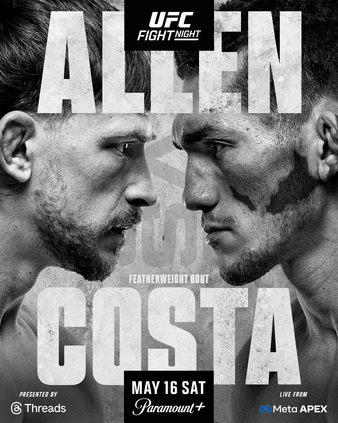
Men's Featherweight Bout • UFC Fight Night: Allen vs Costa
Saturday, May 16, 2026 • 25 ft octagon (small cage)
Explore Detailed Fighter Profiles
Click on either the fighter's name or profile image for each fighter to access comprehensive UFC statistics including striking metrics, grappling data, clinch performance, complete fight history, offensive & defensive analytics, and round-by-round breakdowns.
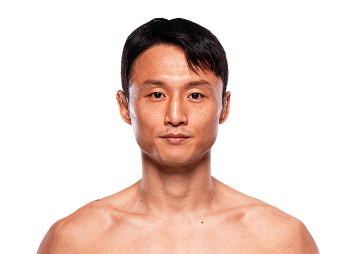
Doo Ho Choi
Fighter Metrics
Victory Methods
Win Round Distribution
Last 5 Fights
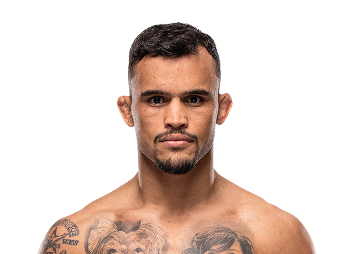
Daniel Santos
Fighter Metrics
Victory Methods
Win Round Distribution
Last 5 Fights
Technical Analysis
Technical Score
Cardio Score
Overall Rating
📊 Technical Score
Calculated as the average of Striking Composite (82 vs 67) and Grappling Composite (66 vs 73). Balances overall striking effectiveness with grappling ability to measure complete MMA technical profile.
💪 Cardio Score
Based on average fight duration, striking rate per minute, takedown rate, and finish rate. Measures cardiovascular endurance and ability to maintain pace throughout fights.
🎯 Overall Rating
Simple average of Technical Score and Cardio Score. Provides a holistic view of fighter capabilities combining skill level with physical conditioning and fight performance.
Striking Composite
Grappling Composite
Technical Radar Comparison
Visual comparison of key performance metrics between both fighters
📊 Detailed Statistical Comparison
🥊 Fight Analysis Breakdown
🧩 Doo Ho Choi Key Advantages
Choi's 56% striking accuracy versus Santos' 40% is the clearest statistical gap in the fight. Combined with an elite 81% KO/TKO finish rate across his wins, Choi possesses the type of clean, high-impact striking that can punish Santos' forward pressure immediately. Santos absorbs 5.03 significant strikes per minute — a dangerous number against a finisher of Choi's caliber.
Choi is three inches taller and owns a three-inch reach advantage. This matters because Santos is a forward-pressure fighter who needs to close distance. Choi's straight shots, left hook, and counter timing give him the tools to intercept Santos before he gets into clinch or wrestling range. The small cage helps Santos close distance, but it also creates danger because he has less space to reset.
Choi's recent wins include a Round 3 TKO over Nate Landwehr and a Round 2 TKO over Bill Algeo. His finishing threat is not just early — he has shown he can create damage in round two and round three. Against Santos' pressure style, this means Santos is exposed to counter windows repeatedly over the course of the fight.
⚠️ Unfavorable Scenarios
Choi bleeds rounds if Santos turns this into repeated clinch rides, mat returns, and fence cycles. The threat is less about submissions and more about Choi's power disappearing when he is forced to carry weight and defend level changes for entire minutes.
Extended pocket trades play into Santos's pressure grappling entries. Choi should force misses first, punish on the way out, and avoid gifting easy body locks off wild exchanges.
📋 Likely Gameplan
Choi should keep the fight in open space as much as possible. He should use the reach advantage, jab early, make Santos reset, and punish level-change entries with uppercuts, hooks, and short elbows. The ideal Choi fight is controlled violence: defend the first layer of pressure, circle off the fence, make Santos reach, and land the cleaner counters. He should also attack the body — Santos' pressure style depends on pace, and body work would make Santos' takedown attempts slower by round two.
Let Santos initiate, then time the check hook, straight right, or uppercut underneath his level changes. Winning clinch breaks with short elbows keeps the fight from settling into a grind.
🚀 Daniel Santos Key Advantages
Santos' path is very real. Choi's 47% takedown defense is the most exploitable number on his side. Santos averages 3.01 takedowns per 15 minutes, and the smaller cage makes it easier to cut Choi off. If Santos gets Choi backing up, touching the fence, and defending clinch sequences, he can reduce Choi's striking rhythm and turn the fight into a grind. The small cage amplifies Santos' ability to initiate wrestling.
Santos' cleanest path is forcing Choi to repeatedly defend. Even failed takedowns matter. Even clinch breaks matter. Even short knees and shoulder pressure matter. Because Choi's power is most dangerous when he has base, space, and timing, Santos needs to take those away. Santos' win condition is cumulative tax — pressure layered over time, not one perfect takedown. Santos wins minutes; Choi wins moments.
⚠️ Unfavorable Scenarios
Santos loses when he spends calories shooting without sticking to Choi's hips or netting ride time. Failed blast attempts in the small cage reset into Choi's straight lanes — the worst trade in the matchup.
Santos's 5.03 significant strikes absorbed per minute is the swing vulnerability: he can win minutes yet remain one clean counter away from reset. Combined with only 40% striking accuracy, extended kickboxing stretches favor Choi's cleaner connections.
📋 Likely Gameplan
Santos should pressure immediately but intelligently. He cannot just rush Choi. He needs feints, low kicks, body shots, and clinch entries behind combinations. His priority should be to put Choi's back near the fence. Once there, Santos can make Choi defend takedowns, knees, dirty boxing, and mat returns. Even failed takedowns can be useful if they force Choi to carry weight and fight defensively. Santos should not spend long periods boxing at mid-range. That is Choi's fight.
After establishing honest hand-fighting, Santos should chain inside trips and body locks into short clinch rides. The goal is not always top position — sometimes it's elbow trenches, knees on the cage, and re-attacks once Choi turns off the fence.
🎯 Fight Prediction Analysis
Data-driven prediction model based on statistical analysis
📊Detailed Analysis Summary
🏟️Cage Dynamics
The small Apex cage creates a dynamic in this matchup — initially giving Choi space to use his reach and accuracy, but gradually favoring Santos' pressure as the fight progresses. Choi's reach allows him to punish entries early, but Santos' relentless forward movement and wrestling volume gradually compress the space, forcing Choi into defensive positions. Santos' ability to cut off angles and chain clinch entries transforms the cage from Choi's striking advantage into Santos' control zone.
🎯Technical Breakdown
The statistical matchup is defined by striker efficiency versus pressure grappling volume. Striking composites favor Choi (82) versus Santos (67); accuracy is a major gap (56% vs 40%), and Choi absorbs fewer significant strikes per minute (4.02 vs 5.03). Santos answers with higher takedown output (3.01 per 15 vs 1.43) and materially better defensive wrestling (73% TDDef vs 47%). SLpM is nearly identical — Santos does not necessarily need more volume; he needs to shrink the space and deny Choi clean counter windows.
🧩Key Battle Areas
Three contested layers decide the verdict: clinch exits and fence breaks (where Santos can rush in but Choi is dangerous when the space opens), sequencing on the feet (mixed feints versus clean counter timing), and takedown-to-control conversion (whether Santos turns entries into prolonged control or spends energy for little return against Choi’s get-ups). Santos’ current four-fight win streak underscores his ability to grind minutes; Choi’s resurgent finishes versus credible UFC foes show elite damage capacity when fights stay honest at range.
🏁Final Prediction
Doo Ho Choi defeats Daniel Santos by KO/TKO. Most likely window: Round 2. Choi's combination of accuracy (56%), power, reach, and Santos' defensive openness (5.03 SApM) creates the clearer finishing angle. Santos is live by decision through wrestling pressure and small-cage control, but Choi owns the higher-impact weapons and the more fight-ending upside. The most common single outcome across simulations is Choi by KO/TKO.
💰 Betting Analysis: Model vs Market
Detailed value assessment in the betting market
📊Market Odds
🤖Analytical Model
💎Value Opportunities
MAXIMUM VALUE
Model: 62% win share — aligned with market fair price on a small favorite; clearest standalone position when you trust the striking math (accuracy + Santos SApM).
GOOD VALUE
Highest-alignment prop: 43% simulated KO/TKO share vs a hitter-friendly price; rewards Choi's finishing trajectory more than grinding Santos.
SLIGHT VALUE
Live grind path when Choi shells on the cage: ~25% modeled decision share implies fair closer to +300; use as a hedge or contrarian ladder leg.
⚠️Key Market Discrepancies
- • Does not decide round count — Market may split between Choi knockout equity and Santos pressure without pricing the full small-cage control tax.
- • Durability optics — Santos absorbs 5+ SigStr/min historically; closing lines tend to underestimate how quickly that resolves against elite accuracy punchers.
- • Hedge note — Santos moneyline tracks the wrestling upset whenever Choi's defensive wrestling leaks in camp news.
🎯 Comprehensive Probabilistic Analysis
100 hypothetical fight simulation based on statistical data
🏆Outcome Distribution - Doo Ho Choi
Most simulated path — mirrors Choi's elite KO conversion on the feet.
Scorecards if Santos banks control but never fully defangs the counters.
Thin tail scenario — opportunistic choke or scramble choke.
💥Outcome Distribution - Daniel Santos
Second-most common outcome — wrestling minutes + optics if damage stays muted.
Accumulation or ground strikes if Choi fades along the cage.
Low base rate in UFC statistical sample — treat as novelty tail.
⏰Fight Timeline Analysis
⚡Window of Opportunity — Doo Ho Choi
- • Round two: Highest leverage counters after first-round scouting.
- • Check hook & straight right: Meet forward pressure before the clinch latches.
- • Body investment: Steals Santos's second level-change explosions.
🎯Process Control — Daniel Santos
- • Fence sequencing: Layer feints → clinch → ride to erase Choi's reset lanes.
- • Volume tax: Even stuffed shots burn clock and force defensive posts.
- • Round three banker: Lean on cardio if the scorecards tighten after absorbing counters.
🎯 Final Confidence Assessment
Confidence level and uncertainty factors
Confidence Level
Solid read on striking damage, tempered by Choi's 47% TD defense — Santos can absolutely bank rounds.
✅Supporting Factors
- • 56% striking accuracy vs 40% — compounding efficiency edge.
- • Choi absorbs 4.02 SApM vs Santos 5.03 — damage profile favors the Korean finisher.
- • Reach/height corridor keeps counters live before clinch settles.
- • Recent resurgence (two straight UFC TKOs + deep finish vs Landwehr).
⚠️Risk Factors
- • Santos's 3.01 TD15 vs Choi's 47% TDDef — live control sequences.
- • Small cage + forward pressure shortens reset space for Choi.
- • Four-fight win streak — confidence and minute-winning reps.
🏁Executive Summary
This matchup is striker finishing equity versus relentless wrestling pace. Our simulation center of mass lands on Choi via KO/TKO in the middle frame, but Santos owns a completely live decision script if he turns the bout into a fence slog. Market prices near -163 / +163 line up with the 62/38 model split, so the betting discussion shifts toward method markets (Choi KO prop) and situational hedges (Santos decision) rather than pure moneyline mispricing.
Prediction: Doo Ho Choi defeats Daniel Santos by KO/TKO in Round 2. Choi's striking accuracy, power, and Santos' high damage absorption create the clearest finishing pathway. Santos has the more repeatable minute-winning plan through wrestling and small-cage pressure, but Choi owns the higher-impact weapons. Across 100 simulations, Choi wins 62 fights (43 by KO/TKO).