

AbdulRakhman Yakhyaev vs Rafael Cerqueira
UFC Qatar • Saturday, November 22, 2025

Click on each fighter's name or profile image to open their dedicated analytics page with full UFC stats, fight history, and advanced striking/grappling breakdowns.
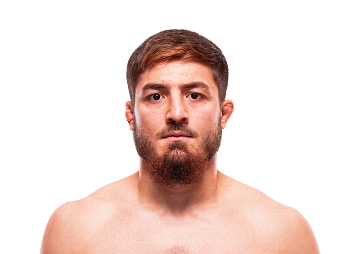
Fighter Metrics
Victory Methods
Win Round Distribution
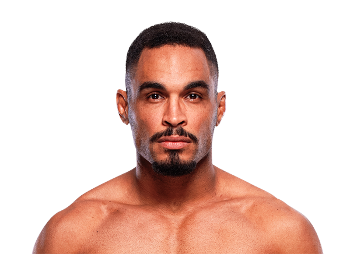
Fighter Metrics
Victory Methods
Win Round Distribution
Last 5 Fights – AbdulRakhman Yakhyaev
| Date | Opponent | Result | Method |
|---|---|---|---|
| 2025-08-26 | Alik Lorenz | W | KO - Punches (R1, 0:30) |
| 2025-03-15 | Jacky Jeanne | W | TKO - Punches (R1, 2:45) |
| 2024-11-23 | Alibek Begai | W | Submission - Rear-Naked Choke (R2, 1:22) |
| 2024-06-28 | Mamadou Oury Diallo | W | KO - Kick (R1, 1:58) |
| 2023-12-09 | Mehdi Rahmati | W | TKO - Punches (R1, 3:12) |
Last 5 Fights – Rafael Cerqueira
| Date | Opponent | Result | Method |
|---|---|---|---|
| 2025-08-09 | Julius Walker | L | Decision - Unanimous (R3, 5:00) |
| 2025-02-22 | Modestas Bukauskas | L | KO - Punches (R1, 2:12) |
| 2024-10-26 | Ibo Aslan | L | KO - Punches (R1, 0:51) |
| 2024-04-28 | Rodrigo Araujo | W | TKO - Punches (R1, 4:58) |
| 2023-12-07 | Jhonathan Azevedo | W | KO - Punches (R1, 4:18) |
Technical Analysis
Technical Score
Cardio Score
Overall Rating
📊Technical Score
Average of Striking Composite and Grappling Composite. Striking weighs output, accuracy, defense and absorbed rate; grappling includes takedown volume, accuracy, defense and submission attempts.
💪Cardio Score
Blends average fight duration, striking output and finish rate, capturing how well each fighter sustains pace while maintaining threat as the fight progresses.
🎯Overall Rating
Simple mean of Technical and Cardio scores. A compact summary of skill plus conditioning that avoids overfitting to a single metric or one anomalous fight.
Striking Composite
Grappling Composite
🥊Striking Composite
Weighted combination of SLpM, striking accuracy, striking defense and the inverse of strikes absorbed per minute. It rewards high-volume, efficient offense that doesn't pay a heavy defensive tax.
🤼Grappling Composite
Aggregates takedowns per 15 minutes, takedown accuracy, takedown defense and submissions per 15. Chain-wrestling and submission hunting score higher than low-urgency clinch work.
Technical Radar Comparison
Detailed Statistical Comparison
🎯 Fight Prediction Analysis
Data-driven model for finishing equity, round-winning capacity, and volatility in a large light heavyweight cage.
📊Detailed Analysis Summary
🏟️Range & Composure
The large 30ft cage gives the southpaw more lateral space, but the key limiter is defensive composure rather than footspeed. Yakhyaev's straighter weapons and +2" reach win first contact unless Cerqueira establishes a steady jab-and-circle rhythm early. The orthodox vs southpaw geometry favors Yakhyaev's straight punching lines (jab and cross down the pipe) against Cerqueira's counter left, while knees up the middle exploit the open-stance gap. In the large 30ft cage, Yakhyaev can cut angles and force fence engagements where his reach advantage compounds, but Cerqueira's historical tendency to retreat linearly to the fence under pressure undermines the theoretical space advantage. Once Cerqueira's back hits the fence, prior UFC losses suggest a high probability of defensive collapse.
🎯Technical Breakdown
Massive output and accuracy edge for Yakhyaev (SLpM 32.00, 88% acc, 66% def) against a hittable southpaw (StrDef 36%, SApM 4.88). The nearly 20-fold output advantage (32.00 vs 1.61 SLpM) means Cerqueira will be forced into reactive mode from the opening bell, playing defense against a pace he has historically struggled to manage. Combined with elite 88% striking accuracy versus Cerqueira's 44%, this creates a suffocating pace that overwhelms defensive reads. Grappling offense is minimal on paper for both, but front-headlock sequences favor the pressure fighter if panic shots appear. Yakhyaev's 100% takedown defense versus Cerqueira's 40% means any desperation shots from Cerqueira play directly into Yakhyaev's front-headlock and back-take strengths. The technical gap is pronounced across every major metric, with Yakhyaev's advantages compounding with every clean entry and fence trap.
🧩Key Battle Areas
First exchanges, fence exits, and front-headlock scrambles. If Cerqueira keeps his back off the fence and times the counter left, he can change momentum. If not, Yakhyaev's straight lines and knees up the middle snowball minutes and finishing equity. The decisive phases are the first two minutes of Round 1 and any extended fence sequences: Cerqueira must land clean counters before patterns settle, while Yakhyaev needs to avoid walking blindly into the southpaw left as he pressures into range. Once the fight stabilizes, Yakhyaev's volume, accuracy and durability profile make prolonged exchanges and fence traps increasingly one-way traffic. Across simulations, the model converges on a high-finish environment where Yakhyaev drives most outcomes, with Cerqueira's upset equity concentrated in a narrow early KO band.
💪Physical & Experience Factors
Yakhyaev's physical advantages (24 years old, 78" reach, 74" height) provide tactical benefits for distance control and pressure application, while his undefeated 7-0 record with 100% finish rate demonstrates proven finishing instincts at a young age. Cerqueira's 35 years of age and accumulated damage from quick stoppages (0:51 vs Aslan, 2:12 vs Bukauskas) suggest physical regression rather than adjustment to elite competition. The 11-year age gap favors the younger fighter in terms of recovery, pace sustainability, and explosive output. While Cerqueira's 11-3 career record and 91% finish rate demonstrate regional-level finishing ability, his 0-3 UFC record reveals consistent defensive vulnerabilities that have not improved across three Octagon appearances. The combination of Yakhyaev's fresher career trajectory (7 fights vs 14) against Cerqueira's battle-tested but declining profile creates a dynamic where physical attributes and recent form heavily favor the rising prospect.
💰 Betting Analysis: Model vs Market
Comparison of BetOnline moneyline and finish props vs our model probabilities.
📊Market Odds (BetOnline)
🤖Analytical Model (Moneyline Fair Lines)
💎Value Opportunities (Directional)
Combined finish metrics and durability flags point to a highly volatile fight where extended minutes are rare.
Model projects ~48% KO/TKO equity driven by pace, accuracy and opponent defensive collapse patterns.
Front-headlock chains vs panic shots give real submission hooks, especially after early damage softens Cerqueira's defensive reactions.
🎯 Comprehensive Probabilistic Analysis
100 hypothetical fight simulation based on statistical data
🏆Outcome Distribution - AbdulRakhman Yakhyaev
Primary finishing lane via pressure entries and volume spikes.
Front-headlock series off panic shots (guillotine / back takes).
Lower probability, but possible if Cerqueira survives early storms and Yakhyaev chooses risk-managed minutes.
💥Outcome Distribution - Rafael Cerqueira
Early counters before pace and reads settle.
Requires consistent minute-winning despite output gap.
Minimal submission threat in current sample.
⏰Fight Timeline Analysis
⚡Window of Opportunity - Rafael
- • First exchanges: Highest KO equity before reads settle.
- • Counter left: Intercept entries when Yakhyaev squares up.
- • Keep space: Avoid extended fence clinches and panic shots.
🎯Progressive Dominance - AbdulRakhman
- • Minute winning: Jab, straights and knees up the middle force defensive shells.
- • Pace control: Manage risk late while banking safe volume.
- • Defense first: Exit clean after combinations to deny southpaw counters.
🎯 Final Confidence Assessment
Model confidence in Yakhyaev's pressure-based finishing routes vs Cerqueira's narrow counter windows.
Multiple convergent indicators favor the undefeated pressure fighter, with volatility mostly front-loaded into Cerqueira's early KO lanes.
Supporting Factors
- • Enormous output and accuracy edge with strong defense.
- • Dual KO + submission finishing profile vs fragile metrics.
- • Opponent on three-fight UFC skid with quick stoppages.
- • Youth, durability and cardio trending in Yakhyaev's favor.
Risk Factors
- • Southpaw counter lanes early in Round 1.
- • Limited UFC sample size for Yakhyaev.
- • Light heavyweight volatility and power on both sides.
Executive Summary
This light heavyweight clash presents a stark contrast in trajectories and tactical profiles. AbdulRakhman Yakhyaev arrives as the rising prospect—undefeated at 7-0 with a 100% finish rate and a devastating blend of volume striking and front-headlock submissions. His statistical profile is exceptional: 32.00 strikes landed per minute with 88% accuracy, 66% striking defense, and perfect 100% takedown defense across his professional career. At just 24 years old and in his athletic prime, he represents the dangerous combination of youth, explosiveness, and proven finishing instincts.
Raffael Cerqueira, conversely, enters on a three-fight UFC losing streak that reveals consistent defensive vulnerabilities. His 0-3 Octagon record includes two first-round knockouts (0:51 vs Aslan, 2:12 vs Bukauskas) that followed identical patterns: early pressure leading to fence traps and defensive collapses. While his overall 11-3 career record and 91% finish rate demonstrate regional-level finishing ability, his UFC metrics paint a troubling picture—36% striking defense, 4.88 strikes absorbed per minute, 40% takedown defense, and minimal output at 1.61 SLpM. At 35 years old, the physical regression and accumulated damage from quick stoppages suggest a fighter on the decline rather than one adjusting to elite competition.
The stylistic matchup heavily favors Yakhyaev across multiple dimensions. His +2" reach advantage (78" vs 76") combines with orthodox vs southpaw geometry to give him straighter punching lanes and first-contact control. The nearly 20-fold output advantage (32.00 vs 1.61 SLpM) means Cerqueira will be forced into reactive mode from the opening bell, playing defense against a pace he has historically struggled to manage. The 30-foot cage theoretically provides Cerqueira more room to circle and reset, but his tape shows a fighter who retreats linearly under pressure rather than using intelligent lateral movement—a critical flaw that negates the cage-size advantage.
The dual-threat finishing profile adds another layer of danger for Cerqueira. If he shells defensively, Yakhyaev's striking volume overwhelms him toward a TKO stoppage (as seen in his last two UFC losses). If he shoots panic takedowns to escape pressure, his 40% takedown defense and Yakhyaev's proven front-headlock game (two career submission wins via RNC) create immediate submission danger. There is no clear defensive escape route that doesn't play into one of Yakhyaev's strengths.
Cerqueira's narrow path to victory requires near-perfect execution in the first five minutes. He must time Yakhyaev's forward movement with counter lefts, avoid fence traps entirely, and land a finish-quality shot before the accumulated volume and pressure break his defense. His 73% career knockout rate (8 of 11 wins) and southpaw power provide genuine one-shot danger, but the window is extremely tight. Historical UFC patterns suggest that once Yakhyaev establishes his pace and Cerqueira's defense begins to leak, the cascade toward stoppage is rapid and inevitable.
Prediction: Yakhyaev wins by KO/TKO (48% probability) or submission (18%), most likely inside the first two rounds. The model assigns a 76% overall win probability to the young Russian prospect, reflecting the convergence of output dominance, defensive reliability, dual-threat finishing, and Cerqueira's consistent UFC-level vulnerabilities. The 30-foot cage and southpaw power provide Cerqueira theoretical counters, but execution under elite pressure has proven elusive across three Octagon appearances. Expect an early finish heavily favoring Yakhyaev, with live hedge value on Cerqueira's counter left in the opening minutes.