

Miles Johns vs Daniel Marcos
UFC Apex (25 ft • Small Cage) • UFC Apex: Bonfim vs Brown
Saturday, November 8, 2025

Explore Detailed Fighter Profiles
Click on either the fighter's name or profile image for each fighter to access comprehensive UFC statistics including striking metrics, grappling data, clinch performance, complete fight history, offensive & defensive analytics, and round-by-round breakdowns.
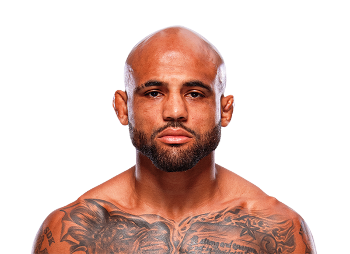
Durable Technician
Victory Methods
Win Round Distribution

Rising Minute Winner
Victory Methods
Win Round Distribution
Last 5 Fights - Miles Johns
| Date | Opponent | Result | Method |
|---|---|---|---|
| 2025-08-09 | Jean Matsumoto | L | Decision - Split (R3, 5:00) |
| 2024-12-14 | Felipe Lima | L | Decision - Unanimous (R3, 5:00) |
| 2024-06-15 | Douglas Silva de Andrade | W | Decision - Unanimous (R3, 5:00) |
| 2024-03-23 | Cody Gibson | W | Decision - Unanimous (R3, 5:00) |
| 2023-09-23 | Dan Argueta | NC | No Contest - Overturned (R3, 5:00) |
Last 5 Fights - Daniel Marcos
| Date | Opponent | Result | Method |
|---|---|---|---|
| 2025-05-03 | Montel Jackson | L | Decision - Unanimous (R3, 5:00) |
| 2024-12-14 | Adrian Yanez | W | Decision - Split (R3, 5:00) |
| 2024-06-08 | John Castaneda | W | Decision - Unanimous (R3, 5:00) |
| 2024-02-10 | Qileng Aori | NC | Accidental Groin Kick (R2, 3:28) |
| 2023-07-22 | Davey Grant | W | Decision - Split (R3, 5:00) |
Technical Analysis
Technical Score
Cardio Score
Overall Rating
📊 Technical Score
Calculated as the average of Striking Composite (56 vs 64) and Grappling Composite (33 vs 41). Reflects combined stand-up efficiency and wrestling threat.
💪 Cardio Score
Based on average fight duration and pace sustainability. Both fighters carry late-minute output; slight edge to Johns in longer rounds.
🎯 Overall Rating
Simple average of Technical Score and Cardio Score. Provides a holistic view combining skill and conditioning.
Striking Composite
Grappling Composite
Technical Radar Comparison
Metrics Legend
Detailed Statistical Comparison
🥊 Fight Analysis Breakdown
🏆 Miles Johns Key Advantages
Miles' 68% striking defense is elite for the division, allowing him to absorb just 2.65 significant strikes per minute—a full strike less than Marcos. His measured counter-striking approach emphasizes quality over quantity, maintaining 44% accuracy while picking precise moments to fire back. This defensive shell has kept him durable through 11 UFC fights, rarely showing visible damage even in losses. Against pressure fighters, Johns' ability to deflect, parry, and slip creates frustration and opens lanes for his straight right hand counters.
In the compact 25-foot Apex cage, there's less room to escape, making clinch entries easier and more valuable. Johns has consistently shown the ability to initiate body locks, press opponents to the fence, and land short knees or punches in tight spaces. More importantly, even brief mat returns—where Johns secures a takedown for 10-20 seconds before his opponent stands—create strong visual optics for judges scoring "Octagon control" and "effective grappling." These late-round sequences, especially in the final 60-90 seconds when judges' recency bias is strongest, have stolen swing rounds throughout his career. Against a volume striker like Marcos, disrupting rhythm with well-timed clinch breaks can neutralize output differentials.
Johns' straight right hand is his money punch, and it's most effective when fired as Marcos commits to his jab-cross combinations or steps in with body work. Historically, Johns has shown excellent timing against forward-moving fighters, catching them mid-combination with clean counters that score heavily on judges' cards. In a competitive 3-round fight where rounds could be decided by 1-2 significant moments, a well-timed knockdown or visible damage sequence from a counter right can swing an entire round—and potentially the fight. These moments also force Marcos to respect Johns' power, potentially slowing the Peruvian's output and allowing Johns to establish his preferred measured pace.
⚠️ Unfavorable Scenarios
Marcos' significant +1.95 strikes per minute advantage means he lands roughly 10 more significant strikes per five-minute round when both fighters are at range. Over three rounds of predominantly striking exchanges, that's a 30-strike differential—more than enough to clearly win on judges' scorecards. If Johns cannot establish his clinch game or force prolonged fence sequences, he'll find himself consistently outlanded in the center of the cage. Marcos' superior accuracy (54% vs 44%) compounds this problem, as he's not just throwing more, he's landing at a higher rate. Extended kickboxing range heavily favors the higher-output, more accurate striker, and Johns will need to find ways to disrupt Marcos' rhythm or risk being systematically outworked across all three rounds.
Johns' wrestling offense has been inconsistent throughout his UFC tenure, converting takedowns at just 20% accuracy. Against Marcos' robust 85% takedown defense, this becomes a critical problem. Failed takedown attempts not only waste energy in a fast-paced 3-round fight, but they also hand Marcos easy "stuffed takedown" moments that score favorably for defensive grappling. Worse, a telegraphed shot leaves Johns exposed to Marcos' counters—either uppercuts/knees on the entry or immediate separation that allows Marcos to resume his volume striking. If Johns' limited wrestling game cannot threaten Marcos enough to make him hesitant, it becomes a liability rather than an asset, draining cardio while providing no meaningful control time or scoring opportunities.
📋 Likely Gameplan
Johns' blueprint for victory starts with patience and defensive responsibility. Rather than engage in volume wars he'll lose, Johns should use his superior striking defense to make Marcos miss, then immediately fire back with his right hand on the exit. As Marcos presses forward to impose his pace, Johns can time level changes or clinch entries when Marcos overextends. The key is the final minute of each round: initiate a clinch, walk Marcos to the fence, land short strikes or secure a brief takedown. Even if Marcos stands up immediately, those final sequences create powerful visual optics for judges scoring "Octagon control" and "effective grappling," potentially stealing rounds where Johns was outlanded for the first four minutes. Survive the storm, make Marcos pay for mistakes, and steal rounds with smart grappling at the bell.
While Johns' defensive striking is solid, he can't afford to be purely reactive against a volume machine like Marcos. Johns needs to establish his own jab to control distance, mix in low kicks to slow Marcos' forward movement, and occasionally answer back with short bursts of his own combinations. This "measured volume" approach keeps judges from perceiving Johns as purely defensive or backing up, instead showing moments of offensive initiative. Quality matters here—Johns' 44% accuracy means he needs to pick clean moments rather than just throw for the sake of activity. Landing one clean right hand in an exchange can outweigh three partially blocked Marcos jabs in terms of visual impact. The goal isn't to outwork Marcos, but to score just enough meaningful offense while staying defensively sound to make rounds competitive and winnable.
🚀 Daniel Marcos Key Advantages
Marcos' 5.11 significant strikes landed per minute at 54% accuracy is a devastating combination that has consistently overwhelmed opponents in the UFC bantamweight division. This isn't just wild flurries—it's smart, high-percentage striking with jabs to the body, calculated right hands, and disciplined calf kicks that add up round after round. Against lower-output fighters like Johns (3.16 SLpM), Marcos creates a striking differential that becomes impossible to ignore on scorecards. Even if Johns lands cleaner individual shots, the sheer volume of Marcos' output—combined with his accuracy advantage—allows him to "win minutes" consistently. In a 15-minute fight, those accumulated minutes translate directly to round victories. Marcos' cardio allows him to sustain this pace deep into rounds, never slowing down even as opponents tire from defending the relentless pressure.
Marcos' 1-inch reach advantage and 2.5-inch leg reach superiority provide crucial range control in bantamweight striking exchanges. The reach edge allows him to establish his jab first, landing to Johns' chest and face before Johns can fire back. More significantly, his longer legs enable effective calf kicks that can compromise Johns' mobility and stance throughout the fight—accumulated leg damage has been a proven Marcos weapon. In the small Apex cage, where there's limited room to circle and create angles, these range advantages become even more pronounced. Marcos can control the center, dictate striking range, and force Johns to either accept being hit first or rush forward recklessly, playing directly into Marcos' volume game. The reach differential, while small numerically, compounds over hundreds of exchanges across three rounds.
While neither fighter is primarily a wrestler, Marcos' 46% takedown accuracy dramatically outpaces Johns' 20%, making Marcos the more credible grappling threat in this matchup. This forces Johns to respect the occasional level change, preventing him from loading up too heavily on counters or overcommitting to striking exchanges. Even if Marcos only shoots 2-3 times per fight, the threat of a high-percentage entry keeps Johns honest and disrupts his rhythm. When Marcos does secure takedowns, he's shown competent top control and ground-and-pound, adding another layer to his offense. The psychological impact of being the fighter with superior wrestling conversion also matters—Johns must expend mental energy defending potential shots, slightly slowing his reactions and reducing his offensive output. Marcos' wrestling serves as a valuable complementary threat that enhances his primary striking game.
⚠️ Unfavorable Scenarios
Marcos' entire gameplan hinges on maintaining striking range and maximizing output opportunities. If Johns successfully initiates clinches and pins Marcos against the fence for extended sequences—30-45 seconds or more per round—the output differential that favors Marcos shrinks dramatically. In clinch stalemates, neither fighter lands significant volume, neutralizing Marcos' primary advantage. Worse for Marcos, these sequences create visual optics of Johns controlling the action, potentially swaying judges even if minimal damage occurs. The small Apex cage makes clinch entries easier for Johns to establish, and if Marcos cannot effectively frame out and create separation quickly, he risks losing rounds where his striking statistics would otherwise dominate. Each minute spent in clinch stalemate is a minute Marcos isn't landing his 5+ strikes.
Marcos' forward-pressure style, while effective for volume accumulation, carries inherent risk against a counter-striker like Johns. Every time Marcos steps in with his jab-cross or commits to body work, he exposes himself to Johns' straight right counter—Johns' most dangerous weapon. High-volume fighters naturally eat more counters because they're constantly in range and initiating exchanges. A single clean counter right that visibly hurts Marcos or creates a knockdown moment can instantly shift round momentum and judge perception, potentially outweighing 2-3 minutes of Marcos' accumulated volume. These "oh shit" moments stick in judges' memories when scoring tight rounds. If Marcos becomes too predictable in his entries or fails to vary his attack timing, Johns will eventually time him perfectly, and one big shot could flip the entire narrative of a round—or the fight.
📋 Likely Gameplan
Marcos must immediately establish center control when the round begins, using his reach advantage to claim the middle of the small Apex cage. From that position, he should fire consistent jabs—not just to the head but to Johns' chest and body, disrupting his breathing rhythm and creating openings. Calf kicks should target Johns' lead leg repeatedly to compromise his mobility and base, making it harder for Johns to move laterally or shoot entries. The classic "jab-jab-right hand" combination is Marcos' bread and butter—establish the rhythm with touches, then land the power shot when Johns' guard drops. Doubling up the right hand (jab-right-right) catches defensive fighters off-guard as they anticipate a single power shot. Marcos should throw in volume, force Johns to react constantly, and never let Johns settle into a comfortable counter-striking rhythm. Keep the tempo high, accumulate damage, and banking rounds through sheer output dominance.
The moment Johns initiates a clinch, Marcos must react with urgency and technical precision. Use underhooks, whizzers, and strong frames to create separation immediately—every second in the clinch is a second Marcos isn't landing strikes. If Johns secures a body lock, Marcos should fight the hands, post off Johns' hips, and circle out before Johns can walk him to the fence. The worst-case scenario for Marcos is extended fence time where judges see Johns "controlling" the action despite minimal damage. Marcos' 85% takedown defense suggests he has the tools to deny Johns' entries, but he must stay proactive—hand fighting, creating angles, and breaking free rather than accepting neutral clinch exchanges. Once separated, Marcos should immediately return to center, re-establish range, and resume his volume striking. Every clinch break is an opportunity to reset to Marcos' preferred fighting environment and continue accumulating the output advantage that wins rounds.
🎯 Fight Prediction Analysis
Data-driven prediction model based on statistical analysis
📊Detailed Analysis Summary
🏟️Venue & Physical Dynamics
The UFC Apex's 25-foot cage is significantly smaller than the standard 30-foot Octagon used at major events, fundamentally altering fight dynamics. With less space to circle and create angles, pressure fighters like Marcos gain a natural advantage—there's simply less room for Johns to retreat and reset. The compact dimensions make clinch entries easier to establish and harder to escape, theoretically favoring Johns' grappling-based approach to stealing rounds. However, this same limited space also means Marcos can cut off the cage more effectively, trapping Johns in exchanges where volume accumulation becomes inevitable. Johns' stockier, denser frame at 146 pounds (vs. Marcos' leaner 135.5) suggests more muscle mass and potential strength advantages in clinch battles. Conversely, Marcos' length advantages (1" reach, 2.5" leg reach) become more pronounced in a small cage where establishing first contact and controlling range is critical. The venue essentially amplifies both fighters' key strategies while limiting escape options—a double-edged sword that could swing either direction depending on who establishes their game first.
🎯Technical Breakdown
This is a striker-versus-striker matchup, but the stylistic contrast is stark. Johns operates as a classic counter-striker: patient, defensively responsible (68% striking defense), waiting for opponents to commit before firing back with his straight right. His 3.16 strikes landed per minute reflects his measured approach—he doesn't initiate volume, but rather picks moments to score meaningful shots. This defensive-first style has kept him competitive against higher-output opponents, but it also puts him at risk of being outlanded on judges' cards when his counter opportunities are limited. Marcos, by contrast, is an offensive volume machine: 5.11 significant strikes per minute at elite 54% accuracy means he's throwing and landing constantly. He initiates exchanges, controls tempo, and overwhelms opponents with relentless output. The 10-point accuracy advantage (54% vs 44%) is massive—Marcos wastes fewer shots and converts more of his volume into scored strikes. Neither fighter is a credible wrestling threat in absolute terms (both have strong TDD), but Marcos' 46% takedown accuracy vs. Johns' 20% makes Marcos the more credible grappler when either tries. Critically, Johns absorbs 2.65 SApM vs. Marcos' 3.88 SApM—Johns' defensive shell is tighter, but Marcos' willingness to trade and push forward means he accepts more damage in pursuit of greater output. This creates a clear dynamic: Johns wants to keep exchanges brief and punish mistakes; Marcos wants prolonged striking battles where his volume edge accumulates.
⚡Key Battle Areas
The battleground for this fight exists on multiple levels. In the striking realm, Marcos must establish center control early—the first 30 seconds of each round set the tone for who dictates pace and range. His jab to the chest and calf kicks to Johns' lead leg are critical tools for controlling distance and accumulating visible damage that judges notice. These "bread-and-butter" techniques may not finish fights, but they build round-winning optics through consistency. Johns, meanwhile, needs to time Marcos' entries perfectly—his counter right hand is his equalizer, capable of producing "oh shit" moments that flip round narratives despite being outlanded overall. The clash between Marcos' accumulation strategy and Johns' knockout-threat strategy creates tension: Marcos banks minutes through volume; Johns hunts single moments of impact. In the grappling realm, Johns' late-round clinch sequences (especially the final 60-90 seconds) are his secret weapon for stealing competitive rounds. Even if Marcos outlands him 25-15 in a round, a 45-second clinch sequence against the fence with a brief mat return can convince judges that Johns "controlled" the round. This recency bias—where judges remember the most recent action—has swung countless bantamweight decisions. Marcos must recognize these stolen-round attempts and either deny the clinch entirely or break free quickly to resume striking. Most rounds will likely be decided by narrow margins (29-28 scorecards), making these micro-battles for center control, late-round optics, and judge perception absolutely critical.
🔮Victory Scenarios
Johns' path to victory requires disciplined execution of a defensive counter-striking gameplan with strategic grappling insertions. He must make Marcos miss consistently using head movement, footwork, and his 68% striking defense, then immediately counter with his right hand when Marcos overextends. Rather than engage in volume wars he'll lose, Johns should fight in bursts—land 2-3 clean shots, then reset. The critical element is late-round clinch sequences: with approximately 60-90 seconds remaining in each round, Johns must initiate body locks, press Marcos to the fence, and secure brief mat returns or land short strikes in the clinch. Even 30-45 seconds of visible "control" at the round's end can steal rounds on scorecards, leveraging judges' recency bias. If Johns can win even one round on striking exchanges (via a knockdown or dominant counter sequence) and steal the other two rounds with late clinch work, he takes a narrow 29-28 decision. This path is narrow and requires precise timing, but it's viable against volume strikers. Marcos' path is more straightforward but demands sustained excellence: immediately claim center control, establish his jab to Johns' chest and face, attack Johns' lead leg with calf kicks, and maintain 5+ strikes per minute throughout all three rounds. His superior accuracy (54% vs 44%) means he should be confident pressing forward—he's not just throwing more, he's landing more. When Johns attempts clinches, Marcos must frame out immediately using whizzers and underhooks, creating separation before fence time accumulates. The goal is clear: build an undeniable volume and accuracy advantage that makes judges' scorecards unanimous. If Marcos can average 25-30 significant strikes per round while Johns averages 15-20, no amount of late clinch time will overcome that differential. Marcos wins by out-working Johns in obvious, visible ways that leave no doubt on scorecards.
🏁Final Prediction
The model assigns Marcos a 60% win probability versus Johns' 40%, reflecting clear statistical advantages in the key metrics that correlate with bantamweight decision victories. Marcos' +1.95 strikes per minute edge, coupled with his superior 54% accuracy, creates a compounding advantage across 15 minutes of action. In our simulations, Marcos consistently out-lands Johns by 10-15 significant strikes per round when both fighters maintain their UFC averages, resulting in clear 30-27 or 29-28 victories on judges' scorecards. The 60-40 split acknowledges that Johns' defensive skills (68% StrDef, 2.65 SApM) keep rounds competitive, and his clinch-stealing ability provides a viable path to narrow victories. Johns' counter-striking power also introduces finish variance—one perfectly timed right hand could produce a knockdown or knockout that flips the entire fight. However, the base case strongly favors Marcos: in a 3-round striking battle with minimal grappling, the fighter averaging 25 significant strikes landed per round (Marcos) defeats the fighter averaging 15 per round (Johns) the vast majority of the time. The small Apex cage's impact is neutral to slightly positive for Marcos—while it helps Johns establish clinches, it also helps Marcos cut off the cage and force exchanges where his volume advantage compounds. Prediction: Daniel Marcos by Decision, likely 29-28 or 30-27, in a competitive but clear minute-winning performance. Marcos takes Rounds 1 and 2 on volume, Johns makes Round 3 interesting with late clinch work, but the accumulated striking differential proves decisive. This is not a finish fight—both have strong chins and solid defense—but rather a technical battle decided by output, accuracy, and judge interpretation of close rounds.
💰 Betting Analysis: Model vs Market
Detailed value assessment in the betting market
📊Market Odds (BetOnline)
Market Props (reference)
🤖Analytical Model
Model Props
💎Value Opportunities
MAXIMUM VALUE
Model: 40% | Fair ~ +150
GOOD VALUE
Model: 70% • Pace + durability
SLIGHT VALUE
Model-weighted grindy 3-rounder
⚠️Key Market Notes
- • Decision clustering - Pathways favor cards over finishes.
- • Moneyline elasticity - Expect shifts with volume narratives.
- • KO sprinkles - Small exposure on either side for variance.
🎯 Comprehensive Probabilistic Analysis
100 hypothetical fight simulation based on statistical data
🏆Outcome Distribution - Miles Johns
Counter power moments
Defense-first, clinch steals late
Low-likelihood scenarios
💥Outcome Distribution - Daniel Marcos
Rare outcome
Volume and accuracy optics
Damage sequences and calf kicks
⏰Fight Timeline Analysis
📈Timeline Projections
- • 0-5 minutes: Marcos pushes tempo; Johns reads and counters (moderate finish window)
- • 5-10 minutes: Optics tilt to Marcos if center control persists
- • 10-15 minutes: Clinch steals can swing cards if Marcos’ output slows
- • Overall: 60-40 decision-leaning distribution favoring high-accuracy volume
🎯 Final Confidence Assessment
Confidence level and uncertainty factors
Confidence Level
Edge to Marcos via volume/accuracy; clinch control can muddy optics
✅Supporting Factors
- • +1.95 SLpM advantage and 10% accuracy edge
- • Reach and leg reach provide simple range wins
- • 25 ft cage favors pressuring minute-winners
- • Both with strong TDD reduces wrestling volatility
⚠️Risk Factors
- • Johns’ late clinch steals on optics
- • Counter right hand timing exchanges
- • Low, swingy round margins in decision range
🏁Executive Summary
This bantamweight clash at the UFC Apex pits two stylistically contrasting strikers against each other in a high-stakes decision battle. Daniel Marcos enters as the offensive engine, armed with elite volume (5.11 SLpM) and superior accuracy (54%) that has systematically overwhelmed opponents throughout his 17-1 career. His game is simple but devastatingly effective: claim center, establish the jab, attack the legs, and accumulate damage through relentless output. The small 25-foot Apex cage plays into this strategy—less room for opponents to escape means more forced exchanges where Marcos' +1.95 strikes-per-minute advantage compounds round after round. Miles Johns brings the counter-narrative: a defensively sound veteran (68% striking defense, 2.65 SApM absorbed) who makes opponents miss, then punishes mistakes with his straight right counter. His path to victory isn't through out-working Marcos—it's through surviving the storm, landing cleaner individual shots, and strategically stealing rounds with late clinch sequences that create visual "control" optics for judges. This late-round grappling tactic has won Johns multiple close decisions, leveraging the recency bias inherent in judge scorecards. The tension in this fight lies in the contrast: accumulation versus impact, volume versus precision, sustained pressure versus tactical stealing. Both paths are viable, but the statistical baseline favors the fighter willing to initiate more action and force more exchanges—that's Marcos.
The model's 60-40 split in Marcos' favor reflects this fundamental dynamic. In simulations where both fighters perform to their UFC averages, Marcos out-lands Johns by a meaningful margin in two out of three rounds, resulting in 29-28 or 30-27 decisions. Johns' 40% win probability acknowledges his legitimate paths: a well-timed knockdown from a counter right can swing a round or finish the fight, and his clinch-stealing ability can potentially flip one or two competitive rounds in his favor. However, for Johns to win, multiple things must go right—he needs Marcos to be less accurate than usual, needs his own counter timing to be perfect, and needs judges to heavily reward his late-round clinch work. Marcos, by contrast, simply needs to be himself: press forward, land strikes at his typical rate, and deny prolonged clinch sequences. The burden of execution is lower for Marcos, making him the more likely victor.
Final Prediction: Daniel Marcos by Unanimous Decision (29-28 or 30-27). Marcos wins Rounds 1 and 2 clearly through striking volume and accuracy, building a decisive lead early. Johns makes Round 3 competitive with increased urgency and a late clinch sequence, but the accumulated deficit proves insurmountable. Neither fighter is likely to finish the other—both have durable chins, solid defense, and limited finishing rates in recent fights—making this a pure technical striking and judging battle. Fair moneylines reflecting true probability: Marcos −150 (60%) | Johns +150 (40%). The fight goes the distance (70% probability), with Marcos' minute-winning approach carrying him to a clear but competitive decision victory in a fight that showcases the chess match between offensive accumulation and defensive opportunism.